-
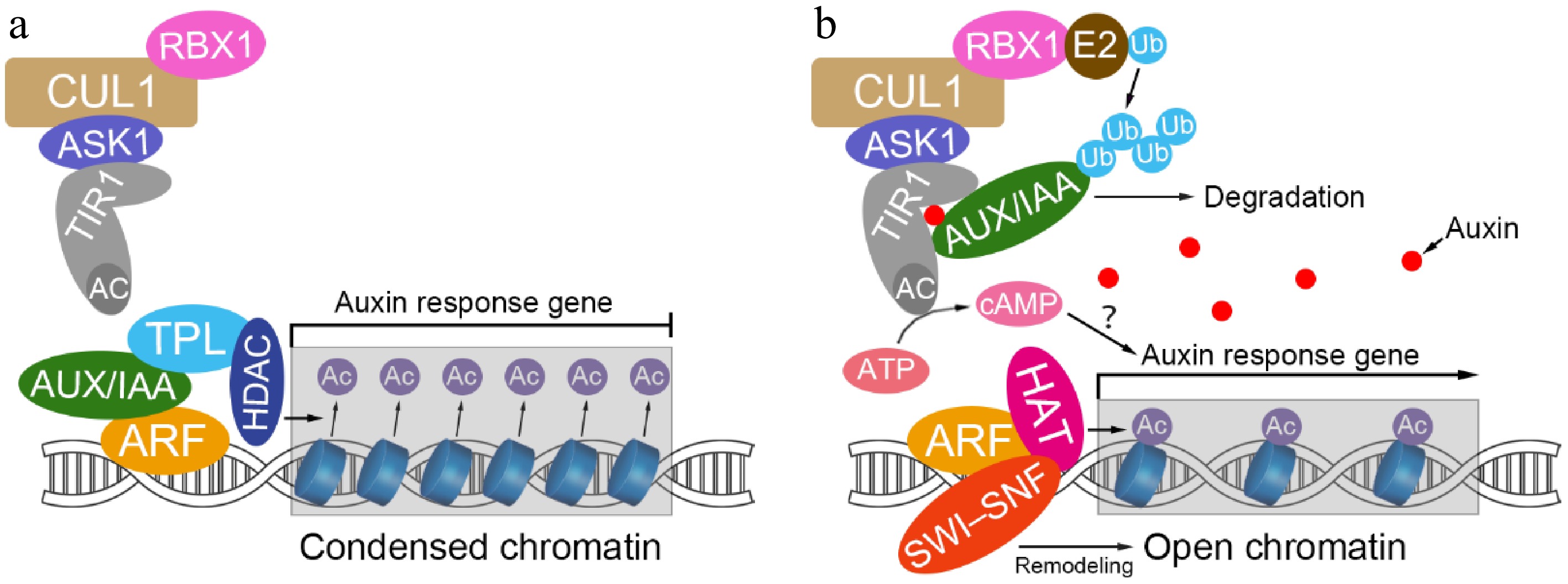
Figure 1.
Nuclear auxin signaling pathway and auxin-dependent regulation of gene expression. (a) Aux/IAA repressors bind to ARF transcription factors at low cellular auxin levels. Aux/IAA recruit TPL-HDA19, which maintains condensed chromatin by histone deacetylation. This interaction prevents ARF from driving gene transcription. (b) At high cellular auxin concentrations, the hormone is perceived by the SCFTIR1- Aux/IAA co-receptor complex, followed by degradation of Aux/IAA and cAMP production. ARFs recruit chromatin-remodeling complexes containing SWI-SNF, histone acetylases, and other regulatory factors. This process promotes chromatin opening and further activates the transcription of auxin response genes. RBX1, RING-BOX 1; CUL1, CULLIN 1; ASK1, ARABIDOPSIS SKP1 HOMOLOG; TIR1, TRANSPORT INHIBITOR RESISTANT1; AC, adenylate cyclase activity of TIR1; Aux/IAA, AUXIN/INDOLE-3-ACETIC ACID; ARF, AUXIN RESPONSE FACTOR; TPL, TOPLESS; HDAC, HISTONE DEACETYLASE; Ac, acetyl group; E2, ubiquitin-conjugating enzyme; Ub, ubiquitin; ATP, adenosine triphosphate; cAMP, cyclic adenosine monophosphate; HAT, HISTONE ACETYLASE; SWI-SNF, SWI-SNF chromatin-remodeling complex. The blue cylinders represent histone-constituted nucleosomes.
Figures
(1)
Tables
(0)