-
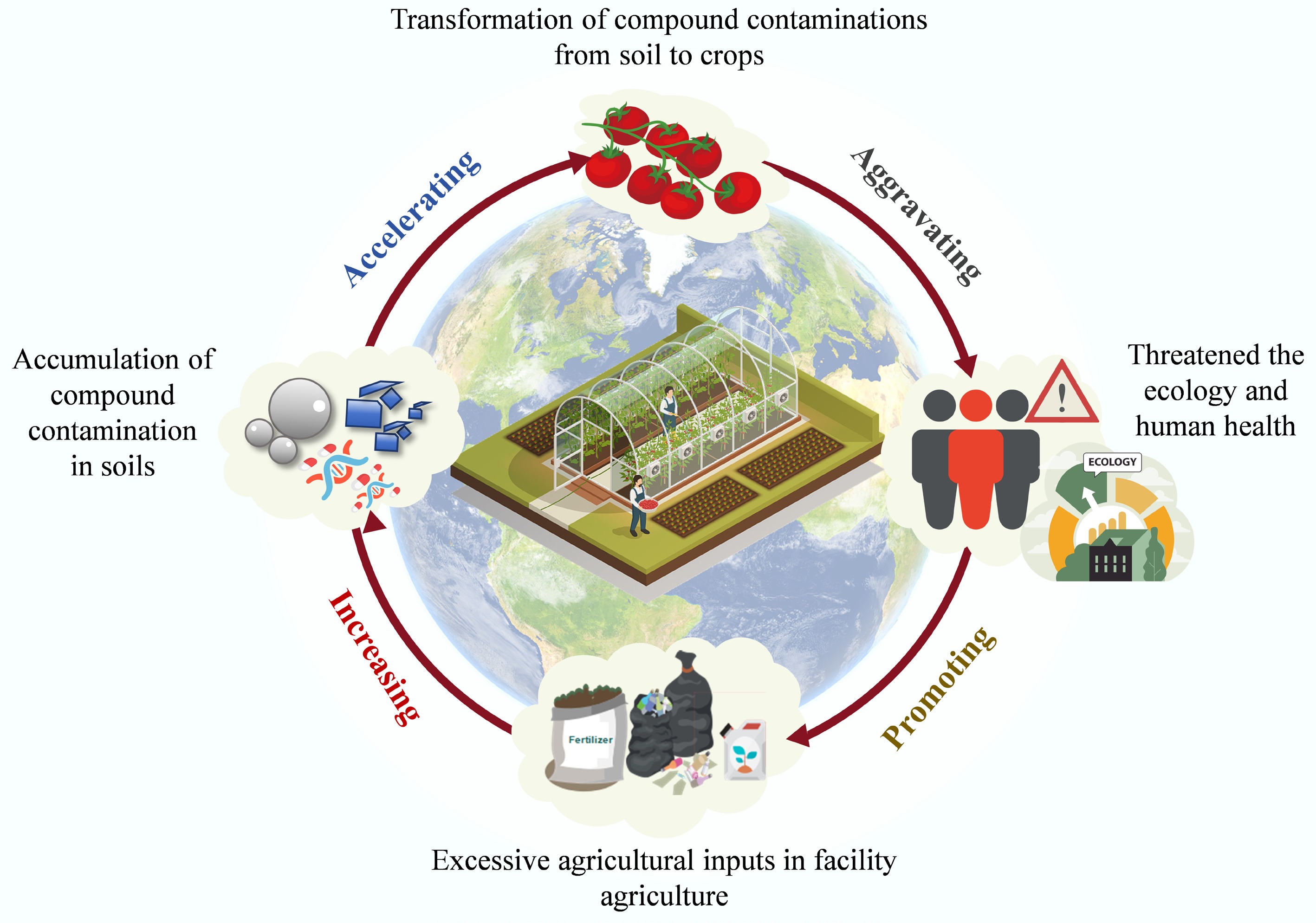
Figure 1.
Impacts of composite contaminations in facility agriculture.
-
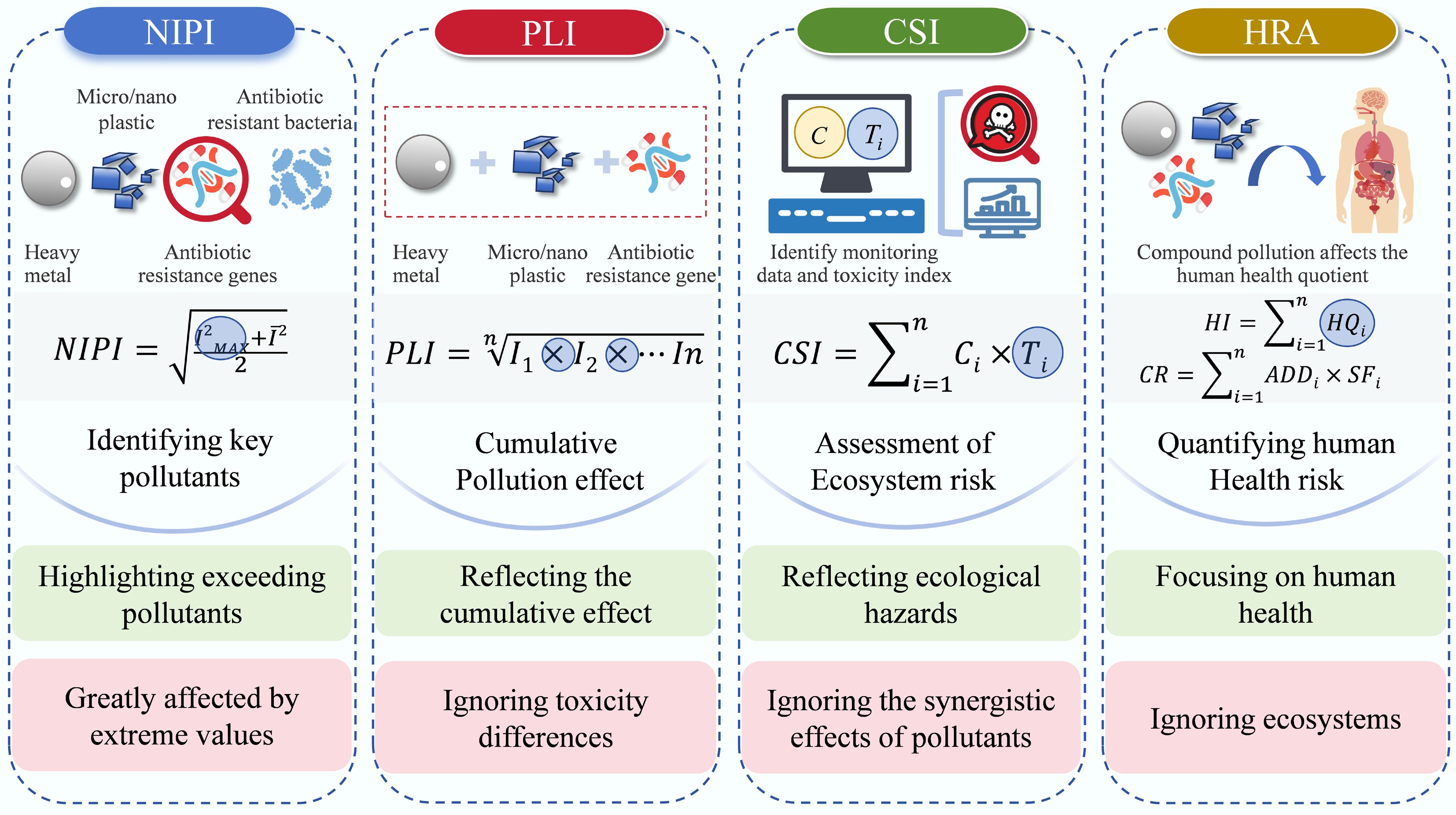
Figure 2.
Assessment framework for the risk of composite contaminations.
-

Figure 3.
Mechanism of synergistic pollution for composite contaminations. (a) Surface interactions of micro/nanoplastics with heavy metals. (b) Co-selection of heavy metals and ARGs drives antibiotic resistance evolution. (c) MNPs enhance ARGs spread via vectoring, biofilm protection, and microbial shift.
-
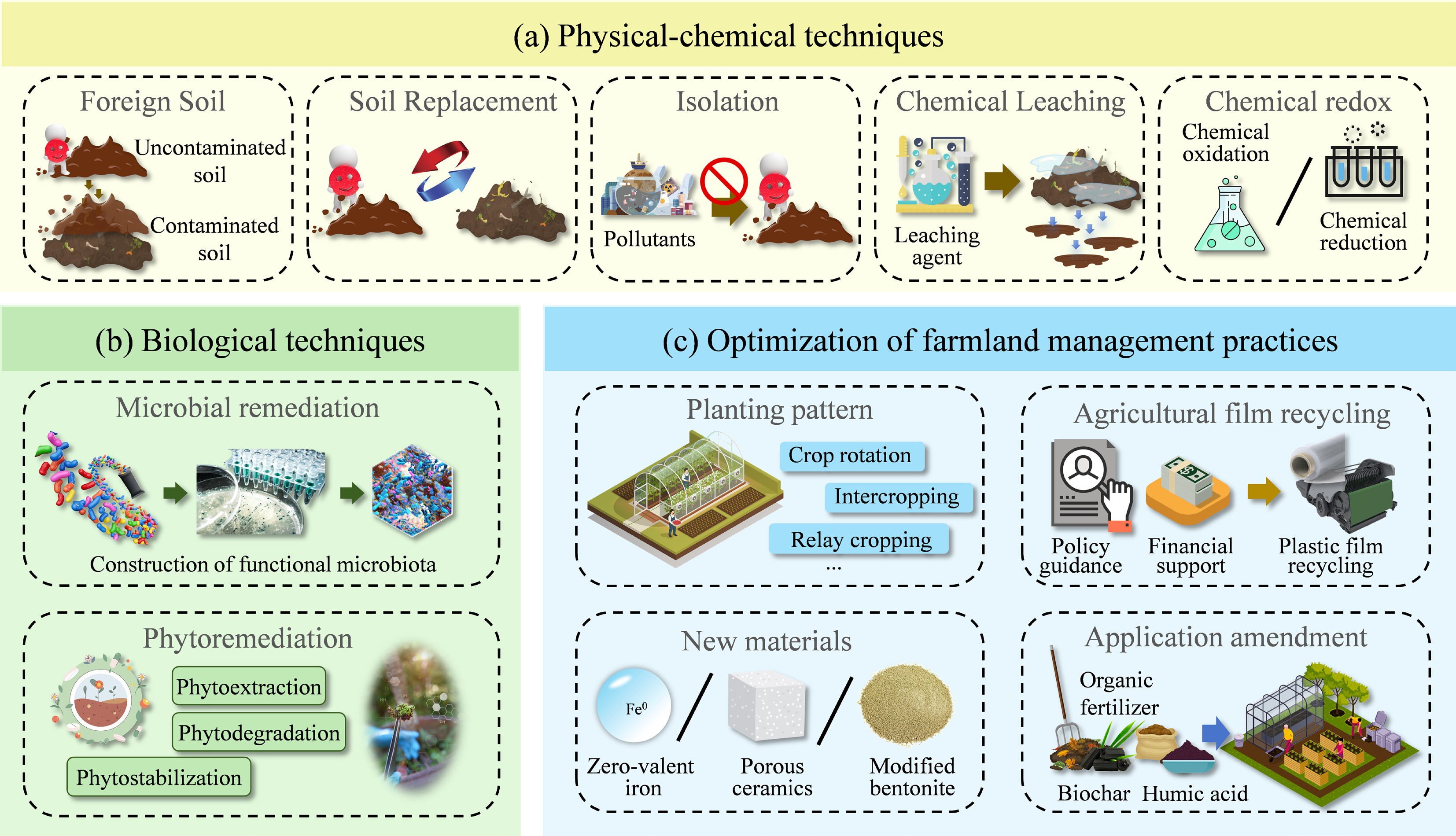
Figure 4.
Mitigation strategies for composite contaminations in facility agriculture. (a) Physical-chemical techniques. (b) Biological techniques. (c) Optimization of farmland management practices.
-
Contamination type Medium Concentration Ref. HMs-MNPs Soil ■ MNPs adsorb Cd:
425.65 mg/kg[24,65,112] ■ MNPs adsorb Pb: 476.6 mg/kg ■ MNPs absorb Cu: 29 mg/g ■ MNPs absorb Zn: 61.01−126.77 mg/kg HMs-ARGs ■ ARGs increased by 2.74 × 10⁷−
1.07 × 10⁸ copies/g[35,114] ■ ARGs increased by 0.20–
0.25 copies/bacterial cellMNPs-ARGs ■ ARGs detected in NPs:
0.05 copies/16S rRNA gene[24,41] ■ ARGs residual level in soil: 3.87–32.59 ppm Table 1.
Concentration of composite contaminations in facility agriculture
-
Categories Technologies Main functions Advantages Disadvantages Ref. Physical-chemical technique √ Foreign soil method ● Replacing or physically isolating contaminated soil
● Blocking pollutant exposure pathways◆ Technological simplicity
◆ Rapid remediation● High cost
● Inadequate degradation[75] √ Soil replacement Method ◆ Complete remediation
◆ Rapid remediation● Extremely high costs
● Significant environmental risks√ Isolation method ◆ Low cost
◆ Significant ecological risk reduction● Inadequate degradation
● Restrictions on land reuse√ Chemical leaching Method ● Eluting pollutants with solvents ◆ Rapid remediation ● Destruction of soil ecosystems
● Risk of secondary pollution[76,77] √ Chemical redox ● Altering pollutant speciation via chemical reactions ◆ Minimal disturbance to soil structure ● Susceptible to soil interference
● Formation of toxic
by-productsBiological technique √ Microbial remediation ● Degrading pollutants through microbial metabolism ◆ Environmentally benign
◆ low cost● Long remediation cycle
● Susceptible to environmental conditions[80] √ Phytoremediation ● Utilizing hyperaccumulator or tolerant plants to absorb, accumulate, and transform pollutants ◆ Environmentally benign
◆ High public acceptance● Protracted remediation period [91,92] Optimization of farmland management measures √ Promotion of degradable agricultural film ● Reducing micro/nanoplastic pollution from agricultural film degradation ◆ Technological simplicity
◆ Recyclable● High cost
● Technical immaturity[98] √ Changing the planting pattern ● Ameliorate soil physicochemical properties and microbial diversity, and synergistically degrade and absorb pollutants ◆ Emphasizes source prevention
◆ Low cost
◆ Significant ecological benefits● Nutrient supply not synchronized with crop demand
● Protracted remediation period[102,103,105] √ New materials application ● Application of new materials to absorb or change the form of pollutants ◆ Environmentally benign
◆ Universally applicable● High cost
● Low technological maturity[106] √ Application of organic fertilizer with different amendments ● Ameliorate soil properties, alter bacterial communities, and reduce pollutant accumulation ◆ Environmentally benign
◆ Persistent efficacy● Vulnerable to environmental interference
● Lacking specificity[104,107] Table 2.
Main measures to reduce composite pollution in farmland systems
Figures
(4)
Tables
(2)