-
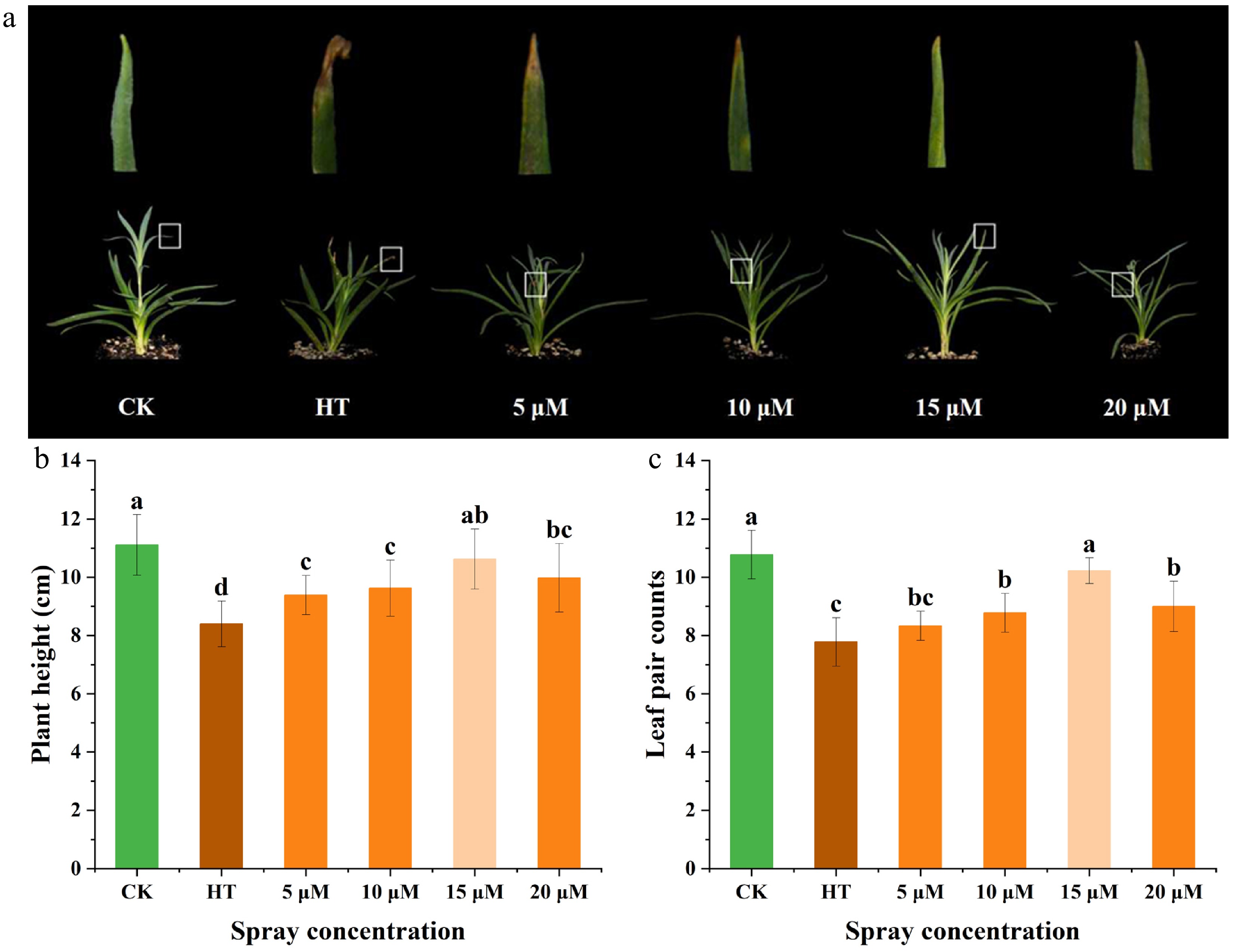
Figure 1.
Effects of pre-spraying with different concentrations of GR24 on the phenotype and growth of carnation seedlings under HS. (a) Phenotype. (b) Plant height. (c) Leaf pair counts. CK: distilled water under control temperature, HT: distilled water under heat stress, 5 μM: 5 μM GR24 under heat stress, 10 μM: 10 μM GR24 under heat stress, 15 μM: 15 μM GR24 under heat stress, 20 μM: 20 μM GR24 under heat stress. Data shown as mean ± SD, and different letters indicate significant differences (p < 0.05).
-
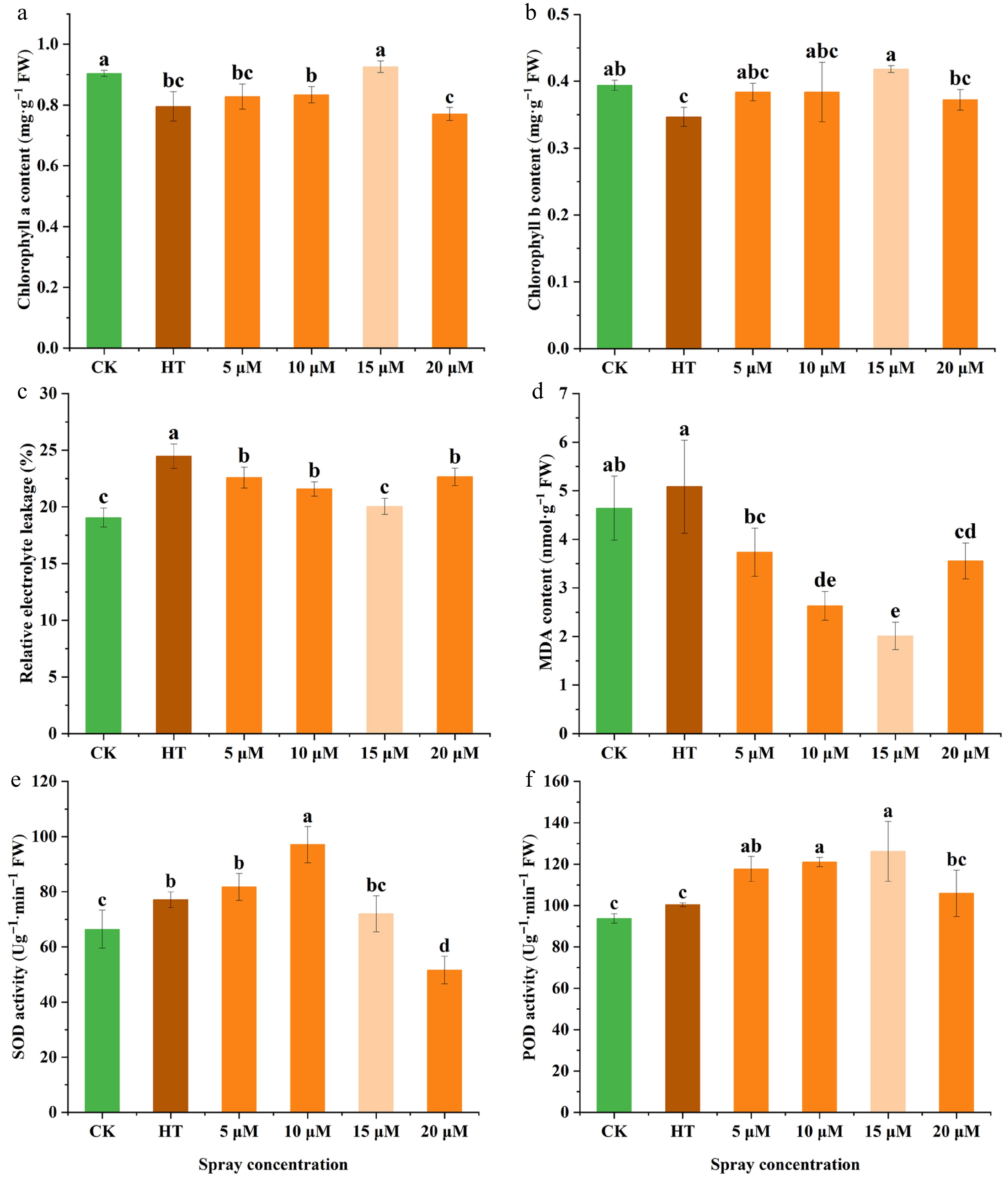
Figure 2.
Effects of pre-spraying with different concentrations of GR24 on the physiological properties of carnation seedlings under HS. (a) Chlorophyll a content. (b) Chlorophyll b content. (c) Relative electrolyte leakage. (d) MDA content. (e) SOD activity. (f) POD activity. Data shown as mean ± SD, and different letters indicate significant differences (p < 0.05).
-
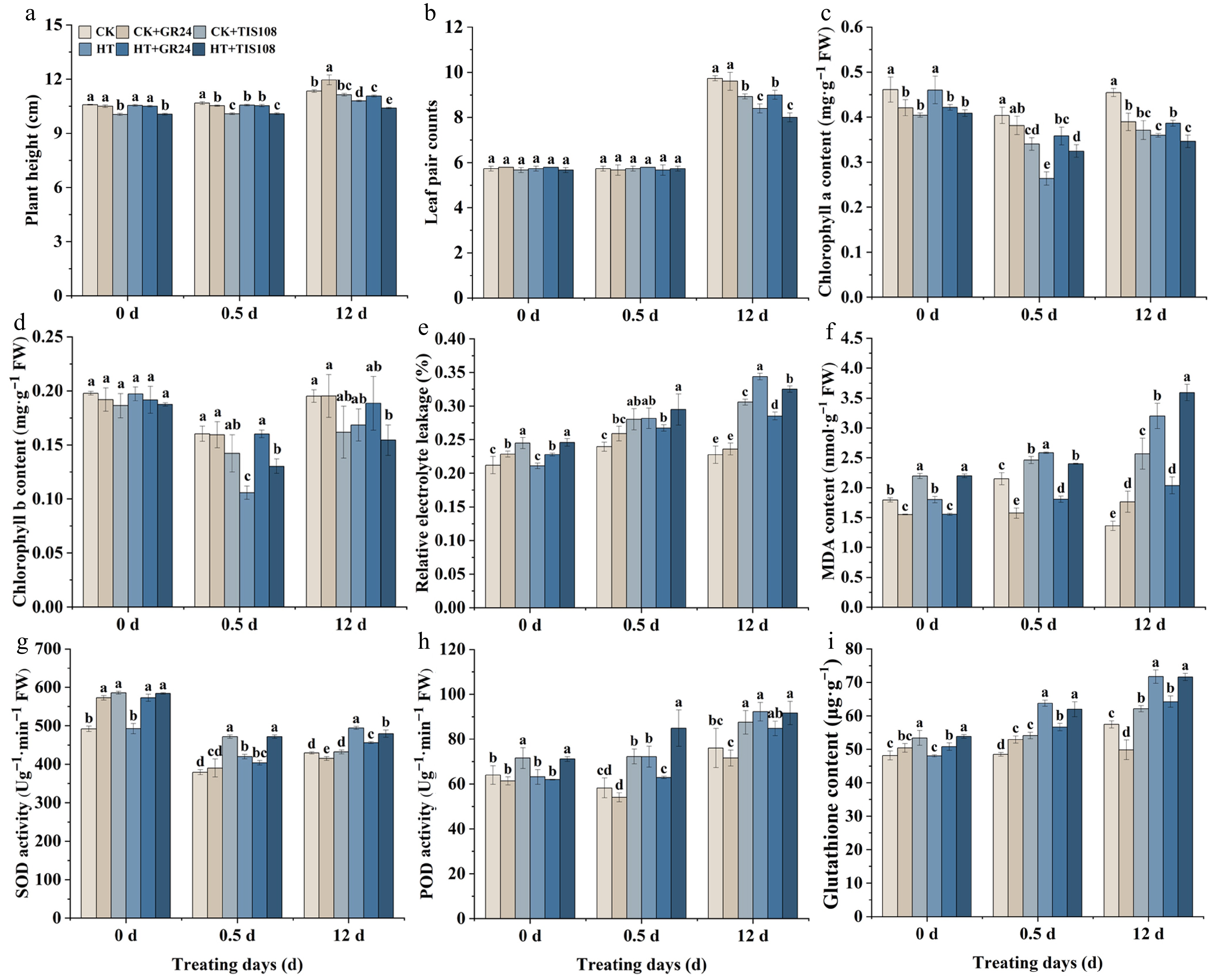
Figure 3.
Effects of pre-spraying with GR24 and TIS108 on the growth and physiological properties of carnation seedlings under HS. (a) Plant height. (b) Leaf pair counts. (c) Chlorophyll a content. (d) Chlorophyll b content. (e) Relative electrolyte leakage. (f) MDA content. (g) SOD activity. (h) POD activity. (i) Glutathione content. Plants were subjected to foliar sprays once daily for 3 d prior to the heat stress (HT) treatment and subsequently every three days during the 12 d HT period, with sampling conducted at 0 (pre-HT), 0.5, and 12 d of HT. Data shown as mean ± SD, and different letters indicate significant differences (p < 0.05).
-
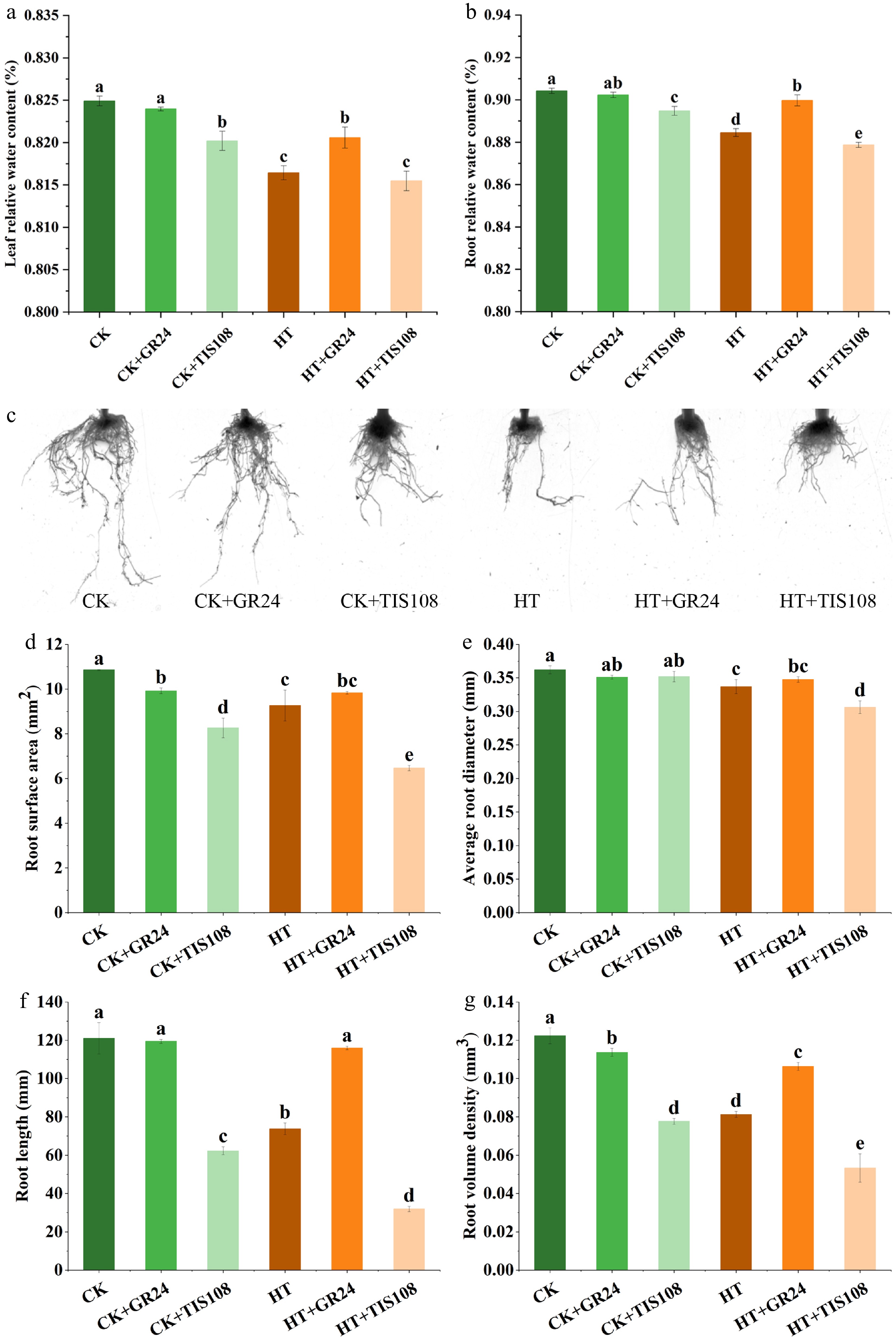
Figure 4.
Effects of pre-spraying with GR24 and TIS108 on relative water content and root systems of carnation seedlings under HS. (a) Leaf relative water content. (b) Root relative water content. (c) Root phenotype. (d) Root surface area. (e) Average root diameter. (f) Root length. (g) Root volume density. Data shown as mean ± SD, and different letters indicate significant differences (p < 0.05).
-
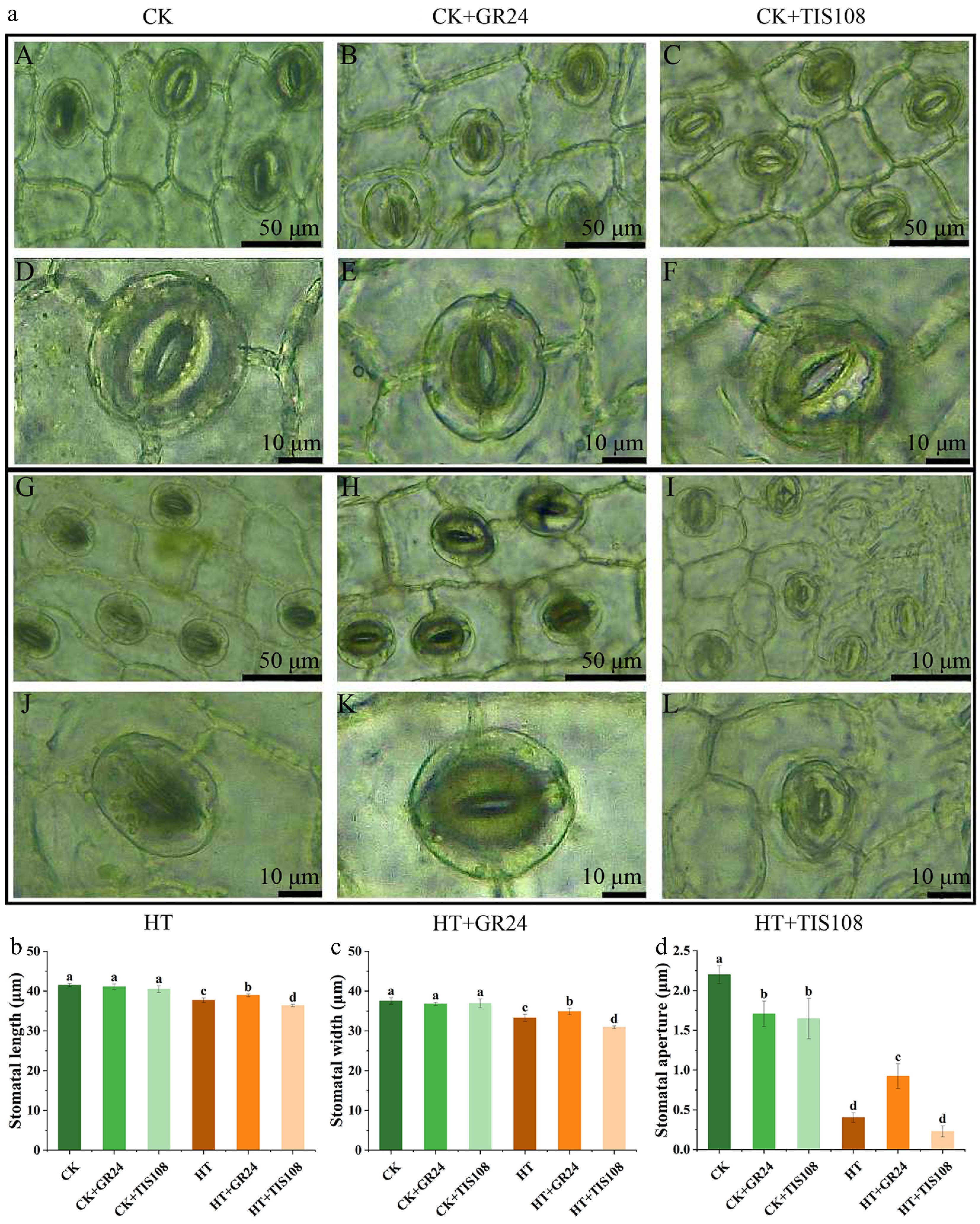
Figure 5.
Effects of pre-spraying with GR24 and TIS108 on stomatal characteristics of carnation seedlings under HS. (a) A, D: CK; B, E: CK+GR24; C, F: CK+TIS108; G, J: HT; H, K: HT+GR24; I, L: HT+TIS108. (b) Stomatal length. (c) Stomatal width. (d) Stomatal aperture. Data shown as mean ± SD, and different letters indicate significant differences (p < 0.05).
-
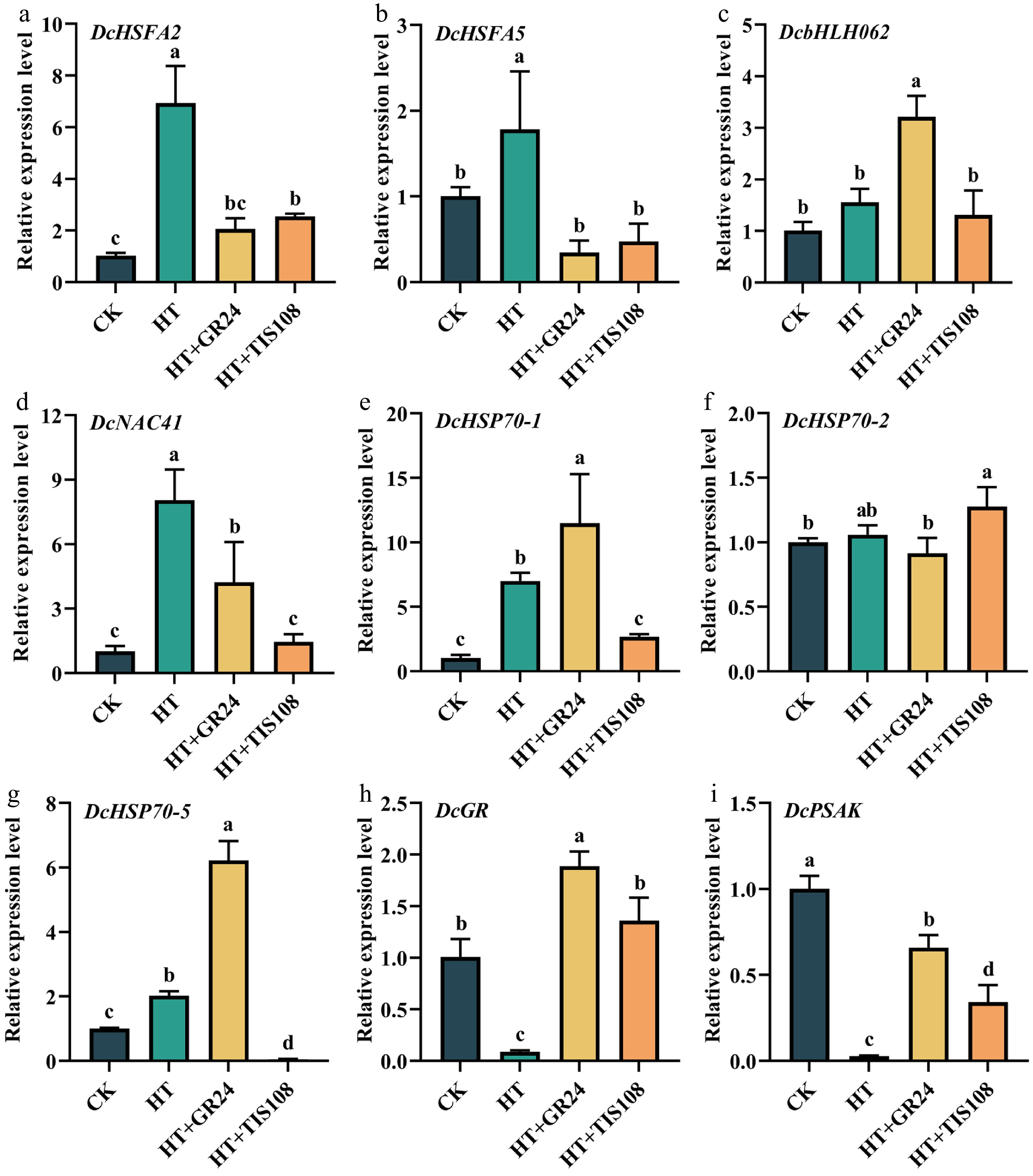
Figure 6.
Effects of pre-spraying with GR24 and TIS108 on gene expression of carnation seedlings under HS. (a) DcHSFA2. (b) DcHSFA5. (c) DcbHLH062. (d) DcNAC41. (e) DcHSP70-1. (f) DcHSP70-2. (g) DcHSP70-5. (h) DcGR. (i) DcPSAK. Data shown as mean ± SD, and different letters indicate significant differences (p < 0.05).
-
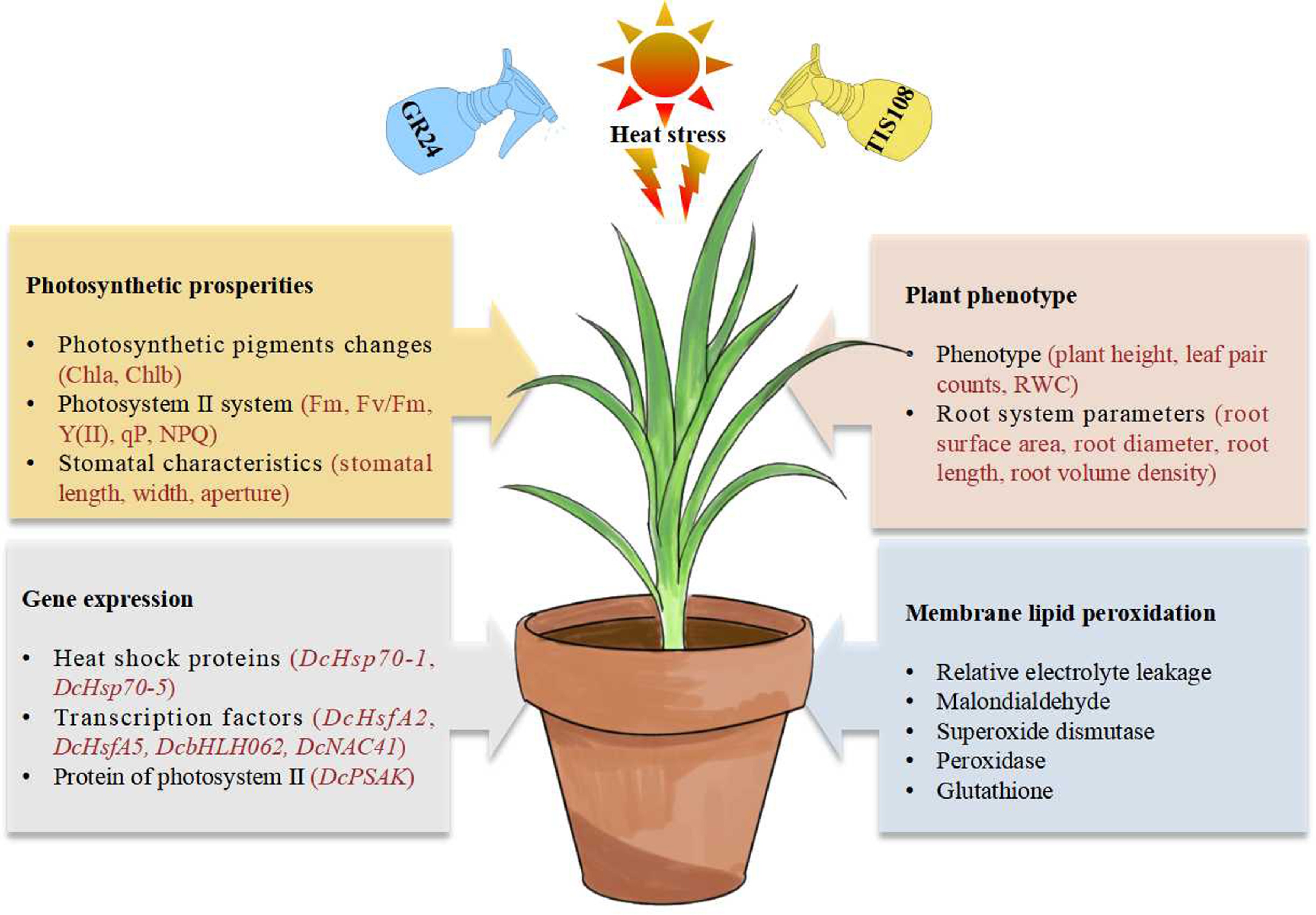
Figure 7.
Potential mechanisms of strigolactone in enhancing thermotolerance in carnation.
Figures
(7)
Tables
(0)