-
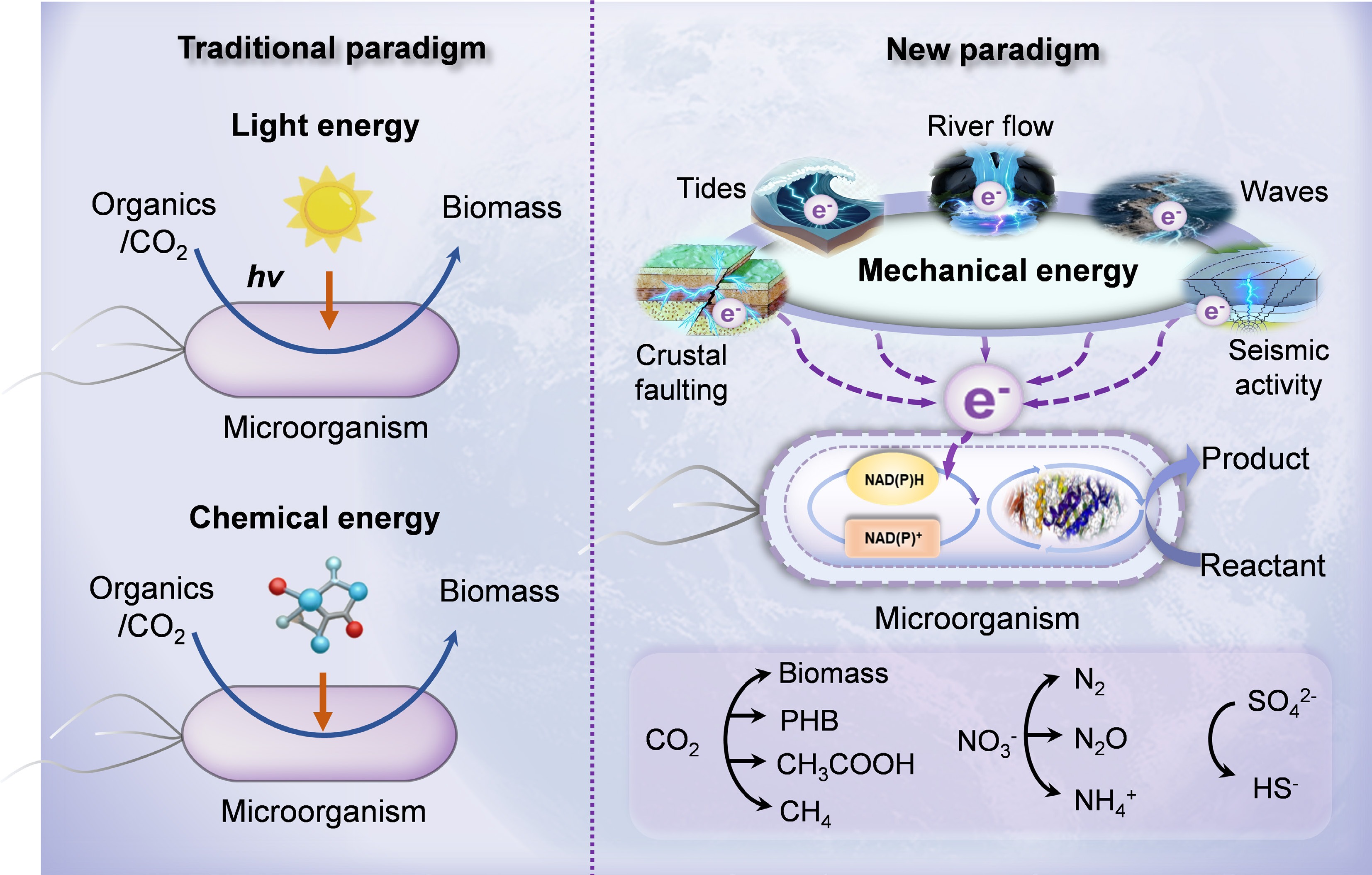
Figure 1.
Mechanical energy promotes the evolution of the conceptual paradigm for understanding biogeochemical cycles.
-
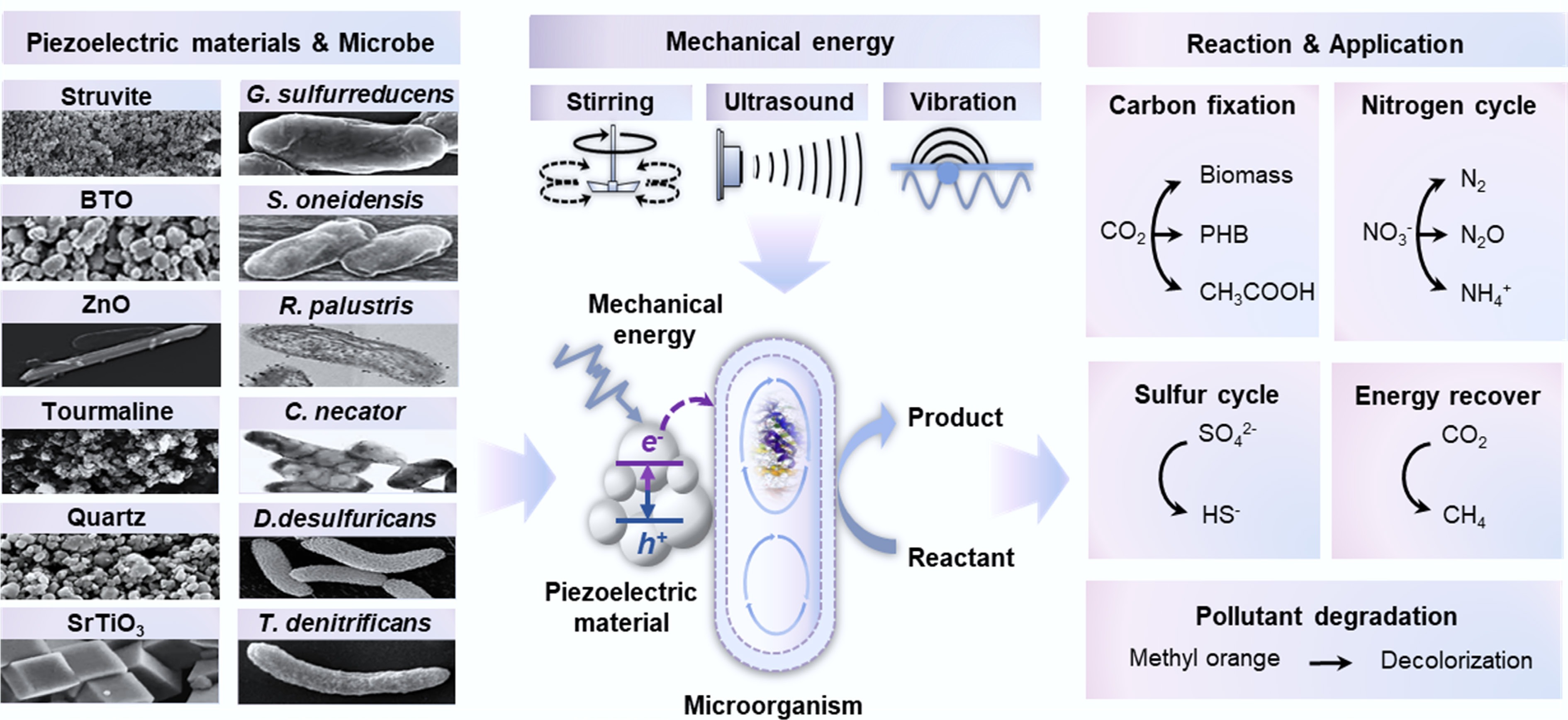
Figure 2.
Experimental evidence across systems.
-
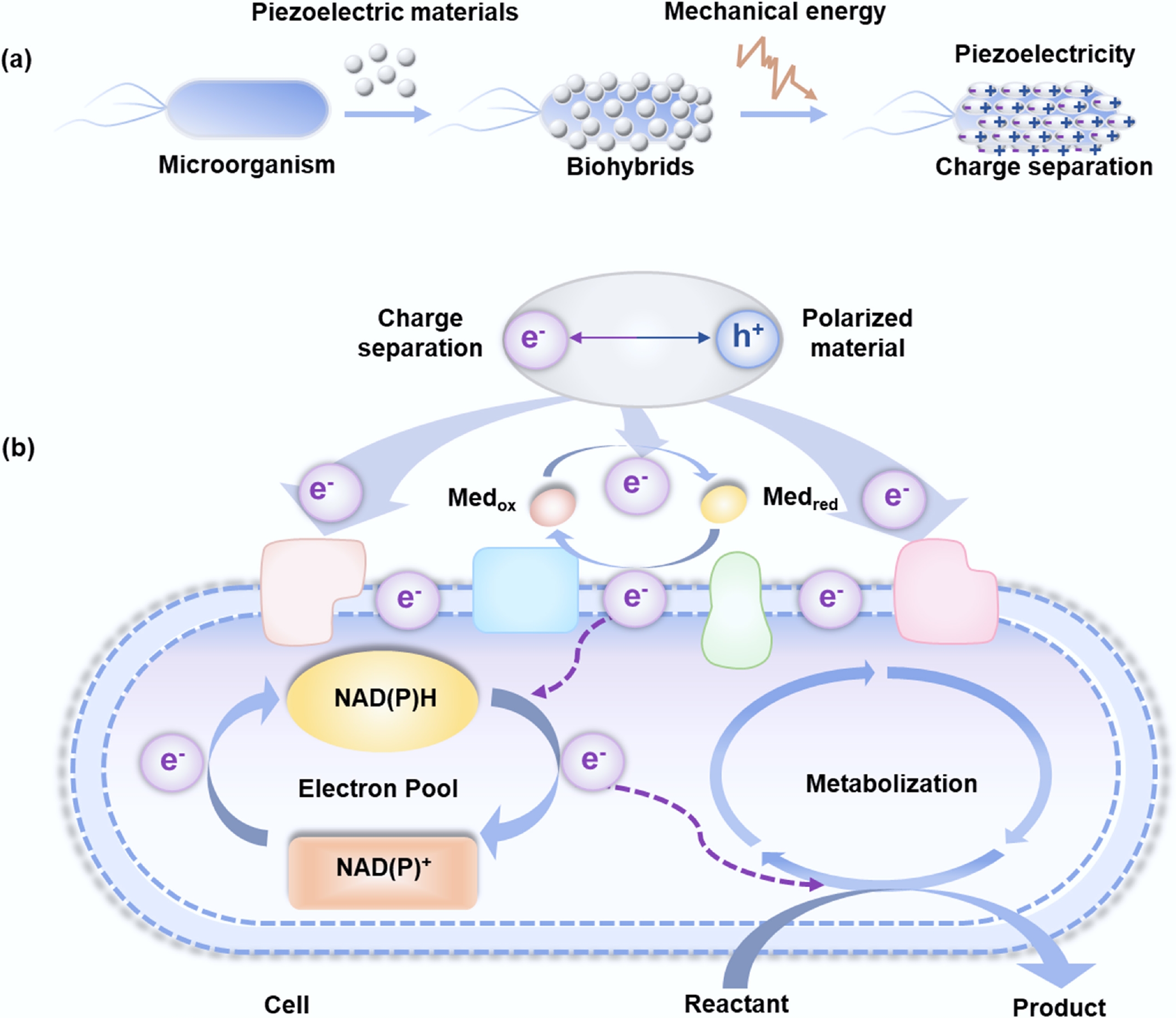
Figure 3.
Mechanism of the biohybrid piezoelectric system. (a) Construction and proposed principle of bio-piezoelectrical hybrid system. (b) Pathway diagram for proposed electron transfer in the biohybrid system.
-
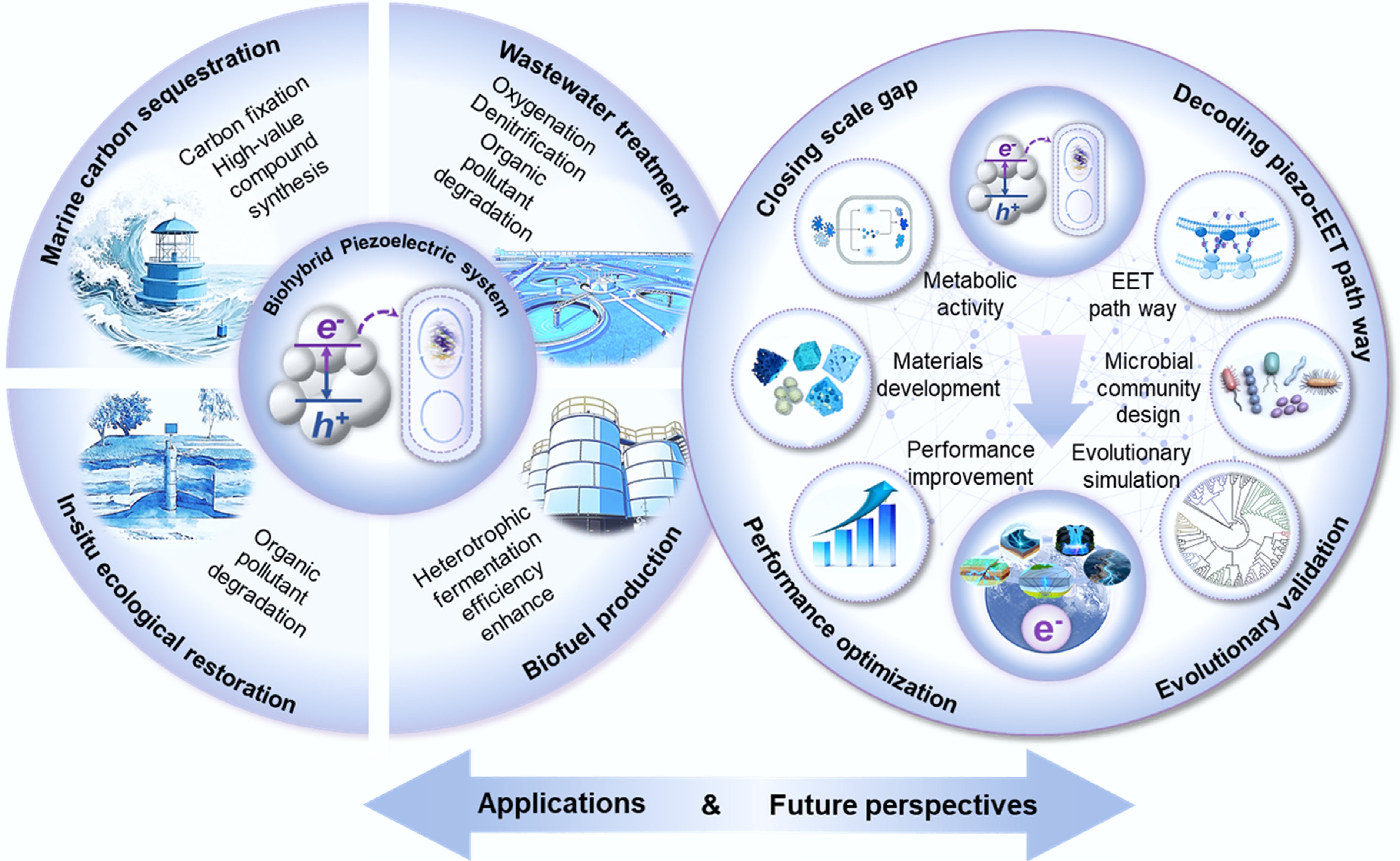
Figure 4.
Applications and future perspectives.
-
System function System composition Performance metrics Main limitations Ref. Piezoelectric material Microorganism Denitrification system Struvite Thiobacillus denitrificans 1. Achieved near 100% NO2− reduction in synthetic wastewater.
2. Enhanced nitrate removal rate by up to 117% in real wastewater treatment.
3. Mechanical to electrical energy conversion efficiency of 0.4%.1. The main product is N2O (~64.5%), a potent greenhouse gas, due to ROS inhibition of N2O reductase.
2. Relatively long reaction time (hours to days).[16] Multi-functional metabolic system Barium titanate (BaTiO3) Rhodopseudomonas palustris and other electroactive microorganisms 1. Drove carbon fixation, increasing biomass ~10 fold.
2. Achieved highly efficient NO3− reduction (near complete).
3. Successfully applied to various metabolic processes including CH4 production, SO42− reduction, and pollutant degradation.1. Broad but limited applicability: The process relies on the microorganism's ability for extracellular electron uptake and is ineffective for non-electroactive microbes (e.g., E. coli).
2. Alkaline conditions generated during piezoelectric transduction may create potential oxidative stress for cells.[18] Nitrate reduction to ammonia system ZnO Nanorods Shewanella oneidensis MR-1 1. NO3−removal efficiency: 97.97%.
2. NH4+ production rate: 40.2 μmol·L−1·h−1.
3. Stability: Maintained 93.4% activity after three cycles.1. Requires optimization of water flow rate (optimal 0.5 m·s−1).
2. High flow rates may cause separation of materials from cells.
3. Not yet validated in real wastewater.[19] Bioplastic synthesis system ZnO nanosheets Cupriavidus necator 1. Autotrophic culture: PHB production increased over 3-fold (reaching 1,093.5 mg·L−1), efficiency 2.4%.
2. Heterotrophic culture: PHB production doubled (reaching 8.2 g·L−1), efficiency 6.2%.
3. Significantly increased intracellular NADPH/NADP+ ratio.1. Ultrasound may cause physical damage to cells at high intensities or prolonged exposure.
2. H2 produced by piezoelectric materials is insufficient to explain all metabolic enhancement; the process relies on electron shuttles secreted by microorganisms.[52] Table 1.
Comparison of key bio-piezoelectric systems
Figures
(4)
Tables
(1)