-
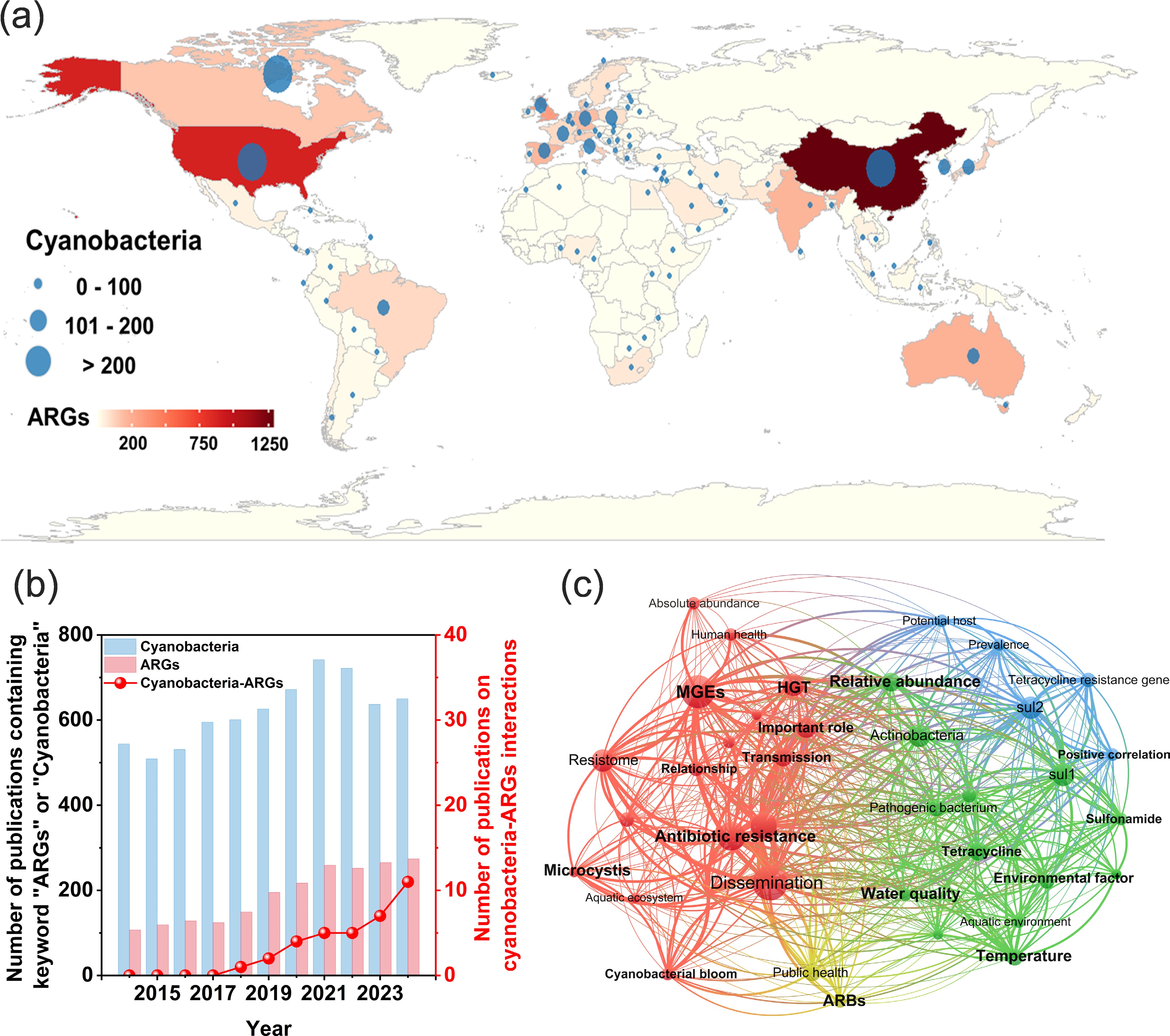
Figure 1.
Mapping the global co-occurrence patterns of eutrophication and ARGs based on cyanobacteria-ARGs-related studies and database integration. Global publication analysis on cyanobacteria and ARGs research: (a) Global distribution of publications related to cyanobacteria and ARGs. (b) Annual publication trends on cyanobacteria, ARGs, and their interactions in freshwater ecosystems. (c) Keyword co-occurrence network highlighting major research themes in the international literature.
-
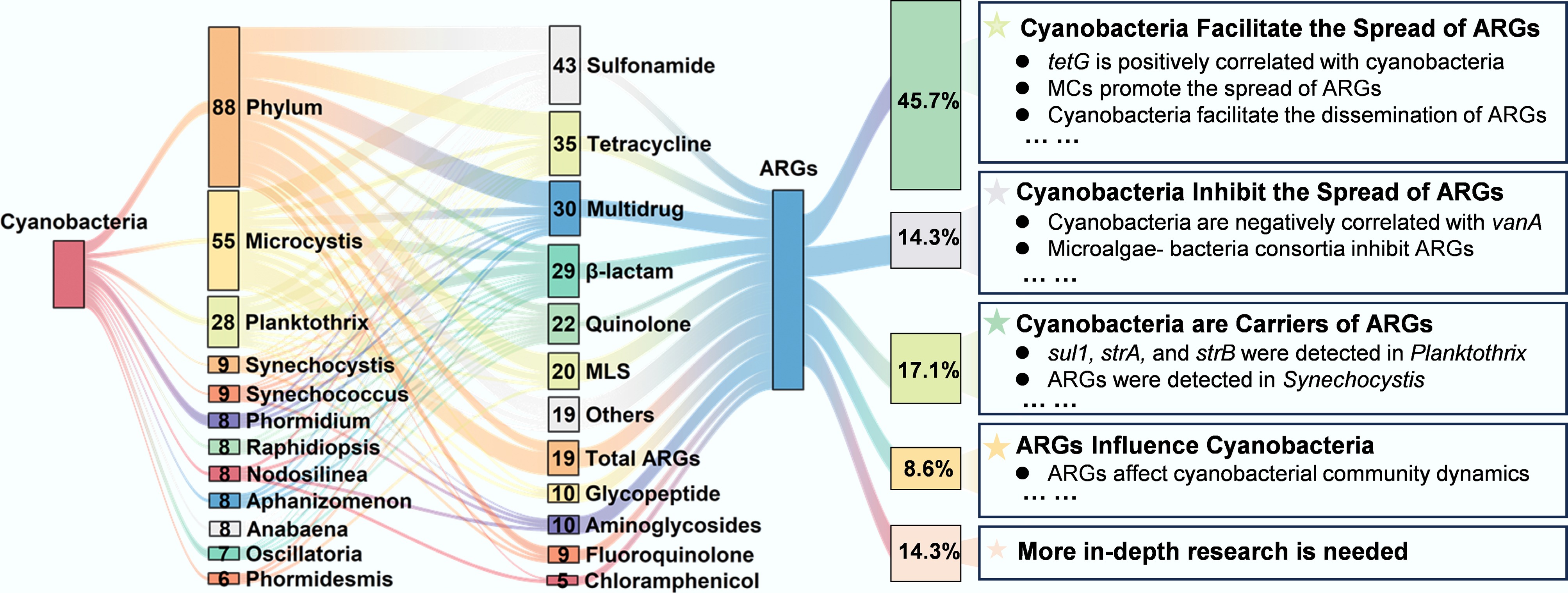
Figure 2.
Summary of interaction types and conclusions derived from current literature on cyanobacteria-ARGs relationships.
-
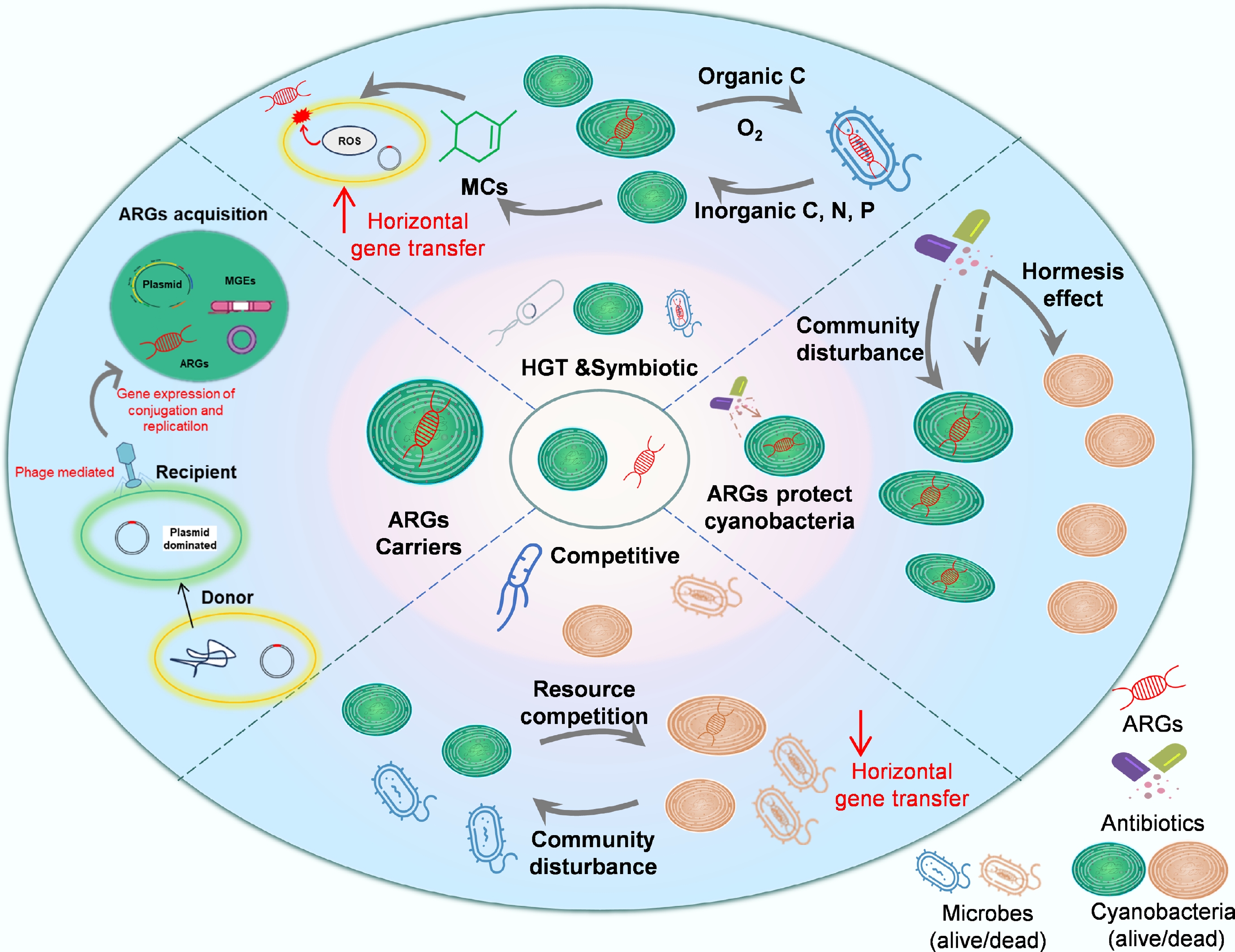
Figure 3.
Mechanisms of interactions between cyanobacteria and ARGs.
-
Cyanobacterial genus Physiological traits and ecological functions Mechanisms of interaction with ARGs Anabaena Produces microcystins (MCs), anatoxins, or cylindrospermopsin. Capable of nitrogen fixation and can withstand low nitrogen environments[51,52]. 1. MCs can induce oxidative stress in bacteria, leading to the generation of reactive oxygen species (ROS), which subsequently stimulate lysozyme activity and alter bacterial membrane permeability. Increased membrane permeability is considered one of the key factors that enhance the efficiency of ARGs transfer[30,53].
2. Neurotoxins may disrupt bacterial transmembrane potential, thereby increasing membrane permeability and facilitating the transformation of ARGs.
3. Extracellular polysaccharides secreted by toxin-producing strains can serve as carriers for ARGs transfer, while also acting as physical barriers that protect ARBs from antibiotic exposure.
4. During algal blooms, large amounts of dissolved organic matter (DOM) are released, providing carbon sources for heterotrophic bacteria carrying ARGs. Meanwhile, DOM may influence HGT among bacteria through QS mechanisms.
5. Cyanobacteria may suppress the spread of ARGs by competing with ARG-hosting bacteria for resources, thereby reducing the abundance of ARG-hosting bacteria.Microcystis Production of MCs and anatoxins often forms harmful algal blooms[54,55]. Oscillatoria Some species produce MCs or neurotoxins, which are widely distributed[56,57]. Planktothrix Produces MCs, widespread in freshwater lakes[58]. Nodularia Some species produce Nodularin or MCs, and nodularin inhibits protein phosphatase synthesis[59,60]. Aphanizomenon Capable of nitrogen fixation, often forming large-scale algal blooms, can produce MCs[52,61]. Cylindrospermopsis Nitrogen fixation, production of cylindrospermopsin or MCs by some species[62,63]. Gloeotrichia Forms buoyant clusters capable of nitrogen fixation and can produce MCs[64]. Phormidium Some species produce neurotoxins[65]. Raphidiopsis Some species produce toxic substances[66]. Dolichospermum Capable of nitrogen fixation[67]. Lyngbya Some species produce toxic substances[68]. Table 1.
Common bloom-forming cyanobacterial genera in freshwater ecosystems
Figures
(3)
Tables
(1)