-
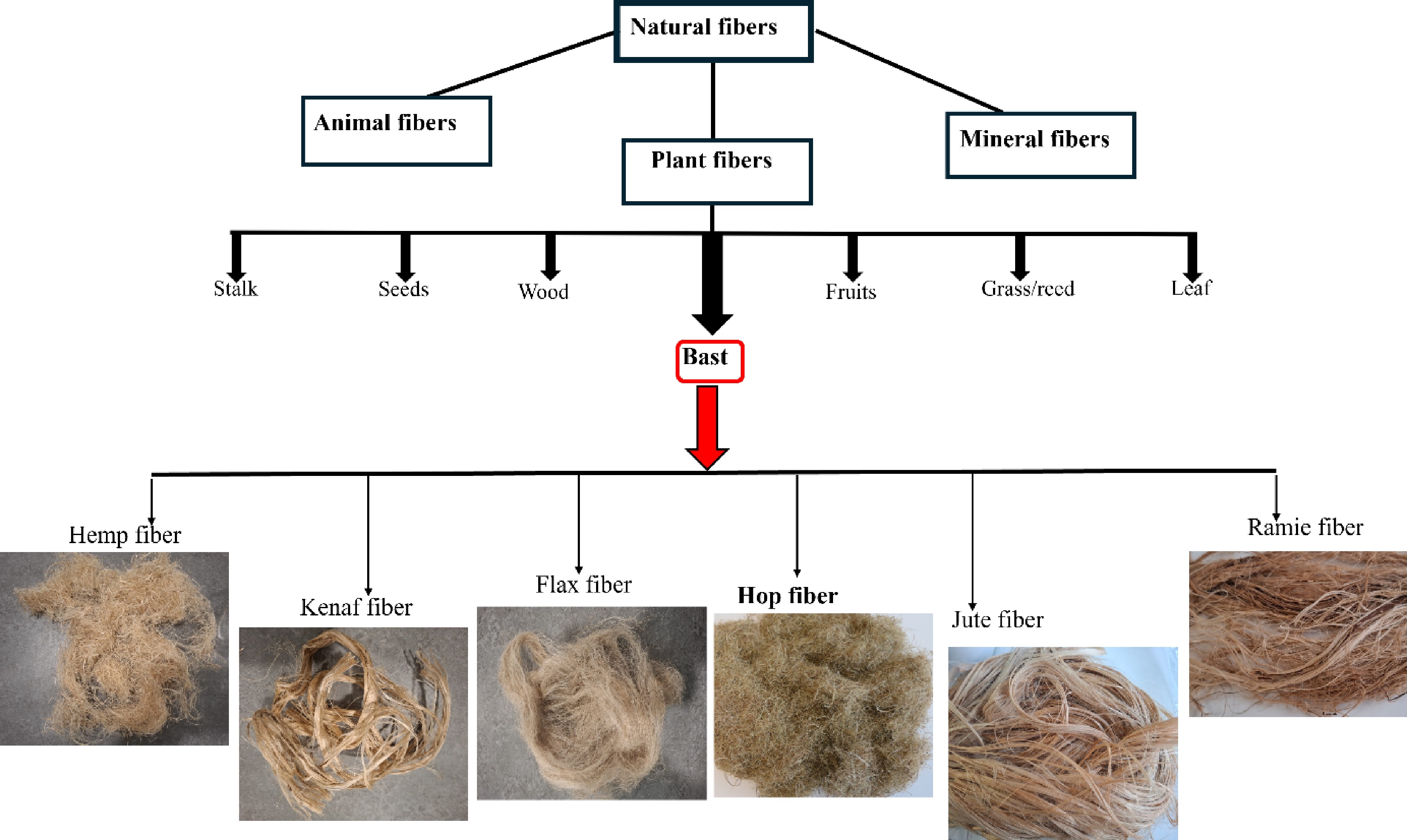
Figure 1.
Chain of natural fibers focusing on bast fibers, especially hop[2]. Images obtained at Lorraine University (LERMAB Laboratory).
-
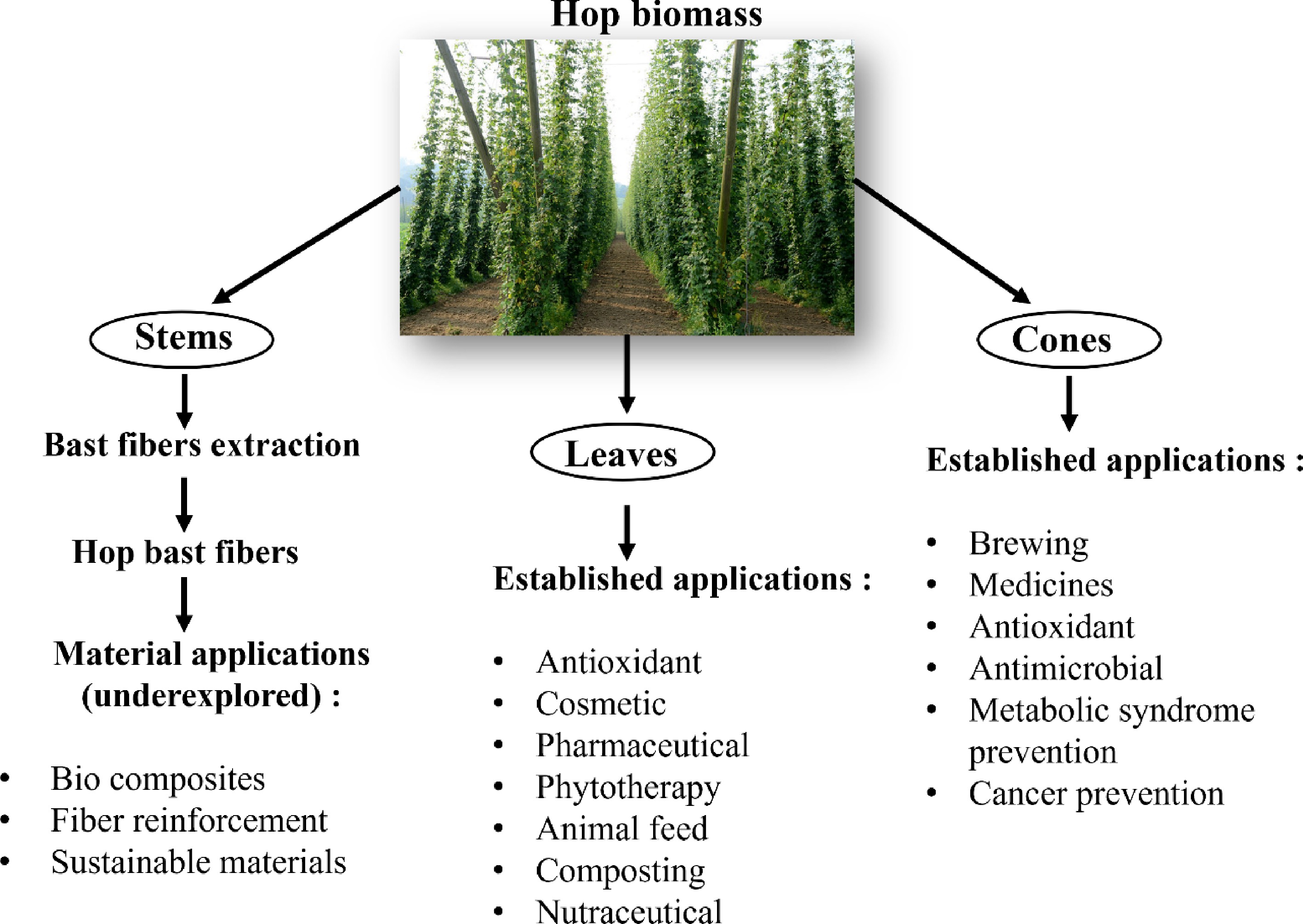
Figure 2.
Hop biomass valorization and applications[9]. Image obtained from the agricultural center in Obernai, Alsace.
-
-
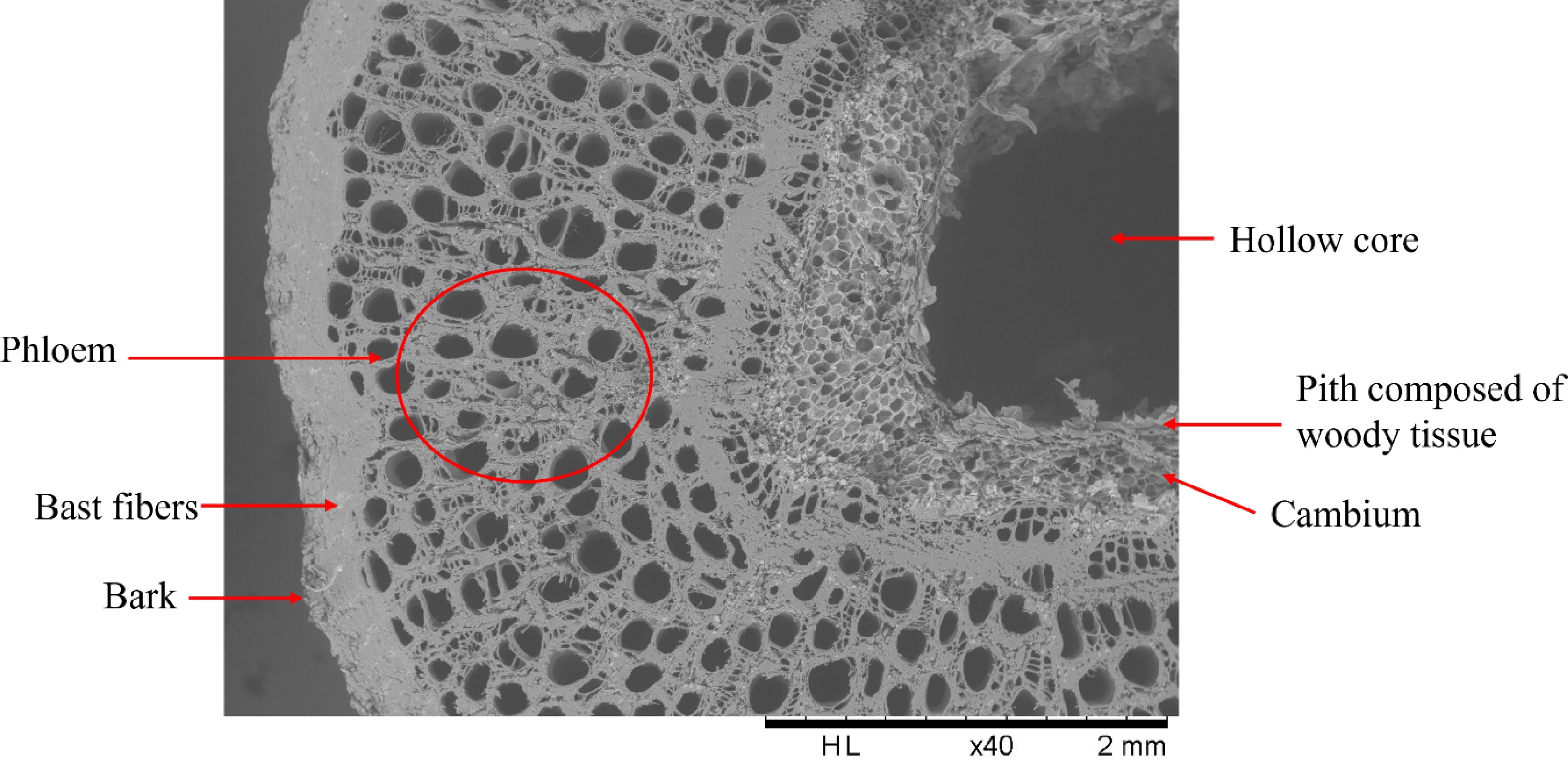
Figure 4.
SEM image of a cross section of hop bine. Image from Lorraine University, LERMAB laboratory.
-
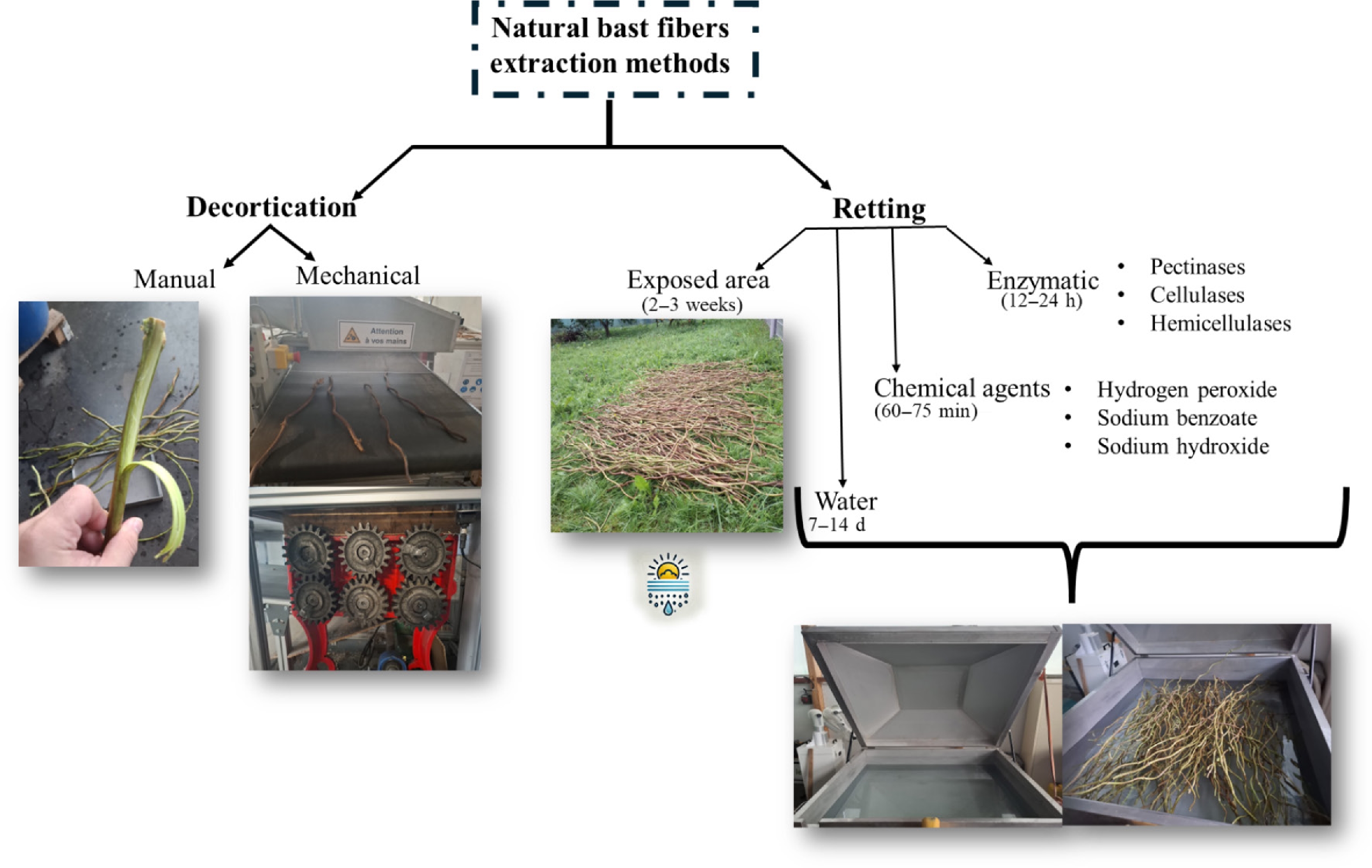
Figure 5.
Schematic representation of the different methods for bast fibers extraction[33]. Images obtained at Lorraine University (LERMAB Laboratory. The hop biomass used in this study was sourced from the agricultural center in Obernai, Alsace.
-
Characteristic Hop Hemp Flax Nettle Fiber diameter (µm) 5−60 15−70 10−50 10−40 Fiber length (mm) Maximum: 85 − − − Cross-section shapes Oval, polygonal, flattened Polygonal Polygonal Polygonal Herzog test Z-twist Z-twist S-twist S-twist Crystal druses size (µm) Maximum: 10 − − − Swelling in cuoxam Slow, irregular, retains structure Uniform, slower than flax Fast, complete dissolution Fast, complete dissolution Table 1.
Characteristics of hop fibers, compared to hemp, flax, and nettle fibers adapted from Lukešová et al.[44].
-
Type of fiber Cellulose
(%)Lignin
(%)Hemi-cellulose
(%)Pectin
(%)Physical properties Tensile strength (MPa) Young's modulus (GPa) Elongation at break (%) Ref. Hop 45.96 20.35 10.44 − 580 − 2.5 [26] Flax 70−85 2 11−20 2−12 345−2,000 15−80 1.2-3.2 [47–49] Kenaf 60.46−66.24 14.57−19.24 12.60−19.91 0.38−2.68 175−930 22.1−60 1.6 [50,51] Jute 58−63 12−15 20−24 3.9 345−1,500 2.7−12.6 7.8−8 [52–54] Ramie 72 0.6−0.8 5−16.7 2 400−938 61.4−128 1.2−3.8 [47,55] Hemp 53−91 1−21 4−18 1−17 550−900 70 1.6 [56,57] Table 2.
Chemical composition and physical properties of some bast fibers including hop, data compiled from Limosin et al.[26] and other sources as indicated in the reference column.
-
Method Efficiency Fiber yield Environmental impact Fiber quality Ref. Water retting Moderate (7−14 d) Relatively high Moderate (High water use + wastewater) Moderate strength and good fineness [59] Enzymatic retting Moderate/slow (12−24 h) Moderate Low (enzymes are biodegradable) High quality, soft and fine fibers [33,60] Alkali treatment Fast (1−2 h) Moderate/low Very high (chemical use and wastewater) Strong, very clean, and high crystallinity [33,61] Mechanical Very fast (immediate) Low Very low (no chemicals or wastewater) Coarse and less spinnable fibers [60] Steam explosion Fast (5−30 min) High Low (steam based) Fine and strong fibers but short [26] Table 3.
Comparison of different bast fiber extraction methods based on efficiency, yield, environmental impact and fiber quality.
Figures
(5)
Tables
(3)