











-
The demand for natural fibers is increasing steadily as researchers discover their significance as sustainable and viable materials for innovative applications[1]. Usually, the fibers extracted from plants offer several advantages over synthetic fibers, such as eco-friendliness[2], lightweight[3], sustainability[4], and reusability[5]. The growing emphasis on sustainable practices has intensified the exploration of various plant sources for natural fibers, including the often-overlooked agricultural byproducts[6]. Natural fibers are classified based on their botanical origin[7,8], with bast fibers derived from the phloem (inner bark) of dicotyledonous plants being a prominent category. Common sources of bast fibers, as illustrated in Fig. 1, include flax (Linum usitatissimum), hemp (Cannabis sativa), jute (Corchorus spp.), kenaf (Hibiscus cannabinus), hop (Humulus lupulus), and ramie (Boehmeria nivea). In contrast, fibers such as cotton (seed fiber), sisal (leaf fiber), and coir (fruit fiber) do not belong to the bast fiber category as they originate from different parts of the plants[7,8]. These distinctions show the diversity of natural fibers, each possessing unique characteristics and applications depending on its source. Bast fibers are valuable for their abundance, morphology, and strength[5], making them suitable for textiles, composites, and other industrial applications[9,10].
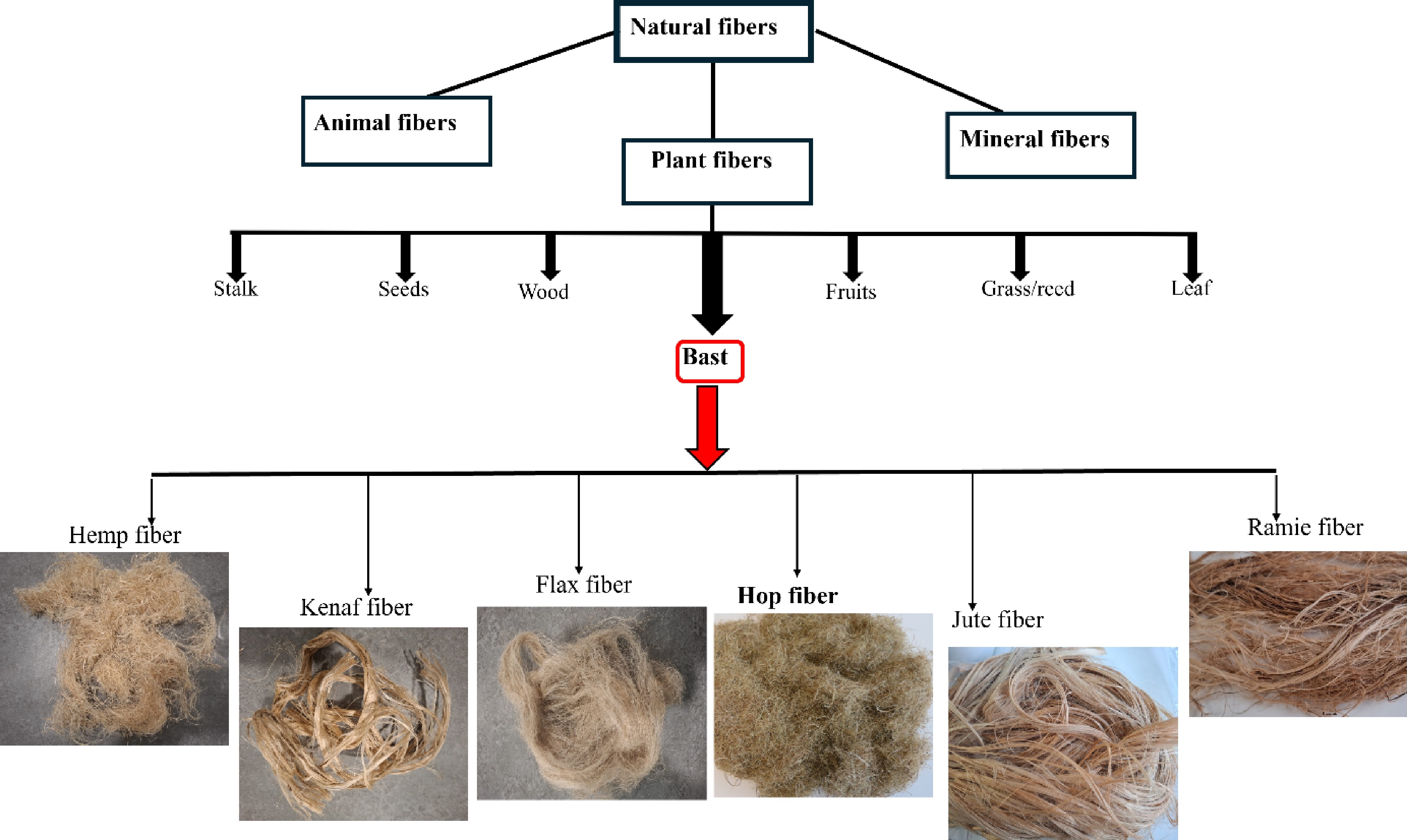
Figure 1.
Chain of natural fibers focusing on bast fibers, especially hop[2]. Images obtained at Lorraine University (LERMAB Laboratory).
Bast fiber production varies worldwide according to the following reported outputs: flax (Canada, France, Belgium)—830 × 103 tons[11], hemp (France, China, Philippines)—214 × 103 tons[12], jute (India, China, Bangladesh)—2,300 × 103 tons[12], kenaf (India, Bangladesh and USA)—970 × 103 tons[12], ramie (China, Brazil, Philippines and India)—100 × 103 tons[12]. Peer-reviewed literature also highlights that European flax farmland increased by around 133% between 2010 and 2020, reaching a flax production of 876,000 tons in 2022, with France contributing with 75% of this output[13]. Furthermore, hemp fiber production increased from 97,130 tons in 2015 to 177,430 tons in 2022, representing an increase of 84% in Europe, and globally, this production reached ~200,000 tons in more than 60 countries[13]. On the other hand, China produced 73,000 tons in 2024 and is expected to reach 117,000 tons in 2028, according to the projected compound annual growth rate (CAGR), which is estimated above 10%[13]. The extensive use and low environmental impact of such fibers highlight their economic and ecological importance[14,15].
The market reports indicate a solid upward trend for bast fibers across textiles and composites[16,17]. Specifically, the global bast fiber (such as flax, hemp, jute, ramie, and kenaf) market was valued at approximately USD 1.9 billion in 2023, with a projected CAGR of 7.5% during that year[16,17]. For example, in North America, this market reached USD 0.57 billion in 2023 and is expected to grow at a CARG of 6.2% between 2023 and 2030[17].
The apparel sub-segment is also expanding rapidly, with a market value of USD 2.5 billion in 2023, expected to reach USD 4.3 billion by 2032 (CAGR of 6.4%)[18]. This trend, driven by increasing demand, will inevitably require higher production of bast fibers. In addition, the global natural-fiber composites market, largely reliant on bast fibers, reached about USD 9.44 billion in 2024 and is projected to grow at a compound annual growth rate of roughly 12% from 2025 to 2030[16]. Despite this fast market growth, bast fiber production derived specifically from hop plants remains largely undocumented in the literature, highlighting an underexplored opportunity for the valorization of hop agricultural residues.
The hop plant (Humulus lupulus) is traditionally cultivated for its cones, which are essential to the brewing industry and other applications illustrated in Fig. 2[19,20].
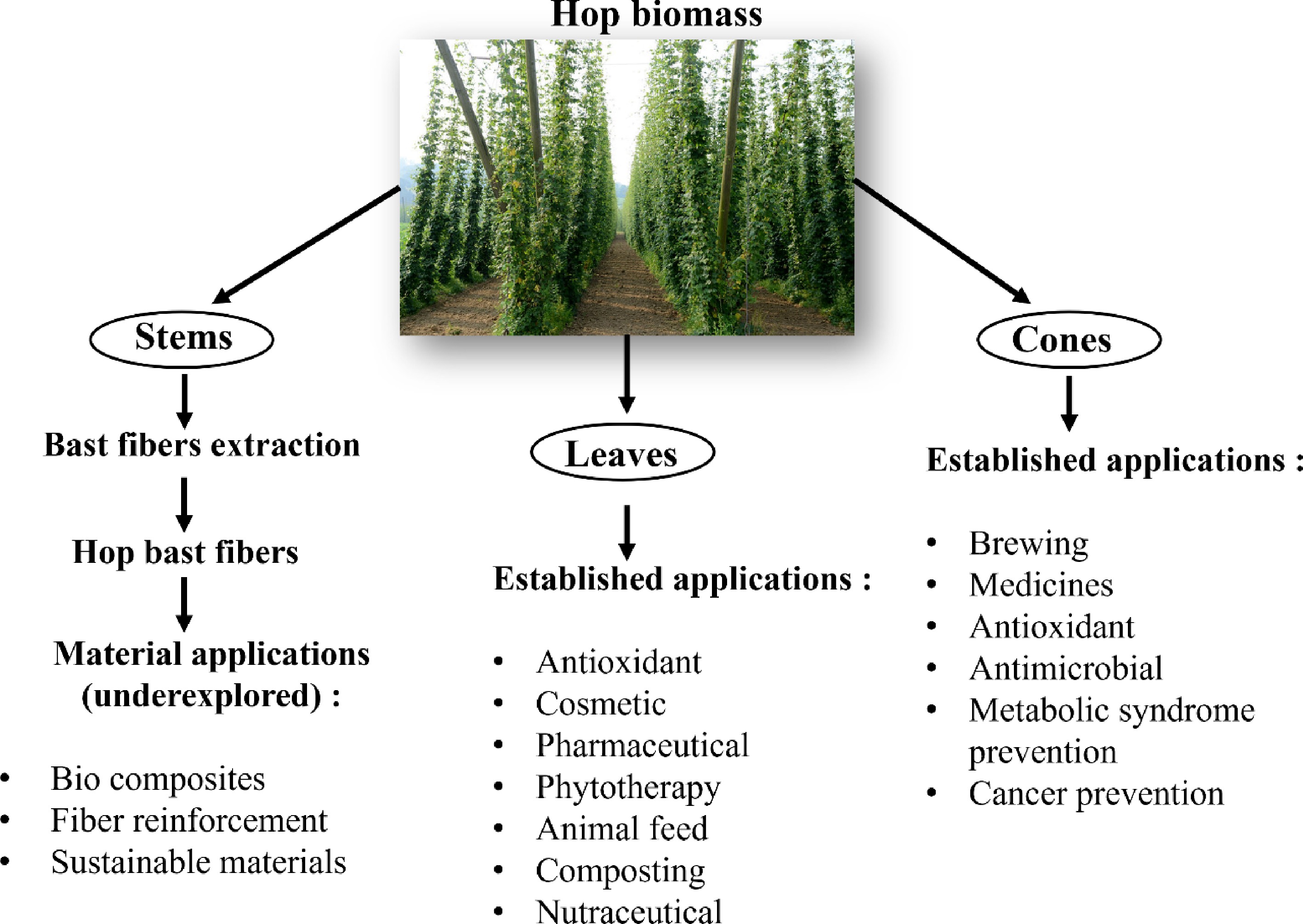
Figure 2.
Hop biomass valorization and applications[9]. Image obtained from the agricultural center in Obernai, Alsace.
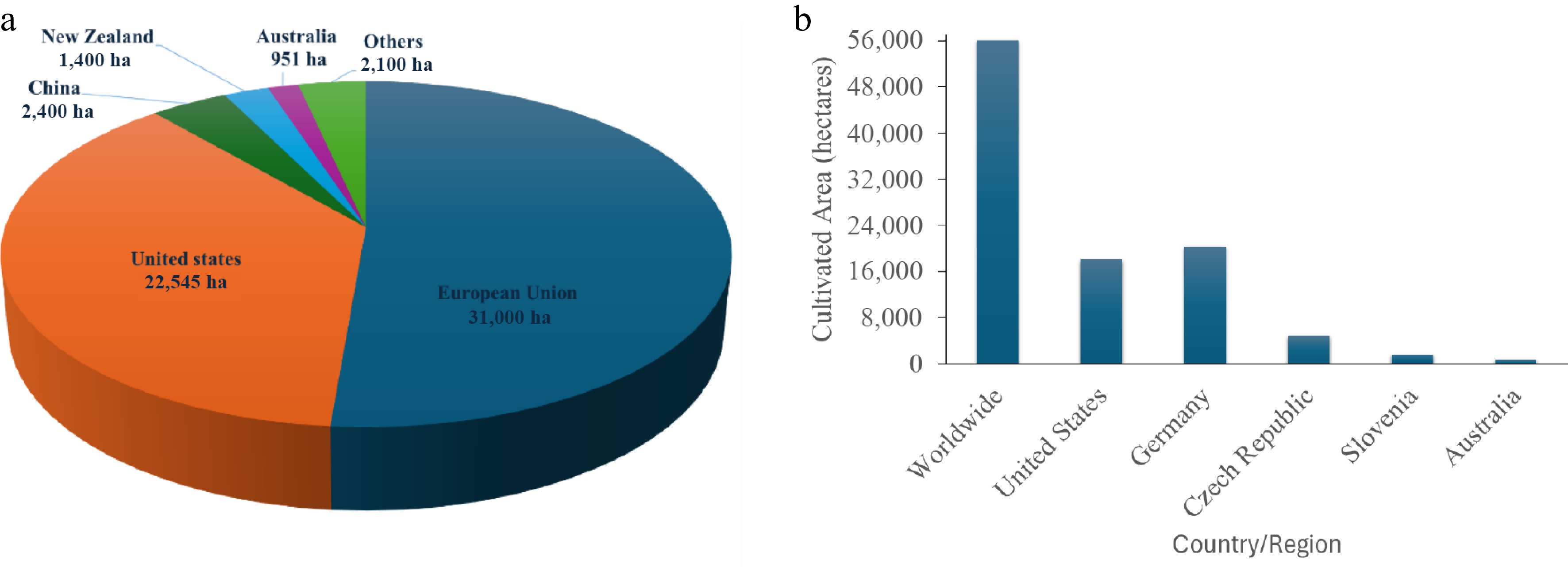
Hop plants thrive very well in temperate zones, particularly in Central Europe, where nitrogen-rich and humid environments favor their growth, and can reach heights of up to 10 m[21,22]. These plants are commonly recognized as climbing perennials, characterized by rhizomes and a peak growing period from June to September. According to the Barth Haas report, Fig. 3a[23,24], Europe led global hop production in 2023, with a hop cultivated area of 3,100 hectares (ha). With 22,545 ha, the United States ranked second, followed by China, which ranked third with 2,400 ha. Other notable hop-producing regions include New Zealand (1,400 ha), Australia (951 ha), and others (2,100 ha). In 2024, global hop producers harvested approximately 113,528 metric tons of hops across 55,715 ha, benefiting from improved per-hectare yield efficiency (averaging ~2.04 t/ha) and strong performance across major growing regions[25]. As shown in Fig. 3b, Germany had the largest cultivated area with 20,289 ha, followed by the United States with 18,026 ha. The Czech Republic maintained 4,852 ha of cultivation, preserving its status as a significant European hop-grower. Slovenia supported global output with around 1,641 ha dedicated to hop production. In the southern Hemisphere, Australia achieved substantial results, cultivating 670 ha[25]. Together, Germany and the United States supplied around 76% of total output, with Germany alone contribution 41%, marking a notable leadership position in world hop production. Beyond these two leading nations, several other countries made meaningful contributions to the global supply. Veritable balance in the 2024 harvest was well maintained: roughly 53% of the crop comprised aroma hops, with the remaining 47% classified as bitter hops, reflecting the needs of the diverse brewing industry[25].
Hop plants also produce significant quantities of stems and leaves[26]. The leaves have generated interest for their applications in pharmaceuticals, cosmetics, eco-friendly pesticides, and other applications[27] (Fig. 4). However, the ability of hop fibers obtained from the stems remains poorly explored. This overlook represents a missed opportunity to valorize the plant's full potential. Adopting an integrated approach that utilizes all parts of the hop plant could minimize agricultural waste, promote sustainability, and increase the profits of hop farming. Additional research concerning the properties, extraction methods, and potential applications of hop bine fibers could unlock innovative applications and enhance renewable material practices across various fields.
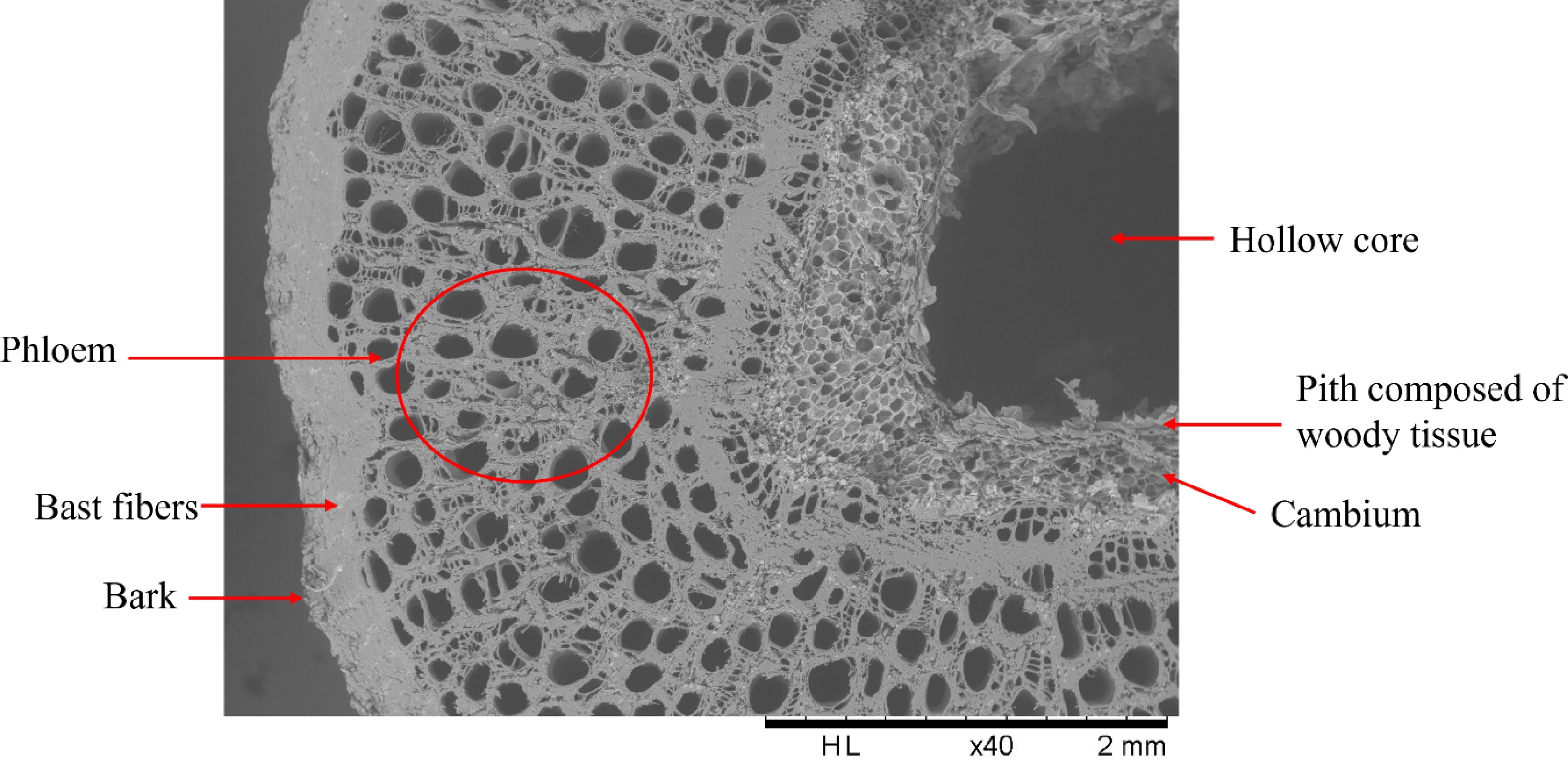
Figure 4.
SEM image of a cross section of hop bine. Image from Lorraine University, LERMAB laboratory.
The fibers presented in the Hop plant offer a big challenge and methods for their extraction. These fibers are located between the bark and the woody core[26], bound together by a natural adhesive known as pectin[28,29]. As shown in Fig. 4, an anatomical analysis of a crop-section of hop bine using a scanning electron microscope (SEM), showing the bark, bast fibers, phloem, cambium, pith composed of woody tissue, and hollow core. These observations were confirmed by Limosin et al., whose work on hop fibers presented similar morphological characteristics[26].
These fibers, like other lignocellulosic plants, have important properties, which lead to the development of sustainable materials[30]. Currently, hop bine remains non-valorized, usually discarded as agricultural waste after cone harvesting. This biomass represents an unutilized resource that matches growing environmental initiatives aimed at reducing agricultural waste and enhancing resource efficiency[31]. Usually, understanding the structural properties of natural fibers, especially those from hops, could open the door for further application and development of advanced materials. Natural fibers generally contain cellulose, hemicellulose, lignin, and minor extractives, with their mechanical properties influenced by the growth conditions, plant source, and extraction methods[32]. A broader knowledge of these characteristics in the hop fibers could facilitate opening the doors for new innovative uses, taking advantage of their strength, flexibility, availability, and biodegradability. This review investigates a comprehensive synthesis of the limited and fragmented research on hop bines, comparing them with other various bast fibers, highlights their extraction processes, potential applications, and highlights the underexplored potential and outlines future perspectives for their sustainable valorization.
-
The extraction of natural fibers, particularly bast fibers, is a critical step in the production of high-quality fibers suitable for a wide range of uses[33]. Based on the literature, multiple extraction techniques are used, each presenting specific advantages and limitations, as illustrated in Fig. 5. Retting is a traditional process that involves the maceration of fibrous plant stems to biologically degrade the pectic bonds of the bast fibers and thus separate them from the woody material[33]. This process can be conducted using water, land-based, or chemical treatments[34], and it is commonly applied to bast fibers such as hemp, jute, and flax[35,36]. The positive part of the retting is its ability to yield fibers with enhanced strength and flexibility. Conversely, over-retting can diminish fiber strength, affecting the final product quality[37]. A more environmentally friendly alternative is the enzymatic extraction method, in which certain enzymes degrade non-fibrous plant components. This method is used to obtain good-quality fibers with low impurity content from plants like sisal and kenaf. Enzymatic extraction is more eco-friendly when compared to chemical treatments and provides precise control over the extraction process. It is sustainable and has gained traction for producing value-added fibers[34,38].
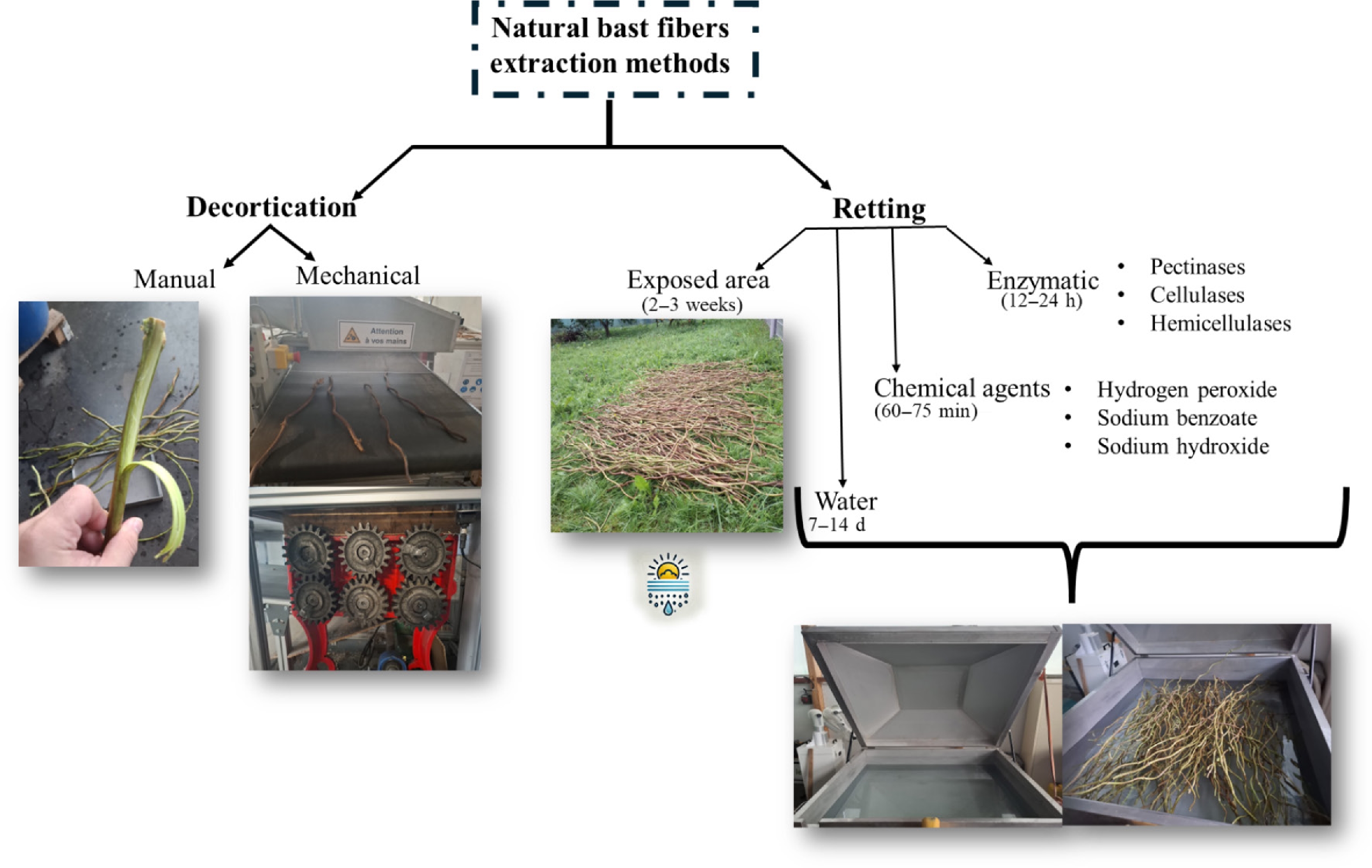
Figure 5.
Schematic representation of the different methods for bast fibers extraction[33]. Images obtained at Lorraine University (LERMAB Laboratory. The hop biomass used in this study was sourced from the agricultural center in Obernai, Alsace.
The decortication stage is necessary to add value to the bast fiber plants. This process involves the mechanical or chemical removal of the outer layers of the plant stem to expose the inner fibers. Mechanical decortication is more efficient for industrial-scale production due to its efficiency, and the chemical method is sometimes used to obtain superior fiber quality, depending on the plant species[39,40].
Each of these extraction methods offers advantages and drawbacks, and research continues to optimize these processes for improved fiber yield, quality, and environmental sustainability. Enzymatic and retting adhesive processes are optimized for cost-effectiveness and sustainability[40,41]. Mechanical decortication is developed and adapted to reduce energy consumption for large-scale production[42]. Growth of these advancements emphasizes the increasing importance of natural fibers in industries from textiles to high-performance composites materials.
-
Studies have shown that hop fibers were utilized in the past for textile applications. Skoglund et al.[43] conducted one of the first experimental studies examining hop fibers, focusing on two Swedish objects of cultural heritage, a 19th century women's garment from Jämtland and a textile fragment from an 18th century sample book. According to this study, the goal was to identify the type of fibers that were used in these textiles, mainly to detect hop fibers in such fabrics, as the existence of these fibers was proposed in archaeological sources but has never been confirmed directly through experiments. The research involved the characterization of those fibers with different analytical techniques, including polarized light microscopy for morphological analysis, the Herzog test for the microfibril orientation, and a microchemical cuoxam (Schweizer's reagent) test to assess fibrous swelling behavior. These methods were applied in accordance with a newly established identification protocol of hop fibers. The results of this study present notable characteristics for hop fibers, such as thickness variation ranging from 20 to 60 µm, a Z-twist microfibril structure, and irregular undulations in swelling patterns[43]. Furthermore, analysis indicated that the top section of the woman's garment is made entirely of hop fibers, while the bottom section is made from a mixture of hop and hemp fibers. The textile fragment was composed exclusively of hop fibers. This research provides the usage of hop fibers for the first time in historical textiles.
Lukešová et al.[44] worked on identifying and characterizing hop fibers in historical and archaeological European contexts, focusing on their distinction from other bast fibers such as flax, hemp, and nettle. The study used retting to extract fibers from hop plants gathered from the Botanical Garden of the University Museum of Bergen. The fibers from the base, middle, and top parts of the stems were analyzed using advanced techniques, including polarized light microscopy to observe fiber morphology and birefringence properties, the Herzog test to determine cellulose microfibril orientation, and micro-CT scanning to visualize the internal structure of hop bines. Furthermore, chemical analysis with Cuoxam (tetraamminediaquacopper dihydroxide) was performed to examine the swelling behavior of hop fibers in comparison to flax, hemp, and nettle.
As listed in Table 1, hop fibers exhibited notable differences from other bast fibers. For example, morphologically hop fibers presented a broader diameter range (varying from 5 to 60 µm) and attained a maximum of 85 mm. Furthermore, hop fibers exhibited a variable cross-sectional shape, such as oval, polygonal, or flattened. In contrast to hemp, flax, and nettle, only have a polygonal shape. The Herzog test of hop fibers displayed a Z-twist microfibril orientation, similar to hemp but different from nettle and flax fibers (S-twists). A significant crystal druse of up to 10 µm was found in hop fibers. Concerning the chemical test, hop fibers displayed slow and irregular swelling in cuoxam, differing from the uniform swelling of hemp, and the fast and complete dissolution of flax and nettle. This swelling behavior is related to the presence of internal protoplasm and rounded fiber edges. In conclusion, although the method used in this study for the identification of hop fibers from other fibers is destructive, the study allowed for the distinction of hop fibers from other bast fibers, emphasizing their unique characteristics[44].
Table 1. Characteristics of hop fibers, compared to hemp, flax, and nettle fibers adapted from Lukešová et al.[44].
Characteristic Hop Hemp Flax Nettle Fiber diameter (µm) 5−60 15−70 10−50 10−40 Fiber length (mm) Maximum: 85 − − − Cross-section shapes Oval, polygonal, flattened Polygonal Polygonal Polygonal Herzog test Z-twist Z-twist S-twist S-twist Crystal druses size (µm) Maximum: 10 − − − Swelling in cuoxam Slow, irregular, retains structure Uniform, slower than flax Fast, complete dissolution Fast, complete dissolution Although hop fiber was used centuries ago, it has gradually fallen into oblivion, and modern scientific literature rarely addresses it, reflecting limited interest in its current study and use. However, some studies have explored its extraction and properties. The main research studies are summarized below. The earliest documented attempt to modernize hop fiber exploitation dates to 1912, with a patent by Pierre-Eugène Delpeuch[45]. This development aims to use hops for textile applications by finding ways of extracting the fibers from hop stalks. The process involved harvesting hops, stems cut into uniform sections, and treating them with the water or steam retting process for better fiber separation. After that, the fibers were subjected to an additional treatment to enhance their resistance and coloration, followed by washing, drying, and mechanical processing like that used for hemp fibers. This process allowed the extraction of resinous gums, which have various applications, and led the researcher to explore hop fibers in textile applications and other industries.
Reddy & Yang[46] studied the mechanical properties of hop bine fibers in comparison with cotton and hemp. Hop fibers were extracted through an alkaline chemical process, obtaining fibers with high cellulose content (84%), moderate lignin content (6%), and low ash content (2%). These values are totally different from the values of Limousin et al.[26] which can be attributed to the different extraction methods used, as such processes strongly influence the chemical composition of natural fibers. Furthermore, these fibers showed a low crystallinity (44%) compared to hemp (81%−89%) and cotton (65%−70%) but exhibited an organized and aligned orientation of cellulose crystals. The hop fibers isolated in this study were coarser than cotton and had an average length of 11.5 cm, exceeding that of cotton (1.5–5.6 cm). Additionally, hop fibers exhibited a moisture regain of 8.3%, comparable to cotton (7.5%–8%) but lower than hemp (12%).
Limousin et al.[26] performed a study to explore the feasibility of hop bine as a novel fibrous bioresource. The processing and characterization of hop bine fibers were carried out using several approaches. First, hop stems were decorticated to obtain technical fibers and shives; subsequently, those were subjected to different degumming processes, including water retting, enzymatic hydrolysis, alkali treatment, and steam explosion. Chemical analyses, mechanical strength tests, and elongation studies (see Table 2) indicated that steam explosion resulted in the most effective process for defibration, reducing pectin and lignin content by ~70% while maintaining tensile strength around 500 MPa.
Table 2. Chemical composition and physical properties of some bast fibers including hop, data compiled from Limosin et al.[26] and other sources as indicated in the reference column.
Type of fiber Cellulose
(%)Lignin
(%)Hemi-cellulose
(%)Pectin
(%)Physical properties Tensile strength (MPa) Young's modulus (GPa) Elongation at break (%) Ref. Hop 45.96 20.35 10.44 − 580 − 2.5 [26] Flax 70−85 2 11−20 2−12 345−2,000 15−80 1.2-3.2 [47–49] Kenaf 60.46−66.24 14.57−19.24 12.60−19.91 0.38−2.68 175−930 22.1−60 1.6 [50,51] Jute 58−63 12−15 20−24 3.9 345−1,500 2.7−12.6 7.8−8 [52–54] Ramie 72 0.6−0.8 5−16.7 2 400−938 61.4−128 1.2−3.8 [47,55] Hemp 53−91 1−21 4−18 1−17 550−900 70 1.6 [56,57] Zee[9] explored how different methods of retting influence the characteristics of hop fibers as they relate to textile production on a small linear scale. Five extraction methods were compared: green processing, dry decortication, water retting, breaking and water retting, and dew retting. Each method is assessed based on fiber length, diameter, linear density, breaking tenacity, elongation at break, modulus, fiber yield, spinnability, and woven fabric character. Results demonstrated that different methods of retting influenced the quality and properties of hop fibers for textile production. Green processing generated fiber with a mean length of 116.83 mm and breaking tenacity of 11.16 centinewton per textile (cN/tex), turning them into the simplest spin and requiring a medium beat to weave. Warm water retting led to fibers with a mean length of 106.1 mm and breaking tenacity of 11.69 cN/tex, adequate for spinning and weaving with a medium beat. Breaking followed by warm water retting yielded the longest fibers, averaging 134.21 mm, with a break tenacity of 12.49 cN/tex. These fibers were accepted for spinning and required a hard beat for weaving. Dew retting produced shorter fibers, averaging 79.42 mm, but with the highest breaking tenacity of 17.89 cN/tex. These fibers were more challenging to spin, and the resulting yarn required a medium beat to weave. The study concludes that, depending on the intended use, these retting methods can be utilized to produce woven and nonwoven textile materials from hop fibers, offering a suitable alternative for small-scale textile production[9].
In another study, hop fibers were used as natural and biodegradable reinforcement for developing an eco-friendly bio-composite, using the combination of hop fiber and a polymer matrix composed of poly(butylene succinate-co-butylene-adipate) (PBSA), grafted with maleic anhydride (MA) as a compatibilizer agent. A comparative analysis was carried out to study the difference after adding fibers and the compatibilizer to PBSA. Various characterization analyses were carried out, including mechanical tests (i.e., tensile strength, flexural strength, and impact strength), morphological analysis, thermogravimetric analysis, differential scanning calorimetry, dynamic mechanical analysis, and heat deflection temperature. Obtained results confirmed that the presence of MA enhanced the mechanical and thermal properties of the composite, with tensile strength increasing from 23.4 MPa (without MA) to 34.1 MPa (c with 5 wt% MA), flexural strength from 41.7 to 47 MPa, and the impact strength from 55.7 to 66.2 MPa, respectively. SEM results showed a strong interfacial bonding, in contrast to the composite without MA. Thermal stability and crystallinity also improved, highlighting hop fibers' potential in sustainable composite applications[58].
Another study investigated the utilization of hop fibers sourced from hop bines, as reinforcement for a biodegradable polymer, which is poly(butylene succinate-co-butylene adipate) (PBSA). The goal of this work is to evaluate the effect of different fiber lengths (0.25, 1, and 2 mm) on the thermal, mechanical, and rheological properties of the obtained composite. Firstly, hop bines were shredded, dried, and transformed into fibers with three different lengths as mentioned above. Bio composites were manufactured by mixing 30 wt% of hop fibers with 70 wt% of PBSA, using an injection molding process. Different characterizations were carried out, such as tensile strength, flexural strength, impact resistance, differential scanning calorimetry (DSC), thermogravimetric analysis (TGA), heat deflection temperature (HDT), scanning electron microscopy (SEM), and rheological measurements. Results displayed that the presence of hop fibers, especially the fibers with 1 mm length, enhanced specific properties of the composite. For example, with PBSA/1 mm, the tensile modulus increases notably to achieve 1,563 MPa, a 320% improvement compared to raw PBSA. As well as the flexural strength, reaching 41.8 MPa, an increase of 118% compared to the raw PBSA. In contrast, impact strength decreases in all composites, while PBSA/1 mm shows the best in this aspect. TGA analysis presents a significant decrease in onset degradation temperature from 351 °C (raw PBSA) to 305 °C (PBSA with 0.25, 1, and 2 mm fibers) because of the low stability of hop fibers, but the maximum degradation temperature increases from 414 °C (raw PBSA) to 433 °C (PBSA/ 0.25 mm fibers). Hop fibers alone degraded at 245 °C, showing, with the composite, a high-temperature stability. Thermal analysis showed an increase in crystallization temperature (Tc), from 63.5 °C in the raw PBSA to 67.7 °C for PBSA/2 mm. The HDT also showed a significant improvement for the composite with 1 mm hop fibers, recorded at 90 °C, compared to 61 °C for the PBSA alone. SEM analysis confirmed better matrix–fiber bonding and reduced fiber detachment for PBSA/1 mm composite. Rheological tests showed an increase in the viscosity of the composite because of the limited mobility in the polymer chain owing to the fiber presence. This study confirms that hop fibers can play an important and effective role in PBSA composites, with significant improvement in the mechanical and thermal properties, especially with the incorporation of 1 mm fibers. The enhancement in flexural and tensile strength puts hop fiber-reinforced PBSA as a prospective option for sustainable applications in biodegradable plastics[30].
Table 3 provides the main extraction techniques used for bast fibers; the comparison includes process efficiency, fiber yield, environmental impact, and resulting fiber quality.
Table 3. Comparison of different bast fiber extraction methods based on efficiency, yield, environmental impact and fiber quality.
Method Efficiency Fiber yield Environmental impact Fiber quality Ref. Water retting Moderate (7−14 d) Relatively high Moderate (High water use + wastewater) Moderate strength and good fineness [59] Enzymatic retting Moderate/slow (12−24 h) Moderate Low (enzymes are biodegradable) High quality, soft and fine fibers [33,60] Alkali treatment Fast (1−2 h) Moderate/low Very high (chemical use and wastewater) Strong, very clean, and high crystallinity [33,61] Mechanical Very fast (immediate) Low Very low (no chemicals or wastewater) Coarse and less spinnable fibers [60] Steam explosion Fast (5−30 min) High Low (steam based) Fine and strong fibers but short [26] These differences highlight that the choice of extraction method plays a key role in determining fiber composition, structure, and performance.
-
In summary, compared to other well-known natural fibers like hemp or jute, hop fibers are still largely underutilized, but based on their interesting mechanical properties, they can represent a sustainable alternative for the valorization of agricultural by-product waste. Additionally, their incorporation into biocomposites highlights their potential applications. The use of hop fibers supports a whole-plant valorization approach, extending the use of hop plants beyond their traditional role in the brewing industry and enabling their use beyond, by identifying value-added applications for different parts of the plant.
In future studies, priority should be given to optimization of the extraction methods, upgrading fiber properties by surface modification of hybridization, and moving through the industrial procedure of processed technologies. Moreover, collaboration between material scientists, engineers, and industrial partners may expedite the advancement of new hop fiber applications.
Composites reinforcement applications can be derived from hemp fibers, considering the utilization of hemp and kenaf as reinforcements of polymer composites for the automotive and construction industries. Meanwhile, composites with hemp fibers embedded into polypropylene matrices have been proven to create lightweight panels for automotive interiors[62]. Another study demonstrates that incorporating kenaf fibers into a polypropylene matrix significantly improved the composite's mechanical properties[63]. A concept that potentially could be duplicated with hop fibers in biodegradable polymers such as polylactic acid. Hop fibers could also be used in making panels in a similar manner to jute and kenaf, which are used as raw materials in medium-density fiberboards and other structural components. At the same time, jute fibers have been successfully applied in lightweight furniture and insulation, which suggests potential for hop fibers to be developed into soundproof panels, insulation boards, or lightweight construction components[64,65]. Additionally, hop fibers could be used in the production of paper and packaging, an area where flax and jute fibers have excelled, given that they are mainly composed of cellulose[66,67]. Lastly, exploring the biomedical potential of hop fibers might also be an idea, taking some inspiration from flax–reinforced composites, whose compatibility has led to their use in orthopedic implants and wound dressings[68]. Otherwise, there have been numerous studies regarding bast fibers such as hemp, jute, kenaf, and flax to obtain flame-retardant materials[64,65,69]. For example, Moussa et al. used hemp fibers mixed with urea/etidronic acid to increase the fire retardancy[69]. Dou et al. developed a jute fiber composite enhanced with a phosphorus/nitrogen-containing flame-retardant film, significantly improving its flame retardancy while maintaining strong adhesion to the fibers[70]. A recent review published in Polymers from Renewable Resources discussed bio-based strategies for improving the flame retardancy of cellulosic materials. Although bast fibers were not specifically considered, their high cellulose content indicates that comparable approaches could be extended to hop fibers[71].
The resulting materials exhibited superior fire resistance and enhanced composite performance. Because its chemical composition resembles other bast fibers such as hemp and jute, these findings suggest hop fibers could be used to create flameproof materials. While research specifically on the flame-retardant properties of hop fibers is limited, the successful applications of similar flame-retardant treatments to other bast fibers offer a promising basis for future applications. With more research and development, hop fibers could be converted into bio-scaffolds or drug delivery systems for therapeutic uses. Therefore, these applications of studied bast fibers can be used to valorize the hop fibers and innovate the development of eco materials in various sectors.
Beyond these conventional approaches, hop fibers also present important and unique opportunities because of their specific swelling behavior, presence of crystal druses, and cellulose-rich composition as described by Lukešová et al.[44] These specific characteristics could be harnessed to develop smart moisture-regulating materials for construction or packaging that passively balance humidity, as well as biocompatible scaffolds capable of controlled drug release or tissue regeneration. To unlock such applications, future studies should examine the relationship between the microstructure of hop fiber and its hydroscopic and mechanical responses, which could lead to assessing its biocompatibility and surface reactivity, and determine optimal modification strategies to adjust these properties.
Exploring hop fibers is not only a stride toward new fabrics but also a sign of commitment to sustainable design. By promoting their use toward advanced and very high-value applications, hop fibers can replace traditional bast fibers and contribute to the next generation of bio-based materials. In conclusion, the natural fibers derived from hops may provide the material science renaissance and a sustainable answer to increasing global demand for biodegradable materials.
-
Future research should prioritize the optimization of bast fiber extraction methods to better control fiber composition, surface chemistry, and resulting material properties. Sustainable extraction and post-treatment methodologies that may be considered, such as surface modifications or hybridization, also need to be prioritized for improved fiber properties for superior material utilization, should be addressed. In addition, systematic studies are expected to determine the direct relationship between the extraction conditions and the mechanical, thermal, and functional properties of hop bast fibers. At the technology level, scaling and integrating the extraction processes of hop fibers into industrial material systems are still challenging issues. Enhancing interaction between material scientists, engineers, and industrial partners will be critical when developing high-value, sustainable uses of hop-derived fibers.
-
The authors confirm their contributions to the paper as follows: study conception and design: El Hage P, Segovia C; literature review and data collection, draft manuscript preparation: El Hage P; writing – review and editing: El Hage P, Segovia C, Mendoza-Castillo DI, Vahabi H, Brosse N; supervision: Brosse N, Vahabi H, Mendoza-Castillo DI. All authors reviewed the results and approved the final version of the manuscript.
-
The data supporting the findings of this study consist of illustrative images and compiled information derived from published literature and technical reports. Images, including hop biomass, stem cross-sections, and bast fibers, were obtained by the authors from the Agricultural Center in Obernai (Alsace, France) and from observations conducted at the LERMAB laboratory (Université de Lorraine, France). Graphs and comparative data presented in this review were generated based on data extracted from published articles and publicly available reports, all of which are appropriately cited in the manuscript.
-
This work was supported by a doctoral scholarship from SECIHTI (secretaría se Ciencia, Humanidades, tecnología e Innovación, Mexico) and financial support from the Région Grand Est (France) within the framework of international doctoral mobility. The authors gratefully acknowledge the doctoral scholarship by SECIHTI (Mexico) and the financial support of the Région Grand Est (France). The authors also thank the Agricultural Center in Obernai (Alsace, France) and the LERMAB laboratory (Université de Lorraine) for providing access materials, facilities, and support for image acquisition and observations.
-
The authors declare that they have no conflict of interest.
- Copyright: © 2026 by the author(s). Published by Maximum Academic Press, Fayetteville, GA. This article is an open access article distributed under Creative Commons Attribution License (CC BY 4.0), visit https://creativecommons.org/licenses/by/4.0/.
-
About this article
Cite this article
El Hage P, Segovia C, Mendoza-Castillo DI, Vahabi H, Brosse N. 2026. Sustainable materials from hop stem. Circular Agricultural Systems 6: e007 doi: 10.48130/cas-0026-0006 

Sustainable materials from hop stem
- Received: 23 January 2026
- Revised: 13 February 2026
- Accepted: 15 February 2026
- Published online: 28 March 2026
Abstract:
Bast fibers derived from phloem tissue are widely recognized for their availability, durability, mechanical properties, and wide range of applications. These naturally occurring fibers have garnered significant interest from both the scientific and industrial communities due to potential use in textiles, composites, and bio-based materials, aligning with the global trend toward more sustainable and renewable production methods. Hop (Humulus lupulus), a dicotyledonous plant belonging to the Cannabaceae family, alongside hemp, is primarily cultivated for flowers, which are extensively used in the brewing industry. Although hop bast fibers have interesting potential uses, they remain underexplored and underutilized. Hop bines, which contain these fibers, are often mistakenly regarded as an agricultural by-product of the crop. This review presents a deep and comprehensive analysis of the current state of knowledge concerning the valorization of hop stalks for material innovation and applications. The review considers contemporary strategies for transforming hop fibers into high-value materials, such as non-flammable panels, textiles, structural composites, and other innovative products. To the best of current knowledge, this review represents the first effort to consolidate existing research on hop bines and offers a critical analysis of properties, processing methods, and potential applications in sustainable material development. By underlining recent studies, technological advances, challenges, and opportunities, this review highlights the untapped potential of hop fibers as a raw material for sustainable materials development and potential integration into industrial applications.
This review specifically focuses on the utilization of Hop (Humulus lupulus) stem fibers, a neglected by-product of the brewing industry, and examines potential contributions of hop stem fibers to sustainable material development.
-
Key words:
- Hops /
- Bast fibers /
- Extraction /
- Valorization /
- Natural fibers /
- Biowaste /
- Humulus lupulus