-
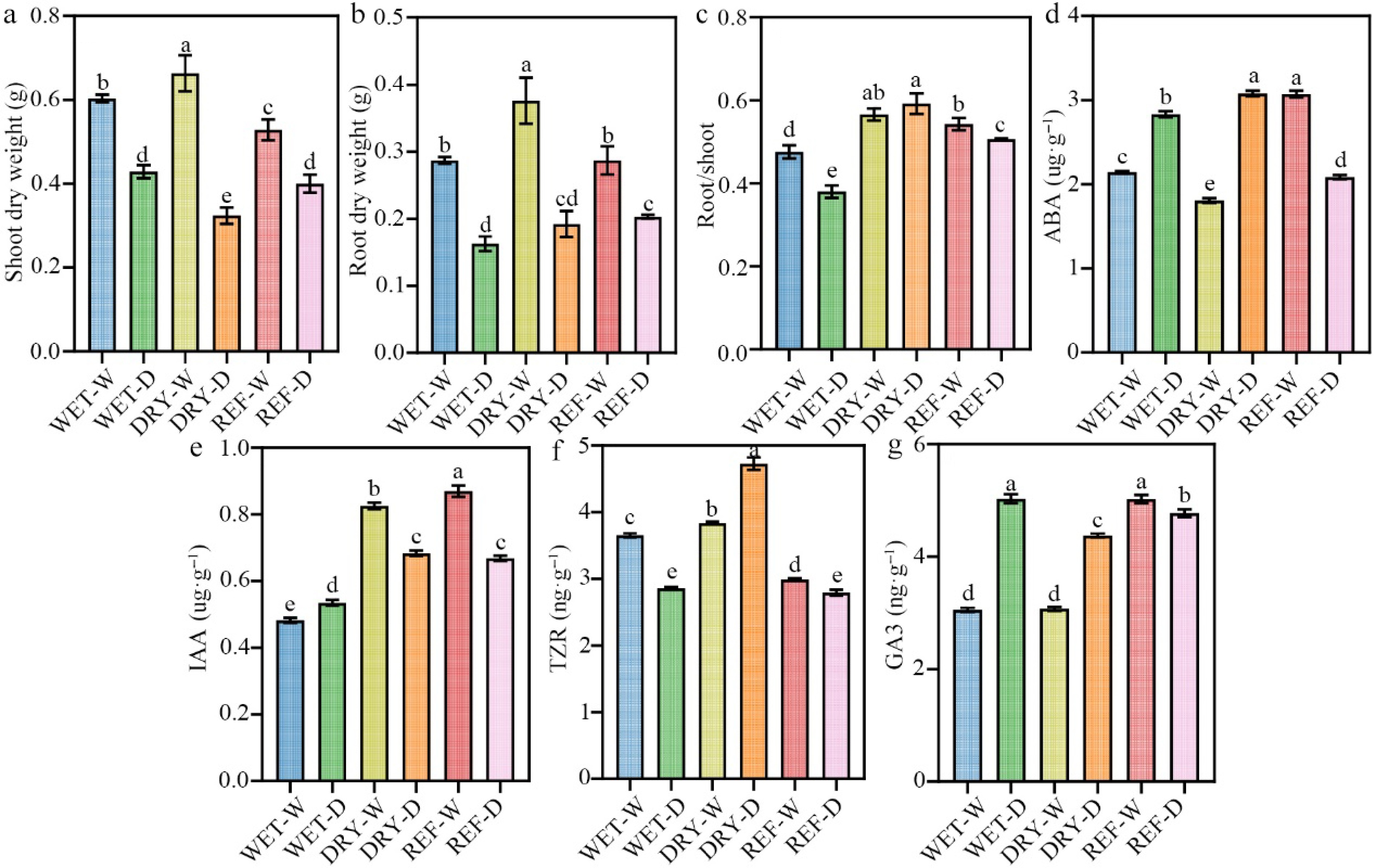
Figure 1.
Effects of different treatments on physiological parameters of tea seedlings in cultivation period II. (a) Shoot dry weight. (b) Root dry weight. (c) Root-to-shoot ratio. (d) Abscisic acid (ABA) content. (e) Indole-3-acetic acid (IAA) content. (f) Trans-zeatin riboside (TZR) content. (g) Gibberellic acid (GA3) content. Different letters represent significant differences between treatments (p < 0.05).
-
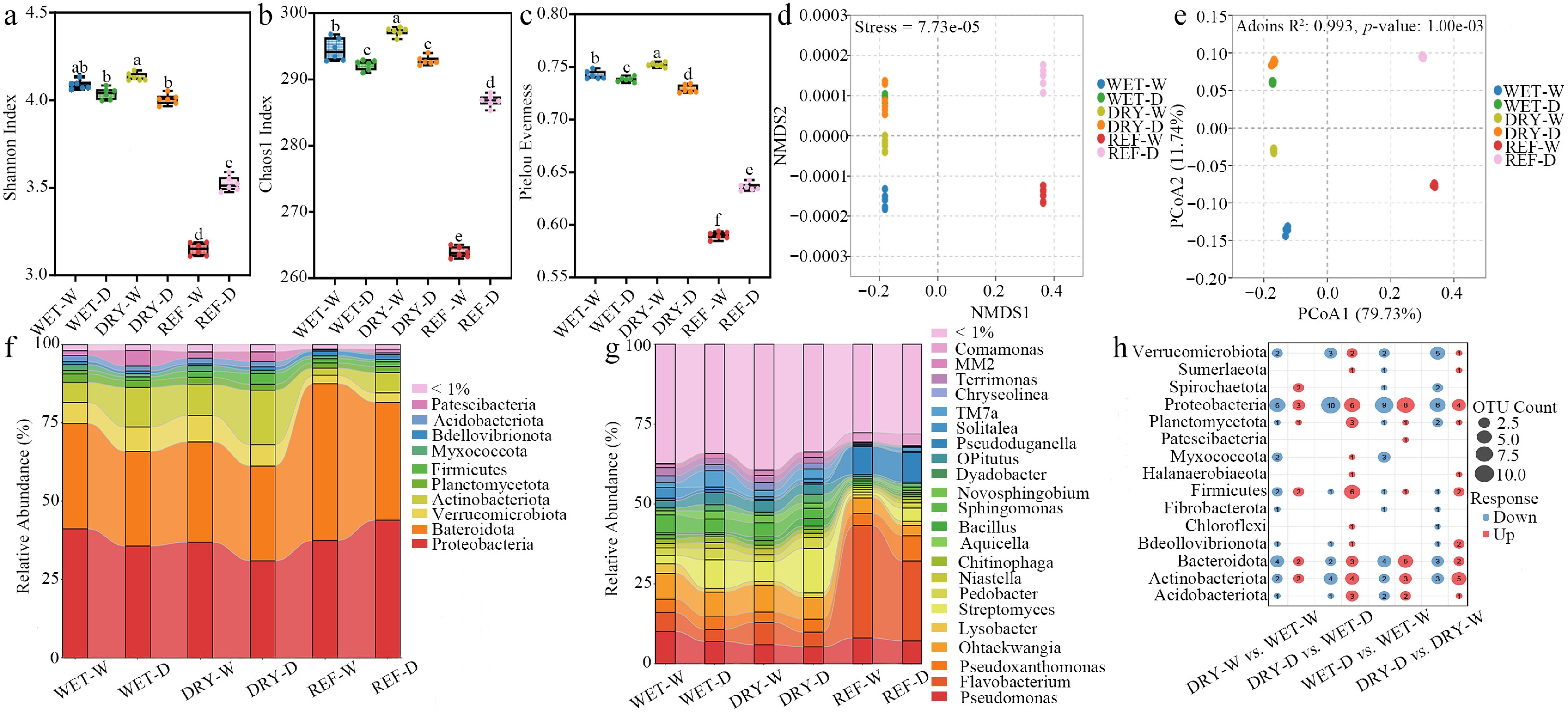
Figure 2.
Effects of different treatments on the diversity and composition of the rhizobacterial community in tea seedlings during cultivation period II. (a) Shannon, (b) Chao1, and (c) Pielou evenness index, respectively. (d) NMDS, and (e) PCoA ordination plots, respectively; Relative abundance of bacterial communities at (f) the phylum, and (g) genus levels, respectively. (h) Bubble plot showing differentially abundant bacterial phyla between treatments, based on DESeq2 analysis (p < 0.05, |log2FC| ≥ 2). Different letters represent significant differences between treatments (p < 0.05).
-
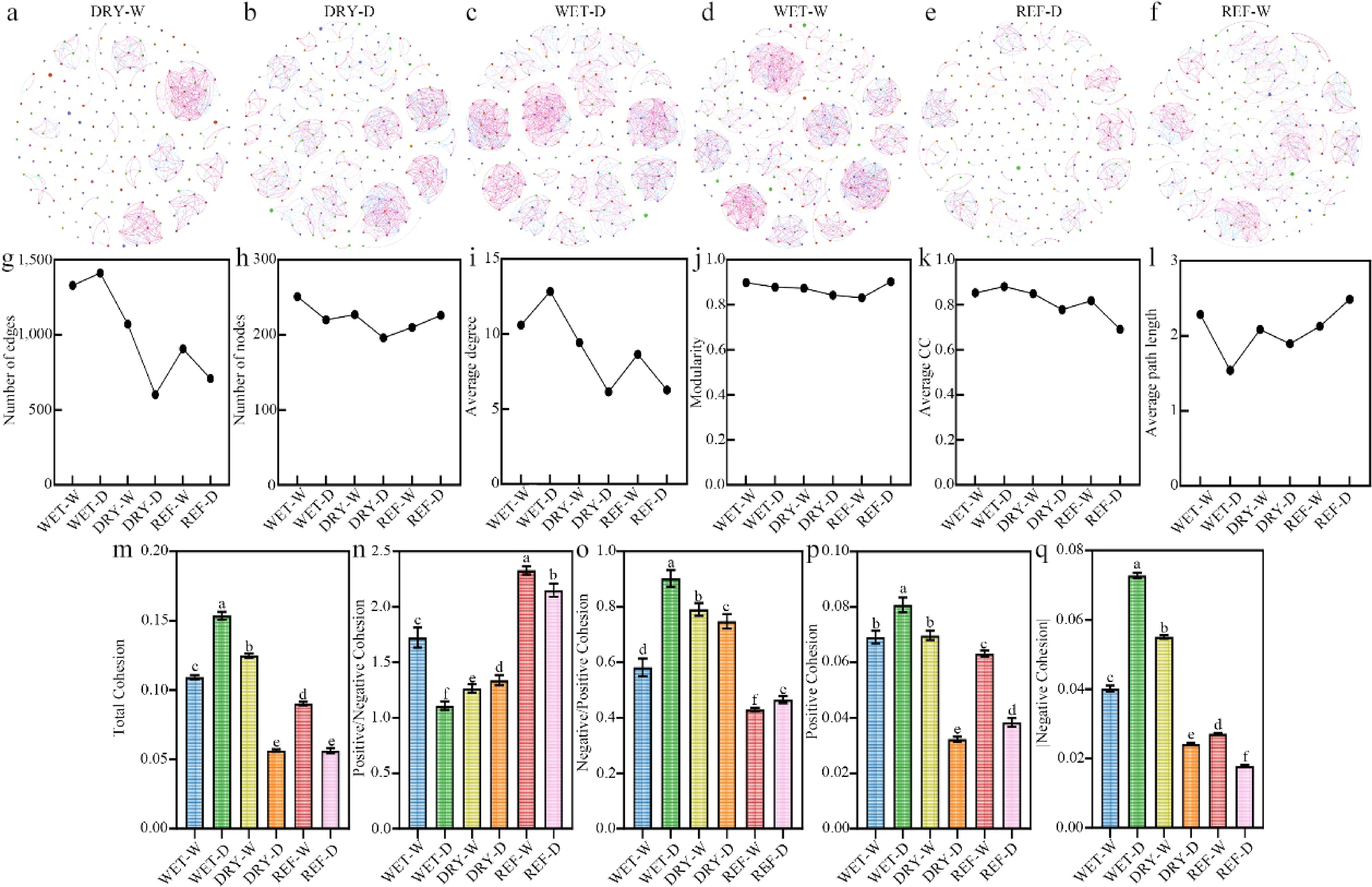
Figure 3.
Effects of different treatments on rhizobacterial network properties in tea seedlings during cultivation period II. (a)−(f) Visualizations of co-occurrence networks under each treatment. (g)−(l) Topological properties of the networks, including node count, edge number, average degree, modularity, average clustering coefficient, and average path length. (m)−(q) Cohesion analysis of the rhizobacterial communities, showing total cohesion, positive/negative cohesion ratio, negative/positive cohesion ratio, and absolute values of positive and negative cohesion. Different letters represent significant differences between treatments (p < 0.05).
-
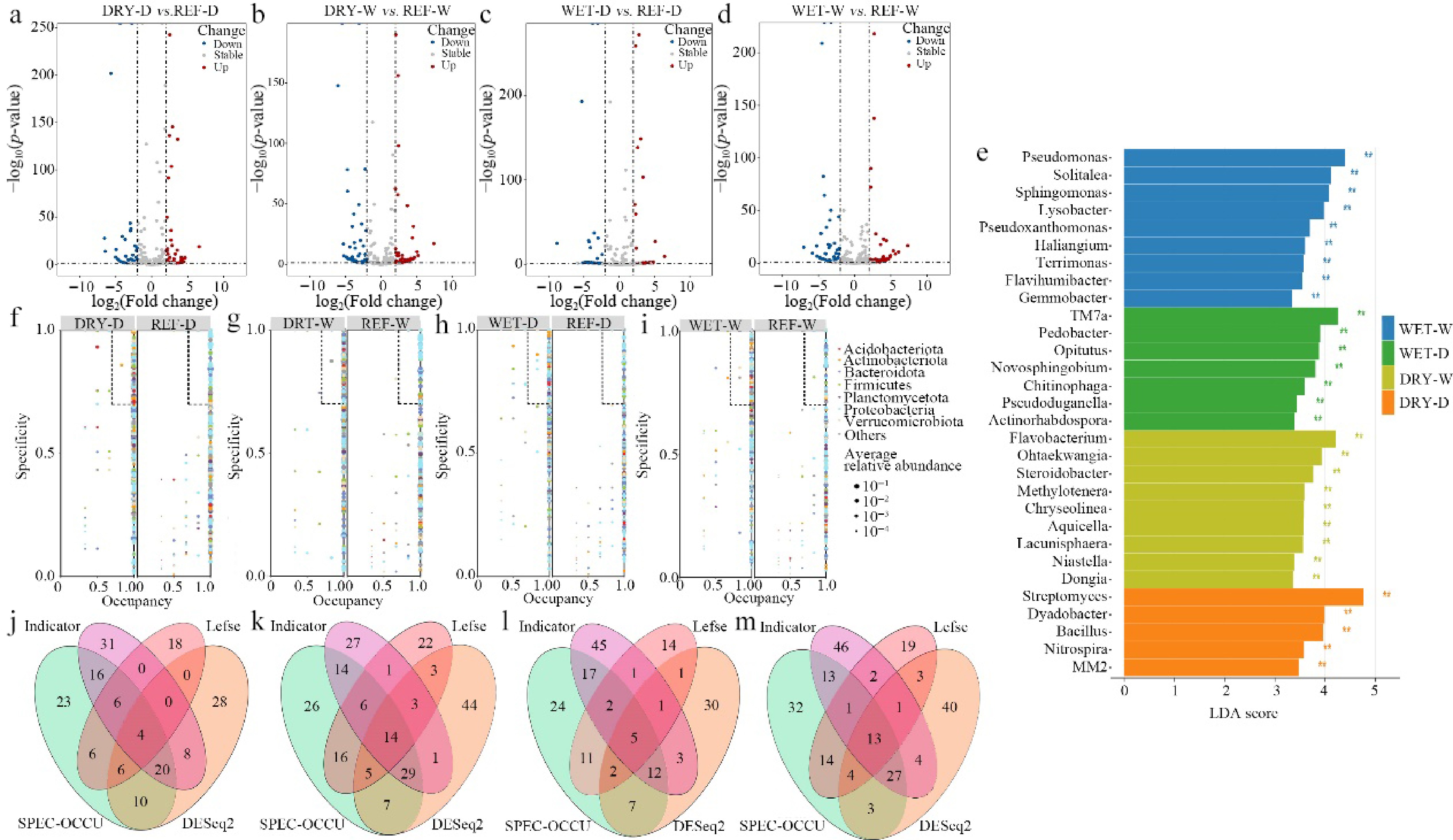
Figure 4.
Identification of core bacterial taxa in the rhizosphere. (a)−(d) Volcano plots showing differentially abundant OTUs in each treatment group (DESeq2). (e) LEfSe analysis illustrating taxa with significant abundance differences among treatments (LDA score > 2, p < 0.05). (f)−(i) Occupancy-specificity plots for each treatment; OTUs with specificity and occupancy values ≥ 0.7 were classified as specialist species. (j)–(m) Venn diagrams representing core bacterial OTUs identified by the combined DESeq2-LEfSe-Indicator Species Analysis-SPEC-OCCU approach.
-
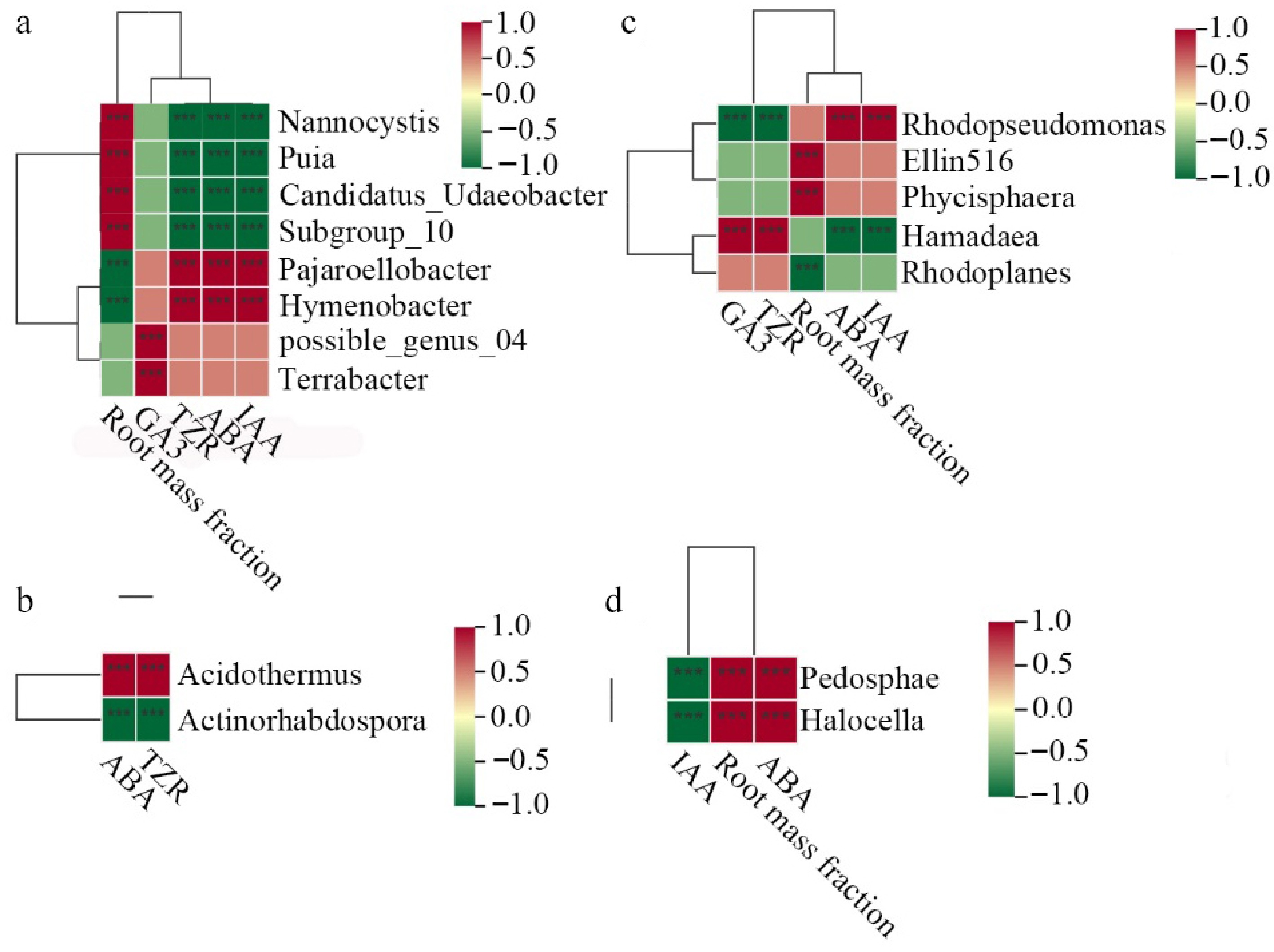
Figure 5.
Spearman correlation analysis between core bacterial and physiological parameters of tea seedlings. (a) WET-W. (b) WET-D. (c) DRY-W. (d) DRY-D. *** p < 0.001.
-
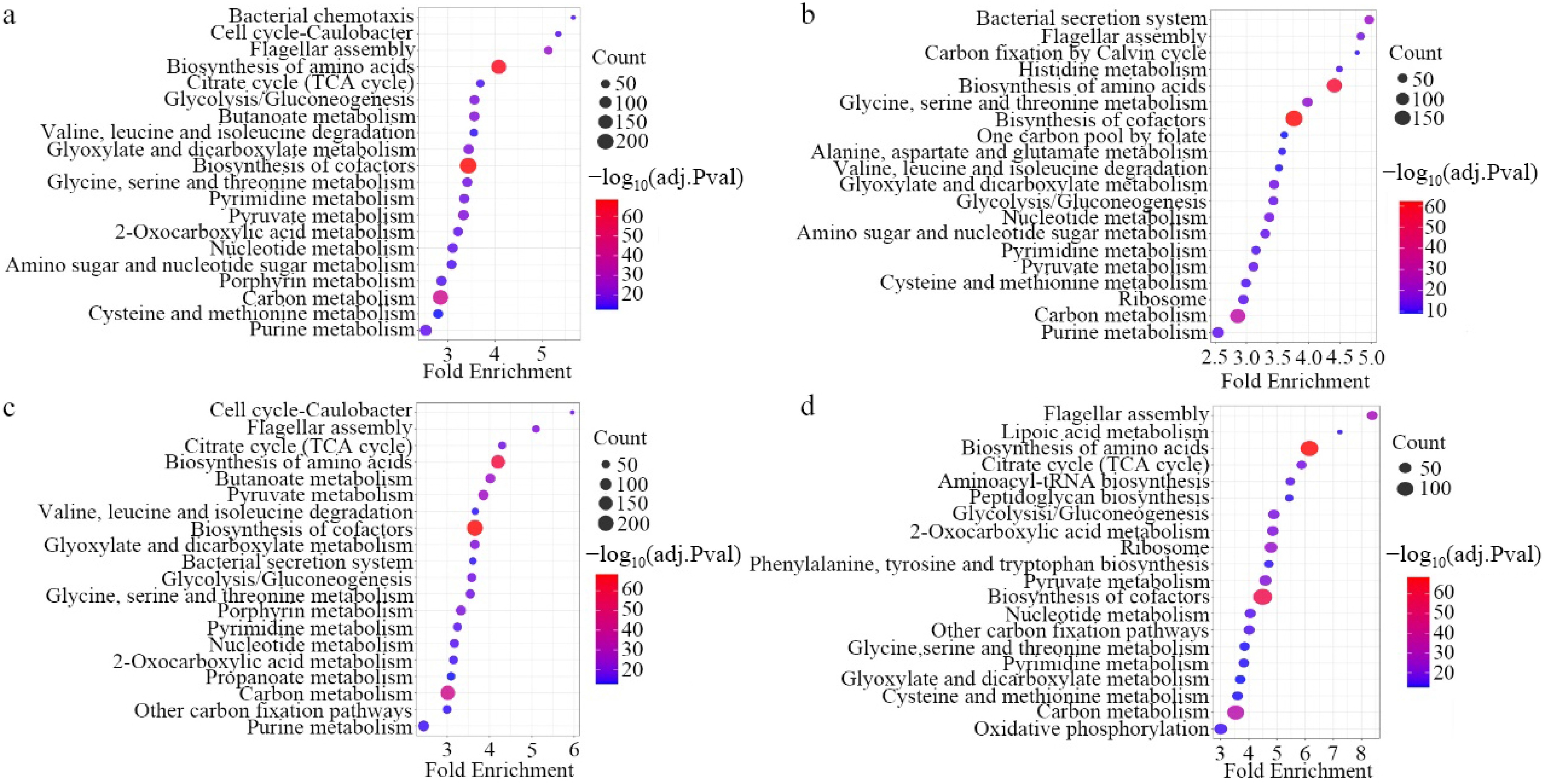
Figure 6.
Functional prediction of core rhizobacteria in different treatments. (a) WET-W. (b) WET-D. (c) DRY-W. (d) DRY-D.
-
df Sum sq. Mean sq. F model R2 p Inoculant (WET vs. DRY) 1 0.095 0.095 7.733 0.260 0.001*** Treatment (C vs. D) 1 0.188 0.188 23.045 0.512 0.001*** ***, p < 0.001. Table 1.
PERMANOVA based on Bray-Curtis distance was used to analyze the effects of inoculum and dry-wet treatment on the composition of bacterial community in the rhizosphere of tea seedlings at culture stage II.
Figures
(6)
Tables
(1)