-
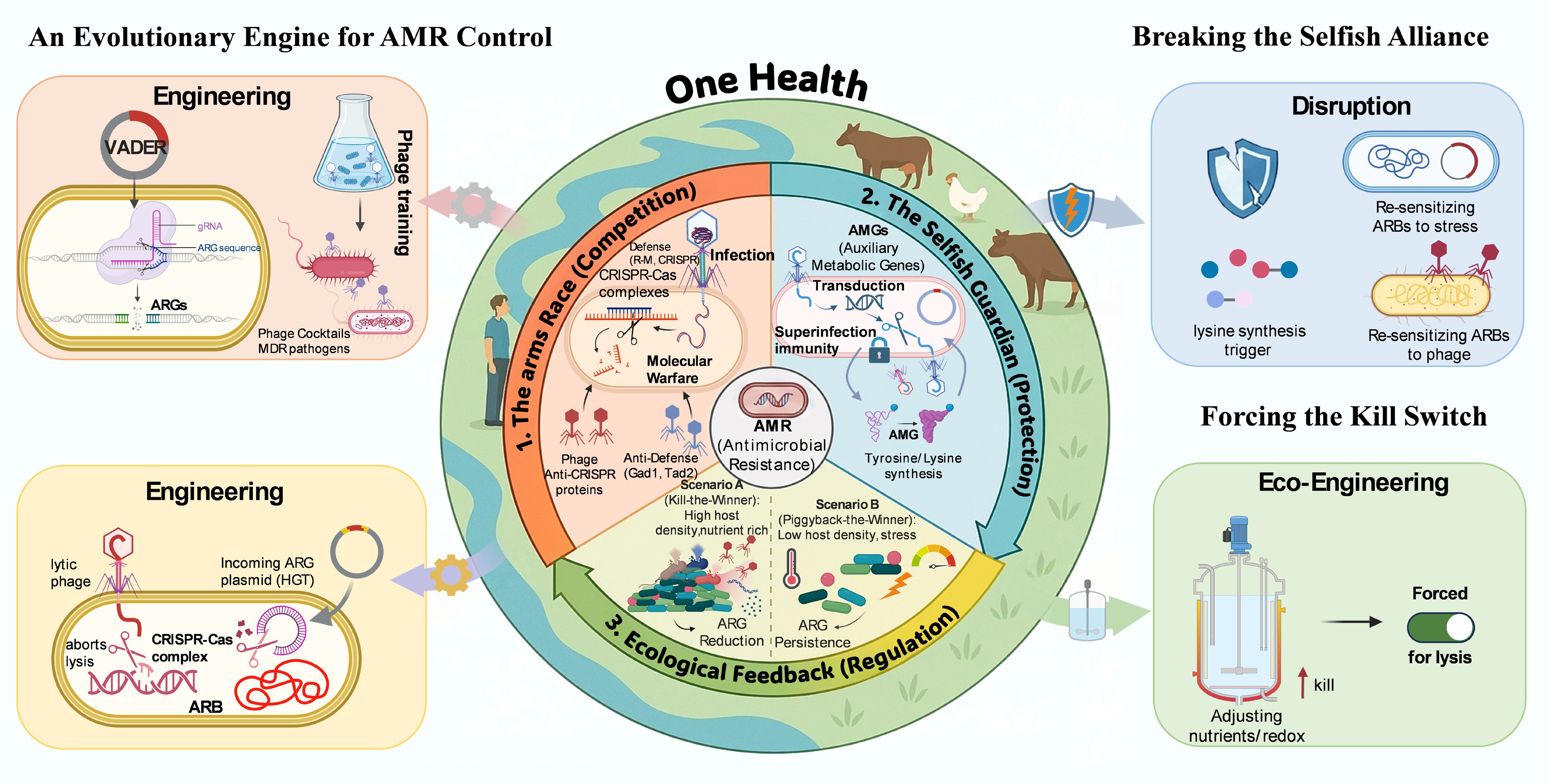
Figure 1.
Phage-host evolutionary triad and strategies for AMR control. The three evolutionary states of phage-host interactions within the One Health context are illustrated. State 1: Arms Race. Phages and hosts engage in molecular conflict (e.g., CRISPR-Cas vs anti-defense proteins). This state provides a genetic arsenal for engineering precision antimicrobials, such as VADER, and optimized phage cocktails. State 2: Selfish Guardian. Successful phages protect their hosts from biotic and abiotic stressors via Auxiliary Metabolic Genes (AMGs) and superinfection exclusion, thereby ensuring survival. Strategies here focus on disrupting this protection to sensitize antimicrobial-resistant bacteria. State 3: Ecological Feedback. Environmental cues (e.g., host density, nutrients) dictate the switch between kill-the-winner (lysis) and piggyback-the-winner (lysogeny). Ecological engineering aims to drive this switch towards lysis, maximizing AMR reduction while minimizing environmental transduction risks.
Figures
(1)
Tables
(0)