-
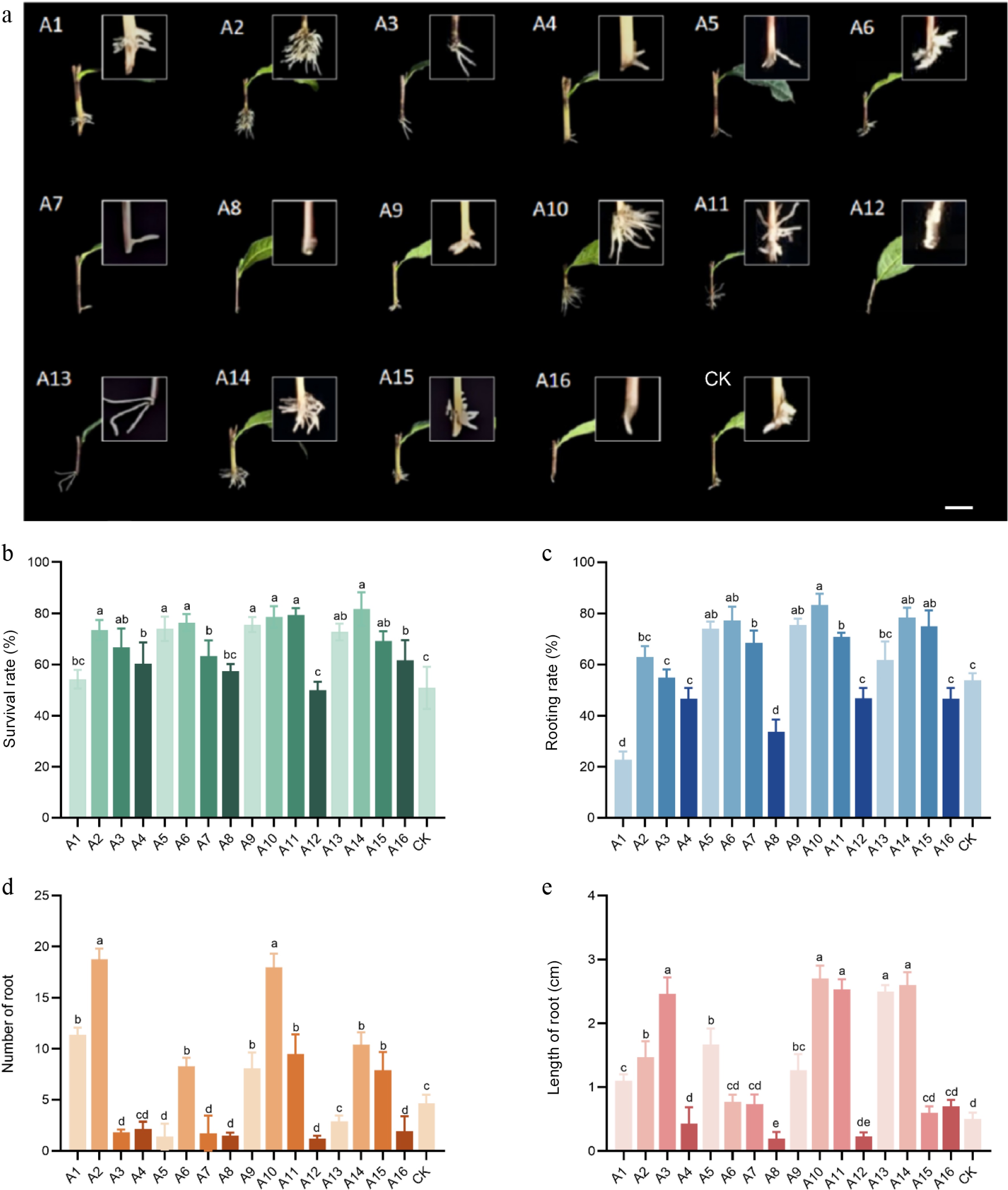
Figure 1.
Cuttings were treated with different auxins. (a) Phenotype of cuttings treated with different auxins. (b) Survival rate of cuttings treated with different auxins. (c) Rooting rate of cuttings treated with different auxins. (d) Number of roots of cuttings treated with different auxins. (e) Root length of cuttings treated with different auxins. Note: bar = 1 cm. Significant differences were found between different alphabets for different treatment groups, p ≤ 0.05.
-
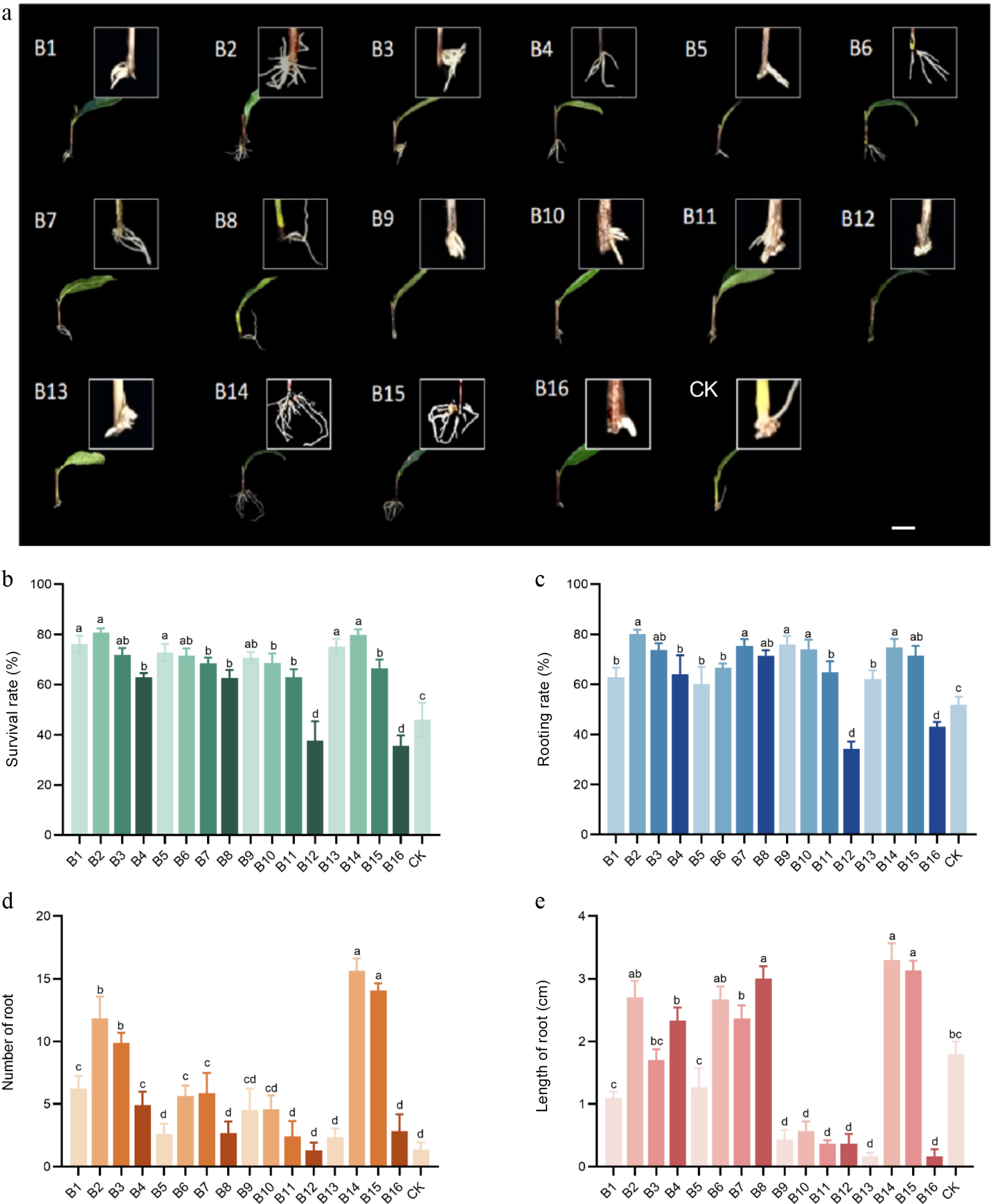
Figure 2.
Cuttings were treated with other plant growth regulators. (a) Phenotype of cuttings treated with other plant growth regulators. (b) Survival rate of cuttings treated with other plant growth regulators. (c) Rooting rate of cuttings treated with other plant growth regulators. (d) Number of roots of cuttings treated with other plant growth regulators. (e) Root length of cuttings treated with other plant growth regulators. Note: bar = 1 cm. Significant differences were found between different alphabets for different treatment groups, p ≤ 0.05.
-
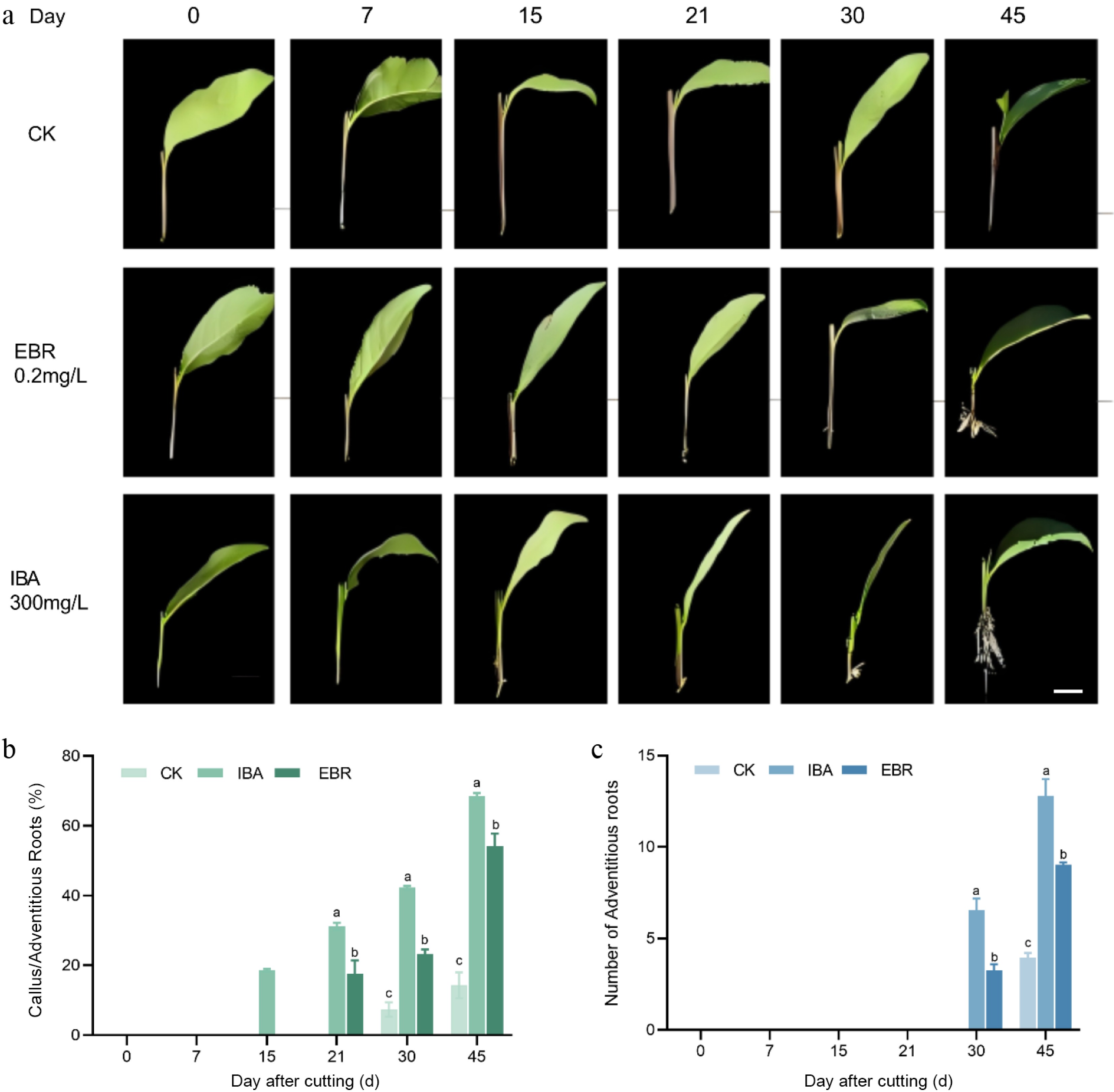
Figure 3.
Comparative analysis of adventitious rooting processes in cuttings treated with IBA and EBR. (a) Phenotypic diagram of IBA and EBR treatment for rhizome rooting process. (b) Incidence of callus and adventitious root formation during the rooting process under IBA or EBR treatment. (c) Number of adventitious roots induced by IBA and EBR treatments. Note: bar = 1 cm. Significant differences were found between different alphabets for different treatment groups, p ≤ 0.05.
-
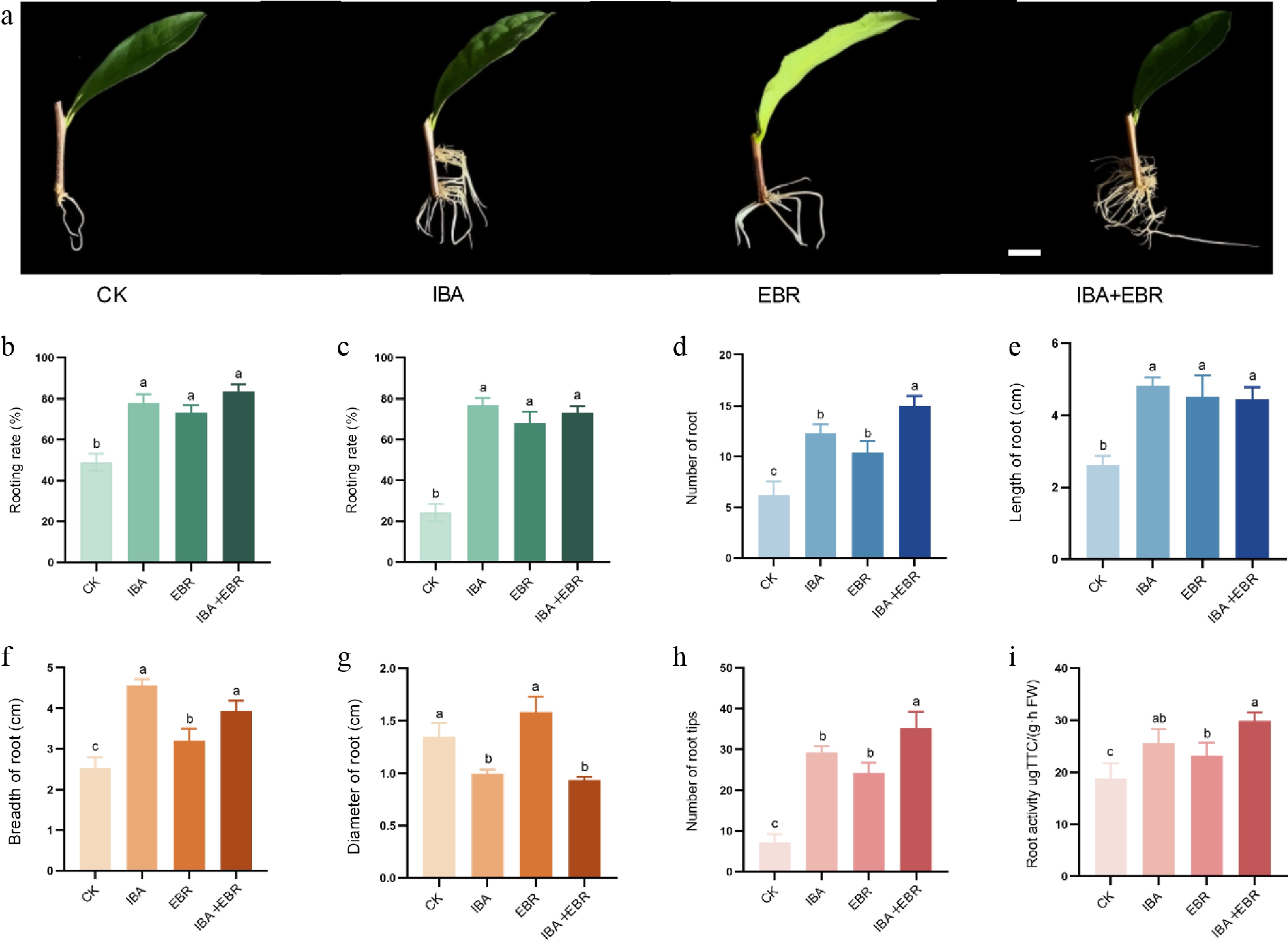
Figure 4.
Effects of IBA, EBR, and their combination on belowground development of Camellia sinensis cuttings. (a) Phenotype of cuttings treated with IBA, EBR, and their combination after 45 d, showing from left to right: CK, IBA, EBR, and IBA–EBR combined treatment. (b) Survival rate. (c) Rooting rate. (d) Root number. (e) Root length. (f) Root spread. (g) Root diameter. (h) Number of root tips. (i) Root activity. Note: bar = 1 cm. Significant differences were found between different alphabets for different treatment groups, p ≤ 0.05.
-
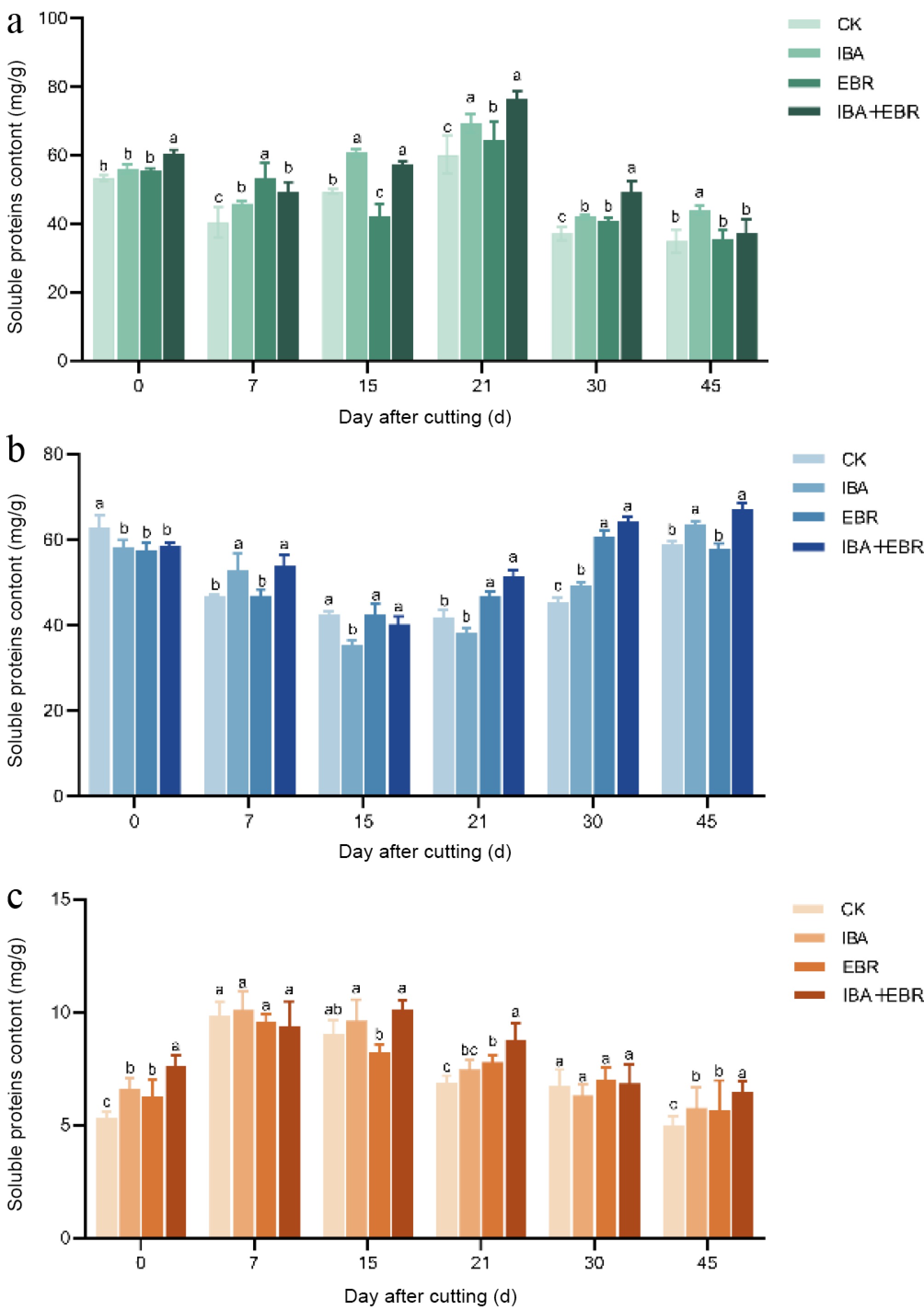
Figure 5.
Effects of IBA, EBR, and their combination on nutrient contents in Camellia sinensis cuttings. (a) Influence on soluble sugar content. (b) Influence on soluble starch content. (c) Influence on soluble protein content. Note: Significant differences were found between different alphabets for different treatment groups, p ≤ 0.05.
-
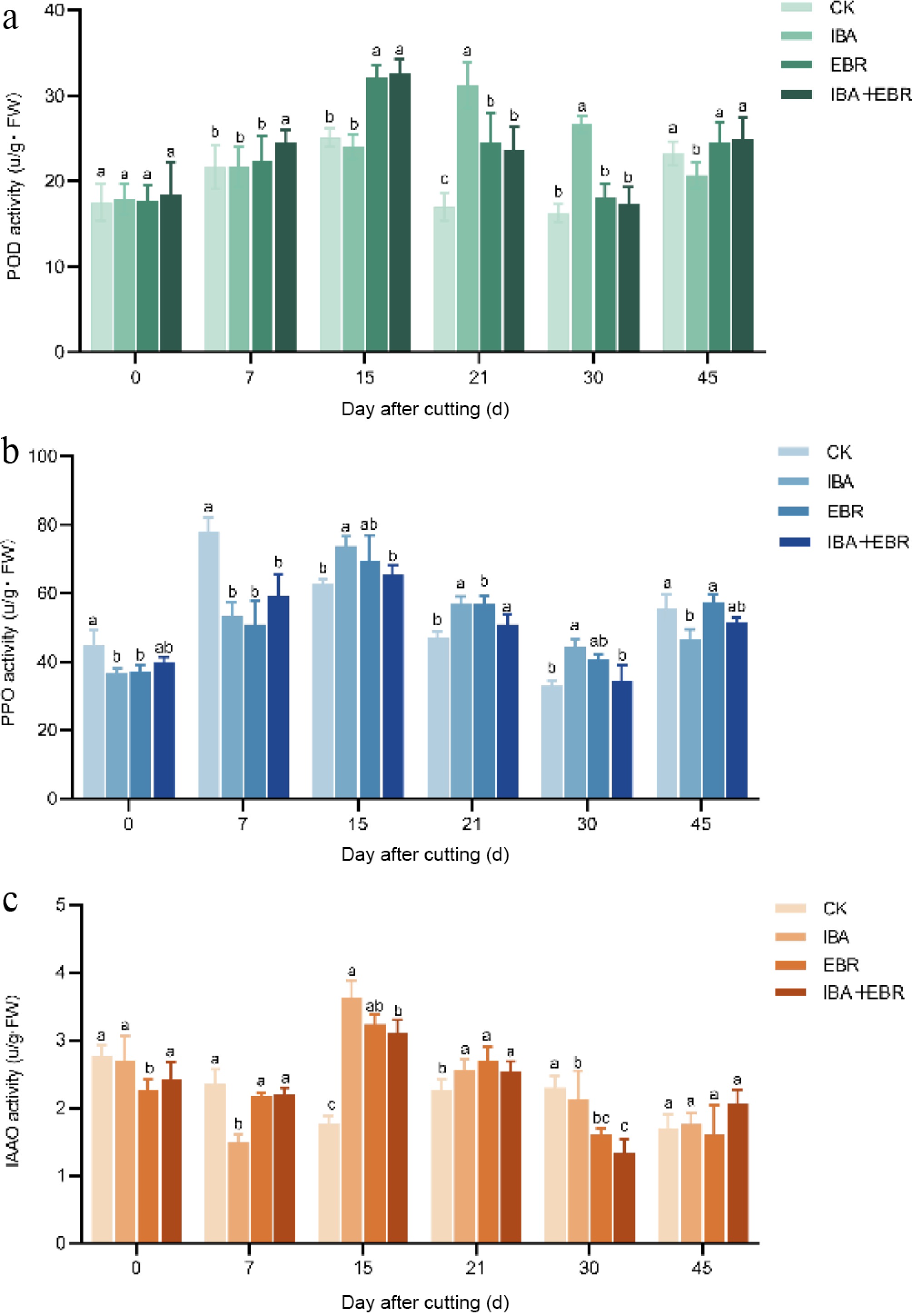
Figure 6.
Effects of IBA, EBR, and their combination on enzyme activities in Camellia sinensis cuttings. (a) Influence on peroxidase (POD) activity. (b) Influence on polyphenol oxidase (PPO) activity. (c) Influence on indole-3-acetic acid oxidase (IAAO) activity. Note: Significant differences were found between different alphabets for different treatment groups, p ≤ 0.05.
-
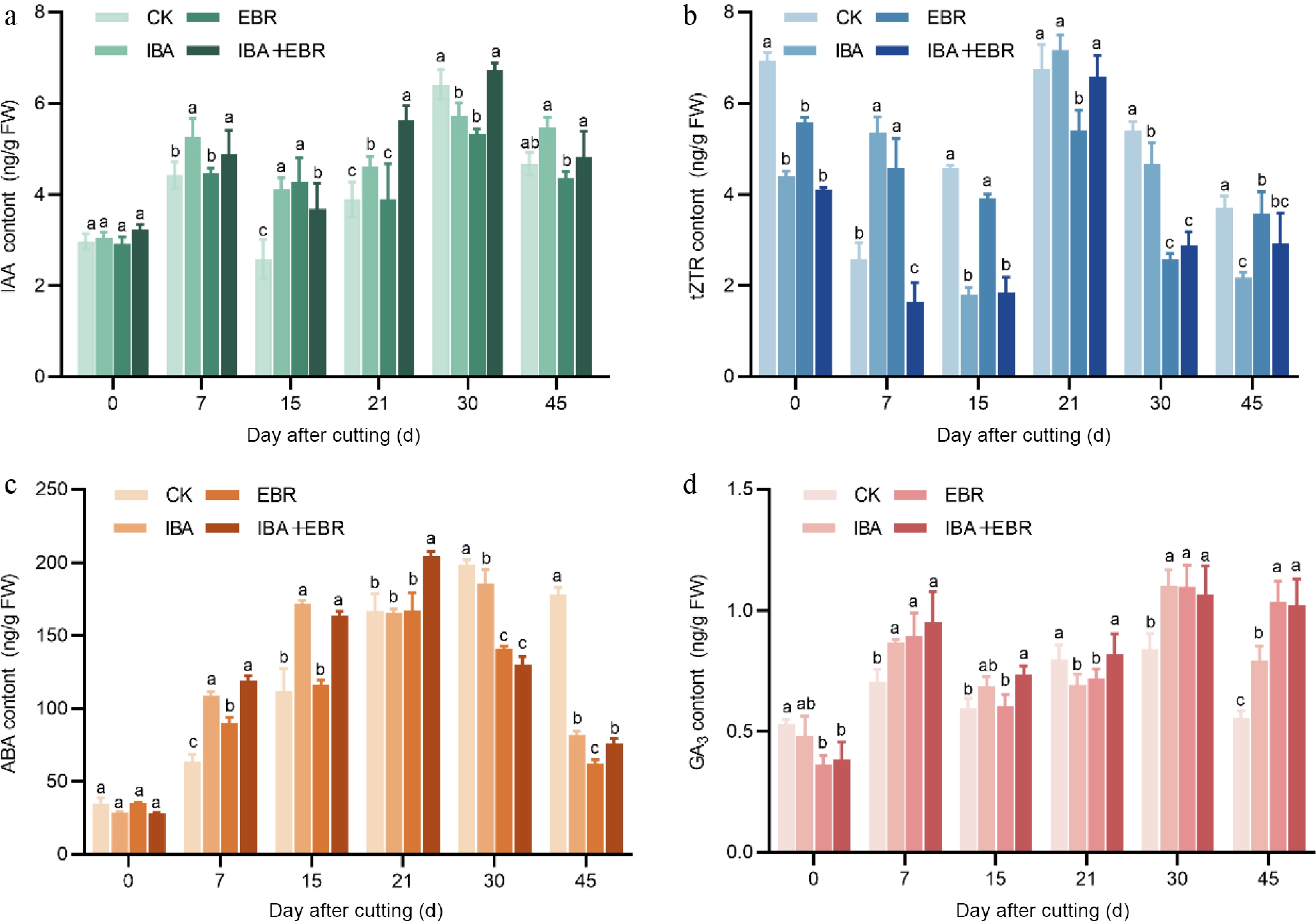
Figure 7.
Effects of IBA, EBR, and their combination on endogenous hormone contents in Camellia sinensis cuttings. (a) Influence on indole-3-acetic acid (IAA) content. (b) Influence on trans-zeatin riboside (tZTR) content. (c) Influence on abscisic acid (ABA) content. (d) Influence on abscisic acid (ABA) content. Note: Significant differences were found between different alphabets for different treatment groups, p ≤ 0.05.
Figures
(7)
Tables
(0)