-
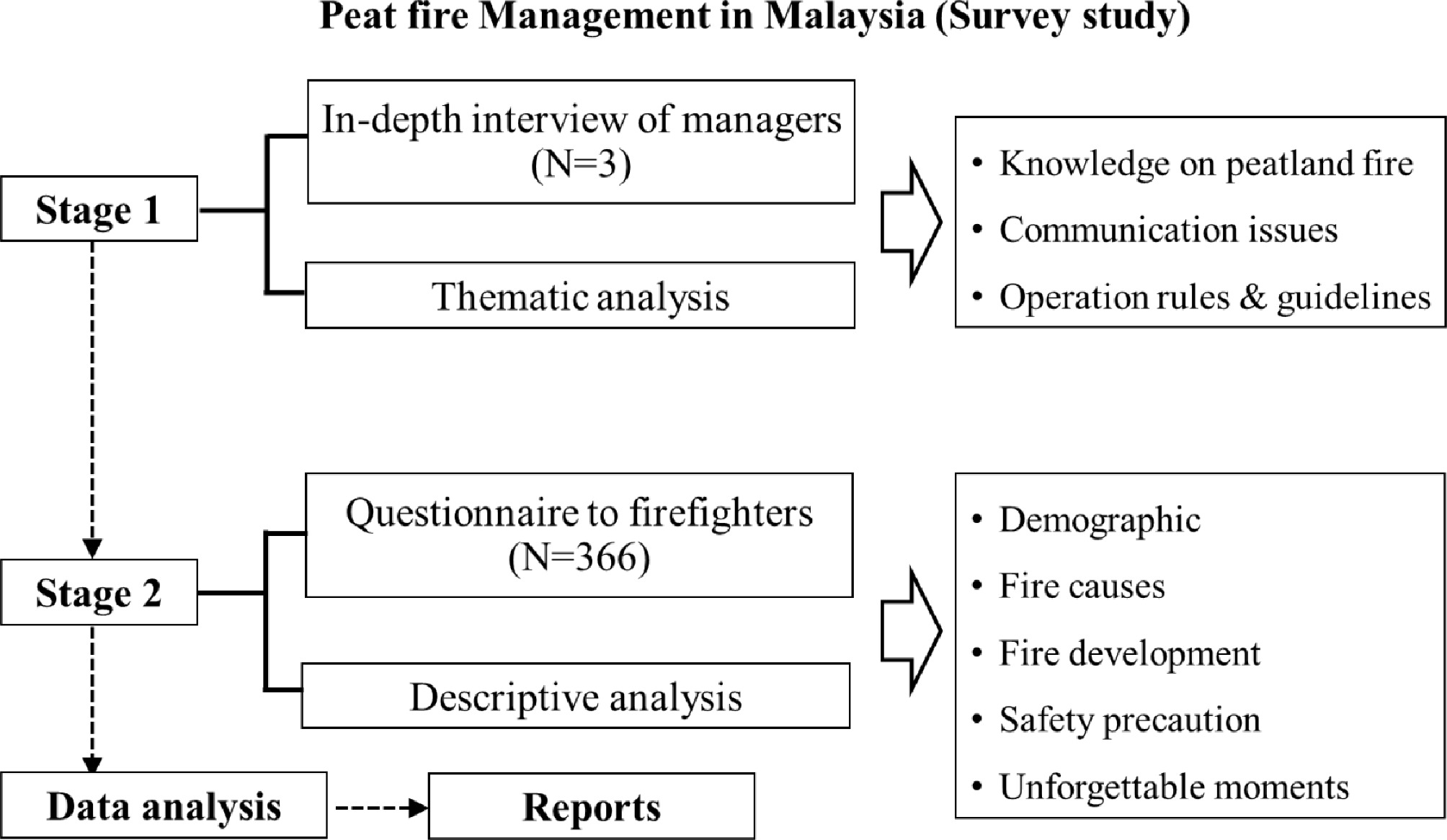
Figure 1.
Research framework for the interview and questionnaire used in this study.
-
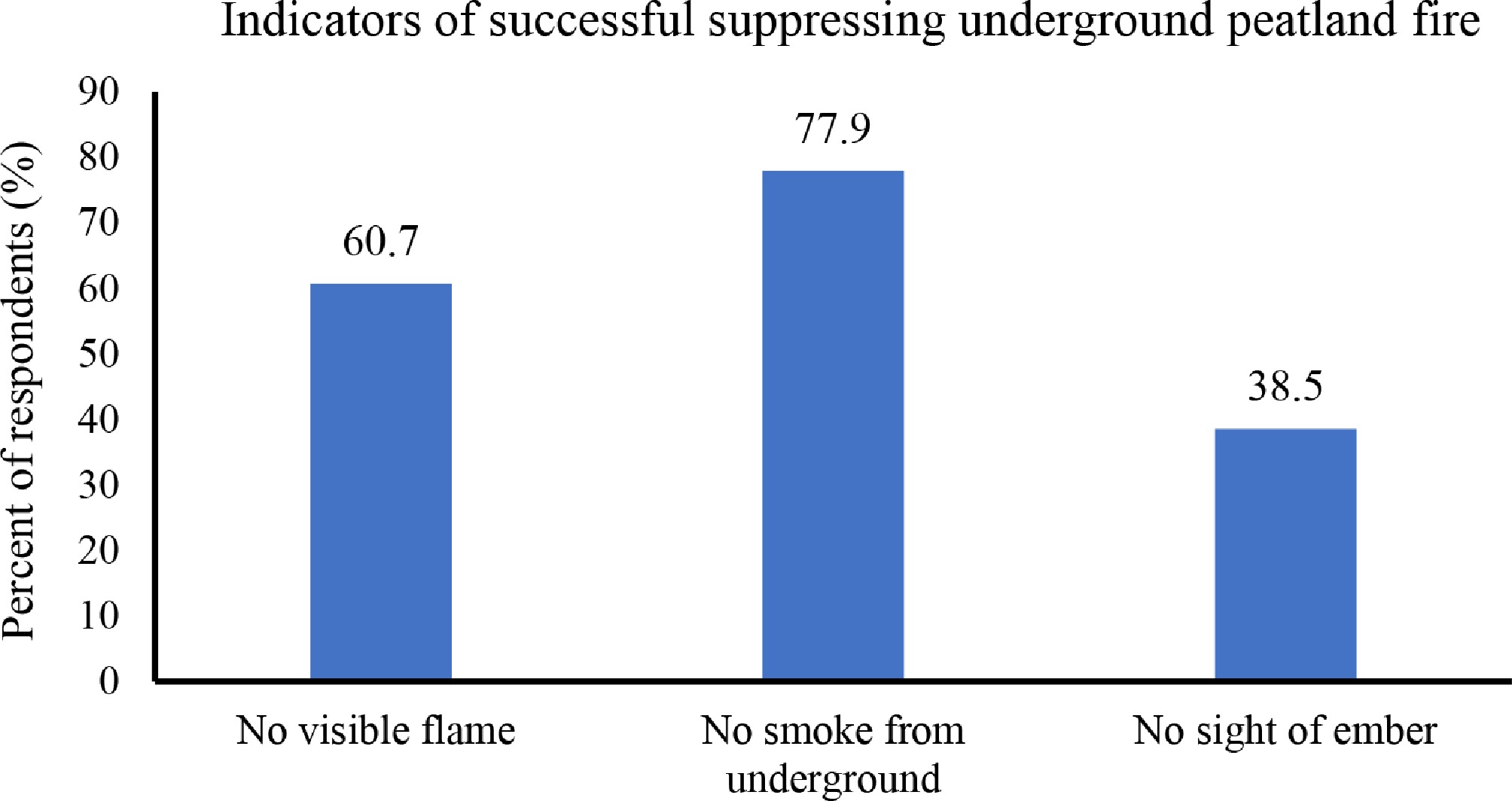
Figure 2.
Malaysian firefighters' perspective on the fully suppressed peatland fire below ground.
-
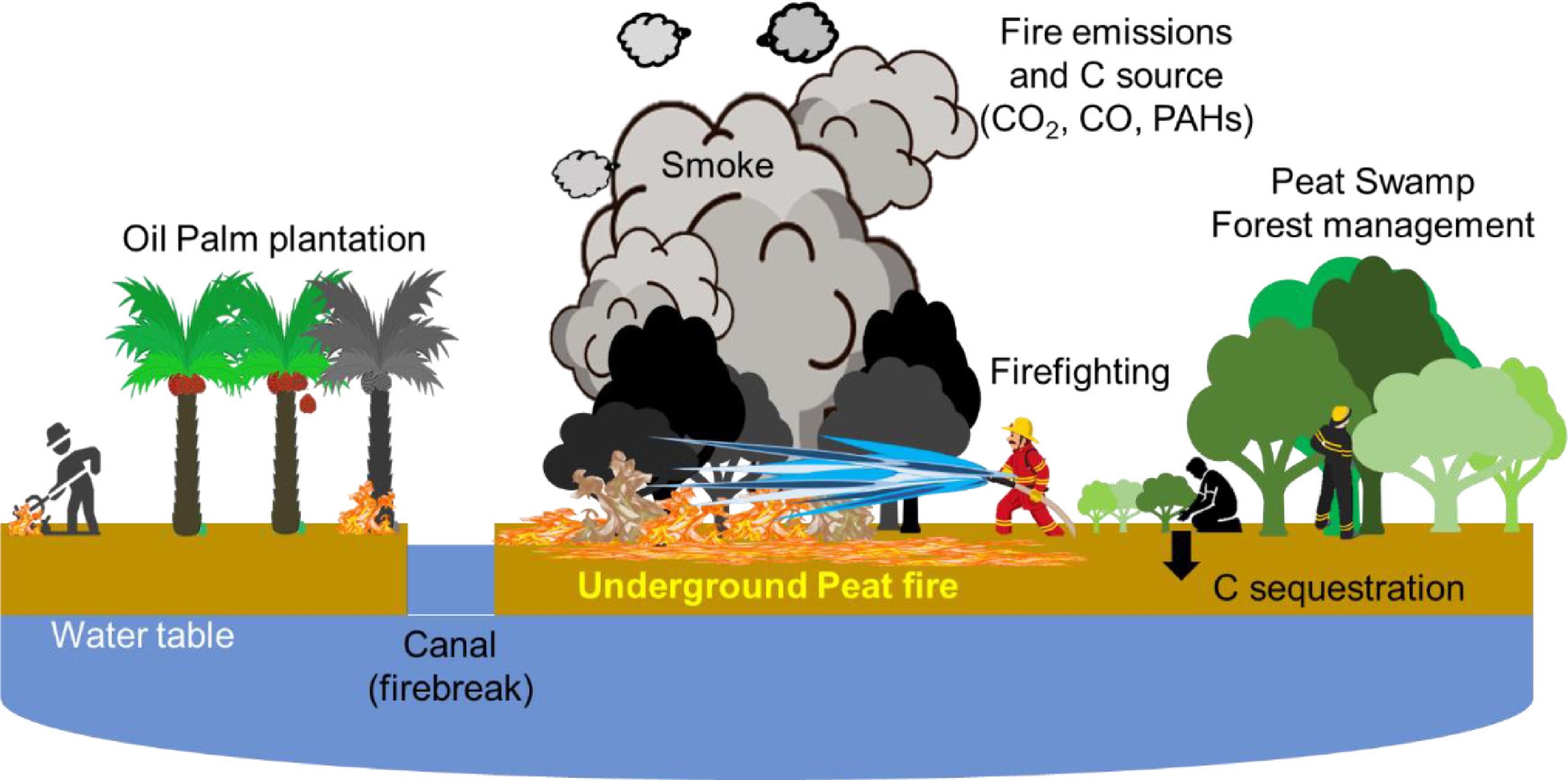
Figure 3.
Peatland fire situation in the tropical region (CC BY: DNS Musa).
-
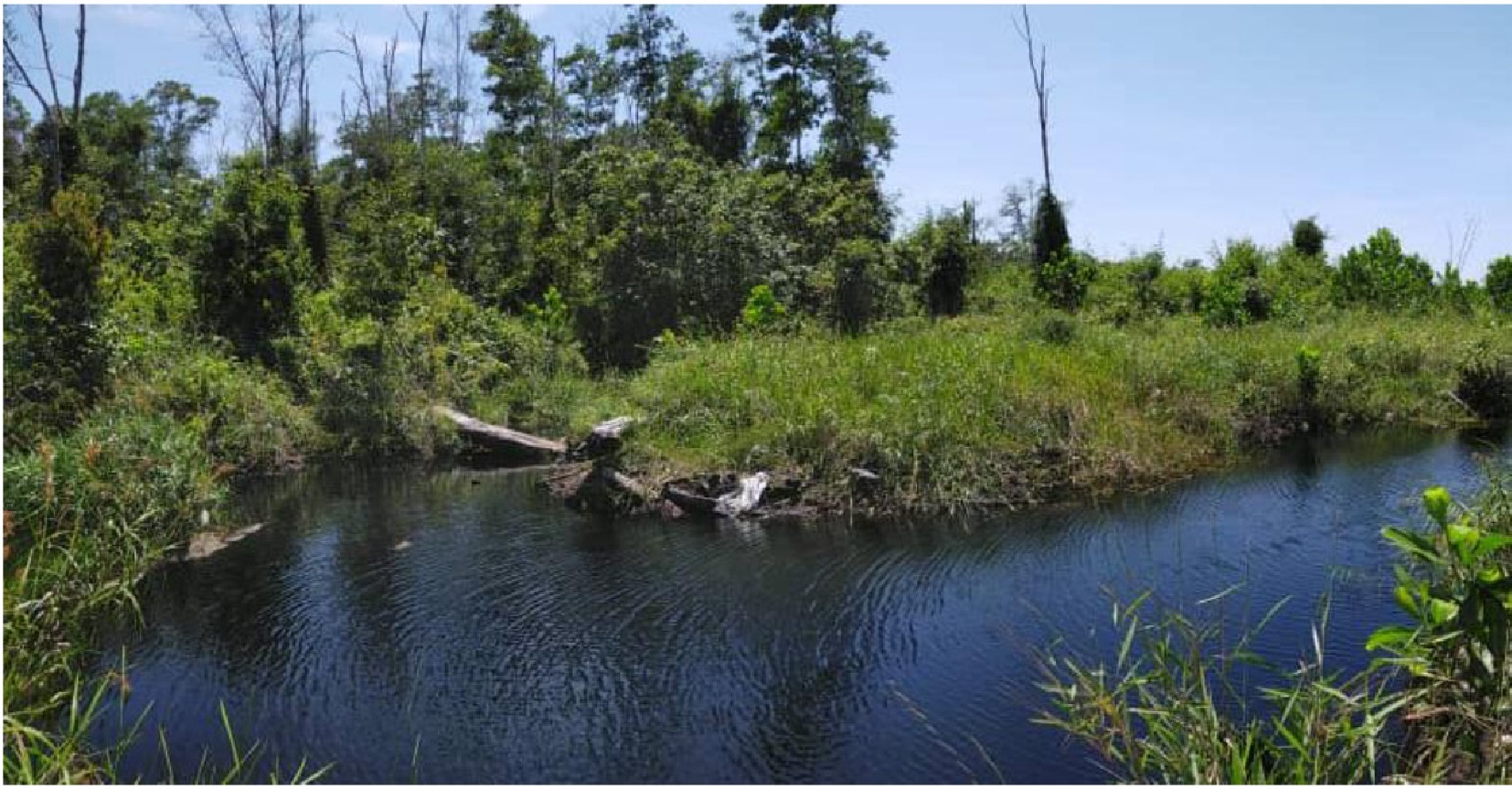
Figure 4.
Firebreak canal as part of the prevention method (Photo by: DNS Musa, 2021).
-
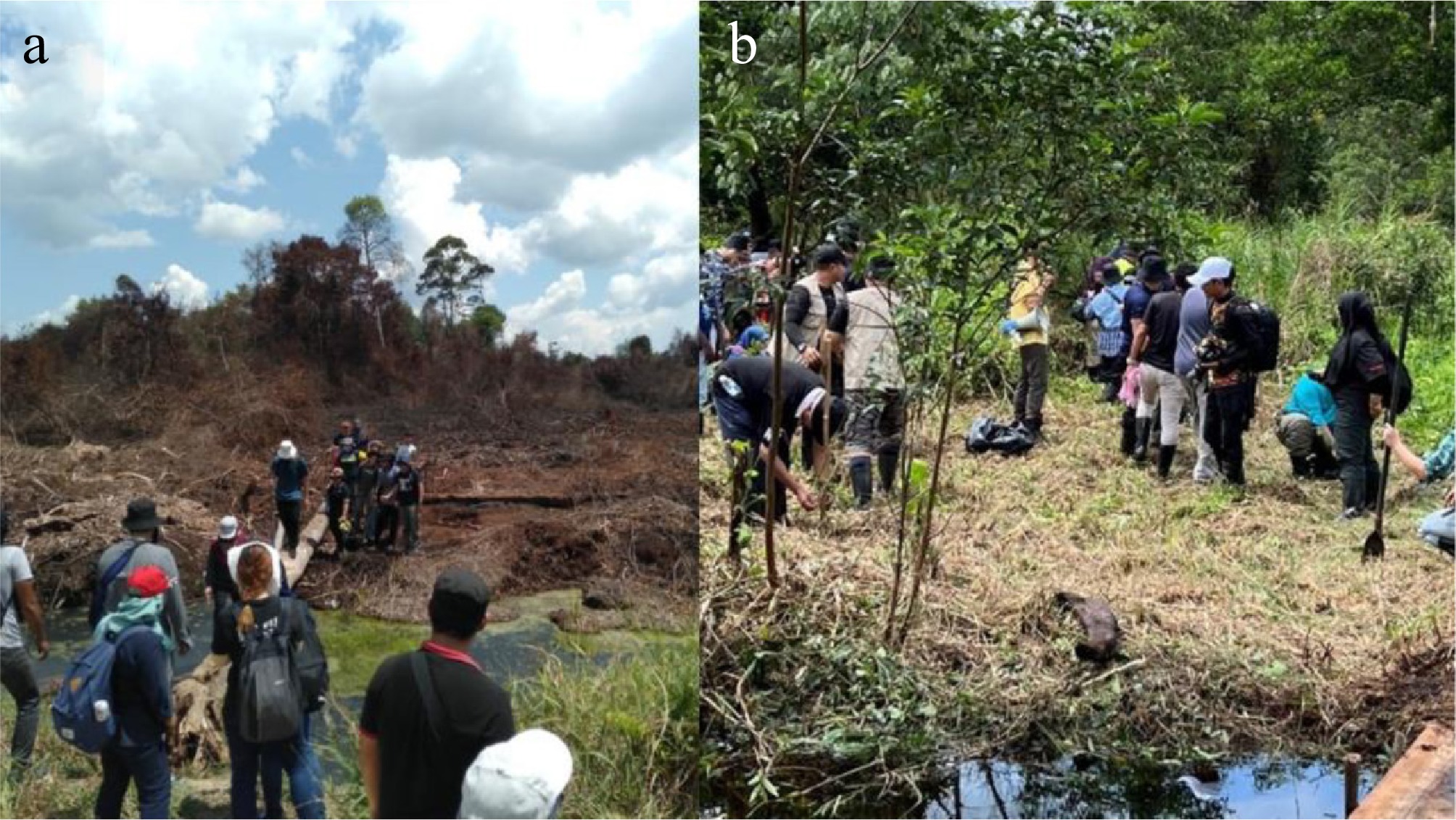
Figure 5.
(a) Higher education students visit the burnt area in Beaufort Peatland, Sabah, while the forest officer informs them of the peatland fire impacts. (b) Tree planting program in Raja Musa Forest Reserve, Selangor, in the post-fire area (Photos by: DNS Musa).
-
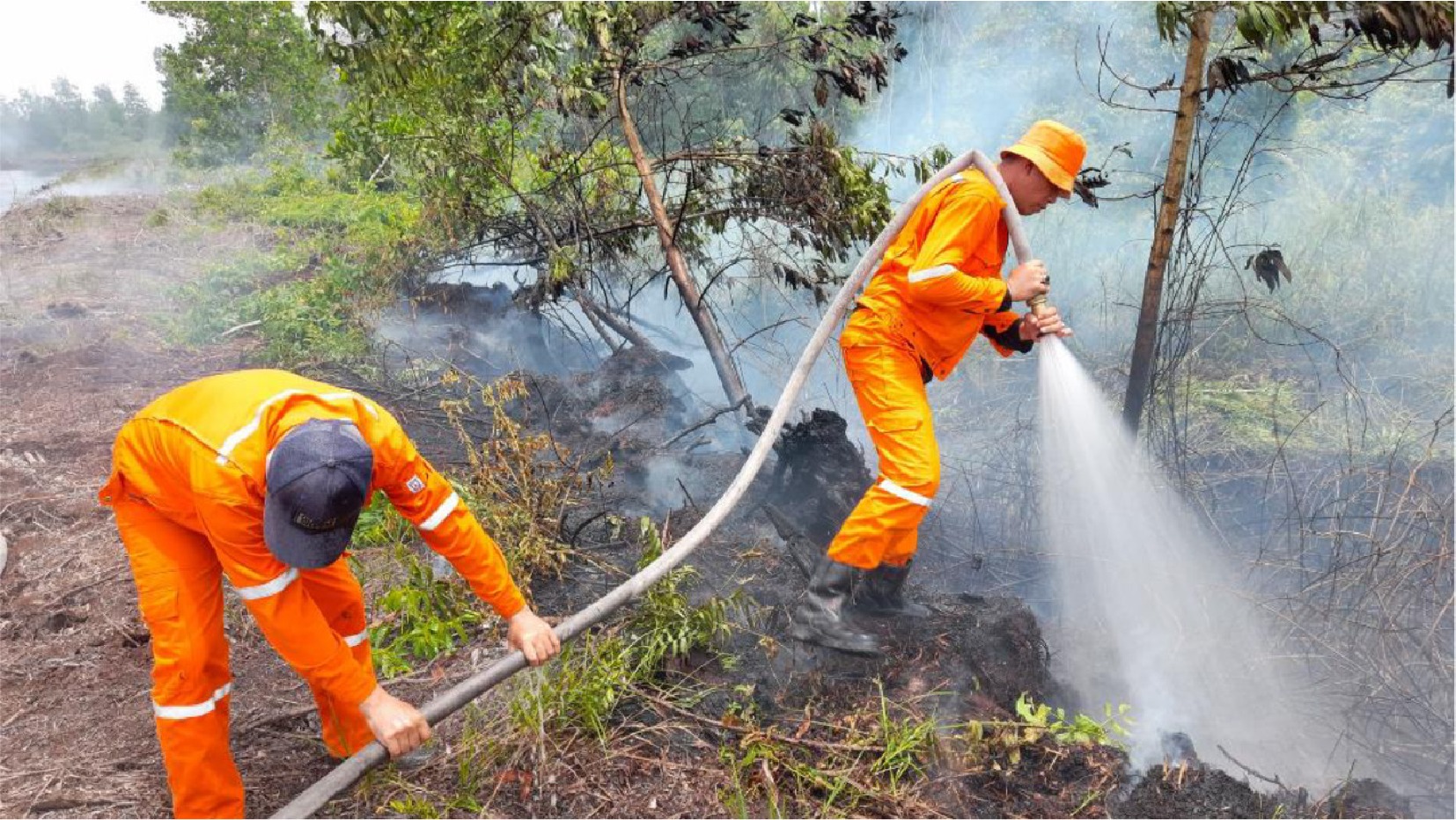
Figure 6.
Initial attack crew doing mopping as part of a post-fire effort to reduce smouldering fire re-occurrences on the surface (Photo by: Sabah Forestry Department).
-
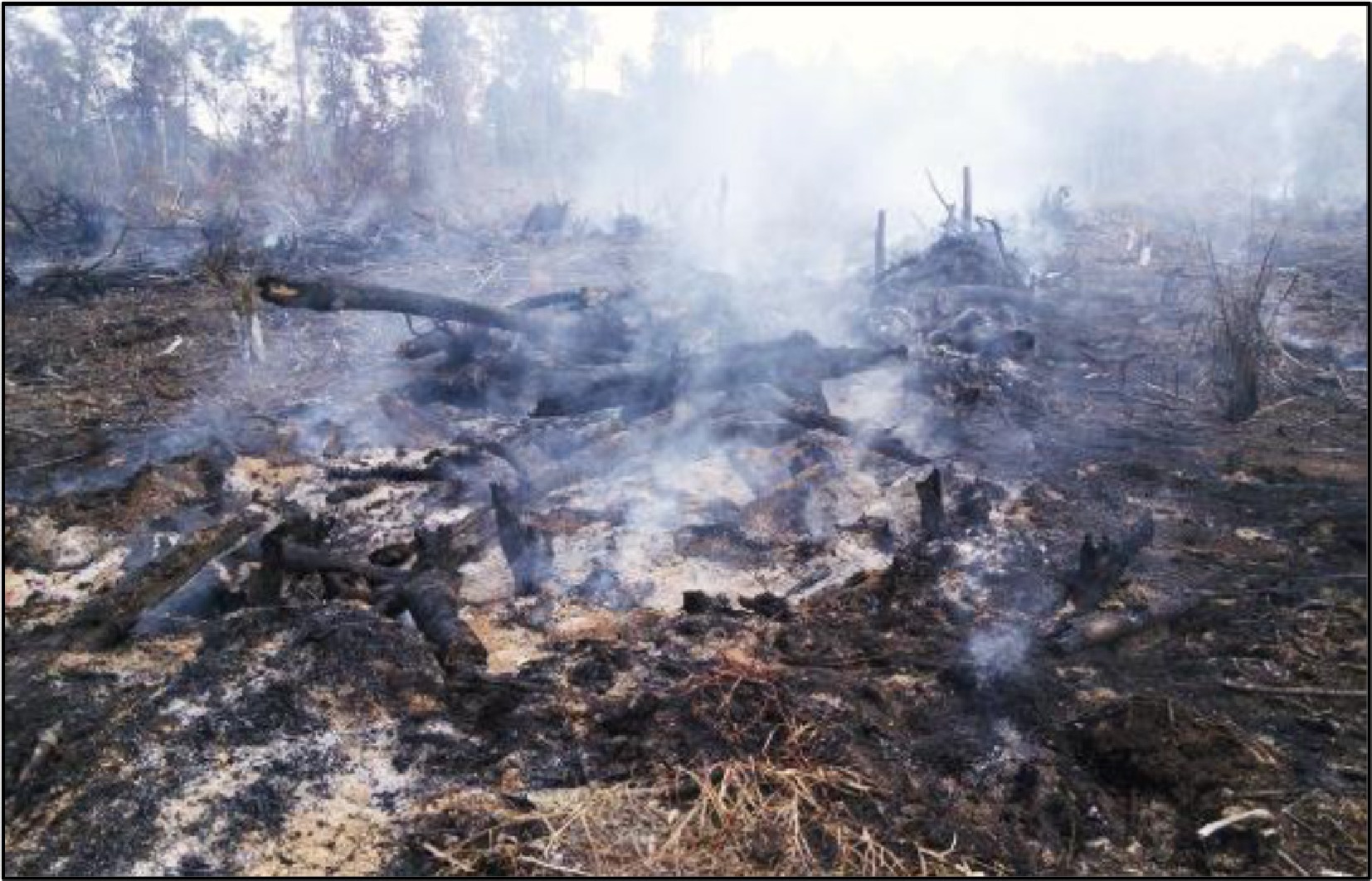
Figure 7.
Smoke on the peat surface due to smouldering fire underground (Photo by: DNS Musa, 2015).
-
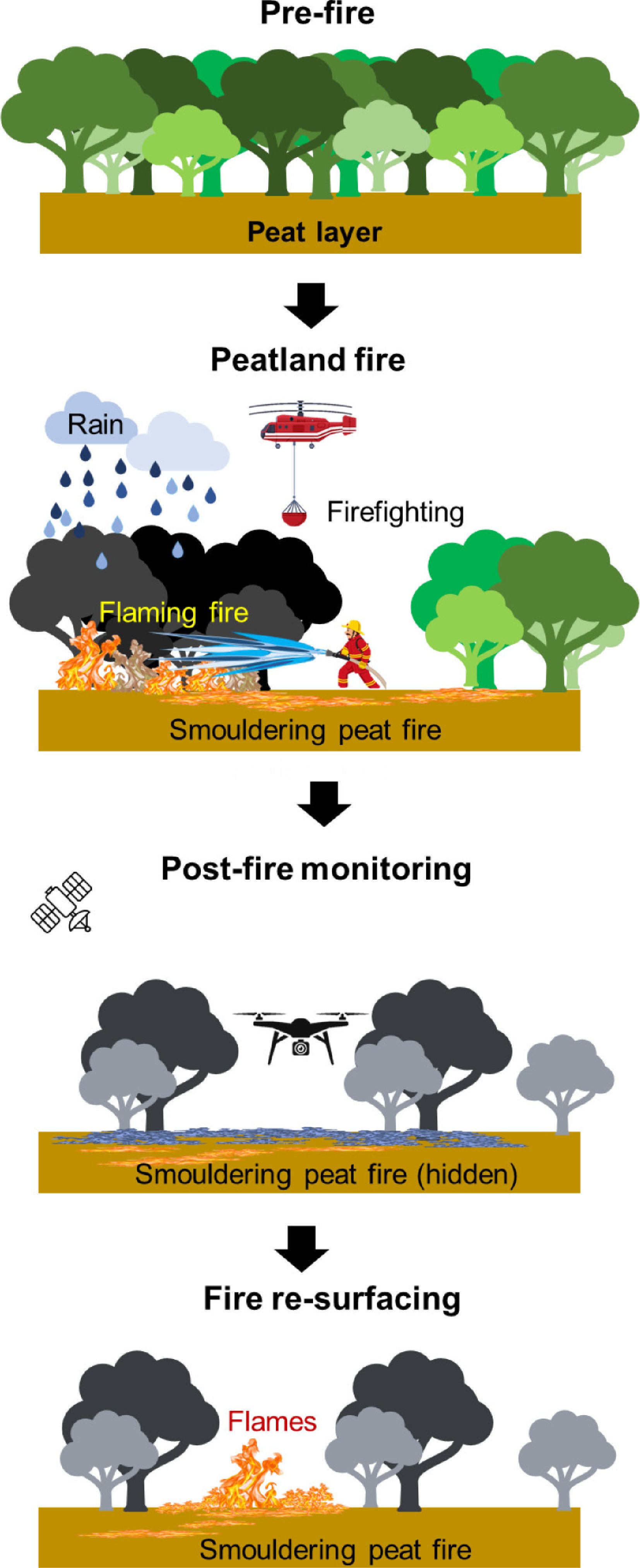
Figure 8.
Re-occurring smouldering fire in the tropical peatland (CC BY: DNS Musa & X. Huang).
-
Representatives Summary A Land clearance activities, such as slash and burn practiced by the locals, are the main contribution to peatland fire spread to the forest reserve. A & B During the El Niño in 2016, the peatland fire occurred for about 6 months. C The human factor is believed to be the main reason for the peatland fire, which is proven during the Movement Controlled Order (MCO) by the government of Malaysia as, the number of fires has been reduced since the pandemic in the past two years. C The slash-and-burn activity cannot be completely prevented and should exist as it relates to the economy. C The fire can smoulder for weeks or up to months A & B is a combination of conversations simultaneously. Table 1.
Summary of representative statements on factors and conditions to peatland fire occurrences.
-
Representatives Summary A Sabah Forestry Department had strengthening: (1) monitoring, (2) crew, (3) equipment, and (4) suppression techniques. A Construction of a canal in the Klias Forest Reserve in Sabah is effective in preventing the spread of fire into the forest; thus, a similar approach has been implemented in the Binsuluk Forest Reserve. B Mostly, human activities such as arson, land development, hunting, and recreational activities contribute to forest fire. B In addition to the prevention measures by the Sabah Forestry Department, an awareness issue was also implemented, especially for the people near the forest reserve, to increase awareness of the peatland fire. C Prevention is better than cure. C Engagement with the local community, known as the Champion, to assist with fire-related issues. C The thermal image will be available within 1–2 h which can check underground from the National Disaster Management Agency (NADMA), and we do not have to make any request from the fire department as this matter is crucial. C As the peatland is not stable land and hard to predict, the situation can be stressful to the firefighters. Other than that, peatland fire can reduce visibility by about 70%. C When discussing cross-border fire, it does not occur as the State of Sarawak creates a resilient community that understands its responsibility to protect the environment. Table 2.
Summary of representative statements on peatland fire occurrence factors and conditions.
-
Representatives Summary A Forest fire management is one of the strengths in SFD, as they believe that forest fire must be controlled, if not, it will affect the people nearby, the ecosystem, and the economy. A We have improved the Fire Danger Rating System by developing a new mobile application technology. The improved technology will collect a daily input of weather (humidity, rain, wind speed, and temperature) from 27 districts in Sabah. A In Sabah, current approaches that the Sabah Forestry Department has implemented since the 1980s are considered effective in controlling forest fire incidents despite the influence of the El Niño phenomenon. The total area affected by the forest fires during the El Niño phenomenon decreased from 1,000,000 ha (the year 1982/83) to 190,000 ha (the year 1997/98). A Awareness was implemented all over Sabah, especially to the people near the forest reserve area, to increase awareness on the peatland fire (a talk). B the recent El Niño phenomenon in 2016 that burn down 19,118 ha. B As a prevention measure, usually during a huge fire and intense smoke, the crew will control the fire using a fire break or fire guard to prevent the spread. B If the fire is very big with thick smoke, the firefighters wait for rain to pour down. B (1) establishing a fire break, (2) conducting an awareness program involving villagers living surrounding peatland forests, (3) providing regular training to forest fire crews, and (4) monitoring forest fire indicators daily through the Fire Danger Rating System (FDRS) and hot spots. C We will monitor the hotspot area through satellite, drone, and helicopter. C Currently, we use thermal image technology to detect and do total flooding to ensure the fire is fully suppressed. The thermal image will be available within 1−2 h, which can be checked underground by the National Disaster Management Agency (NADMA), and we do not have to make any requests from the fire department, as this matter is crucial. As the team marked the potential area and did the total flooding for the past two years, the fire cases have extremely reduced. C Rain is helpful in suppressing peatland fires. Peatland fire can reappear after suppression or rain. Table 3.
Summary of representative statements on peatland fire control and suppression.
-
Demographic Description Respondents (%) Age (respondent's year) < 20 1.4 21−30 16.9 31−40 39.6 41−50 23.0 51−60 19.4 > 60 n.a. Years of working experience < 3 13.7 3−10 29.2 11−20 30.9 21−30 13.9 > 30 13.1 Trained in peatland fire suppression Trained 77.0 Not trained 23.0 Table 4.
The socio-demographic of the firefighters who participated in this study (n = 366).
-
Statement Percentage (%) Totally disagree Disagree Neutral Agree Strongly agree 1 The current policy can prevent peatland fire occurrences 5.7 3.6 15.6 26.5 48.6 2 The pandemic situation in Malaysia demonstrates that human activity
is the main contributor to peatland fires3.3 1.9 14.5 20.5 59.8 3 Local villagers can help prevent peatland fires on their own by proper training 2.2 1.6 9.6 19.1 67.5 4 High fire intensity is a major challenge during firefighting 1.1 0.5 8.5 19.9 69.9 5 Rotation during firefighting can reduce stress 2.2 1.1 11.7 12.3 72.7 Table 5.
Statements on the current approach to preventing peatland fires, as reported by respondents.
-
Code Summary Water shortage • Water shortage during peatland fire suppression worsens the situation due to the lack of a water supply for peatland fire extinguishment Past events • Most firefighters recalled locations where peatland fire suppression had been conducted previously. Physical and mental issues • Challenges faced include inhaling smoke, fatigue, thirst, difficulty breathing, stress, and carrying heavy equipment.
• A small group of firefighters is tasked with extinguishing a large area.
• Losing a friend during operations
• Working at night without showering and sleeping in the forestLong operation hours • Long operation hours and standby periods of up to two months Trapped in fire • Almost trapped due to a huge fire and thick smoke, surrounded by flames Collaboration with Indonesia • Assisted in peatland fire suppression in Indonesia. 'Operation KALBAR 1997' is frequently mentioned Equipment issue • There is insufficient personal protective equipment (PPE) for firefighters during suppression, although some believe their PPE is adequate.
• Equipment to aid in suppression is inadequate.
• Some firefighters burned their hoses during suppressionOther issues related to peatland fire suppression • Come across venomous animals and insects; not enough manpower; strong friendship develops; fire in oil palm plantation;
a tree falls in front of them; lost communication.This summary is based on the open-ended responses from the questionnaire given to respondents, which were categorised based on the code. Table 6.
Unforgettable moments respondents experienced during peatland fire suppression.
-
Issue Factors Respondents' perspective Ratio (%) Contributing factors Open burning Most important 36.1 Man-made canal Moderately important 34.4 Agricultural activities Moderately important 32.2 Arson Moderately important 33.1 Fishing Least important 35.0 Forest encroachment Moderately important 35.5 Worsen the situation Strong wind Most important 34.4 High temperature Most important 35.8 High humidity Moderately important 33.1 Haze Moderately important 28.4 Water shortage Moderately important 29.2 Small population in the area Moderately important 33.3 This perspective in the questionnaire were based on Least important; Moderately important, Most Important for each factor. The results here show the highest number of responses for each factor showing the majority perspective of the respondents. Table 7.
Perspectives of Malaysian firefighters on the contributing factors to peatland fire occurrences and the situations that exacerbate peatland fire events.
-
Items Respondent feedback (%) Least important Moderately important Important Most important Safety suit (PPE) 0.8 10.4 14.8 74.0 Transportation 0.5 9 16.9 73.5 Training for peatland fire suppression 0.5 10.1 17.5 71.9 Rotation hour 0.6 12 17.2 70.2 Hand tools 0.6 14.2 16.1 69.1 Communication gear 1.1 11.2 19.7 68.0 Water back-pump 0.8 14.2 19.4 65.6 The range is based on the most important factors on the safety precautions during peatland fire suppression operations. Here, 'Transportation' refers to access logistics to remote peatland fire locations, including the movement of firefighters, pumps, hoses, and water supply to the fire ground. Table 8.
The most important subject for safety precautions according to peatland fire suppression operations.
Figures
(8)
Tables
(8)