














-
The Malaysian peat swamp forest is part of the tropical rainforest that receives substantial annual rainfall per year (973,000 m3/year), which is crucial for maintaining a high water table near the peat surface[1,2]. In tropical regions, heavy rainfall influences water level fluctuations and maintains water levels consistently above the soil surface[3,4]. The tropical peat swamp stores approximately 15%−19% of the world's total peat carbon. Despite these wet conditions, tropical peatlands remain vulnerable to fire during prolonged dry periods, and peat burning can account for a substantial share of post-fire carbon loss in these ecosystems[5−7].
Local communities have traditionally relied on the peat swamp forests for agricultural, fisheries, and the collection of non-timber forest products. However, despite these benefits, peat swamp forest ecosystems are increasingly threatened by fires, largely due to the high flammability of peat soils, which exacerbates the risk of fire occurrences[8,9]. Malaysia committed to sustainable forest management (SFM) as a strategy to tackle deforestation and forest degradation, particularly those driven by fire hazards[4,10]. Effective fire management plays a crucial role in mitigating the occurrences of high-intensity wildfires[11,12]. Therefore, the implementation of effective and robust fire management strategies is essential, as severe fires can lead to significant degradation of forest ecosystems[13,14].
Fire occurrence in the peatlands is closely associated with underground smouldering fires[15,16]. These flameless peatland fires are highly persistent and can survive deep in the soil for weeks under rainy seasons and cold weather[16−18]. Based on the Sabah Forestry Department Annual Report 2016[7], this type of fire can persist for approximately two months even without the influence of El Niño. To date, land managers are focused on mitigating and better predicting smouldering fires in peatland ecosystems[19]. To achieve this, management should emphasize essential prevention, monitoring, and suppression strategies, including prompt response to peatland fire occurrences, enhancing firefighter efficiency, and closely monitoring hotspot areas. Additionally, fire prevention strategies that raise awareness can reduce ignition risks and diminish fuel loads[13,20].
The widespread and intense nature of peatland fire leads to severe habitat loss for both wildlife and humans, ecosystem degradation, haze pollution, carbon emission, and economic losses[20−23]. Although fire management cannot completely eliminate peatland fire risk, effective prevention and response still depend on strategies tailored to local conditions. In Malaysia, this is especially important because tropical peatlands differ from boreal and Arctic peatlands in climate, hydrology, land-use pressure, and ignition patterns[4,24−26]. Integrated fire management addresses fire preparedness and response as important by considering the context of stakeholders' management to improve the capability of reacting effectively when fires occur[27,28].
Large peatland fire episodes in Southeast Asia have repeatedly caused transboundary haze and major social and economic disruption[2,29,30]. In Malaysia, several agencies now operate under a national action plan to prevent and manage peatland fires[31]. However, relatively few studies have examined how peatland fire management is experienced in practice by Malaysian fire managers and frontline personnel[32−36]. This study addresses that gap by examining practitioner perspectives on prevention, suppression, and operational challenges.
This study employs a mixed-methods approach, combining in-depth interviews and questionnaire surveys to capture practitioners' perspectives and enrich researchers' understanding and interpretation of peatland fire suppression practices on the ground. It also aims to reveal the gap between the academic research community and the firefighting operations in the field. The findings from this work will enhance the scientific understanding of peatland fire prevention, suppression, and management as applied in real-world wildfire scenarios.
-
This study used an exploratory sequential mixed-methods design (Fig. 1). In phase 1, purposive expert interviews were conducted with three senior officers from the two departments directly responsible for peatland fire management in the study regions, namely the Sabah Forestry Department and the Fire and Rescue Department of Sarawak. The purpose of the interview stage was to capture institution-level operational experience and to identify recurrent themes relevant to peatland fire prevention, suppression, and firefighter safety. The interview recordings and notes were analysed using thematic analysis. Recurrent themes from phase 1, including perceived ignition sources, operational constraints, suppression practices, community involvement, and safety issues, were then translated into structured questionnaire items for phase 2. In this way, the questionnaire was developed directly from the interview findings to broaden and triangulate the operational issues first identified by the managers.
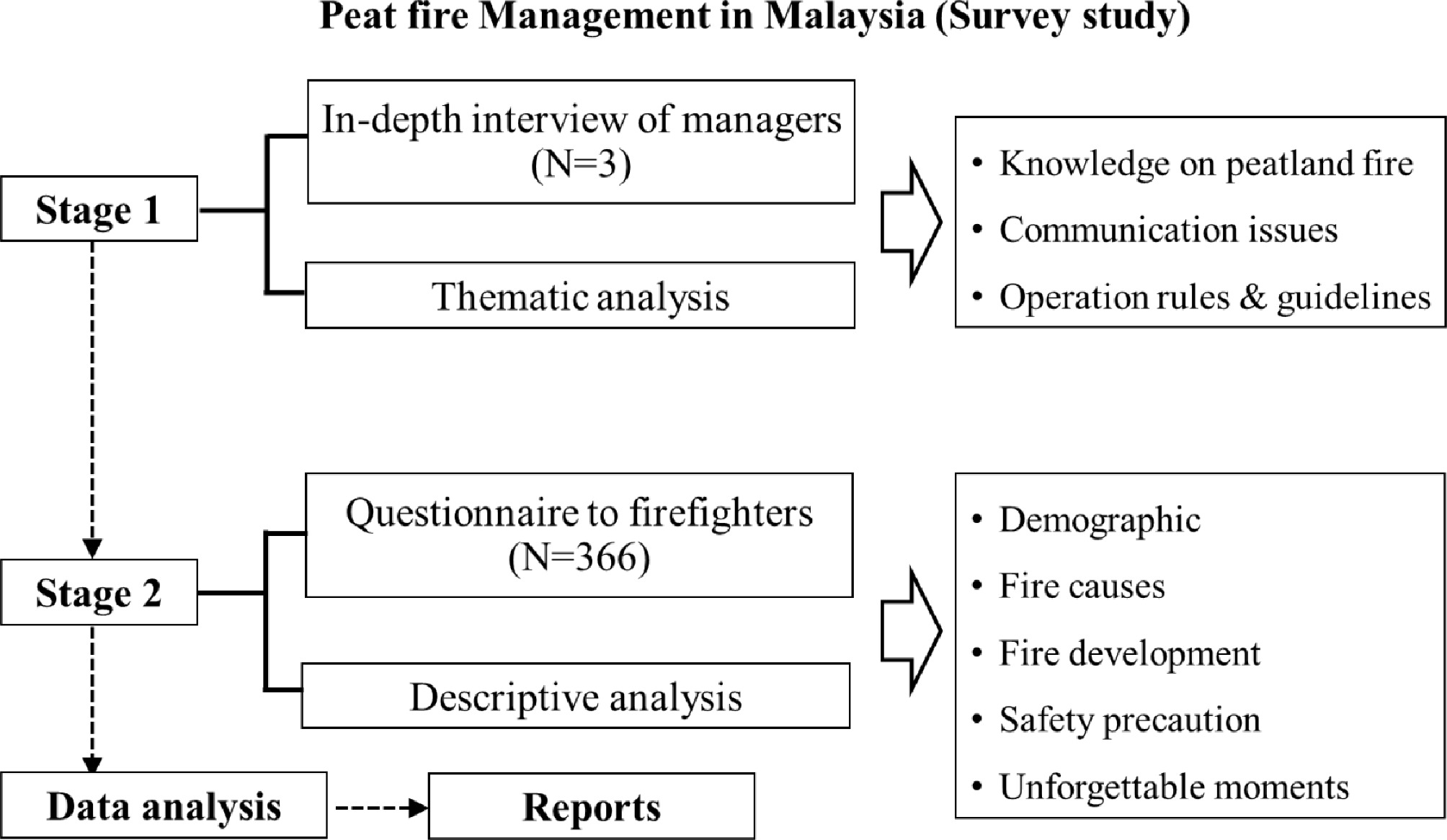
Figure 1.
Research framework for the interview and questionnaire used in this study.
In phase 2, a structured questionnaire was developed from the interview themes and distributed to frontline personnel from the same operational context. The questionnaire included both closed-ended and open-ended items covering respondent background, knowledge of peatland fire impacts, communication in firefighting, and compliance with operational rules and guidelines (see detailed survey question in Supplementary File 1). In total, 366 firefighters participated in the survey through a snowball sampling approach, representing approximately 30% of the total officer population (n = 1,200). For attitudinal items, the Likert scale was defined as 1 = strongly disagree, 3 = neutral, and 5 = strongly agree. For factor-importance items, 1 = least important and 5 = most important. Descriptive statistics were calculated in IBM SPSS Statistics 28.0. All interviewees and survey respondents were informed of the purpose of the study, participation was voluntary, and informed consent was obtained before the interviews and questionnaire survey.
-
This section analyses in-depth interviews conducted with three high-ranking officials from the Sabah Forestry Department and the Sarawak Fire and Rescue Department. The interviews concentrated on the peatland fire incidence, current approaches to management practices related to fire mitigation strategies, and suppression. The results and discussion are organised into distinct themes (see detailed raw data in Supplementary File 1), which include peatland fire, current approaches to peatland fire control and suppression, and peatland fire management.
Peatland fire
-
In the context of peatland fire occurrences, the interviewees have mentioned humans as factors contributing to most of the fire incidents in Malaysia. Table 1 summarizes the representative statementson factors and conditions to peatland fire occurrences. The highlighted statements related to humans as factors from the representatives are as follows.
Table 1. Summary of representative statements on factors and conditions to peatland fire occurrences.
Representatives Summary A Land clearance activities, such as slash and burn practiced by the locals, are the main contribution to peatland fire spread to the forest reserve. A & B During the El Niño in 2016, the peatland fire occurred for about 6 months. C The human factor is believed to be the main reason for the peatland fire, which is proven during the Movement Controlled Order (MCO) by the government of Malaysia as, the number of fires has been reduced since the pandemic in the past two years. C The slash-and-burn activity cannot be completely prevented and should exist as it relates to the economy. C The fire can smoulder for weeks or up to months A & B is a combination of conversations simultaneously. Human activities factor, such as slash-and-burn practices by local communities within the area, were identified as the primary contributors to peatland fires in a forest reserve. Representative C explained, "The human factor is believed to be the main reason for the peatland fire, which is proven during the Movement Controlled Order (MCO) by the government of Malaysia, as the number of fires has been reduced since the pandemic in the past two years. The slash-and-burn activity cannot be completely prevented and should exist as it relates to the economy." Similarly, Representative A remarked, "However, land clearance activities such as slash and burn practiced by the locals are the main contribution to peatland fire spread to forest reserve". Since human activity is the major contributor to the peatland fire occurrences, the situation is further exacerbated during the prolonged drought periods, which can last for several months.
Representative C highlighted that, "The fire can smoulder for weeks up to months". In addition, Representatives A and B added that, "during the El Niño in 2016, the peatland fire happened for about six months". These statements indicate that peatland fire can last for a long period, even under smouldering conditions below the ground surface.
Peatland fire management
-
Concerning managerial issues in the peatland area, key concerns focus on the current approaches to peatland fire management, as summarised in Table 2. Based on the interviews, several perspectives on existing policies and practices were shared by the representatives during the interviews as follows:
Table 2. Summary of representative statements on peatland fire occurrence factors and conditions.
Representatives Summary A Sabah Forestry Department had strengthening: (1) monitoring, (2) crew, (3) equipment, and (4) suppression techniques. A Construction of a canal in the Klias Forest Reserve in Sabah is effective in preventing the spread of fire into the forest; thus, a similar approach has been implemented in the Binsuluk Forest Reserve. B Mostly, human activities such as arson, land development, hunting, and recreational activities contribute to forest fire. B In addition to the prevention measures by the Sabah Forestry Department, an awareness issue was also implemented, especially for the people near the forest reserve, to increase awareness of the peatland fire. C Prevention is better than cure. C Engagement with the local community, known as the Champion, to assist with fire-related issues. C The thermal image will be available within 1–2 h which can check underground from the National Disaster Management Agency (NADMA), and we do not have to make any request from the fire department as this matter is crucial. C As the peatland is not stable land and hard to predict, the situation can be stressful to the firefighters. Other than that, peatland fire can reduce visibility by about 70%. C When discussing cross-border fire, it does not occur as the State of Sarawak creates a resilient community that understands its responsibility to protect the environment. Representative A highlighted that in peatland fire management, "Sabah Forestry Department had strengthening: (1) monitoring, (2) crew, (3) equipment, and (4) suppression techniques".
Representative C acknowledged that the significant challenges of preventing peatland fires and stressed that "Prevention is better than cure."
"Construction of a canal in the Klias Forest Reserve in Sabah is effective in preventing the spread of fire into the forest. Thus, a similar approach has been implemented in Binsuluk Forest Reserve", as summarised by Representatives A and B.
Representatives A, B, and C collectively highlighted the critical role of community engagement in effective peatland fire management, which was summarised as follows:
"Representative C encourages engagement with the local community, known as the Champion, to assist with fire-related issues. When discussing cross-border fire, it does not occur as the State of Sarawak creates a resilient community that understands its responsibility to protect the environment". Also, "In addition to the prevention measures by the Sabah Forestry Department, an awareness issue was alsoimplemented, especially for the people near the forest reserve, to increase awareness of the peatland fire". Furthermore, smoke is used as an indicator to assess whether peatland fires are fully suppressed, supported by thermal imaging technology provided by the National Disaster Management Agency (NADMA), which enables detection within 1−2 h. These combined efforts contribute to more effective prevention and reduction of peatland fire occurrences in Malaysia.
Current approaches for peatland fire control and suppression
-
Table 3 summarises the interview content with the high-ranking officers involved in peatland fire control and fire suppression. The interviews also provided valuable insights on the impact of the El Niño phenomenon in Malaysia, as follows:
Table 3. Summary of representative statements on peatland fire control and suppression.
Representatives Summary A Forest fire management is one of the strengths in SFD, as they believe that forest fire must be controlled, if not, it will affect the people nearby, the ecosystem, and the economy. A We have improved the Fire Danger Rating System by developing a new mobile application technology. The improved technology will collect a daily input of weather (humidity, rain, wind speed, and temperature) from 27 districts in Sabah. A In Sabah, current approaches that the Sabah Forestry Department has implemented since the 1980s are considered effective in controlling forest fire incidents despite the influence of the El Niño phenomenon. The total area affected by the forest fires during the El Niño phenomenon decreased from 1,000,000 ha (the year 1982/83) to 190,000 ha (the year 1997/98). A Awareness was implemented all over Sabah, especially to the people near the forest reserve area, to increase awareness on the peatland fire (a talk). B the recent El Niño phenomenon in 2016 that burn down 19,118 ha. B As a prevention measure, usually during a huge fire and intense smoke, the crew will control the fire using a fire break or fire guard to prevent the spread. B If the fire is very big with thick smoke, the firefighters wait for rain to pour down. B (1) establishing a fire break, (2) conducting an awareness program involving villagers living surrounding peatland forests, (3) providing regular training to forest fire crews, and (4) monitoring forest fire indicators daily through the Fire Danger Rating System (FDRS) and hot spots. C We will monitor the hotspot area through satellite, drone, and helicopter. C Currently, we use thermal image technology to detect and do total flooding to ensure the fire is fully suppressed. The thermal image will be available within 1−2 h, which can be checked underground by the National Disaster Management Agency (NADMA), and we do not have to make any requests from the fire department, as this matter is crucial. As the team marked the potential area and did the total flooding for the past two years, the fire cases have extremely reduced. C Rain is helpful in suppressing peatland fires. Peatland fire can reappear after suppression or rain. "In Sabah, current approaches that the Sabah Forestry Department has implemented since the 1980s are considered effective in controlling forest fire incidents despite the influence of the El Niño phenomenon. The total area affected by the forest fires during the El Niño phenomenon decreased from 1,000,000 ha (the year 1982/83) to 190,000 ha (the year 1997/98), and the recent El Niño phenomenon in year 2016 that burned down 19,118 ha". This information was summarised from the interview with Representatives A and B.
Fire prevention and suppression are integral components of peat swamp forest management. The following efforts has been undertaken to support prevention and suppression initiatives:
"(1) establishing a fire break, (2) conducting an awareness program involving villagers living surrounding peatland forests, (3) providing regular training to forest fire crews and (4) monitoring forest fire indicators daily through Fire Danger Rating System (FDRS) and hot spots", as summarised from interviews session with all representatives.
Technological advancements in fire monitoring have significantly enhanced the capacity to detect, monitor, and respond to fire occurrences in peat swamp forests. The input from the interview, stated by Representatives A and C, is as follows:
"We have improved the Fire Danger Rating System by developing a new mobile application technology. The improved technology will collect a daily input of weather (humidity, rain, wind speed, and temperature) from 27 districts in Sabah". Representative A.
"We will monitor the hotspots area through satellite, drone, and helicopter", Representative C.
Moreover, one suppression technique highlighted in the interview as a strategy is 'Total flooding', which is used to prevent the peatland fire from smouldering below ground. Representative C has stated that:
"Currently, we use thermal image technology to detect and do total flooding to ensure the fire is fully suppressed. The thermal image will be available within 1–2 h, which can be checked underground by the National Disaster Management Agency (NADMA), and we do not have to make any requests from the fire department, as this matter is crucial. As the team marked the potential area and did the total flooding for the past two years, the fire cases have extremely reduced."
Another strategy that has been used in peatland fire management is the provision of regular training specific to peatland firefighting. The importance is discussed as follows:
"This is our elite team, and everyone is well trained for peatland fire suppression," said Representative A, referring to the Initial Attack Crew (IAC) fire brigade. Representative B added, "We ensure that the incident command system is a safety measure to be followed by the personnel, and our crew is in a good spirit during the suppression."
In addition to that, water shortage-related issues during the prolonged drought have to be tackled to suppress the peatland fire. Therefore, the interviewees have stated that "If we have a water shortage, we have to wait for the rain to pour down to help ease the peatland fire". Also, the representatives A, B, and C mentioned the importance of rain and the impacts after fire, summarised as follows:
"Rain is helpful in suppressing peatland fires. But peatland fire can re-appear after suppression or rain."
Questionnaire for firefighters
Socio-demographics of the Malaysian firefighters
-
The respondents of this study were specific firefighters from the Sabah Forestry Department (Initial Attack Crew) and the Fire and Rescue Department Sarawak, all with experience in peatland fire suppression under the direction of the fire managers. A total of 366 firefighters participated in the survey (Table 4). The majority of respondents were between 31 and 40 years old (39.6%), while only 1.4% involved under 20 years old. Additionally, this study measured The respondent's' experience with peatland fire suppression in the field. Most respondents had 11−20 years of experience (30.9%) in peatland fire suppression, followed by those with three to ten years of experience (29.2%). Notably, 13.1% of the respondents had over 30 years of experience. The survey also revealed that 77% of respondents had received specific training in peatland fire suppression, while 23% had not.
Table 4. The socio-demographic of the firefighters who participated in this study (n = 366).
Demographic Description Respondents (%) Age (respondent's year) < 20 1.4 21−30 16.9 31−40 39.6 41−50 23.0 51−60 19.4 > 60 n.a. Years of working experience < 3 13.7 3−10 29.2 11−20 30.9 21−30 13.9 > 30 13.1 Trained in peatland fire suppression Trained 77.0 Not trained 23.0 Malaysian firefighters' perspective on the peatland fire issues.
-
Table 5 summarises respondents' perspectives on current peatland fire management. A large proportion of respondents strongly agreed that high fire intensity is a major challenge during firefighting (69.9%) and that rotation during firefighting can reduce stress (72.7%). Strong agreement was also reported for the role of local villagers in peatland fire prevention (67.5%) and for the preventive value of current policy measures (48.6%). In addition, 59.8% of respondents strongly agreed that the pandemic period highlighted the importance of human activity in peatland fire occurrence.
Table 5. Statements on the current approach to preventing peatland fires, as reported by respondents.
Statement Percentage (%) Totally disagree Disagree Neutral Agree Strongly agree 1 The current policy can prevent peatland fire occurrences 5.7 3.6 15.6 26.5 48.6 2 The pandemic situation in Malaysia demonstrates that human activity
is the main contributor to peatland fires3.3 1.9 14.5 20.5 59.8 3 Local villagers can help prevent peatland fires on their own by proper training 2.2 1.6 9.6 19.1 67.5 4 High fire intensity is a major challenge during firefighting 1.1 0.5 8.5 19.9 69.9 5 Rotation during firefighting can reduce stress 2.2 1.1 11.7 12.3 72.7 Based on the questionnaire, we asked respondents to share their unforgettable moments during peatland fire suppression. Their response was summarised into several categories: water shortage, past events, physical and mental challenges, long operational hours, being trapped in fire, international collaboration, equipment issues, and other concerns highlighted by the respondents, as summarised in Table 6.
Table 6. Unforgettable moments respondents experienced during peatland fire suppression.
Code Summary Water shortage • Water shortage during peatland fire suppression worsens the situation due to the lack of a water supply for peatland fire extinguishment Past events • Most firefighters recalled locations where peatland fire suppression had been conducted previously. Physical and mental issues • Challenges faced include inhaling smoke, fatigue, thirst, difficulty breathing, stress, and carrying heavy equipment.
• A small group of firefighters is tasked with extinguishing a large area.
• Losing a friend during operations
• Working at night without showering and sleeping in the forestLong operation hours • Long operation hours and standby periods of up to two months Trapped in fire • Almost trapped due to a huge fire and thick smoke, surrounded by flames Collaboration with Indonesia • Assisted in peatland fire suppression in Indonesia. 'Operation KALBAR 1997' is frequently mentioned Equipment issue • There is insufficient personal protective equipment (PPE) for firefighters during suppression, although some believe their PPE is adequate.
• Equipment to aid in suppression is inadequate.
• Some firefighters burned their hoses during suppressionOther issues related to peatland fire suppression • Come across venomous animals and insects; not enough manpower; strong friendship develops; fire in oil palm plantation;
a tree falls in front of them; lost communication.This summary is based on the open-ended responses from the questionnaire given to respondents, which were categorised based on the code. Analysis of the respondent's perspective on the peatland fire concern
-
The concerns regarding the contributing factors to peatland fire and factors that worsened the scenarios are shown in Table 7. Respondents identified open burning as the most important contributing factor (36.1%). Man-made canals, agricultural activities, arson, and forest encroachment were most frequently rated as moderately important, whereas fishing was most frequently rated as the least important factor (35.0%). Based on the respondents' perspectives, the most important factors that worsen the situation are strong winds (34.4%) and high temperatures (35.8%). Meanwhile, the factors of high humidity (33.1%), haze (28.4%), water shortages (29.2%), and a small population in the area (33.3%) are considered moderately important in worsening the peatland fire situation.
Table 7. Perspectives of Malaysian firefighters on the contributing factors to peatland fire occurrences and the situations that exacerbate peatland fire events.
Issue Factors Respondents' perspective Ratio (%) Contributing factors Open burning Most important 36.1 Man-made canal Moderately important 34.4 Agricultural activities Moderately important 32.2 Arson Moderately important 33.1 Fishing Least important 35.0 Forest encroachment Moderately important 35.5 Worsen the situation Strong wind Most important 34.4 High temperature Most important 35.8 High humidity Moderately important 33.1 Haze Moderately important 28.4 Water shortage Moderately important 29.2 Small population in the area Moderately important 33.3 This perspective in the questionnaire were based on Least important; Moderately important, Most Important for each factor. The results here show the highest number of responses for each factor showing the majority perspective of the respondents. Additionally, the survey results indicate that the majority of respondents (77.9%) consider the absence of smoke from underground as the most reliable sign of successful fire suppression, rather than the absence of visible flames (60.7%) or embers (38.5%) (Fig. 2).
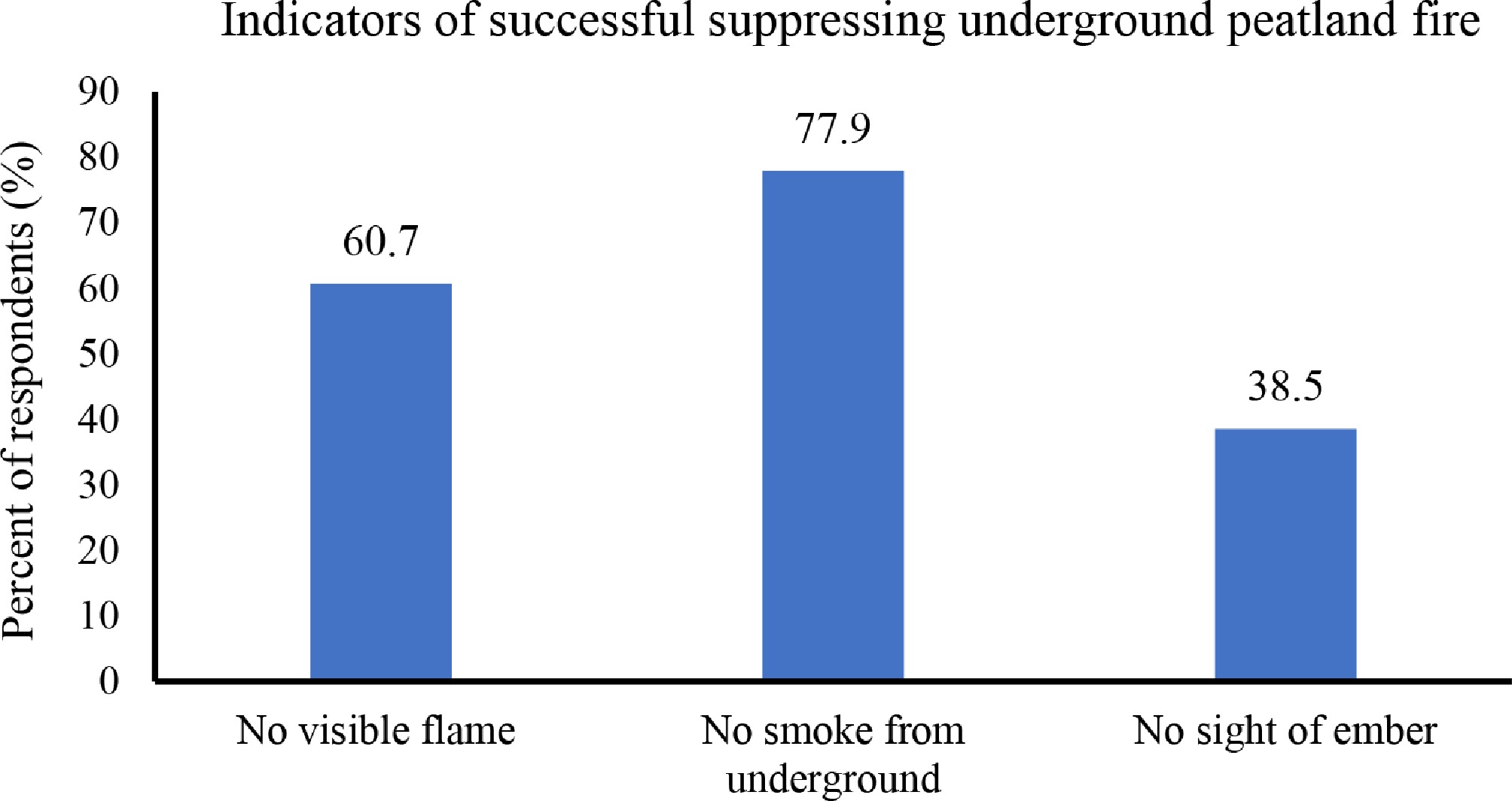
Figure 2.
Malaysian firefighters' perspective on the fully suppressed peatland fire below ground.
Malaysian firefighters' perspective on the safety issue
-
This study summarised the respondents' perspective on the most important subject related to safety issue (Table 8), wherein, PPE was the most important safety factor (74%), followed by transportation and site access for personnel, pumps, hoses, and water supply (73.5%), peatland fire suppression training (71.9%), and rotation hours (70.2%).
Table 8. The most important subject for safety precautions according to peatland fire suppression operations.
Items Respondent feedback (%) Least important Moderately important Important Most important Safety suit (PPE) 0.8 10.4 14.8 74.0 Transportation 0.5 9 16.9 73.5 Training for peatland fire suppression 0.5 10.1 17.5 71.9 Rotation hour 0.6 12 17.2 70.2 Hand tools 0.6 14.2 16.1 69.1 Communication gear 1.1 11.2 19.7 68.0 Water back-pump 0.8 14.2 19.4 65.6 The range is based on the most important factors on the safety precautions during peatland fire suppression operations. Here, 'Transportation' refers to access logistics to remote peatland fire locations, including the movement of firefighters, pumps, hoses, and water supply to the fire ground. -
The interview findings highlight three closely related aspects of peatland fire management in Malaysia: perceived ignition sources, current prevention and suppression practices, and the operational challenges faced by firefighters. Together, these findings show that peatland fire management in Malaysia is shaped not only by fire behaviour, but also by hydrology, land use, access constraints, and the need for sustained coordination between agencies and local communities.
Peatland fires pose a major ecological and operational challenge in Malaysia because they threaten forests, biodiversity, air quality, and firefighter safety[4,22,23,37,38]. Compared with boreal and Arctic peatlands, Malaysian peatlands are shaped by permanently warm conditions, seasonal drought, extensive drainage, and intense land-use pressure, all of which increase the likelihood of persistent subsurface smouldering. Within this setting, practitioners also identified human-related activities, especially land clearing and open burning, as important drivers of peatland fire occurrence.
Aligned with the findings that human activities are the primary cause of fire occurrence, one notable example is the slash-and-burn method. This traditional practice is the most common land-clearing method among local villagers, who burn undesirable grasses or trees to increase the nutrients necessary for their farms, as observed in the study area (Fig. 3). In Indonesia, the government's strict ban on land clearing in 2015 has impacted food security, as traditional farmers have struggled under this new policy. Nevertheless, farming plantations remain a significant driver of forest fire occurrence in Southeast Asian countries, including Malaysia[2,29].
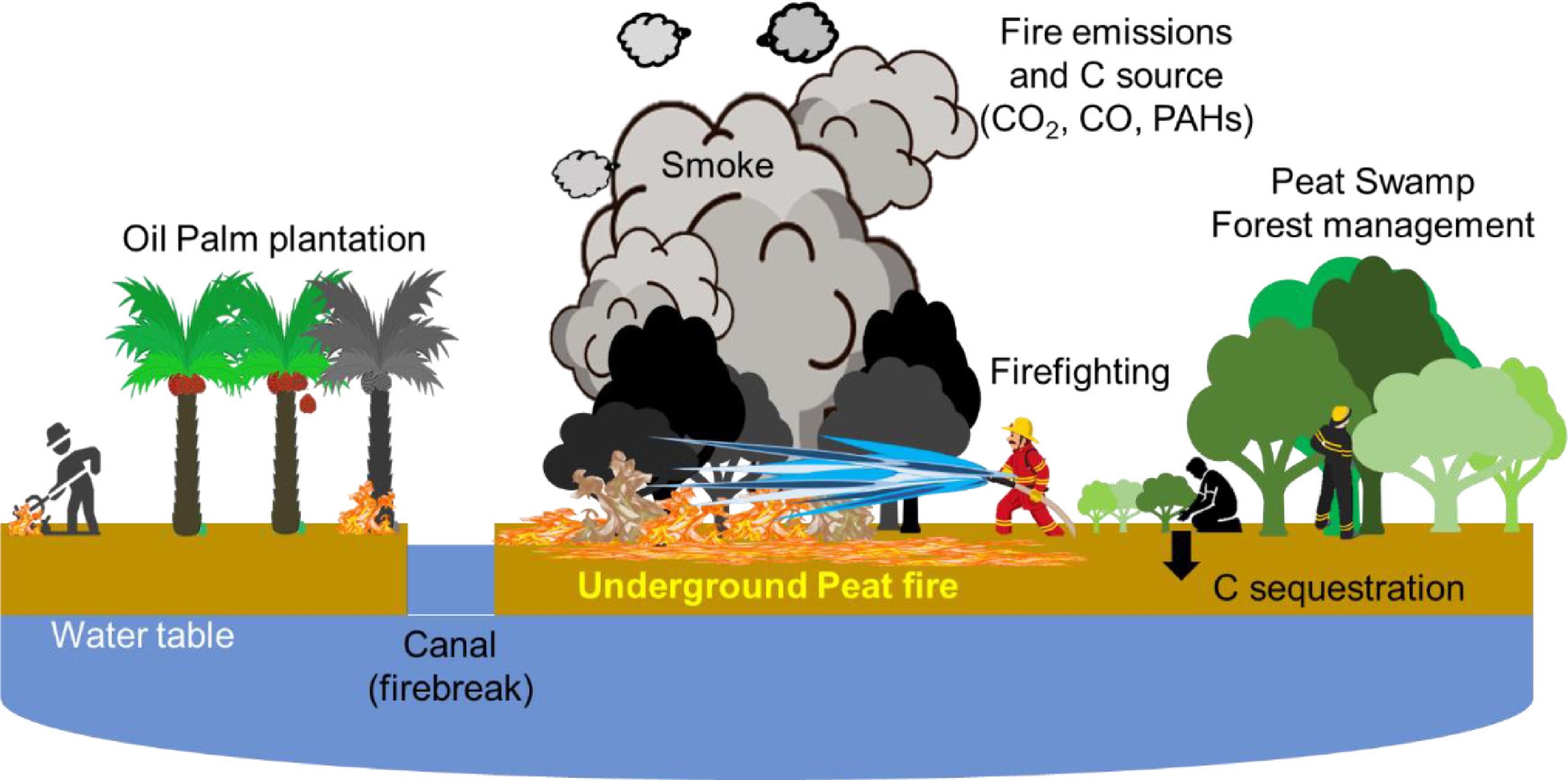
Figure 3.
Peatland fire situation in the tropical region (CC BY: DNS Musa).
The reduction in peatland fire occurrences during the COVID-19 pandemic may reflect the influence of reduced human activity, as perceived by fire managers and respondents, rather than definitive proof of causality. In the Malaysian peatland context, this interpretation is consistent with the importance practitioners placed on land clearing, open burning, and other livelihood-related activities near peatland margins. These findings suggest that prevention strategies should focus not only on suppression capacity but also on reducing avoidable ignition sources through awareness, early intervention, and community-based engagement[13,39,40].
Fire management practices in this region have applied a suitable policy and action to control the peatland fire occurrences, as presented in the interview results. This collective action, guided by experts, is integral to effective fire disaster response[3]. It is important to strengthen the current strategies due to the increased risk of peatland fire during the strong El Niño phenomenon in Malaysia, which is very challenging to manage[23]. Government agencies, including forestry, environmental, and fire and rescue departments, along with other NGOs, are prioritizing forest fire management as the top priority in preventing fire under the standard management protocol[4].
Firebreak canals were highlighted by the interviewees as an important prevention measure in Malaysian peatland fire management[41,42]. In practice, these canals are used to reduce lateral fire spread from adjacent land into peat swamp forest reserves, especially where degraded or converted land borders protected peatland (Figs 3 and 4).
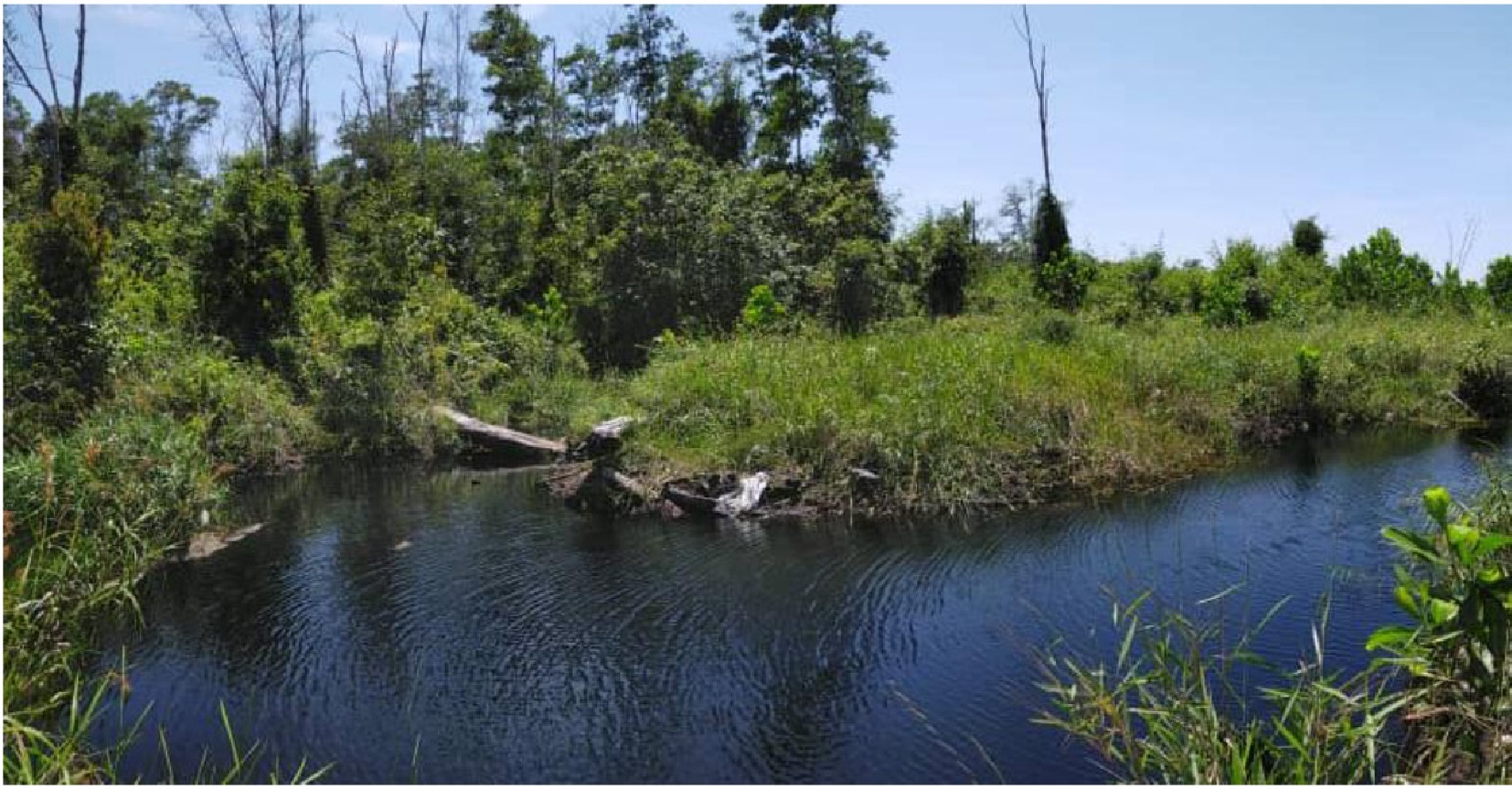
Figure 4.
Firebreak canal as part of the prevention method (Photo by: DNS Musa, 2021).
Hydrological management is equally important. The protective function of firebreak canals differs from drainage canals associated with agriculture or land conversion, which may lower groundwater levels and increase peat flammability. For this reason, fire managers also emphasised check dams, water retention, and other measures that slow water loss and support rewetting as part of long-term fire prevention[36,40,43,44].
Community engagement was also repeatedly identified as a practical component of prevention. Awareness programmes, local participation, and initiatives such as Sarawak's Champion approach may help reduce unsafe burning practices and improve early response capacity in peatland communities located near fire-prone areas (Fig. 5). The recovery process allows regeneration of the burned area, which results in variability in the forest regrowth process, and long-term monitoring is recommended, especially the groundwater levels, as part of the hydrological nature of peat swamp forest[14,45].
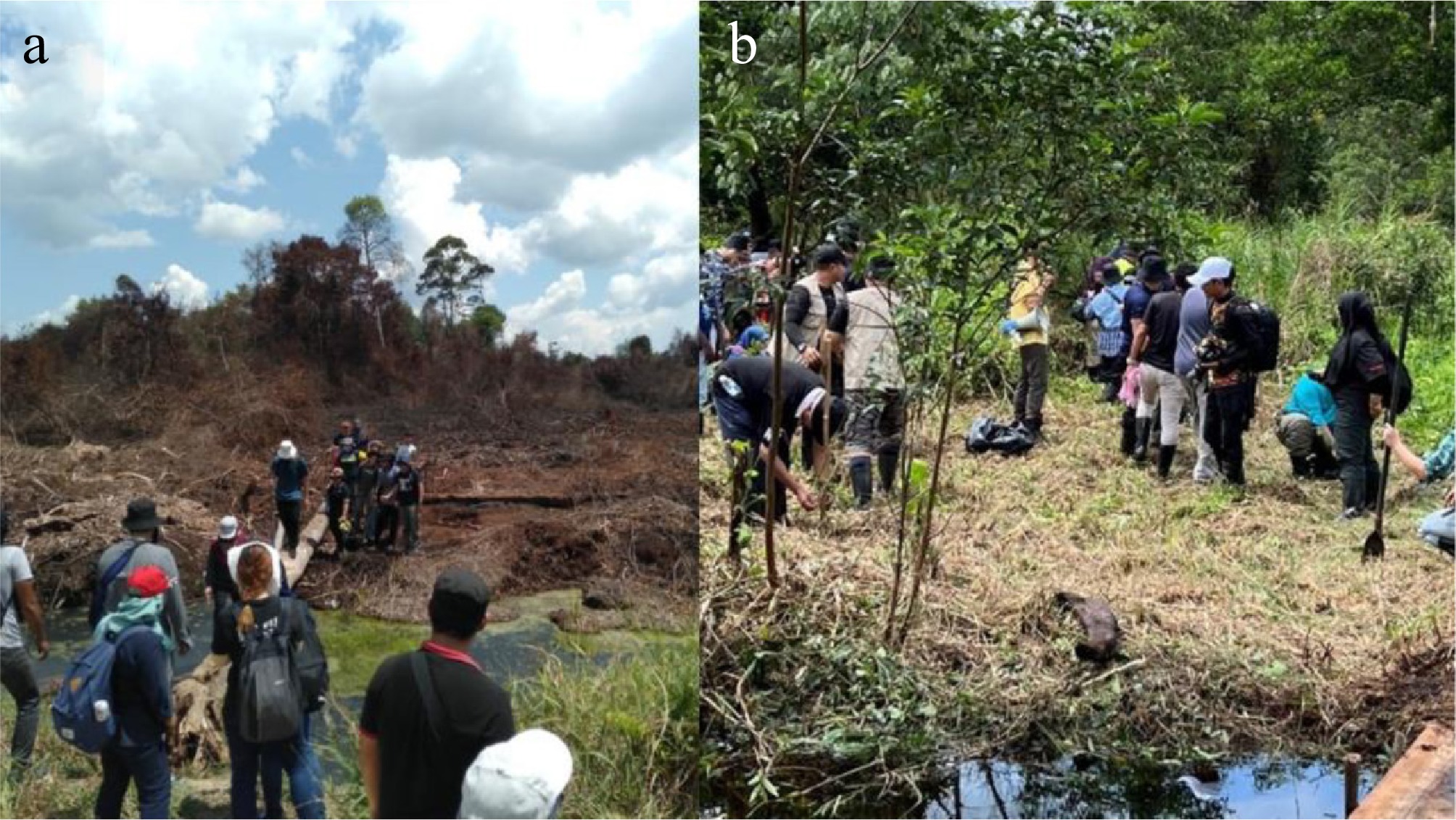
Figure 5.
(a) Higher education students visit the burnt area in Beaufort Peatland, Sabah, while the forest officer informs them of the peatland fire impacts. (b) Tree planting program in Raja Musa Forest Reserve, Selangor, in the post-fire area (Photos by: DNS Musa).
Suppression becomes particularly difficult during El Niño-related drought, when prolonged dry conditions increase peat flammability and extend fire duration in Malaysian peatlands[7,23,45]. The operational implication is that fire management must remain prepared for long-duration incidents that require sustained water management, repeated patrols, and extended mop-up rather than short surface suppression alone[46,47].
Monitoring is a key component of peatland fire management because early detection improves both prevention and suppression planning. In the study regions, managers described the use of hotspot monitoring, weather observations, and the Fire Danger Rating System (FDRS) to guide surveillance and allocate resources more effectively in fire-prone areas[4,46].
Firefighters are the first ones to respond to all types of fires, including open burning like peatland forest fires[47]. Direct suppression of peatland fire exposes firefighters to heat, smoke, unstable ground, and prolonged physical strain, especially when flooding is used to extinguish subsurface smouldering. Although indirect methods such as firebreak construction and aerial water delivery may reduce immediate exposure, water shortage and difficult access remain major operational constraints during dry periods. The indirect attack method to extinguish the fire is safer for the firefighters, for example, building firebreaks and water bombing by using helicopters. However, water shortage will be a problem during the prolonged dry season[28]. The water table of at least –20 cm from this surface is lower during the dry season, causing a high risk if people are around[3]. In Sabah, the suppression process by the firefighters during a forest fire will be done by the frontline crew of the Initial Attack Crew under the Sabah Forestry Department before the national firefighters arrive.
From the statement, during huge fires and thick smoke, waiting for the rain to fall is another precaution taken for the firefighter's safety. In many cases, the fire brigade must rely on rain to help control a peatland fire, especially as water shortages frequently occur during the dry season, limiting water availability for fire suppression. Rain is often the best, and sometimes the only option to control the fire, although this approach is difficult for most non-firefighting communities to accept and understand[16,48]. Wetter sites would have lower fire vulnerabilities through the integrated effects of site-specific soil moisture and short-term water level[19].
After the suppression process on the surface fire, a mopping-up operation will be done (Fig. 6) to ensure that any underground fire is fully extinguished and cannot reignite or spread. Many deep underground fire points are difficult to detect because the soil absorbs most of the fire smoke unless the smouldering fire spreads closer to the surface[18,49]. Therefore, extensive patrolling and suppression are required in burned peat areas to address smouldering fires[28]. The continuous monitoring on the peatland after burning was required, such as hotspot detection, groundwater level, water level on the check dam, continuous monitoring from a watch tower, and monitoring the potential area that is susceptible to fire using Geographic Information System (GIS), remote sensing, and drone[50].
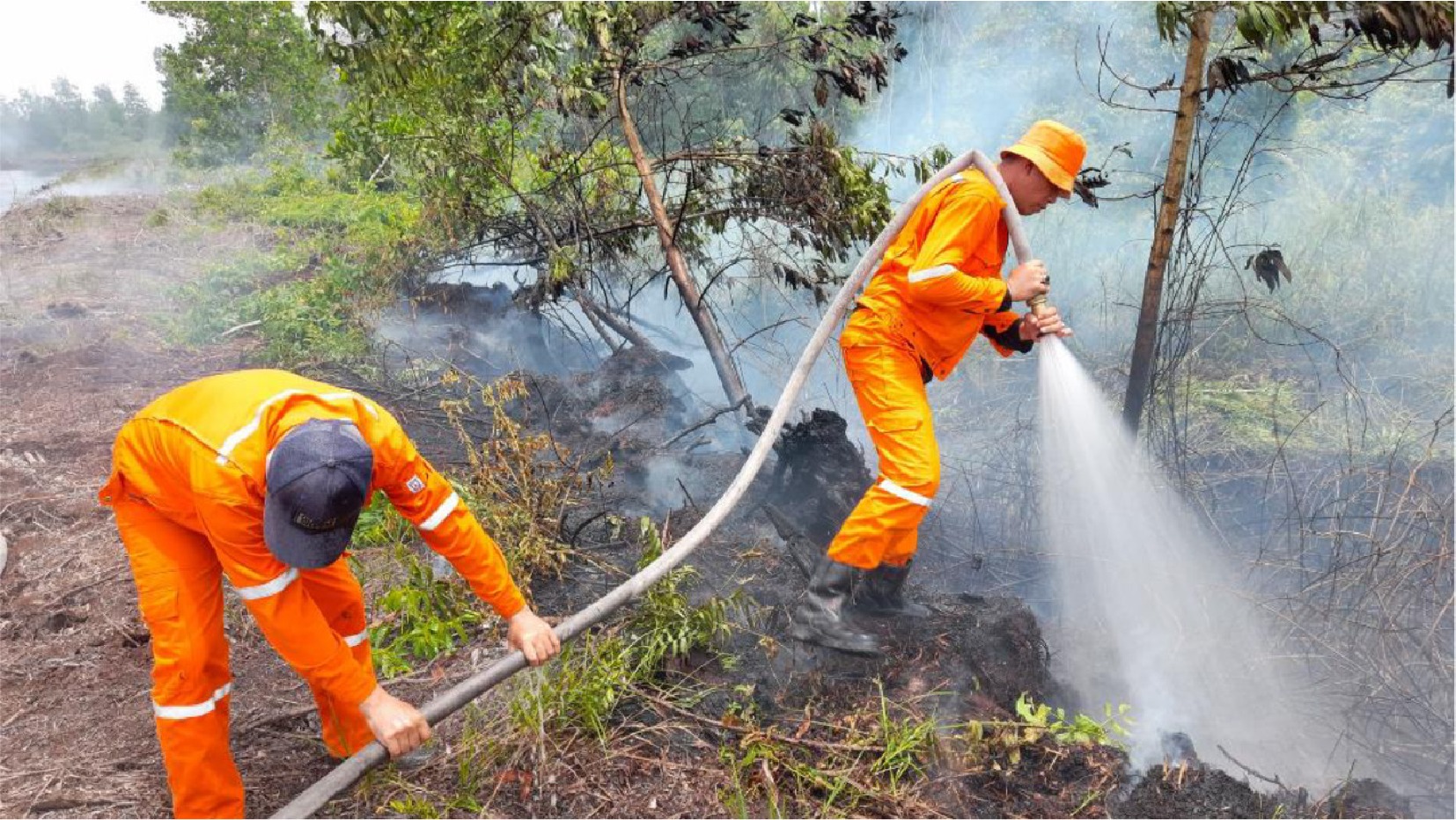
Figure 6.
Initial attack crew doing mopping as part of a post-fire effort to reduce smouldering fire re-occurrences on the surface (Photo by: Sabah Forestry Department).
Questionnaire for firefighters
-
A total of 366 firefighters participated in the survey, which also assessed the respondents' experience in the field, revealing a broad range of expertise, with many having over a decade of experience in peatland fire suppression. Notably, a significant portion of the respondents have received specialized training in peatland fire suppression, highlighting the importance of training as a crucial safety measure given the unique challenges posed by peatland fires and the distinct structure of peat forests.
Respondents strongly supported the role of local villagers and current policy measures in peatland fire prevention. This pattern is consistent with the interview findings, which emphasised that community participation and practical awareness efforts remain important for reducing ignition risk in fire-prone peatland areas.
This study provides an overview of the firefighter's moments related to past peatland fire suppression (Table 6), aligning with Table 5. Several factors, either alone or in combination, contribute to forest fire occurrences, and most hotspots occur in tropical regions[4]. Water shortage is mentioned in the survey, and it is a moderate factor that worsens the fire case, but also affects the firefighters' suppression efforts. The effort can also be diverted when the equipment to help in fire suppression is not enough, and sometimes the hose is burned during the suppression. Other than worsening the situation, it will also prolong the period for the firefighters to extinguish the peatland fire. Without adequate water, controlling and suppressing the fire, especially the smouldering fire is difficult. Moreover, prolonged operations during peatland fire suppression necessitate night work and overnight stays in the forest for firefighters.
Moreover, the respondents highlighted that physical and mental health issues were identified as issues related to peatland firefighting. It is highly related to the higher fire intensity as a major challenge during the firefighting efforts in Table 2, and the respondents had experienced inhaling smoke, fatigue, thirst, difficulty breathing, and stress with the heavy equipment that they must carry, which increased their physical intensity, and mental strength. There was a scenario where the firefighters were trapped in a fire because of the high fire intensity, which required more mental strength to overcome the situation.
Other than that, the respondents also assisted the Kalimantan Barat (KALBAR) fire suppression in 1997/98, which is one of the severe peatland fires that lasted from June 1997 to June 1998. This event is one of the most devastating years that produced much smoke, which led to huge haze pollution. In Malaysia, haze pollution warnings are issued based on the Air Pollution Index (API) levels, starting with an early warning at API 101−150, escalating through second (API 151−200 for 24 h), third (API 201−300), and strict warnings (API 301−400), and culminating in an emergency warning at API 401+, which is considered very dangerous and leads to a disaster declaration and closure of government and NGO operations, and cloud seeding operation[51]. Peatland burning has increased toxic haze, affecting the skies of Southeast Asia and escalating fire incidents in recent decades[52]. Peatlands pose a significant risk, potentially causing ecological impacts like fires, habitat destruction, and greenhouse gas emissions[24,53]. The 1997/98 catastrophe, characterised by extensive fires, persisted for approximately six months. Extinguishing fires in peatlands typically takes days or even weeks due to the extensive area affected[47].
Another issue discussed is the insufficient manpower available during high-intensity firefighting situations. Also, the emotional toll of losing a crew or a friend impacts the firefighters in the 2020 fire incidents in Sabah, Malaysia, which involved a fire crew from the Sabah Forestry Department. Respondents also noted instances of losing friends during firefighting operations (Table 6), as exemplified by a crew member who was found unconscious and believed to have suffocated[54]. Respondents also highlighted concerns regarding oil palm plantations, with land use changes to oil palm being identified as a significant driver[36].
The survey results in Table 7 indicate that respondents perceived open burning as the most important contributing factor to peatland fire occurrence, while man-made canals, agricultural activities, arson, and forest encroachment were more often rated as moderately important. Fishing was included as a context-specific activity because small ignition sources may occasionally arise during fishing trips, for example, from temporary cooking fires or discarded cigarettes; however, respondents clearly ranked it as a minor contributor. Overall, these findings suggest that Malaysian peatland fire prevention should focus primarily on reducing high-risk human ignition sources and land-use pressures.
Factors that worsen the situation of the peatland fire were analysed to understand the respondents' perspectives. Weather conditions, including strong winds and high temperatures during the peatland fire event are the most important factors that worsen the incidents. Fire-promoting factors like wind direction, drainage system, water availability, and the climatic regime of that area are important to quantify the fire-prone area which will be helpful in fire management strategies[4]. Moreover, hot temperatures and extended dry weather conditions notably escalate forest fire occurrences by increasing flammability and facilitating rapid spread[21,55]. The potential impact of Arctic influence on the low-latitude precipitation suggests a shift to increase the influence of tropical warming in the future and intensify the precipitation[56]. Other factors like humidity and haze, though they moderately influence the fire situation, significantly affect firefighting operations. Water shortage conditions and small populations are also identified as moderate factors that worsen the fire scenarios and impede firefighter suppression efforts. An awareness campaign involving the local communities is important to be conducted to assist with firefighting as an early fire suppression.
In peatlands, the underground smouldering fire is dangerous because the flameless fire can burn in the deep soil layers, and underground smouldering fire points are difficult to visualise and detect. Then, it is challenging to use effective suppression measures to extinguish these hidden and persistent holdover fires. Smoke is one of the indicators for the presence of smouldering fire below the surface in the peatland area (Fig. 7). Respondents agreed that no presence of smoke coming from underground signifies successful suppression (77.9%), rather than judging by no visible flame or ember presence as an indicator of successful suppression (Fig. 2). Ensuring the peat saturation will complement the underground smouldering fires are fully suppressed. Maintaining a high groundwater level can serve as a natural firebreak for peatland fire propagation[8]. Effective groundwater level management, moisture content, and fuel arrangement are crucial for preventing smouldering fires in peat soil. Thus, techniques such as rewetting are used to conserve water and increase the moisture level in drained peatlands to mitigate fire risk[36].
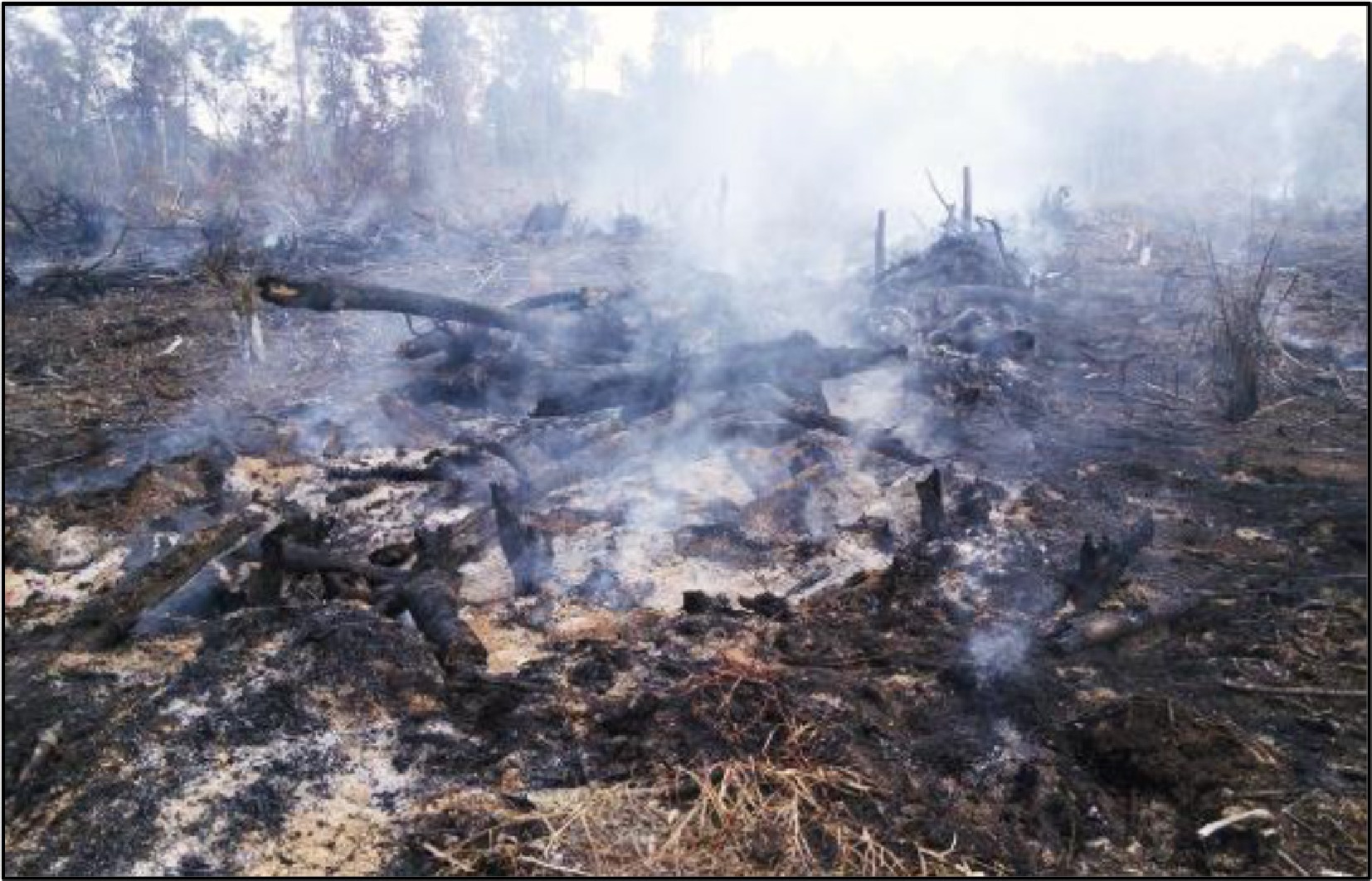
Figure 7.
Smoke on the peat surface due to smouldering fire underground (Photo by: DNS Musa, 2015).
Ensuring safety during firefighting is very important, and this study summarised the respondent's perspective on the safety issue. Personal Protective Equipment (PPE) plays a crucial role in minimising hazards, as indicated in Table 3. We can see that the inadequacy of PPE and tools significantly impacts peatland fire suppression efforts and time. Respondents agreed that PPE was the most important safety factor (74%), followed by hand tools (69.1%), water back pump (65.6%), and communication gear (68%). Insufficient training, lack of equipment, funds, water, and remote location were often cited as the reasons for failure in past peatland fire events[57]. Consequently, transportation to peatland fire location (73.5%) and peatland fire suppression training (71.9%) were emphasised as mostly important to control the peatland fire respondents. Additionally, rotation operation hours are very important to 70.2% of respondents, correlating with the long operation hours and stress levels as discussed in Tables 5 and 6. Given the challenges of peatland fire suppression, proper training and rotation hours are very important to minimise fatigue during firefighting.
-
Fires in tropical peatlands pose significant risks due to accidental ignition, especially during dry seasons and human activities. The underground smouldering peatland fires in these regions, akin to 'zombie fires' or a holdover fire, persist underground despite current suppression methods like water bombing and total flooding (Fig. 8). Fundamental research on peatland fire behaviour and emissions is vital for effective prevention and suppression strategies. Governance measures, including tube wells to saturate the land, aim to mitigate these fires. The tube well is an underground infrastructure to allow underground water to be extracted to the surface as part of mitigation and suppression efforts by pumping the water to flood the area and to increase the water level[32]. Firefighters' efforts are crucial for both fire control and addressing health concerns due to emitted pollutants. Proactive strategies based on interdisciplinary research are essential to mitigate the environmental and human impacts of peatland fires.
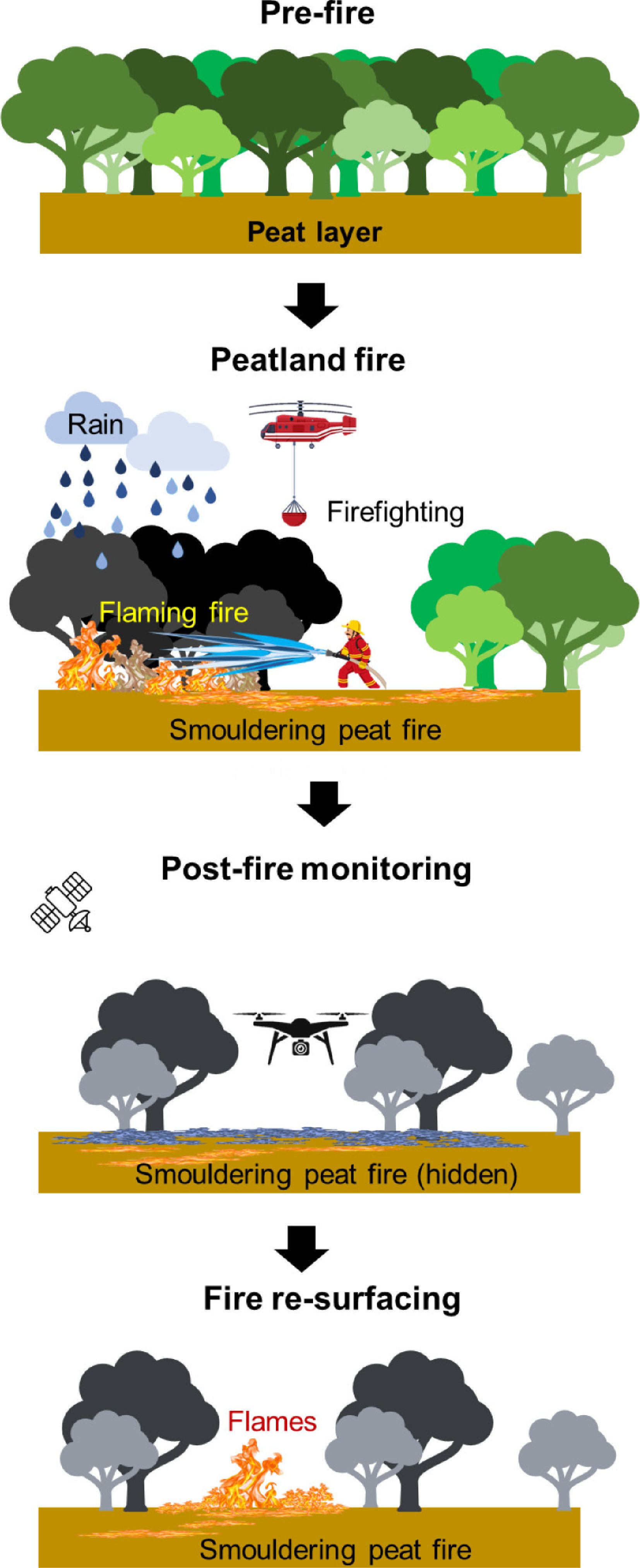
Figure 8.
Re-occurring smouldering fire in the tropical peatland (CC BY: DNS Musa & X. Huang).
New technologies in peatland firefighting
-
Current technology applied in tropical peatlands includes a monitoring system utilising satellite imagery and the Fire Danger Rating System (FDRS) to detect hotspots. Future research focusing on smart firefighting technologies holds significance for enhancing peatland fire management practices. These technologies incorporate artificial intelligence (AI), machine learning (ML), and data analytics to offer real-time insights and decision support for firefighting efforts. AI-based forecast systems will provide early warning systems, enabling peatland fire managers and firefighters to plan and deploy resources effectively and proactively.
Climate change and peatland fire
-
Peatlands are integral to global carbon cycling, yet their vulnerability to fire poses challenges for carbon emissions reduction and biodiversity conservation, especially given changing climatic conditions. Climate change has significantly altered fire patterns in tropical peatland ecosystems. To effectively manage peatland fires in the long term, a multidisciplinary approach merging ecology, climatology, remote sensing, socioeconomics, and advanced technology is essential. This integration can improve early detection and prediction of peatland fires, enabling proactive fire management strategies. Ultimately, this comprehensive approach seeks to understand the intricate relationships between climate change, peatland ecosystems, and fire dynamics.
Policy related to peatland fire management
-
Current peatland fire management policies in Malaysia have reduced fire occurrences, but addressing prescribed burning activities remains crucial. Prevention is prioritised, with initiatives such as sustainable palm oil sectors and no-open-burning policies. Collaboration on an international level is essential for developing new strategies. Rehabilitation efforts, including tree-planting programs, are critical for reducing human-caused ignitions and enhancing resilience to peatland fires while also supporting carbon trading initiatives. As illustrated in Fig. 3, the fire risk in Malaysian tropical peatlands is linked not simply to the presence of oil palm plantations, but more specifically to drainage, land-use conversion, lowered groundwater levels, and the resulting smouldering-prone tropical peat fuel complex. Unlike many boreal or Arctic peatlands, Malaysian peatland fires occur in warm, densely used landscapes without freeze-thaw interruption and frequently in drained or degraded peat adjacent to oil palm or other converted land. The fuel complex may include peat soil, roots, woody debris, litter, and plantation residues, which can sustain hidden smouldering below the surface even when flaming fires are no longer visible. This helps explain why practitioners emphasised thermal imaging, total flooding, canal-based water management, and extended mop-up operations rather than relying only on surface suppression. The findings therefore support suppression strategies tailored to Malaysian conditions, especially rewetting, check dams or canal blocking, rapid access to water, and community-based ignition prevention in high-pressure land-use settings.
-
This study on peatland fire management in Malaysia serves as a foundational framework for integrated peatland management strategies. It offers valuable insights to inform fire management policies aimed at mitigating future fire incidents, particularly concerning firefighter safety. Anthropogenic activities have been identified as significant contributors to peatland fire occurrences, with a notable reduction during the pandemic, particularly in forest reserve areas. Similarly, Bhutan has experienced a decline in fire cases due to the prohibition of slash-and-burn agriculture, coupled with enhanced fire prevention measures such as forest fire training and improved firefighting equipment.
In Malaysia, Sabah has set ambitious goals of ceasing new planting on peatlands through rigorous certification standards like the RSPO, contrasting with federal government initiatives. To bolster efficiency and minimise risks for firefighters, stringent safety measures encompassing training, protective gear, equipment, and rotational schedules are imperative. Insights garnered from respondents and interviews have shed light on factors exacerbating peatland fire occurrences, safety measures, and scenarios vital from the perspectives of firefighters and managers.
Firefighters face significant hazards, including exposure to toxic gases and the risk of being entrapped in fire zones, which can lead to acute and chronic non-communicable diseases (NCDs) due to prolonged exposure to harmful substances and gases during firefighting. Further research on the occupational risks and injuries among Malaysian firefighters is warranted to comprehensively comprehend the post-firefighting effects.
Preventive measures during large-scale fires involve establishing fire breaks or fireguards to contain fire spread. Awareness programs targeting local communities near forest reserves play a pivotal role in enhancing understanding and preventing peatland fires. Engaging local communities in firefighting efforts can significantly curb fire propagation. Effective coordination among managers is essential, exemplified by peatland restoration programs aimed at enhancing biodiversity. Forest areas affected by fires should ideally undergo natural regeneration without human intervention to promote species richness. This holistic approach underscores the collective responsibility of individuals and coordinated efforts to safeguard forests and lives from the ravages of peatland fires.
This research is funded by the National Natural Science Foundation of China (NSFC Grant No. 52322610) and State Key Laboratory of Climate Resilience for Coastal Cities. The authors thank the Sabah Forestry Department and Fire and Rescue Department of Sarawak for providing information on the in-practice approach to combat a peatland fire and participating firefighters for the questionnaire.
-
The authors confirm contributions to the paper as follows: study conception and funding acquisition: Huang X; methodology: Lin S, Huang X; investigation: Musa DNS, Qin Y; formal analysis: Musa DNS, Huang X; data curation, writing – original draft: Musa DNS; resources: Musa DNS, Qin Y, Tohir MZM; writing – review & editing: Qin Y, Yahya H, Lin S, Tohir MZM, Huang X; supervision: Tohir MZM, Huang X. All authors reviewed the results and approved the final version of the manuscript.
-
The datasets generated during and/or analyzed during the current study are available from the corresponding author on reasonable request.
-
The authors declare that they have no conflicts of interest.
- Supplementary File 1 Interview session with fire managers, survey form for firefighters, and firefighter survey results.
- Copyright: © 2026 by the author(s). Published by Maximum Academic Press on behalf of Nanjing Tech University. This article is an open access article distributed under Creative Commons Attribution License (CC BY 4.0), visit https://creativecommons.org/licenses/by/4.0/.
-
About this article
Cite this article
Musa DNS, Qin Y, Yahya H, Lin S, Tohir MZM, et al. 2026. Peatland fire management in Malaysia: current approaches and challenges. Emergency Management Science and Technology 6: e004 doi: 10.48130/emst-0026-0004 

Peatland fire management in Malaysia: current approaches and challenges
- Received: 19 February 2026
- Revised: 30 March 2026
- Accepted: 10 April 2026
- Published online: 09 May 2026
Abstract: Peatland fires in Malaysia are a recurrent environmental hazard associated with prolonged drought conditions and human activities. Interviewees and respondents perceived human-related activities to be major contributors, and fire incidents were reported to decline during the COVID-19 pandemic period. In response to this issue, this study examines critical management strategies and firefighter efforts to control peatland fire occurrences, focusing on risk assessment and suppression effectiveness. To achieve this, the research integrates structured interviews with peatland fire managers and survey responses from 366 individuals involved in fire suppression. As a result, the collected data provide insights into policy frameworks, prevention measures, and safety challenges. Specifically, findings highlight inefficiencies in fire management policies, gaps in prevention and suppression strategies, and notable firefighter safety concerns. Furthermore, perspectives from management and frontline responders reveal operational challenges and key areas for improvement. Consequently, this study enhances understanding of peatland fire prevention approaches, contributing factors influencing fire occurrences, and the safety risks faced by firefighters. By building on these insights, the study emphasizes the necessity of integrating both managerial and frontline perspectives in comprehensive fire risk mitigation. Ultimately, the findings support improved risk assessment frameworks and policy recommendations, advocating for a more effective peatland fire management approach. Therefore, this study underscores future research directions in fire suppression strategies, safety protocols, and management efficiency enhancements.
-
Key words:
- Peat fire /
- wildfire management /
- Tropic forest /
- Emergency response /
- Field survey