-
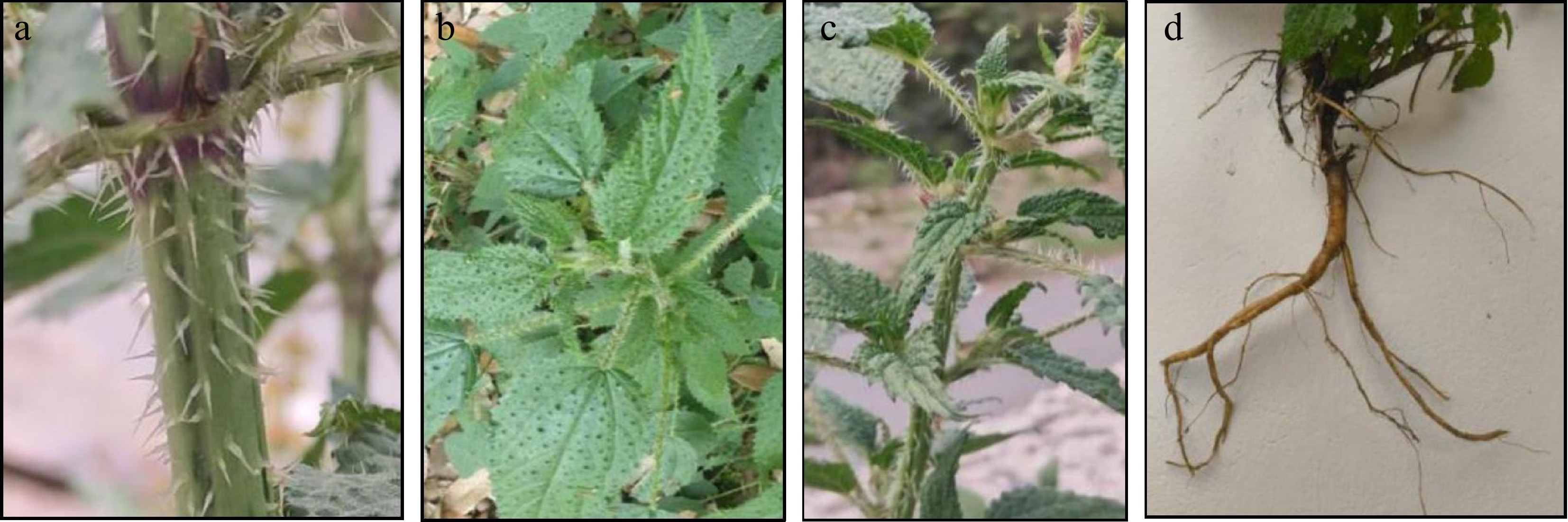
Figure 1.
Urtica dioica (a) trichomes, (b) leaves, (c) whole plant, and (d) roots collected from Hiranagar (Totu), Shimla (H.P.).
-
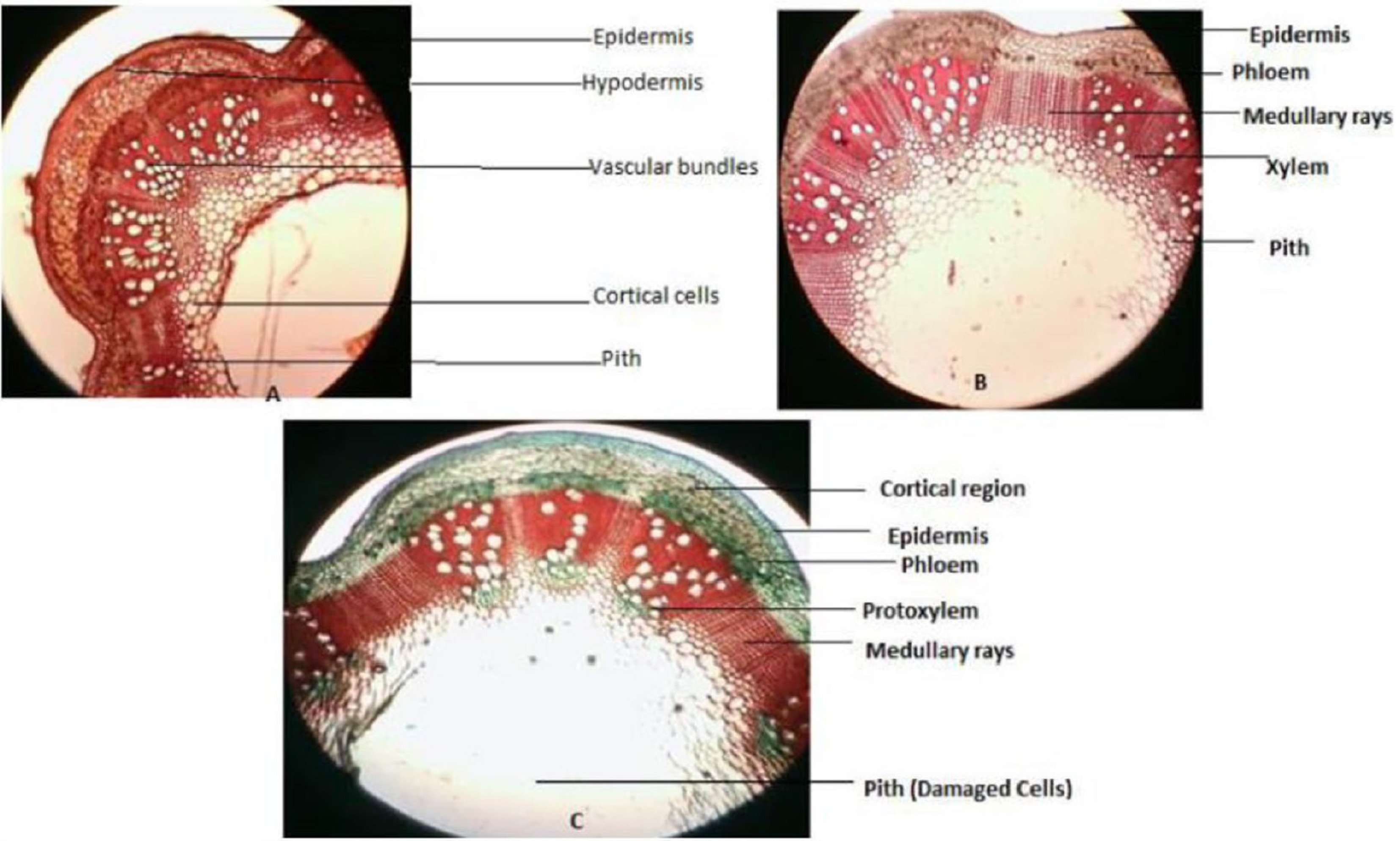
Figure 2.
(a)–(c) Transverse section of Urtica dioica stem showing vascular bundles[11].
-
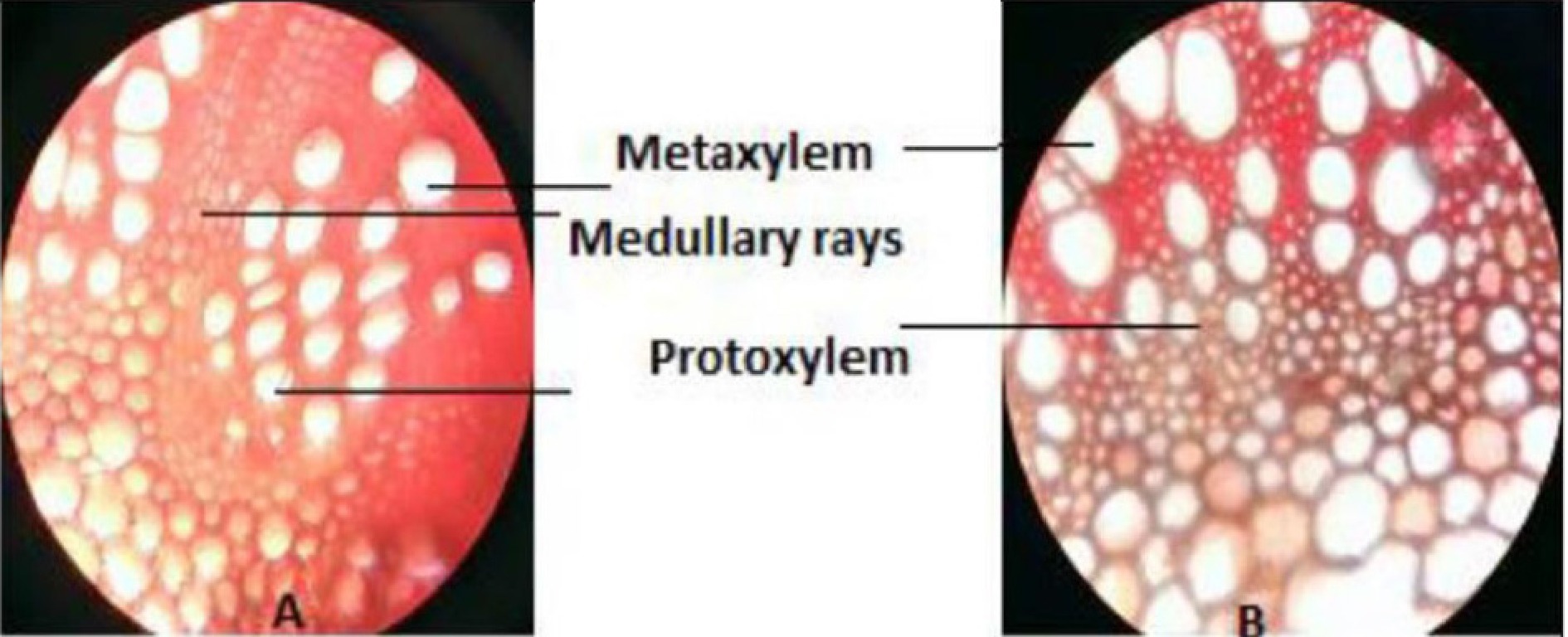
Figure 3.
(a), (b) Transverse section of Urtica dioica stem showing meta xylem, and proto xylem vascular bundles[11].
-
-
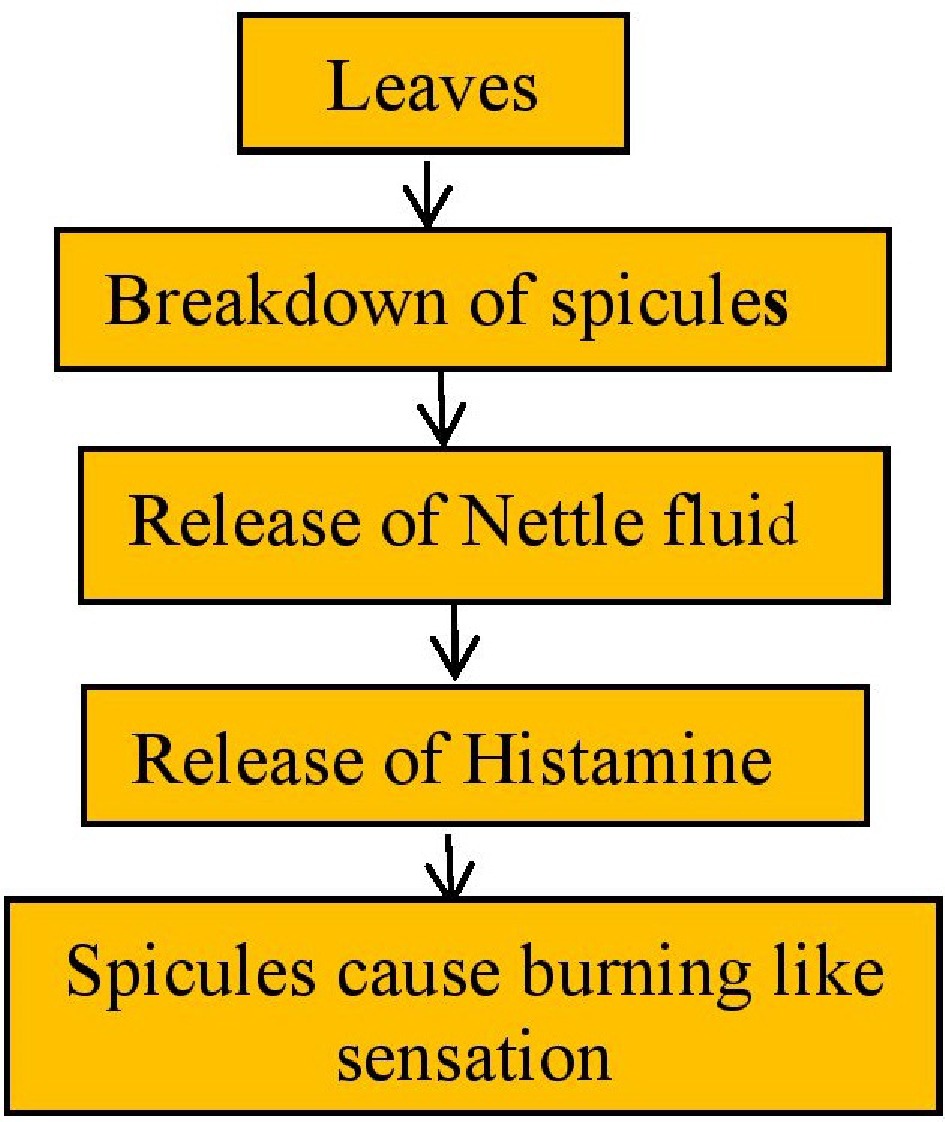
Figure 5.
Mechanism of the stinging sensation caused by Urtica dioica trichomes.
-
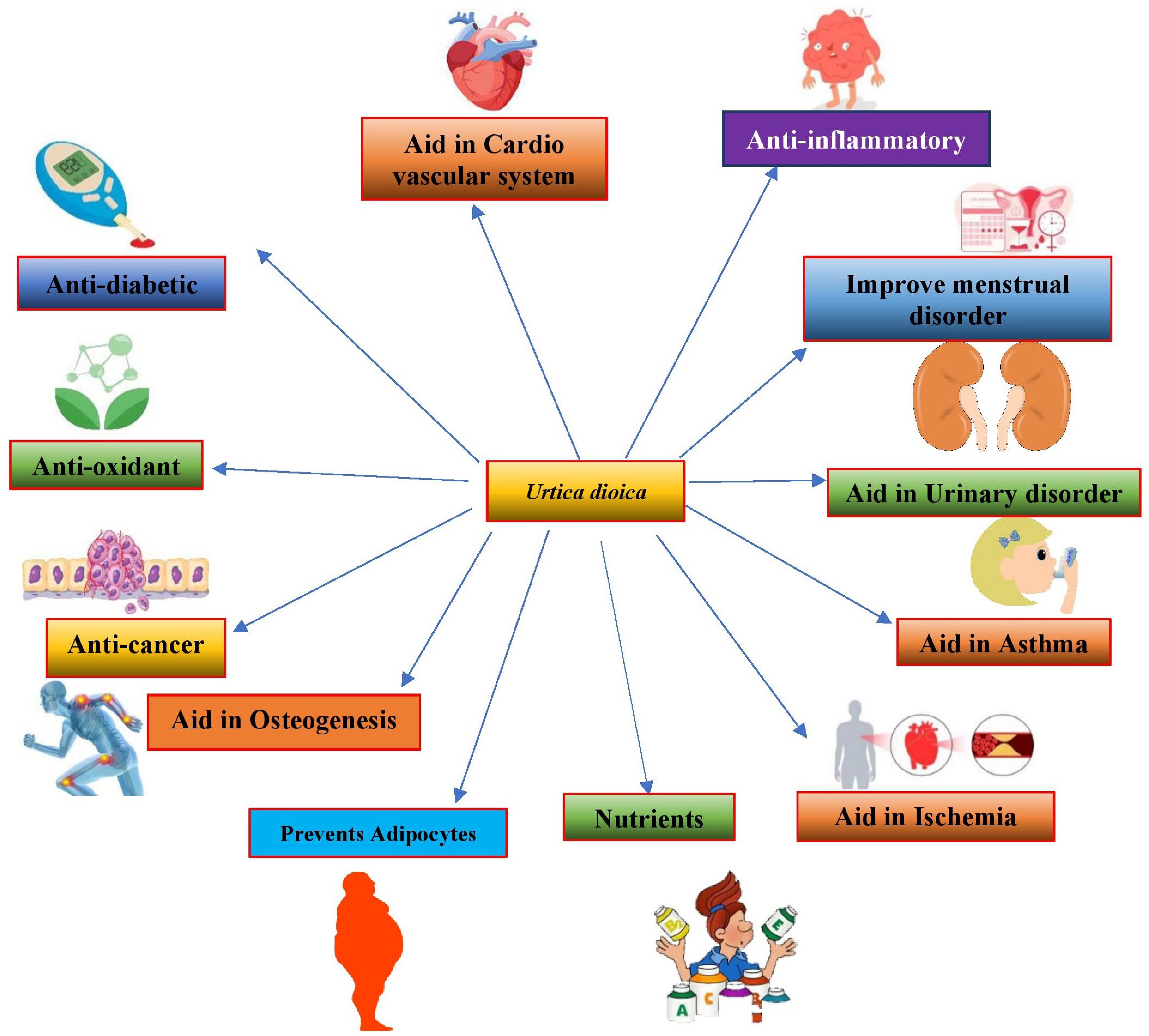
Figure 6.
Biological activity of Urtica dioica L.
-
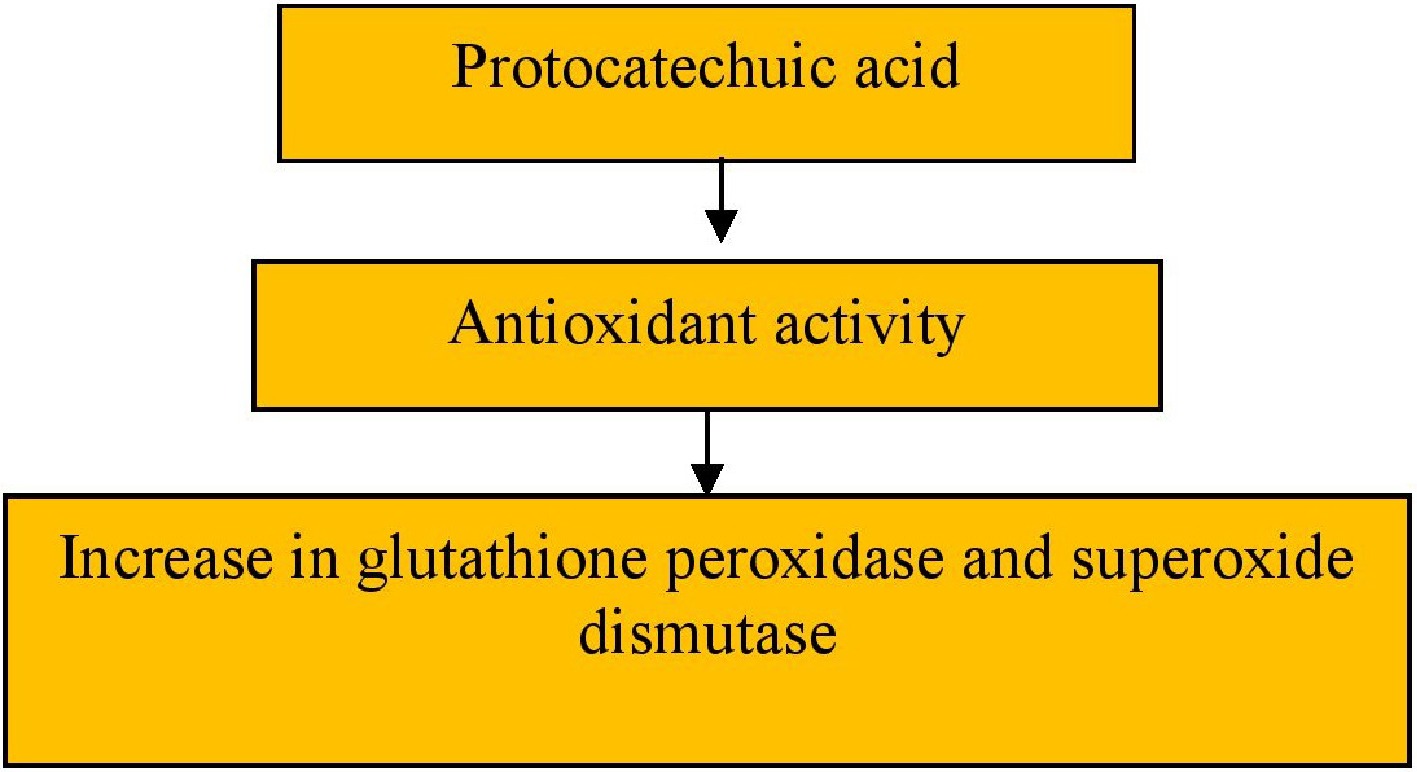
Figure 7.
This figure illustrates enhancement of antioxidant activity by protocatechuic acid.
-

Figure 8.
Nutrient composition of leaves.
-
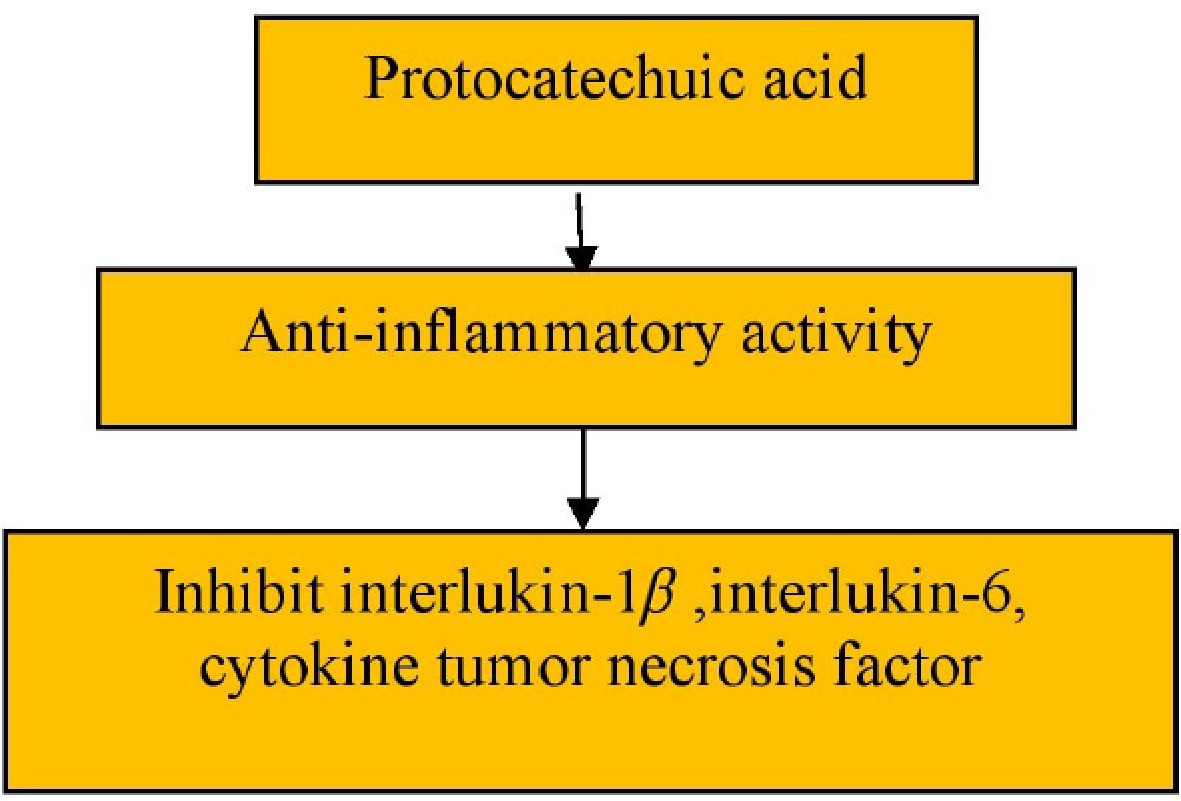
Figure 9.
Anti-inflammatory activity of protocatechuic acid.
-
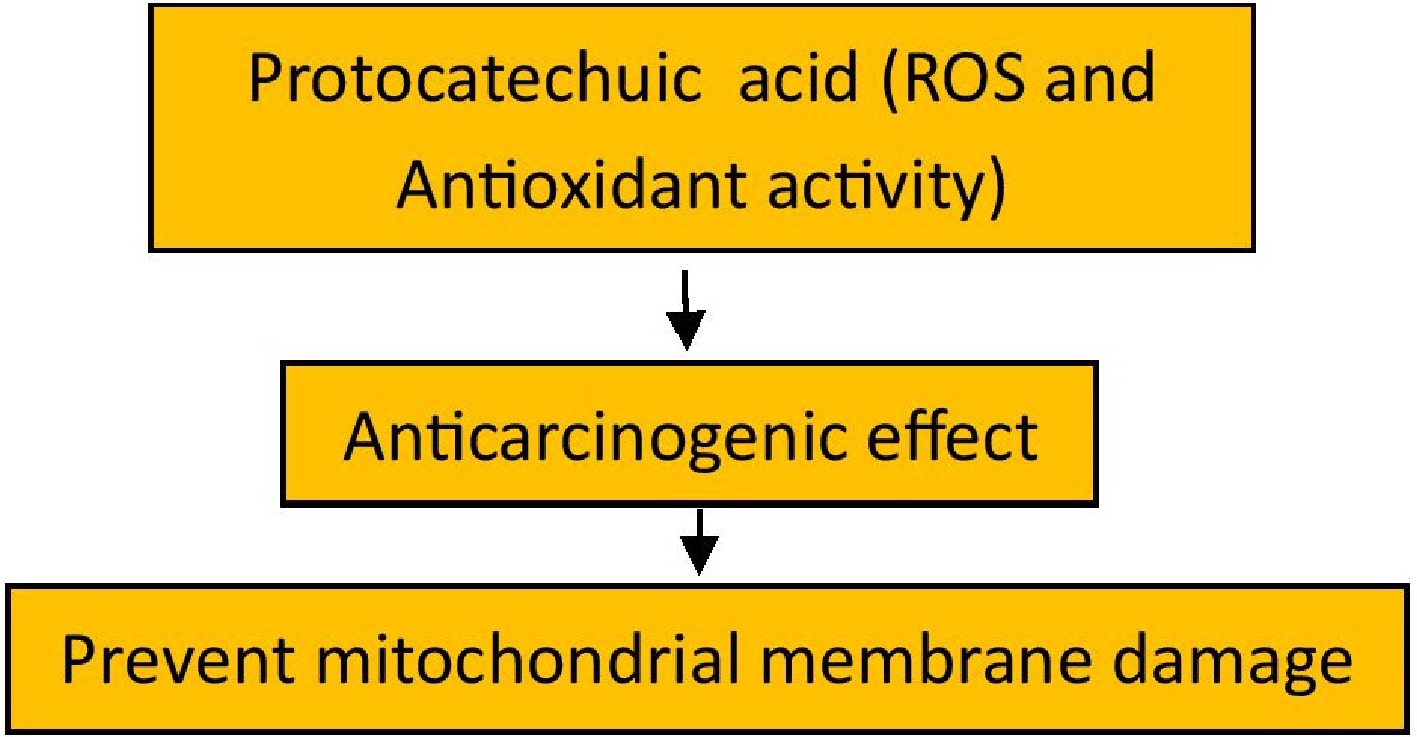
Figure 10.
Anticancerous activity of protocatechuic acid.
-
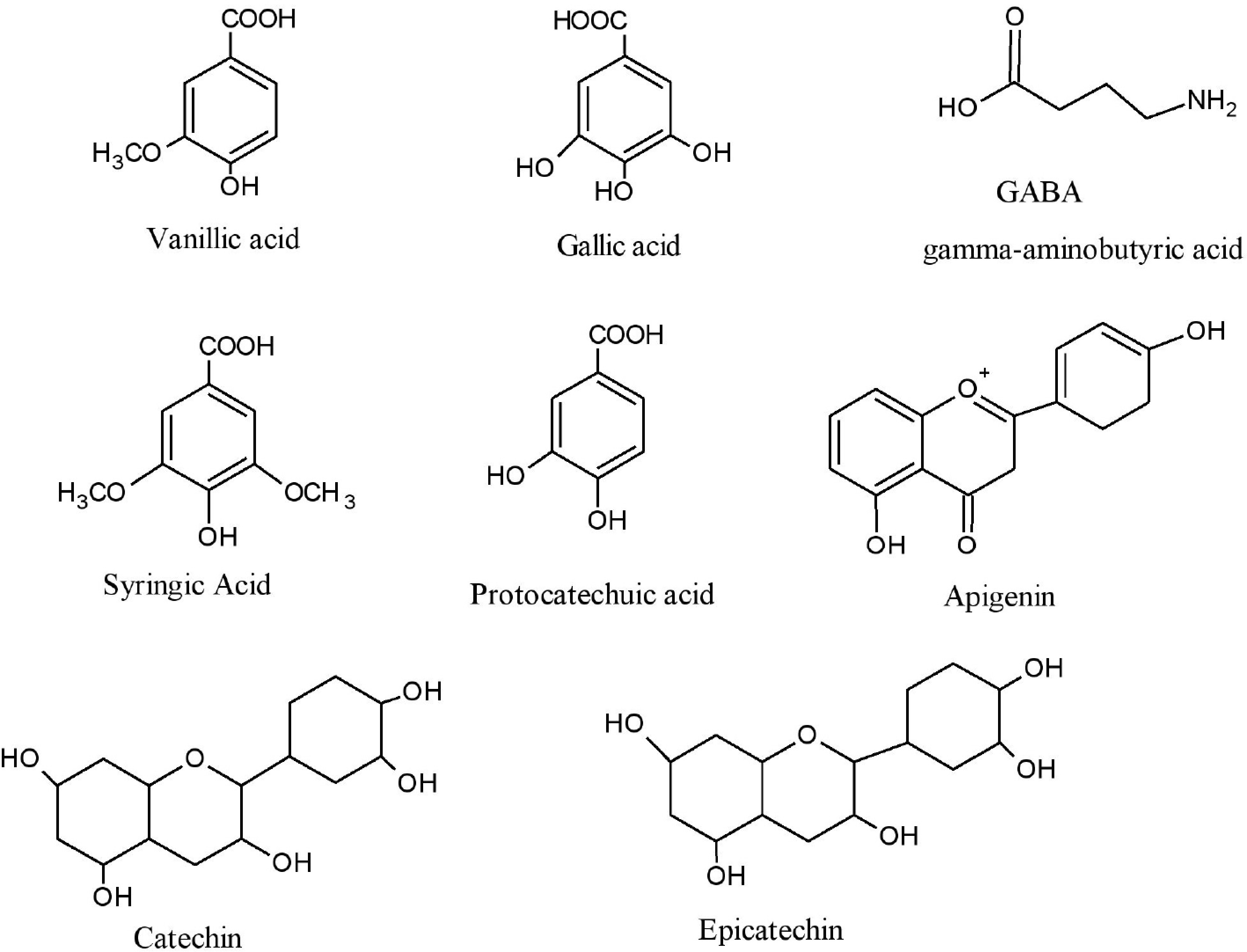
Figure 11.
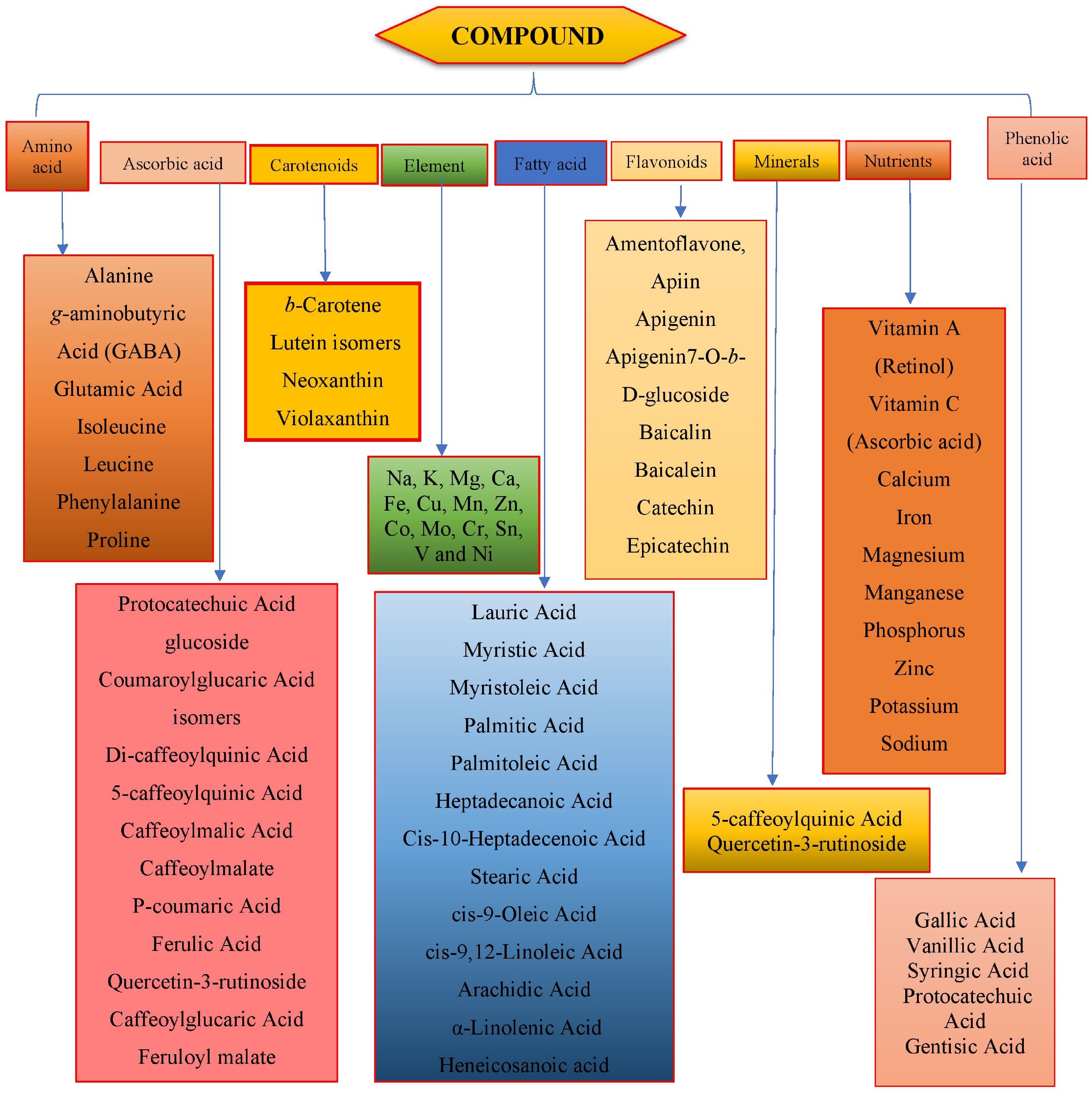
Structures of the most abundant bioactive compounds in Urtica dioica.
-
Compounds Leaves Root Seed Ascorbic acid Present Present Present Alkaloids Absent Absent Absent Flavonoids Present Present Present Fatty acids Present Present Present Lignin Present Present Present Sterols Present Present Present Silica Present Present Present Tannins Present Present Present Terpenoids Absent Absent Absent Triglycerides Absent Absent Absent Protein Absent Absent Absent -
Language Vernacular name of Urtica dioica Hindi Bichu Butti Kumaon Shisuun Sanskrit Vrishchhiyaa-shaaka, Dushsparsa Unani Anjuraa Common name Stinging nettle, Himalyan nettle, Nettle Table 2.
Vernacular name of Urtica dioica.
-
Kingdom Plantae Sub kingdom Tracheobionta – vascular plant Division Magnoliophyta – flowering plant Class Magnoliopsida – dicotyledons Subclass Hamamelidae Order Urticales Family Urticaceae – nettle family Genus Urtica L. Species dioica L. Table 3.
Taxonomy.
-
Fatty acid Content (µg/g) Element Content (µg/g) Ascorbic acid Content Lauric acid 4.09 Na 296.20 Protocatechuic acid 4.27 µg/g Myristic acid 9.19 K 33,899.00 Coumaroylglucaric acid 0.50 mg/g Myristoleic acid 1.72 Ca 28,608.0 5-caffeoylquinic acid 3.58 mg/g Palmitic acid 60.97 Mg 8,699.76 Caffeoylmalate 0.13 mg/g Palmitoleic acid 3.19 Fe 150.97 Ferlic acid 0.11 mg/g Heptadecanoic acid 1.09 Mn 81.40 Cis-10-Heptadecenoic acid 1.46 Zn 18.03 Stearic acid 9.95 Cr 0.31 Cis-9-Oleic acid 9.80 Sn 0.49 Cis-9,12-Linoleic acid 55.9 Ni 0.03 Arachidic acid 1.76 α-Linolenic acid 67.9 Heneicosanoic acid 2.76
Figures
(11)
Tables
(4)