-
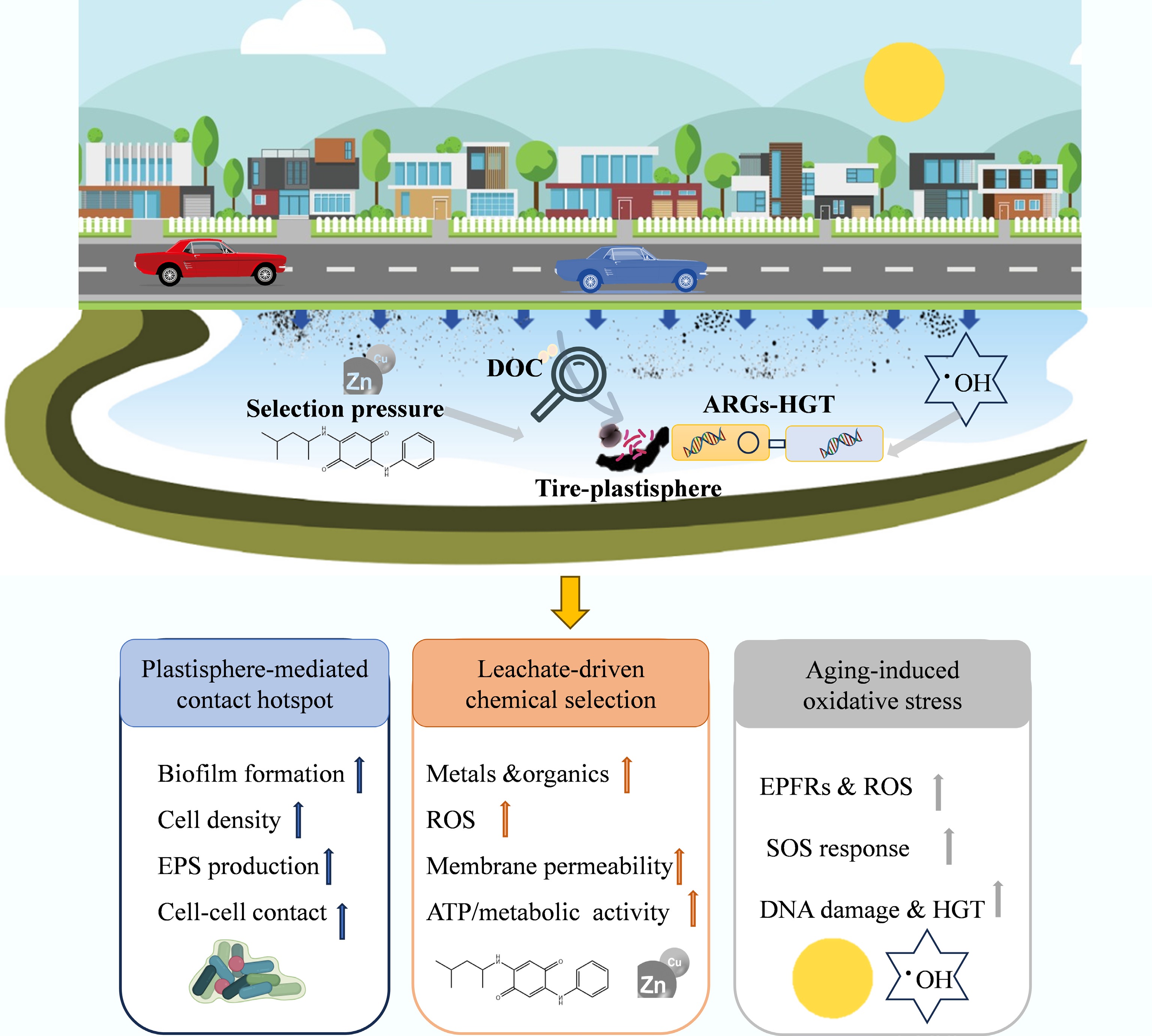
Figure 1.
The propagation and transfer of ARGs via TMPs.
-
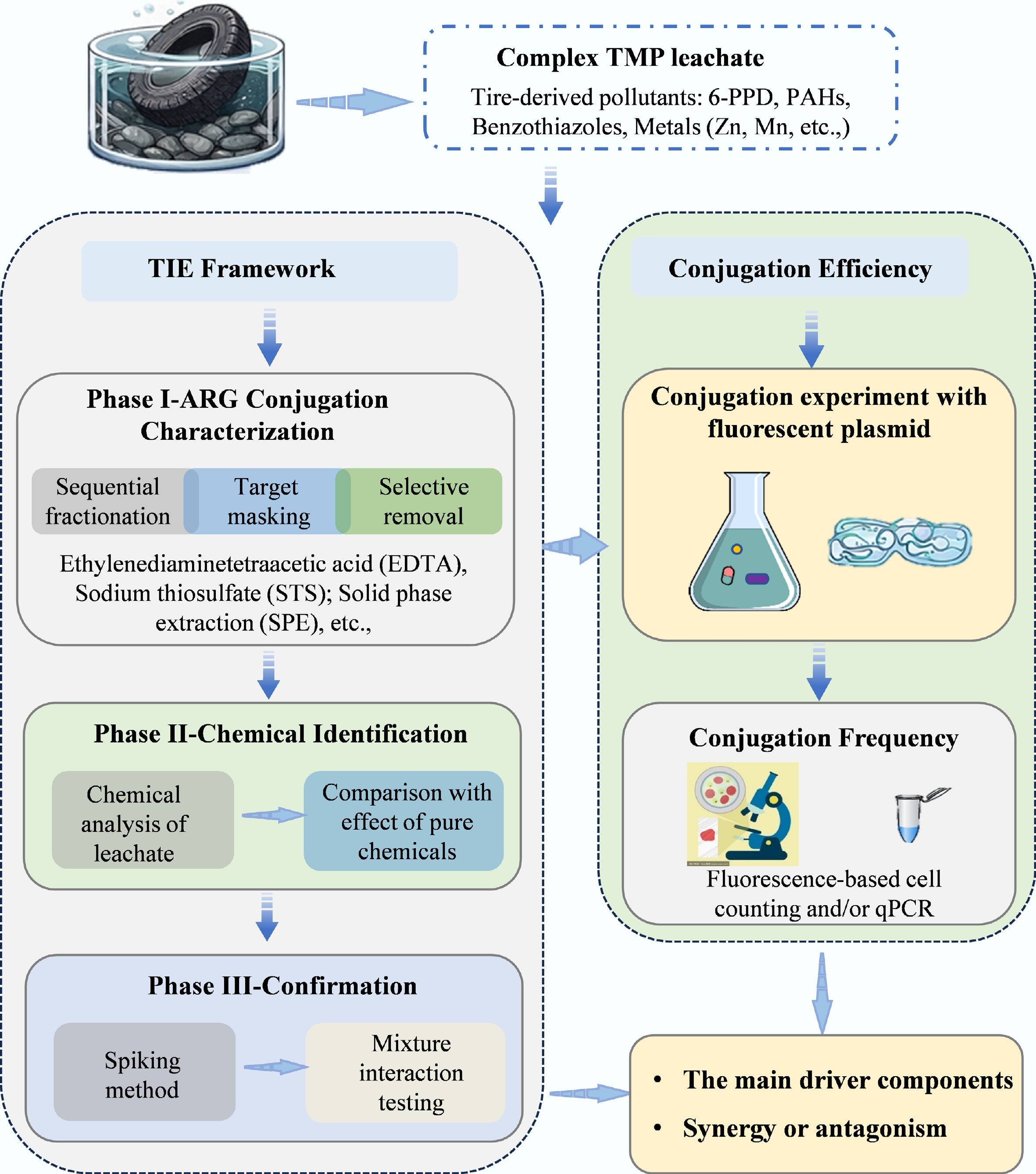
Figure 2.
A TIE-based framework to resolve the chemical drivers and interactions underlying ARG conjugation in TMP leachates.
-
Media TMPs or specific leachate chemicals ARGs or ARB Main findings Ref. Soil TMPs ARGs Distinct bacterial communities formed on TMPs; however, they exhibited lower richness and relative abundance of ARGs compared with the soil communities and were strongly influenced by soil pollutants. [19] Soil TMPs ARGs Unique biofilm formed on the pristine and ultraviolet (UV)-aged TMPs; they were found to increase the richness and potential transfer of ARGs in the TMP-enrichedsoils. [20] Sediment TMPs and leachate ARGs Raw tire particles and their leachates increased the abundance and diversity of ARGs and virulence factors in coastal sediments, with raw particles having the strongest effect, whereas specific chemicals in the leachates (e.g., Zn and N-cyclohexylformamide) directly influenced ARG profiles in pore water. [21] Sludge TMPs and leachate ARGs Both shade- and photoaged tire crumb rubber promote extracellular ARG spread by activating prophages, but through different mechanisms: Leached substances versus free radical generation. [22] Water TMPs ARGs TMPs significantly enhanced horizontal gene transfer (HGT) rates compared with traditional microplastics or natural chitosan, an effect observed both in biofilms and the planktonic phase. Furthermore, HGT rates associated with TMPs increased with temperature. [18] Water 6PPD and 6PPD-Q ARGs Tire rubber antioxidant 6PPD exhibited a lower rate of HGT of ARGs in Escherichia coli than its quinone derivative 6PPD-Q. This lower rate was caused by the lesser increases in membrane permeability and cell adhesion induced by 6PPD. [17] Water TMPs ARB Field-incubated tire wear particles, traditional microplastics, and wood particles did not enrich or transmit the multidrug-resistant, ESBL-producing E. coli present in surrounding estuarine to coastal waters. [23] Table 1.
Related studies about the propagation and spread of ARGs affected by TMPs
Figures
(2)
Tables
(1)