-
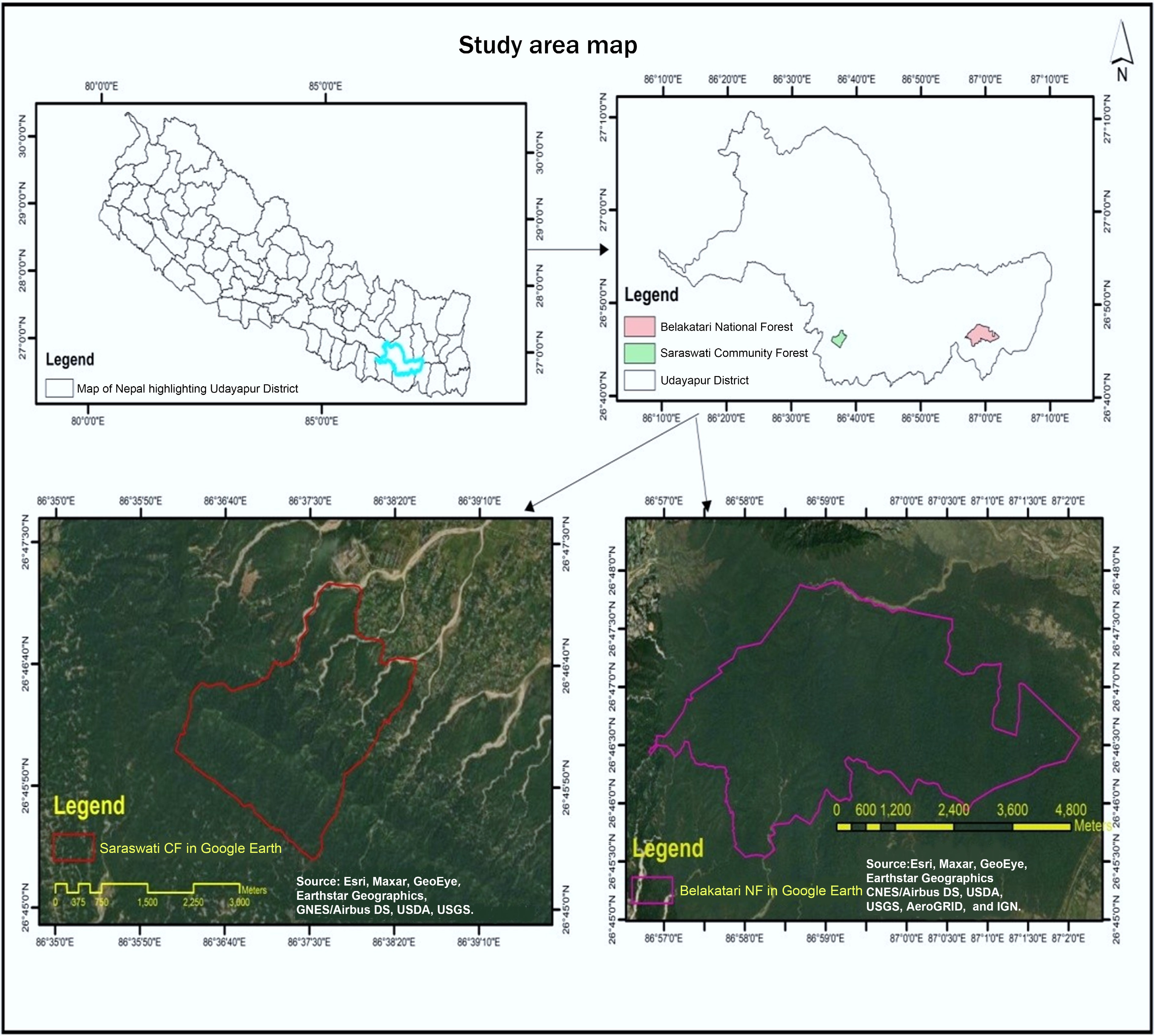
Figure 1.
Map of the study area. (This map is created with the help of QGIS and Google map.)
-
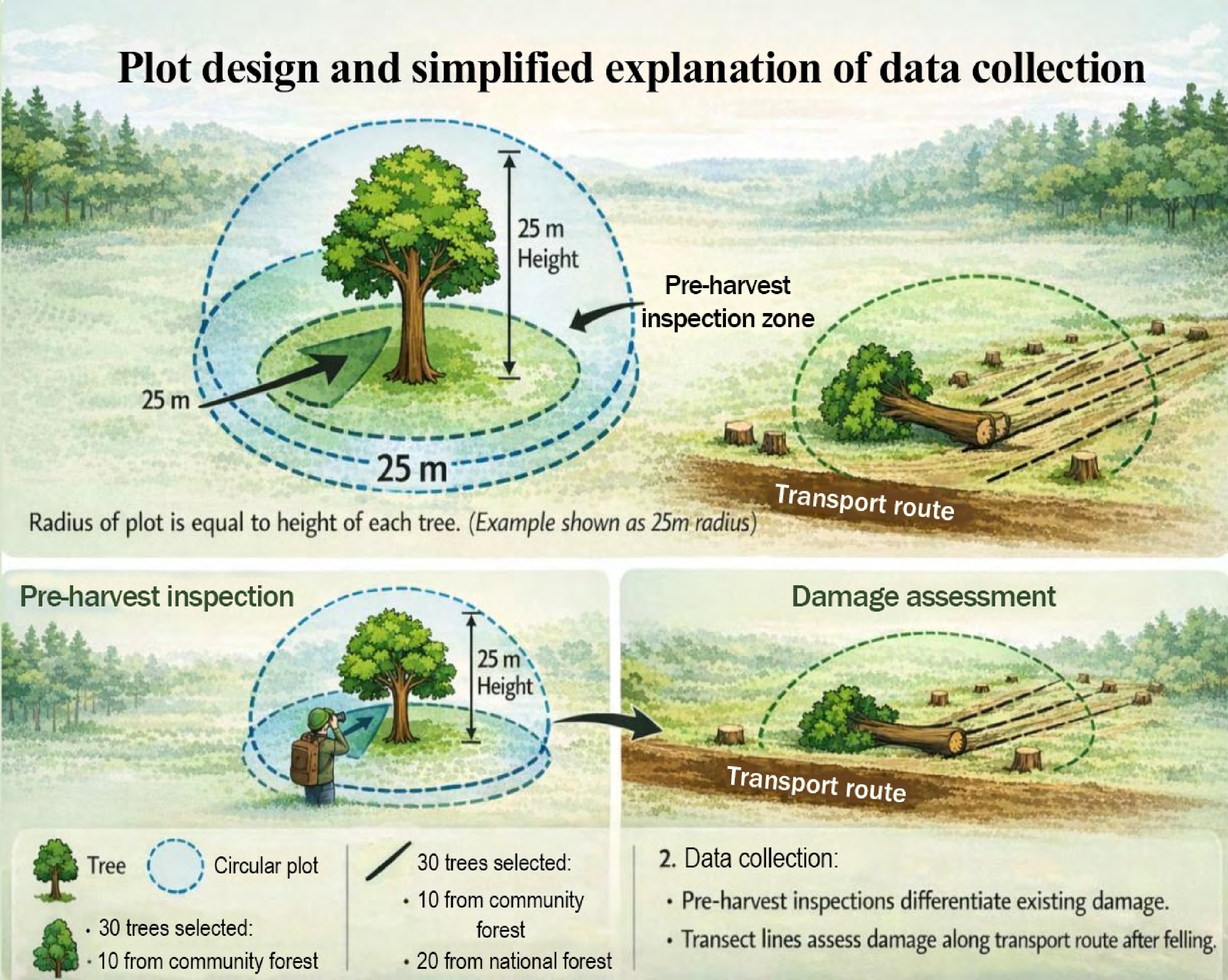
Figure 2.
Plot design and simplified explanation of data collection. The radius of the plot is equal to the height of each tree; here we have shown a 25 m radius as an example only.
-
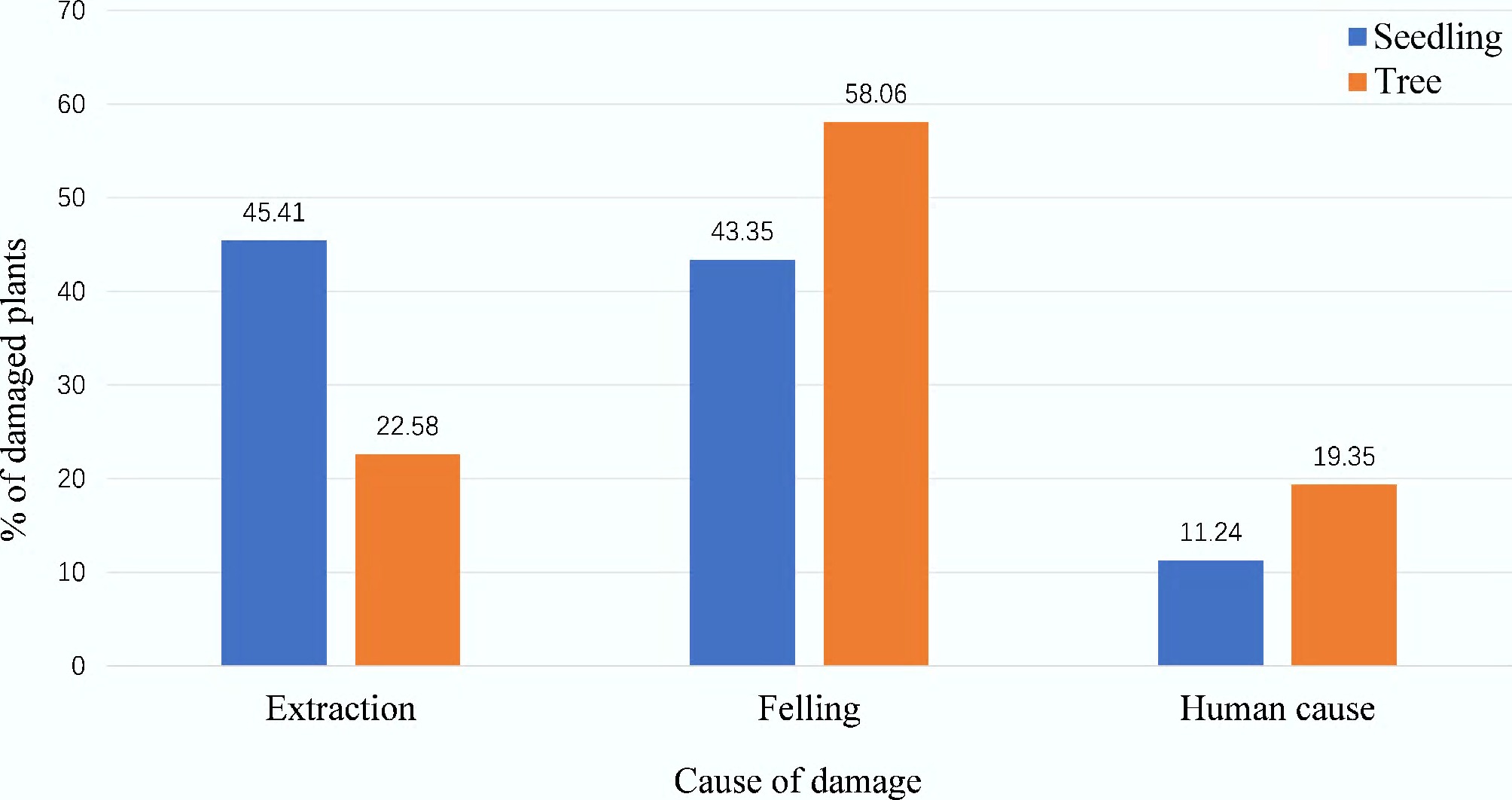
Figure 3.
Causes of damage to residual plants during felling and extraction.
-
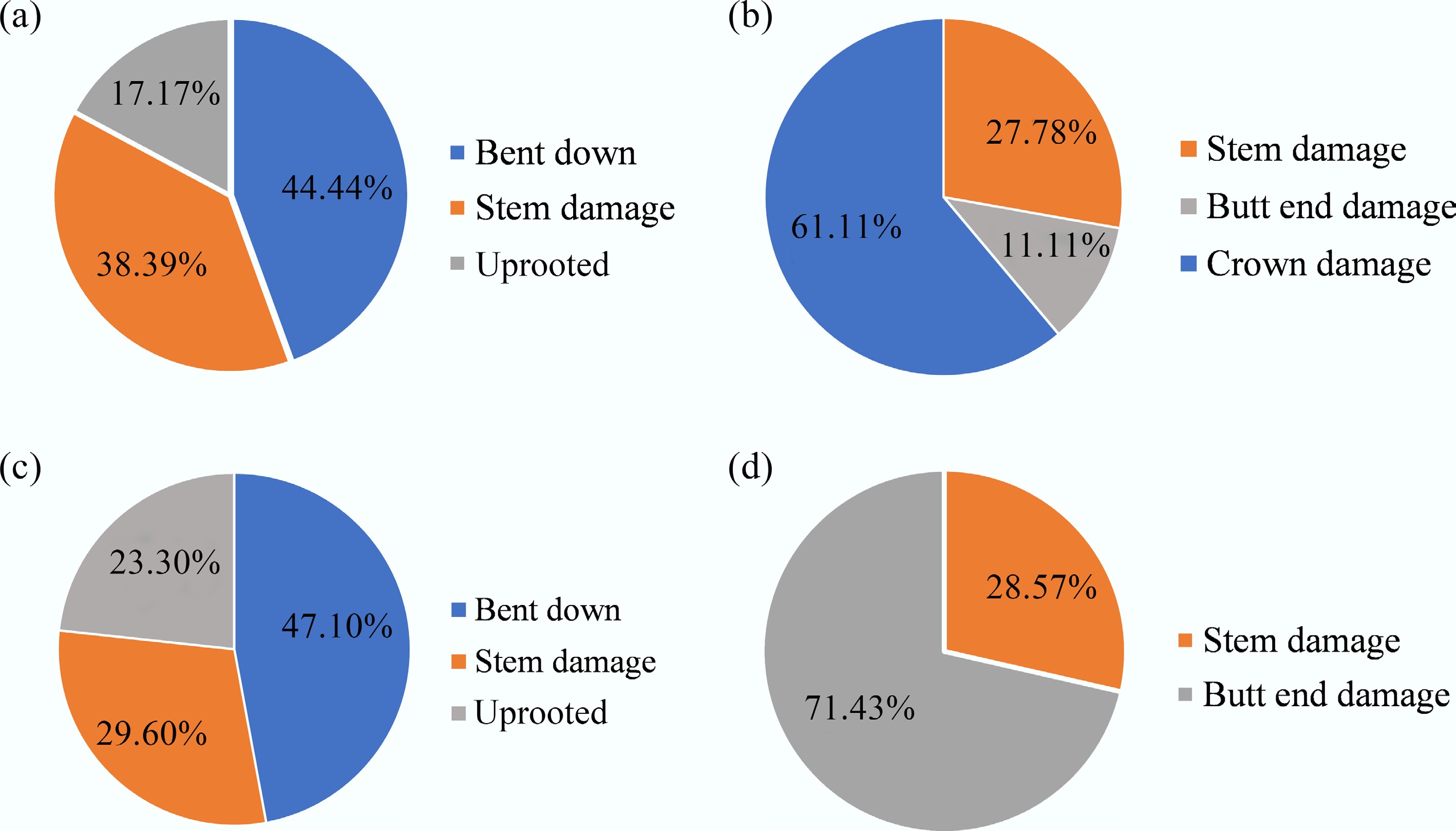
Figure 4.
Type of damage to (a) residual seedlings during felling, (b) residual trees during felling, (c) residual seedlings during extraction, and (d) residual trees during extraction. The types of damage to residual plants during felling and extraction are presented in (a)−(d).
-
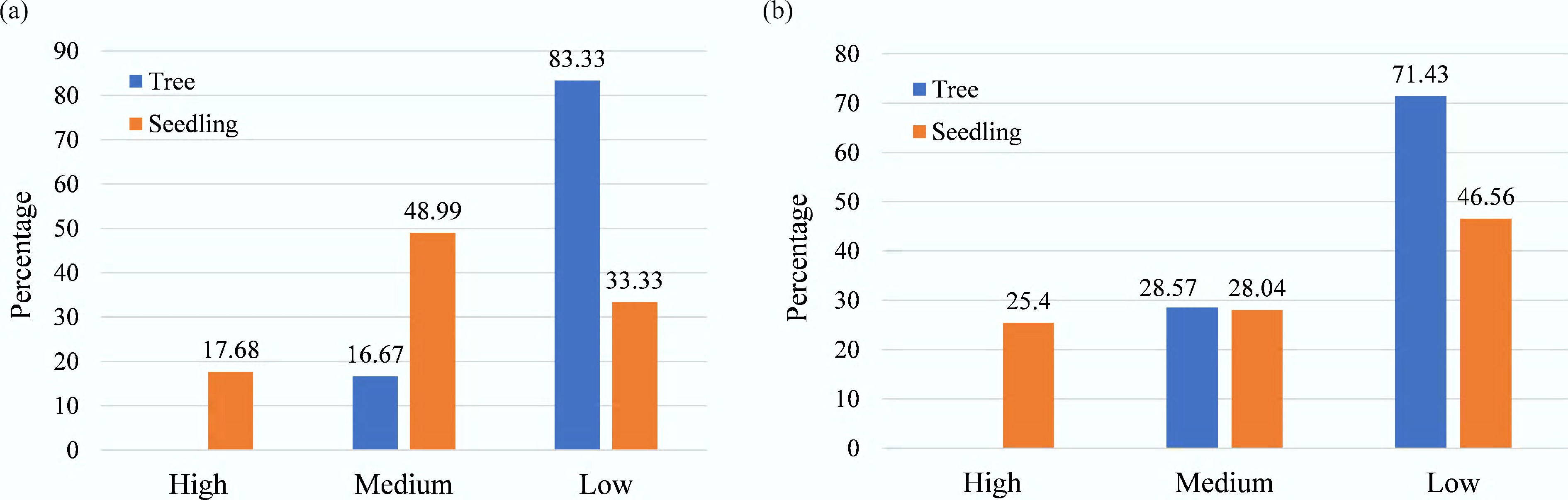
Figure 5.
Damage severity for (a) residual seedlings and trees during felling, and (b) seedlings and trees due to extraction, expressed as percentages. The damage severity for residual plants during felling and extraction operations is presented in (a), (b).
-
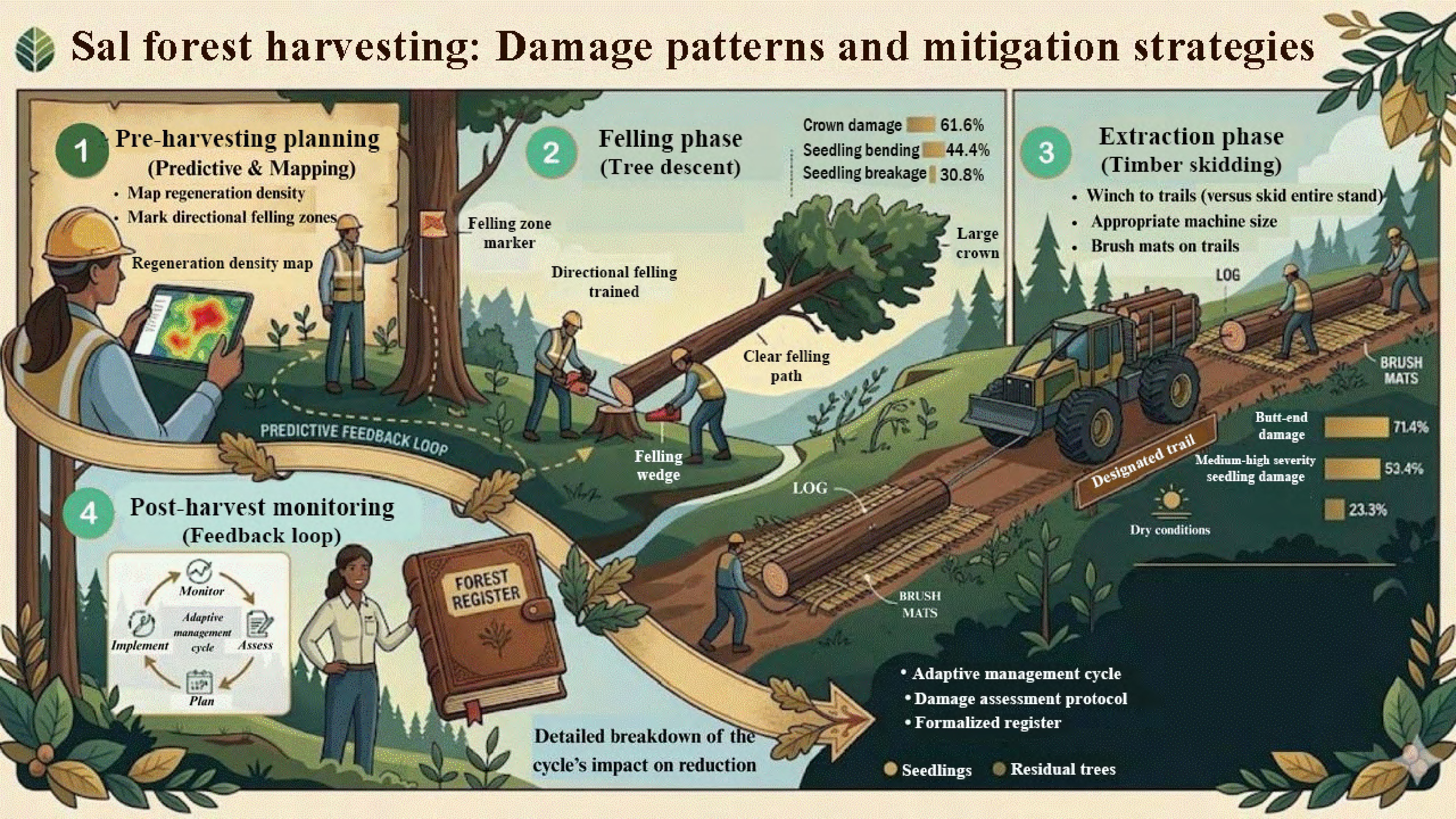
Figure 6.
Conceptual framework linking observed damage patterns to targeted mitigation strategies during felling and timber extraction in Sal-dominated forests. The figure illustrates the operational phases (left column), primary damage types documented in this study (center, with percentages), and evidence-based interventions (right column) to minimize residual plant damage.
-
Severity Damage High Damage that could lead to tree mortality (uprooting, broken stem, broken from base). Medium Damage that could disrupt the growth of trees (large branches broken, crown injuries). Low Minimum effect on tree growth and survival (few branches broken, seedling bending, bark injuries). Damage categorization was based on previously published literature[8,24−26], visual inspection by expert and experienced forest officials, and community forest user groups. Table 1.
Damage severity classification of residual plants based on damage type
-
Operation Plant
formDamage category Damage type/severity % (n) 95% CI* Felling Seedling Type Bent down 44.4 (88) [36.8, 52.3] Stem damage 38.4 (76) [31.5, 45.8] Uprooted 17.2 (34) [12.0, 23.9] Severity Low 49.0 (97) [41.3, 56.7] Medium 28.3 (56) [21.7, 35.9] High 22.7 (45) [16.8, 29.9] Tree Type Crown damage 61.1 (11) [43.5, 76.4] Stem damage 27.8 (5) [13.8, 48.3] Butt-end damage 11.1 (2) [3.9, 27.8] Severity Low 83.3 (15) [62.6, 94.5] Medium 16.7 (3) [5.6, 37.4] High 0.0 (0) [0.0, 18.1]# Extraction Seedling Type Bent down 47.1 (175) [39.8, 53.4] Stem damage 29.6 (108) [22.9, 36.4] Uprooted 23.3 (86) [17.2, 28.8] Severity Low 46.6 (173) [39.8, 53.4] Medium 28.0 (104) [22.3, 34.6] High 25.4 (94) [19.9, 31.8] Tree Type Butt-end damage 71.4 (10) [45.4, 88.4] Stem damage 28.6 (4) [11.6, 54.6] Severity Low 71.4 (10) [45.4, 88.4] Medium 28.6 (4) [11.6, 54.6] High 0.0 (0) [0.0, 28.5]# * Confidence intervals for proportions were calculated using the Wilson score method with α = 0.05. One-sided 97.5% confidence interval for zero-count categories. # indicates categories where no damaged plants were observed. Table 2.
Percentage distribution and 95% confidence intervals of damage types and severity to residual plants during felling and extraction operations
-
Operational phase Observed damage pattern Primary causes Mitigation strategies Pre-harvest
planningGeneral damage across all plant forms. Lack of site-specific harvesting plans; inadequate trail layout. • Conduct pre-harvest inventory of regeneration and residual trees. • Design skid trails to avoid high-density regeneration patches. • Mark directional felling zones based on crown characteristics and slope. Felling operations Crown damage to residual trees (61.1%). Falling trees striking crowns of neighbors; uncontrolled felling direction. • Train operators in precision directional felling techniques. • Clear falling paths of understory vegetation before felling. • Use felling wedges and felling aids to control tree fall direction. Seedling bending (44.4%) and stem damage (38.39%). Falling trees and branches crushing regeneration. • Create brush mats from slash to cushion seedling impacts. • Fell trees toward existing gaps rather than dense regeneration. • Consider seasonal timing when seedlings are more flexible. Butt-end damage during felling (11.1%). Logs striking base of trees during fall. • Ensure proper notch and hinge techniques to control tree trajectory. • Maintain sufficient distance between felled and residual trees. Extraction
operationsSeedling damage (45.41% of all seedling damage), bending (47.1%), uprooting (23.3%). Machinery traffic; logs dragging across forest floor; repeated passes. • Design and mark designated skid trails before operations begin. • Limit number of machine passes on same trail. • Use brush mats on skid trails to reduce soil and seedling disturbance. • Winch logs to trails rather than skidding through entire stand. Butt-end damage to residual trees (71.4%). Logs striking tree bases during skidding; poor log alignment. • Maintain safe distance between skid trails and residual trees. • Ensure logs are properly secured and aligned during skidding. • Use appropriate machinery size relative to trail width and tree spacing. Medium-high-severity damage to seedlings (53.4% combined). Cumulative impacts of multiple extraction passes; heavy machinery. • Conduct extraction during dry or frozen ground conditions to reduce soil disturbance. • Match equipment size to terrain and stand conditions. • Consider alternative extraction methods (cable winching) in sensitive areas. Post-harvest monitoring Cumulative damage effects. No systematic damage assessment; lack of adaptive management. • Implement post-harvest damage assessments using standardized protocols. • Document damage patterns to inform future harvesting plans. • Adapt management practices based on monitoring results. Table 3.
Summary of damage patterns, operational causes, and targeted mitigation strategies for sustainable harvesting in Sal forests
Figures
(6)
Tables
(3)