












-
Forests require disturbance to regenerate, which is typically achieved through timber harvesting systems where several combinations of equipment[1] are used for felling and extracting timbers (i.e., a mechanism for felling trees and a mechanism for removing felled trees or portions of felled trees to a roadside log landing for transportation to a sawmill). Throughout this process, various damage (uprooting, leaning, broken from top, base, middle, buried in lash, wound, bark damage, broken branches, and many more) to the residual trees and regeneration can be observed when moving timber from the felling area to the landing[2−4]. However, this damage can somehow be minimized by matching the equipment to the site, implementing proper harvesting layout, and hiring a skilled operator.
In Nepal, nearly 44.74% of the landmass is covered by forests[5], and the Sal (Shorea robusta) forests, particularly, are crucial for reducing the adverse impacts of climate change, consequently enhancing the livelihoods of forest-dependent communities[6]. However, the sustainability of these forests is threatened by the various anthropogenic activities, with logging being a significant concern. Logging activities, including the felling and extraction processes, have intensified over the years, driven by the demand for timber and other forest products[7]. While logging is essential for meeting economic needs, it often results in detrimental impacts on forest ecosystems, particularly in terms of damage to residual trees and regeneration.
Residual tree damage is a significant concern in both even-aged and uneven-aged stands, with partial felling often leading to substantial harm[8]. International studies have highlighted the adverse effects of felling and extraction on residual trees and regeneration, emphasizing factors such as felling intensity, tree diameters, terrain slope, and machinery type[9−11]. For instance, studies in Caspian forests report damage rates ranging from 15.5% to 19.7% after selection cutting[12]. Similar trends were observed globally, with 14%–23% damage in Turkey and California from skidding operations[12−14], and 16%–32% damage during cut-to-length thinning in California[15]. In Iran's Caspian forests, winching was responsible for 48%–79% of damage to regeneration and trees[16].
Although tree felling and timber extraction are among the primary forest management activities in Nepal, few studies have been conducted on these themes, such as harvesting loss in Sal forests[17]. The majority of studies in Nepal have focused on understanding regeneration status, species diversity, soil properties, and carbon stocks across different silvicultural interventions[18−21]. While such studies quantify the extent of stand damage, fewer have systematically categorized the specific types and operational causes of damage in Sal forests. It is necessary to understand not only the extent of damage, but also its type and timing, in order to guide effective management interventions. However, significant research gaps persist regarding whether residual plants are damaged during these operations; if so, the types, causes, and severity of such damage remain largely understudied. Therefore, this study aims to fill this knowledge gap by characterizing the types, patterns, and severity of damage to residual plants during felling and timber extraction in Sal forests in Udayapur district, Nepal. Rather than quantifying stand-level damage incidence, this diagnostic approach focuses on identifying which operations lead to specific damage forms. Results can provide information critical for improving logging practices and reducing residual stand injury.
-
The study was conducted in the Saraswati Community Forests (CFs), and the Belakatari National Forest of Udayapur district, Nepal, located in Koshi Province (Fig. 1).
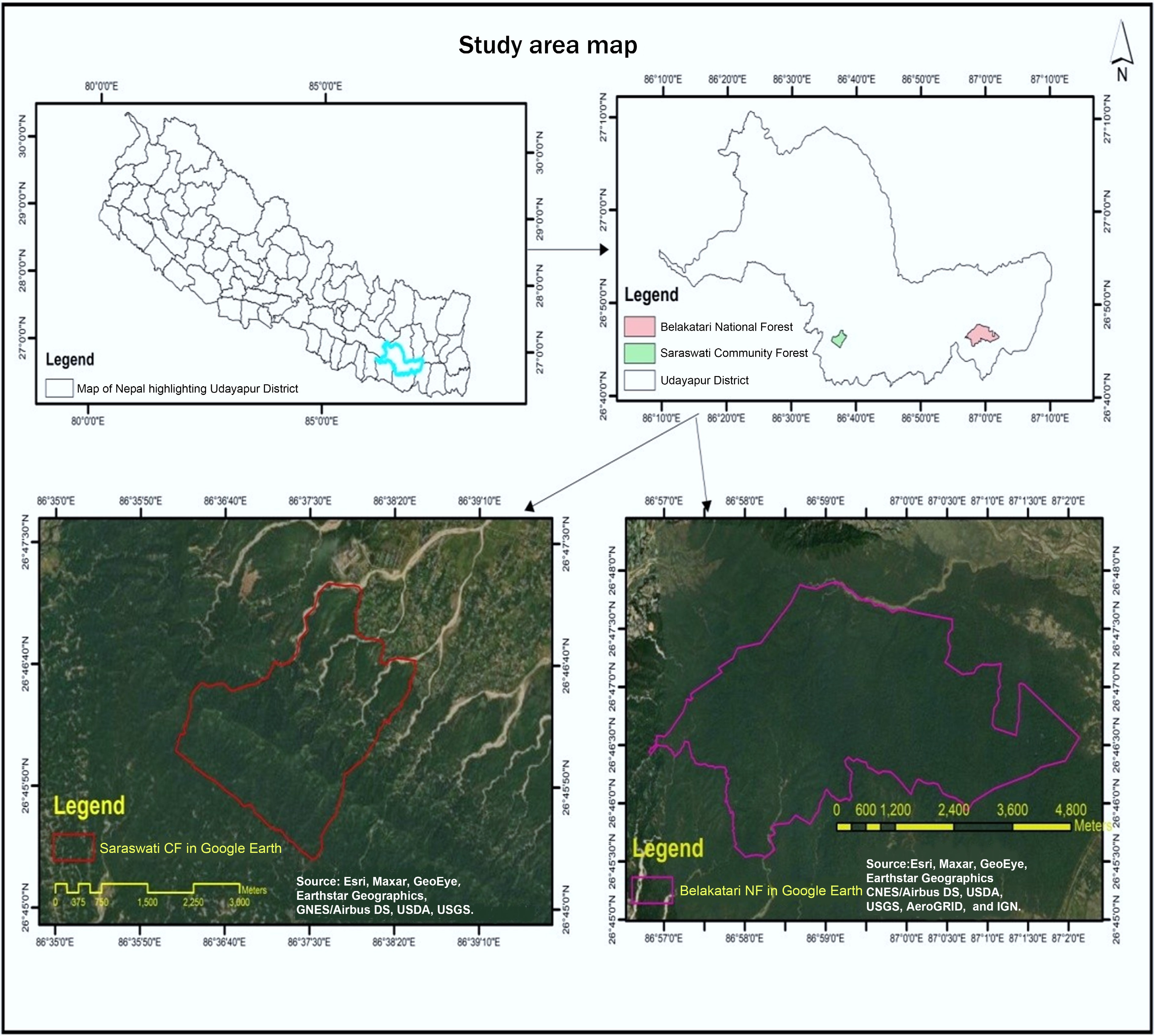
Figure 1.
Map of the study area. (This map is created with the help of QGIS and Google map.)
The CF was in the southeastern part of the country, at 26.8372° N latitude and 86.3213° E longitude. The district was surrounded by both the Mahabharat and Shiwalik hills, which converge in the west to form the Udayapur Valley. The elevation of the district varied, with slopes ranging from moderately steep to lower tropical areas below 300 m, and upper tropical regions between 300 and 4,000 m[22]. The Saraswati Community Forest spanned an area of 644.3 ha, located south of Deuri Bazar and extending toward the Chure Hills and the Bhawar region of the Terai. The forest was predominantly composed of Shorea robusta, along with other timber species such as Terminalia elliptica and Senegalia catechu. Non-timber species like Asparagus officinalis, Terminalia chebula, Terminalia bellirica, and Bauhinia vahlii were also present.
Tree harvesting and timber extraction practices in study area
-
Harvesting of trees in the Chure region is allowed with priority to 4D trees (dead, diseased, dying, and decayed) to meet the annual allowable cut (AAC) of the Community Forest, and to meet timber demand. Harvesting is generally practiced once a year for a maximum of 3 months from December to February. Based on AAC and timber demands, trees for harvesting in the Chure region are selected with priority to 4D trees. Once identified, these trees were marked using a tachha (annual forest product allocation), a marking made approximately 6 inches above the ground on two sides of the tree, with the assistance of forest technicians in both forests. This process is called marking of trees, where attributes of trees to be felled are recorded. Before felling, the marked trees received approval from the Division Forest Office (DFO) based on the recommendations of forest technicians from the Sub-Division Forest Office. Monitoring during harvesting varied between the two forests. In Saraswati Community Forest, members of the Community Forest User Groups (CFUGs) oversaw the process, while in the Belakatari National Forest, forest officers from the Sub-Division Forest Office were responsible. Monitoring included recording details such as time of harvest, tree number, species, and size.
The harvesting methods also differed slightly in the studied forests. In the Community Forest, two workers and four CFUG members used chainsaws for felling, with a JCB employed for loading and unloading logs, which were then temporarily stored in depots. In the national forest, a larger workforce was engaged, using chainsaws for cutting and tractors for timber extraction. Throughout the process, records were maintained in registers such as the Chhapan Register (forest resource inventory register or forest stock register), Kataan Register (felling register or tree harvesting record), and the Depot Register.
Primary data collection
-
A total of 30 circular plots were established, one around each of the 30 trees selected (10 from Community Forest and 20 from the National Forest) which were already marked for harvesting by the Division Forest Office, Gaighat, Udayapur to assess damage caused by felling operations (Fig. 2).
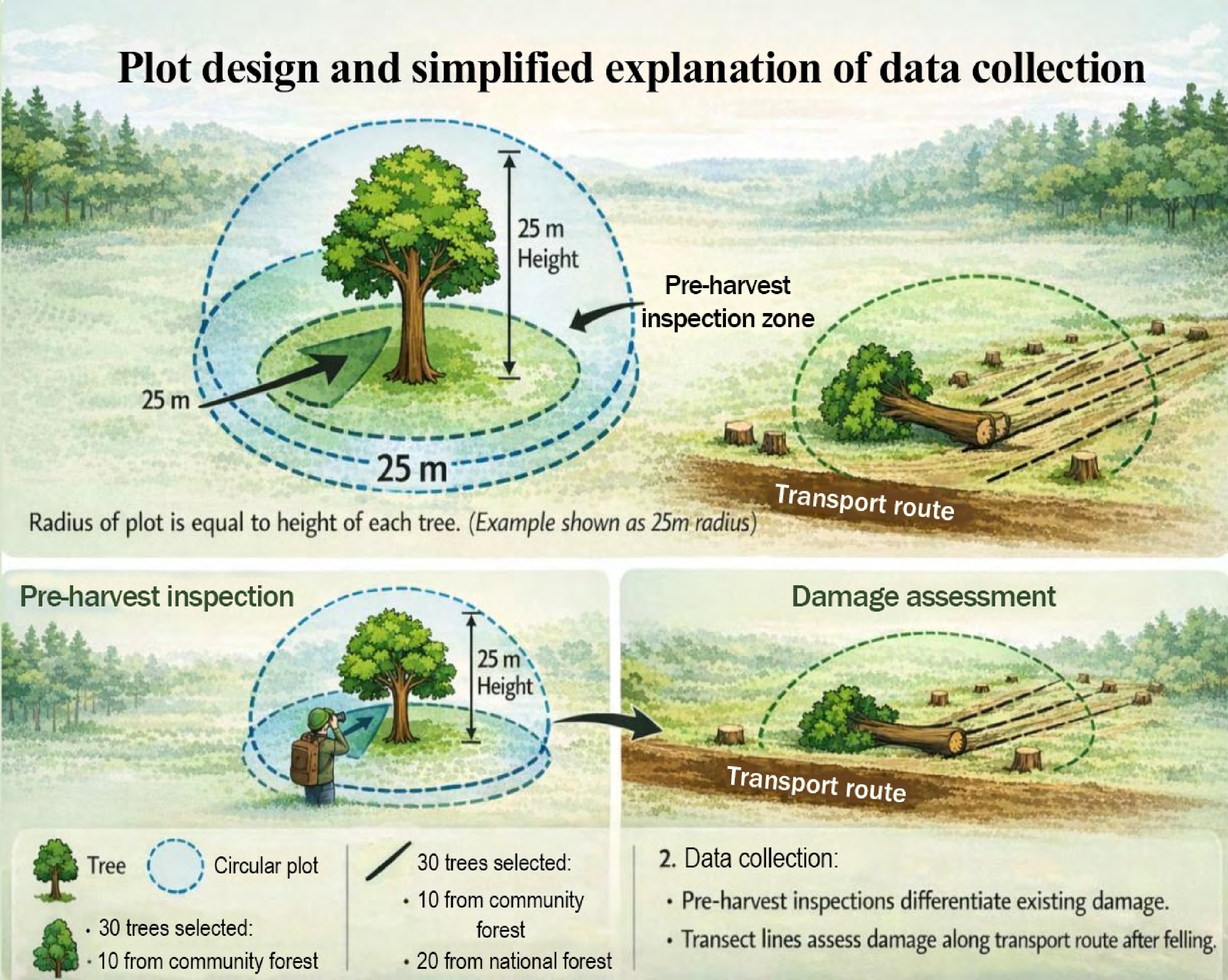
Figure 2.
Plot design and simplified explanation of data collection. The radius of the plot is equal to the height of each tree; here we have shown a 25 m radius as an example only.
Additionally, 30 transect lines were established along the skid trails used for extraction to evaluate damage caused by moving felled trees to the nearest forest roads. Transect length varied from each stump to approximately 60 m, depending on the distance to the nearest road, and transect width was fixed at 12 m (6 m on each side of the trail centerline), following the methodology of Badraghi et al.[23]. Transects were already positioned directly along the skid trails, and all residual trees and seedlings within the transect width were inventoried.
Before harvesting, the vegetation status in the predicted felling direction of each tree was visually inspected. This pre-harvest assessment helped differentiate damage caused by the felling operation from pre-existing damage. The circular plots were designed based on the height of the selected trees to ensure adequate coverage of the potential impact area for each individual tree. It should be noted that this study was designed to characterize the type and severity of damage occurring during felling and extraction operations, rather than to quantify the overall proportion of the residual stand affected.
After felling was conducted, the type of damage and the number of damaged plants were recorded. Plant forms (trees, poles, saplings, and seedlings) that were damaged by felled trees during felling or extraction were counted. Damage types were classified as bent down, crown damage, stem damage, uprooted and butt-end damage. Similarly, damage severity was categorized into three categories: high, medium, and low (Table 1).
Table 1. Damage severity classification of residual plants based on damage type
Severity Damage High Damage that could lead to tree mortality (uprooting, broken stem, broken from base). Medium Damage that could disrupt the growth of trees (large branches broken, crown injuries). Low Minimum effect on tree growth and survival (few branches broken, seedling bending, bark injuries). Damage categorization was based on previously published literature[8,24−26], visual inspection by expert and experienced forest officials, and community forest user groups. To ensure consistency in damage severity classification, all assessments were conducted by the same field team using predefined criteria. The team were trained together prior to data collection, and initial assessments were carried out jointly in the field to standardize interpretation. Regular cross-checking and discussion among team members were also undertaken during data collection to maintain consistency.
Data analysis
-
The numbers were recorded and expressed as percentages (Eqs [1], [2]) to give an overall picture of damage assessment. Similarly, the percentage of damage by type and severity was calculated across all plots. This involved determining the total number of plants affected by each specific type of damage (such as bent down, crown injury, etc.) and each severity level (high, medium, low) across all plots. These percentages reflect the distribution of different damage types and severity levels among all the damaged plants in the study area. To provide a measure of statistical precision for the observed damage proportions, 95% confidence intervals (CIs) for all reported percentages were calculated using the Wilson score method[27]. This method is robust for proportions and provides asymmetric intervals that respect the 0%–100% bounds. All CIs were calculated using R software (v4.2.1) with the Hmisc package. Microsoft Excel was used to prepare graphs and pie charts.
$ \mathrm{\begin{split} & \mathrm{Percentage\; of\; damage\; by\; felling}= \\ &\dfrac{\mathrm{Total\; number\; of\; damaged\; plants\; by\; felling\; across\; all\; plots}}{\mathrm{Total\; number\; of\; damaged\; plants\; across\; all\; plots}}\times 100\text{%} \end{split} } $ (1) $ \mathrm{\begin{split} & \mathrm{Percentage\; of\; damage\; by\; extraction}= \\ &\dfrac{\mathrm{Total\; number\; of\; damaged\; plants\; by\; extraction\; across\; all\; plots}}{\mathrm{Total\; number\; of\; damaged\; plants\; across\; all\; plots}}\times 100\text{%} \end{split} } $ (2) -
Figure 3 provides information about the causes of damage to residual plants during felling and extraction. The major cause of damage to seedlings was extraction (45.41%), followed by felling (43.35%), and other human causes (11.24%). However, trees were more damaged due to felling (58.06%) than extraction (22.58%) and other human causes (19.35%).
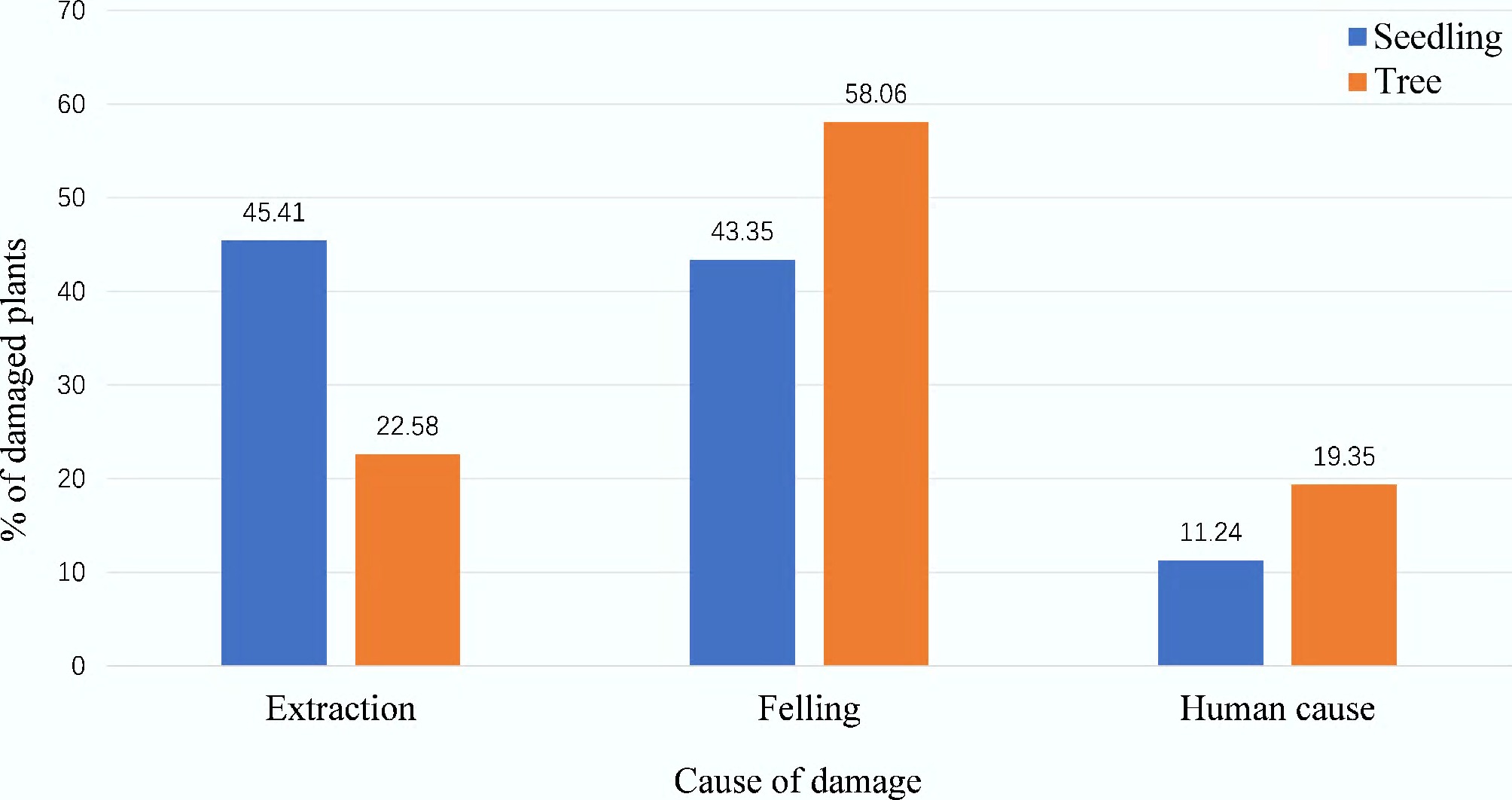
Figure 3.
Causes of damage to residual plants during felling and extraction.
Damage types by felling and extraction
-
Due to the felling of trees, the majority of residual seedlings were bent down (44.4%), followed by stem damage (38.4%), and uprooted (17.2%) (Table 2; Fig. 4a). Stem damage includes broken from the base and minor damage. The confidence intervals indicate reasonable precision for these estimates, particularly for the more frequent damage types (Table 2). For residual trees, crown damage was the most frequent (61.1%), followed by stem damage (27.8%), and butt end damage (11.1%) (Table 2; Fig. 4b). Notably, the confidence intervals for tree damage types are wider than those for seedlings due to the smaller sample size of damaged trees (Table 2).
Table 2. Percentage distribution and 95% confidence intervals of damage types and severity to residual plants during felling and extraction operations
Operation Plant
formDamage category Damage type/severity % (n) 95% CI* Felling Seedling Type Bent down 44.4 (88) [36.8, 52.3] Stem damage 38.4 (76) [31.5, 45.8] Uprooted 17.2 (34) [12.0, 23.9] Severity Low 49.0 (97) [41.3, 56.7] Medium 28.3 (56) [21.7, 35.9] High 22.7 (45) [16.8, 29.9] Tree Type Crown damage 61.1 (11) [43.5, 76.4] Stem damage 27.8 (5) [13.8, 48.3] Butt-end damage 11.1 (2) [3.9, 27.8] Severity Low 83.3 (15) [62.6, 94.5] Medium 16.7 (3) [5.6, 37.4] High 0.0 (0) [0.0, 18.1]# Extraction Seedling Type Bent down 47.1 (175) [39.8, 53.4] Stem damage 29.6 (108) [22.9, 36.4] Uprooted 23.3 (86) [17.2, 28.8] Severity Low 46.6 (173) [39.8, 53.4] Medium 28.0 (104) [22.3, 34.6] High 25.4 (94) [19.9, 31.8] Tree Type Butt-end damage 71.4 (10) [45.4, 88.4] Stem damage 28.6 (4) [11.6, 54.6] Severity Low 71.4 (10) [45.4, 88.4] Medium 28.6 (4) [11.6, 54.6] High 0.0 (0) [0.0, 28.5]# * Confidence intervals for proportions were calculated using the Wilson score method with α = 0.05. One-sided 97.5% confidence interval for zero-count categories. # indicates categories where no damaged plants were observed. 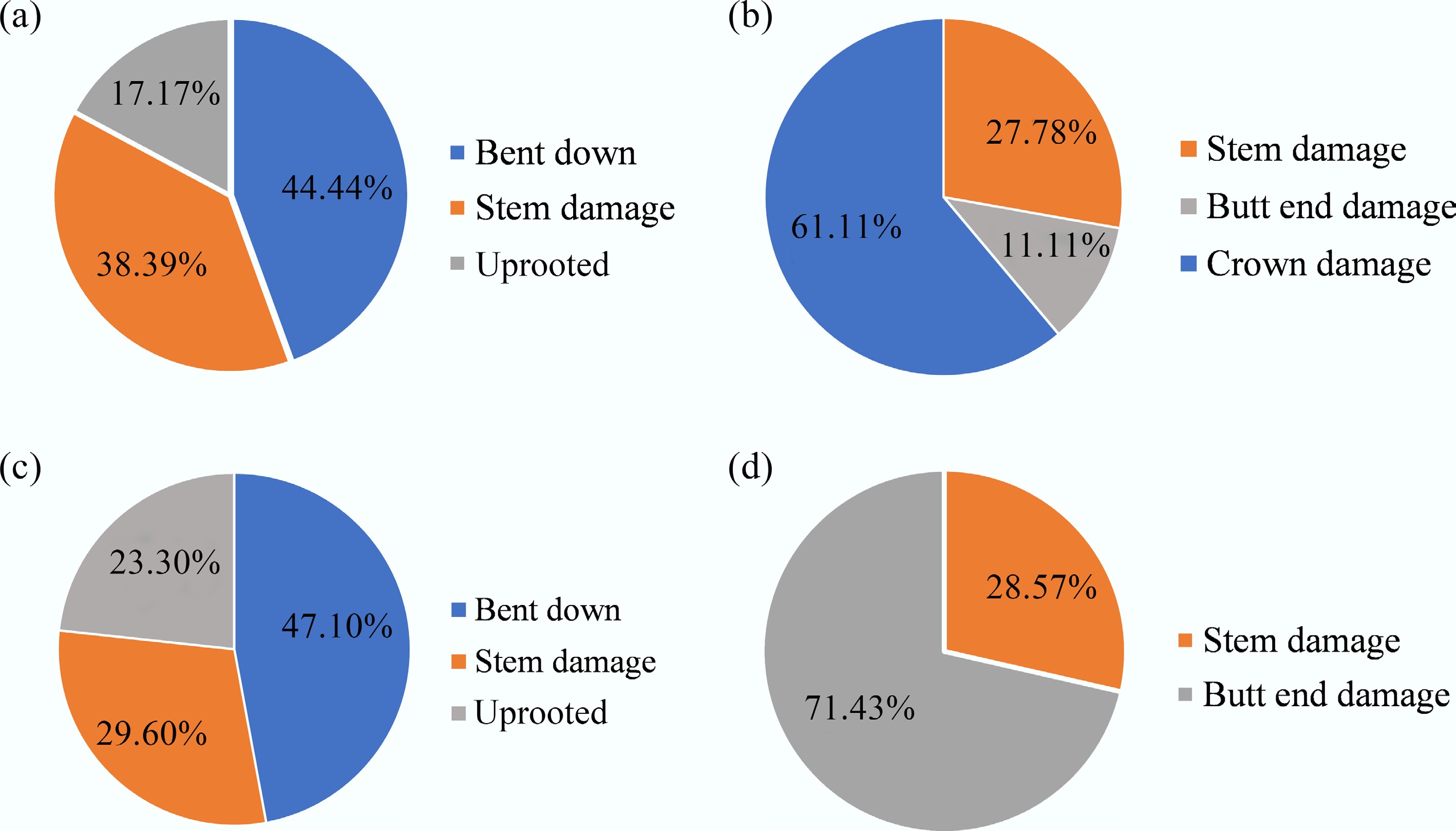
Figure 4.
Type of damage to (a) residual seedlings during felling, (b) residual trees during felling, (c) residual seedlings during extraction, and (d) residual trees during extraction. The types of damage to residual plants during felling and extraction are presented in (a)−(d).
During extraction, seedlings were most commonly bent down (47.1%), followed by stem damage (29.6%), and uprooted (23.3%) (Table 2; Fig. 4c). For residual trees during extraction, butt-end damage was predominant (71.4%), with stem damage (28.6%) accounting for the remaining proportion (Table 2; Fig. 4d). The confidence intervals (Table 2) reveal that estimates for seedling damage have relatively narrow precision (e.g., ± 5%–8%), reflecting larger sample sizes, while estimates for tree damage have wider intervals (e.g., ± 15%–25%), due to smaller sample sizes of damaged trees.
Damage severity due to felling and extraction
-
During felling, approximately 33.33% of seedlings experienced low-severity damage, followed by medium- (48.99%), and high-severity damage (17.68%) (Table 2; Fig. 5a). For residual trees, the majority experienced low-severity damage (83.3%), with 16.7% experiencing medium-severity damage, and none experiencing high-severity damage (Table 2; Fig. 5a). The confidence intervals for seedling severity estimates are narrower than those for trees, reflecting the larger sample size of damaged seedlings (Table 2).
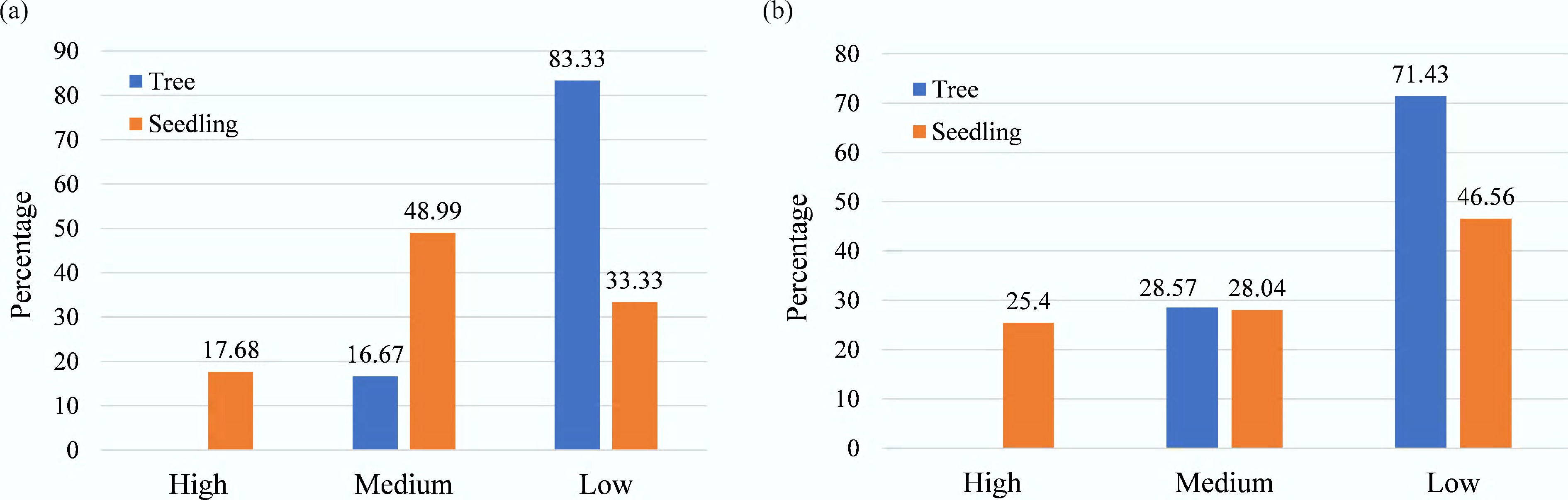
Figure 5.
Damage severity for (a) residual seedlings and trees during felling, and (b) seedlings and trees due to extraction, expressed as percentages. The damage severity for residual plants during felling and extraction operations is presented in (a), (b).
During extraction, about 46.56% of seedlings experienced low-severity damage, followed by medium (28.04%), and high-severity damage (25.4%) (Table 2; Fig. 5b). Similarly, most residual trees (71.43%) experienced low damage, while 28.57% experienced medium-severity damage, and none experienced high-severity damage (Table 2; Fig. 5b). The confidence intervals (Table 2) showed that during extraction, seedlings experienced a slightly higher proportion of high-severity damage (25.4%, CI [19.9, 31.8]) compared to felling (22.7%, CI [16.8, 29.9]), although the intervals overlapped slightly.
-
Our findings reveal distinct patterns of damage to residual plants depending on the harvesting operation and plant form. Extraction activities caused slightly greater damage to seedlings (45.41%) compared to felling (43.35%), with the remaining 11.24% attributed to other human causes such as trampling or unregulated movement in the forest (Fig. 3). This indicates that both operations have a substantial impact on forest regeneration, with extraction posing a marginally higher threat to the seedling layer. The significant damage to seedlings during extraction can be explained by the movement of heavy machinery, logs, and equipment, which directly disturbs the forest floor where seedlings are typically found[28]. In contrast, damage to mature trees showed a different pattern: felling accounted for the majority (58.06%), followed by extraction (22.58%), and other human activities (19.35%). This suggests that while extraction poses a higher threat to seedlings, the felling process through poor cutting techniques or the falling of large trees has a more significant impact on the residual tree population. Improper tree felling techniques may reduce productivity, log supply, and leave residual stands with tremendous damage, resulting in increased production costs and time[29]. Yuniawati & Dulsalam[30] found that improper timber harvesting techniques and falling of large canopy trees caused damage to residual stands, with an average of 13 trees per ha damaged by logging. This differential impact is particularly concerning because damage to mature trees not only disrupts immediate forest structure but also reduces the economic value and ecological role of these trees, such as their potential for carbon storage[31].
Our findings complement the only existing Nepalese study on harvesting impacts by Aryal et al.[17], which quantified timber volume loss during felling and sawing in Sal forests of the Terai region. While Aryal et al.[17] focused on product loss, reporting 21.6% volume loss during felling and 30.8% during sawing, our study addresses the parallel ecological impact on residual stand structure. Together, these studies provide a more complete picture: Aryal et al.[17] demonstrated the economic inefficiency of current practices, while our study reveals the ecological consequences for forest regeneration and future stand composition. This dual perspective is critical for Nepal's Community Forestry program, where user groups must balance timber revenue against long-term forest health. The fact that both studies, conducted in different Sal forest regions (Morang vs Udayapur) and under different management regimes (collaborative/community forests vs community/national forests), reveal substantial operational impacts suggests that harvesting-related damage is a systemic issue requiring national attention.
During felling, the majority of residual seedlings were bent down (44.4%), followed by stem damage (38.4%), and uprooted (17.2%) (Table 2; Fig. 4a). Bending damage is likely due to the flexibility of younger plants, which can be bent under the force of falling trees or branches without complete breakage. Breakage at the base and uprooting suggest more severe impacts, possibly from direct hits by falling debris or soil disturbance. This aligns with Surakka et al.[32], who reported higher regeneration damage in mechanized selection cuttings in uneven-aged Norway spruce stands, with stem breakage being the most common injury. For residual trees during felling, crown damage was the most frequent (61.1%), followed by stem damage (27.8%), and butt-end damage (11.1%) (Table 2; Fig. 4b). Crown damage reflects the impact of falling trees and branches on the canopy structure, and can have long-term effects on tree health by reducing photosynthetic capacity, and making trees more susceptible to secondary stressors like pests or disease[33].
In contrast, extraction activities resulted in different damage patterns. Seedlings were most commonly bent down (47.1%), followed by stem damage (29.6%), and uprooted (23.3%) (Table 2; Fig. 4c), patterns consistent with physical disturbances caused by skidding operations and the movement of felled logs across the forest floor. For residual trees during extraction, butt-end damage was predominant (71.43%), with stem breakage accounting for the remaining 28.57% (Table 2; Fig. 4d). This type of damage, typically from logs striking the base of standing trees during skidding or transportation, can weaken structural integrity and make trees more prone to infection or future mechanical failure. Our findings are consistent with international studies: in the Caspian forests of Iran, Tavankar et al.[34] reported 1.4% and 3.4% of residual trees destroyed and injured by felling in selection cutting, and 5.2% and 11.1% by skidding, respectively. Similarly, Tavankar et al.[35] observed that 52% of residual trees suffered damage during thinning operations, with diameter growth reduced by 1.7% in damaged trees, and a 22% reduction in trees with decayed wounds. Bodaghi et al.[9] found that during felling, the largest number of injuries was to the crowns of neighboring trees, followed by damage to the butt end, whereas during timber winching, the most common damage was to the root collar.
The implications of these findings are substantial for forest regeneration and sustainability. Seedling damage, especially when combined with residual tree damage, can impede natural regeneration and lead to shifts in species composition, favoring species more resilient to mechanical damage. The widespread crown and butt-end damage to residual trees may slow forest recovery, reduce productivity, and increase vulnerability to disease and environmental stress. This underscores the need for reduced-impact logging techniques, such as directional felling and careful planning of extraction routes, to minimize damage to both seedlings and residual trees.
Damage severity by felling and extraction
-
In the context of felling, approximately 33.33% of seedlings experienced low-severity damage, while medium and high-severity damage accounted for a smaller proportion (Fig. 5a). This indicates that while a significant number of seedlings were affected, the majority of damage was not catastrophic, potentially allowing for some degree of recovery. Similarly, the majority of residual trees (83.33%) also experienced low-severity damage, with only 16.67% facing medium damage, and no residual trees classified under high-severity damage. This suggests that, although felling operations can cause considerable disruption, most trees and seedlings were subjected to relatively minor impacts, which may facilitate their recovery over time. In contrast, the damage severity due to extraction reveals a more varied distribution among seedlings. Approximately 46.56% of seedlings experienced low-severity damage, but a notable proportion suffered medium (28.04%) and high-severity (25.40%) damage. This shift in damage severity suggests that extraction activities are more detrimental to seedlings than felling, likely due to the mechanical impacts of heavy machinery and the disturbance of the forest floor during the extraction process. For residual trees during extraction, the results show that 71.43% experienced low-damage severity, while 28.57% faced medium-damage severity, with no trees recorded under high-damage severity. This indicates that while extraction is damaging, it tends to result in less severe impacts compared to the potential for higher-severity outcomes observed in seedlings.
These findings highlight the differential impact of felling and extraction on forest structure, particularly regarding seedling health and recovery potential. The predominance of low-severity damage to residual trees during both operations suggests that the mature tree population may remain stable despite disturbances, potentially serving as a source of regeneration for future cohorts. However, the higher proportions of medium and high-severity damage among seedlings during extraction indicate that the young forest community may face greater challenges in recovery. This pattern is supported by existing literature, where studies have demonstrated that extraction activities can lead to increased mortality rates and hindered growth in seedlings compared to more established trees[36]. The variations in damage severity underscore the need for improved management practices that mitigate the impacts of extraction on seedlings while maintaining the health of residual trees. Such approaches could enhance the resilience of forest ecosystems and support long-term sustainability, ultimately promoting the recovery of both seedlings and the mature tree population post-harvest.
Implications and recommendations for sustainable forest management
-
The distinct damage patterns documented in this study provide a diagnostic basis for improving harvesting practices in Sal-dominated forests. By linking specific damage types to their operational causes, we can develop targeted mitigation strategies that address the most significant impacts on forest regeneration and residual stand structure. Figure 6 presents a conceptual framework summarizing the key damage patterns observed in our study alongside corresponding mitigation strategies organized by operational phase. Table 3 synthesizes the key damage patterns observed in our study with corresponding management recommendations organized by operational phase. Our findings have direct implications for Nepal's Community Forestry program, which manages nearly 45% of the country's forests. Currently, CFUG operational plans emphasize timber volume accounting through registers like Chhapan Register (forest stock register), Kataan Register (felling record), and Depot Register, but lack protocols for assessing ecological damage to residual stands. We recommend that Division Forest Offices and CFUGs integrate simple damage monitoring into these existing systems. For instance, the Kataan Register could be expanded to include a column for recording observable damage to surrounding regeneration (e.g., 'high/medium/low' damage severity in the felling gap). This would require minimal additional training but would generate crucial data for adaptive management. The differential impacts we documented, extraction damaging seedlings most, felling damaging trees most, suggest that CFUG training programs should be restructured. Currently, CFUG members receive basic training on tree marking and product allocation, but our results indicate that practical, hands-on training in directional felling and skid trail layout could substantially reduce residual damage. We recommend that the training curriculum developed by the Department of Forests and Soil Conservation incorporate modules on: (1) pre-harvest assessment of regeneration density to inform felling direction and skid trail placement; (2) precision felling techniques including proper notch and hinge methods to control tree fall direction and minimize crown damage to neighbors; (3) extraction route planning that concentrates machinery disturbance in designated trails rather than dispersing it across the stand. Given that 11.24% of seedling damage and 19.35% of tree damage were attributed to 'other human causes' (trampling, unregulated movement), strengthening enforcement mechanisms against unauthorized forest entry is equally important. CFUGs should consider seasonal restrictions on non-harvesting forest use during and immediately after logging operations to allow regeneration to recover. The comparison with Aryal et al.[17] reinforces that harvesting inefficiency (timber loss) and ecological damage (residual plant damage) are twin challenges requiring integrated solutions. Their recommendation for reduced-impact logging (RIL) training aligns with ours: both studies point to operator skill as the critical intervention point. We therefore urge the Government of Nepal to consider developing a national certification program for chainsaw operators and skidding machine operators, similar to programs in Malaysia and Indonesia, which would create a cadre of skilled workers capable of implementing RIL techniques across community and national forests.
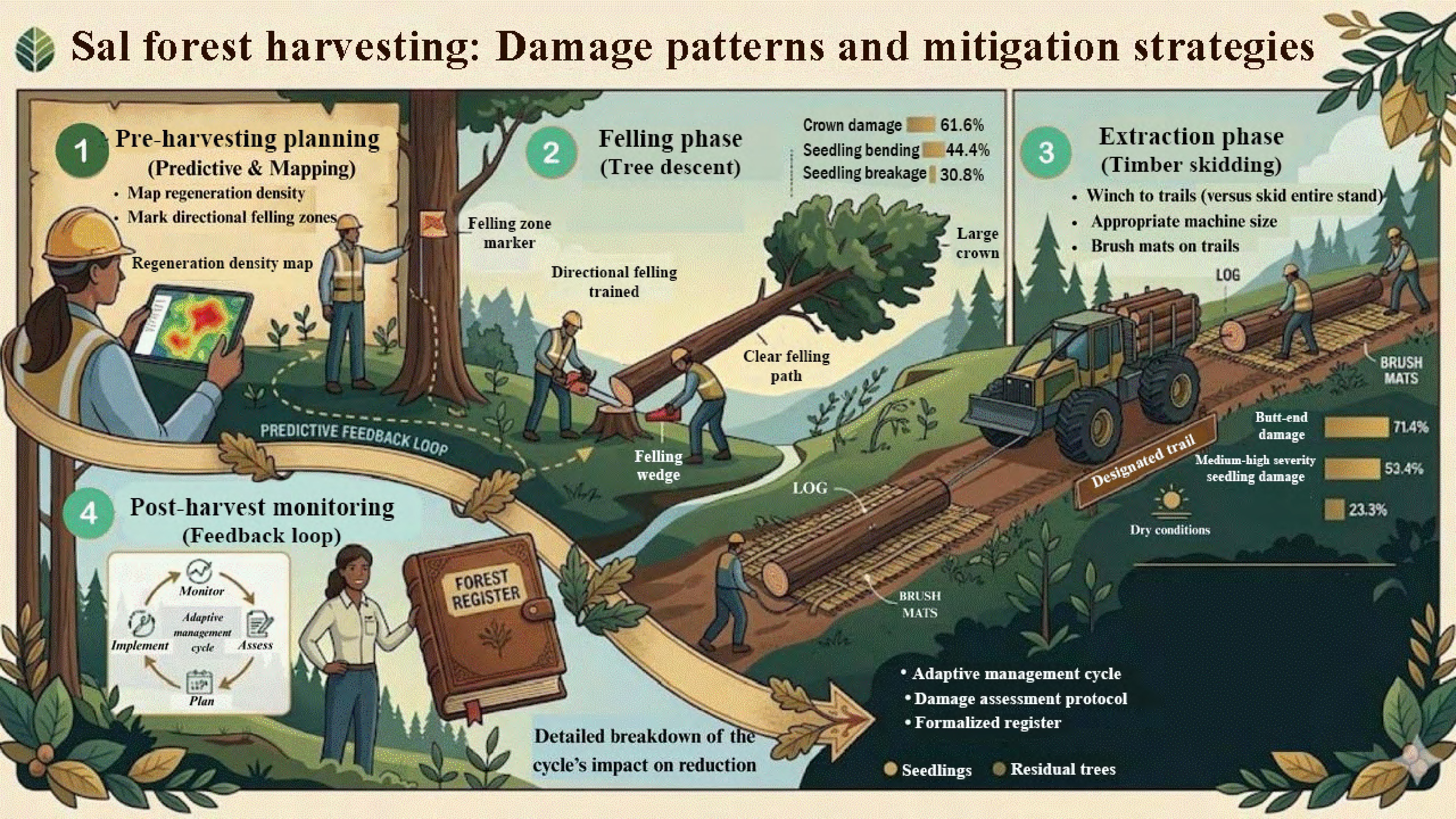
Figure 6.
Conceptual framework linking observed damage patterns to targeted mitigation strategies during felling and timber extraction in Sal-dominated forests. The figure illustrates the operational phases (left column), primary damage types documented in this study (center, with percentages), and evidence-based interventions (right column) to minimize residual plant damage.
Table 3. Summary of damage patterns, operational causes, and targeted mitigation strategies for sustainable harvesting in Sal forests
Operational phase Observed damage pattern Primary causes Mitigation strategies Pre-harvest
planningGeneral damage across all plant forms. Lack of site-specific harvesting plans; inadequate trail layout. • Conduct pre-harvest inventory of regeneration and residual trees. • Design skid trails to avoid high-density regeneration patches. • Mark directional felling zones based on crown characteristics and slope. Felling operations Crown damage to residual trees (61.1%). Falling trees striking crowns of neighbors; uncontrolled felling direction. • Train operators in precision directional felling techniques. • Clear falling paths of understory vegetation before felling. • Use felling wedges and felling aids to control tree fall direction. Seedling bending (44.4%) and stem damage (38.39%). Falling trees and branches crushing regeneration. • Create brush mats from slash to cushion seedling impacts. • Fell trees toward existing gaps rather than dense regeneration. • Consider seasonal timing when seedlings are more flexible. Butt-end damage during felling (11.1%). Logs striking base of trees during fall. • Ensure proper notch and hinge techniques to control tree trajectory. • Maintain sufficient distance between felled and residual trees. Extraction
operationsSeedling damage (45.41% of all seedling damage), bending (47.1%), uprooting (23.3%). Machinery traffic; logs dragging across forest floor; repeated passes. • Design and mark designated skid trails before operations begin. • Limit number of machine passes on same trail. • Use brush mats on skid trails to reduce soil and seedling disturbance. • Winch logs to trails rather than skidding through entire stand. Butt-end damage to residual trees (71.4%). Logs striking tree bases during skidding; poor log alignment. • Maintain safe distance between skid trails and residual trees. • Ensure logs are properly secured and aligned during skidding. • Use appropriate machinery size relative to trail width and tree spacing. Medium-high-severity damage to seedlings (53.4% combined). Cumulative impacts of multiple extraction passes; heavy machinery. • Conduct extraction during dry or frozen ground conditions to reduce soil disturbance. • Match equipment size to terrain and stand conditions. • Consider alternative extraction methods (cable winching) in sensitive areas. Post-harvest monitoring Cumulative damage effects. No systematic damage assessment; lack of adaptive management. • Implement post-harvest damage assessments using standardized protocols. • Document damage patterns to inform future harvesting plans. • Adapt management practices based on monitoring results. Policy and institutional recommendations
-
Our findings have implications for forest policy in Nepal's Sal forests, particularly in the Chure region, where harvesting follows annual allowable cut calculations with priority for 4D trees. While this approach ensures that harvesting focuses on trees with lower economic and ecological value, it does not inherently minimize damage to residual stands. We therefore recommend that Division Forest Offices and Community Forest user groups develop operational guidelines that explicitly address damage mitigation, including pre-harvest trail planning, directional felling requirements, and extraction protocols tailored to Sal forest conditions. Such guidelines should be grounded in the empirical damage patterns documented in this study and adapted to local site conditions.
Investment in operator training and certification programs that emphasize reduced-impact logging techniques represents another critical intervention. Building on the existing involvement of forest technicians in tree marking and monitoring, these programs could equip workers with practical skills in precision felling, skid trail layout, and damage assessment. Given that our study found unregulated human activities contributed to 11.24% of seedling damage and 19.35% of tree damage, strengthening enforcement mechanisms against illegal logging and unauthorized forest entry is equally important. This could include increased patrolling, community surveillance, and clear sanctions for violations.
We further recommend incorporating damage monitoring into existing forest registers, such as the Chhapan Register, Kataan Register, and Depot Register, by creating simple protocols for recording post-harvest damage alongside timber production data. This would enable adaptive management where future harvesting plans are informed by documented damage patterns. Additionally, promoting knowledge exchange between community forests and national forests could facilitate shared learning, as our study included both management regimes and revealed similar damage patterns that could benefit from cross-institutional collaboration. The community-based forest management framework that has proven successful in Nepal[6] provides an excellent institutional foundation for implementing these recommendations. By engaging local user groups in damage prevention and monitoring, these recommendations align with existing governance structures while enhancing their ecological outcomes.
Limitations of the study
-
This study provides important insights into the patterns and types of damage resulting from logging activities; however, several methodological limitations should be acknowledged. First, the study design using circular plots sized to tree height and focusing on the predicted felling direction was intended to capture damage patterns and severity, rather than to estimate the overall proportion of the residual stand damaged within each plot. Future studies should incorporate pre- and post-harvest inventories to better assess the overall extent of damage at the stand level. As a result, direct comparisons with studies reporting stand-level damage percentages should be made with caution. Additionally, pre-harvest assessments were qualitative and visual, which, while useful for distinguishing new from existing damage, did not involve tagging or censusing all individuals. Future studies would benefit from pre- and post-harvest plot-based inventories to quantify damage incidence across the entire stand. Additionally, while this study's primary aim was a diagnostic characterization of damage patterns, we acknowledge the importance of statistical precision. To address this, we have provided 95% confidence intervals for all reported proportions using the Wilson score method. This approach quantifies the uncertainty around our sample estimates and strengthens the robustness of our conclusions. The wider confidence intervals observed for tree damage (compared to seedling damage) reflect the smaller sample sizes of damaged trees and should be considered when interpreting these results.
-
This study is the first to attempt damage assessment of residual plants in the Nepalese forestry context. We observed that extraction causes greater damage to seedlings, whereas felling primarily affects residual trees. Crown damage to the residual trees was observed during felling, whereas butt-end damage was observed during extraction. Bending of seedlings was common during both felling and extraction. Although the majority of residual plants experienced low-severity damage, it is still a matter of concern. Forest management activities should be planned to minimize damage to residual plants, with an emphasis on reducing impacts on regeneration, especially seedlings.
The authors would like to express sincere gratitude to the Saraswati Community Forest User Group, Tapeshwari Sub-Division Forest Office and Division Forest Office, Udayapur for their cooperation during data collection. Additionally, we would like to thank Jageshwor Shah (Forest Officer, Division Forest Office, Udayapur, Nepal) for supervising the first author during the data collection period.
-
Not applicable.
-
The authors confirm their contributions to the paper as follows: Nisha Dhungel: conceptualization, software, validation, formal analysis, investigation, data curation, writing − original draft preparation; Rajeev Joshi: conceptualization, methodology, software, validation, formal analysis, investigation, resources, data curation, writing − original draft preparation, writing − review and editing, supervision; Jeetendra Gautam: conceptualization, methodology, software, validation, formal analysis, investigation, data curation; Aman Prabhakar: software, investigation, resources; Tek Maraseni: investigation, writing − review and editing; Han Zhang: investigation, writing − review and editing; Saraswoti Adhikari: resources, data curation, writing − review and editing. All authors reviewed the results and approved the final version of the manuscript.
-
The datasets generated and analyzed during the current study are not publicly available due to ongoing research, but the data underlying this article will be shared on reasonable request to the corresponding author.
-
This work was financially supported by the Major Project of the National Social Science Foundation of China (Grant No. 24&ZD108).
-
The authors declare that they have no known competing financial interests or personal relationships that could have appeared to influence the work reported in this paper.
-
Full list of author information is available at the end of the article.
- Copyright: © 2026 by the author(s). Published by Maximum Academic Press, Fayetteville, GA. This article is an open access article distributed under Creative Commons Attribution License (CC BY 4.0), visit https://creativecommons.org/licenses/by/4.0/.
-
About this article
Cite this article
Dhungel N, Joshi R, Gautam J, Prabhakar A, Adhikari S, et al. 2026. Damage to residual plants during felling and timber extraction on Sal (Shorea robusta Gaertn. f.) dominant forest in Nepal. Agricultural Ecology and Environment 2: e015 doi: 10.48130/aee-0026-0012 

Damage to residual plants during felling and timber extraction on Sal (Shorea robusta Gaertn. f.) dominant forest in Nepal
- Received: 08 February 2026
- Revised: 01 April 2026
- Accepted: 20 April 2026
- Published online: 20 May 2026
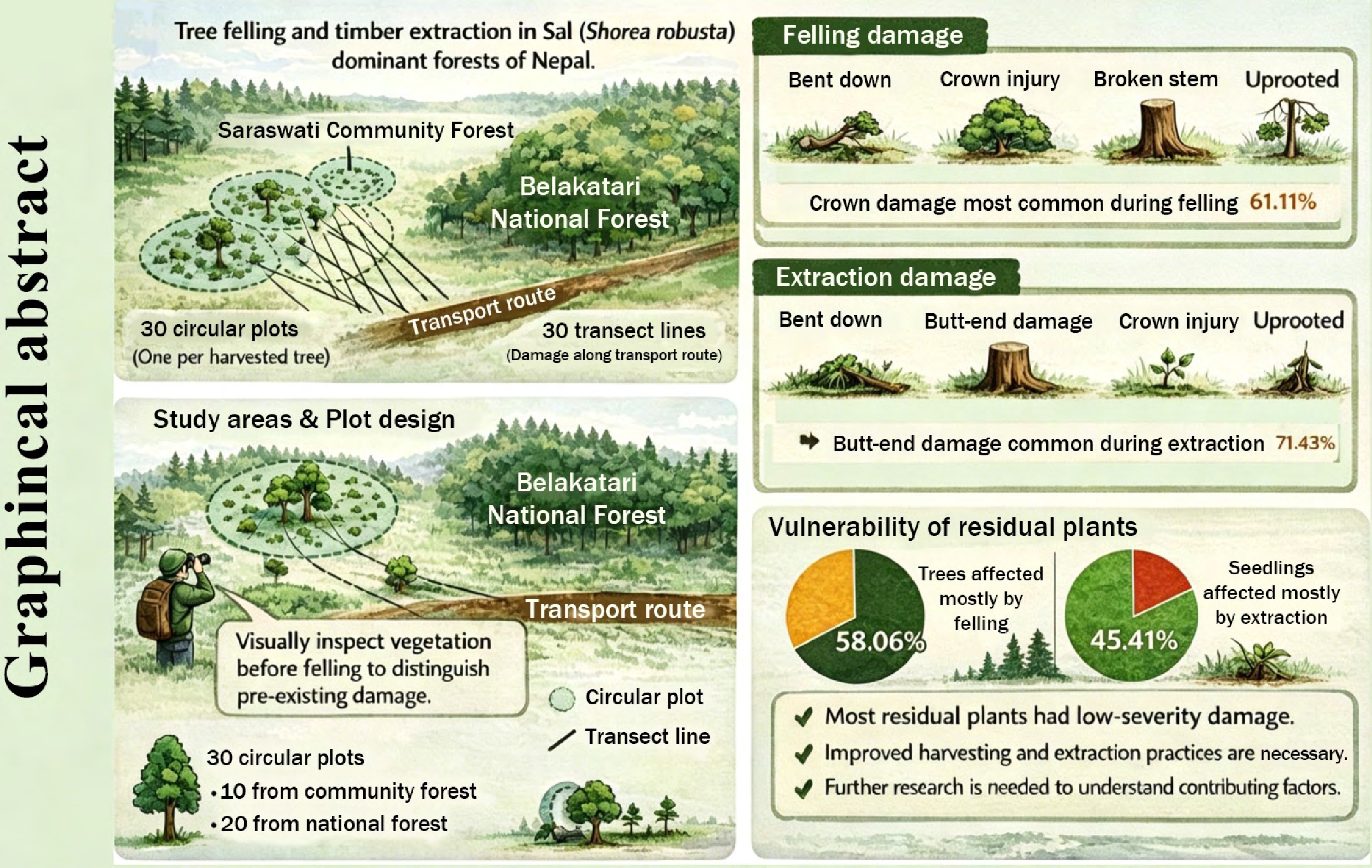
Abstract: Tree felling and timber extraction are among the primary forest management activities in Nepal. However, significant research gaps persist regarding the types, causes, and severity of damage to residual plants during these operations. This study addresses these gaps by characterizing damage patterns to residual plants in Sal (Shorea robusta Gaertn. f.) dominant forests. Primary data were collected from a total of 30 circular plots (one plot per harvested tree) for felling damage assessment and 30 transect lines for extraction-related damage in Saraswati Community Forest and the Belakatari National Forest. Vegetation was visually inspected before felling to distinguish felling-induced damage from pre-existing injuries. After felling and extraction, damage was categorized by type (e.g., bent down, crown damage, stem damage, uprooted) and severity (high, medium, low) based on expert evaluation and established literature. Among damaged plants, extraction caused greater damage to seedlings (45.41%), while felling primarily affected trees (58.06%). Crown damage (61.11%) to residual trees was common during felling, whereas butt-end damage (71.43%) occurred during extraction. Similarly, bending of seedlings was frequent during both operations. Although most residual plants experienced low-severity damage, these findings underscore the need for improved harvesting practices to minimize residual damage. This study provides a diagnostic assessment of damage patterns to inform sustainable forest management in Sal ecosystems.
-
Key words:
- Chure region /
- Forest management /
- Impact assessment /
- Selection cutting /
- Tree harvesting