-
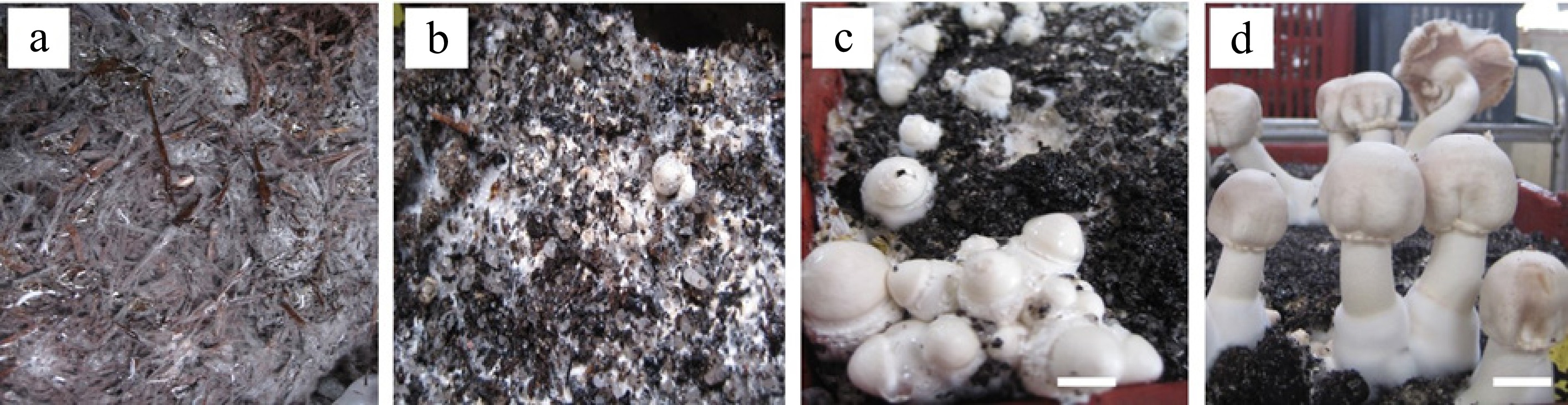
Figure 1.
Overall cultivation cycle of A. subrufescens, using the French cultivar CA 487 as a representative, showing different developmental stages: (a) spawn-running period (day 14), (b) mycelial colonization in the casing layer (day 21), (c) fruiting induction (day 28), and (d) fruiting body formation (day 35). Scale bars: (c) = 1 cm, (d) = 1.5 cm.
-
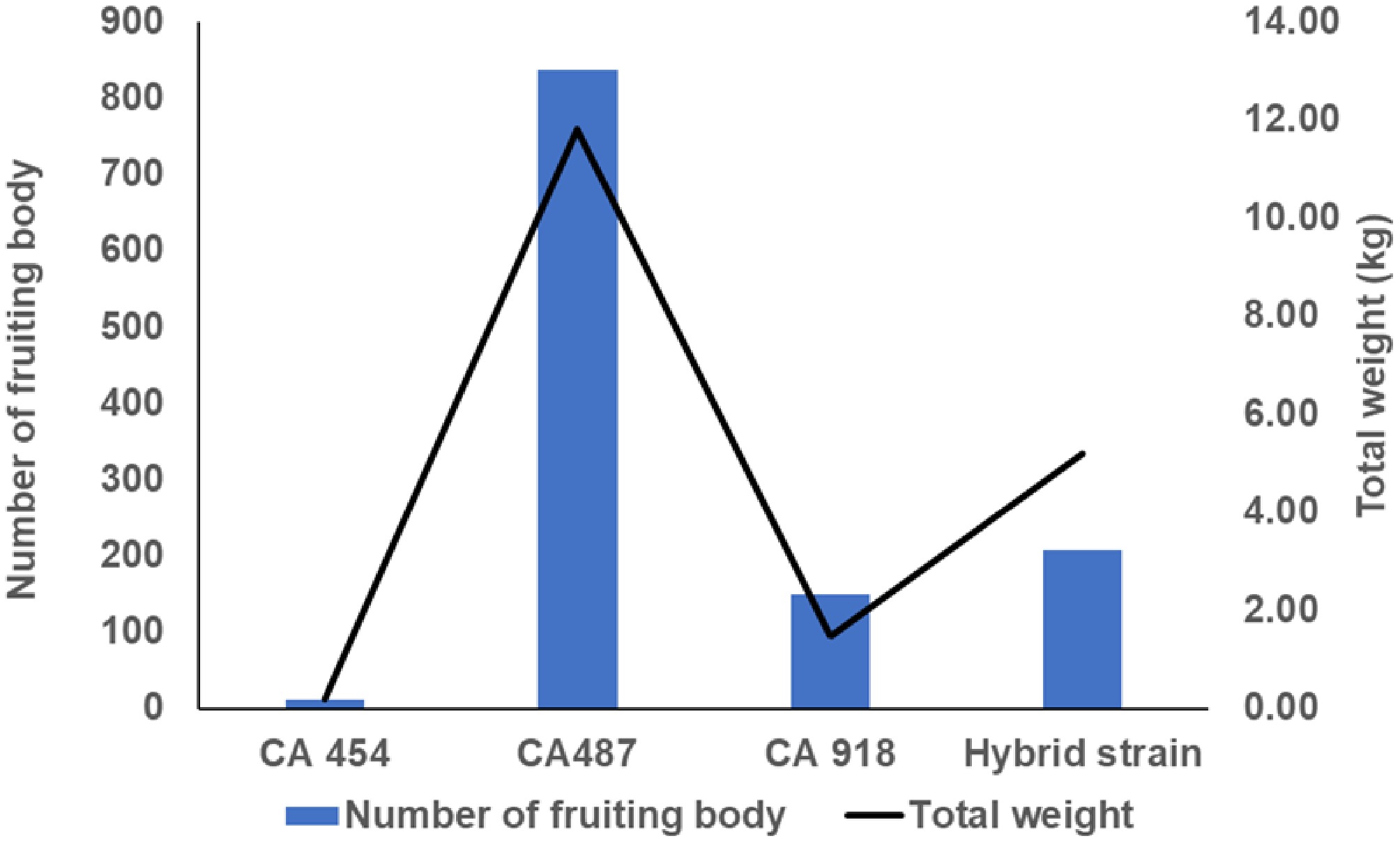
Figure 2.
Productivity of four strains of Agaricus subrufescens, showing the number of fruiting bodies and total weight (kg) for each strain.
-
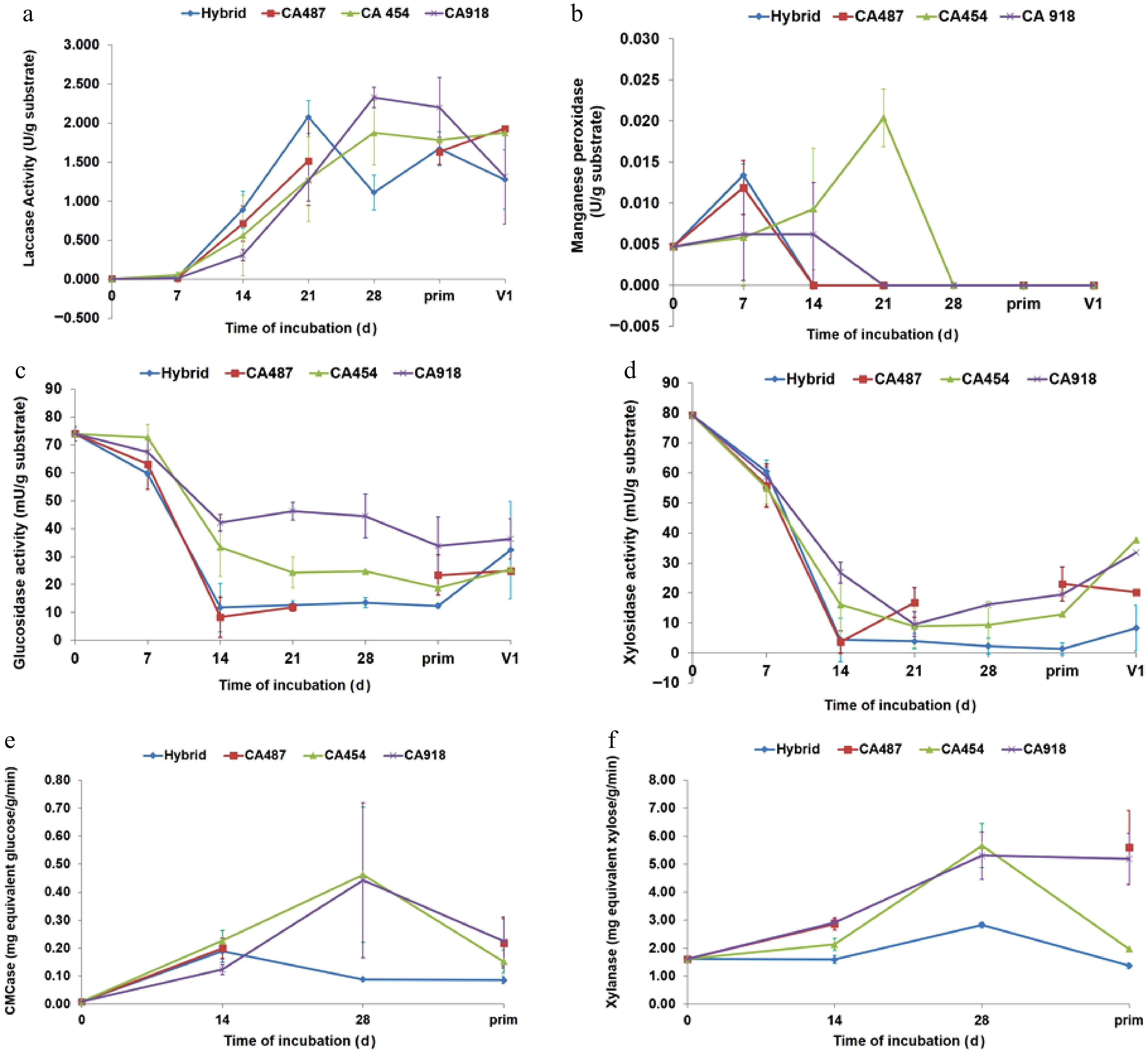
Figure 3.
Extracellular enzyme production by Agaricus subrufescens in compost: (a) laccase, (b) manganese peroxidase, (c) glucosidase, (d) xylosidase, (e) CMCase, and (f) xylanase. Symbols represent different strains: (▲) CA454, (■) CA487, (♦) hybrid CA487 × CA454, and (×) CA918. Error bars indicate the standard deviation from three parallel cultivations.
-
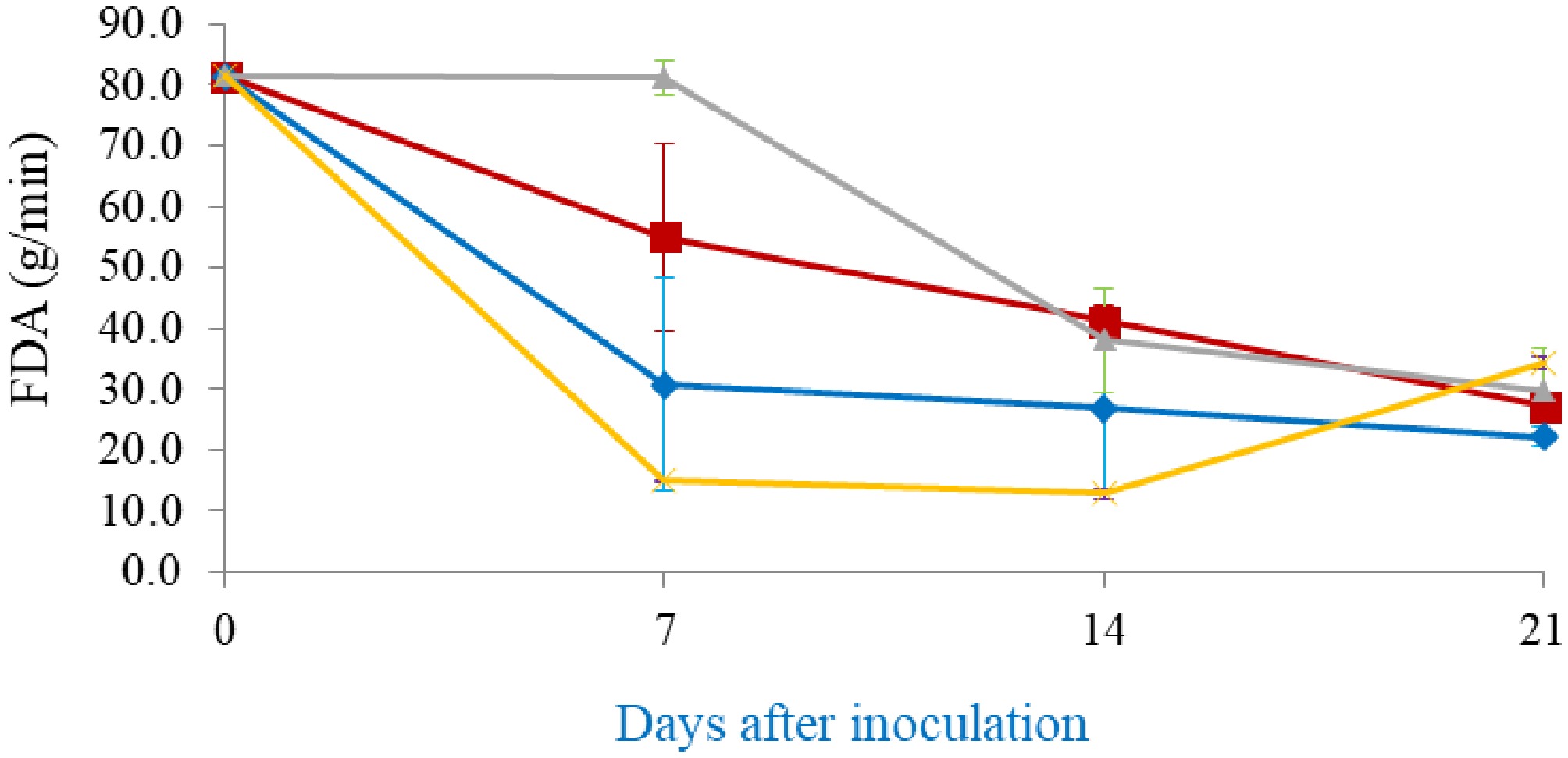
Figure 4.
Fluorescein diacetate (FDA) hydrolysis by Agaricus subrufescens strains: (▲) CA454, (■) CA487, (♦) hybrid CA487 × CA454, and (×) CA918. Error bars represent the standard deviation from three parallel cultivations.
-
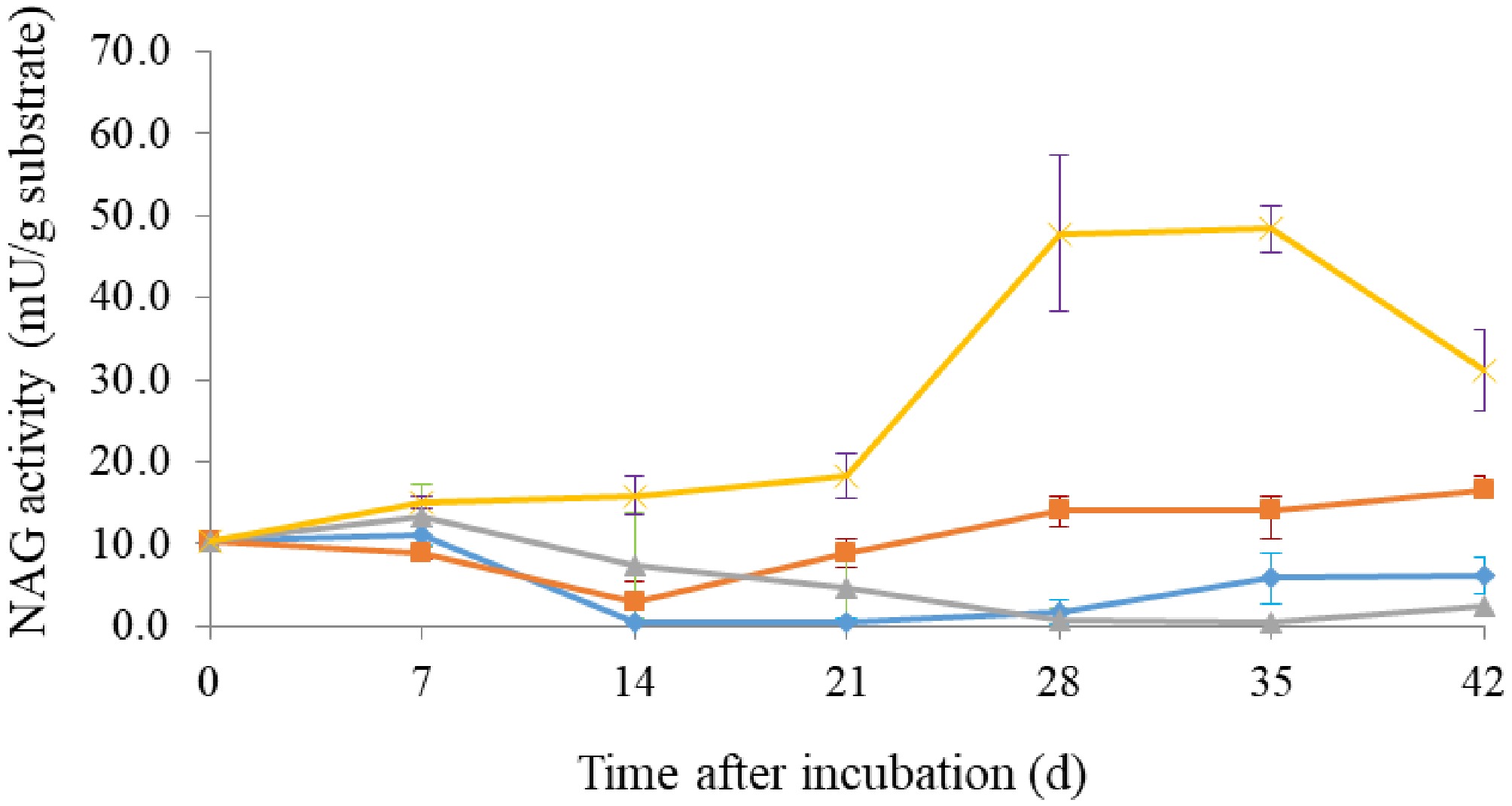
Figure 5.
N-acetyl-glucosaminidase (NAG) activity of Agaricus subrufescens strains: (▲) CA454, (■) CA487, (♦) hybrid CA487 × CA454, and (×) CA918. Error bars indicate the standard deviation from three parallel cultivations.
-
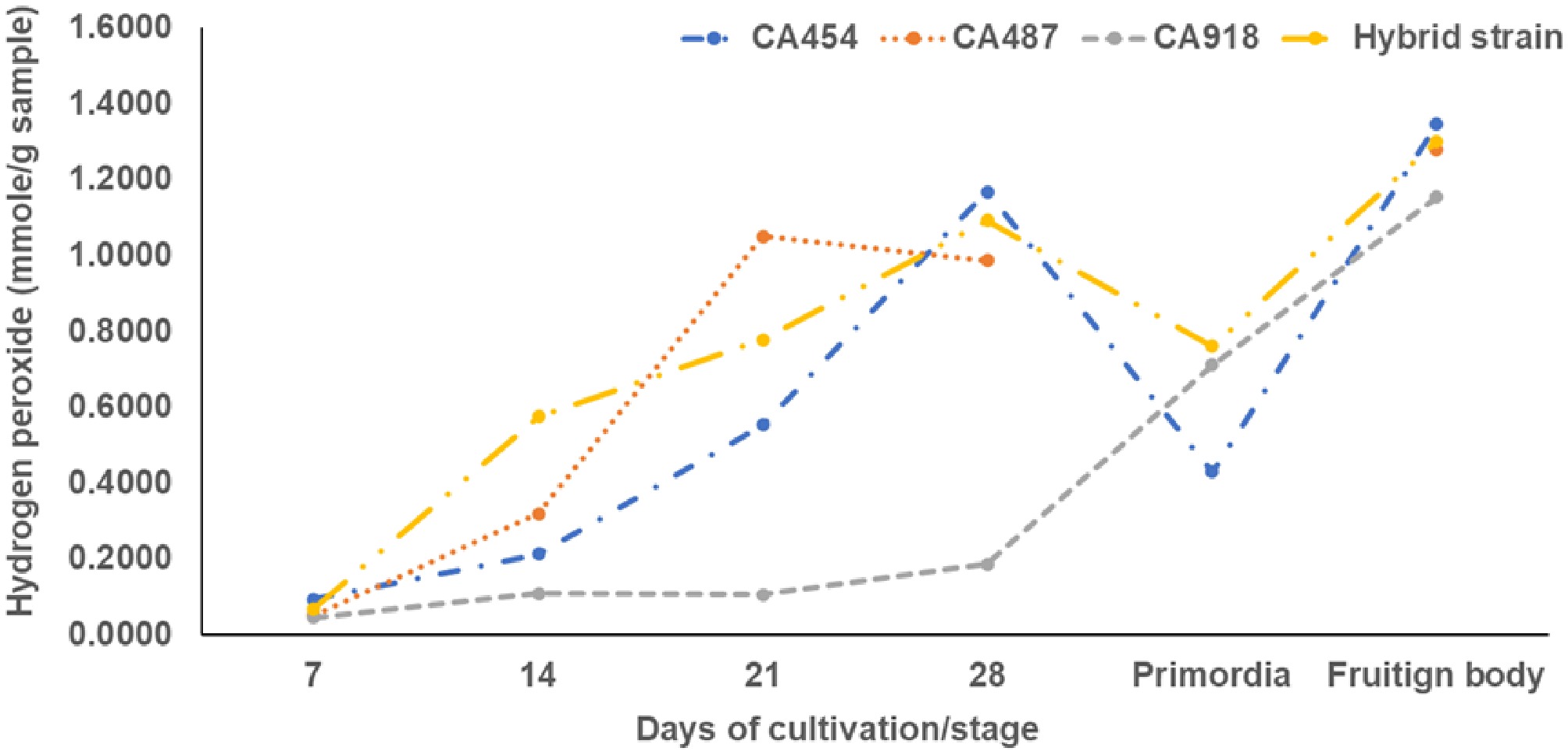
Figure 6.
Changes in H2O2 concentration in extracts from mushroom compost colonized by Agaricus subrufescens.
-
Strain Origin Remarks CA454 (= WC837) Brazil Subculture strain, also similar to ATCC 76739 CA487 France Wild isolate CA918 Thailand Wild isolate HB INRA Crossbred strain of CA454-3 × CA487-100 Table 1.
Strains of A. subrufescens used in this study.
Figures
(6)
Tables
(1)