-
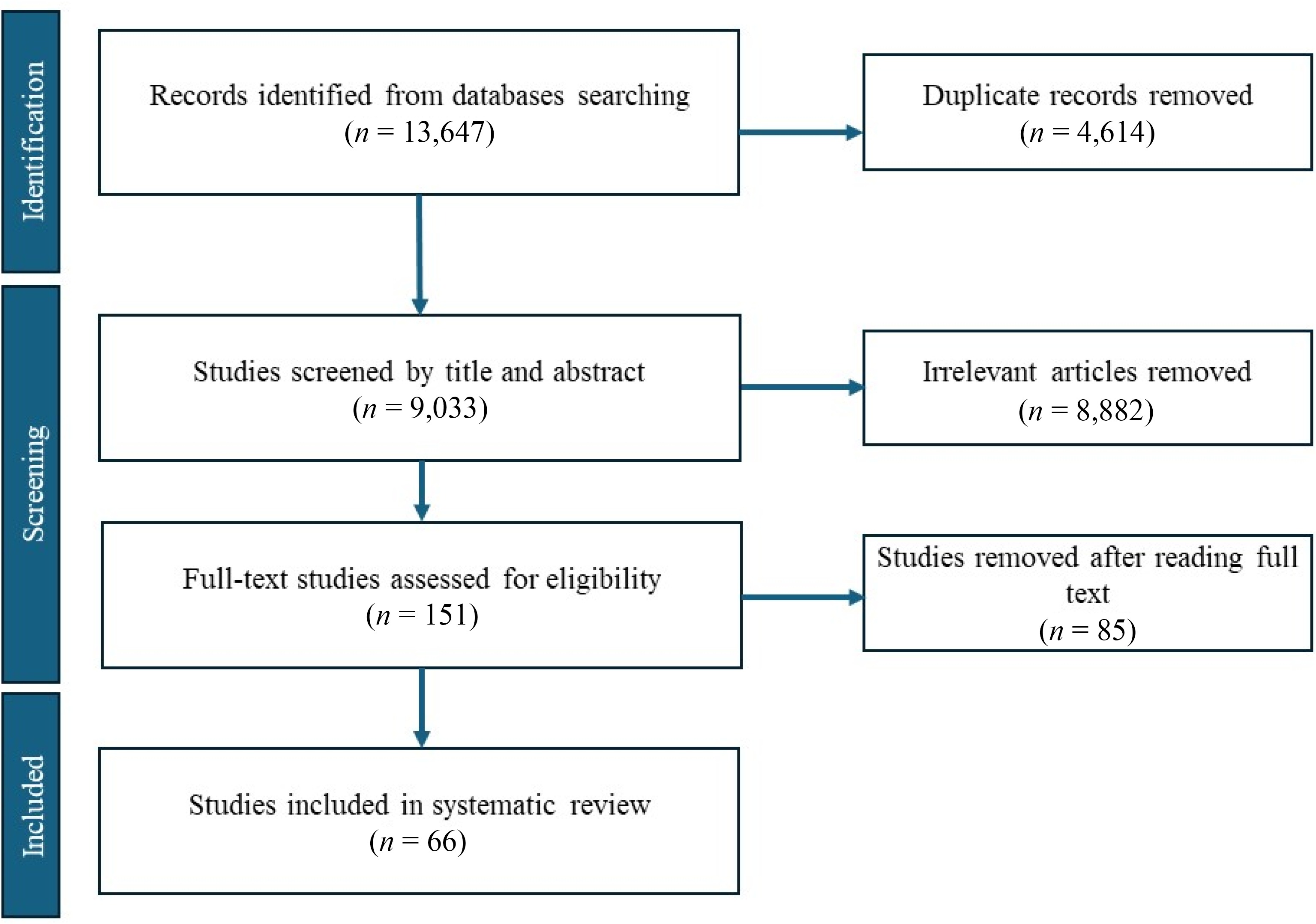
Figure 1.
PRISMA flow diagram illustrating the systematic literature search, screening, and selection process.
-
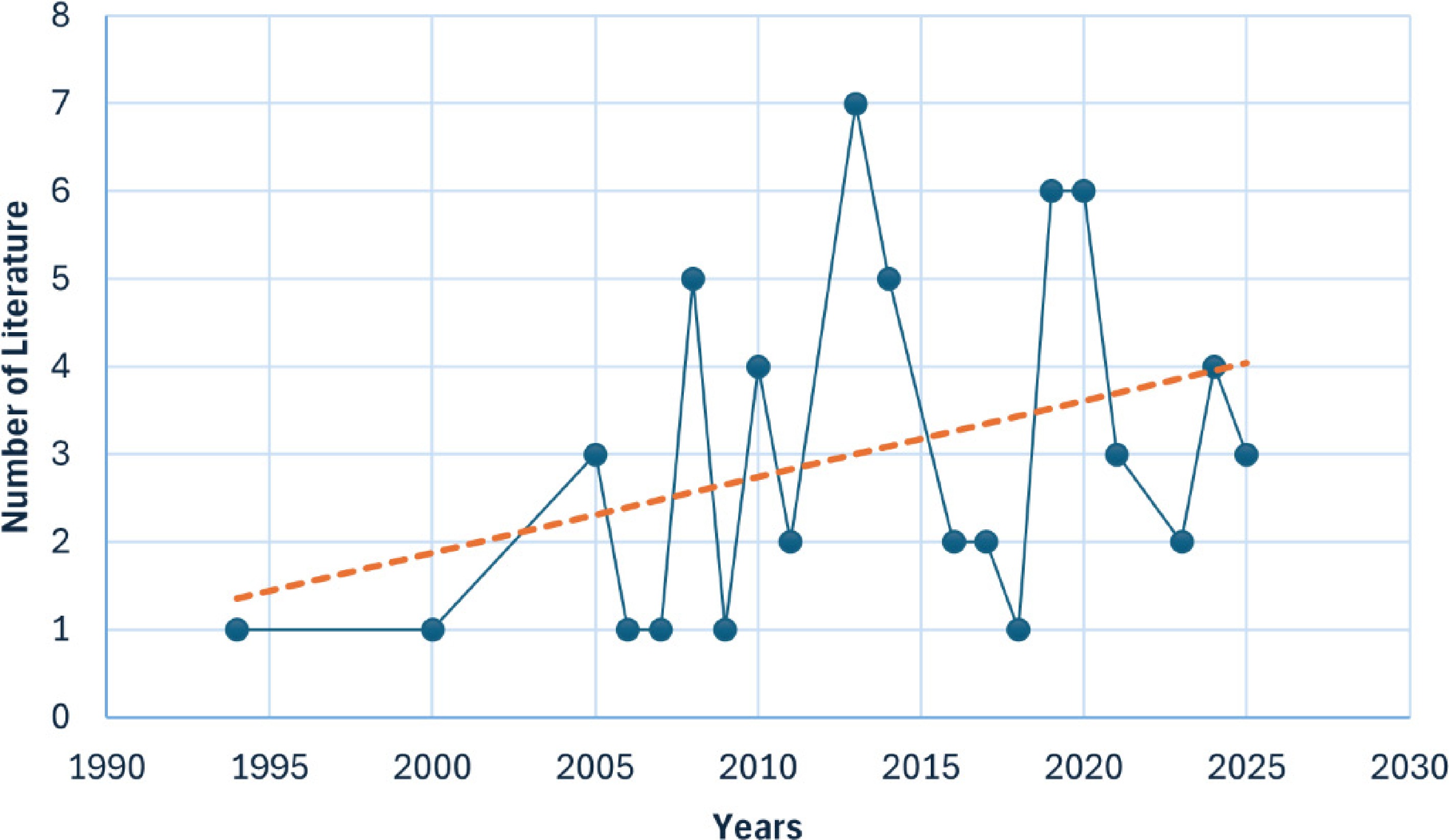
Figure 2.
Annual trend of the number of ethnomycological studies in Nepal.
-
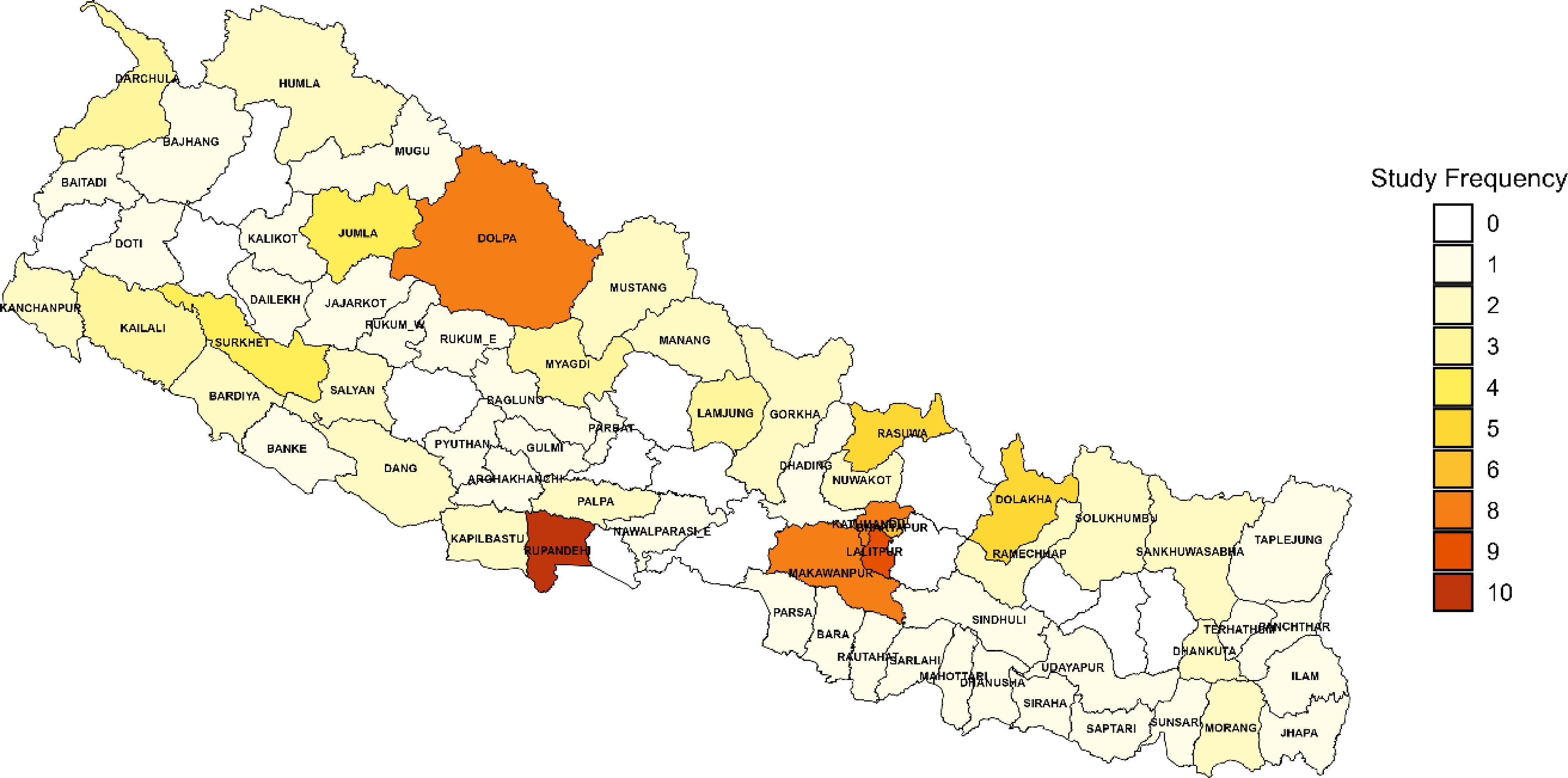
Figure 3.
District-wise geographic heat map of ethnomycological studies included in the systematic review. Shading intensity reflects the number of studies reported per district, based on the latest administrative boundaries of Nepal. Map source: Administrative boundary shapefile adopted from Nasa Engineering Consultancy and Engineering Deurali Pvt. Ltd., Nepal, and created and generated by Nilkantha Regmi.
-
Criterion Inclusion criteria Exclusion criteria Geography Studies conducted in Nepal or explicitly containing Nepal-specific ethnomycological data (can include Himalayan regions if Nepalese data are separable). Studies conducted outside Nepal or not mentioning Nepal-specific data. Focus Studies addressing traditional knowledge, cultural significance, folk taxonomy, medicinal or culinary uses of mushrooms/fungi. Papers focusing only on mushroom taxonomy, genetics, or laboratory-based mycology without reference to cultural or ethnobotanical aspects. Subject Studies focusing on fungi or mushrooms, including wild edible, medicinal, or toxic species. Studies emphasizing pathogenic, toxicological, or clinical infection contexts. Studies on fungi affecting plants, animals, or industrial processes, unrelated to traditional human knowledge. Knowledge Documentation of indigenous or ethnobiological knowledge (e.g., rituals, taboos, beliefs, harvesting practices, folk classification). Global or regional ethnomycological reviews that lack Nepal-specific analysis or data. Source Peer-reviewed articles, theses, conference proceedings, and grey literature published till October 5, 2025. Language Articles published in English or Nepali Articles in other languages without an available translation or summary. Context Articles in chemistry, microbiology, or pharmacology that test compounds from mushrooms but do not document indigenous knowledge or cultural use. Table 1.
Inclusion and exclusion criteria for study selection.
-
Validation outcome Orthographic status Count Percentage Description and notes Currently accepted name Correct spelling 533 80.64% The reported genus and specific epithet were correct and remain current. Currently accepted name Typographical error 36 5.45% Records contained spelling or orthographic errors in the original entry (e.g., Agaricus biosporus was corrected as Agaricus bisporus). Outdated synonym Correct spelling 78 11.80% The reported binomial is an outdated synonym that has been superseded by a currently accepted name (e.g., Lentinus lepideus was updated to Neolentinus lepideus). Outdated synonym Typographical error 8 1.21% Records contained spelling or orthographic errors in the original entry, and the reported name was an outdated synonym superseded by a currently accepted name (e.g., Auricularia polytrichia [misspelling of Auricularia polytricha] was corrected and updated to Auricularia nigricans). Unresolved or invalid records 6 0.9% Could not be matched to a verified species and were excluded. Total records processed 661 100% Final validated species 215 Final count after standardization and deduplication Table 2.
Outcomes of the taxonomic validation process for mushroom names documented in Nepalese ethnomycological literature.
-
Category Number of species Percentage of total (215) Edible/food use 168 78.1% Medicinal 47 21.9% Economic value 31 14.4% Disputed edibility 16 7.4% Ritual use 10 4.7% Material use 9 4.2% Total 215 The 'disputed edibility' category includes species recorded as 'edible' in Nepalese ethnomycological literature but regarded as poisonous or toxic in global mycological sources; this discrepancy may reflect localized use practices or potential misidentification. Percentages are based on the total species count (n = 215). Table 3.
Categorization and utilization frequency of 215 mushroom species.
Figures
(3)
Tables
(3)