












-
Mushrooms have served as a vital partner in human cultural and ecological systems for millennia, providing sustenance, medicine, spiritual symbolism, and economic opportunity across diverse societies worldwide[1]. Study of these relationships, known as ethnomycology, sits at the intersection of mycology, anthropology, and ecology, offering critical insights into traditional knowledge systems, sustainable resource use, and biocultural heritages[2,3]. In a nation celebrated for its extraordinary biological and cultural diversity, mushrooms of Nepal represent a particularly rich yet underexplored dimension of its natural wealth[4]. From the high-altitude alpine pastures where the valuable caterpillar fungus (Ophiocordyceps sinensis) is harvested to the subtropical forests teeming with diverse edible mushrooms, fungal resources are deeply woven into the fabric of local livelihoods, health practices, and cultural traditions for numerous indigenous and rural communities[5−7].
Nepal's dramatic altitudinal gradient, ranging from lowland Terai plains to the peaks of the Himalayas, fosters an immense diversity of macrofungi[8]. Species from genera such as Russula, Amanita, Morchella, and Ganoderma are integral to local food security and traditional healthcare, while others hold specific ritual importance or provide critical seasonal income[9−11]. Despite their significance, mushrooms have historically received less scholarly and policy attention compared to plants and animals, leading to their characterization as the 'forgotten kingdom' in both ecological research and conservation planning[12]. This neglect extends to the documentation of associated traditional knowledge, which is often orally transmitted and highly vulnerable to erosion from socio-economic change, land-use shifts, and climate impacts.
Over the past three decades, academic interest in Nepalese ethnomycology has grown, resulting in a scattered body of journal articles, theses, and reports[4,11,13−15]. However, this literature remains fragmented, with no comprehensive synthesis to date. The absence of a systematic review hinders a clear understanding of the state of knowledge, obscuring patterns, biases, and critical gaps. Key questions remain unanswered: What are the geographic and temporal trends in research? Which mushroom species and use categories are most documented? How is traditional knowledge distributed across different ethnic and ecological zones? What are the prevailing concerns regarding conservation and knowledge transmission?
This study addresses these gaps by presenting the first PRISMA-based systematic review of ethnomycological research in Nepal from 1994 to 2025. Through a rigorous bibliometric and thematic analysis of 66 eligible studies, this review aims for: (1) a quantitative and qualitative analysis of geographic, methodological, and cultural biases, (2) quantify the documented mushroom diversity and categorize its uses, (3) taxonomic validation of all recorded species using Index Fungorum and MycoBank, and (4) a critical discussion of the 'edibility paradox' and its implications for biocultural conservation. By consolidating and critically assessing the existing knowledge, this review seeks to elevate the visibility of mushrooms in Nepalese biocultural discourse, provide an evidence base for informed conservation and policy action, and contribute to global understanding of human-mushroom interactions in a rapidly changing world. Despite the increasing volume of publications, a holistic framework that integrates ecological, cultural, and methodological dimensions of Nepalese ethnomycology remains lacking. By providing a comprehensive and systematic synthesis, this study provides clearer evidence to support future interdisciplinary research and informed conservation strategies.
-
This systematic review was conducted to synthesize extant literature on the traditional knowledge and cultural significance of mushrooms in Nepal. The methodology was designed and reported in accordance with the Preferred Reporting Items for Systematic Reviews and Meta-Analyses (PRISMA) 2020 statement to ensure rigor, transparency, and reproducibility throughout the review process[16].
Data sources and search strategy
-
A systematic search was executed across eight interdisciplinary electronic databases to capture the breadth of relevant literature: Google Scholar, PubMed, JSTOR, Semantic Scholar, CORE, Dimensions, NepJol, and CrossRef. These platforms were selected to encompass peer-reviewed journal articles, grey literature (theses, reports, conference proceedings), and publications from the biomedical, biological, social sciences, and humanities disciplines. The search was updated as of records available up to October 5, 2025.
The search strategy employed a combination of Boolean operators (AND, OR, NOT) to intersect three core conceptual blocks: (1) Geography ('Nepal' OR 'Himalaya*), (2) Biological Subject ('fungi' OR 'mushroom*' OR 'chyau* - a common Nepali vernacular term for mushroom), and (3) Socio-cultural Domain ('ethnomycology' OR 'traditional knowledge' OR 'cultural significance' OR 'medicinal use' OR 'culinary use'). To refine the results toward socio-ecological and use-based studies, clinical mycological literature was excluded using terms such as NOT 'pathogen' NOT 'infection' NOT 'clinical'. Search strings were meticulously adapted to the specific syntax and filtering capabilities of each database, as detailed in Supplementary File 1 (Table S1).
Screening process
-
All retrieved records were imported into the spreadsheet for deduplication and screening. The study selection process was conducted in two distinct stages following the removal of duplicate records. The inclusion and exclusion criteria used to evaluate the relevance and eligibility of each record are detailed in Table 1. Title, abstract, and full-text screening were conducted primarily by a single reviewer (S.C.); however, when doubts arose regarding eligibility, the items were discussed with co-authors (A.S. and B.S.) to reach a consensus. A formal review protocol was not registered, but the PRISMA 2020 checklist was followed throughout.
Table 1. Inclusion and exclusion criteria for study selection.
Criterion Inclusion criteria Exclusion criteria Geography Studies conducted in Nepal or explicitly containing Nepal-specific ethnomycological data (can include Himalayan regions if Nepalese data are separable). Studies conducted outside Nepal or not mentioning Nepal-specific data. Focus Studies addressing traditional knowledge, cultural significance, folk taxonomy, medicinal or culinary uses of mushrooms/fungi. Papers focusing only on mushroom taxonomy, genetics, or laboratory-based mycology without reference to cultural or ethnobotanical aspects. Subject Studies focusing on fungi or mushrooms, including wild edible, medicinal, or toxic species. Studies emphasizing pathogenic, toxicological, or clinical infection contexts. Studies on fungi affecting plants, animals, or industrial processes, unrelated to traditional human knowledge. Knowledge Documentation of indigenous or ethnobiological knowledge (e.g., rituals, taboos, beliefs, harvesting practices, folk classification). Global or regional ethnomycological reviews that lack Nepal-specific analysis or data. Source Peer-reviewed articles, theses, conference proceedings, and grey literature published till October 5, 2025. Language Articles published in English or Nepali Articles in other languages without an available translation or summary. Context Articles in chemistry, microbiology, or pharmacology that test compounds from mushrooms but do not document indigenous knowledge or cultural use. First, titles and abstracts were screened against the inclusion criteria. Records that clearly did not meet the criteria were excluded. Second, the full texts of the remaining records were retrieved and subjected to a rigorous eligibility assessment using all criteria. The entire selection process, including the number of records identified, screened, assessed, and included, is presented in a PRISMA flow diagram (Fig. 1).
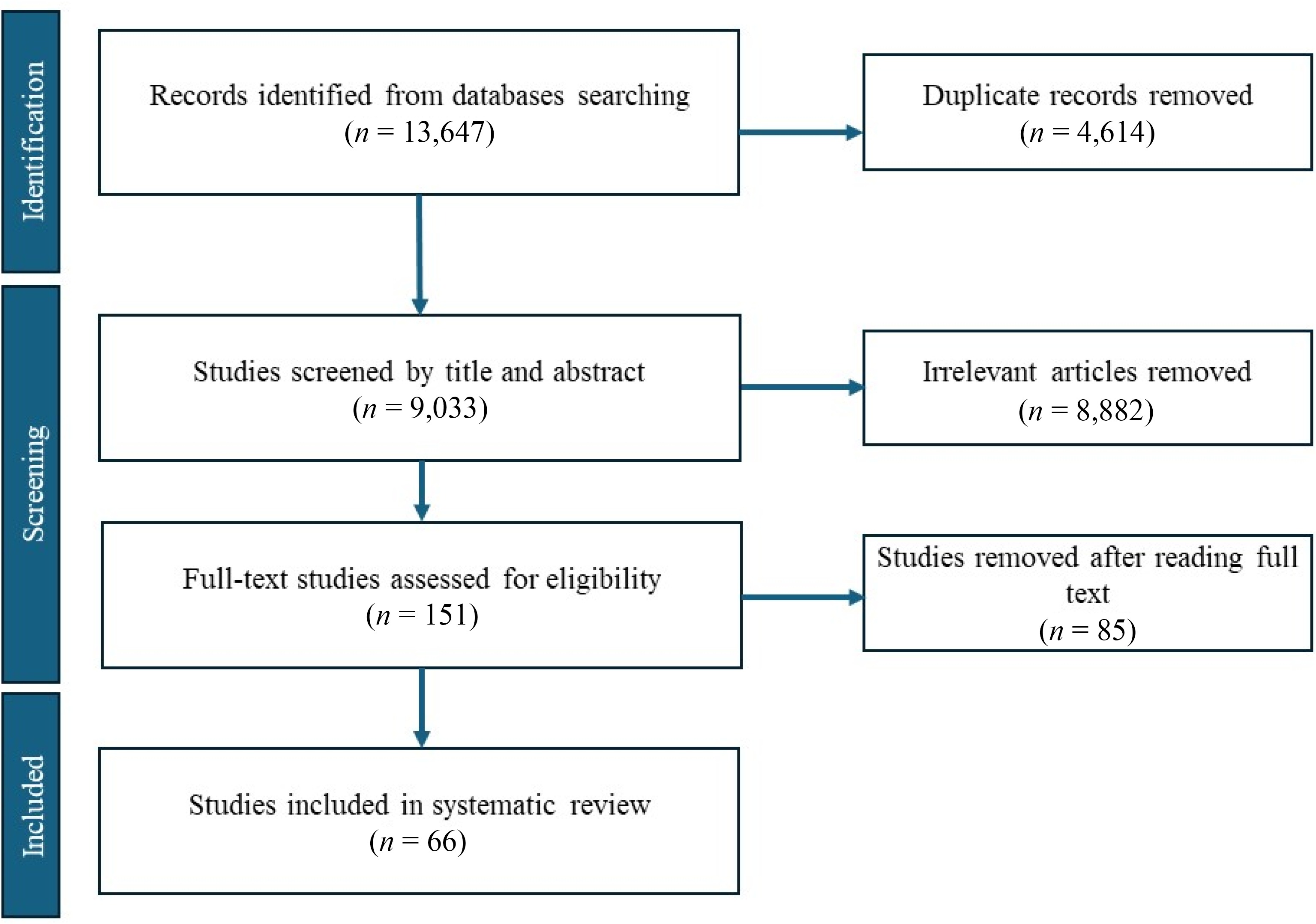
Figure 1.
PRISMA flow diagram illustrating the systematic literature search, screening, and selection process.
Data extraction and thematic analysis
-
A convergent mixed-methods approach was employed for data synthesis, integrating qualitative thematic analysis with quantitative bibliometric and descriptive statistics. A standardized extraction template was used to systematically collect bibliographic, ethnomycological, and methodological data into a relational database. To ensure taxonomic accuracy, all cited mushroom scientific names and authorities were verified and updated against records current to December 2025 using global authoritative online databases 'Index Fungorum' and 'MycoBank'. The qualitative analysis involved an inductive, iterative process of coding and theme development, which culminated in a framework of five core domains: 'Food use', 'Medicinal use', 'Ritual/Symbolic significance', 'Other uses (material use)', and 'Economic aspects'. Coding was performed using a spreadsheet. The unit of analysis was each mention of a mushroom species and its associated use. An additional theme, 'Disputed edibility', was also used. A species was classified as 'disputed edibility' if (a) the original study reported it as edible, but (b) authoritative global references (mycoweb, mycokey, regional and global mycotoxin literature) list it as toxic, poisonous, or requiring hazardous preparation, and (c) no peer-reviewed toxicological or molecular confirmation specific to the Nepalese population exists. Concurrently, a quantitative synthesis mapped publication trends, geographic distributions, and data collection methods, while also providing a descriptive tally of species and uses. Classification of data collection method was based on the authors' judgment; only one study explicitly employed both qualitative and quantitative data collection and analysis. Throughout this process, all included articles and species lists were critically appraised to account for heterogeneity and potential effect modifiers, such as variations in study design and reporting quality.
Methodological limitations and mitigation
-
We acknowledge several potential limitations inherent to this review. Geographic and linguistic biases may exist, as studies from western and eastern Nepal and those published in local languages (e.g., Nepali, Tibetan) are likely underrepresented in international databases. The reliance on grey literature, while crucial, introduces challenges related to accessibility and variable reporting quality. Taxonomic inconsistencies across studies, where vernacular names are not reliably linked to scientific identifications, complicate comparative analysis. To mitigate these limitations, we employed a broad, multi-database search strategy, explicitly included grey literature sources, and transparently reported these discrepancies as part of our synthesis.
Due to the predominantly qualitative, descriptive nature of the included studies and the absence of standardized quality assessment tools for ethnomycological research, we did not perform a formal risk-of-bias or quality score. Instead, we conducted a critical appraisal of methodological reporting, noting limitations such as unreported sample sizes, lack of voucher specimens, and inconsistent taxonomic identification. These limitations are synthesized in the Results section and later elaborated in the Discussion section.
-
A total of 13,647 records were identified through initial database searching. After removing 4,614 duplicates, 9,033 records were selected for titles and abstract screening. Of these, 8,882 records were excluded as irrelevant. After evaluating 151 full-text papers for eligibility, 85 studies were excluded because they lacked primary data, had insufficient ethnomycological information, or lacked mushroom-related data. Finally, this review included 66 studies that met the inclusion criteria.
Publication trends, geographic distribution, and thematic focus
-
Over the years, ethnomycological research in Nepal has expanded (Fig. 2). Scholarly attention is showing an erratic but typically rising trend, based on annual publication counts. Prior to 2005, there were only a few isolated publications. Around 2008, there was a noticeable increase that peaked in 2013 (n = 7). A second, continuous surge of interest began in 2019 after a period of moderate output; 2019 and 2020 each contributed six publications, and 2024 contributed four. According to this pattern, ethnobiological and mycological research is showing signs of expansion and increasing scholarly attention.
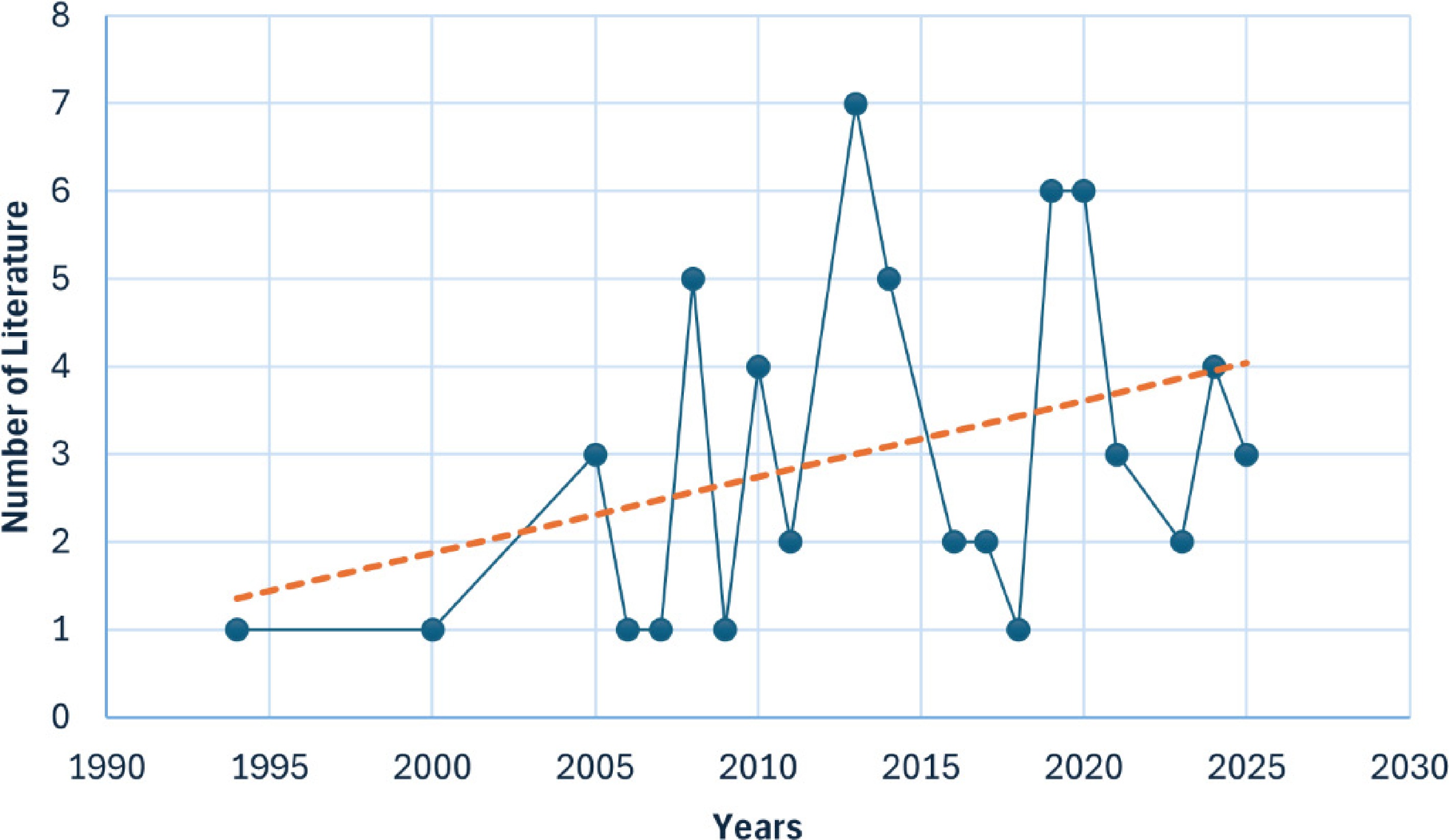
Figure 2.
Annual trend of the number of ethnomycological studies in Nepal.
The literature is dominated by peer-reviewed journal articles, which constitute 57 of the 66 publications (86.4%). Theses and dissertations represent the second-largest category (9.1%), indicating this topic is a significant component of postgraduate research in the region. Conference proceedings (3.0%) and technical reports (1.5%) form a minor part of the corpus, highlighting the field's strong orientation toward academic dissemination.
The reviewed literature encompasses two primary scopes: focused ethnomycological studies (66.7%, n = 44), where the mushroom is the central subject, and broader ethnobiological studies (33.3%, n = 22), which include the mushroom among other taxa. Within this corpus, research on Ophiocordyceps sinensis is especially prominent, comprising ten studies representing 22.7% of mushroom-specific research and 15.2% of the total literature and underscoring its distinct socio-economic and cultural relevance in the region.
Geographic analysis reveals a pronounced spatial bias in ethnomycological research across Nepal. Analysis of 66 unique studies shows the Hill region as the overwhelming focus, accounting for 46 studies (69.7%), followed by Tarai (11 studies; 16.7%) and High Himalaya (nine studies; 13.6%). This distribution likely reflects a combination of accessibility, population density, and proximity to academic institutions.
At the district level, 156 study incidences were recorded across 68 districts, with the Hill contributing 74 incidences (47.4%), Tarai 42 (26.9%), and High Himalaya 40 (25.6%) (Fig. 3). The higher district-level share of High Himalaya, rising from 13.6% of unique studies to 25.6% of district incidences, reflects the tendency of high-altitude investigations to cover multiple remote districts per study (e.g., Dolpa, Rasuwa and Jumla). These complementary metrics suggest that while the Hill region remains the primary research focus, both Tarai and High Himalaya are more extensively documented at the district level than unique study counts alone suggest.
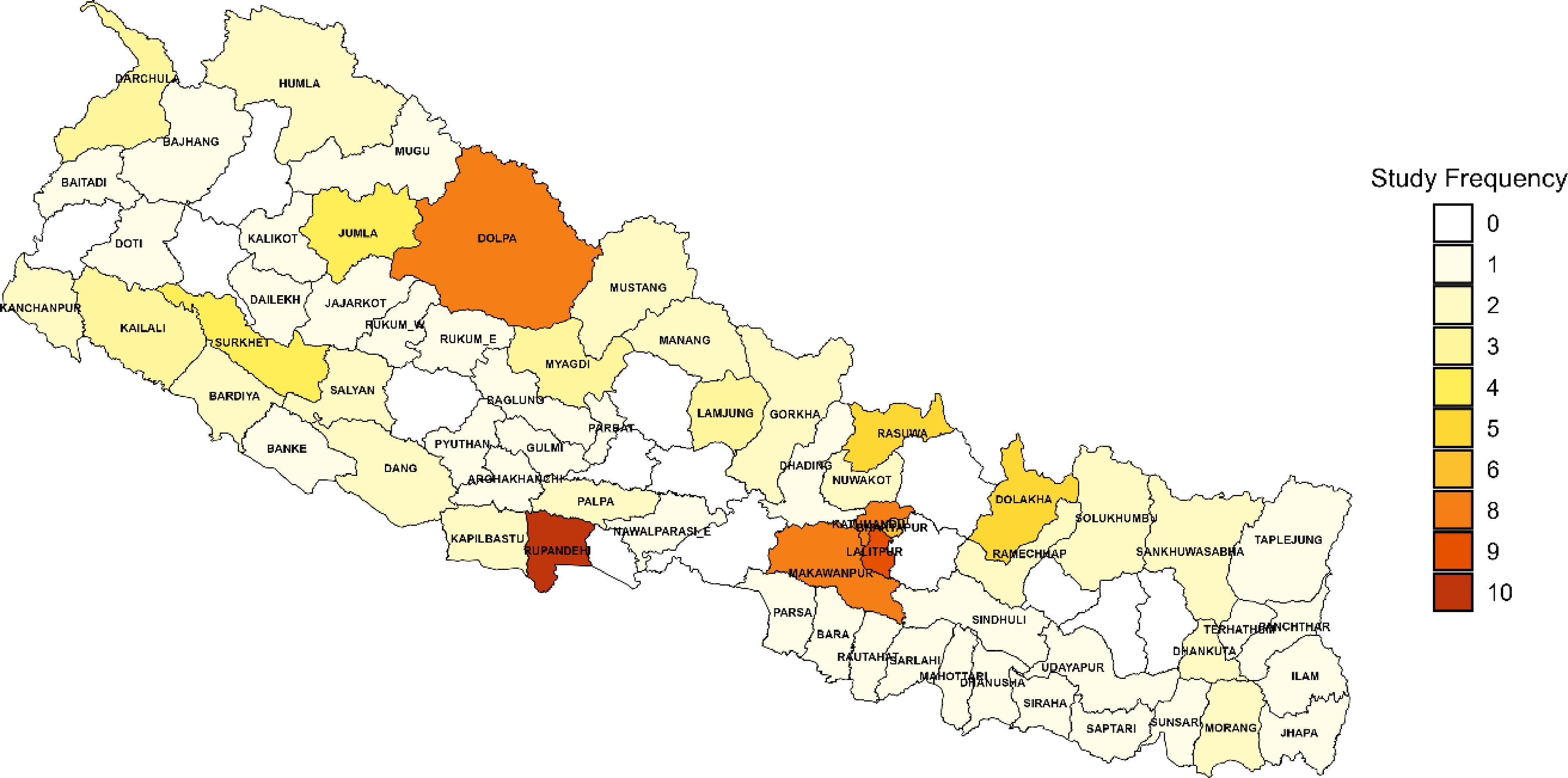
Figure 3.
District-wise geographic heat map of ethnomycological studies included in the systematic review. Shading intensity reflects the number of studies reported per district, based on the latest administrative boundaries of Nepal. Map source: Administrative boundary shapefile adopted from Nasa Engineering Consultancy and Engineering Deurali Pvt. Ltd., Nepal, and created and generated by Nilkantha Regmi.
Research is geographically clustered, with a few districts attracting disproportionate scholarly attention (Fig. 3). Rupandehi (Tarai) is the most-studied district (n = 10), followed by Lalitpur (Hill, n = 9), and Kathmandu, Dolpa (High Himalaya), and Makawanpur (Hill) (each n = 8). This clustering suggests research is often driven by proximity to major urban centers (e.g., Kathmandu Valley) or by the presence of high-value species such as Ophiocordyceps sinensis (e.g., Dolpa). Conversely, 31 districts are represented by only a single study, indicating vast areas of the country remain under-researched from an ethnomycological perspective.
Methodological approaches and socio-cultural focus
-
The methodological framework of the reviewed studies is characterized by a strong predominance of qualitative and participatory social science methods, reflecting the ethnobiological nature of the research.
Interviews and surveys form the nearly universal cornerstone, employed in 56 studies (84.8%). Focus Group Discussions (FGDs) and Participatory Appraisal methods (PRA/RRA) are also widely used, appearing in 25 (37.9%) and 21 (31.8%) studies, respectively. Field observation (n = 18, 27.3%) and Key Informant Interviews (KII) (n = 11, 16.7%) provide complementary data. The fact that the sum of methodological percentages far exceeds 100% indicates that multi-method approaches are the norm, with studies typically combining two or more techniques to triangulate data. Only one study was explicitly classified as 'Mixed methods' in a formal sense, suggesting most combine methods within a qualitative paradigm rather than integrating qualitative and quantitative approaches.
A significant weakness in methodological reporting is the inconsistent documentation of sample size. In 42 studies (63.6%), the number of participants was not reported, hindering assessments of study scale and generalizability. Among the 24 studies that did report sample size, the range of 51−150 participants was most common (n = 11, 45.8% of reporting studies), followed by small-scale studies of 1−50 participants (n = 8, 33.3% of reporting studies). Larger studies with over 150 participants were rare (n = 5, 20.8%).
Regarding socio-cultural depth, the majority of studies (51, or 77.3%) took a generalized community approach without a specific ethnic focus. However, a substantive subset of 15 studies (22.7%) deliberately centered on the knowledge and practices of specific ethnic groups. This targeted research highlights the importance of cultural context in understanding fungal use.
Among these ethnically-focused studies, research attention is unevenly distributed across Nepal's diverse populations. The Tamang community is the most frequently studied (n = 6), followed by the Chepang, Newar, Tharu, and Magar communities (each n = 4). Another 13 ethnic groups, including Gurung, Sherpa, Rai, and Limbu, are represented in only one to three studies each. This indicates that while the literature acknowledges ethnic specificity, it has only deeply engaged with a limited number of communities, leaving significant gaps in the documentation of the ethnomycological knowledge held by many other communities.
Taxonomic data quality and nomenclature validation
-
To construct a reliable dataset for analysis, all 661 fungal name records extracted from the literature underwent a rigorous validation process. The core binomial (genus and specific epithet) of each originally reported 'Scientific name' was compared against the 'Current name' to distinguish genuine taxonomic reclassifications from differences in author citation or orthography. The validation revealed that most records (533 out of 661, 80.64%) were reported using the currently accepted binomial and required no revision (Table 2). However, 78 records (11.80%) cited outdated synonyms that have been taxonomically revised, requiring an update to the accepted binomial. A total of 44 records (6.7%) contained explicit typographical or orthographic errors in the original source; notably, these errors existed within both accepted and revised name categories, and were corrected accordingly. Six records (0.9%) could not be resolved as valid names and were excluded from the final synthesis ( Supplementary File 1, Table S2). Following the standardization of taxonomically revised names and the correction of orthographic errors, all entries were deduplicated. This process consolidated the dataset into a validated master list of 215 unique mushroom species, providing a robust, taxonomically coherent foundation for all subsequent analyses of diversity and ethnomycological use.
Table 2. Outcomes of the taxonomic validation process for mushroom names documented in Nepalese ethnomycological literature.
Validation outcome Orthographic status Count Percentage Description and notes Currently accepted name Correct spelling 533 80.64% The reported genus and specific epithet were correct and remain current. Currently accepted name Typographical error 36 5.45% Records contained spelling or orthographic errors in the original entry (e.g., Agaricus biosporus was corrected as Agaricus bisporus). Outdated synonym Correct spelling 78 11.80% The reported binomial is an outdated synonym that has been superseded by a currently accepted name (e.g., Lentinus lepideus was updated to Neolentinus lepideus). Outdated synonym Typographical error 8 1.21% Records contained spelling or orthographic errors in the original entry, and the reported name was an outdated synonym superseded by a currently accepted name (e.g., Auricularia polytrichia [misspelling of Auricularia polytricha] was corrected and updated to Auricularia nigricans). Unresolved or invalid records 6 0.9% Could not be matched to a verified species and were excluded. Total records processed 661 100% Final validated species 215 Final count after standardization and deduplication Ethnomycological diversity and use values
-
The systematic analysis of 66 ethnomycological studies from Nepal reveals a rich and multifaceted relationship between local communities and mushroom biodiversity, documented through 215 unique species categorized into five distinct yet often overlapping use values: 'Food', 'Medicinal', 'Economic', 'Cultural/Ritual', and 'Material' (Table 3). A critical distinction was made regarding edibility: 168 spp. (78.1%) were classified as edible for general consumption. Separately, 16 spp. (7.4%) were categorized as 'Disputed edibility'. These species are documented as edible in Nepalese ethnomycological literature but are classified as poisonous or toxic in broader global sources. This discrepancy may arise from genuine localized safe-use practices or, critically, from potential misdocumentation or misidentification in the original ethnological records. This category highlights significant challenges in verifying and translating traditional knowledge. Beyond food use, medicinal applications accounted for 47 spp. (21.9%), and 31 spp. (14.4%) were identified as having economic value. The remaining species were associated with ritual use (10 spp., 4.7%) or other practical applications (9 spp., 4.2%). The use categories were not mutually exclusive. Analysis revealed that 66 of the 215 unique species (30.7%) appeared in multiple categories (e.g., both food and medicine), reflecting a strong pattern of multifunctionality.
Table 3. Categorization and utilization frequency of 215 mushroom species.
Category Number of species Percentage of total (215) Edible/food use 168 78.1% Medicinal 47 21.9% Economic value 31 14.4% Disputed edibility 16 7.4% Ritual use 10 4.7% Material use 9 4.2% Total 215 The 'disputed edibility' category includes species recorded as 'edible' in Nepalese ethnomycological literature but regarded as poisonous or toxic in global mycological sources; this discrepancy may reflect localized use practices or potential misidentification. Percentages are based on the total species count (n = 215). To illustrate the breadth and cultural depth of mushroom uses across Nepal, Supplementary File 1 (Table S3) shows 20 representative species spanning all documented use categories ('food', 'medicine', 'economy', 'ritual', and 'material'). The table includes well-known edible and medicinal taxa (e.g., Morchella esculenta, Ganoderma lucidum, Termitomyces spp. etc.), species with high economic value (e.g., Ophiocordyceps sinensis), and culturally significant fungi such as Schizophyllum commune, which is indispensable in Tamang and Newar marriage ceremonies. Several species exhibit multifunctionality; for example, Grifola frondosa and Ramaria botrytis serve as food, medicine, and local market commodities.
Food value: the cornerstone of mushroom use
-
The systematic review identifies the consumption of mushrooms as a widespread and culturally embedded practice, cataloging 168 spp. with credible documentation as food (Supplementary File 2, Sheet 'Food'). This extensive list highlights a diverse traditional diet that includes prized edible mushrooms like morels (Morchella spp.), chanterelles (Cantharellus spp.), and boletes (Boletus spp.), alongside many Russula spp. and Termitomyces spp. Detailed preparation notes, such as boiling, pickling, or cooking with specific detoxicants like ash, reveal a sophisticated, localized knowledge system for safely processing and incorporating these wild resources into daily nutrition, demonstrating their vital role in food security and culinary heritage across communities.
A critical analysis presented in Supplementary File 2 (Sheet 'Disputed edibility') highlights species where the documented 'Edible' status necessitates further scientific verification. This includes notoriously toxic species like Amanita muscaria and Paxillus involutus. The case of the genus Scleroderma (earthballs) is particularly intriguing. While globally regarded as gastrointestinal irritants, multiple independent studies from Nepal consistently report several species as 'Edible'. This compelling discrepancy suggests several non-exclusive hypotheses: 1) unique regional species - Nepal hosts locally distinct, morphologically similar but phylogenetically different species that are globally unrecognized or understudied. 2) specialized detoxification - local communities may apply highly specific, undocumented preparation methods that effectively neutralize irritants. 3) folk taxonomic conflation - the common local name 'Alu chyau' may be applied to both true Scleroderma and edible, morphologically similar mushroom-like Rhizopogon luteolus, leading to misidentification in some records. The recurrent reports strongly favor the first two possibilities, indicating a significant ethnomycological anomaly. It is noteworthy, however, that some species of Scleroderma, including S. citrinum, are considered 'Edible' and are widely available in wild mushroom markets in Yunnan, China[17]. The recurrent reports of Scleroderma spp. as edible in Nepal are intriguing, but until molecular identification and chemotaxonomic analysis are performed, these reports should not be interpreted as evidence of safety. We strongly recommend that future research involve professional taxonomists and toxicologists.
Medicinal value: mushrooms in traditional healthcare
-
The reviewed literature, synthesized in Supplementary File 2 (Sheet 'Medicinal'), documenting 47 spp., shows the extensive role of mushrooms in traditional medicine for treating diverse ailments. Applications are highly specific and fall into key therapeutic categories: wound healing (e.g., Trametes spp., puffballs), internal disorders like respiratory and gastrointestinal issues (e.g., Ganoderma spp., Termitomyces spp.), and chronic conditions such as diabetes and hypertension (e.g., Chlorophyllum spp.)[7,14,18,19]. Mushrooms are also used as general tonics and adaptogens, most notably G. frondosa, and for musculoskeletal pain and specialized infections[13].
Preparation methods are tailored to the ailment, primarily involving topical pastes for wounds/skin diseases and decoctions, teas, or soups for internal consumption[19]. This documented knowledge underscores mushrooms as a significant, culturally embedded component of local healthcare systems and a valuable resource for bioprospecting.
Economic value: mushrooms as a livelihood resource
-
Mushroom serves as a crucial economic resource for many communities in Nepal, providing both subsistence-level income and, in a few cases, transformative wealth. As detailed in Supplementary File 2, Sheet 'Economic', economic value is documented for 31 unique species, though the scale and impact vary dramatically. This economic dimension can be divided into two primary tiers: high-value global commodities and locally traded wild edibles.
The economic landscape is overwhelmingly dominated by a single species: Ophiocordyceps sinensis (Yarsagumba). As shown in Supplementary File 2, Sheet 'Economic', this caterpillar fungus represents a unique high-stakes economy. With reported market prices reaching up to USD 56,000/kg (and collector earnings averaging several thousand dollars per season), it constitutes the primary annual cash income for numerous high-altitude households[20,21]. Its harvest, governed by permits and local management systems in some areas, drives a seasonal 'gold rush' that reshapes local socio-economics but also raises significant concerns about equity, governance, and sustainability[6].
The second tier consists of wild edible mushrooms that provide important supplementary cash income, particularly for women foragers who sell surplus harvest in local markets. Key genera include Morchella (morels), Grifola (hens of the woods), Hericium (lion's mane), and Ramaria (coral fungi). Morchella spp. (Supplementary File 2, Sheet 'Economic'), for instance, are dried and sold for approximately NRs 14,000/kg, providing vital seasonal revenue[22]. The economic value of many common edible species is often implicit in their local trade, even when specific price data is not recorded in studies.
Furthermore, economic value intersects with cultural practice. The ritual use of S. commune as an auspicious item (Sagun) in a marriage ceremony creates a cultural market demand, where the fungus holds economic value within the context of essential social transactions[23]. Similarly, medicinal mushrooms like Ganoderma lucidum are traded for their therapeutic reputation[24].
The economic value of mushrooms in Nepal is characterized by extreme concentration in one high-value species and broader, smaller-scale trade in numerous wild edibles. This reliance underscores the importance of mushrooms for rural livelihoods but also highlights vulnerabilities, including market fluctuations, overharvesting pressures, and the need for sustainable management frameworks that ensure benefits are equitably shared and ecologically sustainable.
Cultural/ritual value: mushrooms in the spiritual and social fabric
-
The cultural and ritual significance of mushrooms, documented for ten unique species, highlights their profound role in Nepal's spiritual and social life beyond mere subsistence. As detailed in Supplementary File 2, Sheet 'Ritual_Ceremonial', these species serve as essential elements in ceremonies, protection, and healing. The most prominent is S. commune, an indispensable item in the marriage ceremony of the Tamang and Newar[15,23]. Other mushrooms, such as Ganoderma spp., are used as protective talismans to ward off evil spirits, while polypores like Fomes fomentarius are carved into ritual masks by the Rai community for healing practices[25,26]. Additionally, Stereum spp. form part of the sacred 'Pancha gole' mixture in Newari celebrations. These practices, compiled from multiple studies, illustrate how mushrooms are deeply embedded in cultural identity and intangible heritage, emphasizing that their conservation is crucial for sustaining both ecological and socio-cultural resilience (Supplementary File 2, Sheet 'Ritual_Ceremonial').
Other values: material, ecological, and decorative uses
-
The 'Other values' category, encompassing nine distinct species, highlights the diverse non-consumptive applications of mushrooms in Nepal, extending their role beyond food and medicine (Supplementary File 2, Sheet 'Material'). This includes material and utilitarian uses, such as using Trametes hirsuta and T. versicolor as an adhesive paste to repair pottery and as tinder[27]. A notable commercial/artisanal use involves several polypores (F. fomentarius, Ganoderma applanatum, Phellinus igniarius, and Porodaedalea pini) being crafted into traditional face masks sold in Kathmandu, illustrating a niche fungal-based handicraft economy[25,26]. Decorative value is also significant, with species like G. lucidum and Microporus xanthopus displayed as natural ornaments[14]. Additionally, G. lucidum holds ritual significance, used in protective practices to ward off evil spirits[25]. These varied uses, from practical repair and artisan crafts to spiritual protection and aesthetic appreciation, indicate a sophisticated and multi-dimensional traditional understanding of fungal properties and their integration into daily life, culture, and local economies.
The ethnomycological diversity of Nepal is characterized by a hierarchy of uses dominated by food and medicine, punctuated by highly specialized economic and ritual values, and complemented by practical material knowledge. The multifunctionality of many species, exemplified by O. sinensis (medicinal, economic, food), Morchella spp. (food, medicinal, economic), and S. commune (food, medicinal, ritual) illustrates the integrated nature of traditional ecological knowledge, where mushrooms are woven into the fabric of daily life, health, economy, and culture. The complete enumeration of species within each category, as presented in Supplementary File 2, provides a foundational resource for future research, conservation planning, and policies aimed at sustaining both mushroom biodiversity and the associated cultural heritage.
Socio-cultural and ecological contexts
-
The documented ethnomycological knowledge is deeply embedded within specific socio-cultural frameworks and ecological relationships. Analysis reveals distinct patterns in how knowledge is distributed across communities, how harvesting is governed by both practical and belief-based systems, and how mushrooms are integrated into local economies and gender roles.
Ethnic communities and traditional knowledge systems
-
Research attention across Nepal's diverse ethnic mosaic was uneven. Overall, 22.7% of studies included one or more communities in their investigations, while the remaining studies did not explicitly mention the communities involved. The Tamang community was the most frequently studied, featured in six studies. Their knowledge system includes beliefs such as harvesting mushrooms only on specific lunar days (Aunshii/no moon day or Purnima/full moon day) and the ceremonial use of S. commune as Sagun in marriage ceremonies[11]. The Chepang community, featured in four studies, indicated highly specific nomenclature and uses, such as applying Daldinia concentrica to stop bleeding[27]. Use of specific mushrooms in Newar and Sherpa communities is also unique[23,28].
In high Himalayan regions, particularly among Tibetan-influenced communities, O. sinensis (Yarsagumba) holds profound cultural and spiritual significance beyond its economic value. Oral traditions describe Yarsagumba as a divine gift from Guru Padmasambhava (Guru Rinpoche), who, during his 8th-century travels across the Himalayas, sowed its seeds after witnessing the extreme hardship of mountain communities[29]. In an environment characterized by limited arable land, harsh climatic conditions, and few income-generating opportunities, this belief frames Yarsagumba as a sacred safeguard against famine and starvation.
Across communities, most respondents reported that they had never experienced mushroom poisoning, attributing this to their ability to reliably distinguish edible from poisonous species[30]. Identification was based on a combination of sensory cues (colour, texture, and taste) and morphological characteristics, including careful observation of structures such as the volva and annulus. This experiential diagnostic knowledge, transmitted orally across generations, underscores the depth and practical reliability of indigenous mushroom identification systems.
Collectively, these findings suggest that while certain communities are repeatedly recognized as custodians of rich mycological knowledge, the broader spectrum of ethno-taxonomic, ritual, and experiential fungal knowledge across Nepal's many ethnic communities remains incompletely documented.
Harvesting practices, management, and traditional ecology
-
Harvesting is governed by a combination of ecological awareness and cultural protocols. A strong seasonal pattern was universal, with collection peaks from pre-monsoon (for O. sinensis) through the monsoon months (for most edible mushrooms)[4,21]. In the case of O. sinensis, collection typically requires official permits and is limited to approximately 45 d per season. In some regions, such as Nubri's Samagaun Village Development Committee (VDC), harvesting is more systematically governed through a combination of village regulations (yul khrims) and religious norms (chos khrims), reflecting a locally embedded governance framework[31]. Elsewhere, informal rules operate, such as restricting Yarsagumba collection within Dhorpatan Hunting Reserve to residents of Myagdi and Rukum districts, although effective enforcement remains challenging due to limited institutional capacity, remoteness of collection sites, and the high economic value of the species, which raises the risk of conflict between reserve authorities and local communities[5].
Sustainable harvesting practices are often deeply embedded in tradition, including the use of knives to cut mushrooms at the base to protect the underground mycelium and ensure future regeneration. A particularly sophisticated dimension of traditional knowledge concerns detoxification practices: communities reported boiling potentially hazardous species (e.g., some Amanita spp.) with ash, salt, garlic, or fruits of Zanthoxylum armatum (Timur) to neutralize toxins[11,15]. These practices represent a refined, culturally transmitted form of food safety knowledge. For O. sinensis, unique practices were also recorded, such as collectors biting the tip of the stroma upon discovery, based on the belief that this prevents further growth and preserves specimen quality[20].
Post-harvest handling practices further suggest ecological and sensory awareness. Morels, which are exclusively collected from the wild, are commonly dried by threading them into garlands and hanging them in well-ventilated areas of houses or near hearths[32]. In some locations, drying is also done over fireplaces or in open shaded areas, while direct sun-drying is often avoided because it is believed to reduce flavor and cause discoloration[9]. These processing methods highlight the integration of quality preservation, culinary preference, and traditional ecological knowledge within local harvesting systems.
Socio-economic dimensions and gender roles
-
Fungal use is strongly gendered and has significant economic impacts. Gender roles are clearly delineated: women are typically the primary knowledge holders and foragers for wild edible mushrooms used for household consumption and local sale. In contrast, the high-altitude, arduous, and often commercially regulated harvest of O. sinensis is predominantly a male activity. However, these patterns are context-specific and not uniformly documented across all regions. The economic impact of mushrooms is dualistic. For most species, foraging provides critical nutritional supplementation and minor cash income, mainly for women. For O. sinensis, however, it is a primary source of income that reshapes local economies. In Maikot, the average price per piece was USD 19, and the average earning per collector was USD 3,090 in 2018[21]. This commercial pressure, however, raises concerns about resource sustainability, access equity, and the erosion of traditional management systems, as noted in several studies focusing on the Yarsagumba 'gold rush'.
Conservation concerns and knowledge transmission
-
A recurring theme across studies is the concern over the erosion of traditional mycological knowledge. Factors frequently cited include youth migration for education and employment, shifting land-use patterns, deforestation, and the declining practice of cultural rituals in which mushrooms play an integral role[21]. Knowledge transmission in these communities is predominantly oral and based on participatory observation, with skills and identification criteria learned through foraging, processing, and ritual practice alongside elders[11]. As these intergenerational learning pathways weaken, the continuity of ethnomycological knowledge becomes increasingly fragile. This cultural loss is paralleled by mounting ecological pressures on mushroom habitats, including climate change, overharvesting of high-value species, and habitat degradation[33]. The integrated analysis suggests that the conservation of mushroom biodiversity in Nepal is inextricably linked to the vitality of the cultural systems that have historically sustained and been sustained by these species over generations.
-
Before interpreting the findings of this systematic review, it is important to acknowledge the methodological limitations of the source literature. All 66 studies included are predominantly qualitative, cross-sectional, and geographically concentrated in Central Nepal. Sample sizes were often unreported (63.6% of studies), voucher specimens were rarely deposited in herbaria, and taxonomic identifications were inconsistent across studies. Furthermore, we did not perform a formal risk-of-bias or quality score due to the absence of standardized tools for ethnomycological research. Consequently, the following synthesis should be interpreted as a descriptive and thematic overview of the documented knowledge, rather than a definitive assessment of the prevalence, ecological sustainability, or biomedical validity of mushroom uses. Where we draw inferences about patterns or gaps, these are accompanied by explicit caveats.
The systematic synthesis of ethnomycological research in Nepal reveals a profound and multifaceted interdependence between human communities and mushroom biodiversity. Documented across 215 species, this relationship spans the essential domains of subsistence, healthcare, cultural identity, and economic livelihood, reflecting a rich Traditional Ecological Knowledge (TEK) system. However, this review also exposes a fragmented and uneven knowledge landscape, shaped by significant geographic, methodological, and thematic biases within the academic literature. The following discussion critically interprets the documented hierarchy of fungal use, confronts the structural limitations of the existing research, and synthesizes these insights to argue for an urgent and integrated biocultural approach to conservation. This approach is vital to safeguard both Nepal's mycological heritage and the cultural systems that have sustained it.
Interpreting the hierarchy and depth of documented fungal use
-
The quantitative dominance of food (168 spp., 78.1%) and medicinal (47 spp., 21.9%) uses provides a clear, utilitarian frame for understanding human-mushroom interactions in Nepal. This aligns with global ethnobiological patterns where resources addressing immediate physiological needs, nutrition, and health are most readily observed and documented by researchers[34,35]. Yet, to view these categories merely as lists of commodities is to miss the depth of sophisticated, localized knowledge they represent.
Food use: a culturally embedded science of safety and sustenance
-
The documentation of 168 edible spp. underscores the critical role of wild mushrooms in dietary diversity and seasonal food security, particularly for rural and indigenous communities (Supplementary File 2, Sheet 'Food'). This practice transcends simple foraging; it embodies a complex, culturally transmitted science of identification, processing, and detoxification. The preparation notes within the dataset are not incidental details but the core of this knowledge system. For instance, the requirement to boil Aleuria aurantia with salt or wood ash is a precise detoxification protocol developed to mitigate gastrointestinal toxins[11]. The practice of drying morels by hanging, rather than sun-drying, is a quality preservation technique that maintains flavor and texture[32]. Similar practices for detoxification have been reported from northeast regions of India, like the use of vinegar, sour herbs, and some sour fruit[36].
This detailed knowledge is especially critical given the high-risk environment of mushroom foraging. The fact that communities confidently consume several species of Amanita, a genus containing the world's most deadly mushrooms, speaks to the precision of their ethnotaxonomy and preparation methods[27]. Each step in the process, from selecting only young Laetiporus sulphureus to avoiding specimens growing on conifers, represents a codified rule that ensures safety and quality, indicating an empirical, trial-and-error-derived science refined over generations[27].
Medicinal use: an integrated parallel healthcare system
-
Medicinal applications documented for 47 species (Supplementary File 2, Sheet 'Medicinal') reveal mushrooms as fundamental components of a holistic, place-based healthcare system. These are not generic 'good-for-you' tonics but specific remedies for targeted ailments, indicating deep empirical knowledge. Use of spore masses from Apioperdon pyriforme (Lycoperdon pyriforme) and Calvatia gigantea as a styptic powder for wounds is a direct, practical application of fungal properties[15,18]. Similarly, use of Lycoperdon spp. for healing and cuts has been reported from the upper Assam region of India by nine major ethnic communities[37]. Trametes cinnabarina (Pycnoporus cinnabarinus) is processed into an infused oil for treating ear infections and mumps, while various Ganoderma spp. are prepared as decoctions for managing chronic conditions like hypertension and diabetes[14,15]. Termitomyces is particularly notable, with different species prescribed for specific illnesses: T. albuminosus for measles, T. heimii for jaundice, and T. globulus for wound healing[19]. Studies from the Jammu district of India also reported the use of Termitomyces spp. for treating skin problems[38].
This structured pharmacopeia operates alongside, and is often integrated with, allopathic medicine. The prominence of O. sinensis as a general tonic and aphrodisiac, while globally recognized and economically transformative, is but the most visible node in this extensive network of fungal medicine. The documentation of these uses is not merely a record of past practices but a valuable repository for bioprospecting, highlighting species with potential for pharmaceutical research based on their longstanding therapeutic validation in traditional contexts.
Beyond subsistence: the qualitative significance of 'minor' use categories
-
A simplistic quantitative analysis risks undervaluing uses that, while documented for fewer species, carry profound cultural weight. The 'Ritual' and 'Material' use categories, representing only 4.7% and 4.2% of documented species respectively, are prime examples of this qualitative depth.
The ritual use of S. commune as a Sagun in Tamang and Newar communities is not a minor footnote but a demonstration of a cultural keystone species (Supplementary File 2, Sheet 'Ritual_Ceremonial). Its role is mandatory; no marriage is complete without it. This ritual embedding ensures the species' continued recognition, protects its habitat (as families may conserve trees where it grows), and drives a cultural market demand. Its value is social and symbolic, far exceeding any nutritional or monetary worth[15,23,27]. Similarly, use of polypore mushrooms like F. fomentarius and G. applanatum in carving ritual healing masks by the Rai community, or their inclusion in the sacred Pancha gole mixture by the Newar community, ties fungal identity directly to spiritual practice and worldviews[23,25].
Likewise, material uses reveal a sophisticated indigenous technology (Supplementary File 2, Sheet 'Material'). Using the sticky context of T. hirsuta or T. versicolor as an adhesive to repair pottery is a precise application of material science[27]. Using polypores as tinder or carving them into marketable handicrafts shows a utilitarian understanding of fungal properties that extends beyond consumption[26]. These 'Material' uses illustrate that TEK views fungi not as isolated resources but as integrated elements of material culture, spirituality, and daily life.
The knowledge contradiction: the Scleroderma paradox and its implications
-
The documented consumption of Scleroderma spp. (earthballs) in Nepal, traditionally considered poisonous in global mycology, is reframed by parallel evidence from Yunnan, China[17,39−41]. This suggests a broader Himalayan ethnomycological pattern rather than an isolated anomaly. The consistent reports of eating S. bovista, S. citrinum, and notably S. yunnanense across these regions indicate an established, regional practice that challenges the universal application of Western toxicity classifications[17,41,42]. This convergence of traditional knowledge compels us to investigate it as part of a significant regional complex where local ecological knowledge and potential biochemical specificity intersect. This regional contradiction presents a critical ethnomycological puzzle with two plausible, non-exclusive hypotheses. (a) Unique Regional Biochemistry: Himalayan populations of these Scleroderma species may be chemically distinct, lacking or possessing only negligible amounts of the gastrointestinal irritants found in conspecifics elsewhere in the world. (b) Specialized Detoxification: Communities both in Nepal and Yunnan may possess an undocumented, highly specific preparation method (e.g., particular leaching, cooking, or fermentation techniques) that effectively neutralizes toxins, rendering the mushrooms safe to eat.
Resolving these questions is a frontline research priority with major implications. It necessitates a collaborative, interdisciplinary approach employing DNA barcoding for precise identification, comparative chemotaxonomy to analyze metabolite profiles, and detailed ethnography to document preparation protocols. Resolving this paradox could validate a remarkable exception to global mycological knowledge, highlighting how localized TEK can sometimes challenge and refine broader scientific understanding. It also serves as a critical safety caveat: foragers outside these specific Nepalese contexts must continue to treat Scleroderma spp. as poisonous.
Confronting structural biases: how research gaps shape perceptions and policy
-
The ethnomycological record is not an objective, complete catalogue but a construct shaped by where researchers have gone, whom they have asked, and what they have sought. This review identifies systematic biases that limit the representativeness, generalizability, and practical application of the documented knowledge.
Geographic bias: a centralized 'myco-cultural map' of Nepal
-
The analysis reveals a stark concentration of research effort. Over 69.7% of studies were conducted in the Hill region, with significant clustering in accessible districts near Kathmandu (e.g., Lalitpur, Makawanpur, Rupandehi) and in Dolpa due to the O. sinensis economy. In contrast, the Terai plains (16.7 % of studies) and the High Himalaya (13.6%) outside of O. sinensis zones are profoundly under-represented. Thirty-five districts have been the subject of only a single study.
This creates a distorted 'myco-cultural map.' Our understanding of Nepalese ethnomycology is overwhelmingly informed by the ecology of the mid-hills and the knowledge systems of its predominant communities, such as Tamang and Newar. The distinct fungal flora and associated knowledge of the lowland Terai forests (home to Tharu, Rajbanshi, and other communities), the eastern hills (Rai, Limbu), or the high-altitude trans-Himalayan valleys (Sherpa, Dolpo-pa) beyond the Yarsagumba harvest, remain largely undocumented. The consequences for conservation and policy are significant. Management strategies developed from a hill-centric knowledge base may be ineffective or inappropriate in the Terai or the far west. Species of great local importance in underrepresented regions may be overlooked in national conservation priorities, and the rights and knowledge of those communities may be marginalized in resource governance frameworks.
Methodological homogeneity: a rich qualitative record, a sparse quantitative foundation
-
The reviewed literature is characterized by a near-exclusive reliance on qualitative, social science methods: semi-structured interviews (84.8%), focus group discussions (37.9%), and participatory rural appraisal (31.8%). While this methodological suite is ideal for eliciting the nuances of TEK, folk taxonomies, use details, beliefs, and perceptions, it fails to generate the complementary quantitative data required for sustainable management and robust policy advocacy.
The field suffers from a critical data gap in three key areas: The first is Ecological Data. There are virtually no longitudinal studies on mushroom population dynamics, phenology shifts due to climate change, or carrying capacities of habitats. What is a sustainable harvest level for Morchella in a given forest? How is the fruiting season of Termitomyces changing with variable monsoon patterns? Without this ecological baseline, 'Sustainable use' remains an abstract principle. The second is the 'Socio-economic data'. While the high value of O. sinensis is well-documented, the aggregate economic contribution of the dozens of other locally traded mushrooms is largely unquantified. What is their annual market value? What proportion of household income, especially for women foragers, do they represent? Similarly, their nutritional contribution to diets has not been measured. This lack of economic and nutritional metrics weakens arguments for their importance in poverty alleviation and food security programs. The third is the 'Demographic data on knowledge transmission'. Over 63% of studies did not report sample size, and few tracked knowledge distribution across age groups. Quantitative data on the rates of knowledge retention and erosion among the youth are scarce, making it difficult to gauge the true urgency of intervention.
This methodological gap means ethnomycology in Nepal has successfully argued for the cultural significance of mushrooms, but remains on weaker ground when advocating for their ecological or economic significance in national planning.
The double-edged sword of commercialization and the 'charismatic species' paradigm
-
The influence of market forces on both research focus and local socio-ecological systems is profound and presents a central dilemma for biocultural conservation.
The overwhelming shadow of Ophiocordyceps sinensis
-
The research landscape is dominated by what can be termed a 'charismatic species' bias. Ophiocordyceps sinensis is the subject of ten dedicated studies (15% of the total corpus), and its economic valuation (up to USD 56,000/kg) completely overshadows that of all other mushrooms combined[20] (Supplementary File 2, Sheet 'Economic'). This focus has yielded invaluable insights into a complex global commodity chain, its socio-economic impacts (providing transformative cash income), and the local governance challenges it sparks. However, it has also created a distorting lens. The 'Yarsagumba gold rush' narrative can inadvertently reinforce a purely extractive, financial valuation of biodiversity[6,43]. These risks sideline the multifaceted subsistence, medicinal, and cultural values of the hundreds of other mushroom species documented, both in academic literature and, potentially, in the perception of younger community members lured by the prospect of high cash returns from a single resource.
The documented socio-ecological impacts of O. sinensis commercialization serve as a cautionary case study. Studies report issues of overharvesting, habitat degradation from intensive collecting, intra- and inter-community conflict, and inequitable benefit-sharing where outside traders capture most of the value[5,21]. This illustrates how high-stakes commercialization, in the absence of strong, legitimate, and community-based governance institutions, can strain social cohesion and undermine the ecological base of the resource itself.
The broader subsistence-commerce continuum
-
In contrast to the O. sinensis model, the economic role of most other mushrooms exists on a subsistence-commerce continuum. Species like M. esculenta, G. frondosa, Hericium erinaceus, and various Ramaria spp. (Supplementary File 2, Sheet 'Economic') are primarily collected for household consumption, with surplus sold in local markets. This trade, often dominated by women, provides critical supplementary cash income. It represents a more diffuse, stable, and potentially sustainable economic integration. The lower per-unit value reduces the incentive for destructive overharvesting, and the local market context keeps benefits within the regional economy.
This distinction is crucial for policy. Managing the O. sinensis economy requires mechanisms for regulating access, setting harvest quotas, ensuring equitable benefit-sharing, and preventing conflict, a complex governance challenge[5,21]. Supporting the broader wild mushroom economy, however, involves different strategies: securing community forest access rights, providing training on sustainable harvesting and value-added processing (drying, pickling), and developing transparent local market structures. A one-size-fits-all policy approach would fail both sectors.
Multifunctionality, knowledge erosion, and the imperative for biocultural conservation
-
The interconnected themes of multifunctionality and systemic vulnerability point toward the necessity of an integrated conservation framework.
Multifunctionality as a hallmark and a challenge
-
Identification of 66 spp. with multiple uses (e.g., Morchella spp.: food, medicine, economy; S. commune: food, medicine, ritual etc.) is a key finding. This multifunctionality is a hallmark of TEK, reflecting a holistic worldview where resources are interwoven into the fabric of life rather than compartmentalized into single-use sectors. From a conservation perspective, this can be a source of resilience; a species valued as food, medicine, and a ritual object may be more carefully stewarded due to its perceived higher importance[44]. However, it also increases vulnerability, as the species faces simultaneous harvesting pressures from different users and for different purposes, potentially exceeding sustainable levels.
The concurrent crises: a biocultural feedback loop
-
The review consistently highlights two concurrent threats: ecological pressure (habitat loss, climate change, overharvesting) and intergenerational knowledge erosion (due to youth outmigration, formal schooling, land-use change, and declining ritual practice)[4,15]. Several studies from different parts of India (Jammu, Darjeeling, Upper Assam, Jharkhand, Meghalaya, etc.) report similar threats of knowledge erosion and ecological pressures. As knowledge is transferred orally in most ethnic communities, this has intensified knowledge erosion[37,38,45−47]. These are not parallel but interrelated crises forming a biocultural feedback loop. The erosion of detailed knowledge, such as the ability to distinguish edible from toxic Amanita, or the detoxification process for Aleuria aurantia, makes the safe, sustainable use of these resources more difficult[11]. This can lead to poisoning incidents, which may then cause communities to vilify and abandon all similar-looking mushrooms, leading to a loss of nutritious food sources. Conversely, if habitat degradation causes a species like S. commune to decline, the associated marriage ritual (Sagun) may be compromised, accelerating the loss of the cultural practice and the knowledge attached to it[4,23]. The loss of the species undermines the culture, and the loss of the culture removes the incentive to protect the species.
Toward a biocultural conservation framework for mushrooms
-
This intertwined reality necessitates moving beyond conventional, species-focused conservation models. The future of mushroom diversity in Nepal is inextricably linked to the vitality of the cultural systems that name, use, value, and govern them[48,49]. Therefore, a biocultural conservation framework is essential. This approach explicitly integrates:
• Ecological protection: conserving the forest and grassland habitats that support mushroom diversity.
• Cultural revitalization: actively supporting the practices, rituals, and languages that encode and transmit mycological knowledge.
• Knowledge co-documentation: partnering with communities to record TEK in ethically appropriate and accessible ways, ensuring intellectual property rights are respected.
• Community-based governance: strengthening local institutions (e.g., community forest user groups) to develop and enforce their own adaptive management rules for fungal resources.
• Intergenerational bridging: creating platforms (e.g., school programs, community forays) where elders can teach youth about mushrooms within both cultural and modern scientific contexts.
• Such a framework recognizes that protecting the fungus alone is insufficient; the 'ecological niche' of these species includes human cultural practices. Policies must therefore support not only habitat conservation but also customary harvesting rights, community-led monitoring, and cultural heritage programs that keep traditional knowledge alive and relevant.
Synthesis and pathways forward: from documentation to application
-
This systematic review consolidates a compelling body of evidence: mushrooms are pillars of Nepal's biocultural heritage, embedded in food systems, healthcare, spiritual life, and local economies. Yet, the knowledge documenting this relationship is partial, unevenly distributed, and largely qualitative. The true contribution of this synthesis lies in moving from a descriptive catalog to a critical analysis that suggests patterns, contradictions, and, most importantly, strategic gaps.
The path forward requires a transformative shift in ethnomycological practice: from a discipline of documentation to one of applied, ethical partnership. It demands targeted research in neglected geographies, interdisciplinary studies that integrate ethnography with quantitative ecology and socio-economics, and the development of longitudinal datasets to track ecological and knowledge trends. Critically, this work must be grounded in a rights-based ethical framework. Future research must operationalize the principles of international agreements like the Nagoya Protocol, ensuring Prior Informed Consent (PIC), Mutually Agreed Terms (MAT) for equitable benefit-sharing, and full partnership with knowledge-holder communities from inception to dissemination[50]. This ethical foundation is not ancillary; it is the prerequisite for building trust, ensuring equity, and producing legitimate, impactful science.
By embracing this comprehensive approach, one that pairs rigorous, interdisciplinary science with deep ethical commitment, the field can generate the robust evidence and collaborative models necessary to inform policies that are both ecologically sound and culturally equitable. The ultimate goal is to ensure that the dynamic, mutually constitutive relationship between Nepal's people and its fungal kingdom, a relationship of immense practical and spiritual value, is not only preserved but empowered to adapt and thrive for generations to come in the face of rapid social and environmental change.
Limitations of the review
-
Several limitations constrain the strength and generalizability of our conclusions. First, we did not perform a formal risk-of-bias or quality score assessment of the included studies. Standardized quality appraisal tools for ethnomycological research are currently unavailable, and the predominantly qualitative, descriptive nature of the literature precludes simple numerical quality metrics. Consequently, our synthesis reflects the content and reported limitations of the original studies without weighing them by internal validity. Second, this review relies entirely on secondary data as reported in the included publications. Any errors, omissions, or misidentifications present in the source literature, such as incorrect taxonomic identifications, incomplete documentation of preparation methods, or unverified claims of edibility, are unavoidably propagated in our synthesis. Third, despite a comprehensive multi-database search, geographic and linguistic biases persist. Studies from western and eastern Nepal remain underrepresented, and publications in local languages (e.g., Nepali, Tibetan) that are not indexed in international databases may have been missed. Fourth, taxonomic validation was performed using global online nomenclatural databases (Index Fungorum, MycoBank) rather than direct examination of voucher specimens; therefore, we cannot independently confirm species identifications. Fifth, the review is descriptive and thematic, not meta-analytic; we did not pool quantitative effect sizes or test statistical hypotheses. Readers should therefore interpret these findings as an organized baseline and a call for more systematic primary research, rather than as definitive conclusions about Nepal's entire ethnomycological landscape.
-
This systematic review consolidates more than two decades of ethnomycological research in Nepal, revealing a rich and multidimensional relationship between the nation's diverse communities and its mushroom biodiversity. The documentation of 215 unique species across the interrelated domains of food, medicine, economy, culture, and material use underscores the integral role mushrooms play in local livelihoods and cultural systems. The profound multi-functionality of many species, where a single mushroom serves as food, medicine, and ritual object, exemplifies the holistic nature of TEK, which views natural resources through an integrated socio-ecological lens.
This review provides the first systematic, taxonomically validated baseline of mushroom traditional knowledge in Nepal. Its most urgent implication is the need for collaborative, community-engaged research that integrates molecular taxonomy and quantitative ecology to support biocultural conservation before knowledge and species are lost.
However, the analysis also reveals that the current state of knowledge is shaped by significant structural biases. The heavy geographic concentration of studies in central Nepal, the overwhelming reliance on qualitative and cross-sectional methodologies, and the disproportionate focus on economically charismatic species like O. sinensis have created an incomplete and uneven evidence base. While this corpus provides an invaluable record of cultural practices, it lacks the quantitative, longitudinal, and geographically diverse data required to assess ecological sustainability, measure socio-economic impact, and develop effective, inclusive conservation policies.
The concurrent pressures of knowledge erosion, driven by socio-economic change, and ecological threat from overharvesting and climate change present a dual crisis. The loss of intricate knowledge, such as species-specific detoxification methods or ritual practices, diminishes cultural heritage and potentially compromises community safety and resource management. This review, therefore, affirms that the conservation of fungal biodiversity in Nepal is fundamentally a biocultural challenge. Protecting mushrooms requires not only safeguarding their habitats but also actively supporting the cultural systems, governance structures, and intergenerational transmission pathways that have sustained them for generations.
This project is partially funded by JSPS KAKENHI (Grant No. 25K03351 to KH). The authors would like to express sincere thanks to Dr. Mahesh Kumar Adhikari, senior mycologist, for delivering guest lectures on mushroom diversity of Nepal and providing relevant literature.
-
The language and grammar of this manuscript were reviewed and corrected with the assistance of AI-based language tools, including DeepSeek (V3) and ChatGPT (GPT-5.2), to improve clarity and readability.
-
The authors confirm contribution to the paper as follows: study conception and design of the study: Shrestha B, Hosaka K, Chaudhary S; data collection, analysis and interpretation of results: Chaudhary S, Shrestha B; data curation and draft manuscript preparation: Chaudhary S, Shrestha AK; critical revision of the draft manuscript and validation of the findings: Shrestha B, Hosaka K, Pinruan U. All authors reviewed the results and approved the final version of the manuscript.
-
All data generated or analyzed during this study are included in this published article and its supplementary information files.
-
The authors declare that they have no conflict of interest.
-
accompanies this paper online at: https://doi.org/10.48130/panfungi-0026-0001.
- Supplementary File 1 PRISMA 2020 checklist and detailed database search strings.
- Supplementary File 2 Complete dataset of mushroom species and their traditional uses in Nepal.
- Copyright: © 2026 by the author(s). Published by Maximum Academic Press on behalf of Jilin Agricultural University. This article is an open access article distributed under Creative Commons Attribution License (CC BY 4.0), visit https://creativecommons.org/licenses/by/4.0/.
-
About this article
Cite this article
Chaudhary S, Shrestha AK, Pinruan U, Hosaka K, Shrestha B. 2026. Traditional knowledge and cultural significance of mushrooms in Nepal: a systematic review. Panfungi 1: e007 doi: 10.48130/panfungi-0026-0001 

Traditional knowledge and cultural significance of mushrooms in Nepal: a systematic review
- Received: 28 March 2026
- Revised: 25 April 2026
- Accepted: 29 April 2026
- Published online: 22 May 2026
Abstract: This systematic review synthesizes ethnomycological research in Nepal from 1994 to 2025, analyzing 66 studies to document traditional fungal knowledge and its socio-cultural significance. The systematic synthesis identifies 215 unique mushroom species with documented uses, predominantly as food (168 spp., 78.1%) followed by medicine (47 spp., 21.9%) and economic (trade value) (31 spp., 14.4%), while a smaller number holds ritual (10 spp.) or other material values (9 spp.). A key finding is the multifunctionality of many species, with 30.7% serving multiple purposes, reflecting an integrated traditional knowledge system. However, the research landscape identifies patterns that suggest significant biases: studies are geographically concentrated in central Nepal, rely exclusively on qualitative methods, and disproportionately focus on high-value species like Ophiocordyceps sinensis, leaving gaps in ecological and socio-economic quantification. The review highlights concurrent threats of traditional knowledge erosion and ecological pressure, underscoring the need for biocultural conservation approaches. To address these gaps, future work must prioritize understudied regions, employ interdisciplinary and participatory methods, and integrate ethnomycological insights into policy and community-based management to ensure the sustainability of both mushroom biodiversity and the cultural heritage it underpins.