-
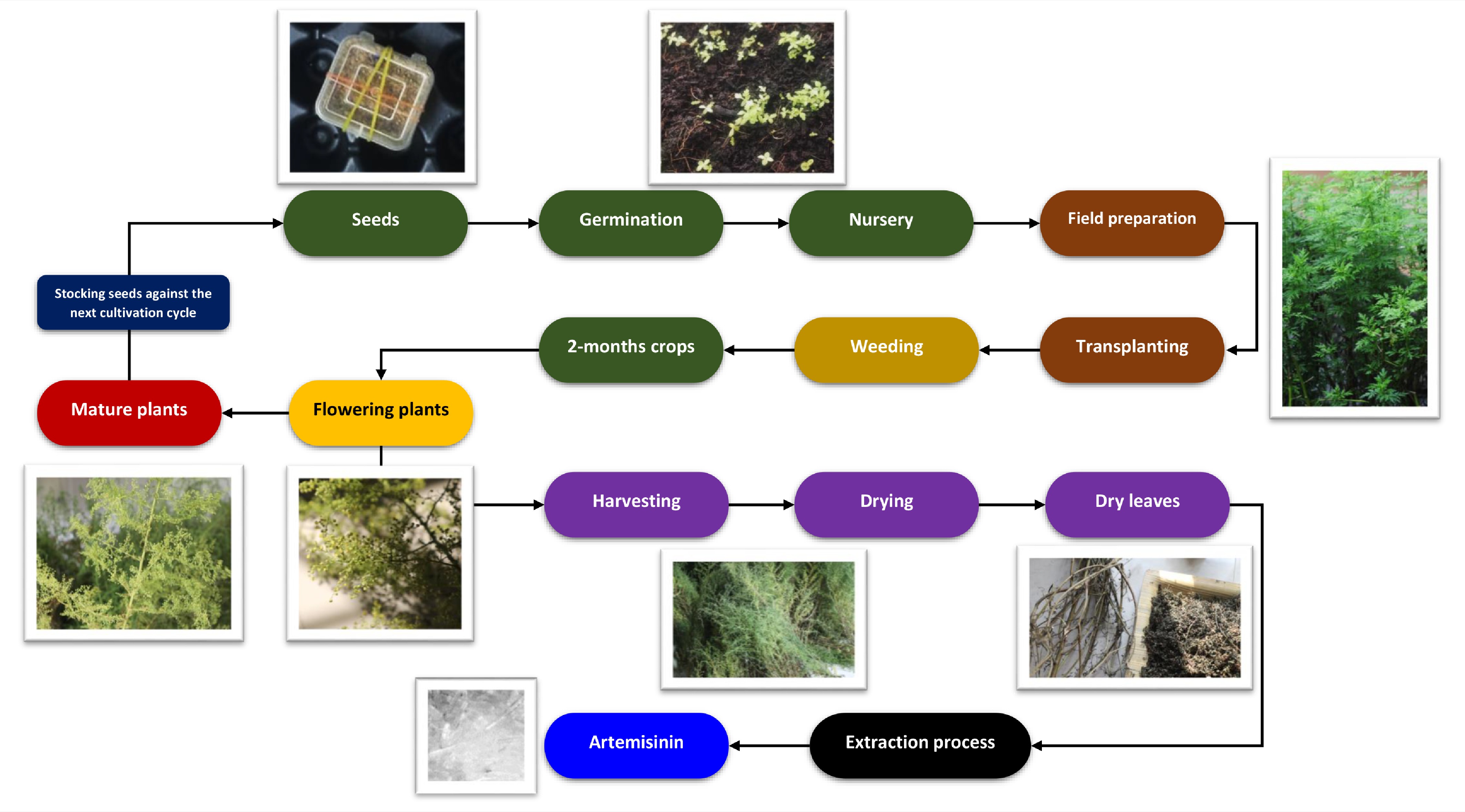
Figure 1.
The annual cultivation and production cycle of A. annua, from nursery establishment to crystalline artemisinin extraction.
-
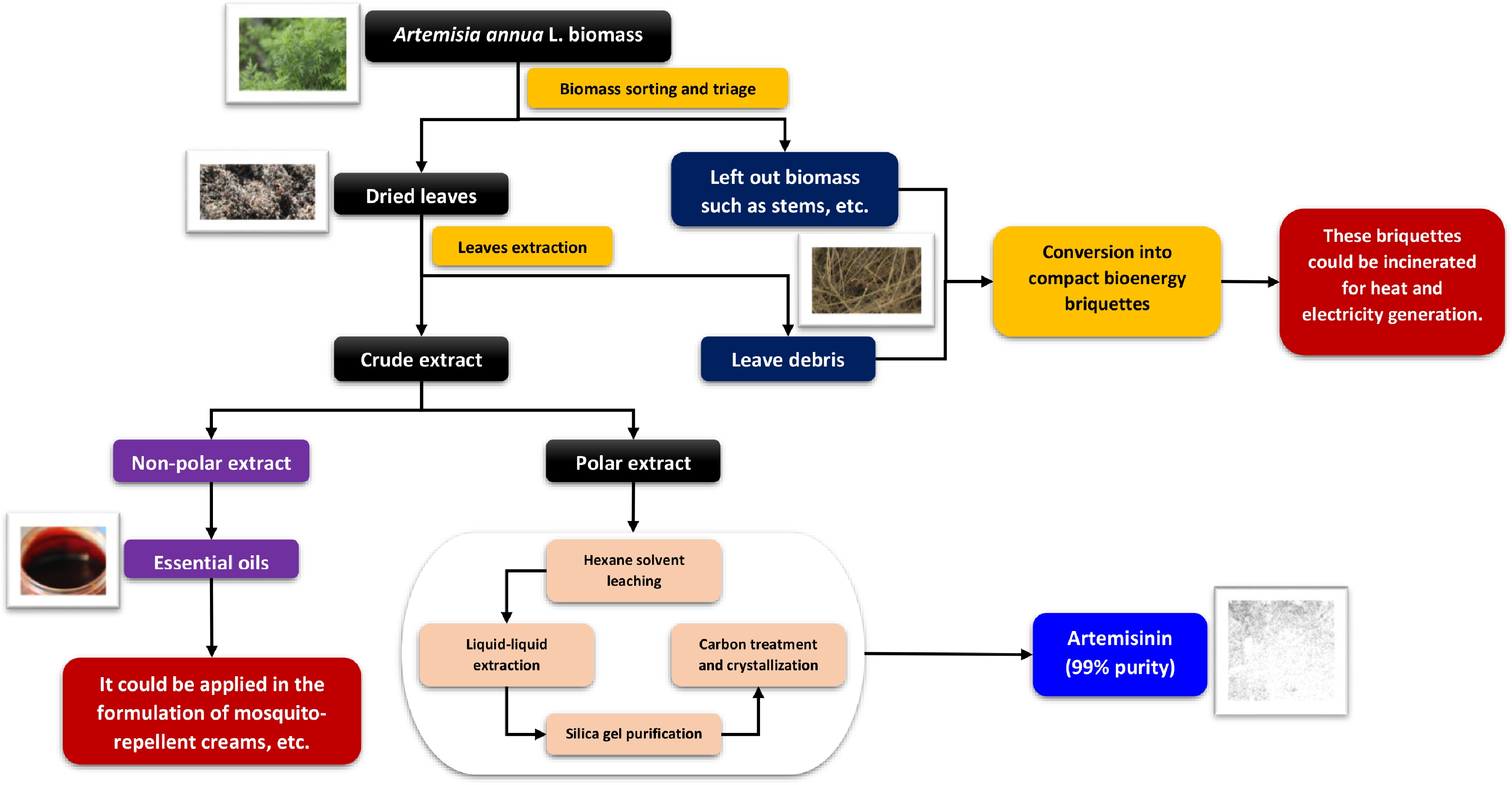
Figure 2.
Schematic of an integrated biorefinery for A. annua biomass valorization and zero-waste processing.
-
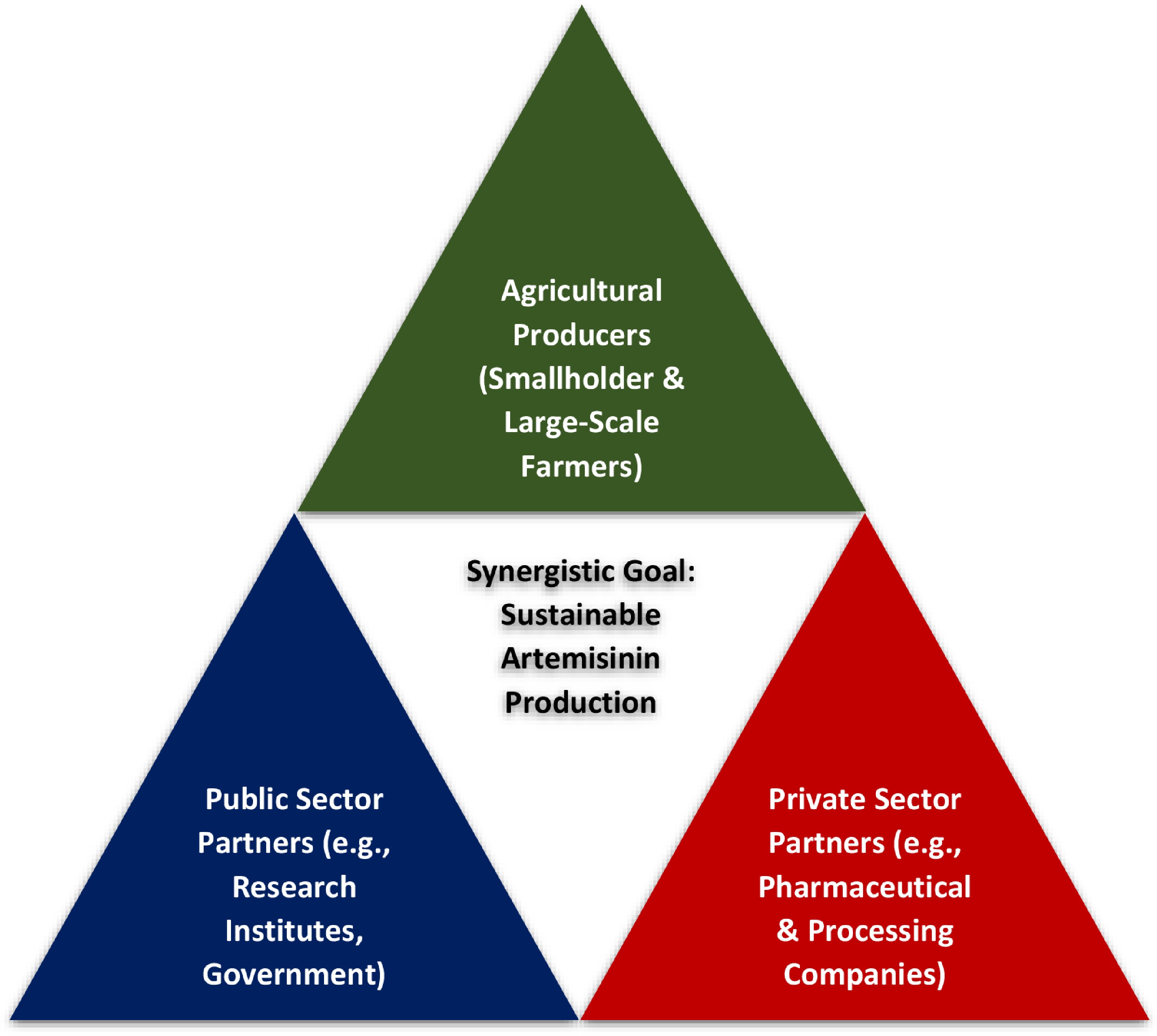
Figure 3.
Proposed Public-Private-Farmer Partnership (PPFP) model for a sustainable artemisinin value chain.
-
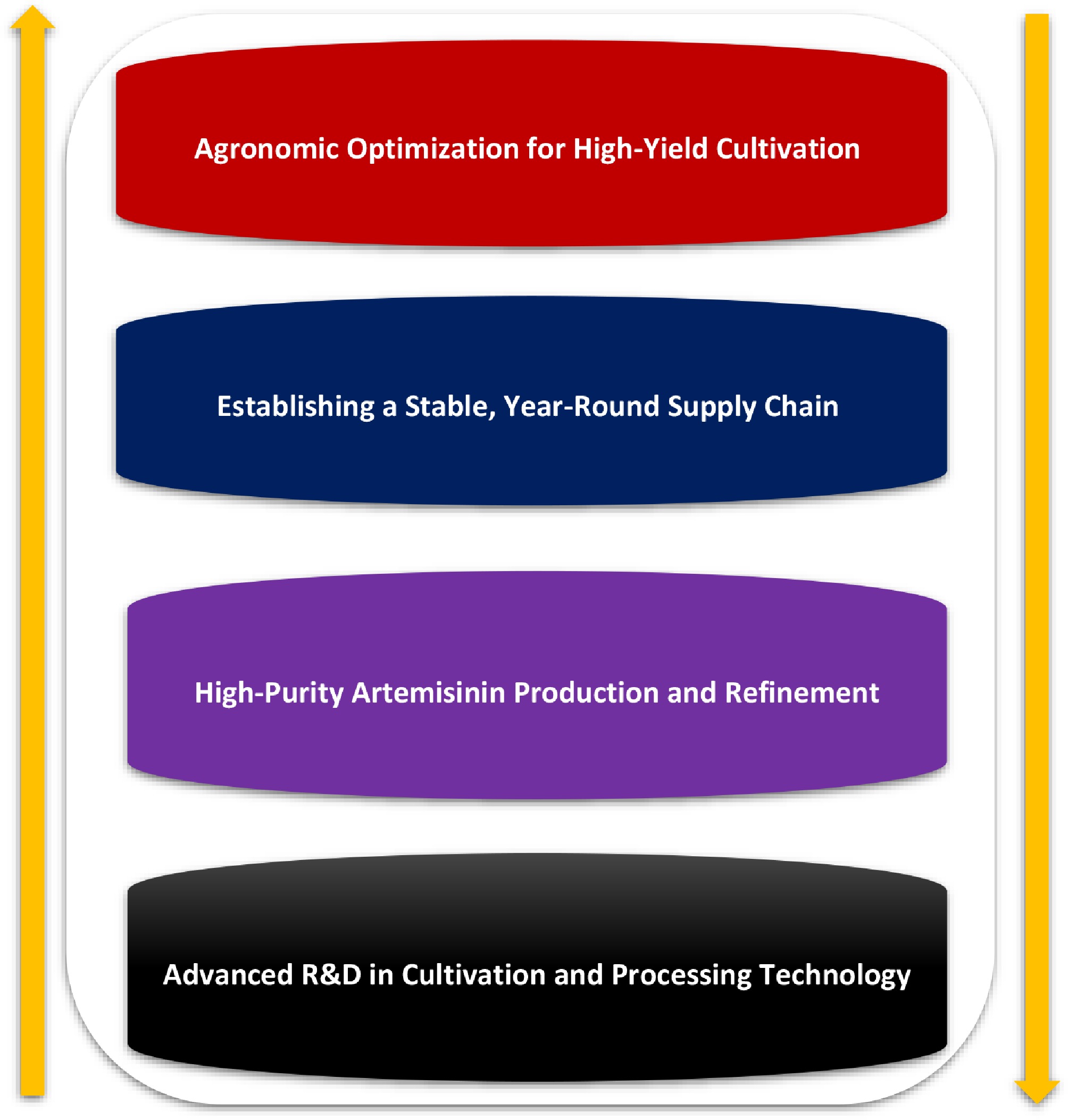
Figure 4.
Strategic milestones for optimizing the A. annua to artemisinin production pipeline.
-
Category Key challenges and risk factors Agronomic and environmental • Land-use competition: Cultivation of A. annua competes with staple food crops for arable land, raising food security concerns.
• Climate change impacts: Increased frequency of extreme weather events (droughts, floods) threatens crop viability and yield stability.
• Geographic constraints: Photoperiod sensitivity limits high-yield cultivation in tropical regions, which bear the highest malaria burden.Genetic and biological • Inherent genetic variability: High heterozygosity in wild and cultivated A. annua leads to inconsistent artemisinin content (0–1.1%).
• Cross-pollination: Gene flow from low-yielding wild Artemisia species can dilute the genetic quality of elite cultivars.
• Pest and disease pressure: While generally robust, monocultures are susceptible to emergent pathogen and pest outbreaks.Post-harvest and processing • Critical harvest timing: Artemisinin content peaks within a narrow window before flowering, making precise timing essential to avoid significant losses.
• Post-harvest degradation: Improper drying, handling, and storage conditions lead to the rapid degradation of artemisinin.
• Extraction inefficiencies: Extraction and purification processes can be costly and result in loss of the final product.Economic and supply chain • Price volatility: A historic 'boom-and-bust' cycle, driven by fluctuating demand forecasts and speculative production, creates extreme financial risk for farmers.
• High cost of alternatives: Semi-synthetic artemisinin production remains expensive and complex, limiting its ability to stabilize the market.
• Logistical bottlenecks: Inadequate infrastructure in many production regions hinders the transport and processing of raw materials.Table 1.
Key challenges and bottlenecks in the global artemisinin supply chain.
-
Geographic/climate zone Key environmental drivers Observed phenological response Implication for artemisinin yield Example regions
& key citationsTemperate
(e.g., Northern China)• Long summer day lengths
(>14 h).
• Distinct seasonal temperature shifts.• Prolonged vegetative growth phase.
• Flowering is delayed until late summer/autumn as day length shortens.• High potential: Long vegetative period allows for maximum biomass and artemisinin accumulation before the onset of flowering. [25,32] Subtropical
(e.g., Northern Vietnam, Southern Brazil)• Moderate day lengths.
• High humidity and rainfall.
• Less pronounced temperature seasonality.• Vegetative phase is shorter than in temperate zones.
• Flowering time is sensitive to both photoperiod and temperature cues.• Moderate to high potential: Yield depends heavily on using late-flowering cultivars specifically bred for these conditions. [33,34] Tropical/equatorial
(e.g., Kenya, Uganda, Madagascar)• Consistently short-day lengths (~12 h).
• High and stable temperatures.
• Bimodal rainfall patterns.• Rapid induction of flowering, often prematurely.
• Significantly curtailed vegetative growth and biomass accumulation.• Low potential (for non-adapted varieties): Standard cultivars flower too early, resulting in very low yields. Requires day-neutral or highly adapted hybrids. [35,36] High-altitude tropical
(e.g., East African Highlands)• Short day lengths (~12 h).
• Cooler night temperatures.• Cooler temperatures can partially inhibit or delay the flowering signal despite short days. • Moderate potential: Altitude can mitigate some effects of the tropical photoperiod, making cultivation more viable than in tropical lowlands. [35,37] Table 2.
Environmental and climatic impacts on A. annua phenology and artemisinin accumulation.
-
Research area Dominant paradigm/
primary goalRepresentative methodologies and approaches Systemic limitation (identified gap) Genetics and breeding To engineer elite, high-yield cultivars with superior artemisinin content. • Development of detailed phenological scales to synchronize flowering for controlled cross-pollination[34].
• Quantitative Trait Loci (QTL) mapping via deep transcriptome sequencing for marker-assisted selection[42].
• Assessment of heritability and use of mass selection to breed high-content lines and F1 hybrids[25].Prioritizes the creation of uniform, specialized hybrids for industrial monocultures, overlooking the conservation of in situ genetic diversity and the role of locally adapted landraces in building resilient farming systems. Biotechnology and metabolic engineering To create alternative, non-agricultural industrial production platforms and genetically enhance the plant. • Engineering of novel transcription factors (e.g., AaMYB121) to boost biosynthetic gene expression[43].
• Co-overexpression of multiple biosynthetic enzymes in transgenic A. annua to increase artemisinin levels[15].
• Application of nanobiotechnology (e.g., graphene, iron oxide NPs) as elicitors to increase yield[44,45].
• Engineering of transcription factors (e.g., AabZIP1) to link yield with stress tolerance[46].
• Use of external biostimulants (e.g., strigolactones, seaweed extract) to enhance growth and yield[47−49].
• Leveraging beneficial microbes (e.g., Trichoderma, endophytes) to improve plant growth and soil fertility[50,51].
• Heterologous expression of artemisinic acid or its precursors in microbes (S. cerevisiae, E. coli) and subsequent chemical conversion[52−57].
• Engineering alternative plants (e.g., tobacco) as biofactories for drug production and oral delivery[58].Inherently decouples drug production from agriculture or frames biotechnology as a tool for maximizing yield in a single species. This approach sidesteps the opportunity to build sustainable rural economies, enhance farm-level agrobiodiversity, and foster ecological resilience. Agronomy and cultivation sciences To maximize biomass and artemisinin yield per unit area through optimized physical inputs and practices. • Evaluation of planting density effects on biomass and allelopathic potential[59].
• Assessment of polyploid accession performance and stability in new tropical agroecologies[60].
• Comparative analysis of growth and artemisinin content across diverse agro-ecological zones[61].
• Optimization of nitrogen fertilizer application rates to maximize leaf biomass[62].
• Development of physical and chemical seed treatments to improve germination rates[63].
• Investigation of nitrogen's physiological effect on trichome density and artemisinin concentration[64].
• Identification of suitable hybrid lines and management practices for cultivation in the humid tropics[65].
• Determination of optimal nitrogen and potassium nutrition to balance biomass with artemisinin concentration[66].
• Proposal of Good Agricultural Practices (GAPs) for large-scale monoculture production[39].Frames sustainability primarily as resource-use efficiency for a single crop. This input-centric model is disconnected from broader farm-level ecology, long-term soil health, and the economic risks farmers face from input dependency. AI and technology To enhance the efficiency and precision of managing simplified, large-scale monoculture systems. • Using machine learning (ML) for disease detection and yield prediction, including analysis of adoption barriers[67].
• Application of ML with remote sensing for precision input management and crop monitoring[68].
• Integration of AI with IoT, unmanned aerial vehicles (UAVs), and sensors for automated and data-driven farm management[69,70].
• Development of smart crop management systems to optimize irrigation, fertilization, and pest control[71].
• Systematic reviews of ML algorithms (e.g., Support Vector Machine [SVM], Random Forest) and remote sensing data types in precision agriculture[72].
• Use of deep learning with IoT for predictive analytics in crop management[73].
• Application of information and communication technology (ICT) and wireless sensor networks for predictive decision-making and enhancing resource efficiency[74,75].Applies advanced technology to solve problems within the conventional production paradigm, rather than using it to design, model, or manage complex, biodiverse agroecosystems that are inherently more resilient and less input-dependent. Supply chain and economic analysis To mitigate market instability through downstream financial, logistical, and policy interventions. • Supply chain mapping and analysis of high-value crops to identify constraints and scale-up potential[76].
• Value chain analysis of non-timber forest products to map actors, income distribution, and challenges[77].
• High-level review of industrial biotechnology's role in developing sustainable bio-based economies[78].
• Economic modeling of the Artemisia supply chain to analyze the impact of support prices and semi-synthetic supply on volatility[79].
• Analysis of market volatility and proposal of financial mechanisms like buffer stocks and risk pooling[80].
• Examination of the downstream pharmaceutical supply chain and its logistical disruptions at a national level[81].Treats the agricultural source as an abstract 'black box' of production. This approach fails to connect supply chain stability directly to the ecological stability and agrobiodiversity of the production landscapes, where resilience can be built from the ground up. Table 3.
Comparative analysis of research paradigms and identified systemic gaps in A. annua studies.
-
Timeline (month) Key phenological stage Critical agronomic activities Artemisinin dynamics and key considerations Dec–Jan Nursery stage • Prepare nursery beds.
• Sow seeds under protected conditions.• No significant artemisinin production.
• Focus is on ensuring high germination rates and healthy seedling development.Feb–Mar Seedling and establishment • Transplant healthy seedlings to the main field.
• Conduct initial irrigation and gap-filling.
• Implement early-stage weed management.• Artemisinin biosynthesis begins as temperatures rise, primarily in young leaves.
• The flexible transplantation window (Feb-Aug) can be used to manage plant density and timing.Apr–Jun Rapid vegetative growth • Apply targeted fertilizers to drive robust biomass accumulation.
• Ensure consistent moisture through irrigation.
• Monitor for pests and diseases.• Artemisinin content steadily increases. Younger, upper leaves consistently show higher concentrations than older, lower leaves.
• Maximizing leaf biomass during this stage is critical for final yield.Jul–Sep Peak vegetative and pre-flowering • Optimal harvest window: Begin harvesting leaves at peak artemisinin content.
• Manage water drainage during the monsoon season.
• Cease nutrient application pre-harvest.• Peak artemisinin accumulation: Artemisinin levels in leaves reach their maximum.
• Delaying harvest into this period ensures both high biomass and high potency.
• Over 90% of total artemisinin is located in leaves and fine stems.Sep–Oct Full flowering stage • Continue harvesting if targeting floral parts.
• Reduce irrigation.
• Prepare for seed collection from selected plants.• Leaf artemisinin content begins to decline as it is partially translocated to the flowering heads (capitula).
• Capitula become a significant source of artemisinin (up to 40% of total).Nov–Dec Seed maturation and senescence • Harvest mature seeds from unharvested plants.
• Clear remaining plant biomass from the field.• Artemisinin content in vegetative parts drops significantly.
• Seeds contain negligible amounts of artemisinin.Post-harvest Drying and processing • Summer/winter harvest: Shade-dry leaves to preserve artemisinin.
• Rainy season harvest: Use aerated drying chambers or forced-air systems to prevent fungal growth and artemisinin degradation.• Proper drying is critical. Rapid, high-temperature drying can cause significant artemisinin loss.
• Shade drying is the preferred method to maintain quality.Table 4.
Phenological and agronomic timeline for Artemisia annua L. cv. 'Jeevanraksha' in subtropical India.
-
Technology tier Core technologies and tools Functional role in A. annua systems Benefits for smallholder and
mixed-scale producersKey constraints and risks High-end
(capital-intensive)Drone-based multispectral and hyperspectral imaging; satellite remote sensing integrated with AI analytics Landscape-scale detection of crop stress, pest and disease outbreaks, nutrient deficiencies, and spatial variability in biomass and phenology; supports site-specific interventions and biodiversity monitoring Enables early, non-invasive diagnostics and precision interventions; improves targeting of pest and disease control; supports monitoring of agroecosystem heterogeneity and habitat complexity[106]. High capital and maintenance costs; need for skilled operators and data-processing capacity; risk of exclusion of smallholders without cooperative or service-based access[101]. Mid-tier (farm-level precision) In-field IoT sensor networks (soil moisture, temperature, pH, nutrient probes); localized weather sensors linked to decision-support systems Real-time monitoring of soil–plant–atmosphere interactions; optimization of irrigation, fertilization, and harvest timing to maximize artemisinin yield and compliance with Good Agricultural Practices (GAPs) Improves resource-use efficiency; reduces input waste and environmental impacts; enhances yield predictability and quality consistency[107]. Dependence on connectivity and power supply; sensor maintenance and calibration requirements; moderate upfront and recurring costs[108]. Frugal (low-cost, scalable) SMS-based advisory services; Unstructured Supplementary Service Data (USSD) platforms; AI-enabled smartphone diagnostic apps; 'farm hack' or Do-It-You (DIY) sensor kits Dissemination of timely agronomic advice (weather alerts, pest warnings, planting/harvest windows); rapid field-level pest and disease identification using mobile cameras Affordable and scalable access to decision support; leverages widespread mobile phone ownership; suitable for remote and resource-constrained settings[101]. Limited data resolution; reliance on basic digital literacy and mobile network coverage; reduced precision compared with sensor-based systems[99]. Service-based/cooperative Outsourced drone services; shared data platforms; cooperative-owned machinery and analytics services Provision of precision agriculture services without individual asset ownership; aggregation of data for regional forecasting and supply-chain coordination Reduces capital risk for farmers; enables access to advanced technologies; strengthens collective bargaining power and data-driven planning[100]. Requires strong cooperative governance and trust; potential data ownership and privacy concerns; dependency on service availability[100]. Table 5.
A tiered approach to intelligent farming technologies for A. annua.
-
Ecosystem parameter Monoculture impact (disservice) Polyculture solution (buffering) Evidence basis Pest vulnerability Rapid spread of specialist pests (e.g., Artemisia aphids) Attraction of natural enemies via diversified plant volatiles [114] Pathogen load Accumulation of E. artemisiae and P. tanaceti Disruption of disease cycles through rotation and intercropping [115] Soil microbiome Reduced microbial richness; dominance of pathogenic taxa Restoration of OTU richness and evenness via organic amendments and crop diversity [116,121] Nutrient cycling Suppressed urease and dehydrogenase activity Recovery of enzymatic activity and nitrogen availability [116,121] Soil fauna Repellence of earthworms and degradation of soil structure Improved habitat quality for beneficial soil fauna and arthropods [117,120] Table 6.
Ecosystem disservices of A. annua monocultures versus buffering benefits of diversified systems.
-
Cropping system Description Primary trade-off Biodiversity potential Relevance for Artemisia annua L. cultivation I. Monoculture systems Monocropping
(sole cropping)Cultivation of a single crop species on the same land over successive seasons. Efficiency and scale vs ecological risk − The current industrial standard for maximizing short-term yield, but it degrades soil health and agrobiodiversity, creating long-term vulnerabilities. Ratooning Cultivating a new crop from the regrowth of the previous crop's stumps or roots. Low establishment cost vs declining yield and pest accumulation − Not a viable system. A. annua is an annual plant harvested for its aerial biomass and does not regrow effectively from stumps. II. Polyculture (multi-cropping) systems Sequential cropping Growing two or more crops in succession on the same land within one year. Land use intensity vs climatic dependence + Highly relevant. Allows A. annua to be rotated with a staple food crop (e.g., legumes, short-season cereals), improving food security and breaking pest cycles. Intercropping (simultaneous cropping) Growing two or more crop species concurrently in the same field. Resource synergy vs management complexity ++ A core strategy. Companion planting with legumes (e.g., cowpea) fixes nitrogen, while aromatic herbs (e.g., basil) can provide pest deterrence. Mixed intercropping Crops are grown together without a distinct row arrangement. Maximum resilience vs inability to mechanize +++ Best suited for smallholder, low-input subsistence farms where A. annua is part of a diverse garden of medicinal plants and vegetables. Row intercropping Crops are grown in distinct, alternating rows. Management control vs potential interspecies competition ++ An excellent, practical model. A. annua can be grown in rows alternating with low-growing cash crops like groundnut or beans. Strip Intercropping Crops are grown in wide, multi-row strips, allowing for separate mechanical access. Mechanization vs reduced ecological interaction + A scalable commercial model. Allows farms to balance the efficiencies of mechanization with the soil health benefits of crop rotation and diversity. Relay cropping Sowing a second crop into an established primary crop before it is harvested. Season maximization vs risk of harvest interference ++ A promising intensification strategy. Legumes can be under-sown into a mature A. annua stand to ensure continuous land cover and provide a 'green manure.' Agroforestry Integrating woody perennials (trees, shrubs) with crops and/or livestock. Long-term resilience vs high initial investment +++ A long-term vision. Trees can serve as windbreaks, improve the microclimate, enhance water retention, and provide farmers with diversified, high-value income streams. Alley cropping (hedgerow intercropping) Crops are grown in 'alleys' between rows of trees or shrubs. Nutrient cycling vs labor for hedgerow management +++ A structured agroforestry approach. Planting hedgerows of nitrogen-fixing trees (e.g., Gliricidia sepium) can provide natural fertilizer and mulch for the A. annua grown in the alleys. Biodiversity potential is rated on a scale from negative (−) to highly positive (+++), reflecting the system's capacity to support species richness and ecosystem services. Table 7.
A comparative framework of cropping systems for sustainable A. annua cultivation.
-
Organizational mechanism Core institutional innovation How value redistribution is achieved Equity outcomes for smallholders Key limitations and governance risks Evidence base Blockchain-enabled digital ledgers Decentralized, tamper-resistant transaction and traceability systems Creates real-time visibility of prices, volumes, quality grades, and payments across the value chain; reduces information asymmetry between farmers and buyers Improves farm-gate price transparency; lowers search and transaction costs; strengthens farmers' bargaining power and data sovereignty Requires digital literacy and connectivity; risk of elite capture if data governance rules are unclear; potential exclusion of farmers without access to digital tools [105,
130,131]Value chain profit-sharing contracts Multi-installment payment structures linked to downstream sales rather than fixed farm-gate prices Distributes risk and reward across the chain by aligning farmer payments with realized pharmaceutical profits Stabilizes income; buffers farmers against artemisinin price crashes; allows participation in upside market peaks while limiting downside exposure Requires high trust and transparent accounting; dependent on enforceable contracts and buyer compliance [132−134] Farmer-led vertical integration Cooperative ownership of early processing stages (drying, grading, leaf–stem separation) Retains value addition at the producer level by capturing margins typically absorbed downstream Increases share of final value retained locally; reduces dependency on intermediaries; enhances income resilience Capital and managerial requirements; risk of cooperative mismanagement without strong governance structures [133,136] Collective governance (cooperatives and producer organizations) Democratic decision-making structures and pooled negotiation power Aggregates production volume and voice to improve negotiating leverage with buyers and service providers Enhances bargaining power; builds social capital; supports collective risk management and long-term resilience Effectiveness contingent on trust, inclusivity, and internal accountability; risk of elite domination [129,135] Gender-transformative inclusion models Explicit integration of women into leadership, data systems, and training pathways Makes women's labor visible and remunerated; ensures equitable access to skills, information, and decision-making Improves household income equity; strengthens quality control in labor-intensive nursery and post-harvest stages Cultural norms may limit participation; requires sustained institutional commitment and monitoring [129,
130,133]Table 8.
Comparison of organizational models for smallholder equity in the A. annua value chain.
Figures
(4)
Tables
(8)