-
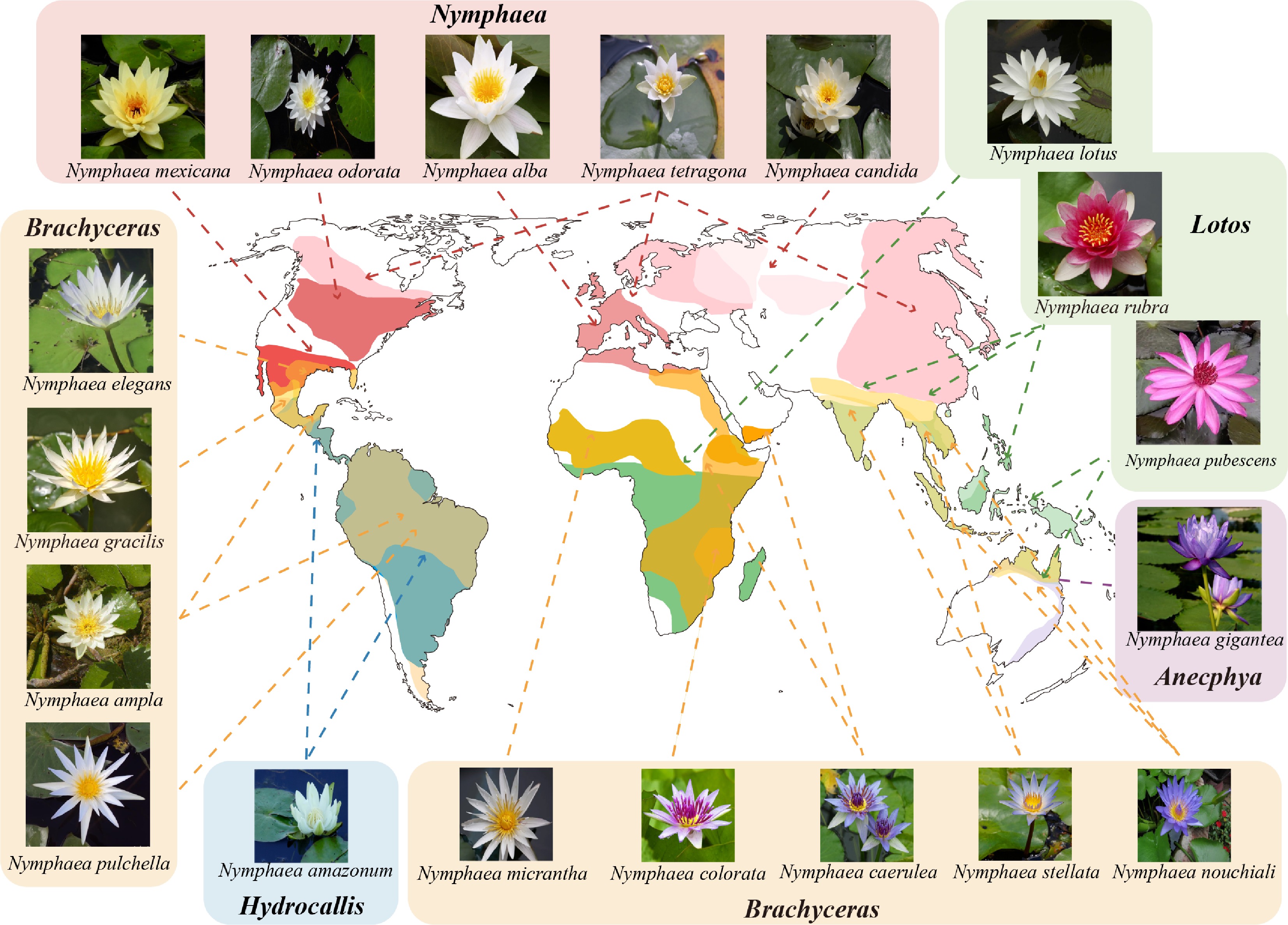
Figure 1.
Global geographical distribution of representative Nymphaea species. The map illustrates the distinct distribution patterns of five Nymphaea subgenera. The subgenus Nymphaea (pink) is predominantly distributed in the northern temperate regions (e.g., N. alba, N. odorata). Tropical and subtropical regions are inhabited by the other four subgenera: subgenus Lotos (green) in Africa and Asia (e.g., N. lotus, N. rubra); subgenus Anecphya (purple) endemic to Australia (e.g., N. gigantea); subgenus Hydrocallis (blue) distributed in the Neotropics (e.g., N. amazonum); and the widely distributed subgenus Brachyceras (yellow/orange), which spans across the Americas, Africa, and Asia (e.g., N. caerulea, N. nouchiali, N. colorata). Representative flower phenotypes for each subgenus are shown in the panels.
-
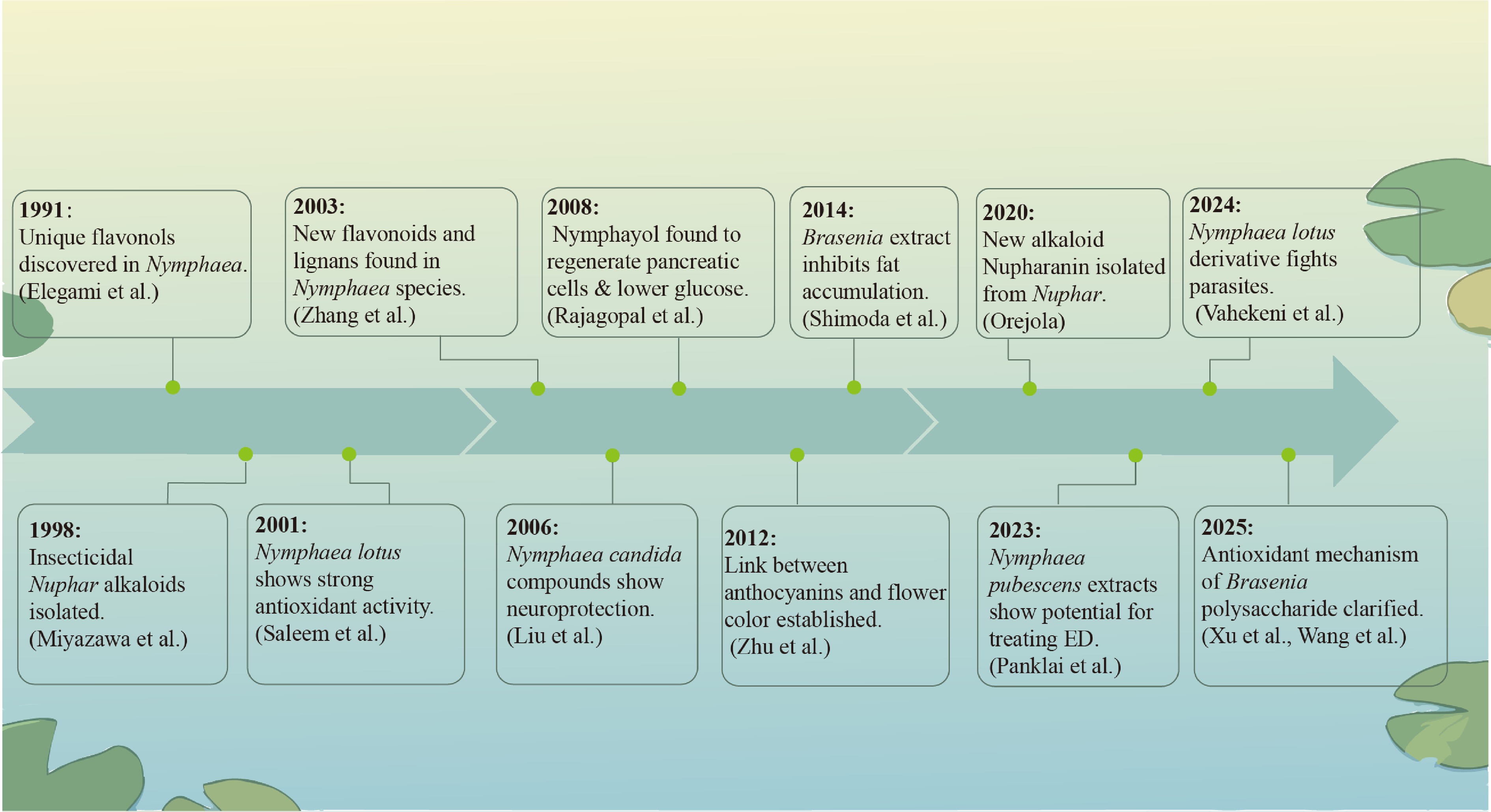
Figure 2.
Historical development of metabolites.
-
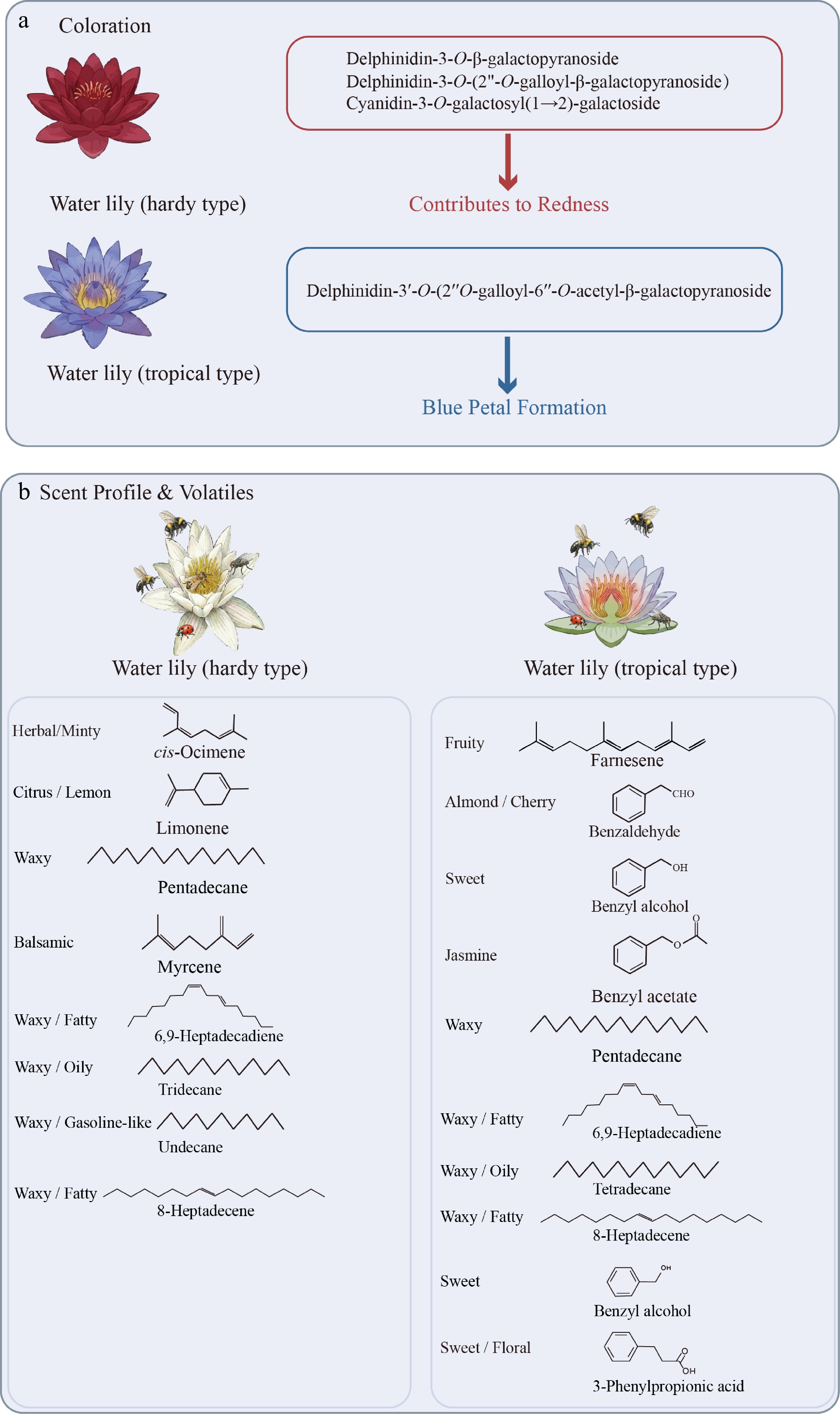
Figure 3.
Metabolic basis of coloration and scent divergence in Nymphaea. (a) Differential accumulation of anthocyanins determines petal color. Redness in hardy types is decided by non-acetylated delphinidin and cyanidin glycosides. Blue formation in tropical types relies on complex modifications, yielding delphinidin-3'-O-(2'' O-galloyl-6''-O-acetyl-β-galactopyranoside). (b) Representative volatile organic compounds (VOCs) and their odor descriptors. The scent of hardy water lilies comprises monoterpenes (cis-ocimene, limonene, myrcene) and alkanes/alkenes (e.g., undecane, tridecane). Tropical water lilies produce a complex bouquet of benzenoids (benzaldehyde, benzyl alcohol, benzyl acetate, 3-phenylpropionic acid) and farnesene.
-
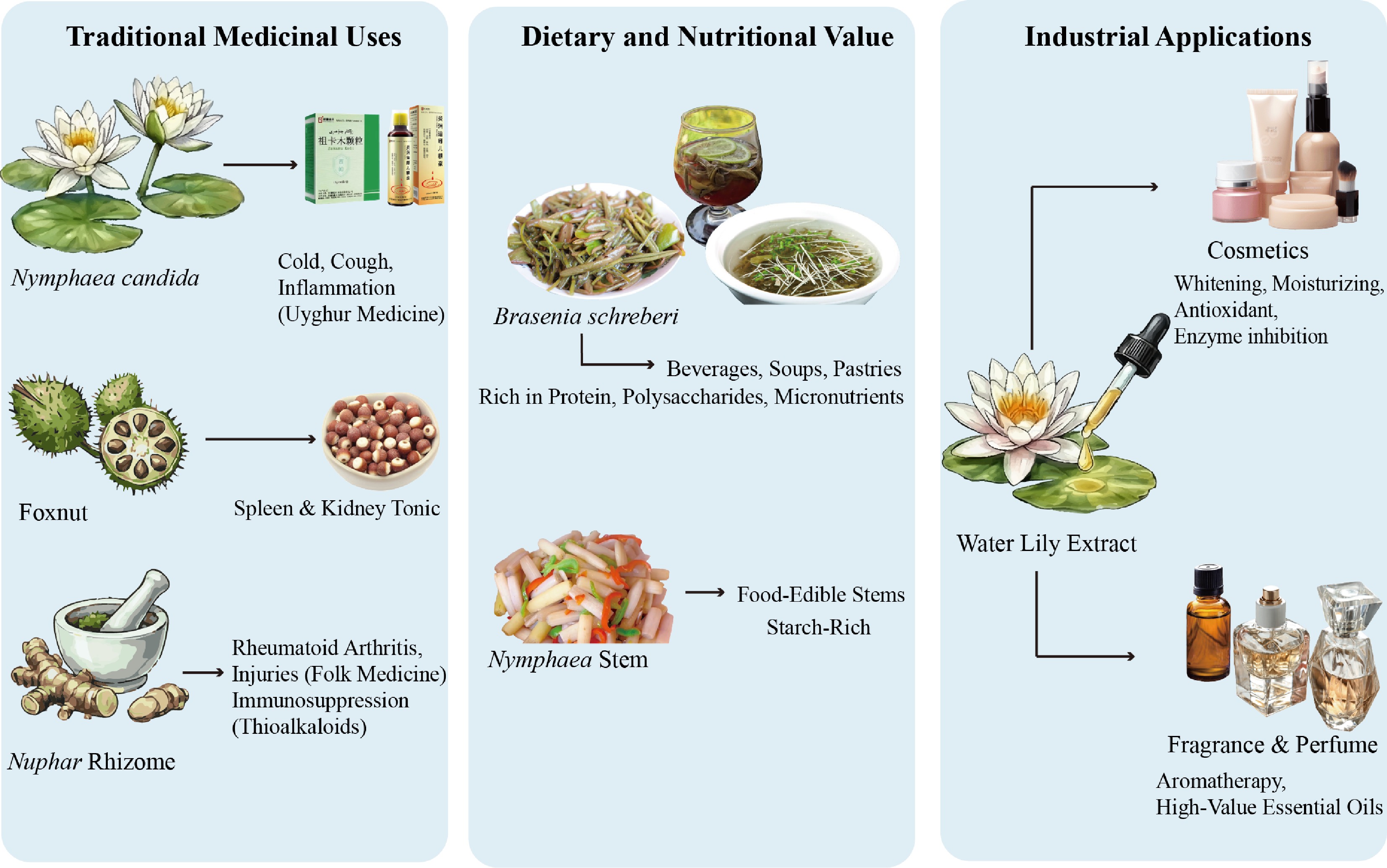
Figure 4.
Traditional uses, dietary value, and industrial applications.
-
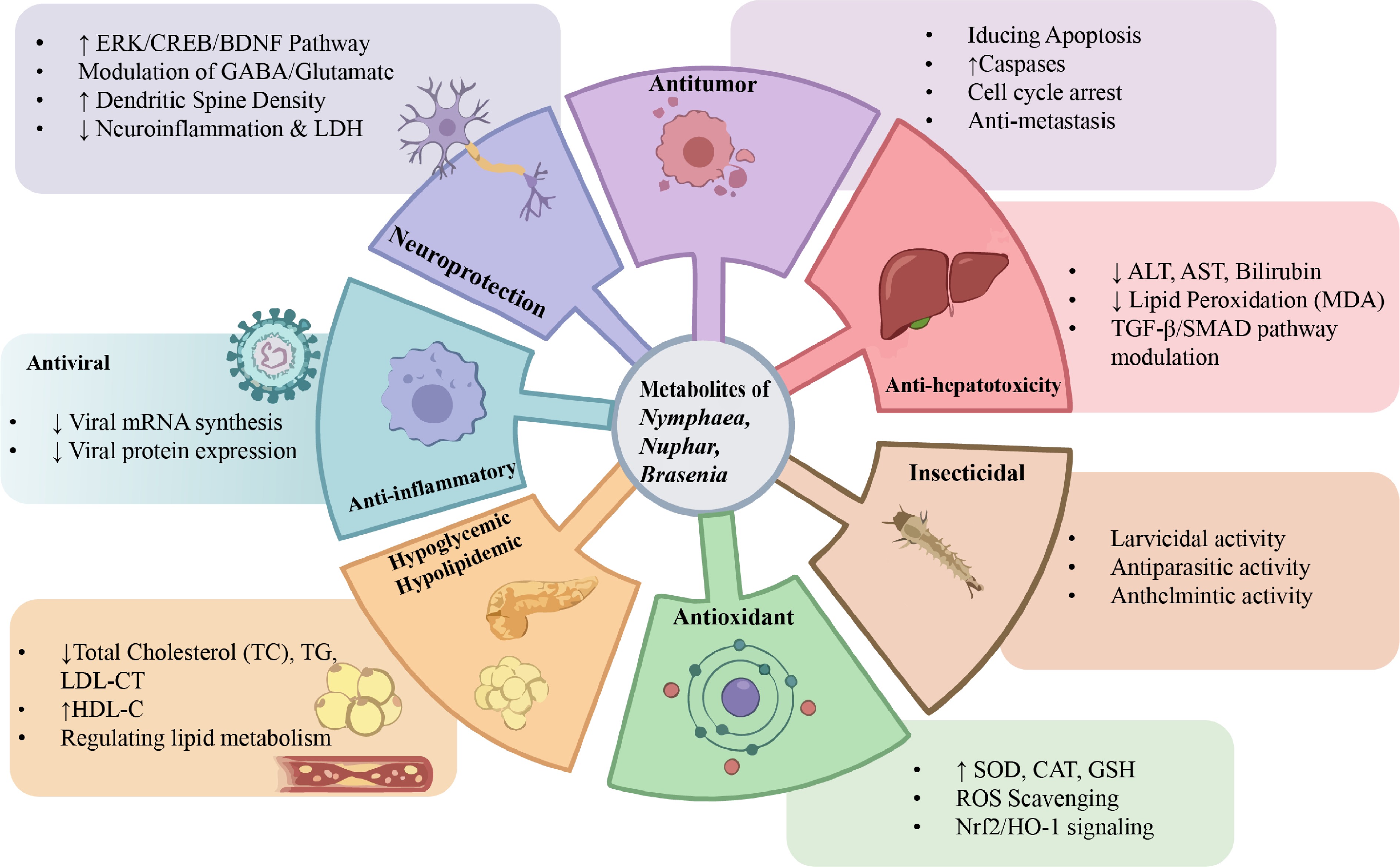
Figure 5.
Overview of the diverse bioactivities and underlying mechanisms of water lilies.
-
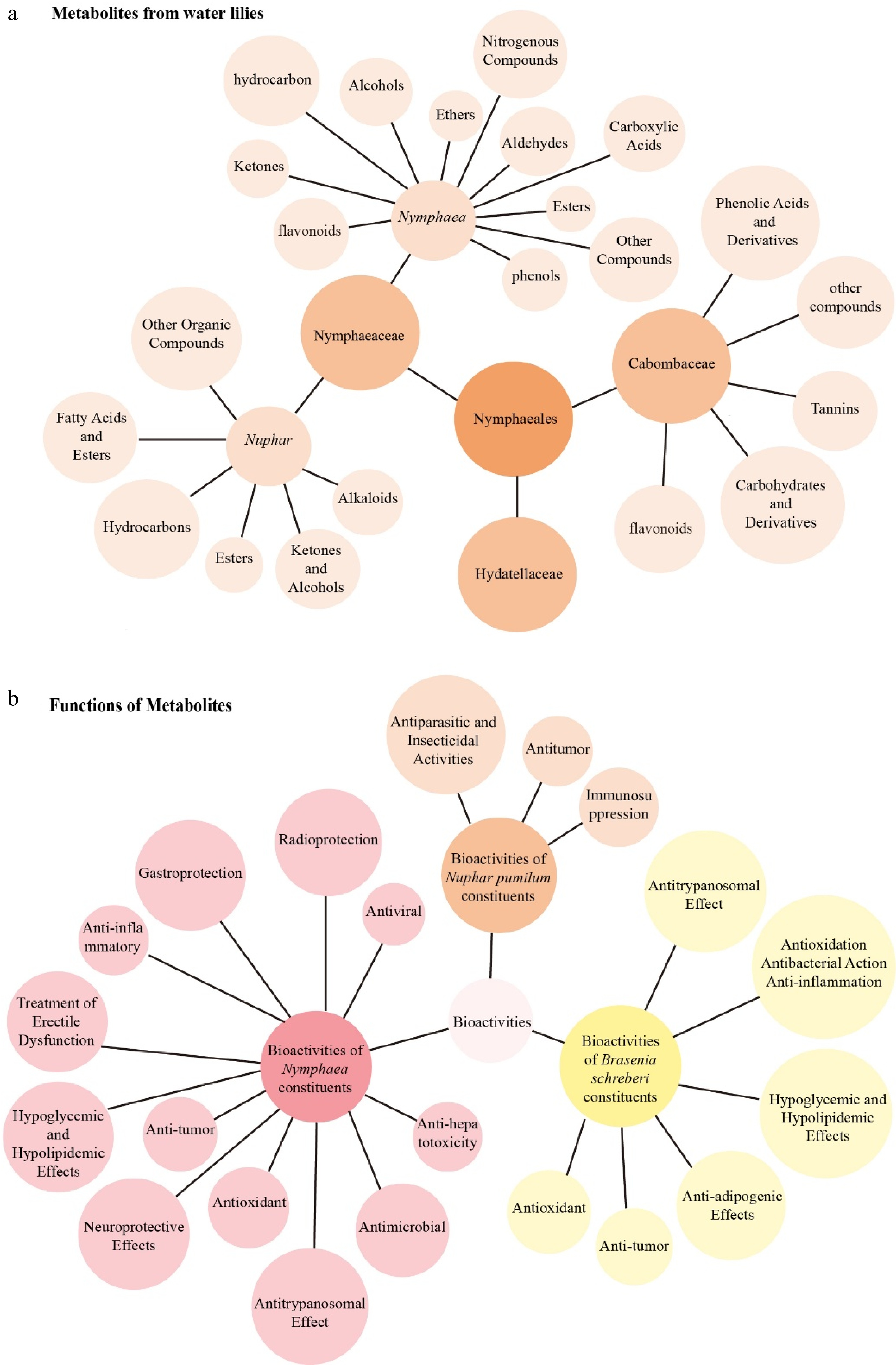
Figure 6.
Summarized chemical constituents and bioactivities of Nymphaeales species. (a) Distribution of the main classes of phytochemical constituents identified in Nymphaeales species. The figure shows the relationship between plant taxa (families Nymphaeaceae, Hydatellaceae, and Cabombaceae) and their major groups of compounds, including flavonoids, alkaloids, phenolic acids, tannins, terpenoids, fatty acids, and other organic compounds. (b) Summary of reported bioactivities of Nymphaeales constituents. The network highlights multiple pharmacological properties, including antioxidant, anti-inflammatory, antitumor, antimicrobial, hypoglycemic, and neuroprotective effects. Notably, compounds from Nymphaea exhibit broad bioactivities such as antioxidation, radioprotection, antiviral, and anti-trypanosomal activities.
Figures
(6)
Tables
(0)