-
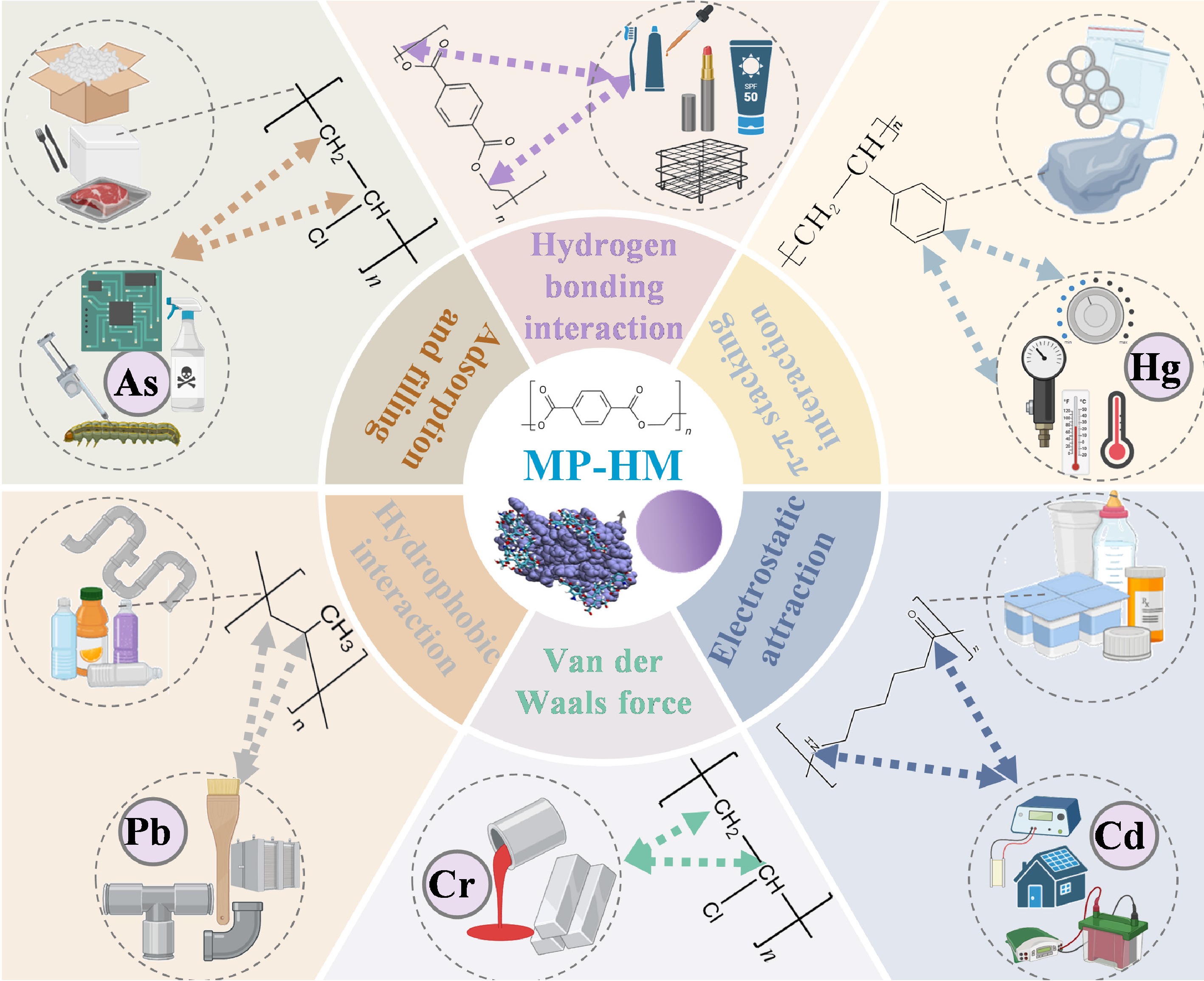
Figure 1.
Conceptual framework of MP–HM interactions in soil. The outer source icons indicate representative MP-related and HM-related inputs, the central sectors summarize the main interfacial pathways (surface adsorption/entrapment, electrostatic attraction, van der Waals force, hydrogen bonding, and related interactions), and the five circled metals indicate the focal elements discussed in this review (Pb, Cr, Cd, As, and Hg). Dashed arrows denote representative linkages between sources, polymer structures, and metal-specific interaction scenarios. The polymer repeat-unit sketches are schematic structural motifs rather than standalone abbreviations.
-
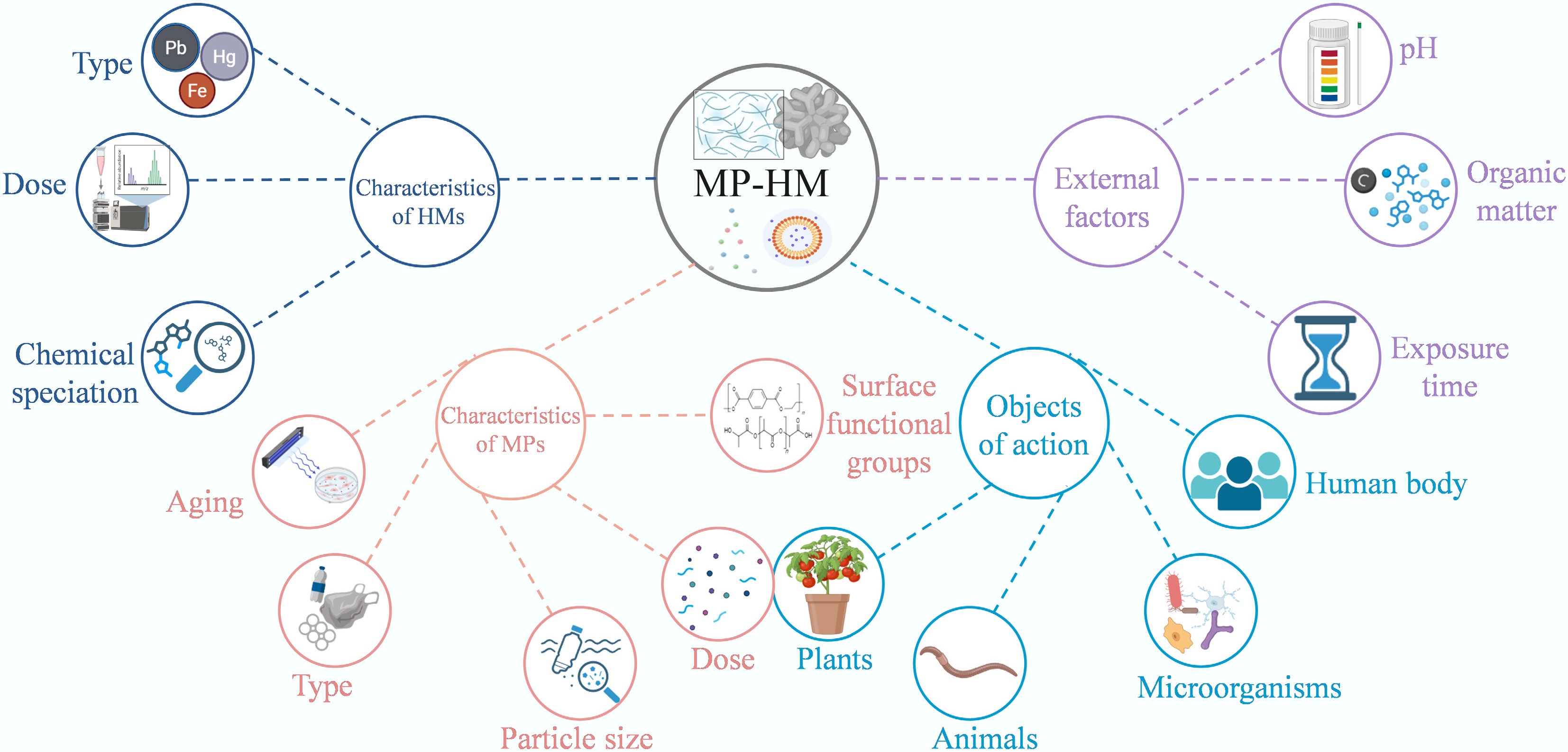
Figure 2.
Comparative framework of the main controls on MP–HM co-pollution. The upper left branch summarizes metal-side controls (type, dose, and chemical speciation), the lower left branch summarizes MP-side controls (aging, type, particle size, dose, and surface functional groups), the upper right branch summarizes environmental controls (pH, organic matter, and exposure time), and the lower right branch summarizes the principal biological receptors (microorganisms, animals, plants, and the human body). The arrows indicate how these linked modules jointly regulate adsorption, redistribution, bioavailability, trophic transfer, and the risk to ecological or human health across soil systems.
-
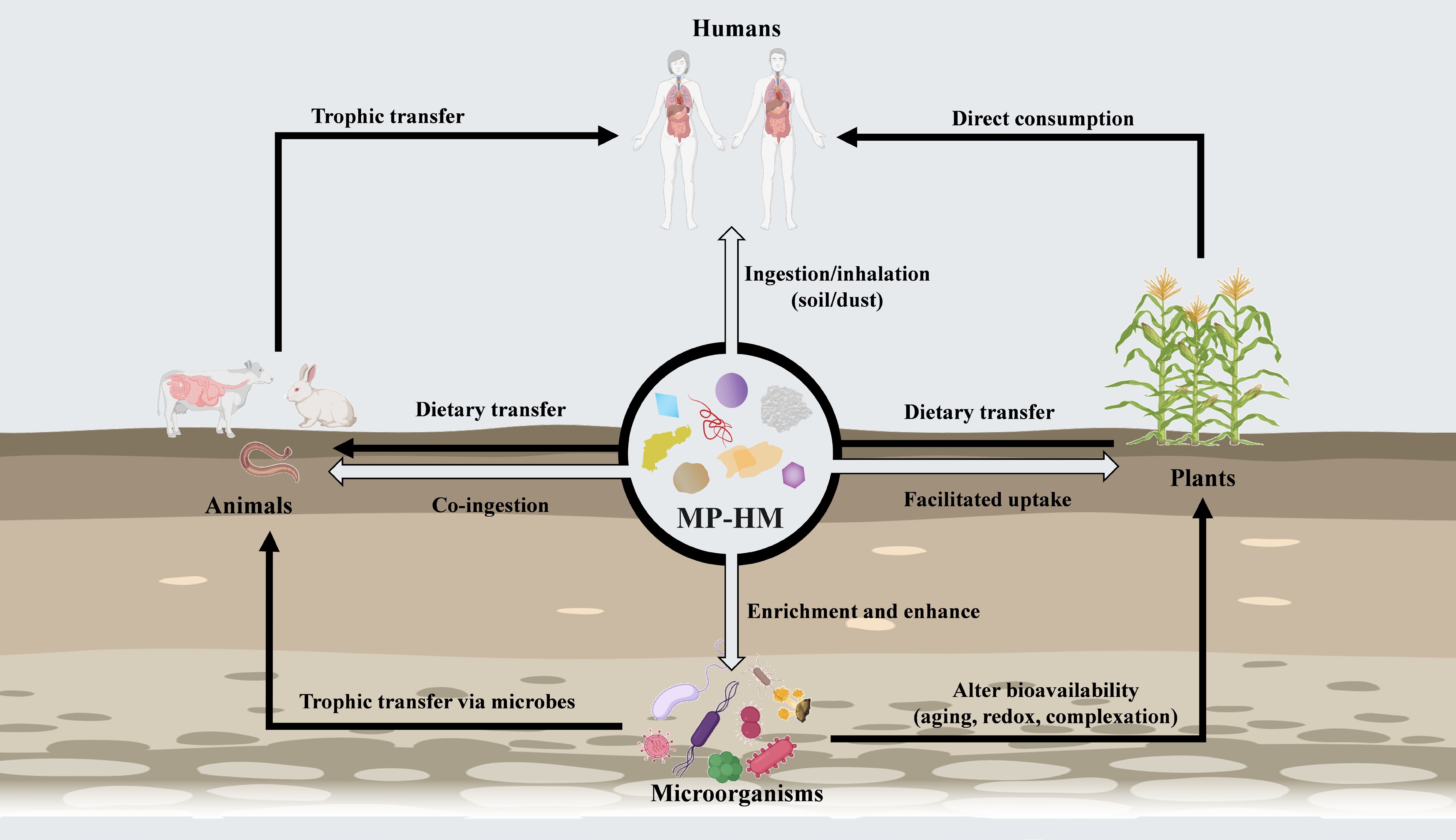
Figure 3.
Schematic illustration of the migration pathways and ecological risks of heavy metals (HMs) and microplastics (MPs) in the soil ecosystem. The central circle represents the soil matrix contaminated with HMs and MPs, serving as the source of pollution. Plants uptake HMs and MPs directly from the soil, where microbial activities (e.g., aging, redox reactions, complexation) alter the bioavailability of pollutants, facilitating their transfer into the food chain. Animals (e.g., earthworms, livestock) ingest HMs and MPs through soil consumption or by feeding on contaminated plants, enabling trophic transfer to higher levels. Humans are exposed to HMs and MPs via multiple pathways: direct consumption of contaminated plants, trophic transfer through animal products, and incidental ingestion/inhalation of polluted soil or dust.
-
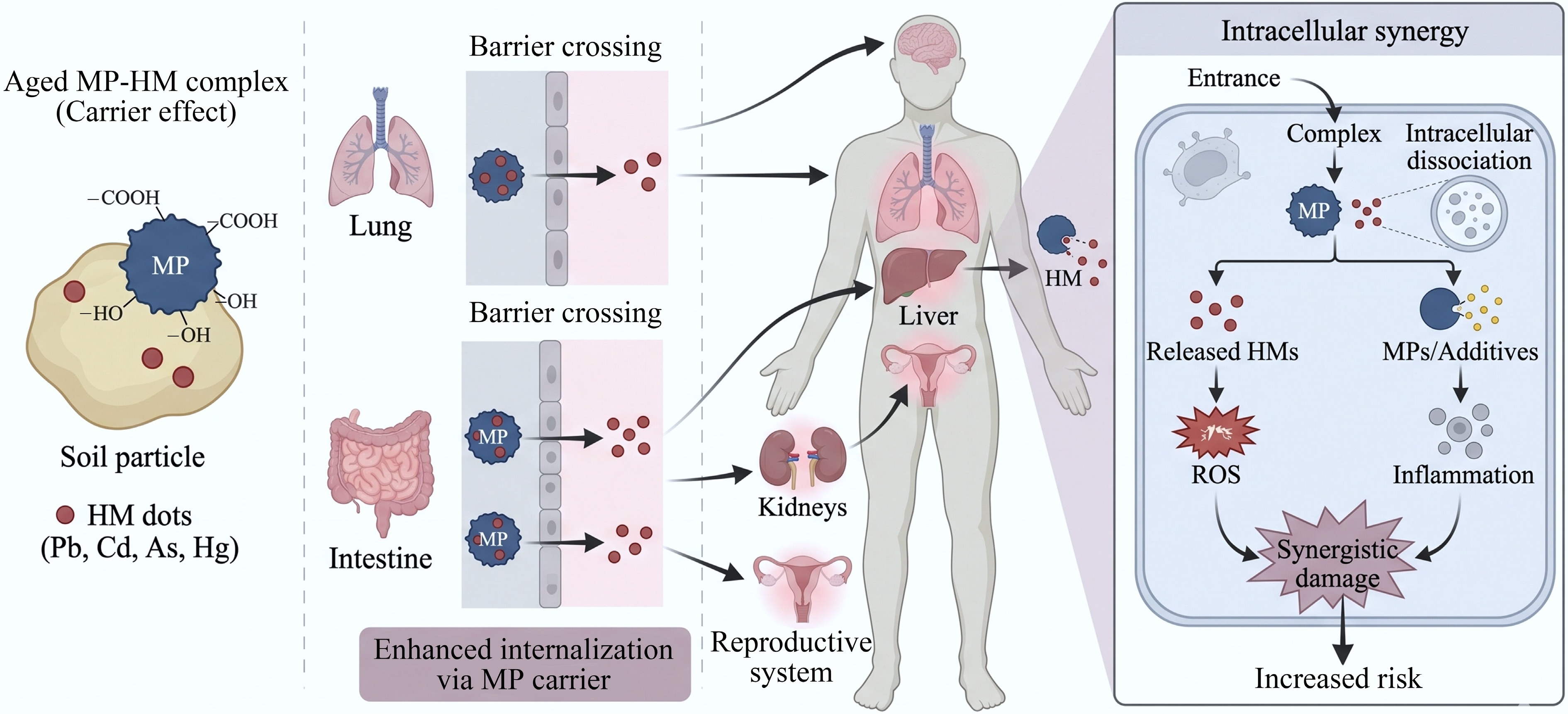
Figure 4.
Proposed mechanistic pathway of soil-derived microplastics (MPs) as carriers for heavy metals (HMs) across biological barriers, leading to target organ accumulation and synergistic human health risks. The diagram illustrates the MP-mediated transport across lung and intestinal barriers, followed by organ-specific risks through converging reactive oxygen species generation and inflammation pathways, resulting in escalated disease risk.
-
Metal Dominant interaction feature Key controlling
variableAging/biofilm response Representative ecological implication Core differential-response note Pb Surface complexation with oxygen-containing groups is prominent pH, soil organic matter (SOM)/humic acid (HA) bridging, particle size, dosage Weathering usually increases oxidized binding sites Plant uptake, oxidative stress, and particle-assisted transfer are frequently reported Useful model for strong pH-sensitive complexation and particle-bound plant transfer[31−36] Cr Response must be interpreted together with the Cr(III)/Cr(VI) redox state Valence, pH, redox condition, particle size, humic reducers Oxidation plus biofilm/eco-corona development can markedly strengthen retention Rhizosphere restructuring and crop quality changes under co-exposure Distinguished most clearly by coupled adsorption–redox behavior rather than sorption alone[41−50] Cd Bioavailability and bioaccumulation often dominate over valence effects Particle size, aging, rhizosphere chemistry, DOC, microbial mediation Weathering and biofilms often increase binding on otherwise weak surfaces Strong relevance for plant uptake, soil fauna toxicity, and nonlinear exposure responses Especially sensitive to indirect geochemical regulation and concentration-dependent responses[51−60] As Interaction depends strongly on anionic speciation, methylation, and mineral competition pH, Fe oxides, DOM/SOM, nanoplastic displacement, exposure duration Aging and nanoscale effects can either increase their release or strengthen complexation depending on the matrix Important for rice (Oryza sativa) systems, pore water mobility, and food chain risk Defined by combined roles of speciation, methylation, and mineral surface competition[62−66] Hg The current soil evidence base is comparatively limited; DOM-mediated processes are central Flooded/oxic status, DOM–Fe–S chemistry, methylation context, polymer aging Aged PVC-derived DOM can shift the response from immobilization toward photoreduction/
re-releasePotential concern for methylmercury control, digestive release, and Hg0 generation Conclusions remain more uncertain than for the other four metals and require cautious interpretation[28,31,58,69−72] Table 1.
Comparative summary of differential responses and interaction mechanisms among the five focal heavy metals (HMs) co-occurring with microplastics (MPs) in the soil
Figures
(4)
Tables
(1)