-
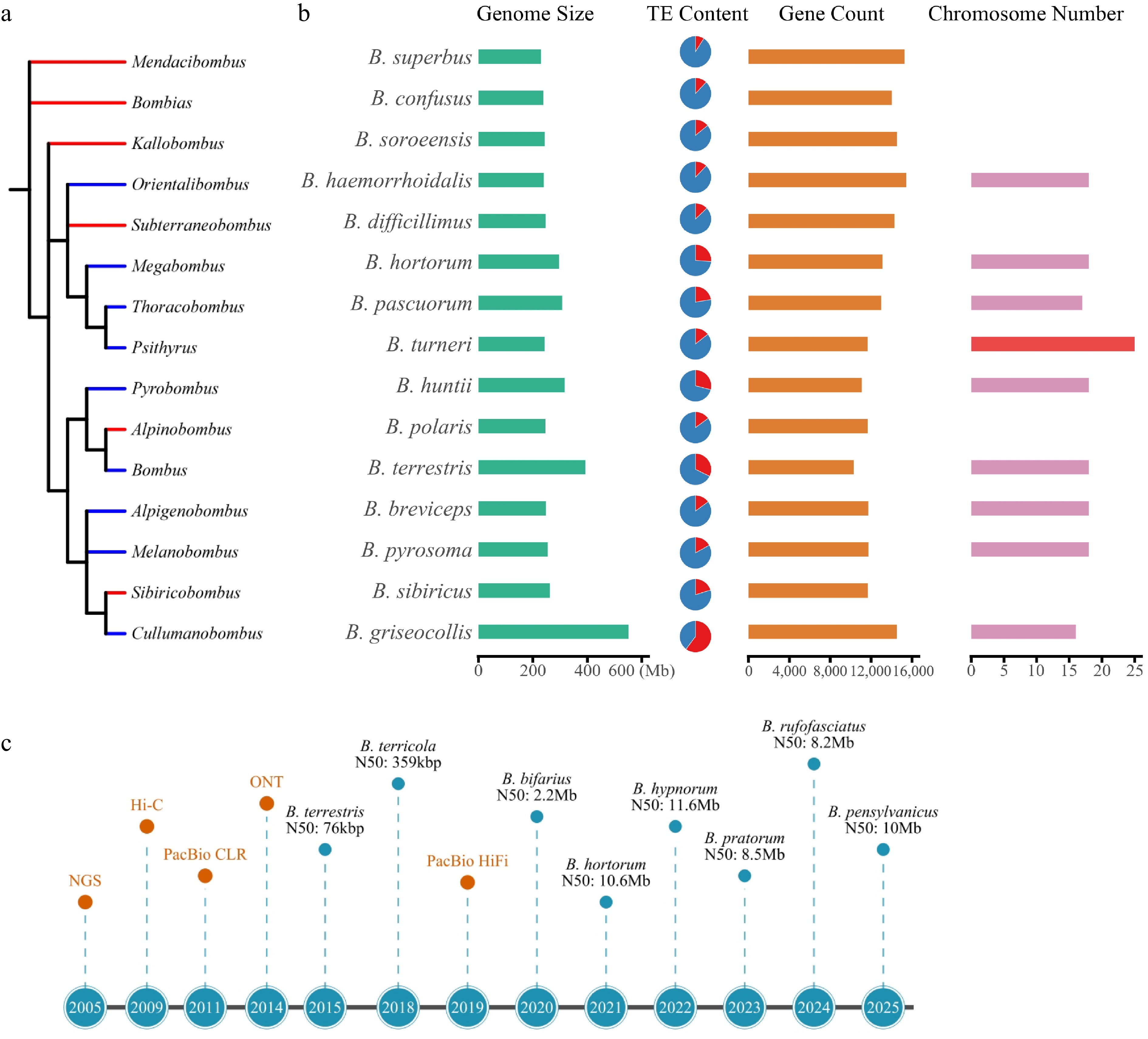
Figure 1.
Genomic landscape of bumblebees. (a) A phylogenetic tree of all 15 bumblebee subgenera, with branches color-coded by the highest level of genome assembly available (blue, chromosome-level; red, scaffold-level). (b) Key genomic features of representative species for each subgenus (TE, transposable element). (c) Timeline of annual representative species genome releases and advances in sequencing technology (N50, contig N50; NGS, next generation sequencing; Hi-C, high-throughput chromatin conformation capture; PacBio CLR, pacific biosciences continuous long read; ONT, oxford nanopore technologies; PacBio HiFi, pacific biosciences high-fidelity).
-
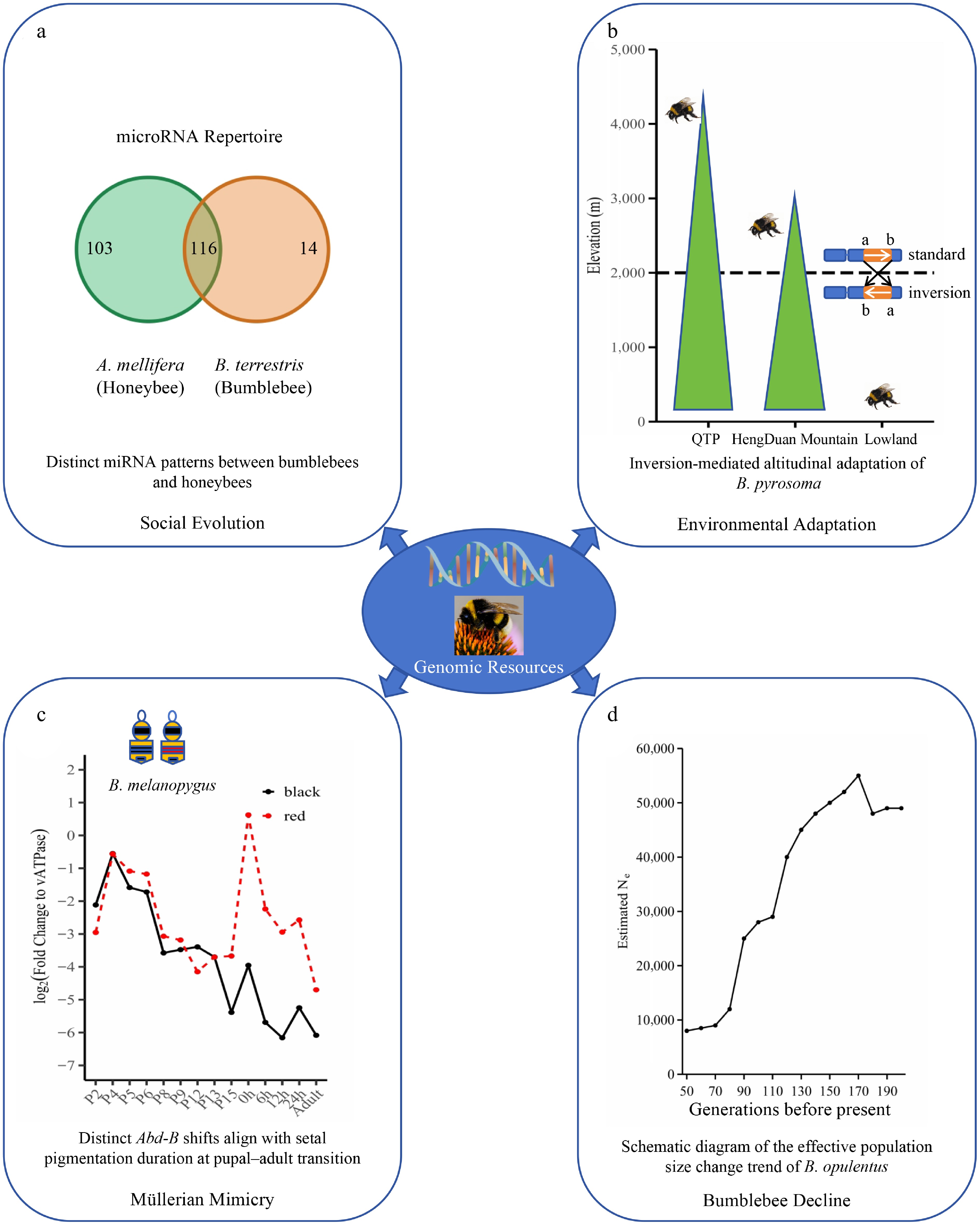
Figure 2.
Schematic diagram of representative studies illustrating biological insights into bumblebees derived from genomic resources. (a) The unique profiles of miRNAs may contribute to the complex behaviors and social organization observed in honey bees. (b) A chromosomal inversion mediates the adaptation of B. pyrosoma to lowland areas (QTP, Qinghai–Tibet Plateau). (c) Differential expression of the Abd-B gene during setae pigmentation results in the black and red phenotypes in the mid-abdominal segments of B. melanopygus. (d) The change trends of effective population size (Ne) for B. opulentus LN populations (LN, LongNan).
Figures
(2)
Tables
(0)