-
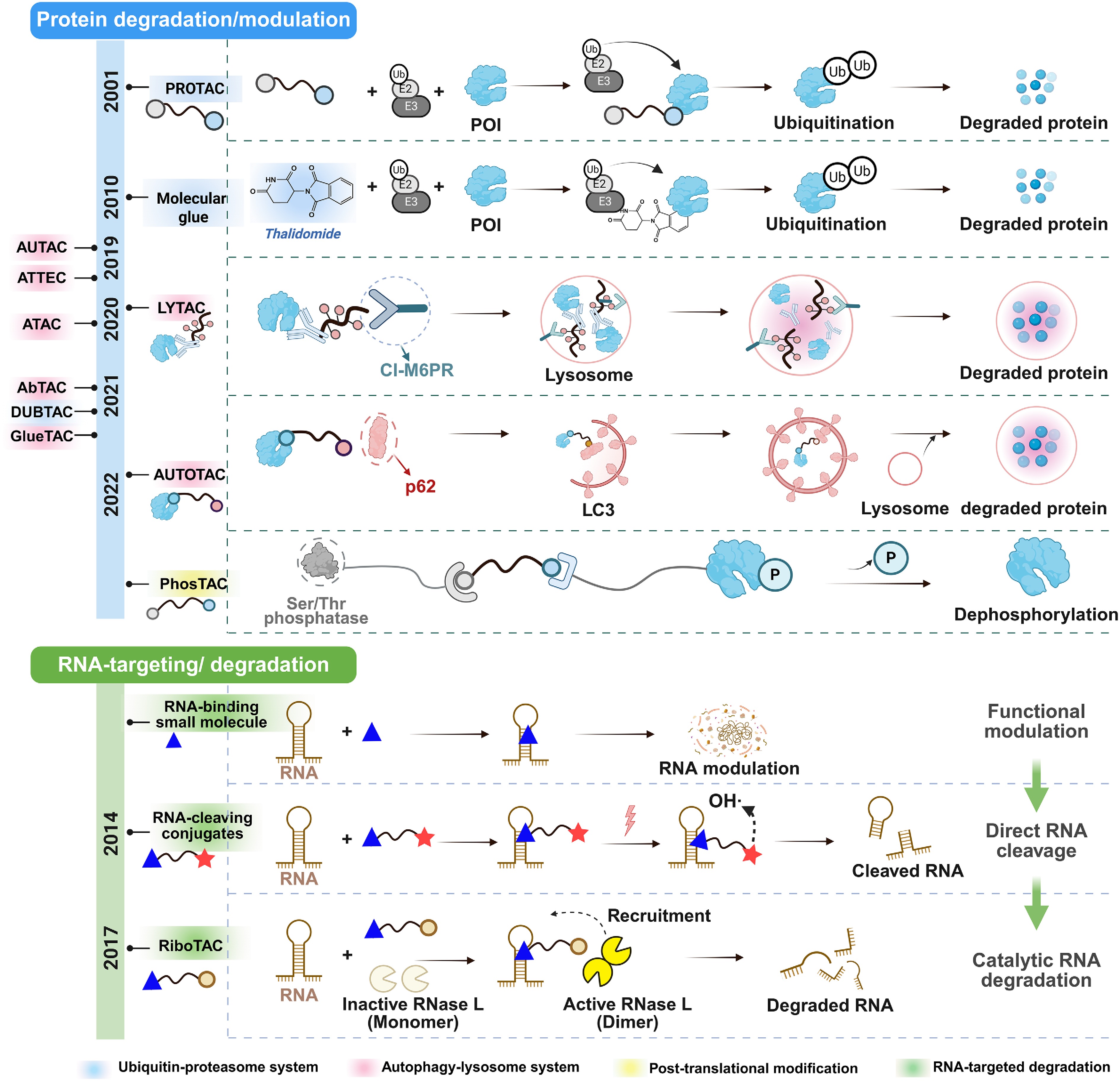
Figure 1.
Development history of targeted degradation and modulation technologies: from proteins to RNAs. PROTACs induce intracellular protein degradation by recruiting target proteins to E3 ubiquitin ligases, thereby triggering ubiquitination and subsequent proteasomal degradation. Molecular glues promote the interaction between target proteins and E3 ligases, leading to degradation mediated by the ubiquitin–proteasome system. LYTACs internalize extracellular or membrane-associated proteins and deliver them to lysosomes for degradation. Autophagy-targeting chimeras, represented by AUTOTACs, mediate target protein degradation through the autophagy–lysosome pathway. Phosphorylation-targeting chimeras (PhosTACs) achieve targeted protein dephosphorylation by recruiting phosphatases. In parallel, RNA-targeting strategies have progressed from RNA-binding small molecules that modulate RNA function without inducing RNA degradation to RNA-cleaving conjugates capable of directly cleaving target RNAs, and further to RiboTACs, which recruit endogenous RNase L to achieve catalytic RNA degradation.
-
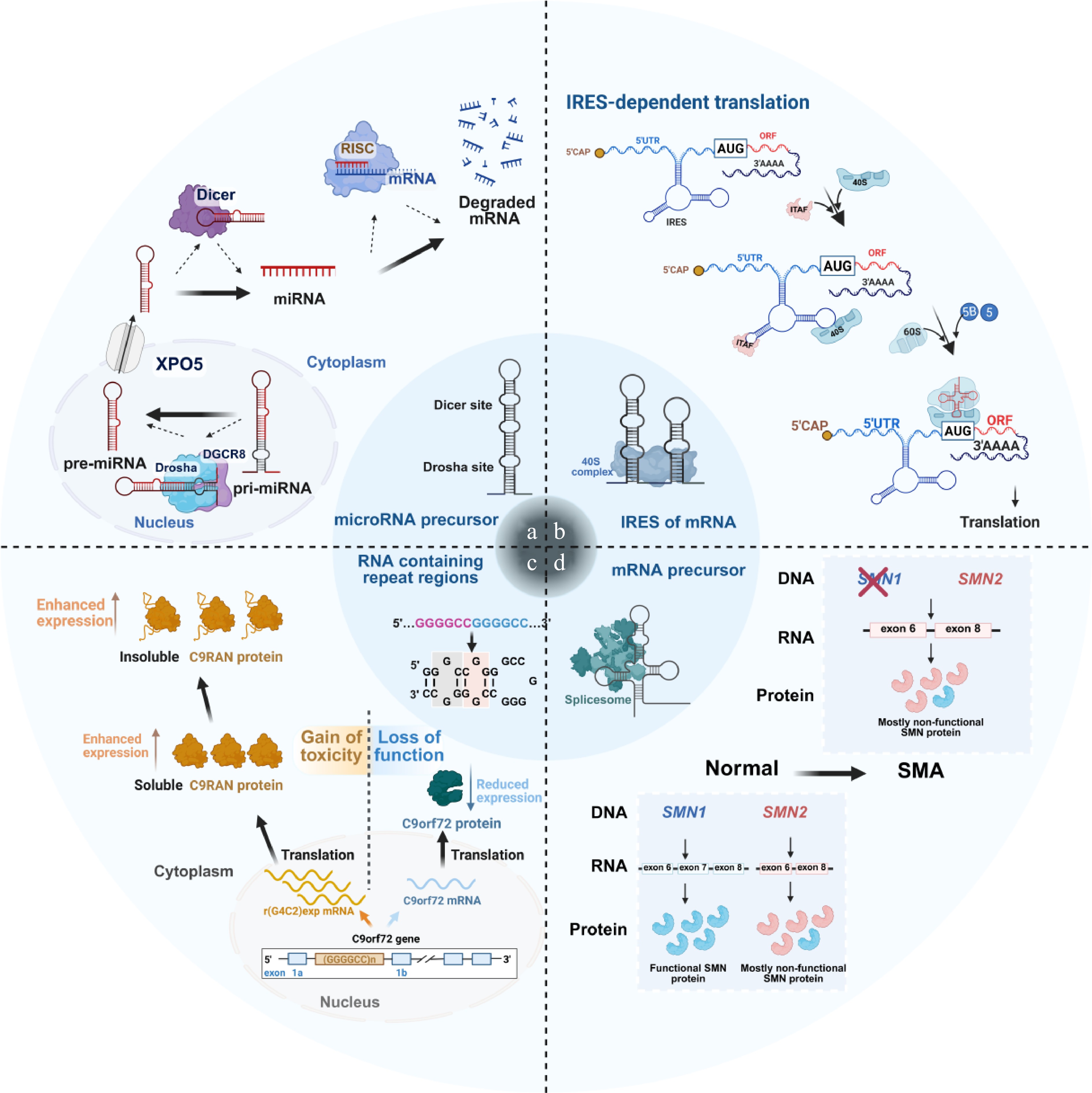
Figure 2.
Representative interaction patterns between small molecules and various target RNAs. (a) Small molecules bind to the Drosha or Dicer cleavage sites of miRNA precursors to block its maturation process. (b) Small molecules interact with the IRES of certain pathogenic mRNAs, inhibiting the translation process. (c) Small molecules attach to the repeat regions of certain mRNAs, causing nervous system-related diseases. (d) Small molecules influence the spatial structure of certain mRNA precursors to affect splicing and inhibit the expression of pathogenic proteins.
-
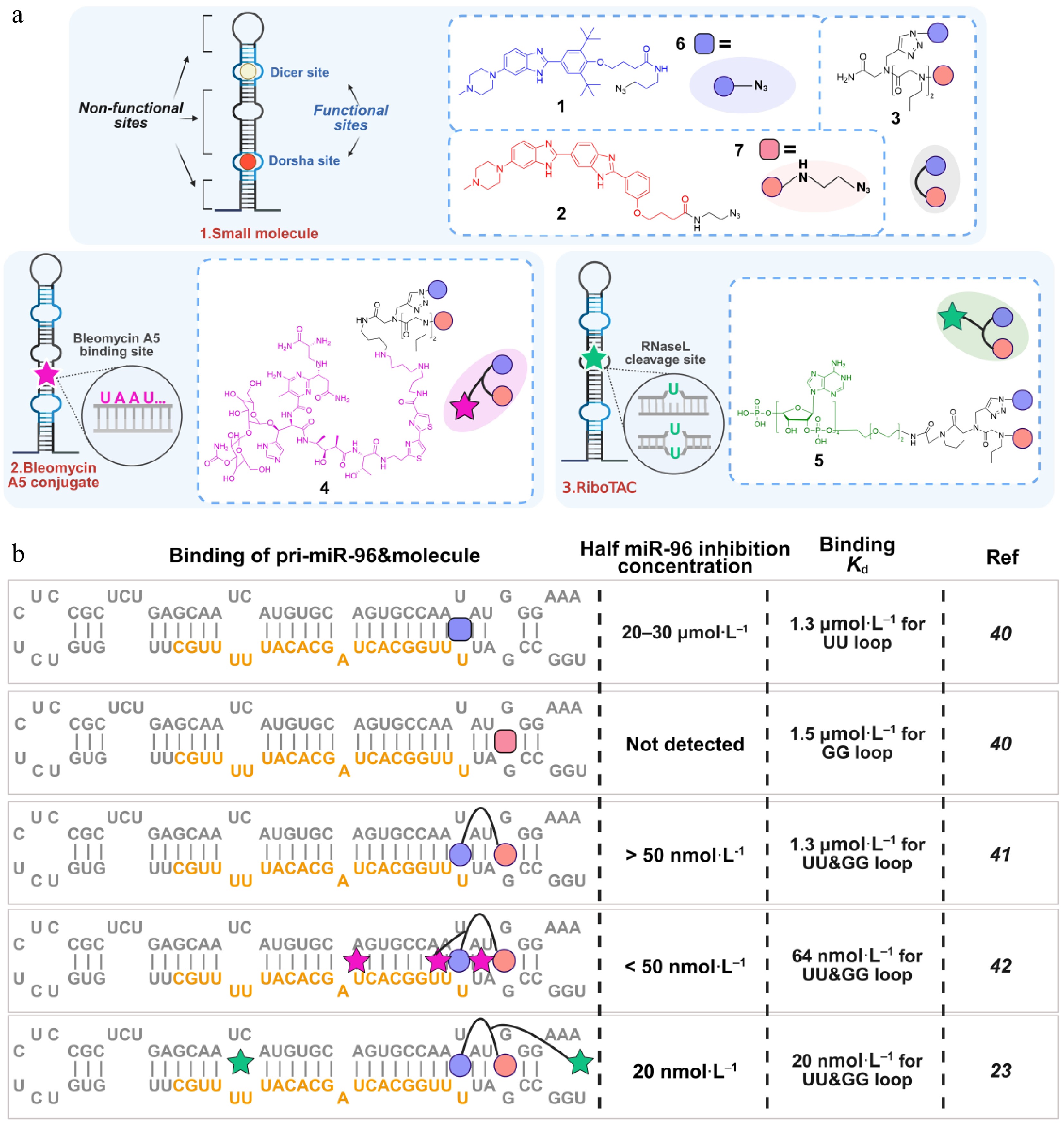
Figure 3.
Small molecule-RNA binding patterns and interaction modes. (a) Three classes of small molecules interacting with pri-miR-96. (b) Binding methods, affinity, and inhibitory effects of different compounds toward pri-miR-96. The orange sequences in (b) present mature miRNA-96.
-
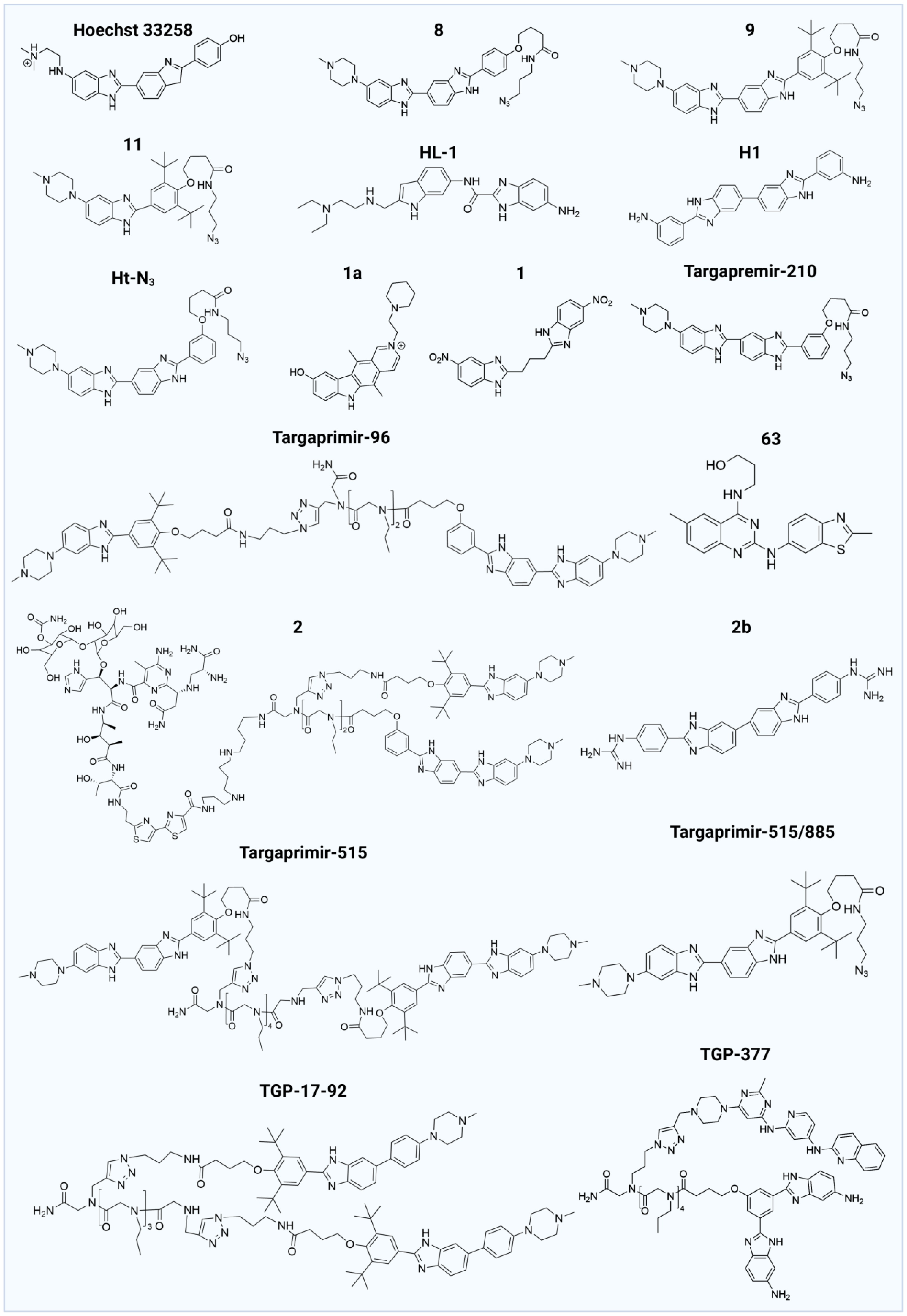
Figure 4.
Structures of RNA-bound benzimidazoles.
-
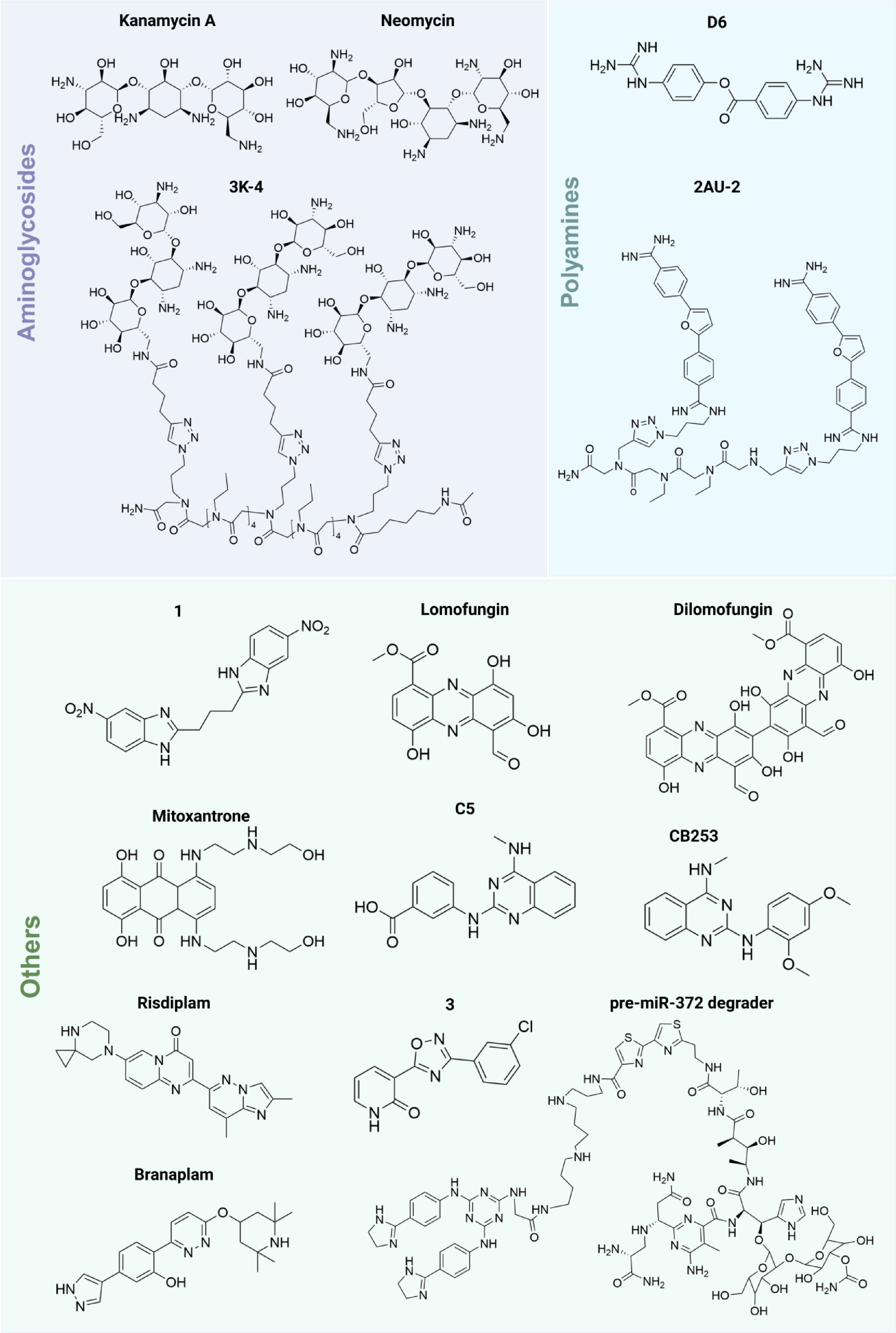
Figure 5.
Structures of aminoglycosides, polyamines, and other compounds.
-
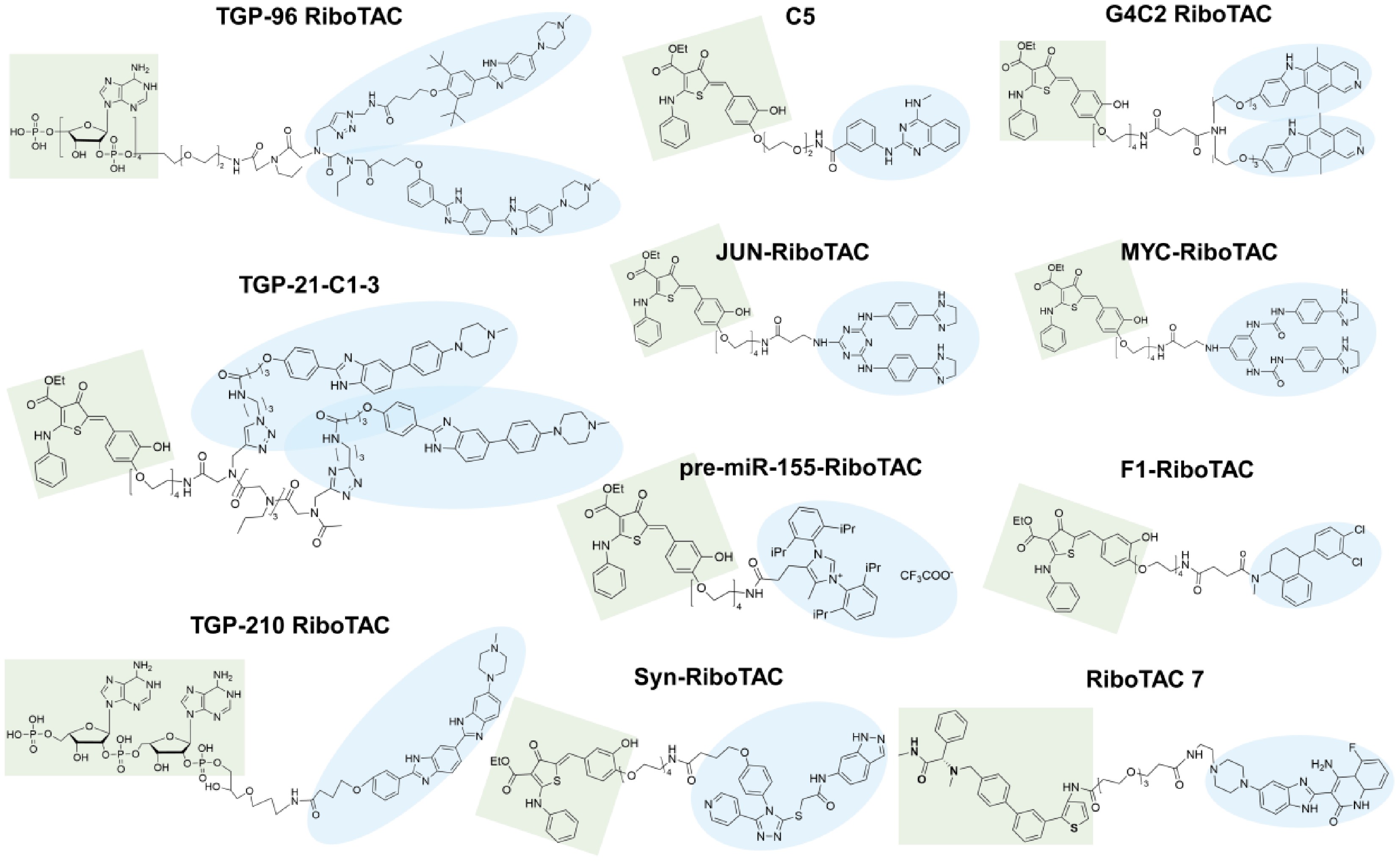
Figure 6.
Structures of currently reported RiboTAC molecules. The green moieties represent RNase L-recruiting groups, whereas the blue moieties represent RNA-binding groups.
-
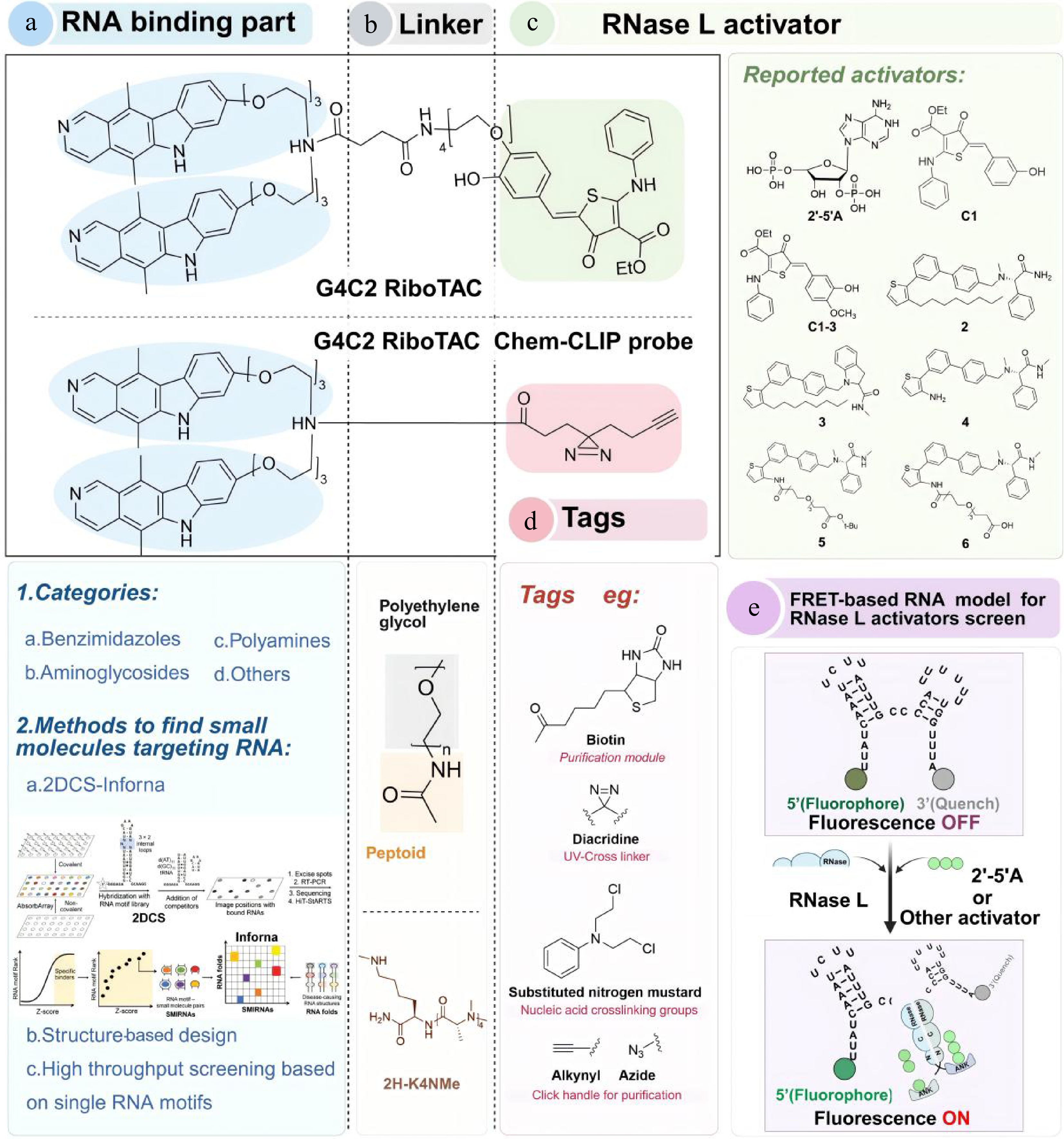
Figure 7.
Optimization of RiboTACs. (a) Classification and screening strategies for the RNA binding part. (b) The linker of RiboTACs is generally a combination of PEG and peptides. (c) Reported RNase L activators. (d) Tags used in RiboTACs. (e) FRET-based RNA model for the RNase L activators screen. When RNase L is dimerized and activated by 2'-5'A or other small molecules, it cleaves the RNA and displays fluorophores.
-
Type Name CAS. RNA Binding site Affinity Disease Validation status Ref. Benzimidazoles Hoechst 33258 207792-72-18 Introns of Candida albicans rRNA / / / Preclinical [73] 8 1174302-28-3 5'UAUAU/
3'AGUCA/ / / Preclinical [74] 9 1311982-86-1 5'UUAU/3'AUGU / / / Preclinical [74] 11 1311982-88-3 Pri-miR-96 Drosha / / Preclinical [42,74] HL-1 263022-88-4 5'CUAA/3'GAUU / / / Preclinical [75] H1 4402-18-0 r(CUG)exp / / DM1 Preclinical [76] Ht-N3 1049722-30-6 r(5'CUG/3'GUC)exp / / DM1 Preclinical [26,77] 1a 70173-34-1 r(5'CGG /3'GGC)exp / 76 ± 4 nmol·L−1 FXTAS Preclinical [78,79] 1a 70173-34-1 r(5'GGG /3'GCC)exp / 9.7 ± 1 μmol·L−1 c9FTD/ALS Preclinical [79] 1 51877-67-9 r(5'CUG /3'GUC)exp / / DM1 Preclinical [80] Targapremir-210 1049722-30-6 Pre-miR-210 Dicer 165 nmol·L−1 TNBC Preclinical [40] TGP-210-RL / Pre-miR-210 Dicer 190 nmol·L−1 TNVBC Preclinical [24] Targaprimir-96 1655508-14-7 Pri-miR-96 Drosha 1.3 ± 0.1 μmol·L−1 TNBC Preclinical [43] TGP-96 Bleo / Pri-miR-96 Drosha 64 ± 11 nmol·L−1 TNBC Preclinical [24] TGP-96 RiboTAC / Pri-miR-96 Drosha 20 nmol·L−1 TNBC Preclinical [23] Targaprimir-515/885 1311982-86-1 Pri-miR-515 Drosha 15 ± 1.9 μmol·L−1 TNBC Preclinical [81] Targaprimir-515/885 1311982-86-1 Pri-miR-885 Drosha 9.0 ± 1.0 μmol·L−1 TNBC Preclinical [81] Targaprimir-515 2290585-84-9 Pri-miR-515 Drosha 940 ± 260 nmol·L−1 TNBC Preclinical [81] TGP-21 2769732-95-6 Pre-miR-21 Dicer 980 ± 97 nmol·L−1 TNBC Preclinical [25,82] TGP-21-C1-3 / Pre-miR-21 Dicer / TNBC Preclinical [25,82] TGP-377 2665700-67-2 Pre-miR-377 Dicer 5 ± 1 nmol·L−1 Coronary artery disease Preclinical [83] 63 2864325-32-4 r(CCUG)exp / 192 ± 20 nmol·L−1 DM2 Preclinical [84] 2b 2332612-58-3 r(5'CUG/3'GUC)exp / 40 ± 6 nmol·L−1 DM1 Preclinical [85] Pre-miR-155-RiboTAC 2763059-27-2 Pre-miR-155 5′GAU/3′C_A bulge 0.8 ± 0.1 μmol·L−1 TNBC Preclinical [12] Syn-RiboTAC / SNCA mRNA SNCA IRE 1.8 ± 0.3 μmol·L−1 PD Preclinical [86] RiboTAC 7 / Pre-miR-21 Dicer 4.6 ± 2.1 μmol·L−1 TNBC Preclinical [87] TGP-17-92 / Pre-miR-17,18a,20a / 120 ± 20 μmol·L−1 for pre-miR-17 and pre-miR-20a; 124 ±
22 μmol·L−1 for pre-miR-18aPC Preclinical [88] Aminoglycosides Kanamycin A 59-01-8 5'UUUU/3'AUCA / / / Preclinical [89] 3K-4 / r(CCUG)exp / / DM2 Preclinical [90,91] Neomycin 119-04-0 Pri-miR-525 Drosha 355 ± 13 nmol·L−1 HCC Preclinical [39] Polyamines D6 94345-49-0 r(5'CAG/3'GAC)exp / 0.06 ± 0.03 μmol·L−1 DM1 Preclinical [92] 2AU-2 / r(5'AUUCU)exp / 185 ± 1.0 nmol·L−1 SCA10 Preclinical [93] Others 1 51877-67-9 Pri-miR-544 Dicer 470 ± 20 nmol·L−1 Hypoxic BC Preclinical [94,95] Lomofungin 26786-84-5 r(5'CUG/3'GUC)exp / 998 ± 180 nmol·L−1 DM1 Preclinical [96] Dilomofungin 1383975-68-5 r(5'CUG/3'GUC)exp / 606 ± 300 nmol·L−1 DM1 Preclinical [96] Mitoxantrone 70476-74-3 Pre-miR-21 Dicer 22 ± 8.3 nmol·L−1 / Preclinical [97] C5 1225177-95-6 SARS-CoV-2 attenuator hairpin 5'CUU/3'GUA internal loop 11 ± 3.8 nmol·L−1 COVID19 Preclinical [98] CB253 1225169-17-4 r(GGGGCC)exp / 18 ± 4 μmol·L−1 c9FTD/ALS Preclinical [99] G4C2 RiboTAC / r(GGGGCC)exp / / c9FTD/ALS Preclinical [60] 3 950276-57-0 Pre-miR-372 Dicer 1.7 ± 0.6 μmol·L−1 Stomach cancer Preclinical [100] F1-RiboTAC / QSOX1-a mRNA / 11 ± 5 μmol·L−1 TNBC Preclinical [13,101] MYC-RiboTAC / MYC mRNA IRES 1.1 ± 0.1 μmol·L−1 Pan-cancer Preclinical [12] JUN-RiboTAC / JUN mRNA IRES 0.5 ± 0.2 μmol·L−1 Pan-cancer Preclinical [12] Pre-miR-372 degrader / Pre-miR-372 Dicer 0.03 ± 0.1 μmol·L−1 Gastric cancer Preclinical [102] Risdiplam 1825352-65-5 SMN2 pre-mRNA Exon 7–intron junction / SMA Approved [7−9,58,103] Branaplam 1562338-42-4 SMN2 pre-mRNA Exon 7–intron junction / SMA Clinical-stage [104] BC: breast cancer, c9FTD/ALS: chromosome 9-caused frontotemporal dementia or amyotrophic lateral sclerosis, COVID19: Coronavirus disease 2019, DM1: Myotonic dystrophy type 1, DM2: myotonic dystrophy type 2, FXTAS: fragile X-associated tremor ataxia syndrome, HCC: hepatocellular carcinoma, PC: prostate cancer, PD: Parkinson's disease, SCA10: spinocerebellar ataxia type 10, SMA: spinal muscular atrophy, TNBC: triple-negative breast cancer. Table 1.
Targeted binding information for small molecules and RNA.
Figures
(7)
Tables
(1)