-
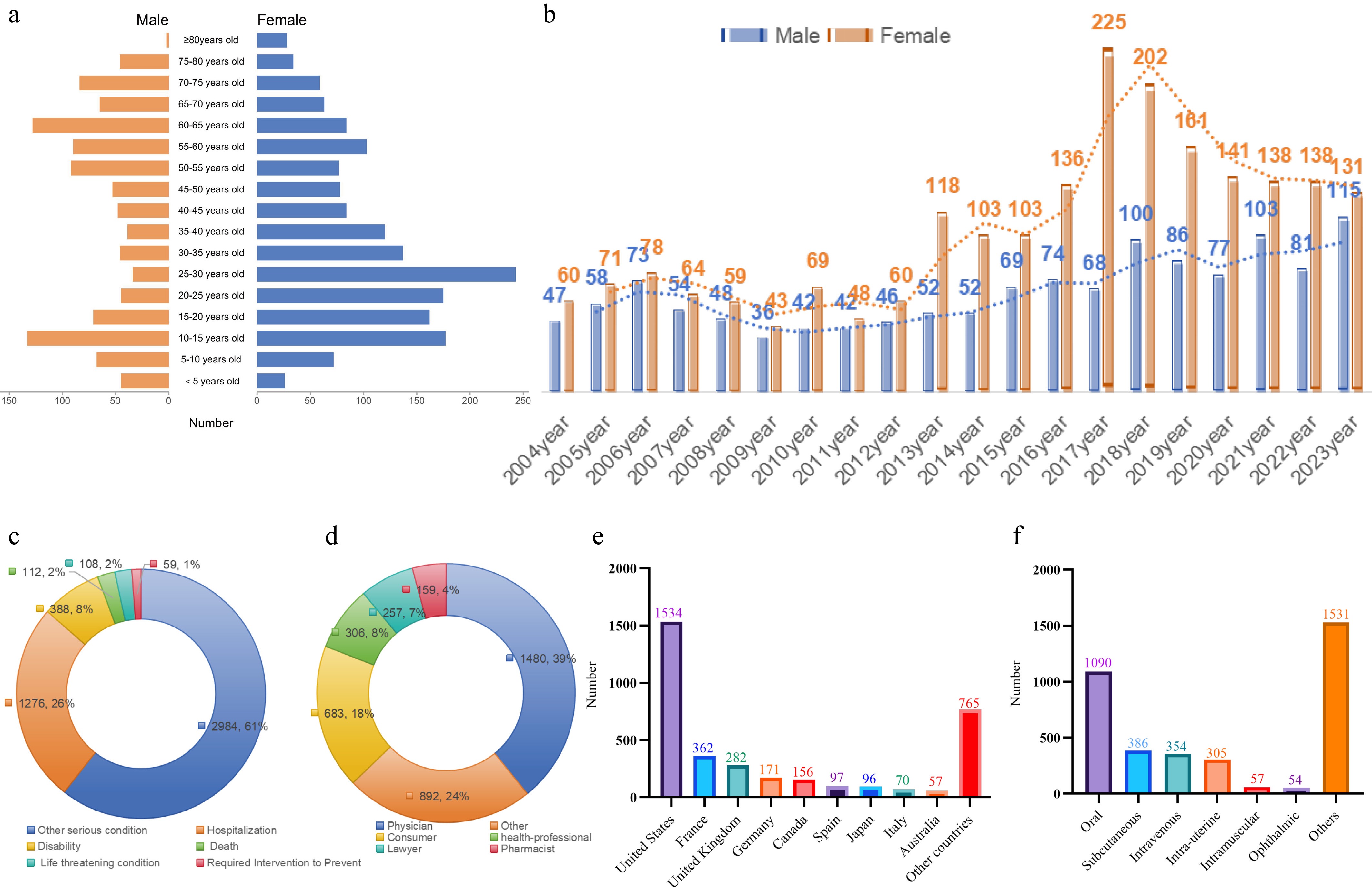
Figure 1.
Baseline characteristics of drug-induced papilledema cases. (a) Age and gender distribution of papilledema-related ADEs. (b) Annual trend of papilledema cases reported from 2004 to 2023. (c) Distribution of clinical outcomes for papilledema cases. (d) Distribution of report sources. (e) Distribution of reporting countries. (f) Distribution of routes of administration among papilledema-related reports.
-
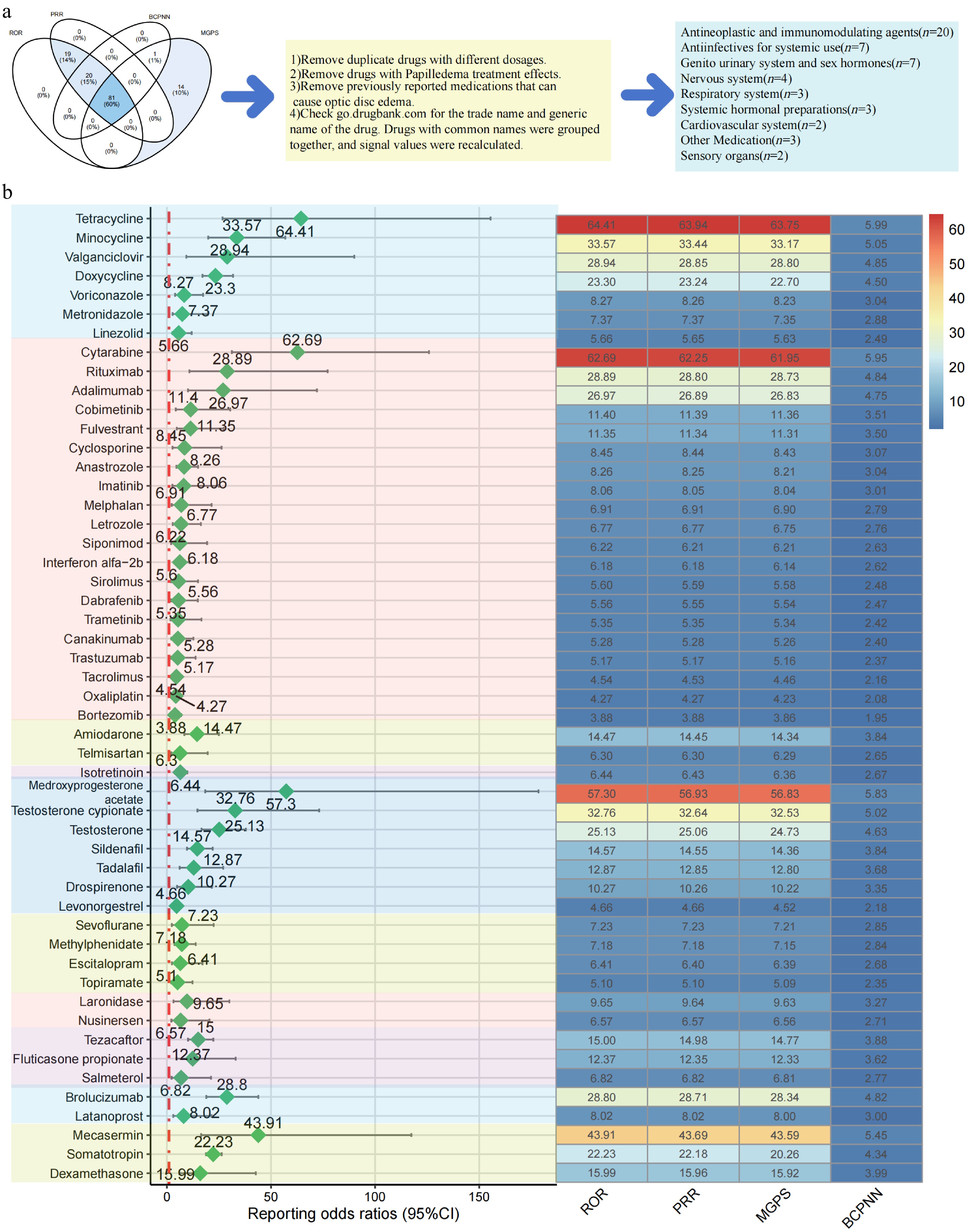
Figure 2.
Drugs associated with papilledema identified by disproportionality analysis. (a) Flowchart of drug screening and categorization. (b) Reporting odds ratios (ROR) of identified drugs grouped by ATC classification.
-
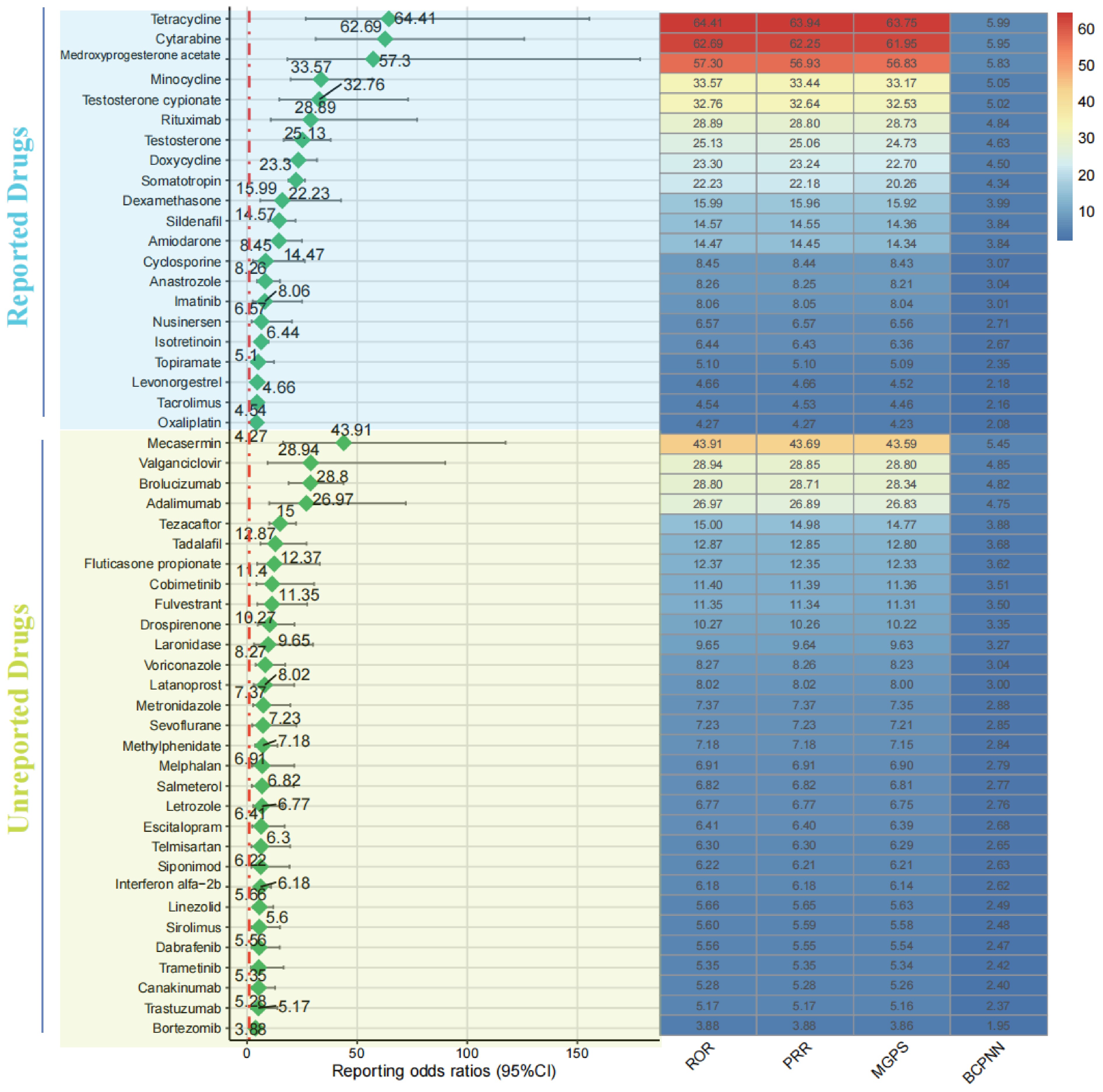
Figure 3.
Classification of medications based on literature reports with papilledema.
-
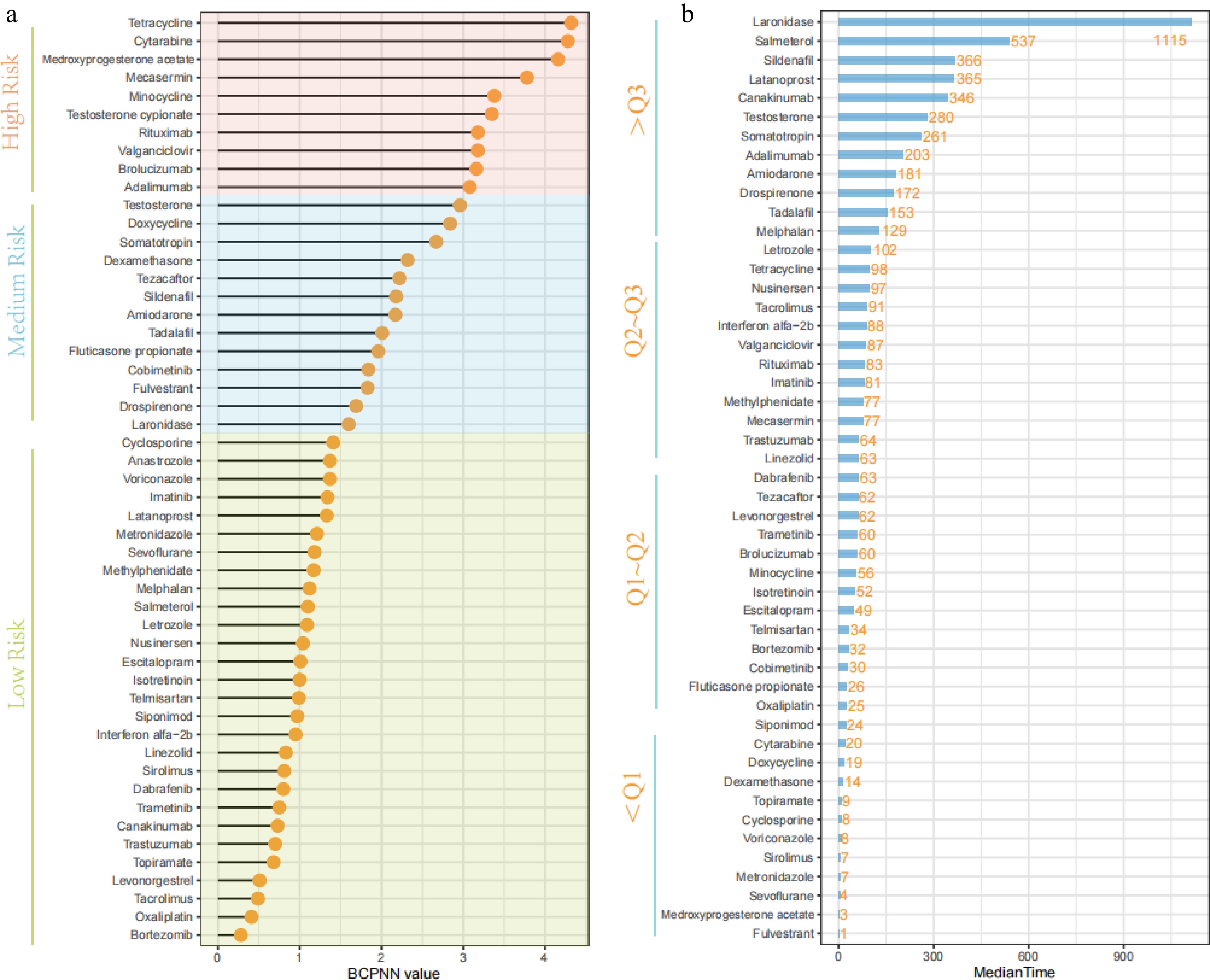
Figure 4.
Ranking of drugs associated with Pppilledema by BCPNN values and induction time. (a) Drugs sorted by BCPNN values. (b) Median induction time for ocular adverse events related to each drug.
-
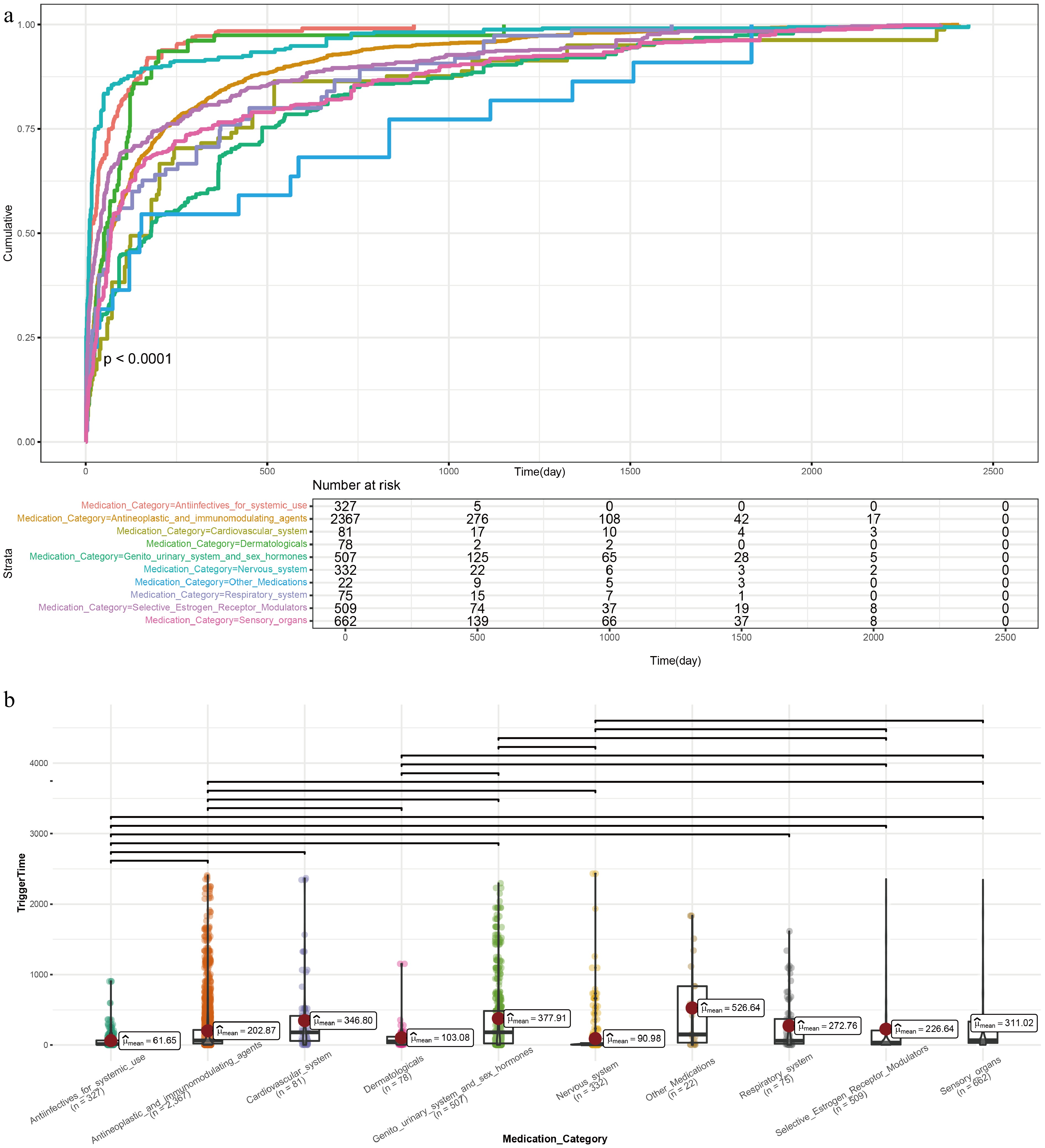
Figure 5.
Time-to-onset analysis of drug-induced papilledema. (a) Kaplan-Meier curves of time to adverse event onset stratified by ATC drug category. (b) Median induction time by ATC drug category. Brackets indicate pairwise comparisons with p < 0.05.
-
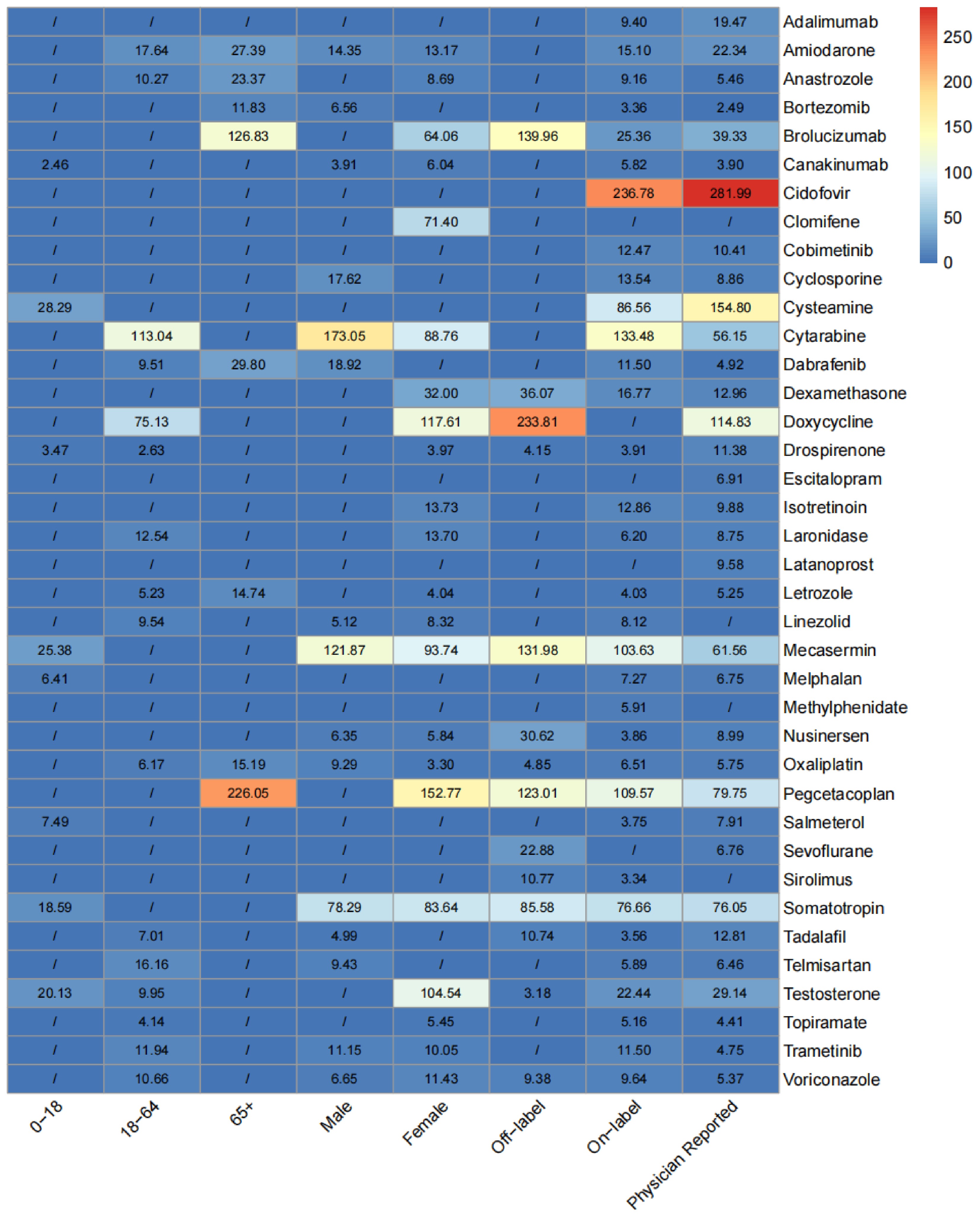
Figure 6.
Subgroup and sensitivity analyses of drug-associated papilledema signals.
-
Generic names of drugs Primary actions of drugs Ref. Levonorgestrel Hormone replacement therapy [10] Doxycycline
SomatotropinAntibacterial activity
Promotion of growth[11]
[12]Tetracycline Antibacterial activity [13] Minocycline Antibacterial activity [14,15] Cytarabine Antitumor actions [16] Medroxyprogesterone acetate Hormone replacement therapy [17] Testosterone cypionate Hormone replacement therapy [18] Rituximab Antitumor actions [19] Testosterone Hormone replacement therapy [20] Amiodarone Management of ventricular and atrial arrhythmias [21,22] Sildenafil
Dexamethasone
Anastrozole
IsotretinoinTreatment of erectile dysfunction
Anti-inflammatory effects
Antitumor actions
Long-term acne control[23]
[24]
[25]
[26]Cyclosporine Immunosuppressive activity [27] Imatinib Antitumor actions [28] Nusinersen Treat spinal muscular atrophy [29] Tacrolimus Prevention of organ transplant rejection [30] Topiramate Anticonvulsant activity [31] Oxaliplatin Antitumor actions [32] Table 1.
Overview of reported cases of drug-induced papilledema.
Figures
(6)
Tables
(1)