-
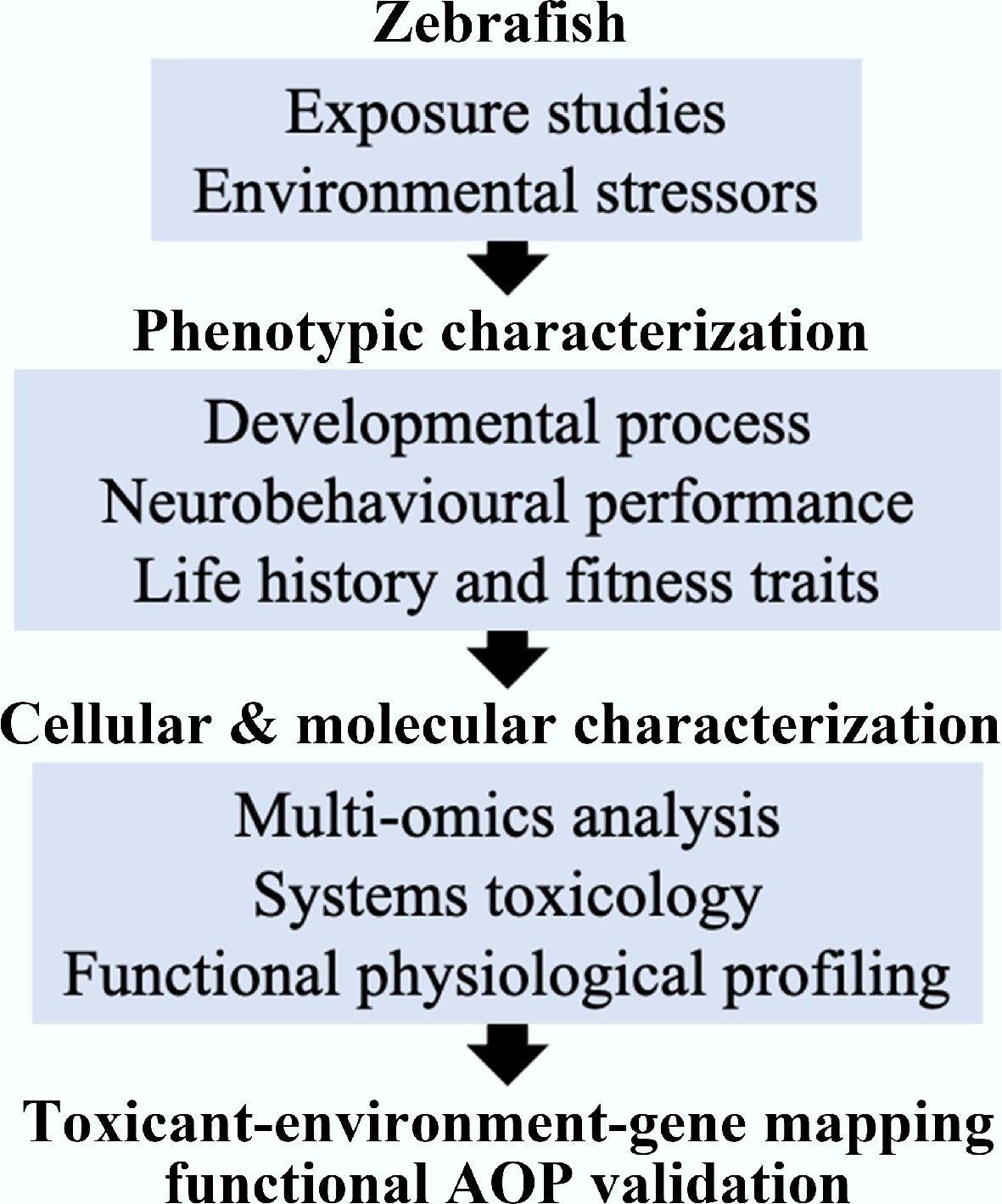
Figure 1.
Proposed multi-tiered experimental strategy for the functional characterization of zebrafish to facilitate toxicant–environment–gene mapping. AOP: Adverse Outcome Pathway.
-
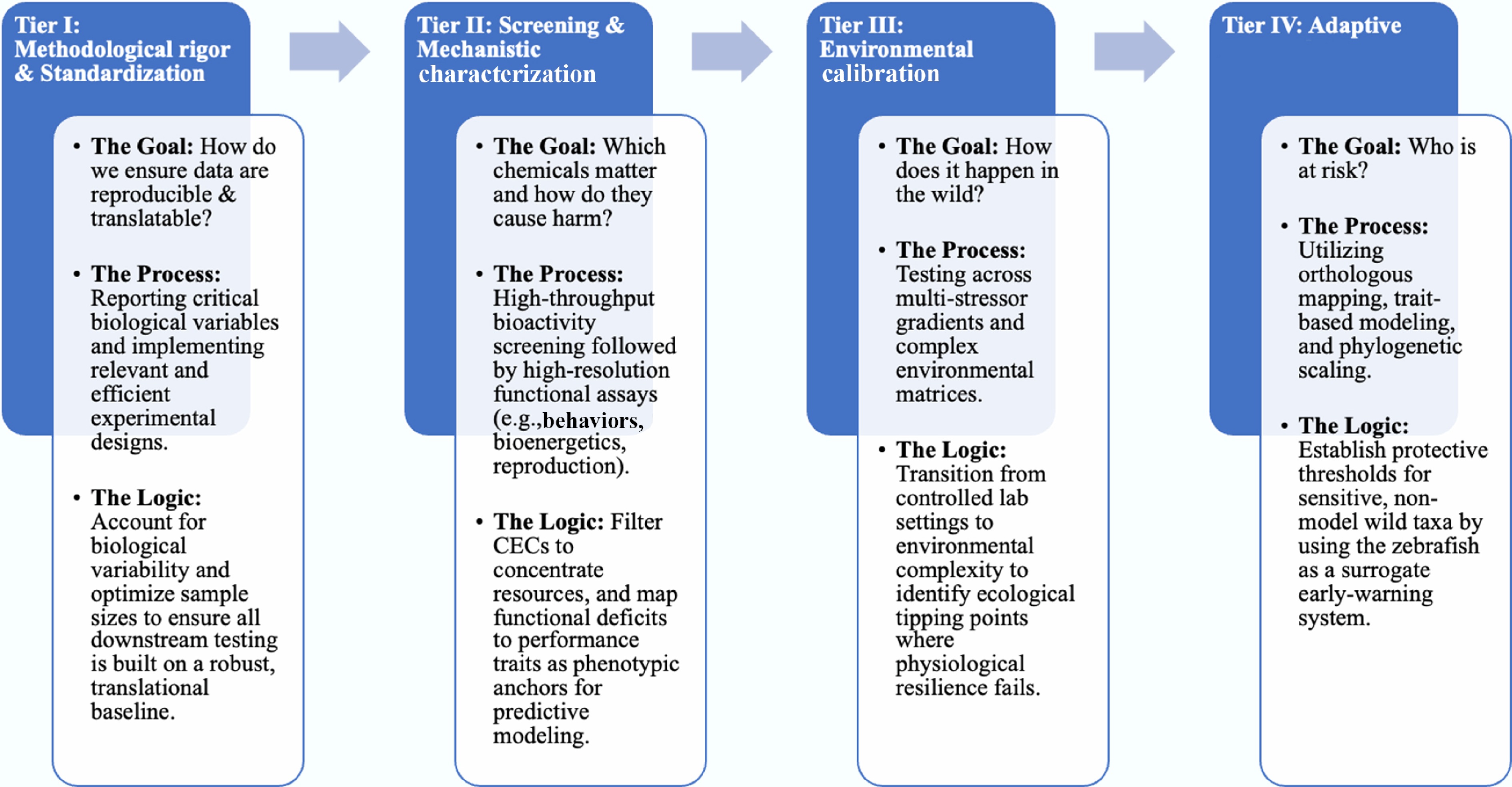
Figure 2.
Operational workflow of the four-tiered Z-PATH strategy. This schematic illustrates the sequential progression from laboratory standardization to field-relevant ecological prediction. The framework is anchored by foundational methodological rigor (Tier I), which structures the downstream phases of chemical screening and mechanistic characterization (Tier II), multi-stressor environmental validation (Tier III), and predictive cross-taxa extrapolation (Tier IV) to establish protective thresholds for sensitive, non-model wild taxa.
-
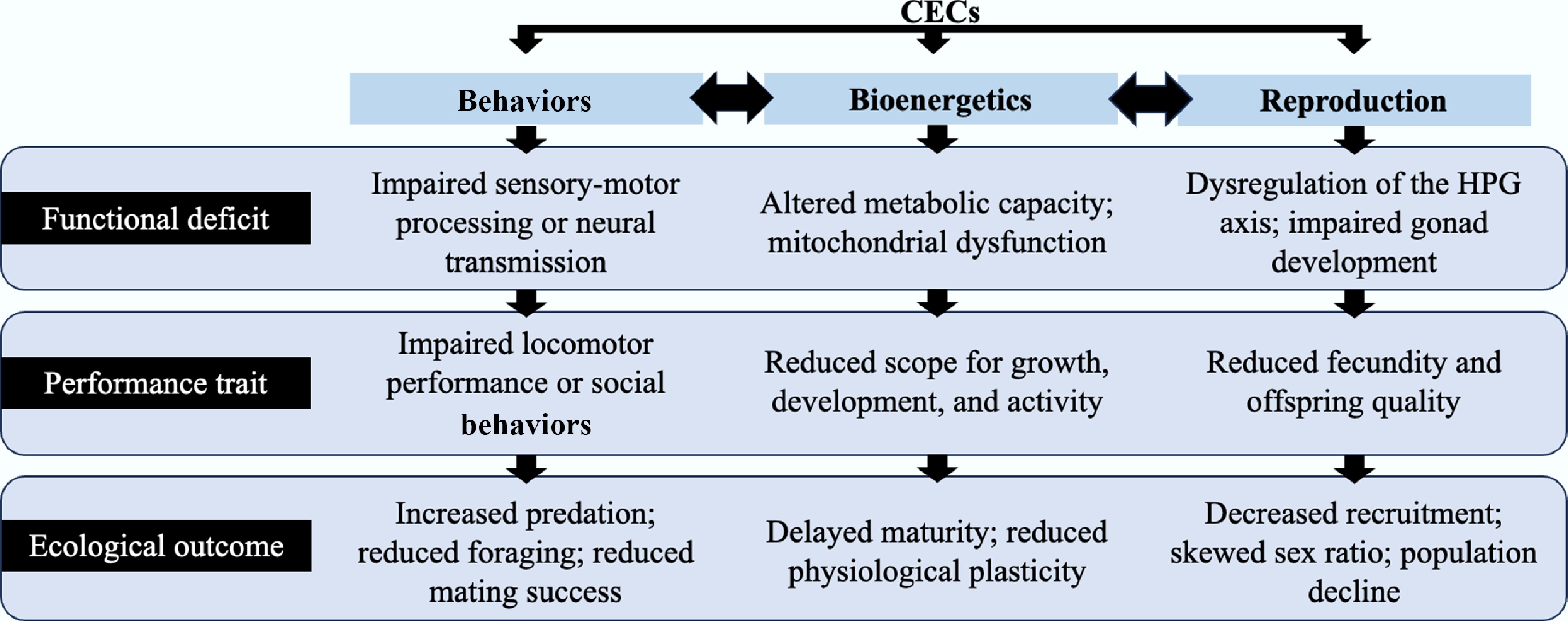
Figure 3.
Mechanistic pathways illustrating the translation of functional deficits into population-level outcomes. This schematic illustrates the causal cascade wherein specific functional deficits (mechanisms) impair key performance traits (phenotypes). These whole-organism performance traits, comprising behaviors, bioenergetics, and reproduction, are intrinsically interconnected; their cumulative impairment provides the phenotypic anchoring necessary to predict shifts in population-level fitness. HPG: hypothalamic-pituitary-gonadal axis.
-
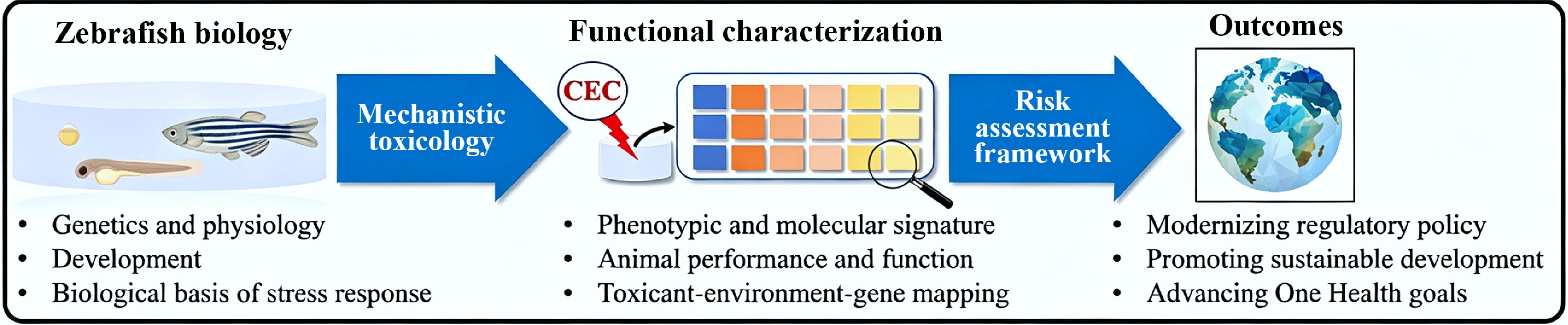
Figure 4.
Conceptual illustration of the integration of foundational zebrafish research and functional toxicology into a risk assessment framework.
-
Assessment domain Lab reality (zebrafish) Field reality (e.g., wild fish) Strategic utility for Z-PATH Genetics Reduced genetic diversity (lab-standardized strains). Vast genetic diversity; adaptive alleles and site-specific adaptations. Establishes the genomic baseline for cross-taxa extrapolation while accounting for population-level variability. Reproduction and metabolism Short generation time; continuous spawning; controlled metabolic rate. Environmentally cued spawning; complex reproductive behaviors (e.g., courtship, competition); variable bioenergetics. Aligns lab-derived reproductive and bioenergetic thresholds with seasonal windows of environmental vulnerability. Ontogeny and development Rapid, transparent organogenesis; synchronous embryo-larval transitions. Slower, often opaque development; diverse life-history strategies. Provides high-resolution assessment of developmental vulnerabilities to identify critical windows that predict long-term health and survival. Neurobehaviors Standardized assays (e.g., photomotor response, anxiety, social preference). Complex predator-avoidance; foraging efficiency; social shoaling or schooling. Serves as a performance-based link that translates physiological stress into predictive models of ecological functions, such as foraging and predator avoidance. CECs and environmental stressors Exposure to single, high-purity compounds; controlled exposure scenario. Exposure to dynamic 'chemical cocktails' and transformation products; multi-stressor environments (e.g., pH, temperature, salinity). Leverages the zebrafish as an integrative platform to quantify the cumulative risk of complex environmental mixtures and their interactions with shifting abiotic stressors. The specific studies supporting these biological assessments are referenced in the main text. Table 1.
Biological considerations for the translational application of zebrafish data in ecological risk assessment
Figures
(4)
Tables
(1)