












-
The increasing release and prevalence of contaminants of emerging concern (CECs), including nanomaterials, rare earth elements, micro/nanoplastics, per- and polyfluoroalkyl substances (PFAS), and pharmaceuticals and personal care products (PPCPs), pose significant risks to environmental and human health. These chemicals are structurally diverse, environmentally persistent, and often biologically active at low concentrations[1,2]. Understanding how CECs interact with complex biological systems across sexes, life stages, and levels of biological organization remains a major challenge, particularly as it is increasingly difficult to keep pace with the rapidly expanding chemical landscape[3−5]. These issues present a significant barrier to predicting the health risks of CECs in a timely and high-resolution manner necessary for effective risk management.
Zebrafish (Danio rerio) have emerged as a powerful experimental system for addressing these challenges, bridging fundamental mechanistic research and regulatory risk assessment[6−8]. They are small, cost-effective to house, genetically tractable, and supported by a well-annotated genome, along with numerous established methodologies for functional and molecular characterization[9−12]. These advantages enable high-throughput, high-resolution experiments ranging from general toxicity screening (e.g., apical endpoints, behavioral changes) to molecular stress responses. Additionally, zebrafish can serve as in vivo model systems allowing genetic manipulation (e.g., transgenes and gene knockdown or knockout), functional imaging, and whole-animal or ex vivo electrophysiological approaches[13−17]. These tools significantly enhance our ability to establish direct gene–toxicant relationships and perform pathway analyses for risk prediction. Such capabilities remain more challenging to achieve with traditional fish models like freshwater rainbow trout (Oncorhynchus mykiss) and fathead minnows (Pimephales promelas). Medaka species (e.g., Oryzias latipes, Oryzias melastigma, and Oryzias javanicus) share many physiological advantages with zebrafish[18,19]; however, their current utility is constrained by more limited resources, particularly regarding the diversity of available transgenic lines and characterized mutants.
To date, zebrafish have been extensively employed to assess CECs, and this organism has proved useful to elucidate effect outcomes and underlying toxic mechanisms for identifying relevant biomarkers for risk assessment. In particular, zebrafish provide a highly versatile in vivo experimental platform for evaluating the impacts of CECs across diverse biological processes, spanning developmental and organ toxicity, reproductive toxicity, neurotoxicity, and transgenerational effects[12,20−25]. Additionally, with growing efforts to understand the underlying molecular mechanisms of how zebrafish cope with extreme environmental conditions, such as fluctuations in water ion content[26−28], dissolved oxygen and carbon dioxide levels[29−31], acidification[32,33], and thermal stress[34,35], this model organism is increasingly valuable for studying multi-stressor responses, including the interactions between CECs and broader climate change factors. The whole-organism approach offered by zebrafish also enables the examination of organ- and system-level coordination and interactions, notably the gut–liver[20,36], gut–brain[37], and brain–pituitary–gonadal axes[38]. Furthermore, the integrated physiological system provides the critical biotransformation and distribution data of CECs needed to develop and validate predictive computational tools, such as physiologically based toxicokinetic (PBTK) models[39−41].
With the rapid emergence of novel environmental contaminants and an increasing reliance on zebrafish for toxicity testing, it is equally critical to address the limitations and translational challenges inherent to this model. The central questions are: Are the effect mechanisms identified in zebrafish always translatable to other species, and how relevant are they for assessing environmental health risks? These considerations encompass routes of exposure, ecological relevance, genetic variability, and physiological divergence. In this perspective, I synthesize recent advances in zebrafish-based functional toxicology and highlight how emerging technologies, such as omics, functional imaging, electrophysiology, and gene editing, are transforming research on CECs. Furthermore, I discuss key model limitations and methodological considerations and propose a conceptual path forward for leveraging these powerful in vivo systems as New Approach Methodologies (NAMs) to enhance translational relevance and support regulatory decision-making.
-
CECs represent a diverse spectrum of chemical classes, including particles such as micro- and nanoplastics and their associated additives, engineered nanomaterials (e.g., metal-containing nanoparticles, nanotubes), rare earth elements, persistent organic contaminants such as brominated flame retardants and PFAS, and PPCPs[42]. This diversity means that CECs may affect organisms through fundamentally different toxicological mechanisms. However, existing waste management infrastructure, including municipal wastewater treatment plants, is not yet effectively equipped to remove these diverse contaminants[43]. Furthermore, non-point sources such as agricultural and urban runoff continue to introduce CECs directly into aquatic ecosystems[44−47]. Collectively, these factors make it increasingly difficult for researchers to assess the ecological risks of CECs at the same pace at which these contaminants are released into the environment.
Zebrafish offer a versatile and relatively high-throughput in vivo experimental system for uncovering the effect mechanisms of CECs. Their applications encompass developmental toxicity, organ-specific toxicity, neurotoxicity, immunotoxicity, endocrine and reproductive disruption, and transgenerational effects[6,24]. The ability to observe whole-organism phenotypes at high spatial and temporal resolution, combined with genetic tractability, extensive collections of reporter lines, and compatibility with automated imaging and behavioral testing, enables researchers to link complex phenotypic changes to specific biological processes[15,48,49]. This capability is essential for modern toxicology because it addresses the current gap between laboratory data and regulatory needs. Apical endpoints, such as survival, growth, and reproduction, are highly valued by risk assessors because they are easy to interpret and directly linked to population-level fitness. However, these broad measures often fail to capture the early perturbations that precede and signal potentially irreversible ecological collapse. The strength of the zebrafish model lies in its ability to perform phenotypic anchoring[50]. By linking Molecular Initiating Events (MIEs) and subsequent cellular and physiological disruptions to observable changes in fitness and behavior, researchers can provide the mechanistic evidence required to validate Adverse Outcome Pathways (AOPs)[51−54]. Ultimately, this approach identifies sensitive biomarkers for environmental monitoring, improves cross-species translation, and provides regulators with the scientific confidence needed to make decisions based on sublethal data and AOP frameworks.
Integrating omics and functional characterization
-
Various omics technologies, including transcriptomics, proteomics, and metabolomics, along with biochemical markers such as oxidative stress indicators, hormone or neurotransmitter levels, and enzymatic activities, have been widely applied to assess the effects of CECs in zebrafish[12,25,55−58]. These approaches provide an essential foundation for understanding cellular and molecular signatures and help identify the biological pathways altered by CEC exposure; nevertheless, they typically yield correlative snapshots of biological activity, as such readouts may capture indirect, downstream, or compensatory effects rather than the primary causal events driving toxicity or tolerance[50,59]. Consequently, determining which specific pathways are directly responsible for observed phenotypic outcomes remains a significant challenge when using these approaches alone.
Advances in electrophysiology, functional imaging, and gene editing technologies with the zebrafish model offer powerful ways to overcome these limitations by enabling real-time, spatially resolved, and organ-specific or cell-specific functional characterization. When integrated into a systems toxicology framework alongside physiological response measurements and multi-omics analyses, these technologies provide a more robust means of anchoring molecular perturbations to phenotypic mechanisms.
Advanced neurobehavioral and electrophysiological profiling
-
Many studies have suggested that neurobehavioral endpoints are highly sensitive indicators of chemical exposure and represent ecologically relevant functions such as foraging, predator avoidance, migration, and reproduction[11,60−64]. Methods for assessing neurobehavior are well established in zebrafish and range from measurements of general locomotor activity and anxiety-like behavior to aggression and social interactions[11,49,65]. However, monitoring zebrafish movement in 3D (i.e., unlike rodents, aquatic species such as zebrafish navigate and interact within a 3D space) and in group settings remains in its infancy. Nevertheless, recent advances in 3D tracking platforms leveraging machine learning technologies hold substantial promise for resolving complex locomotor and social behaviors with greater spatial and temporal precision[66−68].
In addition to locomotor patterns, electrophysiological approaches are indispensable because they provide high-resolution measurements of neural function, such as sensory processing, synaptic activity, and network dynamics in real time, thereby linking cellular perturbations to functional outcomes[69]. This information cannot be inferred directly from molecular or behavioral assays alone. Consequently, these approaches are particularly useful for assessing CECs that are putative neurotoxicants. To date, methods for electrophysiology in zebrafish typically include local field potential (LFP) recordings, multielectrode array (MEA) measurements of population-level neuronal firing, and whole-cell patch-clamp recordings to resolve individual synaptic events[70−74]. These are typically performed either in vivo during early developmental stages in immobilized intact larvae or in acute brain slices (e.g., ex vivo) from adult fish. Furthermore, recordings are not limited to the brain; spinal cord electrophysiology remains a critical tool for linking neural output directly to motor behavior[70,75]. When combined with pharmacological tools or genetic manipulation, electrophysiology enables precise identification of the cellular- and circuit-level mechanisms driving sensory and neurobehavioral alterations[69]. These approaches address key limitations inherent to gene expression or biomarker analyses by yielding direct evidence of functional output, including non-genomic effects such as synaptic transmission, functional plasticity, and ion channel activity.
Reporter lines and targeted genetic manipulation
-
Genetically encoded fluorescent reporter lines enable the visualization of pathway-specific activity, including oxidative stress responses (e.g., nrf2 reporter lines)[76], inflammatory signalling (e.g., tnfa or NF-κB)[77,78], mitochondrial function (e.g., mitochondria-targeted and redox-sensitive reporters)[79−81], and neuronal machinery (e.g., neuronal and neurotransmitter-system reporters)[82−84]. Rather than yielding a static snapshot, these reporter lines function as cellular sentinels, offering real-time visual evidence of how CECs move through and disrupt the biological system. This dynamic histology allows researchers to pinpoint the spatiotemporal triggers of toxicity with a level of precision that traditional methods find difficult to match. The reporter lines can be utilized as rapid screening tools to detect toxicant-induced perturbations within intact organisms, identifying the windows of vulnerability and the specific cell types or organs targeted by CECs, and serving as real-time biosensors that bridge the gap between initial molecular signalling and late-stage physiological failure.
Gene editing tools such as Clustered Regularly Interspaced Short Palindromic Repeats (CRISPR) systems allow targeted mutagenesis or gene suppression to directly test putative molecular targets influenced by CECs. For example, CRISPR/Cas9 enables knockout mutagenesis to generate heritable loss-of-function alleles, while CRISPR/Cas13d can be used for RNA-level knockdown of putative target genes[13,14,17]. Recent advances in optogenetics further expand these capabilities by allowing temporally precise manipulation of specific cell populations or signalling pathways to directly probe functional responses to toxicant exposure[85,86]. Together, these approaches introduce gene-specific and circuit-specific perturbations that enable validation of candidate pathways and the elucidation of direct gene–toxicant relationships with much greater precision than traditional correlative methods.
Multi-stressor risk assessment through functional toxicology
-
The zebrafish has been widely utilized to study the impacts of environmental stressors on physiological processes. These processes include, for example, iono- and osmoregulation[26−28] and respiration[29−31]. This body of work provides essential information on the fundamental mechanisms of homeostasis and can inform CEC research within complex environmental contexts where multiple stressors are present. For example, ion regulation in zebrafish is modulated by hormones[26,27]; consequently, endocrine-disrupting CECs may alter the capacity of the organism to maintain ionic balance during conditions that strain ion transport mechanisms, such as ion-poor environments or acidification[87−89]. Conversely, these stressful environmental conditions can adversely affect an organism's physiological resilience, thereby increasing its vulnerability to chemical toxicity. Therefore, an overlap between the molecular pathways underlying physiological acclimation and those targeted by CECs can reciprocally increase organismal sensitivity to both environmental changes and chemical toxicity. However, this mechanistic intersection remains largely understudied.
Through integration with the experimental strategies described previously, the zebrafish model provides a powerful platform for obtaining mechanistic insights into the interactions between CECs, environmental stressors, and broader climate change factors. By leveraging high-resolution functional tools and assays, such as gene editing, electrophysiological profiling, and omics, researchers can pinpoint the precise physiological tipping points where abiotic stressors enhance CEC toxicity, or where CECs reduce an organism's capacity to tolerate environmental changes. For instance, electrophysiological assessment in zebrafish can reveal how environmental stressors, such as hypoxia, hypercapnia, or temperature shifts, modulate the functional dynamics of neural transmission when the organism is exposed to neurotoxic CECs. Similarly, metabolic profiling can identify how environmental stressors reallocate energy reserves, thereby modulating the metabolic capacity available for detoxification and cellular repair. This information is crucial for understanding how CECs and ecological drivers interact to affect organismal function. Ultimately, understanding how CECs modulate physiological resilience in zebrafish will be instrumental in developing multi-stressor risk assessments that better reflect real-world environmental challenges.
A conceptual framework linking the various experimental strategies to enhance pathway analysis and toxicant-environment-gene mapping is illustrated in Fig. 1. However, the successful translation and extrapolation of these data rely on more than just advanced technology; they require a deep understanding of zebrafish biology and the external interfaces that define ecological relevance. The following sections explore these foundational genetic and physiological considerations that underpin robust toxicological assessment.
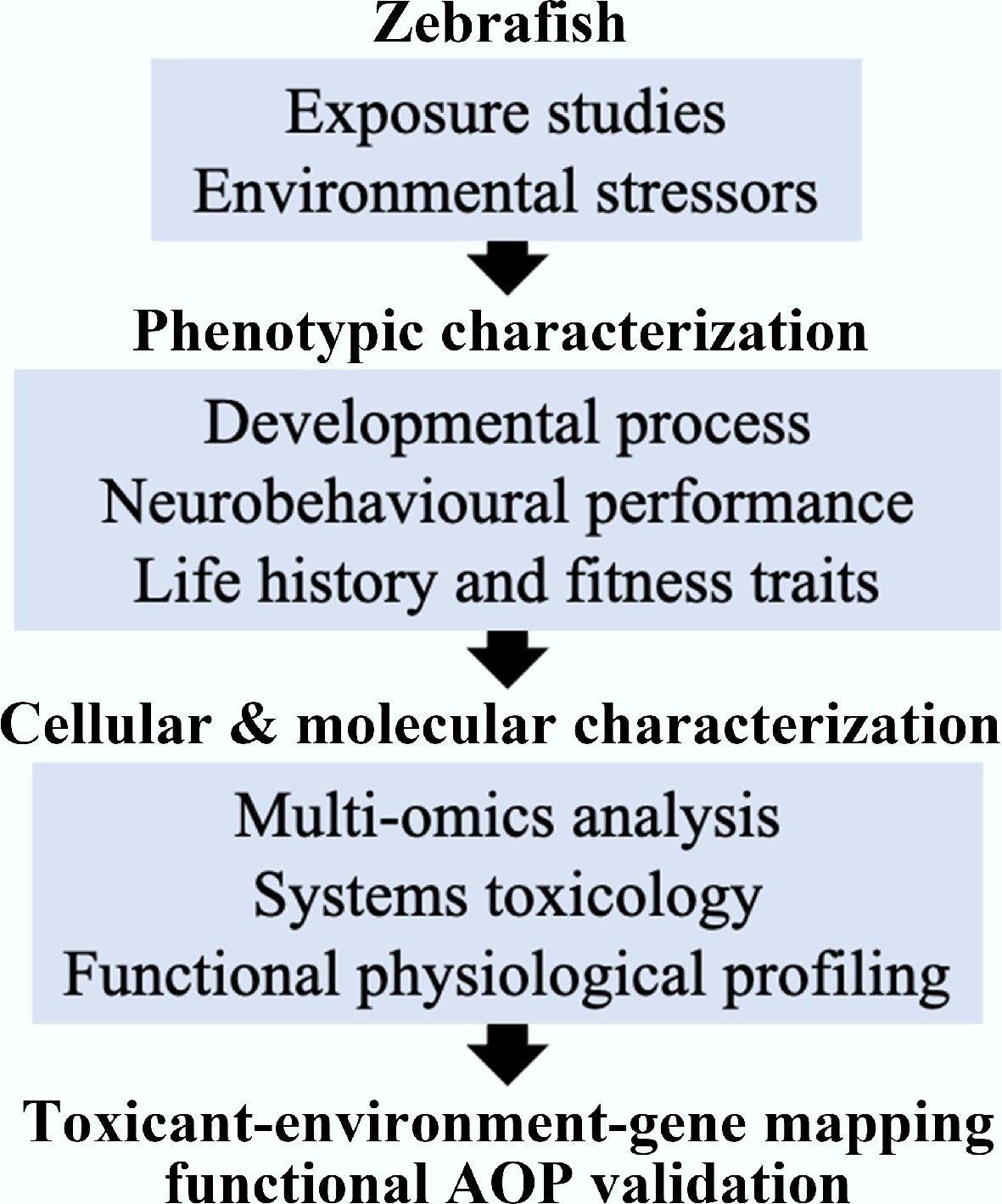
Figure 1.
Proposed multi-tiered experimental strategy for the functional characterization of zebrafish to facilitate toxicant–environment–gene mapping. AOP: Adverse Outcome Pathway.
-
A critical consideration when using zebrafish for functional toxicology is a thorough understanding of their genetics and physiology, as these factors can influence toxicological outcomes and mechanistic interpretation for CECs. Currently, there are two reference-quality genome assemblies (GRCz12) for the zebrafish reference genome, representing the Tübingen (TU) and AB strains (GRCz12tu and GRCz12ab)[90]. These assemblies provide complete and strain-specific genomic resources that improve mapping accuracy and enable more precise interpretation of omics and systems toxicology data. In the literature, the most commonly used laboratory strains include TU, AB, and Tübingen longfin (TL). These strains exhibit distinct genetic backgrounds, and many studies have demonstrated significant differences among strains in their phenotypic traits, including behavioral reactivity and metabolic rate[91−96]. Importantly, baseline disparities among strains can significantly affect result interpretation. For example, if a strain already exhibits an elevated baseline level of a specific biomarker (e.g., a stress hormone or high locomotor activity), it may appear comparatively insensitive to CEC exposure due to a limited dynamic range for further induction. This strain-dependent effect means that phenotypic sensitivity and potency estimates may vary significantly between laboratories. However, laboratory strains are not always explicitly identified in published methodologies, which complicates result comparisons and challenges reproducibility across the field.
Another important consideration in zebrafish toxicology is the prevalence of lab-specific genetic drift. In many zebrafish laboratories, maintaining isolated colonies with limited population sizes leads to unintended inbreeding, resulting in reduced genetic diversity and the accumulation of unique genetic variants[93,97−99]. Consequently, a specific strain in one facility may exhibit a divergent toxicological profile compared to nominally identical strains in another laboratory. Furthermore, reduced genetic diversity due to excessive inbreeding can adversely affect fitness and disease susceptibility[97,100,101]. To mitigate these issues, the simplest way is to regularly outcross existing stocks with new breeders of the same strain from established repositories or trusted zebrafish facilities to refresh the genetic pool[99]. Collectively, these factors necessitate the implementation of standardized reporting and rigorous genetic monitoring to ensure that findings generated in individual laboratories contribute to a reliable and reproducible understanding of CEC toxicity.
A fundamental aspect of zebrafish genetics that must be integrated into toxicological study design is the evolutionary legacy of the teleost-specific whole genome duplication (TSGD)[102,103]. This event resulted in a highly complex genetic architecture characterized by a vast network of gene paralogs. A prominent example is the cytochrome P450 (CYP) superfamily, where the TSGD generated numerous fish-specific paralogs (such as the cyp3a cluster), alongside the retention of ancestral genes (cyp1a, cyp1d1) and the duplication of the cyp1c subfamily into cyp1c1 and cyp1c2[104]. Consequently, the effects observed in zebrafish as well as other teleost species may not reflect the metabolic disposition of organic pollutants in other non-teleost species (e.g., cartilaginous fish, early-diverging ray-finned fish, and amphibians). Additionally, such expansions can lead to functional redundancy and genetic compensation[103], where the inhibition of one gene product is mitigated by a duplicate paralog. These observations also suggest that relying on mammalian toxicity proxies cannot fully capture ecological risk, as fish-specific paralogs may activate or detoxify CECs via pathways that do not exist in the mammalian counterparts. Therefore, a deep understanding of zebrafish genomic architecture is crucial for mapping sublethal transcriptomic responses in order to enhance their translational potential to other species.
Beyond genetic background, the age and sex of the experimental model are pivotal variables that are frequently under-reported. While studies using developing zebrafish are predominant, adult zebrafish research often fails to distinguish between physiologically prime young adults (typically 3 to 12 months old) and senescent individuals (2 years and older). As fish age, significant shifts in physiological state, including altered metabolic rates, reduced DNA repair efficiency, diminished locomotor activity and cognitive function, and the onset of inflammaging (chronic inflammation), can drastically diverge from the profiles of younger adults[105−108]. These age-related trajectories potentially alter both the sensitivity to and the metabolic disposition of CECs. Furthermore, zebrafish exhibit distinct sexual dimorphism in brain signalling, lipid metabolism, and hormonal baselines[109,110]. Consequently, a single CEC, particularly endocrine-disrupting or neuroactive contaminants, may elicit divergent, or even opposing, physiological outcomes in males vs females.
Evaluating CEC toxicity in zebrafish also requires accounting for their exceptionally high cellular repair capacity, including robust DNA damage responses and organ regeneration. Zebrafish are known to effectively repair macromolecular damage and regenerate complex structures, such as the liver, brain, spinal cord, heart, and gills[111−114]. These repair capacities appear to be even higher during early developmental stages, likely driven by highly active cellular proliferation and biosynthetic signalling pathways. Importantly, while environmental concentrations of CECs are unlikely to cause direct gross physical tissue damage, they can induce cellular injuries through pathways such as oxidative stress or DNA lesions, leading to histopathological changes, cell death, and the subsequent disruption of organ function[12,22,115]. Consequently, the robust cellular and genetic repair mechanisms in zebrafish can effectively mask ongoing CEC toxicity during continuous or pulsed chemical exposures. This phenotypic illusion of tolerance or rapid recovery in zebrafish risks underestimating toxicity when compared to other organisms with lower repair capacities. Additionally, the activation of these defense systems fundamentally alters the underlying cellular mechanisms of toxicity, potentially shifting the mode of action from direct chemical damage to secondary metabolic strain and systemic compensatory stress. Ultimately, this high baseline resilience can introduce false negatives or lead to underestimations of chronic risk if data collection is restricted solely to static, terminal endpoints. To prevent this misinterpretation, there is a critical need for detailed phenotypic characterization with high spatiotemporal resolution of functional changes. Pinpointing exact physiological tipping points and cellular mechanisms of toxicity requires capturing the temporal window where chemical-induced damage outpaces the organism's cellular and regenerative capacities to maintain homeostasis.
While the zebrafish is an exceptional model for developmental toxicology and endocrine toxicology, its polygenic and environmentally plastic sex determination system makes it a less desirable model for the study of sex-specific toxicities, particularly during early life stages. To assess the impacts of CECs with endocrine-disrupting potential, using complementary teleost models such as medaka (e.g., Oryzias melastigma, Oryzias dancena, Oryzias latipes) may prove highly advantageous. Unlike zebrafish, these medaka species possess a well-defined XX/XY genetic sex determination system, alongside a high tolerance for varying salinities that allows for estuarine- and marine-relevant experimental designs[116−118]. Utilizing models with fixed genotypic sex allows researchers to differentiate between natural developmental variations and chemically-induced discordance between genetic and phenotypic sex, providing a more robust framework for evaluating reproductive risk across environmental gradients than is currently possible with zebrafish.
-
Zebrafish have become a popular model to inform toxicity in higher vertebrates such as mammals because of their high genomic synteny[9]. However, critical differences exist between their respective exposure routes and absorption pathways. These pathways undergo significant ontogenetic shifts throughout the zebrafish life cycle, a transition that likely parallels the ontogenetic development of respiratory and ionoregulatory mechanisms[26,27]. During embryonic and early larval stages, chemicals are likely absorbed through the integument; conversely, the branchial and intestinal epithelia become the dominant absorption routes in juveniles and adults. Notably, as a freshwater species, zebrafish do not drink water for osmoregulation[119]; therefore, waterborne chemicals are predominantly absorbed via the gills. This stands in contrast to marine fish, which must actively drink seawater to maintain fluid balance, thereby facilitating the uptake of waterborne chemicals through both the gills and the intestinal tract. It is noteworthy that the gills are critical for a variety of functions, including gas exchange, acid-base balance, ion- and osmo-regulation, nitrogenous waste excretion, and chemosensing[120−123]. Despite their importance, our understanding of the direct toxicological impacts of CECs on gill function, as well as how this pathway modulates the metabolic disposition of CECs, remains limited[115,124−126].
Challenges of dietary exposure
-
Dietary ingestion represents a critical pathway for the absorption of environmental contaminants, particularly regarding trophic transfer. This route is especially relevant to contaminants such as particles (e.g., nano and microplastics) and organic pollutants with high lipophilicity (e.g., long-chain PFAS, brominated flame retardants), where diet often serves as the primary exposure vector. Furthermore, dietary exposure involves essential interactions with the gut microbiome, which can significantly modulate the metabolic fate and toxicity of CECs[127,128]. Nevertheless, most research with fish is focused on waterborne exposure to reduce experimental complexity, as incorporating CECs into the diet presents significant technical challenges[129,130]. Preparing stable, homogenized feed with CECs may require specialized formulations to prevent the leaching of chemicals into the surrounding water during feeding. Such leaching can result in unintended simultaneous dietary and waterborne exposure, which necessitates additional verification to ensure the primary route of uptake is correctly identified. Alternatively, using CEC-exposed live prey (e.g., Artemia or Daphnia) offers greater ecological realism, but it remains difficult to control for the internal metabolism or biotransformation of CECs within the prey species prior to ingestion. Additionally, ensuring a uniform dose of CECs across a population is difficult due to the natural hierarchical feeding behaviors of zebrafish[131]. Further, as the developmental toxicology of CECs continues to emerge, the effects of dietary exposure throughout development remain significantly understudied. In zebrafish, the onset of exogenous feeding typically occurs 5 d post-fertilization as the yolk is depleted. However, dietary exposure during larval stages introduces significant experimental challenges. Beyond the inherent difficulty of standardizing the preparation (e.g., feed type, nutritional composition, and potential leaching) and the amount of feed provided (e.g., daily ration), there is often substantial variability in individual intake among larvae. Overall, the technical hurdles of dietary exposure, for both developing and adult zebrafish, require careful consideration and rigorous control experiments to ensure exposure accuracy. This includes, for example, spike recovery and the quantification of CEC metabolites to verify the actual concentration and exposure within the feed matrix after preparation, leaching tests to quantify possible chemical loss into the water, and the measurement of body burdens to assess the amount of CECs absorbed by the organism.
The environmental relevance of the zebrafish model
-
In modern ecotoxicology, it is crucial to accurately mimic ecological exposure to CECs by utilizing ambient, environmentally relevant concentrations. However, it is possible that the physiological mechanisms observed in zebrafish at the concentrations typically required to elicit a response may not directly translate to more sensitive species exposed to chronic, ambient environmental levels[46,126,132,133]. It is also noteworthy that low and high exposure concentrations may induce divergent effect outcomes and toxic mechanisms (i.e., non-monotonic dose-responses), potentially owing to factors such as the activation or inactivation of detoxification pathways, compensatory responses, and receptor saturation at high doses[134,135]. In the context of the zebrafish model, utilizing these ambient concentrations may require a shift from traditional gross morphological or fitness-related endpoints (e.g., survival) toward more sensitive, sublethal biomarkers (e.g., transcriptomics, biochemical changes). Identifying these high-resolution endpoints is crucial for achieving ecological protection prior to the onset of population-level stress. However, these endpoints are often difficult to interpret for their broader ecological relevance. Additionally, although zebrafish are increasingly utilized in neurobehavioral toxicology of CECs, how these laboratory outcomes translate to actual fitness costs or population-level changes in the wild has yet to be resolved[136]. In many jurisdictions, these sublethal endpoints are typically not considered in formal ecological risk predictive frameworks, primarily owing to the difficulty in establishing causal evidence linking initial molecular or behavioral perturbations to apical outcomes such as growth, reproduction, and survival. Bridging this gap requires the integration of these signals into the AOP framework to demonstrate their predictive power. Establishing these causal links through phenotypic anchoring provides the weight of evidence required to translate sensitive molecular markers or behavioral outcomes into validated tools for regulatory risk assessment.
-
Zebrafish have been instrumental in advancing our understanding of the ecological impacts of CECs, providing critical insights into functional performance, systems toxicology, and genome-level regulation. The shift from ecologically relevant wild species to standardized laboratory models has simplified experimental design, streamlined regulatory testing, and facilitated the application of high-resolution physiological and molecular tools. However, as the field moves forward, several critical considerations must be addressed to ensure that this standardization does not compromise our ability to protect the species and ecosystems at risk.
(1) What we can learn: Model-derived data remain central to regulatory decision-making. Insights from zebrafish research are invaluable for elucidating conserved pathways of sensitivity and tolerance, identifying early-warning biomarkers of stress, and providing the mechanistic depth necessary for robust risk characterization. However, to maximize their ecological utility, these insights must be integrated within a broader, multi-tiered risk assessment framework that explicitly accounts for interspecies variability and environmentally relevant exposure scenarios.
(2) What we may miss: Overreliance on zebrafish or any model organism may lead to the oversight of species that are truly at ecological risk. Widely used models often exhibit narrow genetic diversity and extensive adaptation to laboratory conditions. Consequently, extrapolating responses from a small number of laboratory-adapted species to diverse wild taxa can result in inaccurate or incomplete risk assessments, particularly when untested species differ significantly in physiology, life-history traits, or environmental sensitivity. Additionally, the strict husbandry requirements of the zebrafish model fundamentally preclude their use in directly testing environmental samples from marine, estuarine, or cold-water habitats without extensive sample manipulation, which can inherently alter the toxicological profile of CECs.
(3) What we oversimplify: A critical disconnect between laboratory toxicology and ecological reality is the environmental context of exposure. To eliminate possible confounding variables, it is crucial to perform standardized laboratory studies under highly controlled conditions. However, aquatic organisms in the wild are exposed to complex chemical mixtures alongside dynamic natural stressors, including fluctuating temperatures, hypoxia, acidification, and salinity shifts, all of which can be exacerbated by global climate change[137]. Importantly, these environmental stressors can fundamentally modulate both chemical bioavailability and organismal sensitivity. For instance, changes in water chemistry can alter the chemical speciation and partitioning of CECs, significantly shifting the exposure profile and, consequently, the resulting toxicological impact. Additionally, concurrent exposure to environmental stressors can exhaust the physiological reserves and cellular defenses required for effective CEC detoxification[138−140]. Nevertheless, expanding experimental matrices to encompass every potential combination of CECs and environmental stressors presents significant logistical, statistical, and financial challenges. Yet, failing to account for these multi-stressor scenarios can lead to a significant underestimation of environmental risk.
Therefore, the path forward cannot rely solely on exhaustive in vivo testing. Instead, the field must prioritize the evaluation of environmentally relevant parameters using experimental systems tailored to capture realistic outcomes, spanning single-chemical, mixture, and multi-stressor analyses. Future studies should leverage computational modelling, such as machine learning and the AOP framework, to predict complex toxicant-gene-phenotype interactions. Strategic in vivo assays can then be reserved for the targeted validation of only the most critical or high-risk ecological scenarios.
A path forward: the Z-PATH strategy
-
To bridge the gap between model strengths and ecological relevance, this perspective proposes a four-tiered strategy: Zebrafish Predictive Assessment for Translational Health (Z-PATH). By integrating mechanistic precision with environmental realism, Z-PATH provides a structured roadmap for the translational application of zebrafish data. The operational workflow of the Z-PATH strategy is illustrated in Fig. 2.
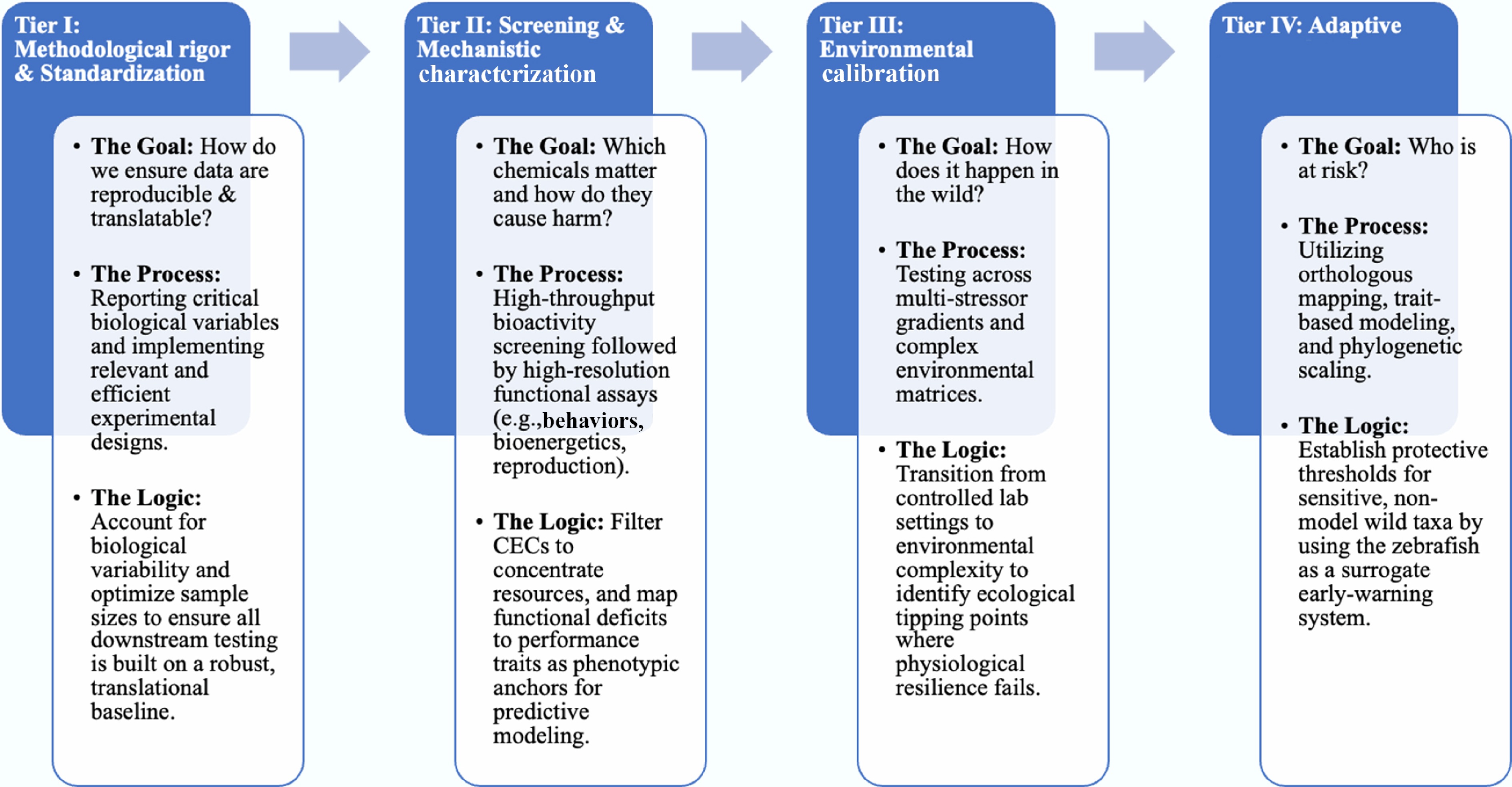
Figure 2.
Operational workflow of the four-tiered Z-PATH strategy. This schematic illustrates the sequential progression from laboratory standardization to field-relevant ecological prediction. The framework is anchored by foundational methodological rigor (Tier I), which structures the downstream phases of chemical screening and mechanistic characterization (Tier II), multi-stressor environmental validation (Tier III), and predictive cross-taxa extrapolation (Tier IV) to establish protective thresholds for sensitive, non-model wild taxa.
(1) Methodological rigor and standardization. Standardized experimental designs must move toward systematically reporting critical biological variables and husbandry practices[99,141], including strain, age, and sex, as well as housing and exposure conditions (e.g., water chemistry, nutritional regimes, and density) as applicable to the study design. When assessing CECs, critical considerations for experimental design should include sex-specific responses and life-stage vulnerabilities, both of which should be explicitly aligned with the targeted environmental exposure scenario, including realistic exposure concentrations and routes of exposure. To optimize sample sizes while adhering to the 3Rs (Replacement, Reduction, and Refinement), this tier advocates for a priori power analyses or Bayesian frameworks and efficient experimental designs (such as factorial matrices or sequential sampling)[142−144]. These strategies maximize the information yielded per individual, thereby reducing total animal use without compromising the sensitivity required to detect sublethal effects. Prioritizing this level of rigor ensures that effect pathways accurately reflect the targeted ecological scenario and possess the robust potential required for results to be reproducible and translational without necessitating exhaustive in vivo testing.
(2) Screening and mechanistic characterization. This tier aims to identify high-risk CECs and capture precise toxicant–environment–gene interactions, allowing researchers to uncover conserved and divergent responses and establish causal cascades within the AOP framework. High-throughput screening platforms, in vitro assays, or computational tools are first employed to understand the biological activity and exposure scenarios of CECs and their metabolites. Omics technologies can provide a comprehensive understanding of molecular signatures; nevertheless, these molecular insights must be complemented by detailed phenotypic characterization and high-resolution functional studies to evaluate effect mechanisms and specific physiological outcomes. This approach bridges the gap between molecular-level omics profiles and organismal phenotypic fitness. Depending on the mode of action of the CECs under investigation, these studies may incorporate, for example, functional imaging, electrophysiology, respirometry, reproductive assays, and behavioral profiling. Furthermore, incorporating advanced genetic tools (e.g., transgenic lines, gene knockdown, or gene knockout) into CEC exposure studies helps elucidate primary molecular targets and effect mechanisms, distinguishing them from secondary effects, non-specific responses, or compensatory regulation. Ultimately, mapping functional deficits to whole-organism performance traits (e.g., behaviors, bioenergetics, and reproduction) provides the phenotypic anchoring necessary to parameterize a risk assessment framework (Fig. 3), specifically through mechanistic effect models (MEMs) such as individual-based models (IBMs) to forecast population-level changes that drive ecological risk[145].
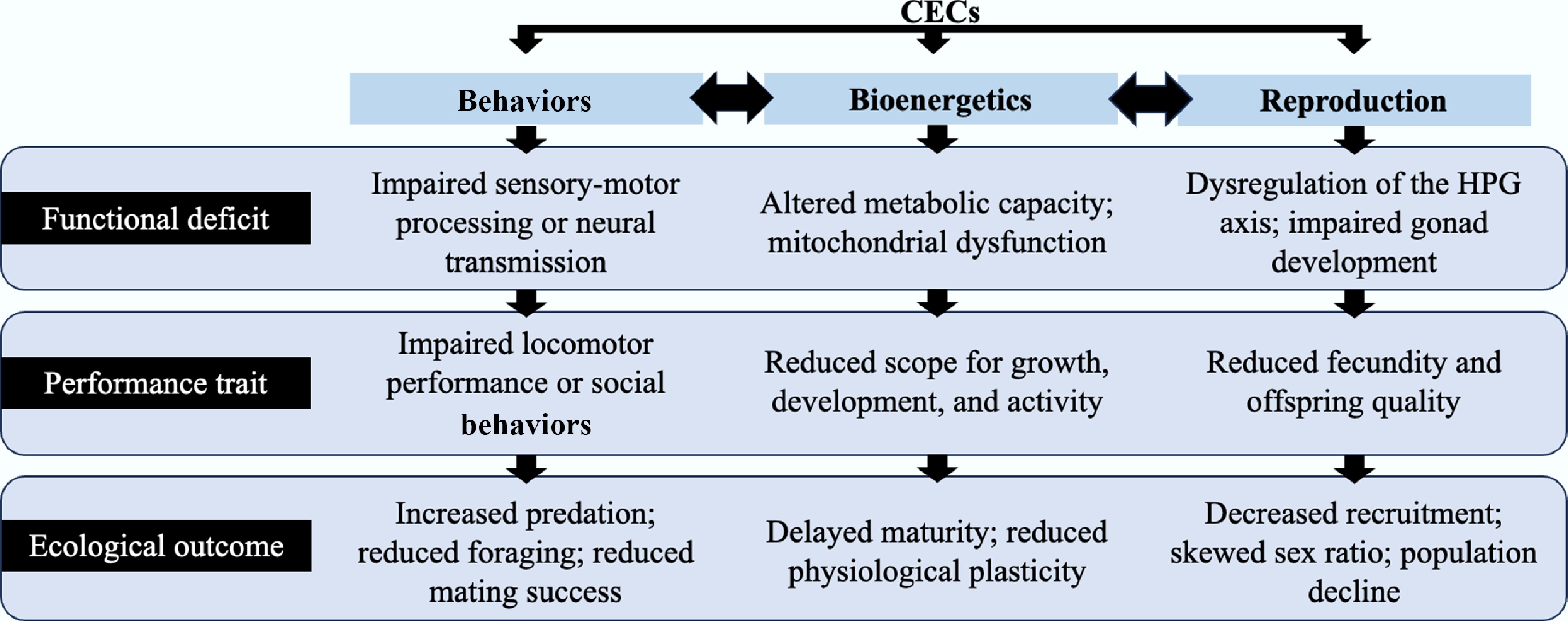
Figure 3.
Mechanistic pathways illustrating the translation of functional deficits into population-level outcomes. This schematic illustrates the causal cascade wherein specific functional deficits (mechanisms) impair key performance traits (phenotypes). These whole-organism performance traits, comprising behaviors, bioenergetics, and reproduction, are intrinsically interconnected; their cumulative impairment provides the phenotypic anchoring necessary to predict shifts in population-level fitness. HPG: hypothalamic-pituitary-gonadal axis.
(3) Environmental calibration. To ensure environmental relevance, this tier advocates for experimental designs that evaluate CEC exposure across a gradient of natural stressors (e.g., temperature, hypoxia, acidification, or salinization), identifying potential ecological tipping points where molecular or physiological acclimation may fail under multi-stressor conditions. The framework leverages zebrafish across multiple life stages to balance high-throughput capacity with chronic ecological relevance. Initially, zebrafish larvae are utilized for rapid, high-throughput screening of expansive multi-stressor matrices, leveraging developmental profiling, automated behavioral tracking, micro-respirometry, and transgenic reporter lines to identify critical physiological thresholds. Subsequently, targeted adult bioassays are deployed to validate these thresholds against chronic endpoints, focusing on reproductive fitness, neurobehaviors, and long-term bioenergetic trade-offs under multi-stressor strain. Furthermore, this screening can be extended to real-world chemical mixtures, notably complex wastewater effluents and urban runoff. By evaluating these complex matrices across varied environmental gradients, researchers can isolate high-priority mixtures and critical multi-stressor interactions. To address the challenges of identifying causative toxicants within chemical mixtures, tools such as Effect-Directed Analysis (EDA) may also be integrated to help disentangle multi-component effects[146,147]. High-resolution findings from zebrafish studies inform these efforts by identifying critical effect outcomes, molecular targets, and biomarkers of stress under highly controlled conditions. This initial characterization allows researchers to strategically target and validate specific biological signals within complex environmental matrices, thereby refining lab-derived effect thresholds and outcomes. This mechanistic focus streamlines the assessment of high-priority risks associated with CECs, their bioactive transformation products, and multi-stressor interactions.
(4) Adaptive extrapolation. The final tier bridges the translational gap between model organisms and wild taxa by anchoring predictive computational models in comparative empirical data. To establish this foundation, parallel experiments can be conducted by exposing zebrafish and native sentinel species in separate containment systems to the same exposure scenario, which may encompass a complex environmental matrix, ambient surface waters, or defined chemical mixtures. This testing approach facilitates molecular fingerprinting and functional outcome benchmarking to identify conserved and divergent responses for cross-species effect calibration. Additionally, by understanding the genomic architecture of wild taxa, the framework maps orthologous molecular targets and utilizes trait-based modelling to translate genotypic variations into functional phenotypes[148,149]. Through the synthesis of empirical testing data, physiological parameters, and genetic variables (e.g., adaptive alleles) via a phylogenetic lens, these computational frameworks facilitate risk characterization for sensitive, non-model species across diverse environmental conditions. Consequently, regulators can forecast how CECs and environmental stressors interact to influence physiological resilience and drive long-term ecological outcomes in wild populations. Collectively, this methodology enables the establishment of protective thresholds based on conserved pathways of sensitivity or divergent biological responses that represent unique, taxon-specific vulnerabilities. Ultimately, this strategy offers a robust, mechanistic alternative to exhaustive in vivo testing across every species at risk, directly supporting the ethical and logistical goals of the 3Rs.
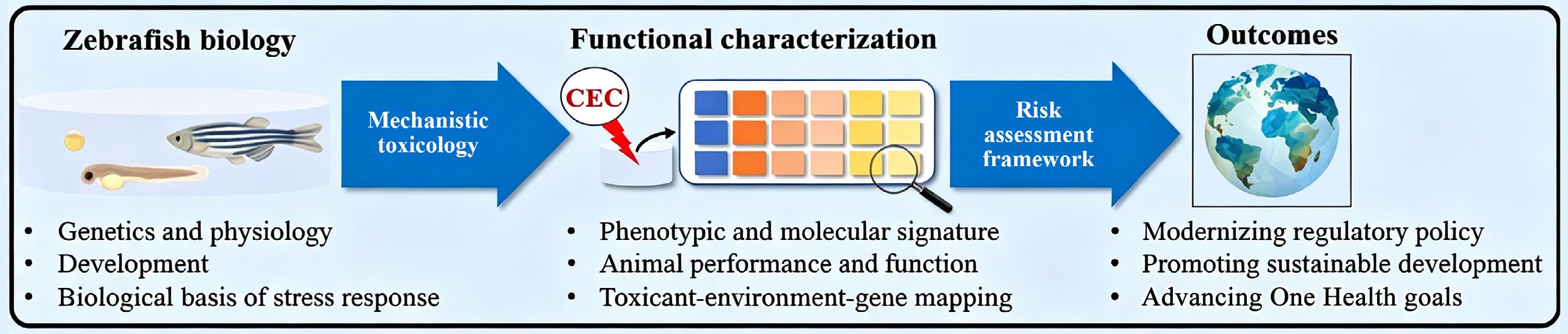
The utility of the zebrafish as a surrogate for wild aquatic species rests on a suite of conserved biological traits spanning the genomic to the whole-organism levels. However, the effective translation of these conserved traits requires a deep understanding of the model's underlying machinery to ensure accurate causal inferences. Reconciling laboratory observations with the ecological realities of the field necessitates a thorough assessment of many key biological considerations (Table 1). Furthermore, as zebrafish become increasingly prominent in biomedical research and disease modelling, the proposed Z-PATH framework supports a One Health approach. This paradigm recognizes that the conserved biological pathways and functional disruptions identified in zebrafish may provide critical early-warning signals for both aquatic ecosystem stability and human health. Figure 4 provides a conceptual illustration bridging foundational zebrafish research with the risk assessment framework.
Table 1. Biological considerations for the translational application of zebrafish data in ecological risk assessment
Assessment domain Lab reality (zebrafish) Field reality (e.g., wild fish) Strategic utility for Z-PATH Genetics Reduced genetic diversity (lab-standardized strains). Vast genetic diversity; adaptive alleles and site-specific adaptations. Establishes the genomic baseline for cross-taxa extrapolation while accounting for population-level variability. Reproduction and metabolism Short generation time; continuous spawning; controlled metabolic rate. Environmentally cued spawning; complex reproductive behaviors (e.g., courtship, competition); variable bioenergetics. Aligns lab-derived reproductive and bioenergetic thresholds with seasonal windows of environmental vulnerability. Ontogeny and development Rapid, transparent organogenesis; synchronous embryo-larval transitions. Slower, often opaque development; diverse life-history strategies. Provides high-resolution assessment of developmental vulnerabilities to identify critical windows that predict long-term health and survival. Neurobehaviors Standardized assays (e.g., photomotor response, anxiety, social preference). Complex predator-avoidance; foraging efficiency; social shoaling or schooling. Serves as a performance-based link that translates physiological stress into predictive models of ecological functions, such as foraging and predator avoidance. CECs and environmental stressors Exposure to single, high-purity compounds; controlled exposure scenario. Exposure to dynamic 'chemical cocktails' and transformation products; multi-stressor environments (e.g., pH, temperature, salinity). Leverages the zebrafish as an integrative platform to quantify the cumulative risk of complex environmental mixtures and their interactions with shifting abiotic stressors. The specific studies supporting these biological assessments are referenced in the main text. 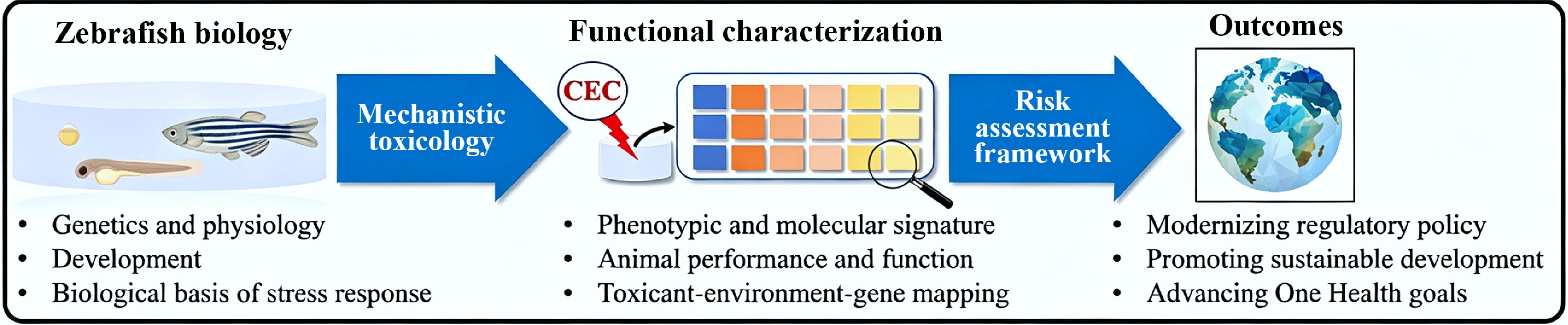
Figure 4.
Conceptual illustration of the integration of foundational zebrafish research and functional toxicology into a risk assessment framework.
-
Shifting from ecologically important native species to standardized laboratory models may reduce pressure on wild populations and ease logistical challenges; however, it is imperative to critically assess the ecological validity and generalizability of the resulting data. In principle, the use of the zebrafish model is rarely intended for the protection of zebrafish themselves; instead, it serves as a sentinel to identify early stress responses that inform the protection of more sensitive aquatic species. Consequently, it is essential that these findings possess robust cross-taxa extrapolation potential to ensure the effective protection of species at risk. With growing interest in using zebrafish to evaluate the biological impacts of CECs, rethinking how the field designs ecologically meaningful experiments is essential for protecting vulnerable ecosystems.
Yet, even the most ecologically relevant experimental strategies will yield limited impact without corresponding policy evolution. Ultimately, regulatory bodies must modernize their risk assessment frameworks to integrate more sensitive sublethal endpoints, AOPs, and multi-species extrapolation[52,148]. A critical requirement for the regulatory adoption of the zebrafish model is a thorough understanding of its biology, inherent limitations, and environmental relevance when assessing the impacts of CECs. This necessitates a rigorous calibration of the laboratory model to ensure that findings are both ecologically relevant and translatable. Neglecting these foundational factors creates a systemic regulatory gap, risking a framework where the most vulnerable species remain unprotected.
-
Not applicable.
The author thanks the anonymous reviewers for their constructive recommendations, which substantially helped refine and sharpen the Z-PATH framework presented in this article.
-
The author confirms sole responsibility for all aspects of this study and approved the final version of the manuscript.
-
Data availability is not applicable to this article, as no new datasets were generated or analyzed during this study.
-
This work was supported by the Canada Research Chairs Program (Grant No. CRC-2021-00131) to Raymond Kwong.
-
The author declares that there are no known competing financial interests or personal relationships that could have appeared to influence the work reported in this paper.
-
Full list of author information is available at the end of the article.
- Copyright: © 2026 by the author(s). Published by Maximum Academic Press, Fayetteville, GA. This article is an open access article distributed under Creative Commons Attribution License (CC BY 4.0), visit https://creativecommons.org/licenses/by/4.0/.
-
About this article
Cite this article
Kwong RWM. 2026. Functional toxicology of emerging contaminants: translating zebrafish models to ecological risk prediction. New Contaminants 2: e022 doi: 10.48130/newcontam-0026-0018 

Functional toxicology of emerging contaminants: translating zebrafish models to ecological risk prediction
- Received: 15 April 2026
- Revised: 24 May 2026
- Accepted: 15 June 2026
- Published online: 21 July 2026
Abstract: Zebrafish (Danio rerio) serve as a foundational mechanistic platform for investigating the toxicity of contaminants of emerging concern (CECs), including nanomaterials, rare earth elements, micro/nanoplastics, per- and polyfluoroalkyl substances (PFAS), and pharmaceuticals and personal care products (PPCPs). As a model organism, zebrafish offer unparalleled potential to elucidate complex biological processes ranging from toxicokinetics and organ-scale development to neurotoxicity and transgenerational effects. Such data facilitate the identification of effect pathways and biomarkers essential for environmental monitoring, risk assessment, and the development of intervention strategies. Equally vital is a thorough understanding of zebrafish genetics, physiology, and inherent limitations, which collectively dictate the accuracy of causal inferences. Despite their importance, these factors are rarely discussed in the context of ecological relevance, cross-species extrapolation, or their applicability to real-world risk predictions. In this perspective, I synthesize the current state of zebrafish functional toxicology and highlight recent technological advances for assessing CECs. I discuss the limitations and methodological considerations of the zebrafish model and propose a strategic path forward that integrates functional characterization and systems toxicology with ecological validation to bridge the gap between laboratory molecular perturbations and real-world regulatory risk assessment.
-
Key words:
- Emerging contaminants /
- Toxicology /
- One Health /
- New approach methodologies (NAMs) /
- Zebrafish