-
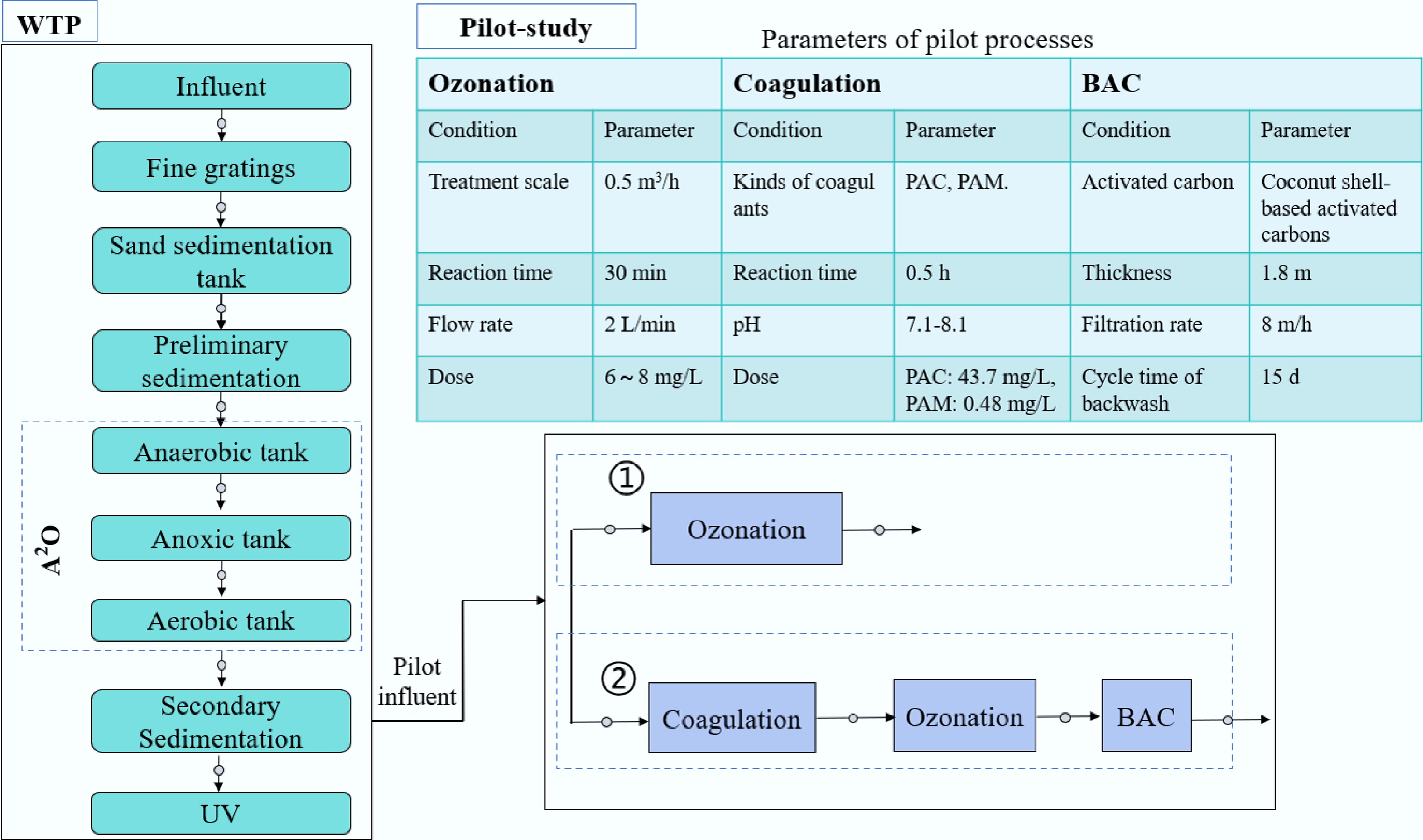
Figure 1.
Main treatment processes and parameters in the WWTP and the pilot plants.
-
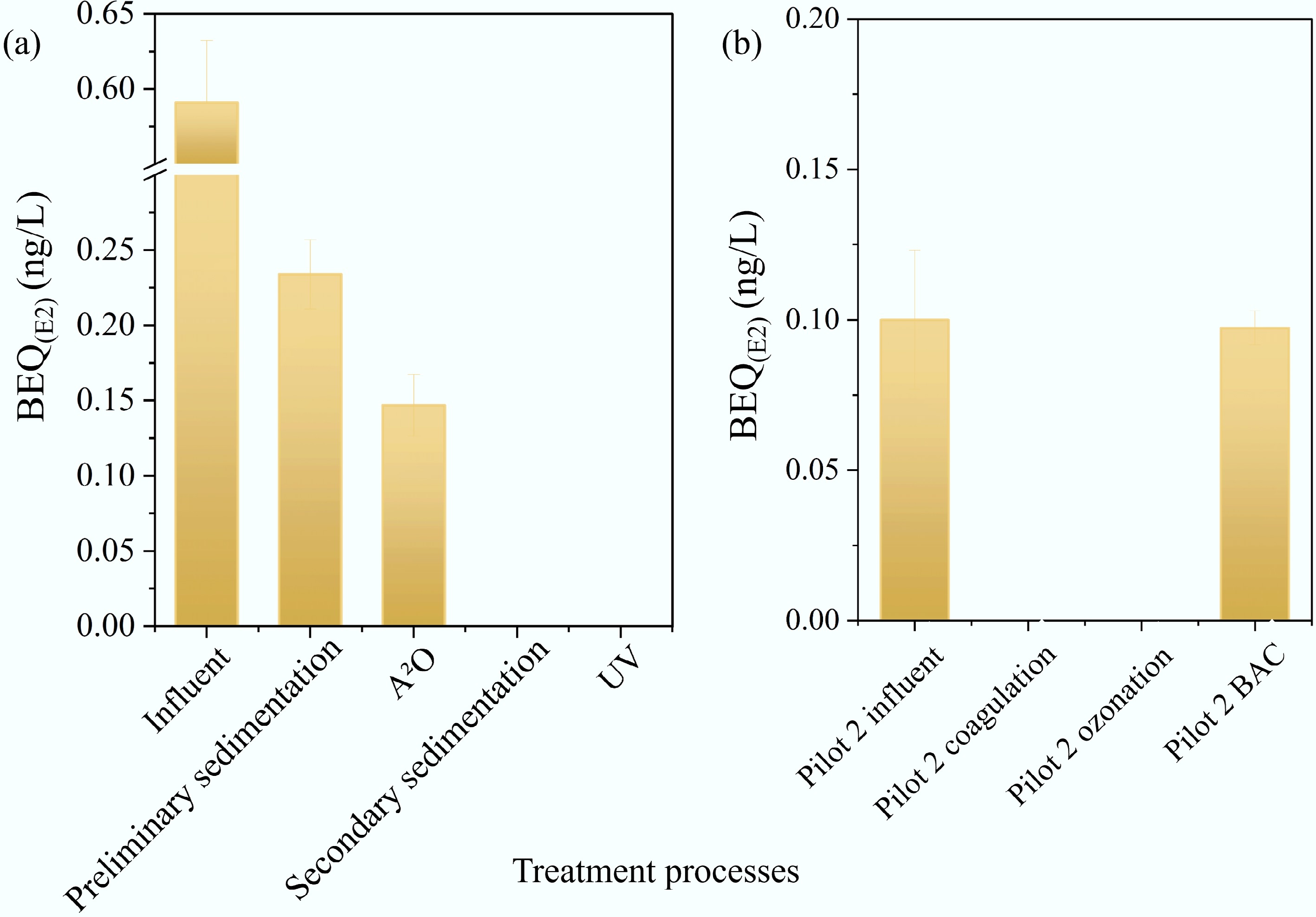
Figure 2.
Agonistic activity against the ER during wastewater treatment processes.
-
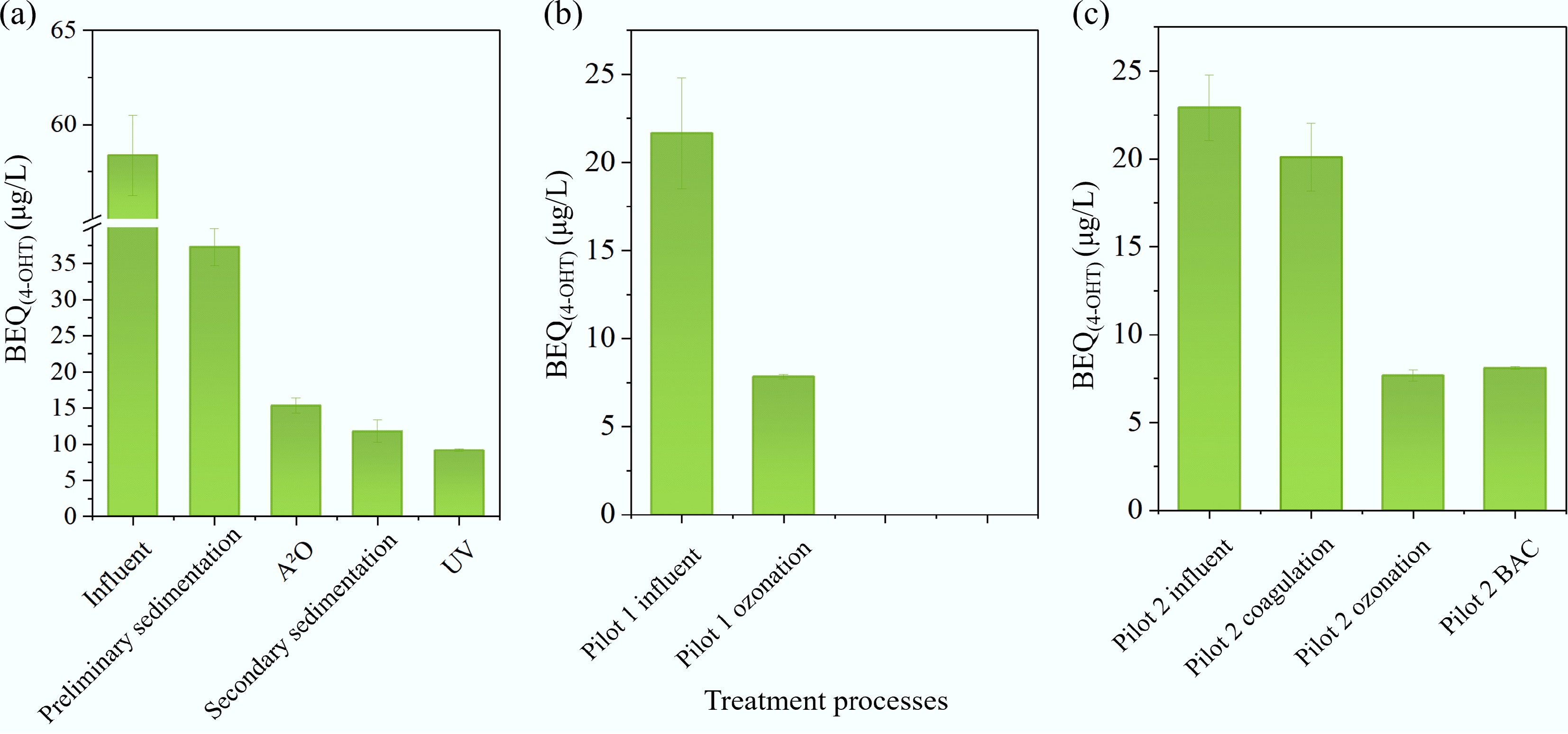
Figure 3.
Antagonistic activity against the ER during wastewater treatment processes.
-
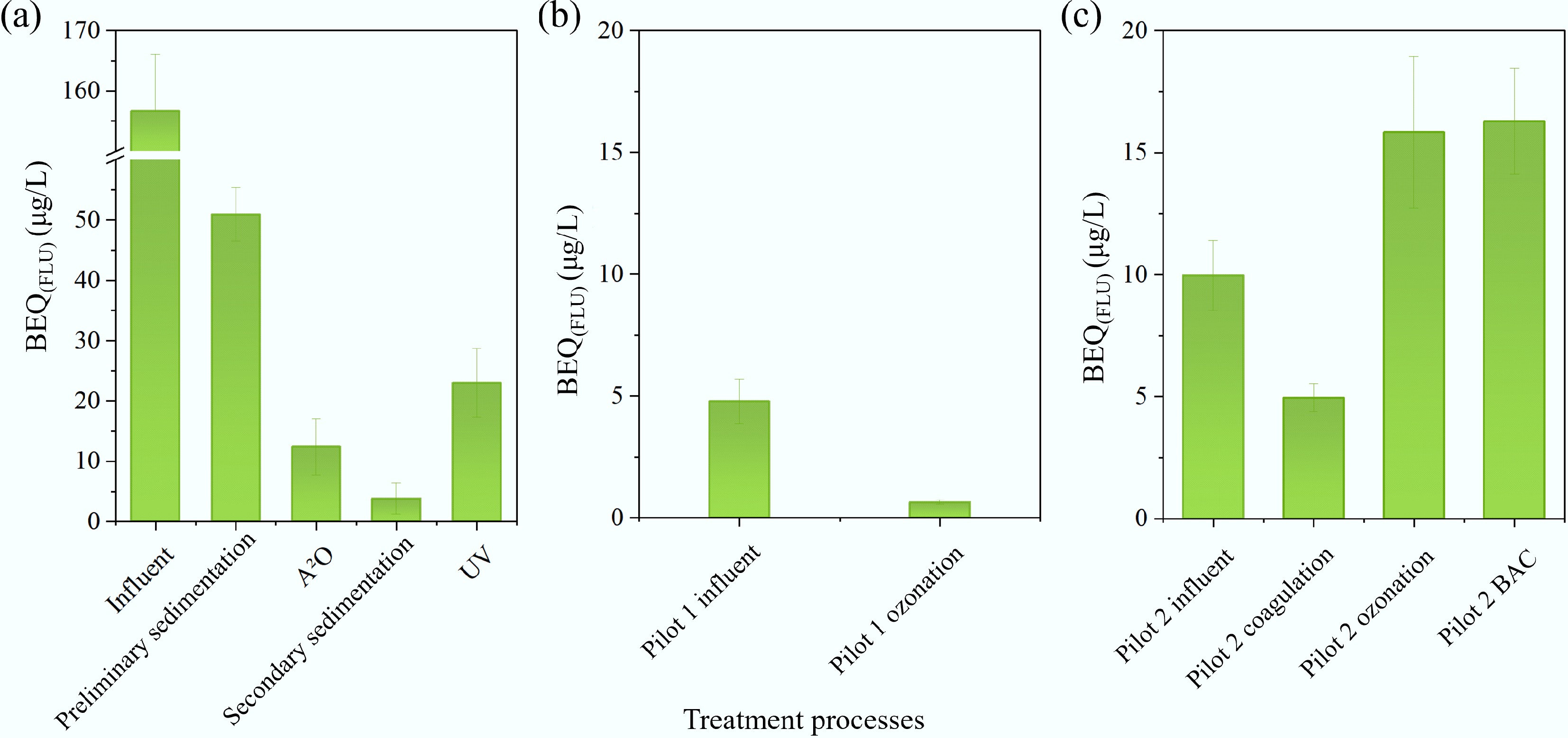
Figure 4.
Antagonistic activity against the AR during wastewater treatment processes.
-
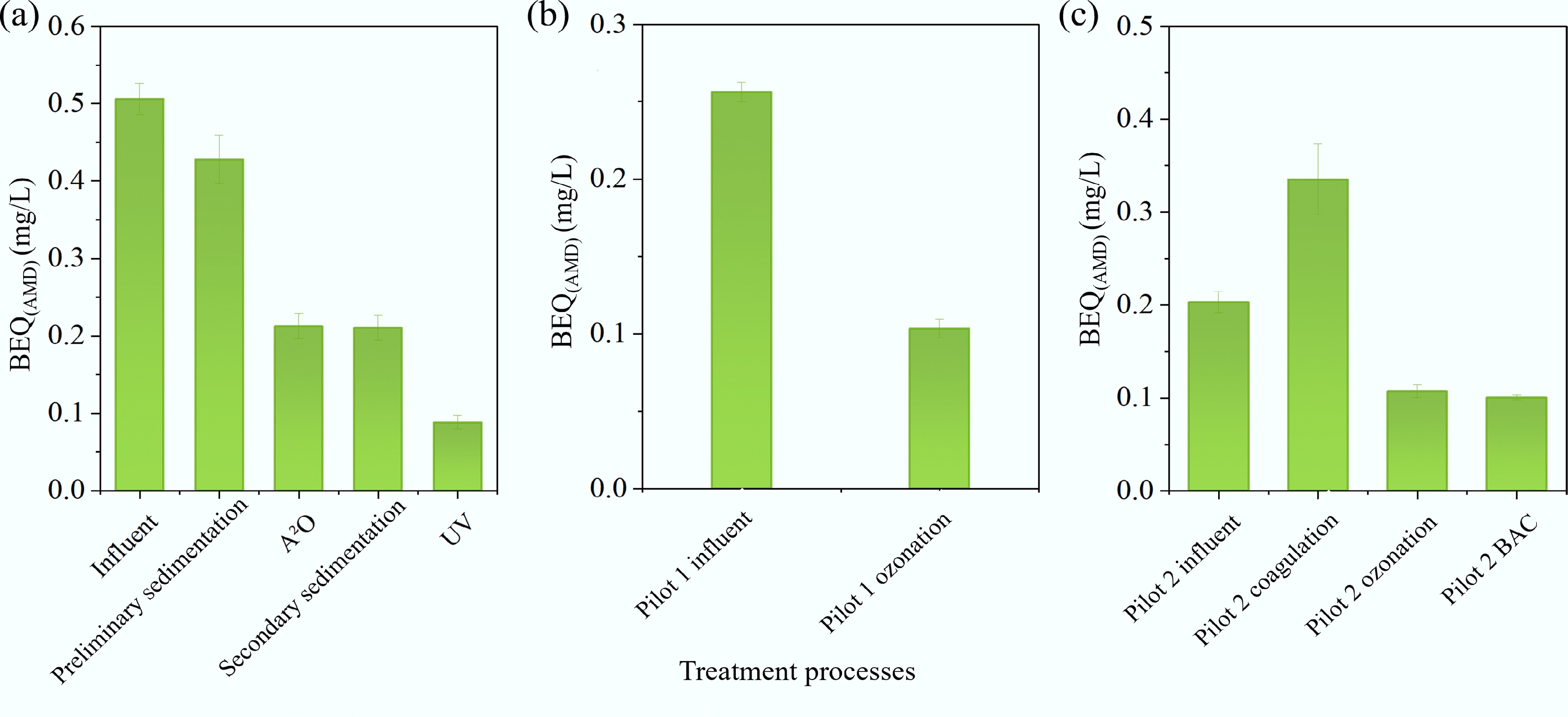
Figure 5.
Antagonistic activity against the TR during wastewater treatment processes.
-
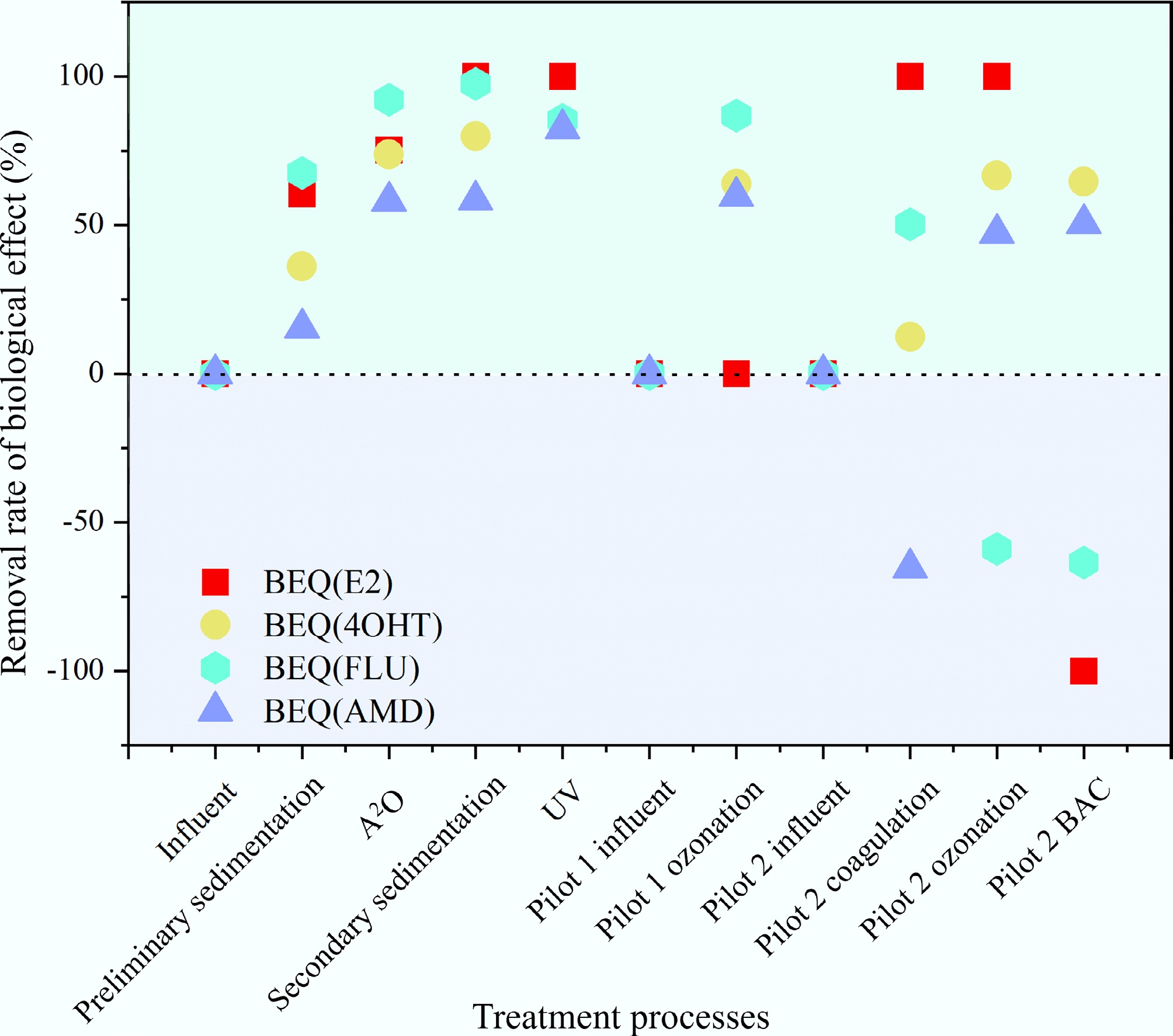
Figure 6.
Removal rate (%) of BEQ for the detected nuclear receptor- disrupting effects in each treatment processes.
-
Endpoint Positive chemicals Maximum test concentrations (M) Mixed exposure chemical Estrogenic E2 2.5E-10 − Anti-estrogenic 4-OHT 1 E-5 E2 Androgenic DHT 6.25 E-8 − Anti-androgenic FLU DHT Thyroid T3 5E-7 − Anti-thyroid AMH 1E-4 T3 Table 1.
Reference compound for positive controls and test concentrations used in the two-hybrid yeast assay
-
Bioassay Endpoint EBT value Ref. ER CALUX Estrogenic 0.5 ng EEQ/L Van der Oost et al.[35] ER-Gene BLAzer Estrogenic 0.34 ng EEQ/L Escher et al.[36] ERa_Luc_BG1 Estrogenic 0.62 ng EEQ/L Escher et al.[36] Two-hybrid recombinant ER gene yeast assay Estrogenic 0.5 ng EEQ/L Zhang et al.[22] Anti-AR CALUX Anti-androgenic 25 µg FLU EQ/L Van der Oost et al.[35] Anti-AR Gene BLAzer Anti-androgenic 3.28 µg FLU EQ/L Escher et al.[36] Two-hybrid recombinant AR gene yeast assay Anti-androgenic 7.97 μg FLU EQ/L Present study Anti-TR-LUC-GH3 Anti-TR 0.60 µg BPA-EQ/L Escher et al.[36] Table 2.
EBT values for the bioassays of nuclear receptor-disrupting effects
Figures
(6)
Tables
(2)