









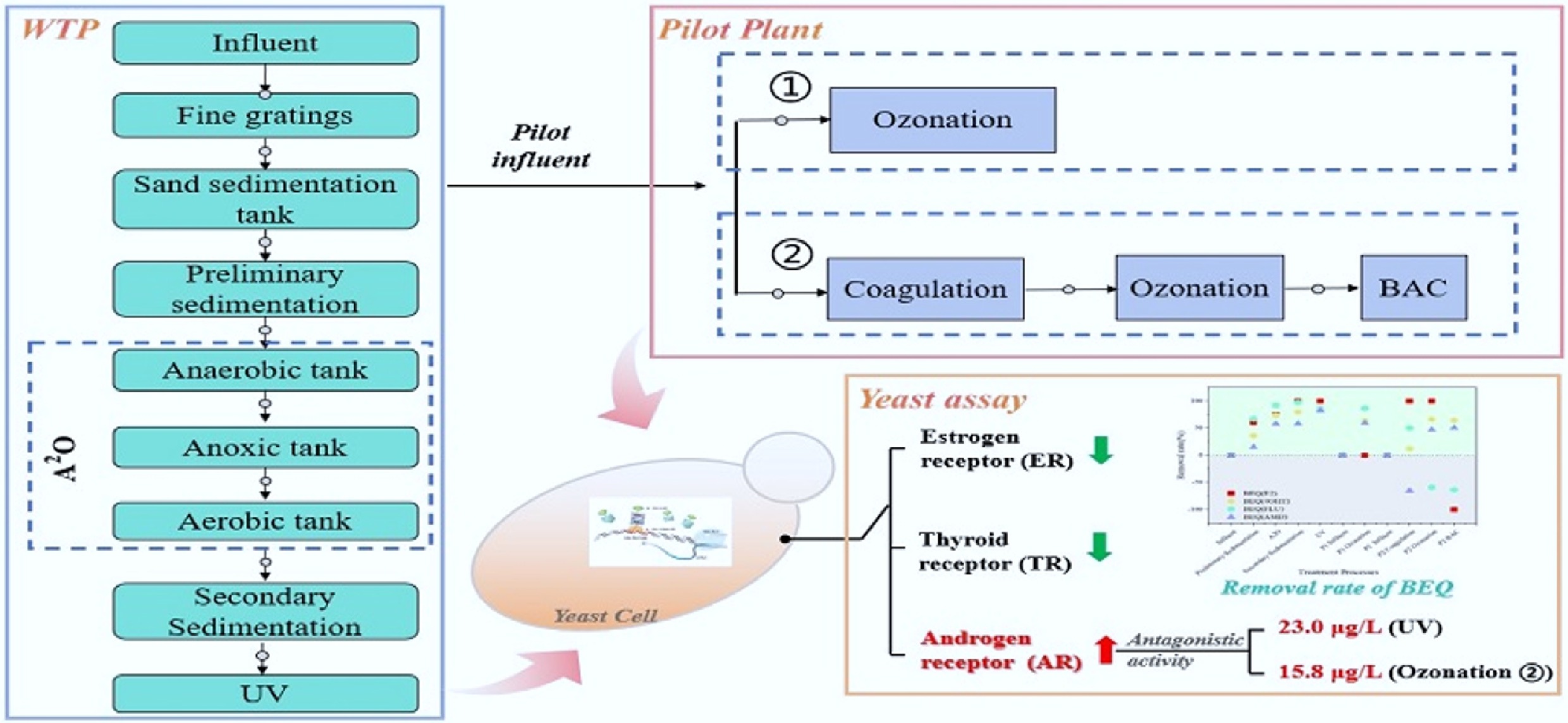



-
With the intensification of global water scarcity, wastewater reclamation has become a crucial strategy[1]. Advanced physical, chemical, and biological processes have been applied to thoroughly purify effluents in wastewater treatment plants (WWTPs) to meet water quality standards by eliminating pathogens and removing organic micropollutants, heavy metal ions, and nutrient pollutants[2−4]. Ozonation, O3/H2O2, and ultraviolet (UV)/H2O2 treatments are used to remove micropollutants by generating highly oxidative radicals, thereby significantly reducing the concentration of the parent pollutants. UV-only treatment is frequently used for wastewater reclamation to inactivate a wide range of pathogens, bacteria, and viruses, without a disinfection agent. However, the transformation products (TPs) formed during these chemical reactions often exhibit toxic characteristics, such as cytotoxicity, genotoxicity, and endocrine-disrupting effects, which differ significantly from those of the parent pollutants[5−7]. If the trace levels of only the parent pollutants, controlled disinfection byproducts (DBPs), and pathogens are estimated, the adverse effects caused by the TPs generated by advanced processes may be underestimated. Therefore, it is urgent to evaluate these adverse effects using an integrated approach that considers multiple toxicological endpoints.
Ozonation is highly effective in removing organic micropollutants because of its strong oxidative capacity. It degrades pollutants by cleaving olefin groups and aromatic rings, demonstrating good performance in reducing toxic effects such as acute toxicity and estrogenic activity[8,9]. In WWTPs, ozonation is often combined with biological activated carbon (BAC) to degrade TPs[10]. However, because pollutants can be released after saturated adsorption during BAC treatment, the toxic risk of O3-BAC effluents requires thorough evaluation. UV disinfection processes excel at removing pathogens, although the reactive radicals generated by photoactivated oxidants, such as hydroxyl radicals (HO•), sulfate radicals (SO4•−), and reactive chlorine species (RCS), can significantly alter the molecular structure of natural organic matter (NOM). HO• radicals notably reduce the aromaticity of NOM, resulting in fewer halogenated aromatic DBPs compared with chlorine-based disinfection[11]. However, the adverse effects of DBPs characterized by higher oxygen-to-carbon (O/C) ratios and lower aromaticity, which are generated during hydroxylation, have received less attention in current research. Additionally, hydroxylation of the hydrophilic fractions of dissolved organic nitrogen (DON) during UV treatment is closely linked to the formation of nitrogenous DBPs (N-DBPs)[12], which are more toxic than carbonaceous DBPs (C-DBPs). Furthermore, the characteristics of the byproducts can vary depending on the reaction conditions, such as pH, oxidant concentration, and reaction time. Advanced treatment processes are often limited by economic constraints and facilities' capabilities in WWTPs, making it difficult to achieve complete mineralization of organic pollutants. Consequently, significant gaps remain in the assessing the toxicity of WWTP effluents.
Endocrine disruption is a critical pathway through which environmental pollutants pose health risks. These pollutants can interfere with hormonal signaling by binding to nuclear receptors, thereby disrupting normal endocrine system functions and potentially leading to adverse health outcomes. Iodoacetic acid (IAA) and haloacetamides (e.g., iodoacetamide, IAM) exhibit cytotoxicity and genotoxicity at nanomolar concentrations and may disrupt the endocrine system's functions through interactions with the estrogen receptor (ERα) and the androgen receptor (AR)[13]. Many endocrine-disrupting chemicals (EDCs) can be degraded by O3, UV, and UV/H2O2 processes, generating hydroxylated or ring-opening products. Although these products lose the estrogenic activity of the parent compounds, their potential to activate other nuclear receptors, such as the aryl hydrocarbon receptor (AhR) or the thyroid receptor (TR), remains unclear[14−16]. Single toxicity tests are insufficient to reveal the synergistic and antagonistic effects on the different nuclear receptors involved in endocrine disruption[17].
Therefore, this study aimed to address the current research gap by using effect-based methods to comprehensively assess the multiple nuclear receptor-disrupting effects of both typical WWTP effluent and combined advanced processes at the pilot scale. The agonistic and antagonistic effects on ER, AR, and TR in the effluents were detected by a two-hybrid yeast assay, and new effect-based trigger (EBT) values were derived to assess the ecological risks. This study provides a scientific basis for improving the quality of reclaimed water.
-
Chemicals including 17-β-estradiol (17β-E2, CAS No. 50-28-2), 4-hydroxytamoxifen (4-OHT, CAS No. 68047-06-3), 5α-dihydrotestosterone (DHT, CAS No 521-18-6), flutamide (FLU, CAS No.13311-84-7), 3,3',5-triiodo-l-thyronine (T3, CAS No. 6893-02-3), amiodarone hydrochloride (AMH, CAS No. 19774-82-4), dimethyl sulfoxide (DMSO, CAS No. 67-68-5), and O-nitrophenyl-D-galactopyr anoside (ONPG, CAS No. 396-07-3) were purchased from Sigma−Aldrich (St. Louis, Missouri, USA). High-performance liquid chromatography (HPLC)-grade dichloromethane and methanol were purchased from Fisher Scientific (Fair Lawn, NJ, USA). All the reagents and chemicals were obtained from reliable sources and were of the highest quality.
Sample collection
-
Samples were collected from a typical WWTP and its combined advanced processes at a pilot scale in Tianjin, China. All the treatment processes of the WWTP are shown in Fig. 1. A pilot-scale combined ozonation system was constructed after secondary sedimentation, including a single ozonation pilot and a combined ozonation pilot incorporating coagulation, ozonation, and BAC (Fig. 1). Detailed parameters of the pilot ozonation processes are described in Fig. 1. Samples were collected from the following 11 sample sites: the WWTP's inlet, preliminary sedimentation effluent, the A2O process's effluent, secondary sedimentation effluent, the UV process's effluent, Pilot 1's influent, Pilot 1's ozonation effluent, Pilot 2's influent, Pilot 2's coagulation effluent, Pilot 2's ozonation effluent, and Pilot 2's BAC effluent. Samples were stored in 4-L amber glass bottles. Sample bottles were kept at 4 °C and pretreated within 48 h. For the influent and preliminary sedimentation processes, 2 L of water per site was collected in amber glass containers to achieve an enrichment factor of 10,000 during subsequent sample processing. For the other sites, 10 L of water was collected to achieve an enrichment factor of 50,000 during sample processing.
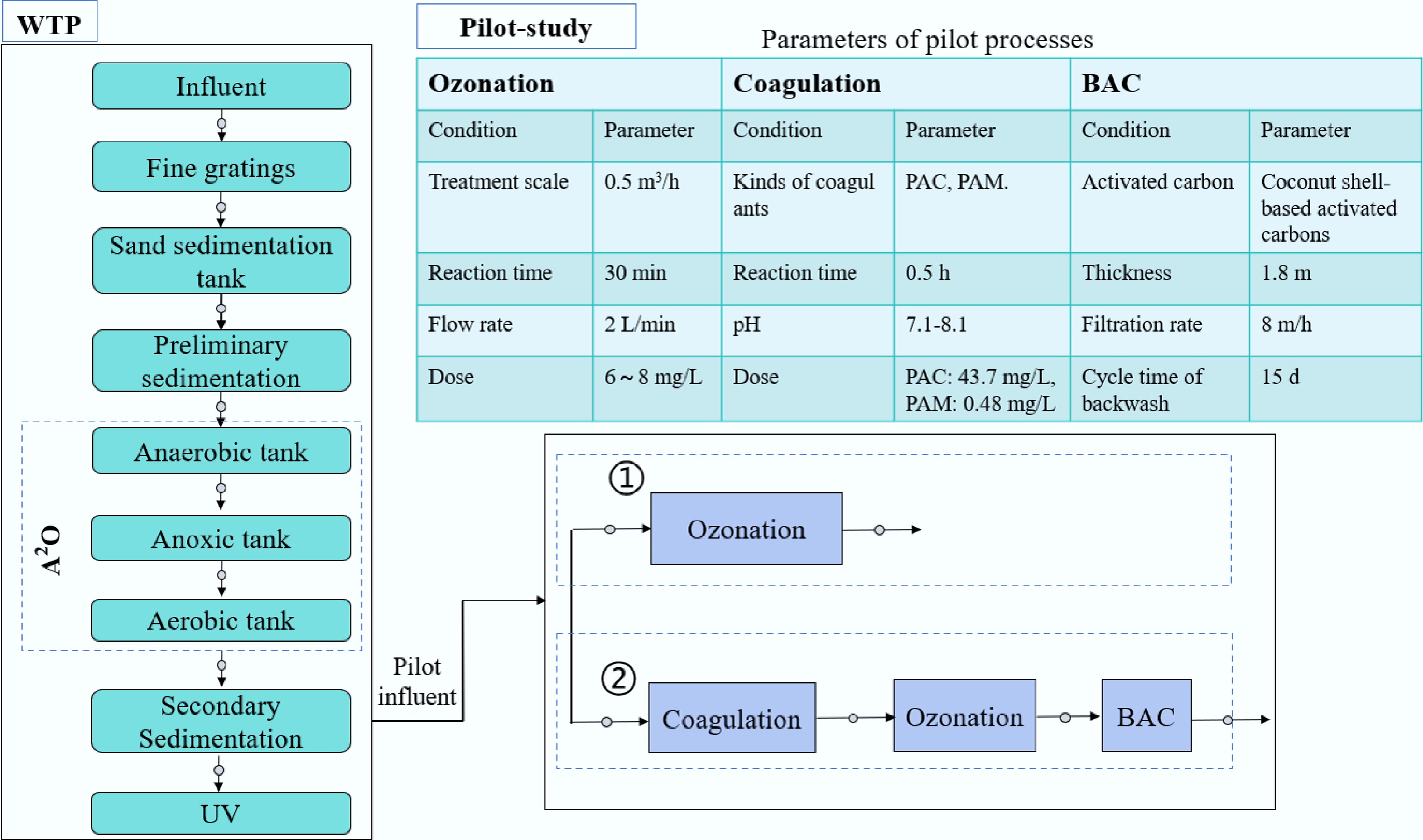
Figure 1.
Main treatment processes and parameters in the WWTP and the pilot plants.
Sample processing
-
Sample processing for the bioassays was performed as described by Han et al.[18] with slight modifications. Samples were transported to the laboratory immediately for processing. Each sample was filtered through 0.45-µm glass fiber filters (APFF; Millipore, USA) to remove insoluble materials. Four Oasis Hydrophilic-Lipophilic Balance (HLB) cartridges (Waters, Milford, USA) were conditioned according to the instructions and used to isolate organic extracts from 10 L of water per sample. The water samples were passed through the HLB cartridges at a flow rate of 5–10 mL/min. After extraction, the cartridges were separated, rinsed with 6 mL of water, and dried for 30 min. Then a dichloromethane : methanol (9:1) solution was used to elute each cartridge, and the eluate extracts were then dried under a gentle flow of nitrogen and dissolved in 200 μL of dimethyl sulfoxide (DMSO). The samples were stored at −20 °C in a fridge. Finally, the extract solutions in DMSO were diluted at a 1:1 ratio across six steps for the bioassays.
Two-hybrid recombint nuclear receptor gene yeasts assay
-
The agonistic and antagonistic activities of the nuclear receptors, i.e., the ER, AR, and TR, were assessed using a two-hybrid recombinant nuclear receptor gene yeast assay, as described by Li et al.[19]. Three two-hybrid yeast strains containing human nuclear receptor genes (hERα, hAR, and hTRβ) and the coactivator GRIP1 were used in this assay. Water samples were tested at six concentrations, each diluted twofold. DMSO served as the negative control. As shown in Table 1, E2 was used as the positive control for the agonistic activity of the ER, whereas 4-OHT was used as the positive control for the antagonistic activity of the ER. DHT was the positive control for the agonistic activity of the AR, and FLU was the positive control for the antagonistic activity of the AR. T3 was used as the positive control for the agonistic activity of the TR, and AMH was the positive control for the antagonistic activity of the TR. To detect agonistic activities, samples were tested in the absence of agonistic chemicals. To detect antagonistic activities, samples were tested in the presence of the agonistic positive chemical, which produced a submaximal stimulatory response. Supplementary Figs S1–S6 show the dose-response curves of the positive chemicals in each assay.
Table 1. Reference compound for positive controls and test concentrations used in the two-hybrid yeast assay
Endpoint Positive chemicals Maximum test concentrations (M) Mixed exposure chemical Estrogenic E2 2.5E-10 − Anti-estrogenic 4-OHT 1 E-5 E2 Androgenic DHT 6.25 E-8 − Anti-androgenic FLU DHT Thyroid T3 5E-7 − Anti-thyroid AMH 1E-4 T3 The procedures were performed as described in previous studies[17,19]. Following a 24-h incubation period at 30 °C with shaking at 175 rpm, 5 μL of each test compound or control was combined with 995 μL of a medium containing 5 × 10³ yeast cells/mL. Then 200 μL of each mixture was transferred to individual wells of a 96-well plate and shaken for 3 h at 30 °C and 800 rpm. After this exposure, the absorbance at 595 nm was measured using a Tecan GENios A-5002 instrument (Salzburg, Austria) to determine the yeast cells' density. Subsequently, 50 μL of the culture was transferred to a new 96-well plate and mixed with 120 μL of a Z-buffer (containing 16.1 g/L Na2HPO4·7H2O, 5.5 g/L NaH2PO4·H2O, 0.75 g/L KCl, and 0.246 g/L MgSO4·7H2O) and 20 μL of chloroform. This mixture was incubated at 30 °C for 10 min. The enzymatic reaction was initiated by adding 40 μL of O-nitrophenyl-β-d-galactopyranoside (13.3 mmol/L in the Z-buffer) and shaking at 30 °C for 60 min. The reaction was terminated by adding 100 μL of Na2CO3 (1 mol/L). Finally, 200 μL of the supernatant was transferred to a fresh 96-well plate, and the absorbance was measured at 420 nm. β-galactosidase activity was calculated according to the equations described by Gaido et al.[20]. All tests were conducted in triplicate.
Data analysis
-
A positive result was defined as both cell viability exceeding 95% and the sample-induced agonistic or antagonistic activity reaching over 10% of the maximum effect of the positive control. For positive results, the bioanalytical equivalent quantity (BEQ) was calculated as described in a previous study[21]. Statistical analysis was conducted using OriginPro 2024 (OriginLab, Northampton, USA).
Derivation of the EBT value for anti-AR activity by the two-hybrid yeast assay
-
The EBT value can indicate the acceptable effect level of toxicological risk. The EBT for AR-antagonistic effects detected by the recombinant androgen nuclear receptor gene two-hybrid yeast assay was derived following the method proposed by van der Oost et al.[35]. The detailed procedures were the same as those in our previous study, which derived the EBT for ER-agonistic effects detected by the recombinant androgen nuclear receptor gene two-hybrid yeast assay. Detailed procedures and results are provided in the Appendix S1 of the present study.
-
As shown in Supplementary Figs S7–S10, positive responses were observed in agonistic ER activity, anti-agonistic ER, AR, and TR activity. The agonistic and antagonistic activities toward the ER, AR, and TR nuclear receptors of the WWTP samples are expressed as the BEQ of the positive chemicals of each assay listed in Supplementary Table S1. This approach allows for a standardized comparison of the endocrine-disrupting potential across different treatment stages. As illustrated in Figs 2 and 3, ER-agonistic activity was prominently detected in the untreated influent and throughout the preliminary stages of the WWTP, especially before the A2O treatment. ER-agonistic activity was also observed at the 0.1 ng/L level in the second pilot ozonation plant. ER-agonistic activity gradually decreased during the WWTP's processes. After secondary sedimentation, the ER-agonistic activity fell below the detection limit. During preliminary sedimentation and the A2O process, a large proportion of ER agonists and ER antagonists were removed, and further UV or ozonation processes continued to demonstrate good efficiency in controlling ER activities, reinforcing their role in the overall treatment strategy.
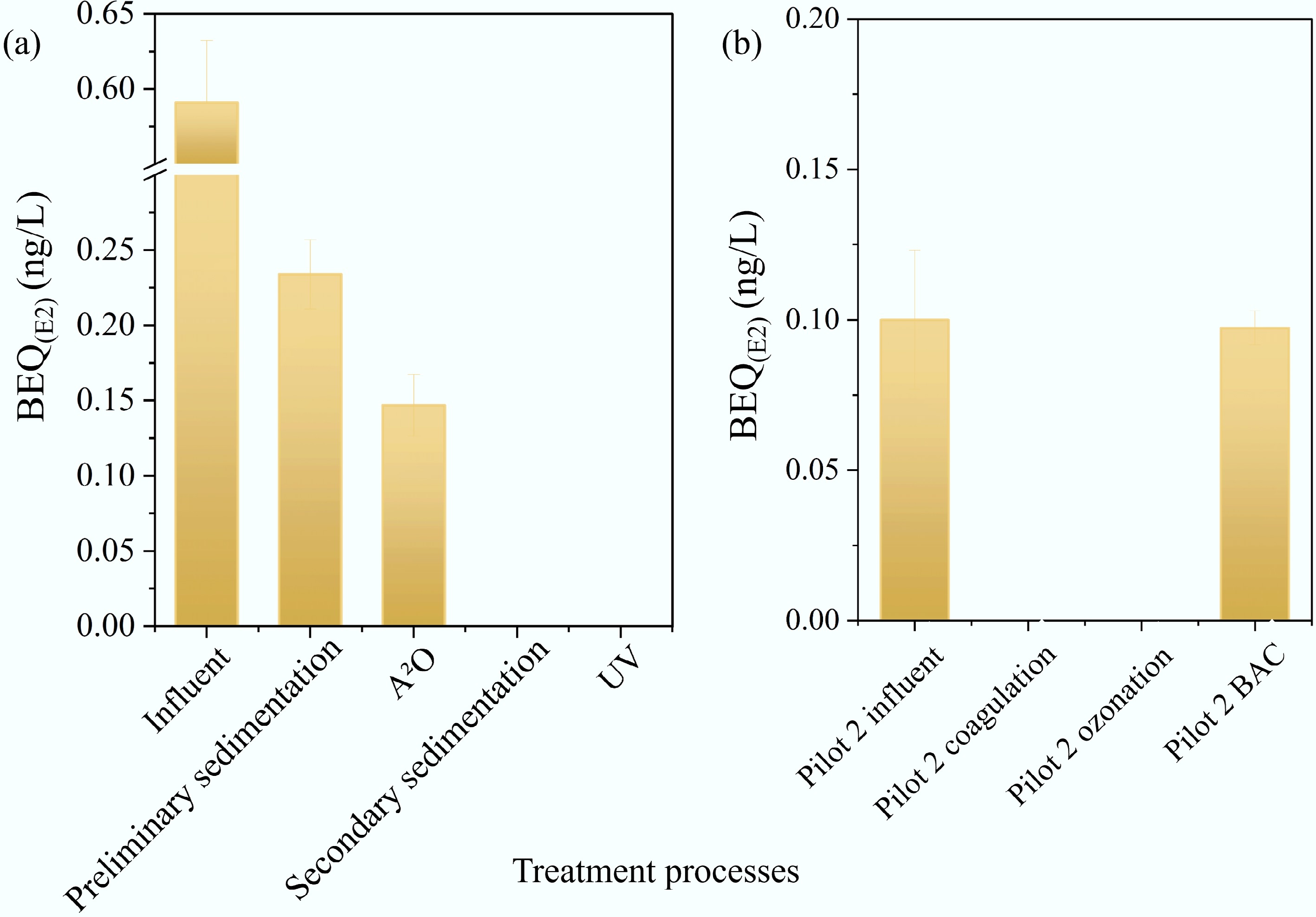
Figure 2.
Agonistic activity against the ER during wastewater treatment processes.
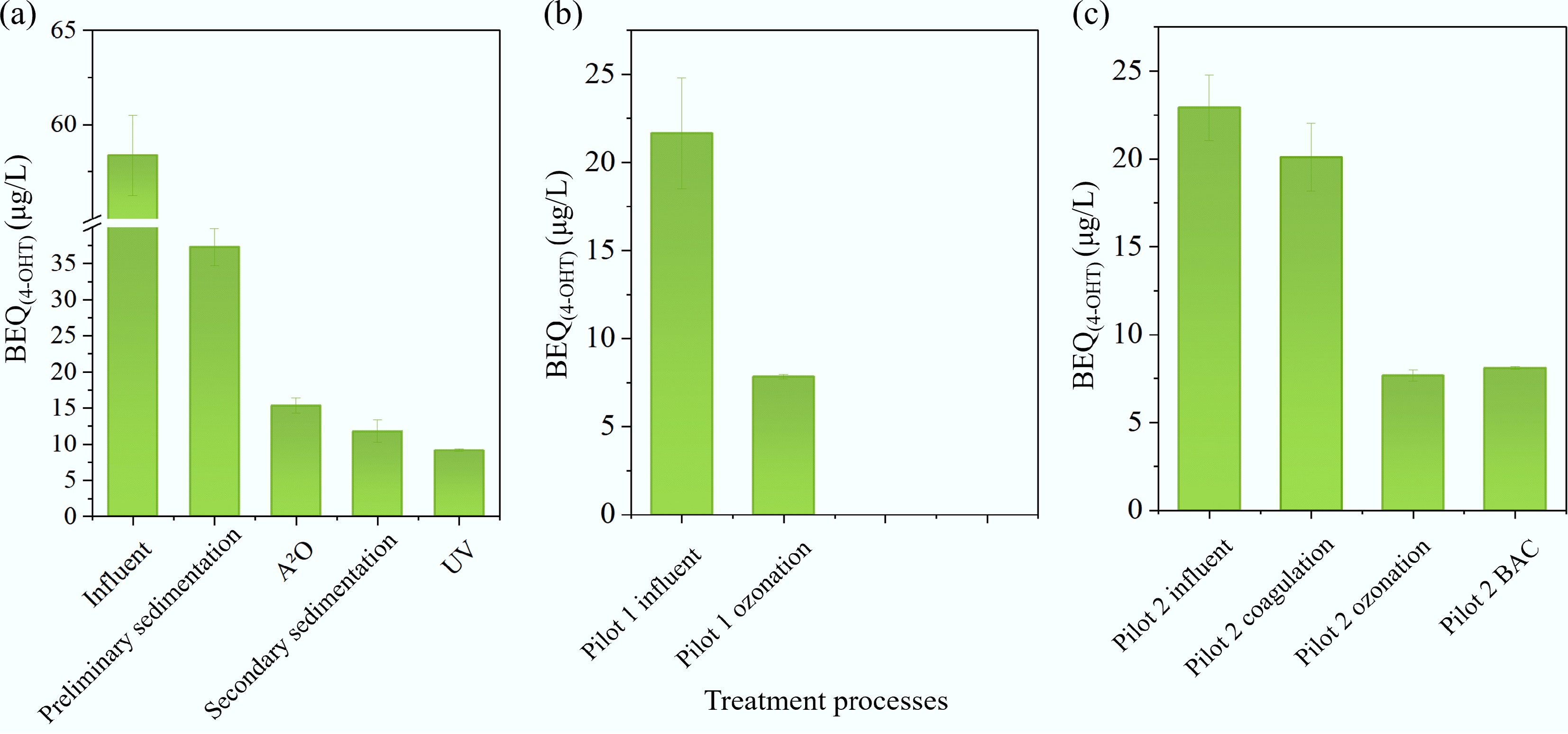
Figure 3.
Antagonistic activity against the ER during wastewater treatment processes.
As Fig. 4 shows, no agonist activity was detected in any of the samples. However, antagonistic activity was consistently observed across all treatment processes, indicating a different profile for anti-androgenic agents. A strong AR-antagonistic activity of 156.6 μg/L was detected in the WWTP influent, which then decreased to 12.4 μg/L during A2O process. A notable increase in AR-antagonistic activity was observed after the UV process in the WWTP and the ozonation process in Pilot 2. Furthermore, BAC followed by ozonation could not further eliminate the increased effects of ozonation in Pilot Plant 2.
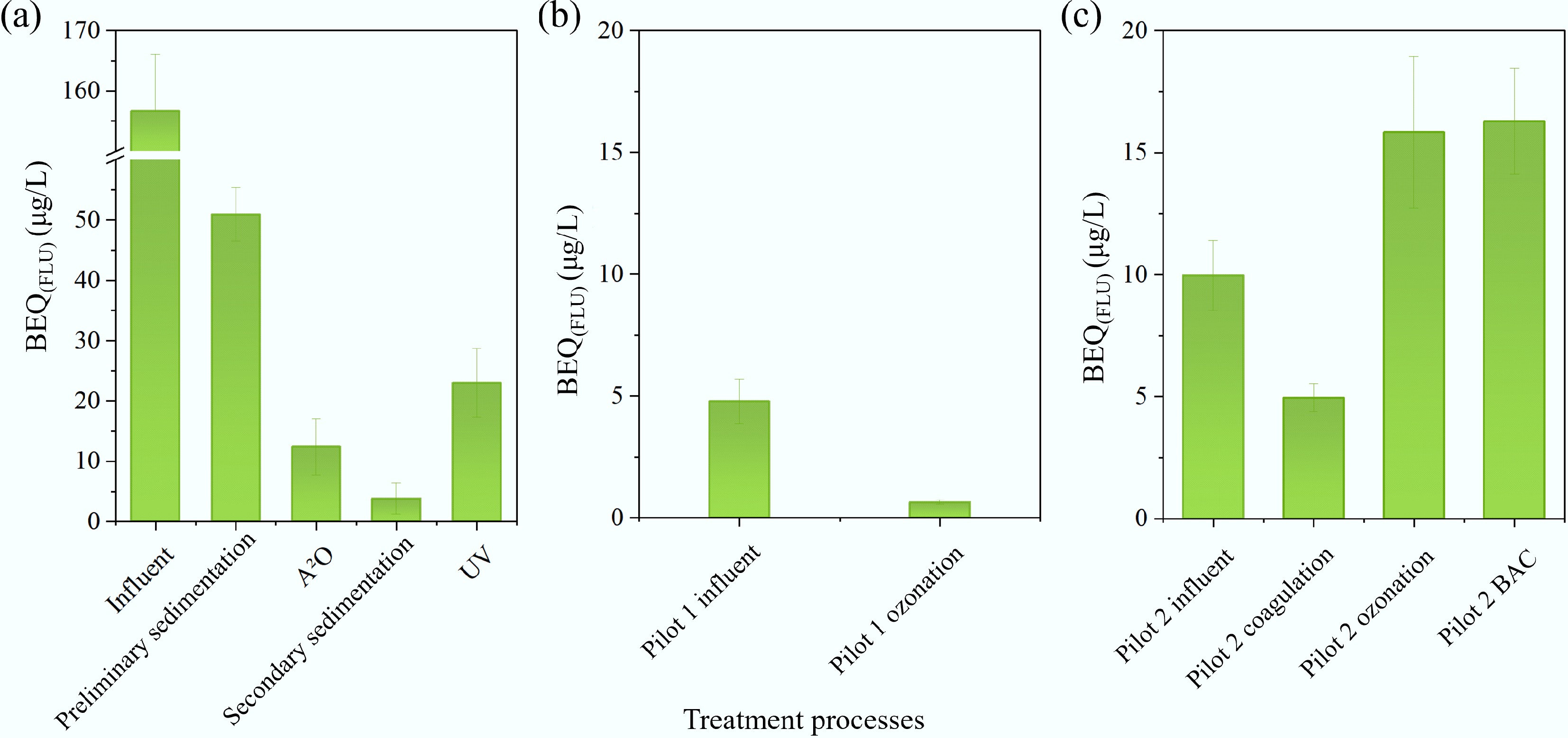
Figure 4.
Antagonistic activity against the AR during wastewater treatment processes.
For TR-disrupting effects, antagonistic activity was detected in all samples (Fig. 5). During the WWTP treatment process, the BEQ (AMD) decreased gradually from 0.56 mg/L to 0.0085 mg/L. In the pilot plant, ozonation and ozonation combined with BAC further eliminated the TR-antagonistic activity to below 0.1 mg/L. A slight increase at the coagulation process in Pilot 2 was observed, compared with Pilot 2's influent.
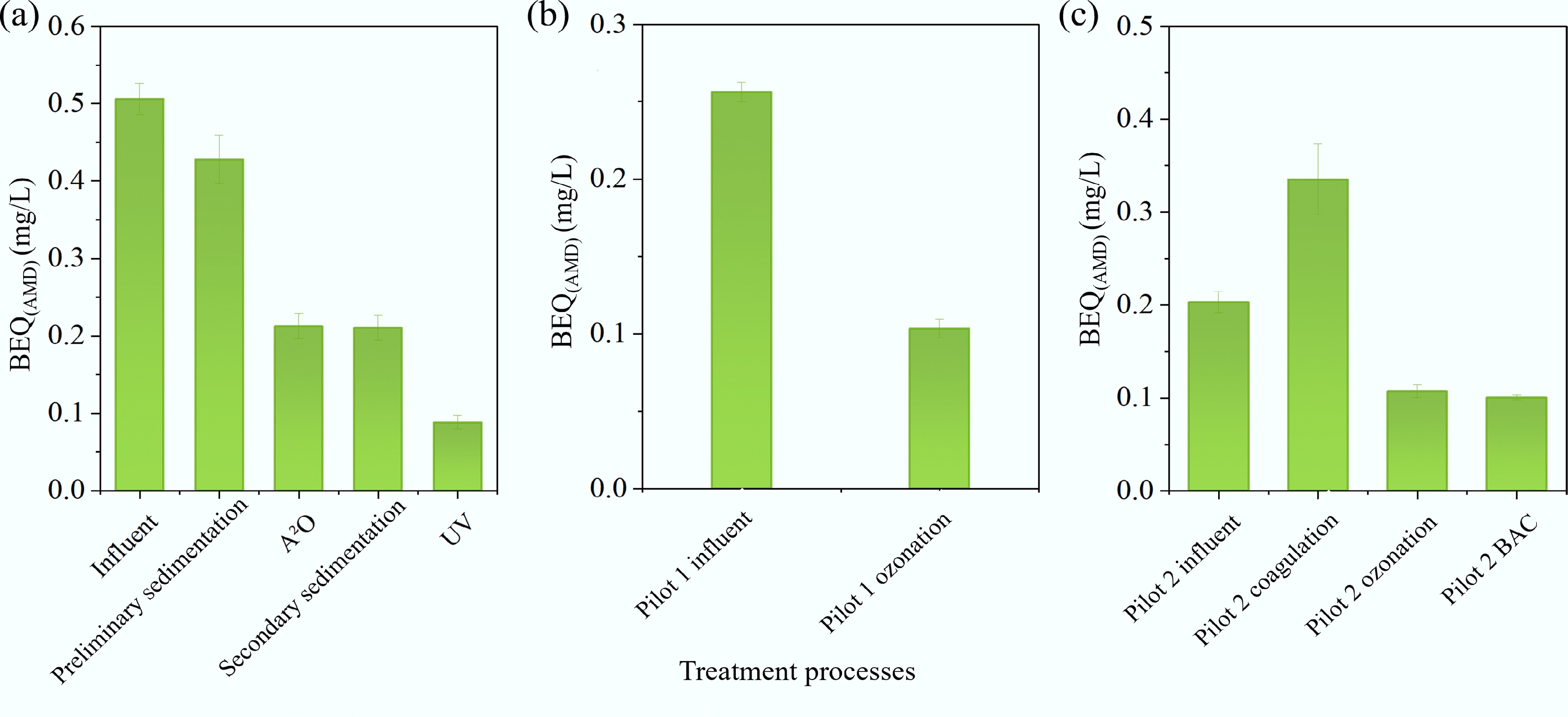
Figure 5.
Antagonistic activity against the TR during wastewater treatment processes.
The removal rates of BEQ for the detected nuclear receptor-disrupting effects for each treatment process were calculated and are presented in Fig. 6, providing a comprehensive overview of the treatment processes' efficacy in mitigating endocrine-disrupting activities. For the treatment processes in the WWTP, the removal rate consistently increased across all stages, except for the BEQ(FLU) during UV treatment. For the treatment processes in the pilot plant, the BEQ(FLU) increased during the ozonation and BAC processes in Pilot 2, and the BEQ(AMD) increased during the coagulation processes in Pilot 2. In addition, the BAC process induced an increase in BEQ(E2), which was not higher than the effluent of secondary sedimentation.
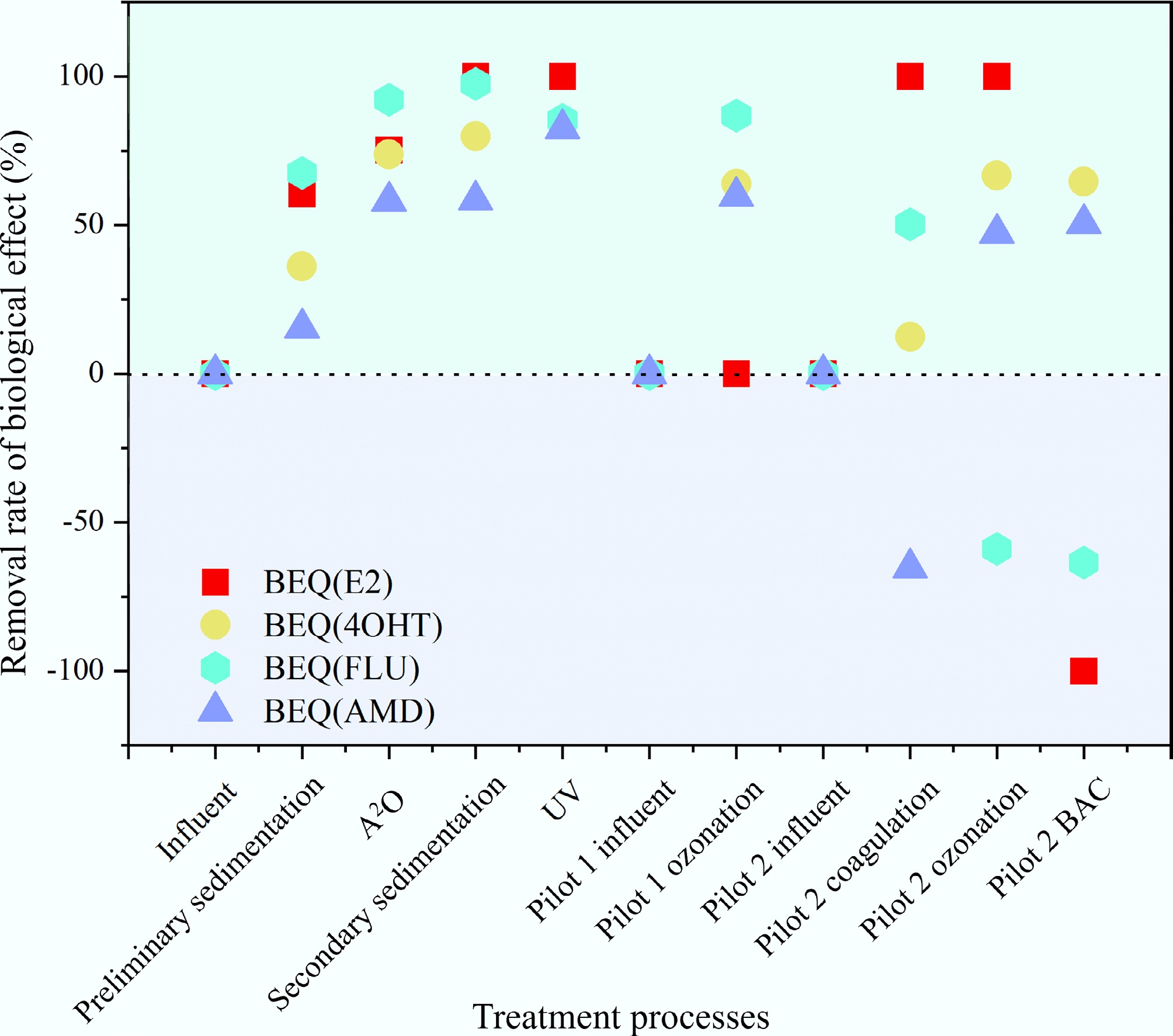
Figure 6.
Removal rate (%) of BEQ for the detected nuclear receptor- disrupting effects in each treatment processes.
-
The present study comprehensively evaluated the efficiency of various wastewater treatment processes in removing endocrine-disrupting activities mediated through the ER, AR, and TR receptors. The adverse effects of advanced processes including UV, ozonation and combined ozonation processes were investigated. As illustrated in Fig. 2, the agonistic activity toward the ER was effectively mitigated throughout the treatment processes. A notable gradual decrease was observed, with activity levels falling below the detection limit following secondary sedimentation. This pattern underscores the efficacy of conventional treatment processes, particularly the A2O process, in eliminating ER agonists, as further quantified by the high removal rates displayed in Fig. 6. These findings align with our previous investigations, where ER-agonistic activity in wastewater was eliminated after A2O treatment in a WWTP[22]. Furthermore, the results corroborate a large-scale study by Zhou et al.[23] involving 12 WWTPs, which demonstrated the superior performance of the A2O-Membrane Bioreactor (MBR) process in removing both estrogenic activity and specific estrogen-like EDCs. However, the ER-agonistic activity detected in the present study was relatively low compared with that reported in the 12 WWTPs in Nanjing, China[23]. It is worth noting that the baseline ER agonistic activity detected in the effluents within our study (expressed as the BEQ of E2) was comparatively lower than the levels reported in the aforementioned large-scale survey, as well as in a prior pilot study in Beijing[24] and an effluent assessment in Switzerland[25], which reported BEQ (E2) values ranging from 0.1 to 1 ng/L. This indicates that the pollution of estrogen-like EDCs exhibits substantial spatial disparities across water environments and obvious temporal variations over different years.
In contrast to agonistic activity, ER-antagonistic activity presented a different removal profile. The ER-antagonistic activity decreased from 58.4 to 7.8–9.2 μg/L, as shown in Fig. 3, with the A2O and ozonation treatments clearly effective in eliminating ER-antagonistic activity. Few studies have investigated antagonistic activity toward nuclear receptors during wastewater treatment processes. However, Wolf et al.[26] examined the impact of ozone treatment on endocrine potential using ERα and AR Chemical Activated Luciferase Expression (CALUX) assays and found that antagonistic activity was detectable in samples with lower agonistic activity. The concurrent presence and variable removal efficiencies of agonistic and antagonistic activities highlight the complex nature of EDCs, as many compounds can exhibit both types of activities. Wang et al.[27] reported that the Tox21 10K compound library contains 954 active agonists and 1,651 active antagonists, with poorly correlated half-maximum effective concentration (EC50) values between these activities.
A particularly intriguing finding was related to AR activity. Although no agonistic activity was detected in any sample, significant antagonistic activity was observed. The A2O process also demonstrated significant efficiency in reducing AR-agonistic activity. In contrast, UV treatment and ozonation (Pilot 2) clearly increased AR-agonistic activity. AR disruptors have been frequently detected in wastewater and sewage sludge, with AR antagonists identified more often than AR agonists[13,28,29]. Itzel et al.[9] observed increased ER- and AR-antagonistic activity for ozonation in two hospital wastewater treatment plants and only Tris(2-carboxyethyl) phosphine (TCEP) was identified as actively anti-estrogenic. In the present study, the increased AR-antagonistic activity following the UV and ozonation treatments is likely related to the TPs generated. It was reported that toxic and assimilable TPs were ubiquitously observed in more than 80% of UV treatment of organic pollutants, for which the toxicity and assimilability levels vary under different reaction conditions, such as the UV fluence and oxidant dosage. It was also reported that toxic and assimilable TPs may be generated during hydroxylation, dealkylation, decarboxylation, and deamination reactions[30]. As EDCs could not be completely mineralized during oxidation processes, their hydroxylated products and benzene-based products probably still act as endocrine-disrupting agents, especially the TPs generated at low dosage of the oxidant[31]. To date, TP with AR-antagonistic effects have not been reported. The main constraint is that sufficient standard mass spectral data are still unavailable for most oxidation-derived TPs, limiting accurate elucidation of their structure and toxicity correlations.
To understand the level of risks indicated by the detected biologi-cal effects, the EBT for the AR-antagonistic effects detected by therecombinant androgen nuclear receptor gene two-hybrid yeastassay was derived as 7.97 μg FLU EQ/L (Appendix S1). Other EBTs for the bioassays detecting nuclear receptor-disrupting effects were collected from recently published studies (Table 2). Compared with the EBT for the anti-AR yeast assay (7.97 μg FLU EQ/L), the antiagonistic effects of the UV-treated effluent indicate a high level of risk. Recent studies have reported that advanced UV-based processes are much more effective at removing both the parent pollutants and their cytotoxicity than UV treatment alone[32−34]. Although an EBT for AR-antagonistic activity using the two-hybrid yeast assay has not yet been established, the current results suggest that when UV treatment is used alone to control pathogenic microorganisms, its adverse effects on multiple endpoints should be carefully considered.
Table 2. EBT values for the bioassays of nuclear receptor-disrupting effects
Bioassay Endpoint EBT value Ref. ER CALUX Estrogenic 0.5 ng EEQ/L Van der Oost et al.[35] ER-Gene BLAzer Estrogenic 0.34 ng EEQ/L Escher et al.[36] ERa_Luc_BG1 Estrogenic 0.62 ng EEQ/L Escher et al.[36] Two-hybrid recombinant ER gene yeast assay Estrogenic 0.5 ng EEQ/L Zhang et al.[22] Anti-AR CALUX Anti-androgenic 25 µg FLU EQ/L Van der Oost et al.[35] Anti-AR Gene BLAzer Anti-androgenic 3.28 µg FLU EQ/L Escher et al.[36] Two-hybrid recombinant AR gene yeast assay Anti-androgenic 7.97 μg FLU EQ/L Present study Anti-TR-LUC-GH3 Anti-TR 0.60 µg BPA-EQ/L Escher et al.[36] Finally, the TR-disruptive effects were exclusively antagonistic. In the pilot plant, ozonation and ozonation combined with BAC demonstrated high efficiency in controlling TR-disrupting effects. Throughout these processes, coagulation caused a slight increase in TR-antagonistic activity compared with the influent in the second pilot plant. As is well known, coagulation plays an important role in removing suspended solids and colloidal particles from wastewater. High-molecular-weight and hydrophobic dissolved organic matter might compete with organic pollutants in Polyaluminium Chloride (PAC) adsorption, and the removal rate of EDCs decreased with an increas in turbidity[37,38]. The increased TR-antagonistic activity is perhaps caused by the residual EDCs during coagulation.
-
The present study conducted an integrated assessment of endocrine-disrupting effects for a typical WWTP equipped with two pilot plants. The study identified and discussed the adverse impacts on toxicity control of advanced processes, including UV, ozonation, and combined ozonation. The results indicate that these advanced processes can increase toxic effects across various toxicological endpoints. After the A2O process removed the majority of toxic effects, the UV and ozonation treatments demonstrated good efficiency in controlling ER and TR activity. However, the AR-antagonistic activity increased following both the UV and ozonation treatments, potentially posing toxic risks to the ecosystem. These results suggest that toxic risks arising from complex TPs generated by advanced processes warrant careful attention. Efforts should be made to balance the formation of toxic TPs with the overall efficiency of advanced processes. This study highlights the necessity of using effect-based analysis across multiple endpoints to identify the adverse effects of advanced treatment processes.
-
It accompanies this paper at https://doi.org/10.48130/een-0026-0014.
-
Not applicable.
-
The authors confirm their contributions to the paper as follows: Yingnan Han: conceptualization, investigation, formal analysis, funding acquisition, writing – original draft; Kongrui Zhu: investigation, sampling; Na Li: methodology, data curation; Wei Shang: conceptualization; Yu Zhang: funding acquisition; Ma Mei: writing – review, supervision. All authors reviewed the results and approved the final version of the manuscript.
-
The datasets generated during and analyzed during the current study are available from the corresponding author on reasonable request.
-
The authors declare that they have no known competing financial interests or personal relationships that could have appeared to influence the work reported in this paper.
-
Full list of author information is available at the end of the article.
- The supplementary files can be downloaded from here.
- Copyright: © 2026 by the author(s). Published by Maximum Academic Press, Fayetteville, GA. This article is an open access article distributed under Creative Commons Attribution License (CC BY 4.0), visit https://creativecommons.org/licenses/by/4.0/.
-
About this article
Cite this article
Han Y, Zhu K, Li N, Shang W, Zhang Y, et al. 2026. Integrated effect-based analysis of endocrine disruption risks in advanced wastewater treatment: elevated hazards from ozonation and ultraviolet processes. Energy & Environment Nexus 2: e021 doi: 10.48130/een-0026-0014 

Integrated effect-based analysis of endocrine disruption risks in advanced wastewater treatment: elevated hazards from ozonation and ultraviolet processes
- Received: 03 March 2026
- Revised: 15 May 2026
- Accepted: 08 June 2026
- Published online: 27 July 2026
Abstract: With increasing understanding of the toxicology of transformation products generated during water treatment processes, the adverse risks of advanced processes have attracted significant attention. However, few studies have comprehensively evaluated the toxicity risks across multiple toxic endpoints in effluents of advanced processes. We conducted an integrated assessment of endocrine-disrupting effects at a typical wastewater treatment plant (WWTP) equipped with two pilot plants. The disrupting effects on the estrogen receptor (ER), androgen receptor (AR), and thyroid receptor (TR) were investigated using a two-hybrid recombinant nuclear receptor gene yeast assay. The effect-based trigger value (EBT) for the AR anti-agonistic yeast assay was derived and applied to identify the adverse effects induced by the advanced processes, including ultraviolet (UV), ozonation, and combined ozonation. The results indicated that UV and ozonation treatment alone were not sufficiently safe for mitigating all endocrine risks. After the A2O process removed the majority of toxic effects, the UV and ozonation treatments demonstrated good efficiency in eliminating the ER and TR activities. However, both UV irradiation and ozonation increased the AR antagonistic activity above the derived EBT benchmark of 7.97 μg flutamide EQ/L, indicating a considerable ecological risk. This study highlights the necessity of identifying the adverse consequences of advanced processes by using effect-based analysis.
-
Key words:
- Advanced process /
- Adverse effect /
- Nuclear receptor /
- Agonistic AR activity /
- Risk