-
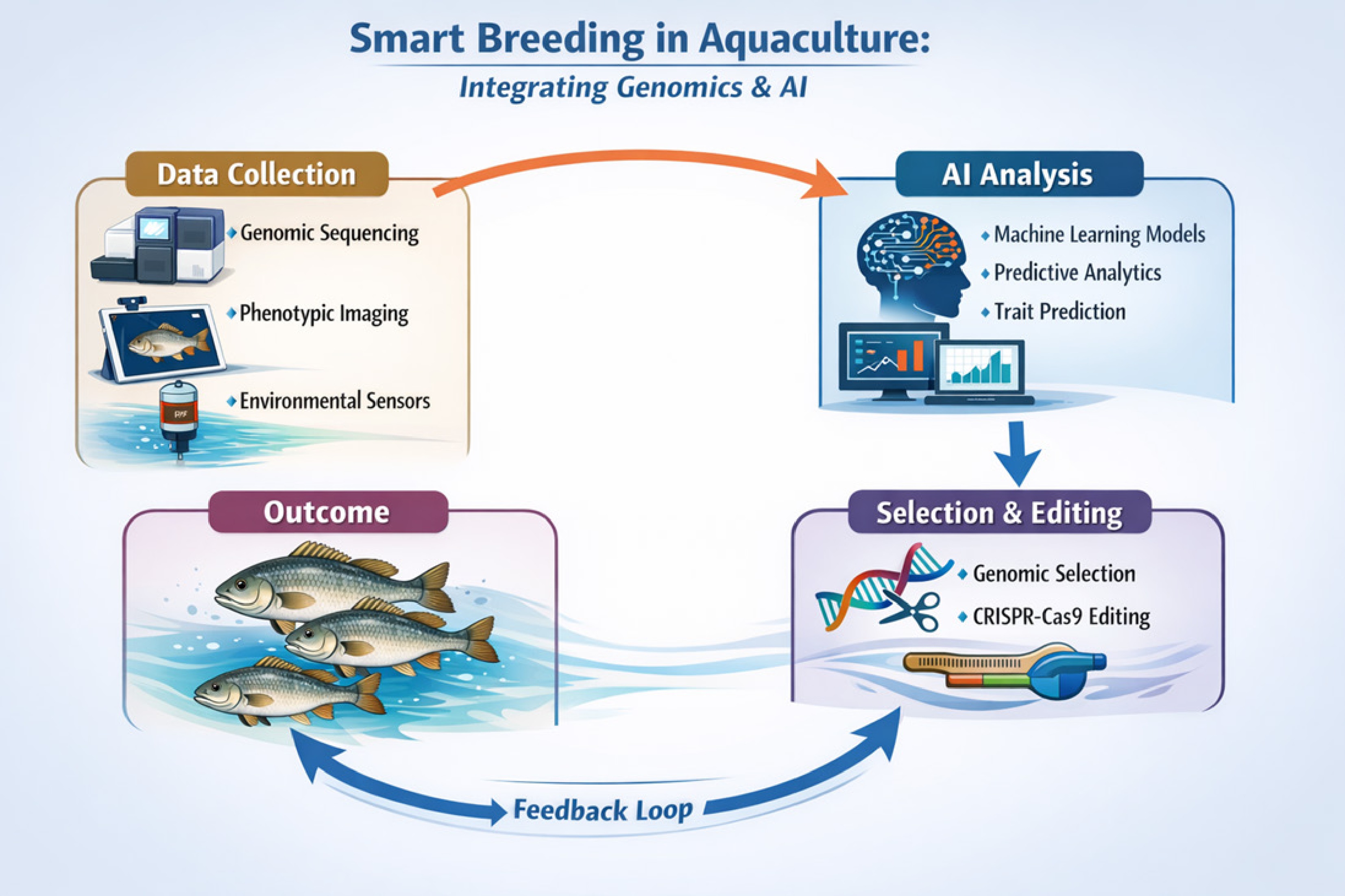
Figure 1.
The smart breeding paradigm. Smart breeding is defined by the convergence of genomics and artificial intelligence. This integration aims to accelerate genetic gain, enhance resilience to diseases and environmental stress, and reduce the environmental footprint of aquaculture production, contributing to global food security.
-
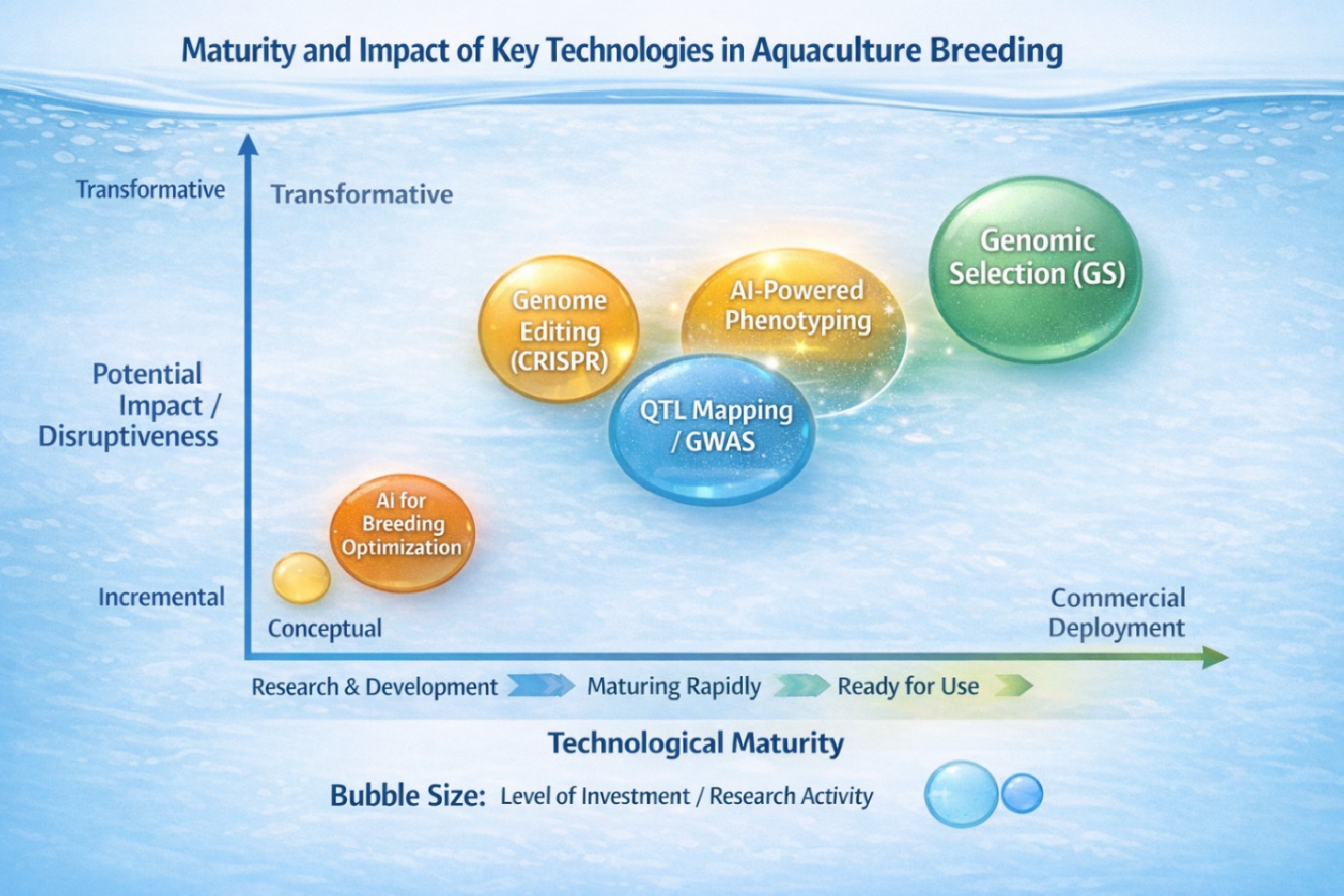
Figure 2.
Maturity and impact of smart breeding technologies. A qualitative assessment of key technologies. Genomic selection (GS) and AI-driven phenotyping are approaching commercial maturity with proven impact. Genome editing and AI-designed breeding strategies hold transformative potential but are at earlier stages of development and validation, facing significant regulatory and technical hurdles. Bubble size indicates relative research activity.
-
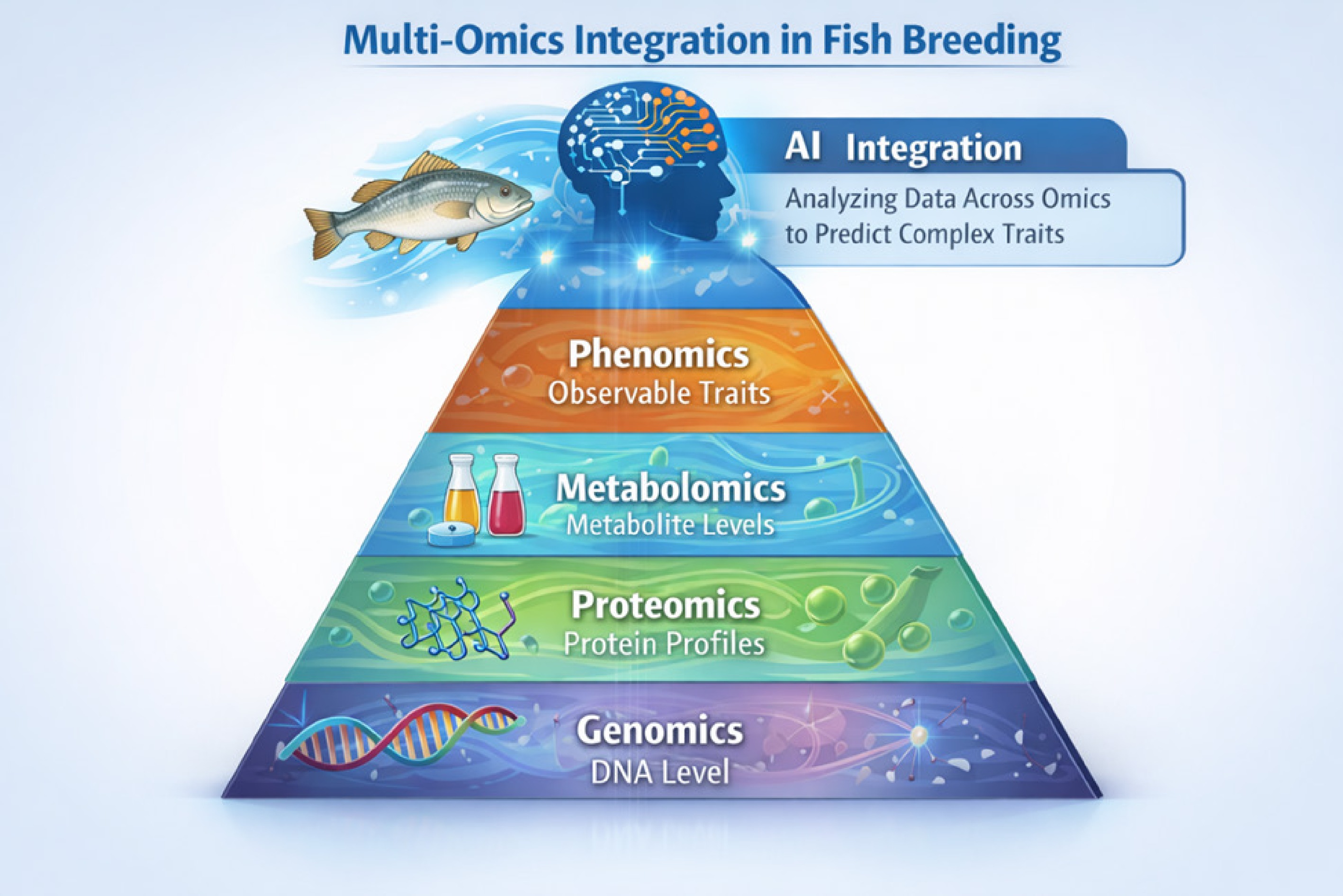
Figure 3.
Multi-omics integration in fish breeding.
-
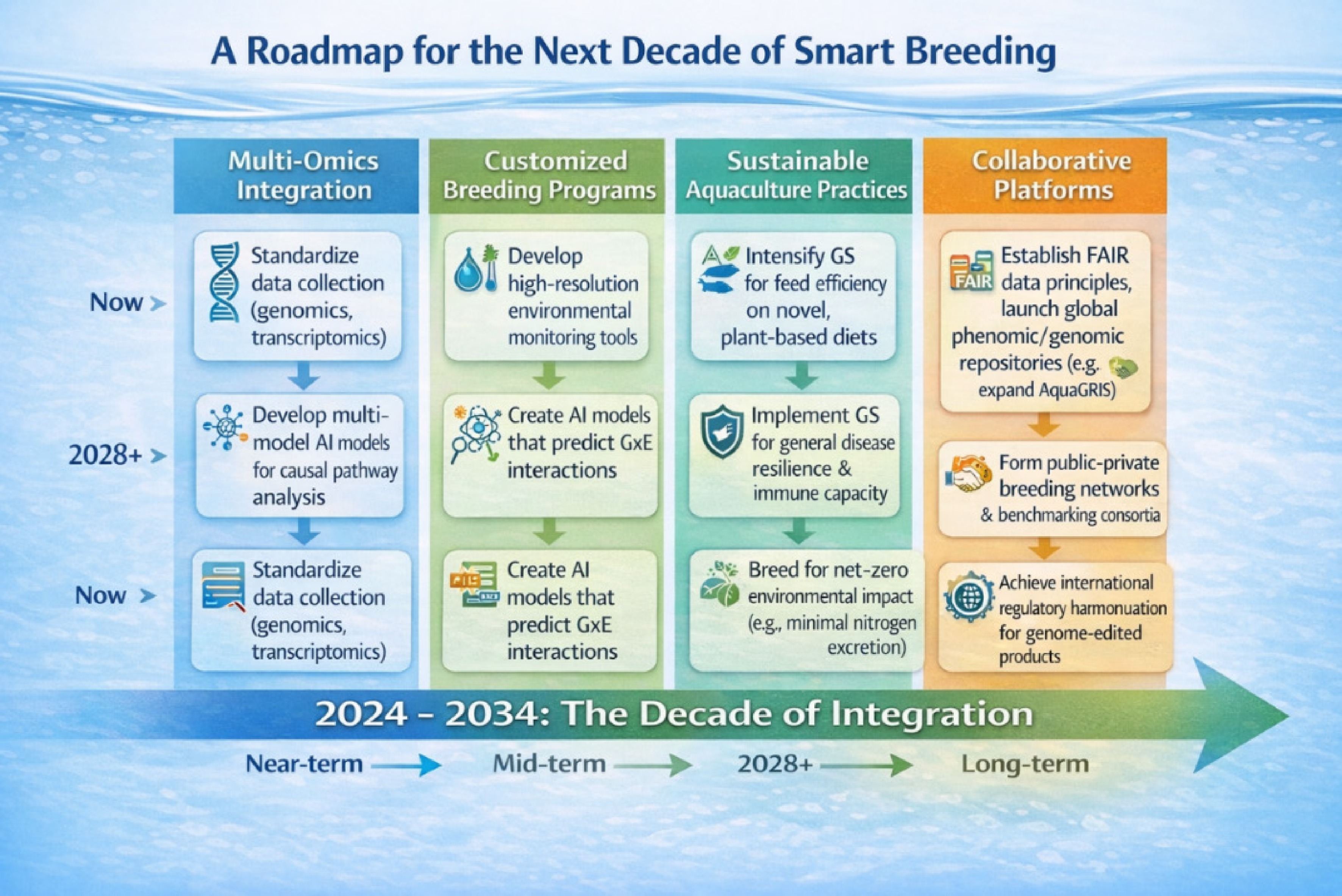
Figure 4.
A roadmap for the next decade of smart breeding. Achieving the full potential of smart breeding requires a coordinated effort across four key fronts. This roadmap outlines the critical near-term, mid-term, and long-term milestones for multi-omics integration, customized breeding, sustainability-focused genetic improvement, and the development of collaborative platforms.
-
AI tool/method Function Use case in aquaculture Machine learning (ML) Pattern recognition, prediction Predicting breeding values from genomic data Computer vision Image analysis Automated phenotyping of body shape & size Deep learning Complex data modelling Analysing gene–environment interactions Simulation models Scenario testing Optimizing breeding strategies under constraints Table 1.
AI tools and their roles in smart breeding in aquaculture.
-
Challenge Impact on adoption Proposed solutions High cost Limits small-scale farms Develop low-cost sequencing and AI tools; subsidies Data fragmentation Inconsistent datasets Create open access, standardized genomic databases Regulatory hurdles Slows innovation Establish clear, science-based guidelines Skill gap Lack of interdisciplinary expertise bioinformatics and AI for aquaculture Table 2.
Challenges and potential solutions in implementing smart breeding.
Figures
(4)
Tables
(2)