












-
Global demand for seafood is projected to increase substantially over the coming decades, driven by population growth, urbanization, and shifts toward healthier diets[1]. Capture fisheries are largely at or beyond sustainable exploitation limits, placing aquaculture at the center of future aquatic food supply[2]. Yet aquaculture faces persistent challenges, including disease outbreaks, inefficient feed utilization, environmental impacts, and vulnerability to climate variability[3]. Traditional selective breeding has delivered substantial genetic gains, but progress is constrained by long generation intervals, limited phenotyping capacity, and complex genotype–environment interactions[4,5].
Smart breeding, defined here as the convergence of genomics and AI-enabled data analytics, promises to overcome some of these constraints[6,7] (Fig. 1). Genomics offers tools for identifying and manipulating genetic variation[8−10], while AI provides computational frameworks for extracting predictive patterns from large-scale biological and environmental datasets[11−13]. The integration of these technologies has the potential to shift breeding from empirical selection toward predictive and design-oriented genetic improvement. Unlike genomic breeding/selection, which primarily leverages molecular markers to predict genetic merit[5,14], and digital aquaculture, which focuses on sensor-based monitoring of environmental and physiological parameters[15], smart breeding integrates AI-based phenotyping and data analytics with automated decision-making. In this way, smart breeding serves as a decision-support bridge between molecular prediction and environmental sensing, rather than being synonymous with either approach. However, the field remains characterized by uneven adoption, methodological uncertainty, and significant ethical and socio-economic considerations.
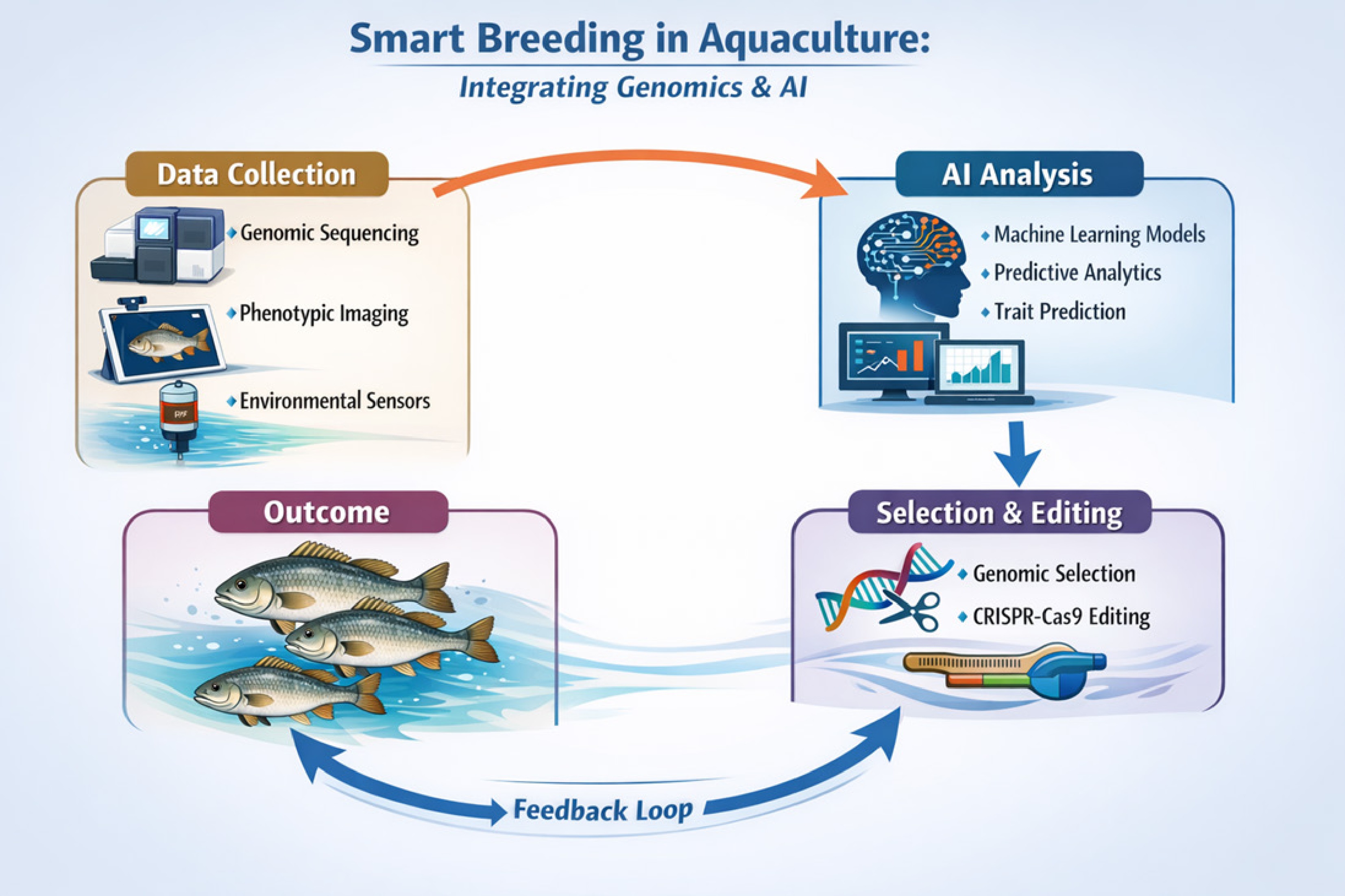
Figure 1.
The smart breeding paradigm. Smart breeding is defined by the convergence of genomics and artificial intelligence. This integration aims to accelerate genetic gain, enhance resilience to diseases and environmental stress, and reduce the environmental footprint of aquaculture production, contributing to global food security.
Unlike previous reviews that focus separately on genomics[8,9,16,17] or digital aquaculture technologies[11,15,18], this article synthesizes their integration into operational breeding pipelines. This review critically examines the state of smart breeding in aquaculture. Rather than providing a purely descriptive overview, we assess empirical evidence, methodological limitations, and systemic barriers. We also outline future research and governance priorities required to transition from proof-of-concept studies to robust, scalable breeding platforms.
-
Next-generation sequencing (NGS)[19] has fundamentally transformed fish genetics and breeding by enabling the generation of reference genomes, transcriptomes, and dense molecular marker resources for economically important aquaculture species[8]. Since the sequencing of the first aquaculture species genome[20], genomic initiatives have expanded rapidly, and over 100 cultured species now have draft or chromosome-level assemblies[8,9,21]. These resources have enabled genome-wide association studies (GWAS), genomic selection (GS), and emerging genome editing (GE) applications, providing unprecedented opportunities to accelerate genetic gain in aquaculture[9,21].
Despite these advances, significant limitations remain. Many aquaculture species still lack high-quality, well-annotated reference genomes, and existing assemblies are often fragmented, incomplete, or biased toward a limited number of populations[8,9,21]. Fish genomes are characterized by high repeat content, recent whole-genome duplications, extensive structural variation, and frequent copy number variation, which are poorly captured by short-read sequencing and conventional assembly pipelines[8,21]. Polyploid species and taxa with complex sex determination systems pose additional challenges for accurate genome assembly and functional annotation. Furthermore, a substantial proportion of genomic data generated by industry and private breeding companies is not deposited in public repositories, restricting data accessibility, reproducibility, and broader scientific progress.
Biological complexity further constrains the predictive power of genomic tools. In aquatic organisms, genotype–phenotype relationships are strongly modulated by environmental variability, including temperature, salinity, nutrition, and pathogen exposure[22,23]. Such genotype-by-environment interactions reduce the transferability of genomic prediction models across production systems and geographic regions, highlighting the need for multi-environment datasets, functional genomics integration, and more sophisticated modelling frameworks.
QTL mapping, GWAS, and genomic selection
-
Quantitative trait loci (QTL) mapping[5] and genome-wide association studies (GWAS)[16] have identified loci associated with growth, disease resistance, and reproductive traits in several aquaculture species[14]. Here are a few case studies in QTL mapping and genomic selection (GS). In Atlantic salmon (Salmo salar), its farming faces a significant threat from sea lice, parasites that cause substantial economic losses and welfare issues[24,25]. Genomic studies have been instrumental in identifying genetic markers associated with natural resistance to this parasite[26,27]. By incorporating these markers into breeding programs via marker-assisted selection (MAS), companies can selectively breed salmon with a greater innate ability to withstand lice infestations, reducing the reliance on chemical and mechanical treatments[25]. Similarly, genomics has been used to map QTLs for traits related to maturation timing (delaying sexual maturity to improve growth and flesh quality)[28], resistance to diseases infectious pancreatic necrosis (IPN)[29,30] and infectious salmon anaemia (ISA)[31,32], as well as resistance to iridovirus in Asian seabass (Lates calcarifer)[33,34]: this high-value species faces challenges with growth uniformity and disease. QTL mapping studies have successfully identified genomic regions significantly associated with body weight and growth rate[35−40]. Furthermore, research has pinpointed QTLs linked to resistance against viral nervous necrosis (VNN), a major viral pathogen[41,42]. These identified markers provide a direct pathway for selective breeding programs to enhance both productivity and survival rates in seabass aquaculture[5]. Marker-assisted selection (MAS) has demonstrated utility for traits controlled by major loci, such as resistance to specific pathogens. However, most economically important traits are highly polygenic, limiting the effectiveness of MAS.
GS represents a major advance by using genome-wide markers to predict breeding values[14]. Empirical studies in salmonids, tilapia, Asian seabass, shrimp species, and other aquaculture species show that GS can increase prediction accuracy compared to pedigree-based methods[9,14,16,43]. For example, in genomic selection for pathogen resilience, instead of relying on disease challenge tests for every selection candidate, GS uses genome-wide DNA markers to predict an animal's genetic merit for resistance[44−47]. A 'training population' of fish is both genotyped and subjected to a controlled disease challenge or is precisely phenotyped[48]. Advanced statistical models (like GBLUP or Bayesian methods) are then used to learn the association between the genome-wide marker profiles and the observed outcomes[49]. Once calibrated, these models can be applied to future generations; by simply taking a DNA sample from a juvenile, breeders can calculate its GEBV for resistance and select the best individuals as parents, all without ever exposing them to the pathogen[14,49]. This method increases accuracy, reduces costs associated with disease challenges, and significantly speeds up the breeding cycle. Here are some successful examples. In shrimp (e.g., Penaeus vannamei), the shrimp farming industry has been devastated by viruses like white spot syndrome virus (WSSV)[50] and early mortality syndrome (EMS)[51]. Selective breeding for resistance has been a cornerstone of recovery. Genomic tools have accelerated this process immensely. By employing GWAS to discover markers and subsequently implementing GS, major breeding companies now routinely produce shrimp lines with significantly higher survival rates when exposed to these pathogens[52,53]. GS enables accurate selection for resistance, enhancing stock resilience and farm profitability at an unprecedented rate. In tilapia, bacterial diseases, such as streptococcosis caused by Streptococcus iniae and S. agalactiae, lead to high mortality[54,55]. Genomic research has identified SNP markers associated with resistance to these infections[56,57]. Breeding programs in major tilapia-producing countries have integrated GS to select for more robust genetic lines[17,58]. This not only reduces mortality but also decreases the need for antibiotic use, addressing a critical concern for food safety and antimicrobial resistance. GS is also applied to improve growth rates and fillet yields in tilapia[59,60].
Nevertheless, prediction accuracy remains variable across environments, populations, and traits, and declines when models are applied across generations or production systems. This highlights the need for continual model recalibration and large, diverse training populations, which are costly and often proprietary. In addition, genotyping for a large number of SNPs is still expensive, although the cost decreases substantially due to the use of genotyping by sequencing using 2nd or 3rd generation sequencing technologies[61]. Wider adoption will depend on improved cost-efficiency, shared datasets, and standardized analytical pipelines (Fig. 2).
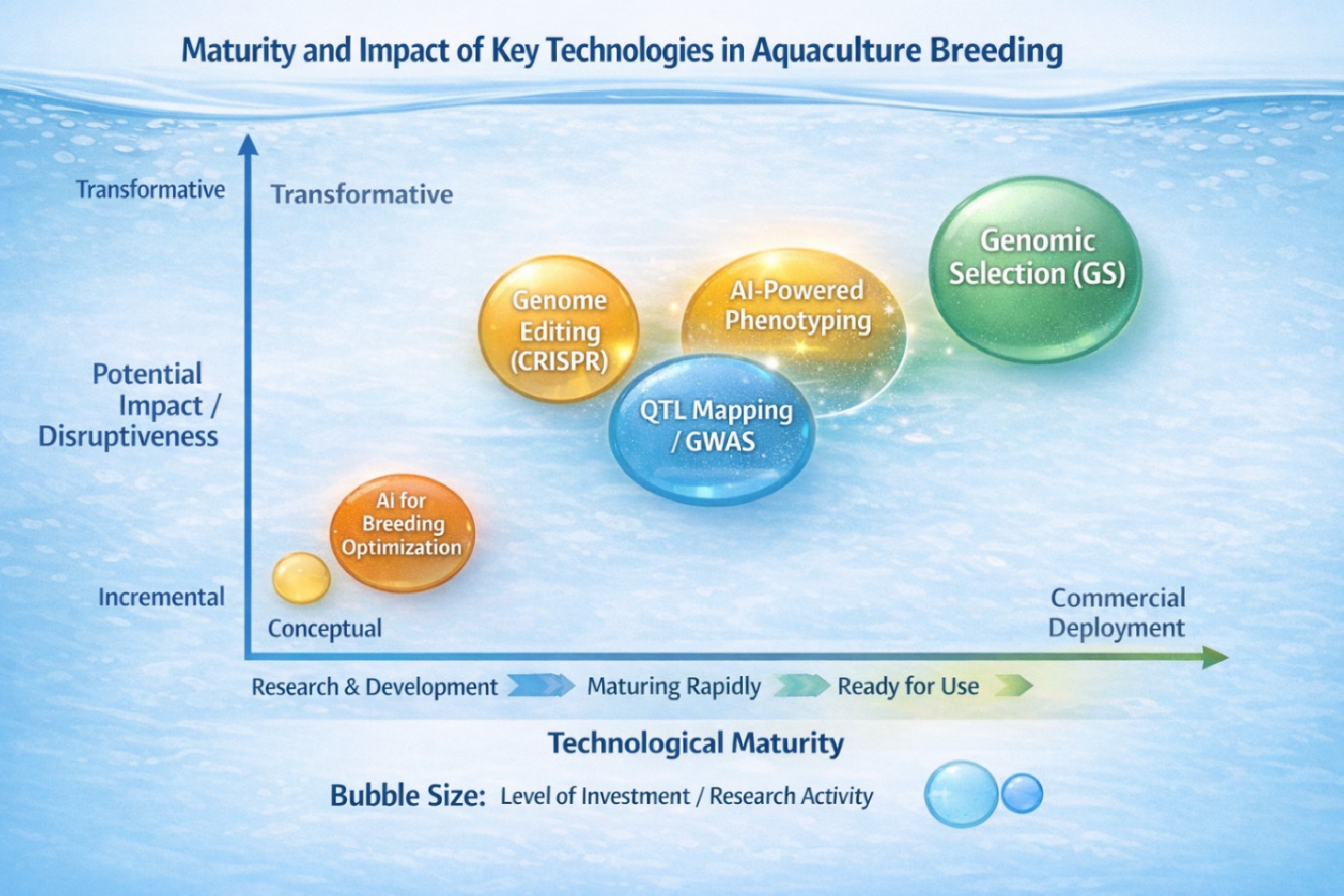
Figure 2.
Maturity and impact of smart breeding technologies. A qualitative assessment of key technologies. Genomic selection (GS) and AI-driven phenotyping are approaching commercial maturity with proven impact. Genome editing and AI-designed breeding strategies hold transformative potential but are at earlier stages of development and validation, facing significant regulatory and technical hurdles. Bubble size indicates relative research activity.
Genome editing (GE): potential and uncertainty
-
While genomic selection accelerates the combination of existing favourable genes[48,58], GE offers the revolutionary ability to directly create desired genetic variants[62,63]. At the forefront of this technology is CRISPR-Cas9, a system that functions as molecular scissors, allowing scientists to make precise, targeted modifications at specific locations in the genome[64,65]. This represents a quantum leap from traditional selective breeding, which relies on the random recombination of genes over many generations[62,63,66]. Here are a few examples of the applications of GE in aquaculture. (1) Enhancing production traits: The most prominent example is the editing of the myostatin (mstn) gene. Myostatin is a negative regulator of muscle growth; inhibiting its function results in increased muscle mass, or a 'double-muscling' phenotype[67]. Successful mstn gene editing has been demonstrated in species such as common carp, red sea bream, and channel catfish, leading to dramatic improvements in growth rate and muscle yield[10,68−70]. This direct intervention can achieve in a single generation what might take decades of selective breeding. (2) Genetic containment and control: A major environmental concern in aquaculture is the escape of farmed fish and their potential to interbreed with, or outcompete, wild populations[71]. GE provides elegant solutions. It can be used to induce sterility by disrupting genes essential for gonad development (e.g., dnd or gsdf), creating sterile fish that cannot reproduce if they escape[72]. Similarly, editing can produce monosex populations (e.g., all-female/male stocks in species where one sex grows larger)[73]. This is particularly valuable for tilapia and trout, preventing uncontrolled reproduction in culture ponds and ensuring more uniform, predictable harvests. GE has many advantages over traditional selective breeding[10,63,74−76]. GE directly targets the causal gene, eliminating the genetic 'drag' of inadvertently selecting linked, undesirable genes, a common problem in traditional breeding. It can introduce beneficial alleles that may not exist in the population's gene pool. It allows for the improvement of traits that are difficult or impossible to breed for selectively, such as introducing disease resistance from a resistant species into a susceptible one or knocking out a gene responsible for an anti-nutritional factor in feed. By creating fish with improved feed efficiency and disease resistance, GE can contribute to more sustainable farming practices with less waste and fewer chemical inputs.
It is critical to distinguish GE from older transgenic (GMO) techniques. While transgenic methods often involve inserting foreign DNA from another species[76], modern editing typically involves precise tweaks within the species' own genome, such as knocking out a gene or changing a single DNA letter to mimic a beneficial natural mutation[10,63]. This distinction is important for regulatory frameworks and public perception. However, GE in aquaculture remains experimental. Concerns include off-target mutations, mosaicism, pleiotropic effects, and unknown ecological consequences[75]. Moreover, regulatory frameworks are fragmented globally, creating uncertainty for commercial deployment and international trade[74]. While some countries have begun to approve genome-edited products, Argentina, the United States, and Japan have each taken different approaches: Argentina has granted regulatory exemptions to a myostatin-knockout Nile tilapia, deeming it non-transgenic; and Japan has approved several genome-edited fish for commercial sale, including a fast-growing red sea bream and tiger pufferfish[10,74,75]. Public acceptance of genome-edited aquatic organisms remains limited and context-dependent, underscoring the need for transparent risk assessment and governance[74,75].
-
Here, we summarize how complementary AI methods collectively enhance the efficiency, accuracy, and scalability of modern aquaculture breeding programs (Table 1).
Table 1. AI tools and their roles in smart breeding in aquaculture.
AI tool/method Function Use case in aquaculture Machine learning (ML) Pattern recognition, prediction Predicting breeding values from genomic data Computer vision Image analysis Automated phenotyping of body shape & size Deep learning Complex data modelling Analysing gene–environment interactions Simulation models Scenario testing Optimizing breeding strategies under constraints AI for genomic prediction
-
Machine learning (ML) models, including random forests, gradient boosting, and deep neural networks, have been proposed as alternatives to classical genomic prediction models[77,78]. These approaches can capture non-linear genetic architectures and gene–environment interactions. However, empirical evidence of consistent superiority over traditional statistical models remains mixed. Here are a few examples of the applications of AI for genomic prediction in key species. In channel catfish (Ictalurus punctatus), breeding in the United States has benefited significantly from AI-driven predictive models[21,79]. Researchers have employed machine learning algorithms to analyse genomic data alongside pond production records. These models predict breeding values for harvest weight and disease resistance more accurately than traditional indexes, accounting for the complex pond environment's effect on trait expression. This enables the selection of broodstock that will perform robustly under commercial, variable conditions, not just in controlled research settings. In Rainbow trout (Oncorhynchus mykiss) and Atlantic salmon, these high-value species with long generation intervals, accelerating genetic gain is paramount. AI platforms are being used to predict traits like fillet color, fat content, and resistance to specific diseases[80−82]. Most studies report marginal gains (< 5%) over GBLUP unless training datasets exceed several thousand individuals[14]. For instance, neural networks can analyse the relationship between genomic markers and lipid metabolism genes to predict fat deposition, a crucial quality trait[83,84]. This allows breeders to select for superior product quality early in the life cycle, streamlining the production of premium market products. Overfitting, limited interpretability, and data bias pose significant challenges, particularly when training datasets are small or unrepresentative of commercial environments.
Automated phenotyping and digital phenotypes
-
Precision of phenotyping is critically important in GWAS[13]. Computer vision and sensor-based monitoring systems enable non-invasive, high-throughput phenotyping of growth, morphology, behavior, and health indicators[12]. AI-powered image recognition systems, using cameras installed above tanks or in recirculating aquaculture system (RAS) pipelines, can monitor individual or group-level traits in real-time[85]. For growth and morphology, deep learning algorithms can extract precise measurements of body length, width, area, and volume from digital images or videos. They can track growth curves over time for thousands of fish simultaneously and detect morphological deformities (e.g., jaw or spine malformations) with consistency superior to human graders[86]. For behaviour and welfare traits, by analysing video sequences, AI models can quantify activity levels, swimming patterns, feeding aggression, and abnormal behaviours (like flashing or piping at the surface)[87,88]. Changes in collective behavior often serve as early, non-specific indicators of stress, poor water quality, or disease onset. For health assessment, computer vision can detect external signs of disease, such as skin lesions, ulcers, or parasites like sea lice on salmon. Spectral imaging and hyperspectral cameras, combined with AI analysis, can even assess internal conditions or physiological stress based on skin coloration or gill pallor[18,89,90].
Furthermore, these vision systems can be integrated with other sensor-based monitoring data, such as acoustic sensors tracking feeding activity, oxygen probes, and RFID tags for individual identification[15]. This creates a holistic 'digital twin' of the fish population. The resulting massive, precise phenotypic datasets are the perfect fuel for training the predictive AI models discussed in "AI for genomic prediction", closing the loop between genotype and environment. This automation not only increases scale and objectivity but also opens the door to selecting for novel behavioural and robustness traits that were previously impossible to measure at scale. These tools address a key bottleneck in breeding programs but introduce new challenges related to data quality, annotation, and standardization. Furthermore, many AI phenotyping systems remain laboratory-based and have not been validated at a commercial scale, where environmental noise and system variability are substantial.
AI for breeding program optimization
-
AI-driven simulations and optimization frameworks can support decisions on mating designs, selection intensity, and resource allocation[91]. For example, AI simulations, often using evolutionary algorithms or reinforcement learning, can model these complex scenarios[91,92]. Breeders can input their program's constraints (e.g., budget, genotyping capacity, desired genetic gain rates) and goals (e.g., improve growth by 15% while maintaining disease resistance)[93]. The AI can then simulate thousands of potential breeding schemes over multiple virtual generations to identify the most efficient strategy[94]. It can answer questions like: 'Is it more cost-effective to genotype 5,000 candidates lightly or 1,000 candidates in depth?' or 'What is the optimal trade-off between selecting the top 1% of fish vs the top 5% to preserve genetic diversity?' Most powerfully, these models enable multi-objective optimization that integrates non-genetic factors, including: (1) Economic factors: AI can incorporate market prices, feed costs, and production timelines to model the economic value of breeding goals[95]. It can help determine if selecting for a 1% improvement in FCR has a higher economic return than a 1% improvement in growth rate under specific cost structures. (2) Environmental factors: Models can optimize for sustainability by simulating the impact of selected traits on environmental outputs[6]. For instance, they can help design a breeding goal that minimizes nitrogen excretion (by selecting for improved protein retention) or reduces the environmental footprint per kilogram of fish produced. (3) Risk management: AI can simulate the spread of a new pathogen through a genetically susceptible population vs a resistant one, helping quantify the biosecurity value of disease resistance traits and justify investment in their selection[96]. While promising, these tools are rarely integrated into operational breeding pipelines and depend heavily on assumptions about genetic architecture, economic values, and environmental stability. Their practical utility requires rigorous validation and integration with industry decision-making processes.
-
The integration of genomics and AI enables closed-loop breeding systems in which genomic data inform predictive models, phenotypic data refine predictions, and AI-guided strategies inform selection and editing decisions[12,97,98] (Fig. 3). This paradigm parallels design–build–test–learn cycles in synthetic biology and suggests a transition from empirical selection toward computationally guided genetic design. By running these complex, in silico experiments, AI provides a decision-support system that minimizes risk and maximizes the long-term genetic, economic, and sustainability outcomes of breeding investments[99,100]. It shifts the breeder's role from making educated guesses based on partial information to executing a data-optimized strategy, ensuring that the immense potential of genomics is channelled in the most efficient and responsible direction possible. For instance, through AI-assisted guide RNA (gRNA) design, off-target prediction, and the optimization of editing strategies via deep learning models trained on large-scale mutagenesis data[101,102]. Additionally, the emerging concept of 'virtual editing', where AI simulates the outcomes of editing events before they are performed in vivo, accelerates design–build–test cycles and reduces experimental bottlenecks[102,103]. These integrations position AI not merely as an analytical tool but as an active driver of precision in smart breeding pipelines.
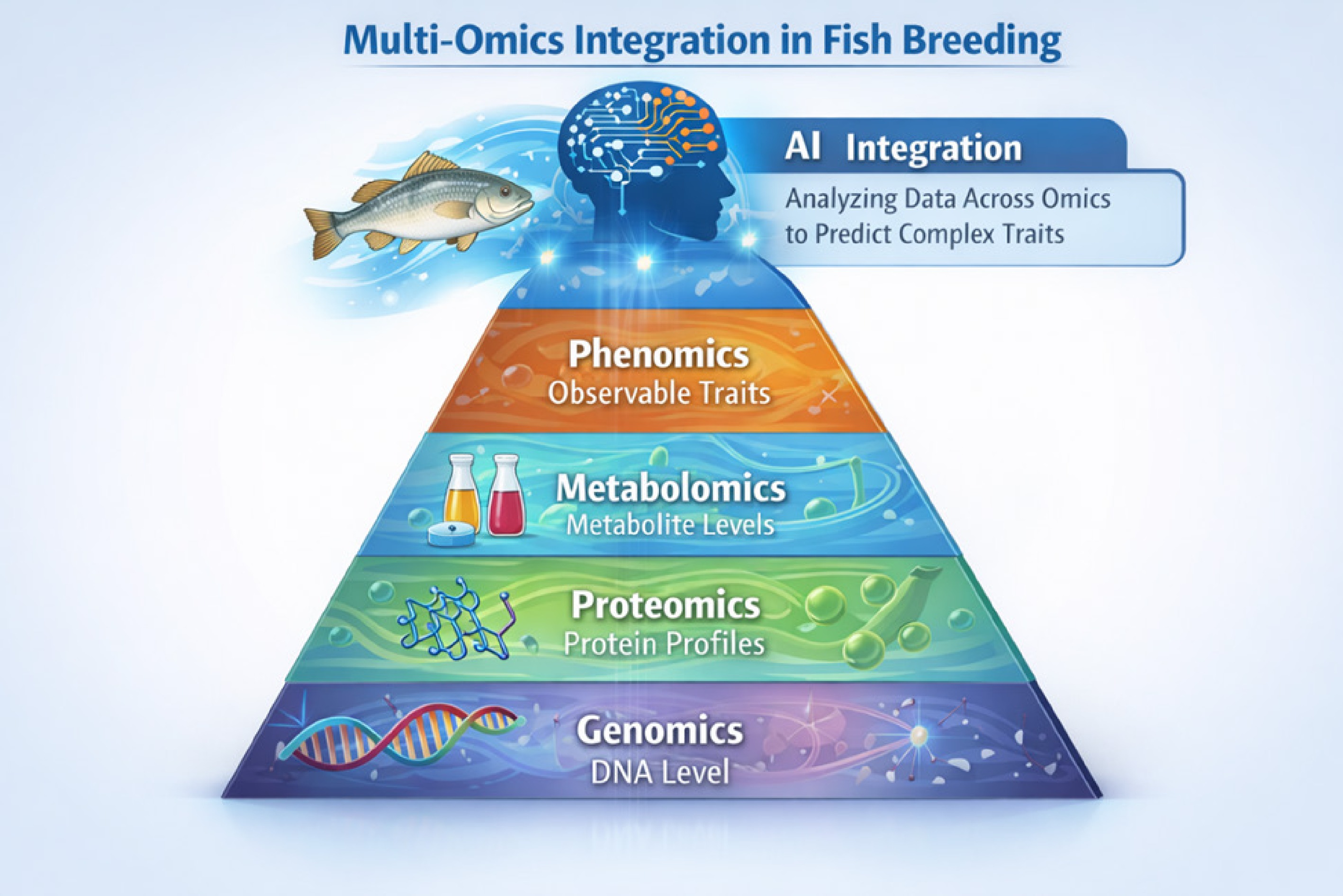
Figure 3.
Multi-omics integration in fish breeding.
Despite this conceptual promise, integrated pipelines remain aspirational. Challenges include interoperability of multi-omics datasets, limited causal inference, and uncertainty in translating in silico predictions into biological outcomes. Moreover, most current AI applications focus on prediction rather than mechanistic understanding, limiting their utility for rational GE and trait design.
-
We outline the major barriers to implementing smart breeding in aquaculture and link each challenge to its consequences for industry adoption. This also highlights practical solutions, including reducing technology costs, improving data standardization and sharing, clarifying regulatory frameworks, and strengthening interdisciplinary training (Table 2).
Table 2. Challenges and potential solutions in implementing smart breeding.
Challenge Impact on adoption Proposed solutions High cost Limits small-scale farms Develop low-cost sequencing and AI tools; subsidies Data fragmentation Inconsistent datasets Create open access, standardized genomic databases Regulatory hurdles Slows innovation Establish clear, science-based guidelines Skill gap Lack of interdisciplinary expertise bioinformatics and AI for aquaculture Data fragmentation and standardization
-
High-quality, interoperable datasets are essential for AI-driven breeding, yet aquaculture data are fragmented across institutions and companies. Lack of standardized phenotyping protocols, metadata reporting, and data-sharing frameworks constrains model development and validation[21]. Without coordinated data infrastructures, AI models risk being brittle, biased, and non-generalizable.
Economic and equity considerations
-
Genotyping, sequencing, computing infrastructure, and automated phenotyping systems require substantial investment[104]. These costs disproportionately favour large multinational breeding companies and may exacerbate inequalities between industrial producers and small-scale farmers. Equitable access to smart breeding technologies requires shared service platforms, public investment, and open-source tools.
Ethical, ecological, and regulatory issues
-
Genome-edited fish raise concerns about ecological impacts, biodiversity, and unintended gene flow[105]. Regulatory frameworks vary widely across jurisdictions, creating uncertainty for commercialization and trade[74,75]. Ethical considerations also extend to corporate control of genetic resources, data ownership, and transparency in AI-driven decision-making. Public engagement and science-based regulatory harmonization are critical for responsible deployment.
Human capital and interdisciplinary capacity
-
Smart breeding requires expertise spanning genomics, quantitative genetics, AI, aquaculture engineering, and ethics[21]. The global shortage of such interdisciplinary expertise represents a critical bottleneck. Training programs, collaborative networks, and user-friendly analytical tools are essential to build capacity across regions.
-
The convergence of genomics and artificial intelligence has set a new trajectory for aquaculture breeding, but this is merely the foundation of a far more transformative journey ahead. The true potential of smart breeding will be unlocked by pushing beyond current applications, embracing more holistic biological models, and fostering unprecedented levels of collaboration. The future lies not in isolated technological advances, but in their strategic integration to solve systemic challenges. This section outlines four pivotal directions that will define the next decade of innovation: the move toward multi-omics integration, the rise of hyper-customized breeding, a deeper commitment to sustainability, and the essential development of open collaborative ecosystems (Fig. 4).
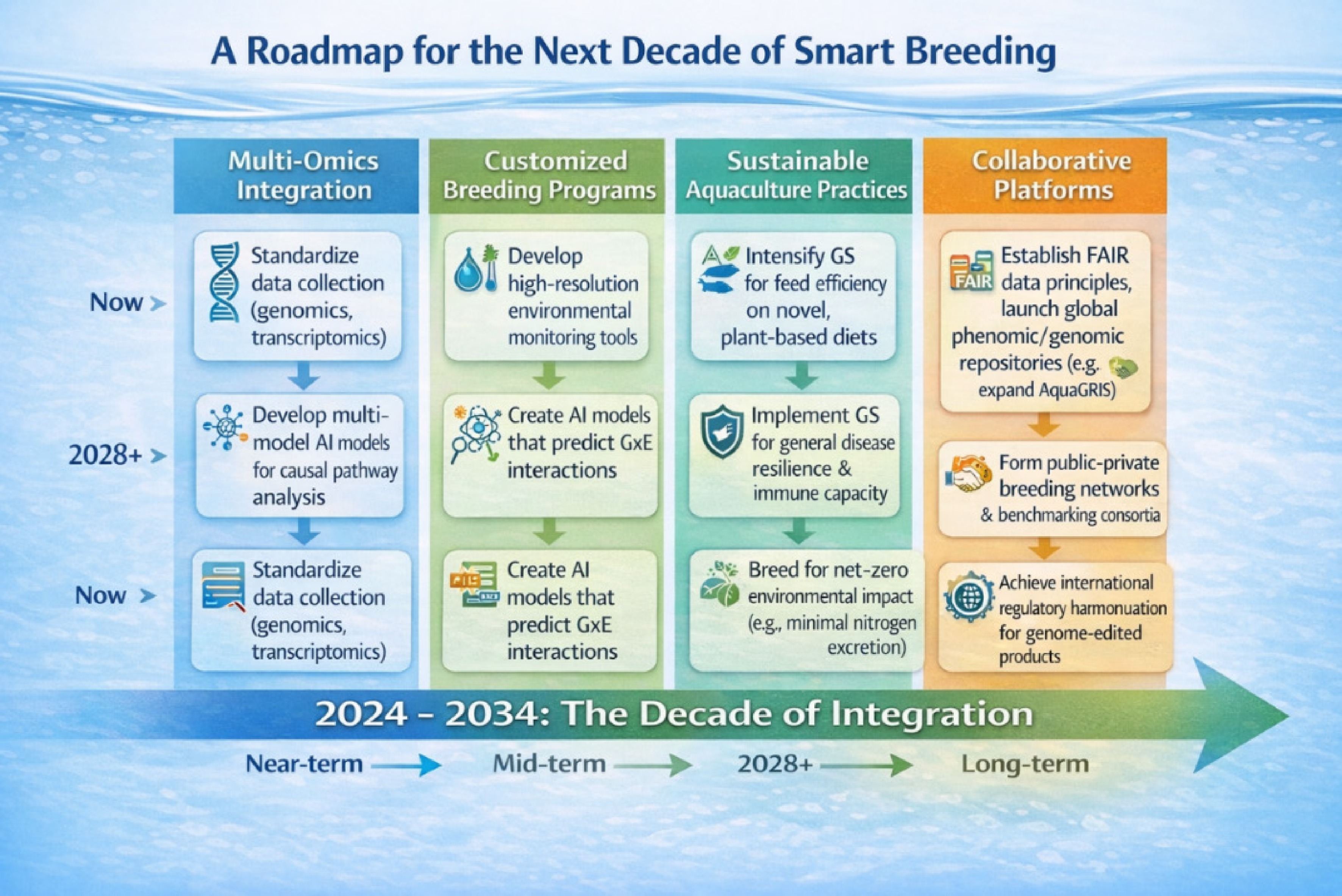
Figure 4.
A roadmap for the next decade of smart breeding. Achieving the full potential of smart breeding requires a coordinated effort across four key fronts. This roadmap outlines the critical near-term, mid-term, and long-term milestones for multi-omics integration, customized breeding, sustainability-focused genetic improvement, and the development of collaborative platforms.
Multi-omics approaches
-
The future of understanding complex traits lies in moving from a monolithic genomic view to a dynamic, multi-layered multi-omics perspective[106]. Genomics provides the static blueprint, but it is the interplay of activated genes, synthesized proteins, and resulting metabolites that ultimately determines phenotype[107]. Integrating transcriptomics, proteomics, and metabolomics with genomics offers a systems-biology view of the fish, capturing the real-time molecular responses to diet, environment, and disease.
Transcriptomics reveals which genes are actively expressed under specific conditions, identifying regulatory networks triggered by heat stress or vaccination[108,109].
Proteomics identifies and quantifies the proteins that execute cellular functions, offering direct insight into muscle composition, immune protein abundance, or digestive enzyme profiles[110].
Metabolomics profiles the small-molecule metabolites, providing a snapshot of physiological status, nutritional efficiency, and stress response that is closest to the observable phenotype[111].
The challenge and opportunity lie in the analysis of these colossal, interconnected datasets. This is where AI becomes indispensable. Advanced machine learning techniques, such as multi-modal deep learning, are uniquely suited to integrate these disparate data types, uncovering causal pathways and predictive biomarkers that are invisible to single-omics analysis[112]. For example, an AI model could integrate genomic variants with liver transcriptome data and plasma metabolite levels to predict an individual's ability to utilize a novel plant-based feed, providing a holistic understanding of nutritional physiology[113,114]. This approach will be crucial for decoding complex traits like overall robustness, welfare, and product quality, enabling selection not just for a single gene but for optimal, resilient biological systems.
Customized breeding programs
-
The era of 'one-size-fits-all' breeding lines is ending. The future points toward customized breeding programs that leverage AI to optimize genetics for hyper-specific local conditions and market niches[115]. By integrating high-resolution local environmental data—such as seasonal temperature fluctuations, prevalent pathogen loads, and water salinity profiles—with genomic information, AI models can predict which genetic combinations will thrive in a particular farm, region, or production system.
A potential direction of customized breeding programs is breeding for climate resilience. In coastal regions where rising sea levels and droughts increase water salinity[116], AI can be used to identify genetic markers for high-salinity tolerance by analysing genomic and transcriptomic data from fish challenged with brackish water. A breeding program can then be designed to introgress these alleles into a high-performing line, creating a locally adapted strain. Similarly, programs can be customized for specific farming practices (e.g., RAS vs pond culture), for resistance to endemic diseases, or for consumer-driven quality traits like specific flesh color or texture. This precision not only maximizes productivity and profitability for farmers but also enhances sustainability by reducing losses and resource use through improved environmental fit.
Sustainable aquaculture practices
-
Smart breeding will increasingly be the engine for achieving core sustainability goals, as shown in plant breeding[117]. Two of the most pressing issues are feed dependency and disease management in aquaculture[118−120]. Future breeding programs will directly target improving feed efficiency and reducing antibiotic use through advanced genomic tools.
A major frontier is breaking aquaculture's reliance on finite marine resources, such as fishmeal and fish oils[121,122]. Future efforts will focus on genomic selection for robust performance on alternative, plant-based feeds. This involves selecting for fish with enhanced abilities to digest plant proteins, optimize amino acid uptake, and tolerate anti-nutritional factors present in plant ingredients. GWAS and AI can identify genes associated with lipid metabolism, carbohydrate utilization, and gut microbiome composition that correlate with success on vegan diets. By breeding fish that thrive on sustainable feed formulations, the industry can drastically lower its environmental footprint and improve its resource independence.
Concurrently, a proactive approach to health will prioritize breeding for general disease resilience and innate immune capacity, moving beyond resistance to single pathogens[123]. This will involve selecting for robust mucosal immunity, effective stress response pathways, and optimal vaccine responsiveness, thereby minimizing the need for therapeutic interventions and promoting overall animal welfare.
Collaborative platforms
-
The complexity and scale of the smart breeding revolution demand a paradigm shift from isolated competition to structured collaboration. The most significant acceleration will come from establishing global collaborative platforms that unite academia, industry, and governments[124,125]. These platforms are essential for overcoming the foundational challenges of data scarcity, high costs, and fragmented expertise.
The vision is for open, pre-competitive research consortia and shared digital infrastructures. Key initiatives include:
Global phenomic and genomic data repositories: expanding and linking databases like AquaGRIS, where anonymized data from public research and voluntary industry contributions are stored under FAIR principles with managed access[126].
Benchmarking and tool development consortia: international groups can collaboratively develop, validate, and share standardized AI models, genomic prediction algorithms, and low-cost phenotyping protocols[13]. This avoids wasteful duplication of effort.
Public-private breeding networks: models where multiple smaller producers pool resources to access genotyping services and shared genomic selection programs, democratizing access to technology.
International regulatory harmonization dialogues: platforms for scientists, regulators, and policymakers to align on science-based risk assessment frameworks for genome-edited aquaculture products, facilitating responsible innovation and trade.
By sharing data, resources, and expertise, these collaborative platforms can accelerate discovery, reduce costs for all participants, and ensure that the benefits of smart breeding contribute to global food security, rather than exacerbating technological divides. The future of aquaculture breeding is not a race won by a single entity, but a collective journey toward a more productive, resilient, and sustainable food system for all.
-
The convergence of genomics, high-throughput phenotyping, and artificial intelligence is reshaping the landscape of aquaculture breeding. Genomic selection and digital phenotyping are already delivering measurable gains in several species, while GE and fully integrated AI-guided breeding pipelines hold longer-term transformative potential. Realizing these opportunities will depend less on individual technological breakthroughs than on coordinated progress in data infrastructure, cost reduction, regulatory clarity, and interdisciplinary workforce development. With strategic investment and responsible governance, smart breeding can become a central pillar of sustainable aquaculture, supporting efficient production, environmental stewardship, and global food security in the decades ahead.
This research was financially supported by the internal fund of Temasek Life Sciences Laboratory (5020).
-
Not applicable.
-
The author confirms sole responsibility for the following: conception, funding, writing − review and editing, and approved the final version of the manuscript.
-
Data sharing is not applicable to this article as no dataset was generated or analysed during the current study.
-
The author declares no conflict of interest.
- Copyright: © 2026 by the author(s). Published by Maximum Academic Press on behalf of Nanjing Agricultural University. This article is an open access article distributed under Creative Commons Attribution License (CC BY 4.0), visit https://creativecommons.org/licenses/by/4.0/.
-
About this article
Cite this article
Yue G. 2026. Smart breeding for better fish for food using genomics and AI. Animal Advances 3: e021 doi: 10.48130/animadv-0026-0017 

Smart breeding for better fish for food using genomics and AI
- Received: 26 February 2026
- Revised: 27 April 2026
- Accepted: 29 April 2026
- Published online: 29 July 2026
Abstract: The accelerating demand for aquatic food, coupled with climate change and environmental constraints, is driving the aquaculture sector toward transformative genetic technologies. Smart breeding, defined as the integration of genomics and artificial intelligence (AI) for genetic improvement, has emerged as a promising paradigm for accelerating genetic gain, improving resilience, and reducing environmental impacts. However, despite rapid technological progress, the translation of these tools into routine commercial breeding remains uneven, constrained by biological complexity, data limitations, regulatory uncertainty, and socio-economic barriers. This review synthesizes current progress in genomics- and AI-enabled breeding for aquaculture, critically evaluating genomic resources, quantitative trait analysis, genome editing, machine-learning prediction, automated phenotyping, and decision-support tools for breeding program design. We highlight that genomic selection and digital phenotyping are approaching operational maturity in several species, whereas genome editing and fully AI-optimized breeding pipelines remain experimental. We identify key systemic barriers, including data standardization, economic accessibility, governance frameworks, and workforce development, and outline priorities for the next decade, including multi-omics integration, locally adaptive breeding strategies, sustainability-focused trait selection, and collaborative data infrastructures. Smart breeding, if responsibly implemented, can become a cornerstone of sustainable aquatic food production and global food security.
-
Key words:
- Aquaculture /
- Genomic Selection /
- Artificial Intelligence /
- Smart Breeding /
- Genetic Improvement /
- Sustainability