-
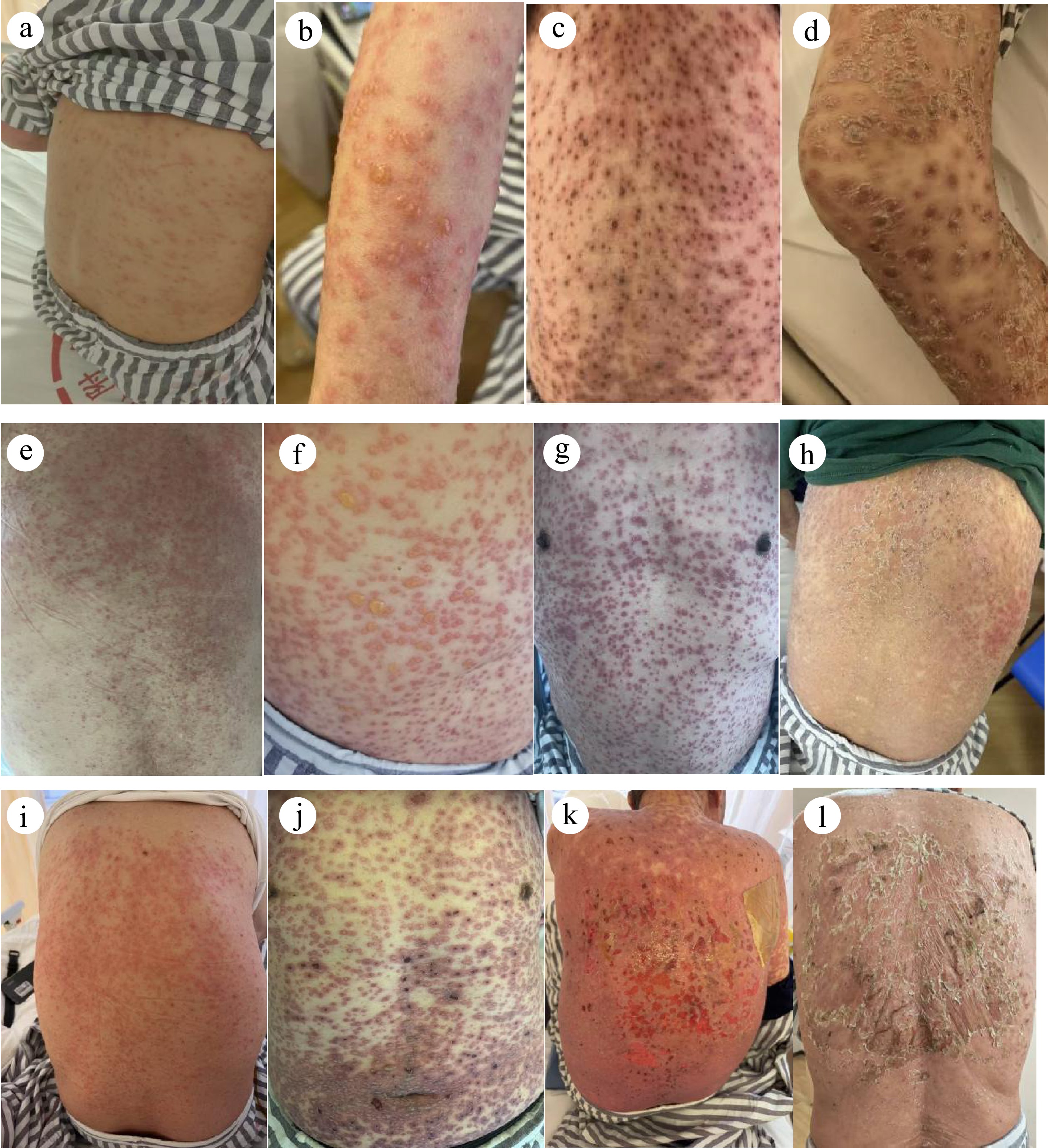
Figure 1.
Rash occurrence and outcome in the high-dose group. (a)–(d) NXME; (e)–(h) CWRO; (i)–(l) CHZH. (a) D3: rashes were spread across the entire body with mild pruritus; (b) D5: vesicles appeared, with a maximum diameter of 3 cm, accompanied by intense pruritus affecting sleep; (c) D10: vesicles partially ruptured and formed crusts; (d) D13: rusted lesions gradually shed, revealing new epidermal tissue at the affected sites; (e) D3: rashes were spread across the entire body, coalescing into patches with mild pruritus; (f) D4: dense vesicles appeared, with a maximum diameter of 2 cm and widespread pruritus; (g) D6: vesicles partially ruptured and the rashes darkened in color; (h) D14: systemic rashes crusted over and shed, with new skin emerging locally; (i) D3: rashes were spread across the entire body, accompanied by small vesicles and widespread pruritus; (j) D6: vesicles progressed to bullae, accompanied by pain and persistent pruritus affecting sleep; (k) D9: bullae ruptured, resulting in copious exudate and back erosion; (l) D21: wounds dried, fresh epithelial tissue appeared, and scabs fell, with no pigmentation or scarring.
-
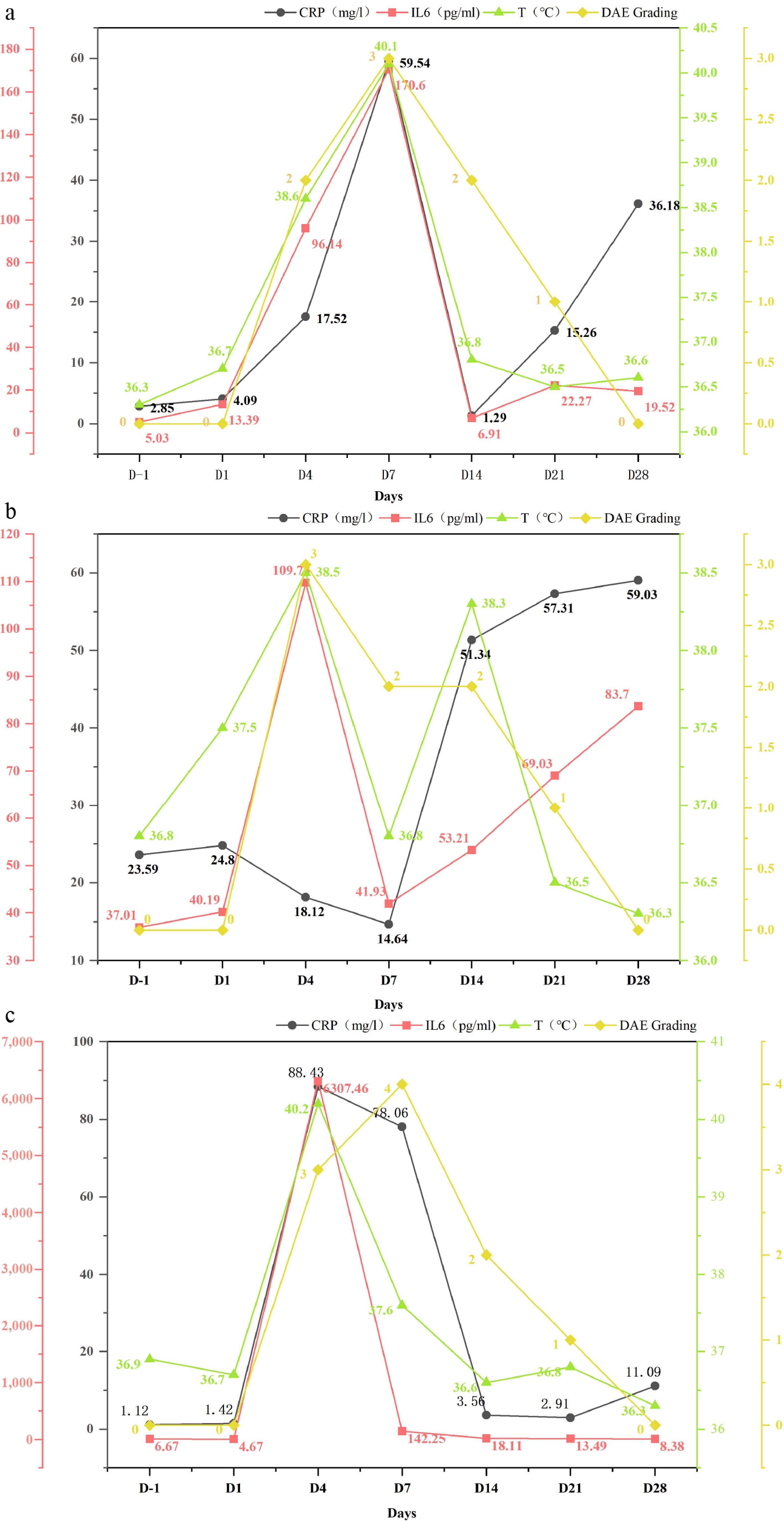
Figure 2.
Changes of CRP and IL-6 levels, body temperature, and DAEs in the high-dose group. (a) NXME; (b) CWRO; (c) CHZH.
-
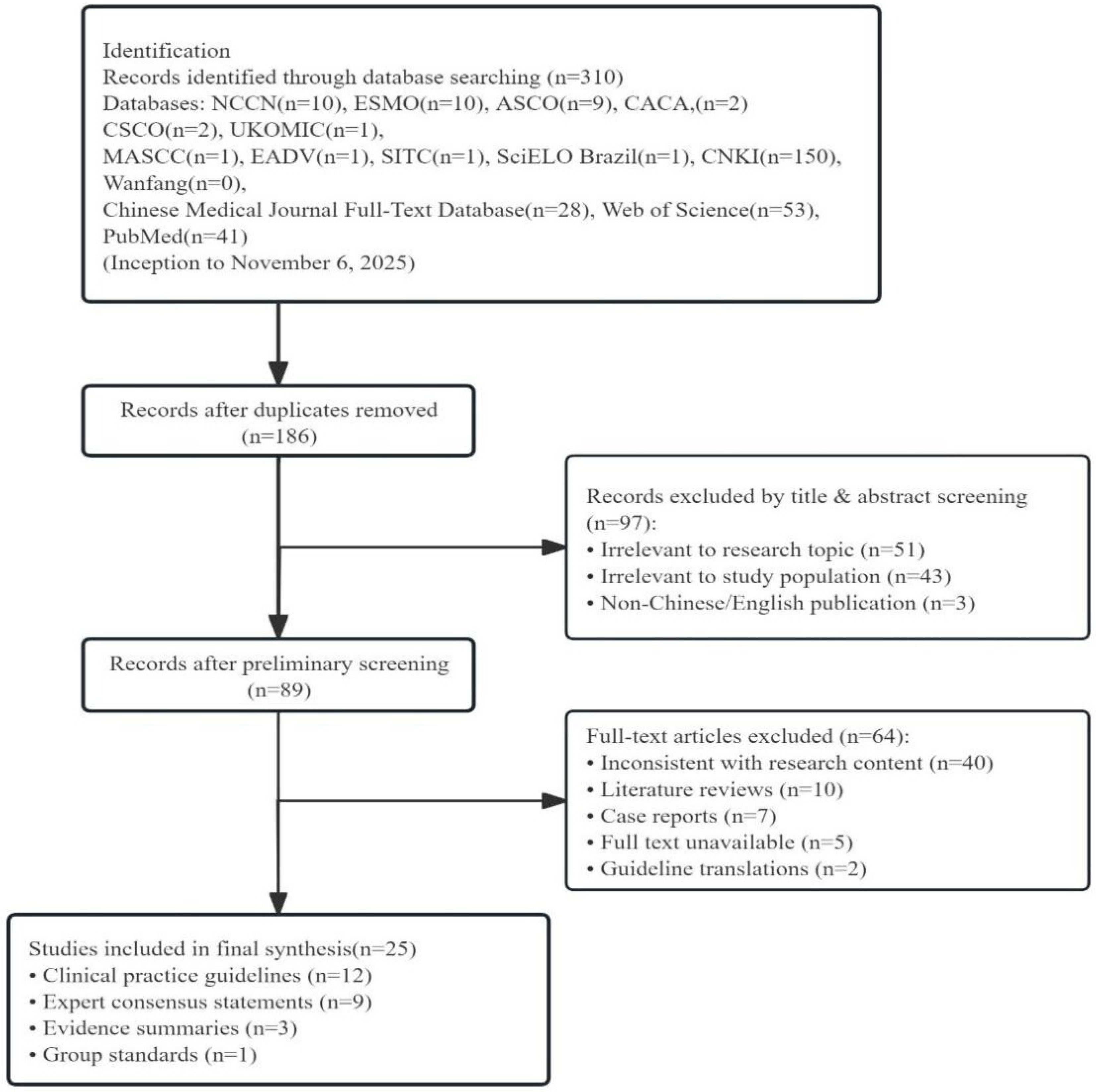
Figure 3.
Literature screening flowchart.
-
Name Age Gender Dose group Rash percentage
(involved body
surface areas)Maculopapular
rash gradingPruritus grading Associated symptoms QRME 53 Female Low 3% (Chest, back, arms) Grade 1 Grade 1 / CHMI 53 Male Low 27% (Chest, back, arms) Grade 2 Grade 1 / NXME 46 Female High 90% (see Fig. 1−1) Grade 3 Grade 3 OM (Grade 2)
CRS (Grade 1)
Fever (D3–D11, highest: 40.5 °C)CWRO 69 Male High 90% (see Fig. 1−2) Grade 3 Grade 2 CRS (Grade 1)
Fever (D0/D4/D11~D12/D14,
highest: 38.5 °C)CHZH 69 Male High 90% (see Fig. 1−3) Grade 3 Grade 3 BP (Grade 4)
OM (Grade 2)
CRS (Grade 1)
Fever (D3~D7, highest: 40.2 °C)Note: The day of reinfusion is designated as D0; CRS: cytokine release syndrome; BP: bullous pemphigoid; OM: oral mucositis; low/high-dose group: 1.0 × 10⁸ cells / 2.0 × 10⁸. The DAE grading reference follows the Chinese Expert Consensus on Diagnosis and Treatment of Immune Checkpoint Inhibitor (ICIs)-Related Adverse Cutaneous Reactions (2024 Edition)[14], the Expert Consensus on Prevention and Treatment of Radiation (Chemotherapy)-Induced Oral Mucositis[15], and the American Society for Transplantation and Cell Therapy (ASTCT) Consensus Grading Criteria[16]. Table 1.
DAE characteristics by dose group.
-
Title Author Type Year Diagnosis and treatment of ICI-related cutaneous adverse reactions Chinese Society of Dermatology (CSD) et al.[14] Expert consensus 2024 Prevention and treatment of oral mucositis Chinese Stomatological Association (CSA)[15] Expert consensus 2024 Immunotherapy-related toxicity management Haanen et al.[21] Guideline 2022 Cancer treatment cutaneous adverse event management Cury-Martins et al.[22] Expert consensus 2020 Prevention and nursing care of ICI-related cutaneous toxicity in lung cancer patients Zheng et al.[23] Evidence summary 2023 Immunotherapy-related toxicity management National Comprehensive Cancer Network (NCCN)[24] Guideline 2025 Cancer treatment and cutaneous-related adverse event management Zhu et al.[25] Guideline 2021 Diagnosis and treatment of Stevens–Johnson syndrome and
toxic epidermal necrolysisMurillo-Casas et al.[26] Guideline 2025 Management of cutaneous toxicity related to ICIs Yang et al.[27] Evidence summary 2024 Management of severe cutaneous toxicity caused by ICIs Choi et al.[28] Guideline 2025 Diagnosis and treatment of bullous pemphigoid China Dermatologist Association (CDA) et al.[29] Expert consensus 2025 Prevention and management of cutaneous adverse reactions in patients with tumor-targeted therapy Hu et al.[30] Evidence summary 2022 Management of chronic pruritus CDA[31] Guideline 2024 Application guidelines for moisturizing and emollient products CDA[32] Expert consensus 2023 Management of ICI-induced cutaneous adverse reactions Apalla et al.[33] Expert consensus 2022 Guidelines for CAR-T cell therapy of malignant hematological diseases Chinese Society of Clinical Oncology (CSCO)[34] Guideline 2024 Diagnosis, prevention, and treatment of acute oral mucositis caused by antitumor therapy CSCO[35] Expert consensus 2021 Oral care in cancer and palliative care United Kingdom Oral Mucositis in Cancer Group (UKOMIC)[36] Guideline 2019 Clinical practice management of ICI-related adverse events Brahmer et al.[37] Guideline 2021 Management of adverse events associated with ICIS. Schneider et al.[38] Guideline 2021 Glucocorticoid treatment for immune-related cutaneous conditions Subspecialty Committee on Autoimmune Diseases, Chinese Dermatologist Association[39] Expert consensus 2018 Nursing care for CAR-T cell therapy Ellard et al.[40] Guideline 2022 Management of psychosomatic symptoms in cancer patients Yin et al.[41] Expert consensus 2025 Management of CAR-T cell therapy for adults and children Hayden et al.[42] Guideline 2021 Long-term follow-up of CAR-T therapy products Shanghai Pharmaceutical Industry Association (SPIA)[43] Group standard 2023 Table 2.
Sources of evidence.
-
Included literature Standardized domain percentage (%) Domains
≥ 60%Domains
≥ 30%Recommendation grade Scope &
purposeStakeholder involvement Rigor of development Clarity of presentation Applicability Editorial independence Haanen et al.[21] 86.11 75.00 79.17 80.56 89.58 87.50 6 6 A NCCN[24] 97.22 77.78 66.67 91.67 70.83 70.83 6 6 A Zhu et al.[25] 86.11 55.56 62.50 86.11 64.58 70.83 5 6 B Murillo-Casas et al.[26] 88.89 77.78 80.21 88.89 68.75 79.17 6 6 A choi et al.[28] 86.11 77.78 77.08 86.11 66.67 70.83 6 6 A CDA et al.[31] 80.56 72.22 70.83 80.56 64.58 70.83 6 6 A CSCO[34] 91.67 86.11 84.38 94.44 77.08 79.17 6 6 A UKOMIC[36] 77.78 66.67 63.54 80.56 56.25 66.67 5 6 B Brahmer et al.[37] 88.89 77.78 78.13 77.78 68.75 83.33 6 6 A Schneider et al.[38] 86.11 80.56 86.46 80.56 64.58 66.67 6 6 A Ellard et al.[40] 86.11 77.78 73.96 86.11 66.67 70.83 6 6 A Hayden et al.[42] 86.11 80.56 77.08 88.89 68.75 75.00 6 6 A SPIA[43] 75.00 63.89 62.50 75.00 52.08 58.33 4 6 B NCCN: National Comprehensive Cancer Network; CDA: China Dermatologist Association; CSCO: Chinese Society of Clinical Oncology; SPIA: Shanghai Pharmaceutical Industry Association. Table 3.
Quality appraisal results of clinical practice guidelines.
-
Author Q1 Q2 Q3 Q4 Q5 Q6 CSD et al.[14] Y Y Y Y Y Y Cury-Martins et al.[22] Y Y Y Y Y Y CDA et al.[29] Y Y Y Y Y Y CDA[32] Y Y Y Y Y Unclear Apalla et al.[33] Y Y Y Unclear Y Y CSA[15] Y Y Y Y Y Y CSCO[35] Y Y Y Y Y Y Subspecialty Committee on Autoimmune Diseases, China
Dermatologist Association[39]Y Y Y Y Y Unclear Yin et al.[41] Y Y Y Unclear Y Y CSD: Chinese Society of Dermatology; CDA: China Dermatologist Association; CSA: Chinese Stomatological Association; CSCO: Chinese Society of Clinical Oncology; Q1: Is the source of opinion clearly identified? Q2: Does the source have standing in the field of expertise? Q3: Are the interests of the relevant population the central focus? Q4: Are conclusions drawn based on analytical results and is the reasoning logical? Q5: Is reference made to existing literature? Q6: Are any inconsistencies with existing literature addressed? Table 4.
Quality appraisal results of expert consensus.
-
Domain Item Appraisal question Zheng et al.[23] Yang et al.[27] Hu et al.[30] Summary topic Q1 Is the summary specific in scope and application? Yes Yes Yes Summary methods Q2 Is the authorship of the summary transparent? Yes Yes Yes Q3 Are the reviewer(s)/editor(s) of the summary transparent? Yes Yes Not completely Q4 Are the search methods transparent and comprehensive? Yes Yes Yes Q5 Is the evidence grading system transparent and translatable? Yes Yes Yes Summary content Q6 Are the recommendations clear? Yes Yes Yes Q7 Are the recommendations appropriately cited? Yes Yes Yes Q8 Are the recommendations current? Yes Yes Not completely Q9 Is the summary unbiased? Yes Yes Yes Summary application Q10 Can this summary be applied to your patient(s)? Yes Yes Yes Overall inclusion Include Include Include Table 5.
Quality appraisal results of evidence summaries.
-
Step Content Level of evidence Recommendation grade Dynamic monitoring Vital signs monitoring 1. For acute hypersensitivity reactions, monitor vital signs and administer corticosteroids and antihistamines[22]. 5 A Hematology biomarker
Monitoring2. The incidence of DAEs is associated with an increased deviation of cytokine levels from the normal range, e.g., IL-6[21]. 1 A 3. Laboratory tests should be conducted before initiating immunotherapy[23,45]. 1 A Evidence-based management of DAEs Rash assessment and interventions 4. If skin symptoms occur, conduct a detailed medical history inquiry and immediately perform a full-body skin examination, including medication history[24,25]. 1 A 5. The severity of DAEs is typically evaluated using the CTCAE version 5.0 of the US National Cancer Institute[15,21,46] . 1 A 6 The Wallace Rule of Nines is used to assess the patient's rash area[26]. 1 A 7. Patients are advised to avoid skin irritants and sunlight[22,27]. 5 A 8. Avoid scratching and scalding with hot water, and limit the bathing time[21,27]. 1 A Nursing care of blisters 9. Exclude other causes of skin blisters. Suspect bullous pemphigoid and perform a biopsy[28]. 1 A 10. Maintain the structural integrity of the blister wall by preventing rupture, thereby establishing a biological dressing[26]. 1 A 11. Regularly clean the lesion with sterile water/saline and change the dressing. Completely cover the affected area with non-adherent or gauze dressings[29]. 5 A 12. The ruptured areas must be disinfected using an iodine solution[30]. 1 B Assessment and nursing care of pruritus 13. The severity of pruritus is evaluated using the Numerical Rating Scale method and the Visual Analog Scale for sleep disturbance[31,52]. 1 A 14. The principle of treatment and management is to actively treat the primary disease[31]. 1 A 15. Apply the moisturizing emollient and then apply the topical medication 30 min later[32]. 5 B 16. First- or second-generation antihistamines and corticosteroids may be used to relieve pruritus. For refractory pruritus, gabapentin may be considered[25,33]. 1 B 17. Grade 1 CRS is treated with symptomatic supportive therapy using non-steroidal anti-inflammatory drugs[34]. 1 A Assessment and nursing care of oral mucositis 18. The clinical grading criteria for oral mucositis follow the World Health Organization's oral toxicity scale[15]. 5 A 19. Treatment principles: relieve symptoms, prevent infections, and avoid complications[35]. 5 A 20. Conduct professional oral hygiene management[35,36]. 1 A 21. Various gargles (such as chlorhexidine), KangFuXinYe, glucocorticoids, lidocaine, and protective gels are recommended as local treatment drugs[15]. 5 A Drug use 22. Corticosteroids are used as the first-line treatment for immune-related adverse events[37]. 1 A 23. For patients with mild cutaneous toxicity, topical corticosteroids, emollients, and oral antihistamines may be used to manage symptoms. Patients with severe cutaneous toxicity unresponsive to topical therapy should receive systemic corticosteroids (initial dose 0.5–1 mg/kg/day; increase to 1–2 mg/kg/day if ineffective)[25,28,38]. 1 A 24. Use hormones in sufficient doses and for an adequate duration. Monitor for complications and consider prophylactic use of relevant medications[39]. 5 B Psychological support 25. The overall prevalence of depression among patients with malignant tumors in China is as high as 44.63%. Attention should be paid to patients' emotional well-being[40]. 1 A 26. Inform the patients; identify the physical and psychological symptoms of anti-tumor treatment, screen patients with these symptoms, and conduct scale assessment promptly[41]. 5 B Discharge follow-up 27. Long-term follow-up should be conducted by a multidisciplinary team[42]. 1 A 28. Patients receiving CAR-T cell therapy are required to undergo regular follow-up, and evaluation and management should be conducted well[43]. 1 B Table 6.
Evidence-based nursing proposal for CAR-T cell therapy-related DAEs.
Figures
(3)
Tables
(6)