-
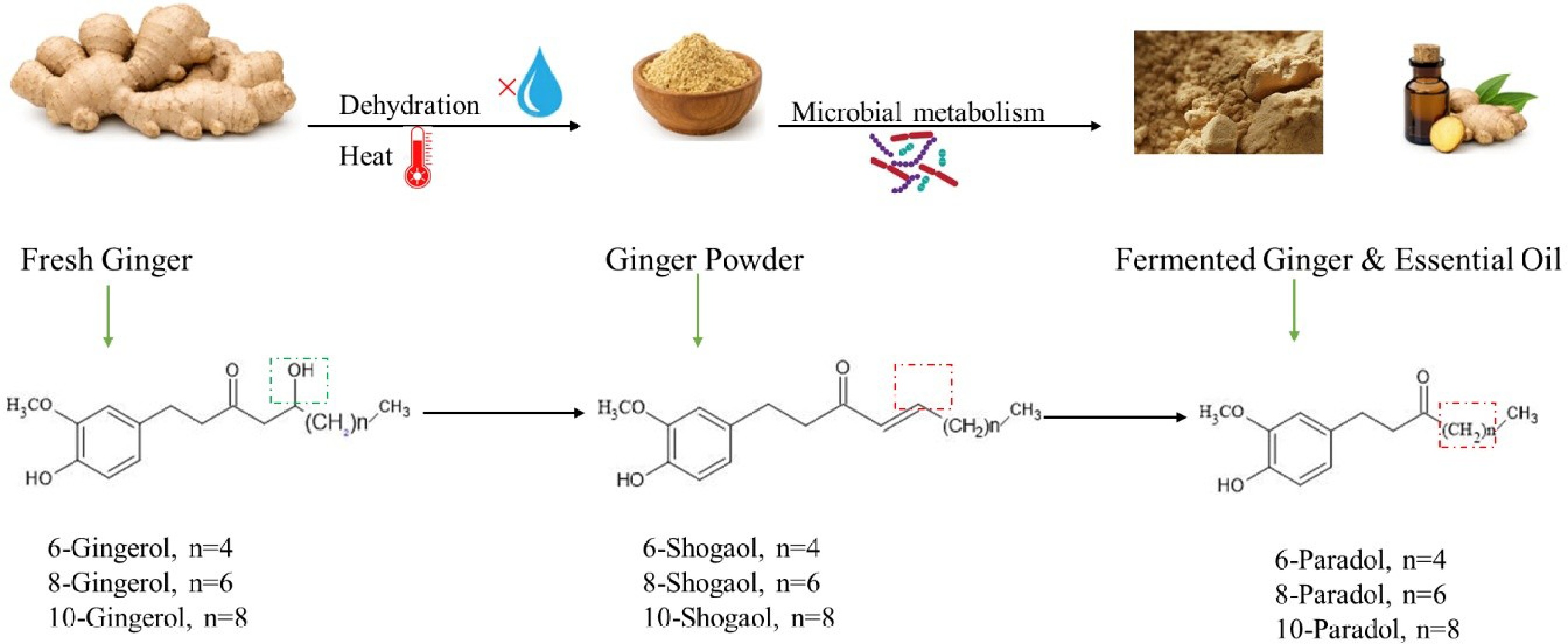
Figure 1.
Effect of ginger processing on the chemical structures of its major bioactive compounds.
-
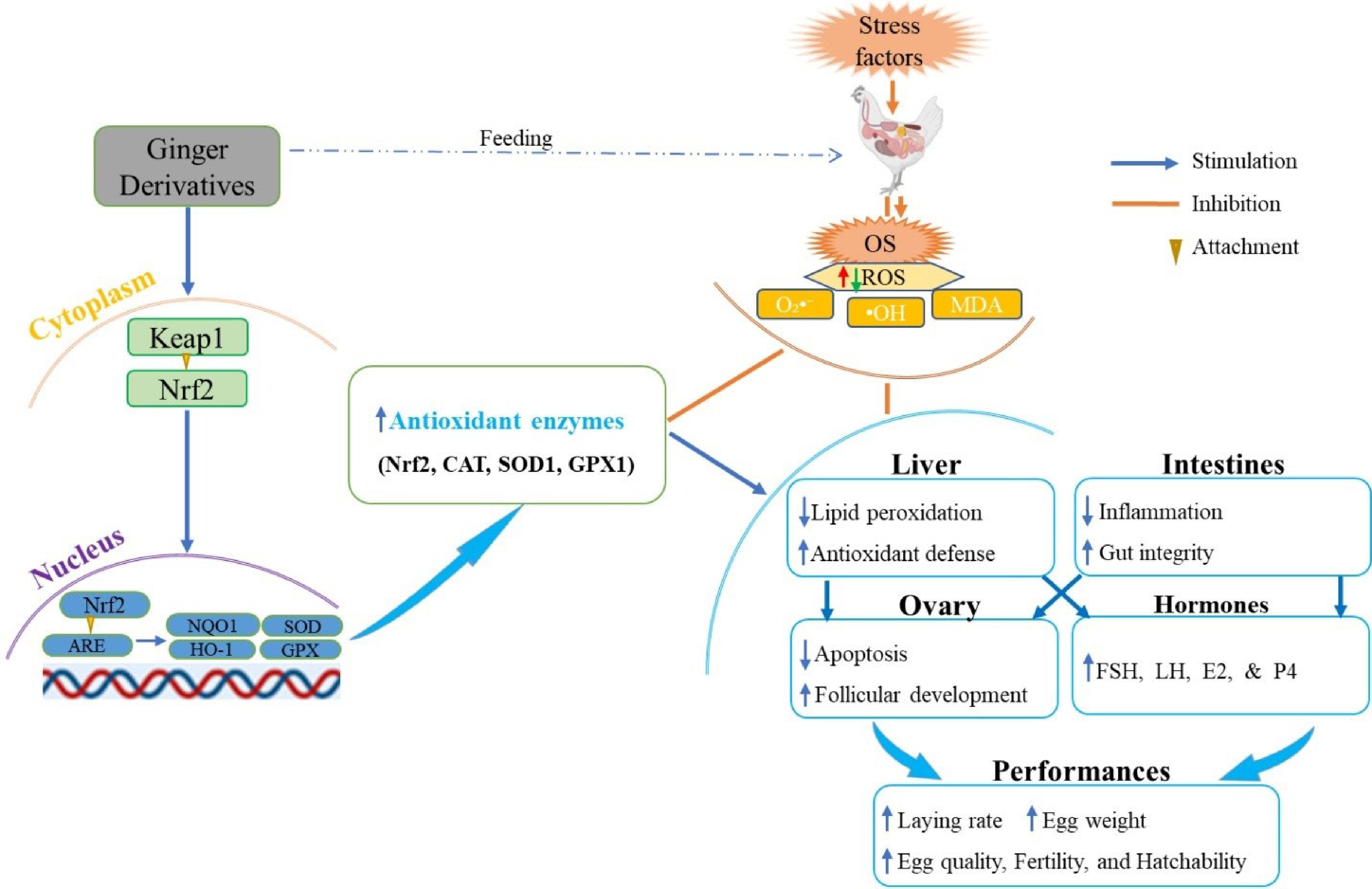
Figure 2.
Schematic diagram showing the multiple biological activities exhibited by supplementary ginger derivatives in the diet of poultry. Abbreviations: ARE, antioxidant response element; E2, estradiol; FSH, follicle-stimulating hormone; GPX, glutathione peroxidase; HO-1, heme oxygenase-1; Keap1, kelch-like ECH-associated protein 1; LH, luteinizing hormone; MDA, malondialdehyde; NQO1, NAD(P)H: quinone oxidoreductase 1; Nrf2, nuclear factor erythroid 2-related factor 2; O2•−, superoxide anion; •OH, hydroxyl radical; OS, oxidative stress; P4, progesterone; ROS, reactive oxygen species; SOD, superoxide dismutase.
-
Derivatives Dose and route of administration Species Outcomes Ref. Ginger powder (GP) 2 and 4 g/kg of diet Turkey The 2 g/kg diet increased feed conversion ratio (FCR), improved growth performance, and hepatic enzyme activity [56] Ginger extract (GE) 0.1% Laying chickens Enhance laying rate, egg weight, and FCR;
Increased SOD, reduced malondialdehyde (MDA), increased lysozyme activity, and reduced plasma prostaglandin E2[31] Ginger oil (GO) + cinnamon oil (CO) GO (0.5 mL and 1.0 mL/kg diet), CO (0.5 mL and 1.0 mL/kg diet) Japanese quails Reduced cholesterol levels, increased serum antioxidant capacity, enhanced hepato-intestinal morphology [34] GO, cinnamon oil (CO), turmeric Oil (TO), garlic oil (GRO) 30 mL of CO, GO, TO, GRO in drinking water Broiler chickens Decreased lipid peroxidation and increased total antioxidant activity [57] Garlic (GrP) + GP 0.25% GP, 0.25 GrP, 0.25% GP + 0.25% GrP, 0.50% GP + 0.50% GrP Broiler chickens The 0.25% GP + 0.25% GrP enhanced feed intake and weight gain [58] GP or frankincense oil (FO) GP (250 and 500 mg/kg diet) or FO (200 and 400 mg FO/kg diet) Japanese quails No effect on egg laying rate, feed intake, and FCR;
Enhanced egg weight, blood serum properties, and productive and reproductive performance[14] Phytogenic premix (PP) (ginger, lemon balm, oregano, and thyme substances) 500, 750, 1,000, and 1,500 mg/kg diet Laying chickens The PP750 and 1,000 mg/kg improved laying rate and egg mass in the ovaries;
Downregulated AhR pathway genes
Positive cytoprotective effects on Nrf2 pathway genes in the ovaries[59] Blended ginger and stevia extracts 0.5%, 1.0%, and 1.5% diet Japanese quails Improved laying performance, egg fertility, and hatchability;
Enhanced biochemical parameters[60] GP + Chinese herbal medicine (CHM) 3.32 g CHM, 10 g GP, and 10 g GP + 3.32 g CHM/kg of diet Laying chickens Increased feed intake and laying rate;
Decreased glucose level, triglycerides, and serum cholesterol
Improved fungal catalase (CAT) levels, nitric oxide, and antioxidant enzymes[54] Blended ginger extract, Onion, and onion extract 10, 100, and 1,000 mg/kg diet Broiler chickens The 1,000 mg/kg maintained growth and carcass quality;
Reduced the fecal microbial load in experimentally infected broiler chickens[61] GP + turmeric powder (TP) 1.0% TP + 0.5% GP, 0.5% TP + 1.0% GP, 0.75% TP + 0.75% GP Laying chickens The 0.75% TP and GP enhanced laying rate and egg weight;
Decreased total cholesterol and serum lipid profile[62] Spent ginger 5, 10, 20, and 40 h/kg diet Laying chickens Enhanced egg yolk color and antioxidative defenses;
Influenced the dominant intestinal bacteria[19] GP 5, 10, or 15 g/kg diet Broiler chickens Increased body weight, antioxidant enzymes in the serum and liver;
Increased white blood cells and % heterophils
Improved dry matter's digestibility and utilization of crude protein, crude fiber, and ether extract[63] GE 0.375%, 0.75%, 1.5%, 3% Broiler chickens The 1.5% enhanced growth and mucosal development;
Reduces oxidative stress and intestinal morphometrics[15] GP 3, 6, and 9 g/kg diet Broiler chickens Enhanced growth performance and gut morphology;
Positive impact on cholesterol, triglycerides, and gut microbes[64] GE Oral administration of 300, 450, and 600 mg Broiler chickens The 600 mg dose increases sperm concentration, motility, and viability and lowers lipid peroxidation;
Enhanced fertility and hatchability
Enhanced morphological structure of the testis[65] GP 5 and 10 g/kg diet Laying chickens Increased laying rate, egg mass, FCR, egg quality, serum antioxidant status, and hepato-intestinal morphology [13] GE 0.375%, 0.75%, 1.5%, and 3% Broiler chickens The 1.5% enhanced the immune system. Suppressed E. coli and positively influenced the fecal and cecal total bacterial concentrations. [16] GP 2% Broiler chickens Increased IgA expression and IgY in the spleen;
Decreased tissue damage in the cecum and ileum of Salmonella enteritidis-challenged birds[66] GO 50, 100, and 150 μL/kg body weight Japanese quails The 100 and 150 μL/kg body weight on feed intake and body weight gain;
Decreased serum and egg cholesterol levels[20] GP 1 g/kg Broiler breeders Enhances sperm motility, seminal antioxidant status, and testicular permeation index;
No effect on sperm concentration, and a tendency towards a lower embryonic mortality rate[67] GP 0.5, 1.0, 1.5 g/kg diet Japanese quails Increased feed efficiency, albumen height, and Haugh units;
Enhanced albumen pH composition
Reduced blood triglyceride levels[24] GP 20 g/kg diet Laying chickens Enhanced egg weight and egg quality parameters [68] Table 1.
Key studies on the positive effects of adding ginger derivatives and/or their combinations with other additives to poultry diets.
Figures
(2)
Tables
(1)