-
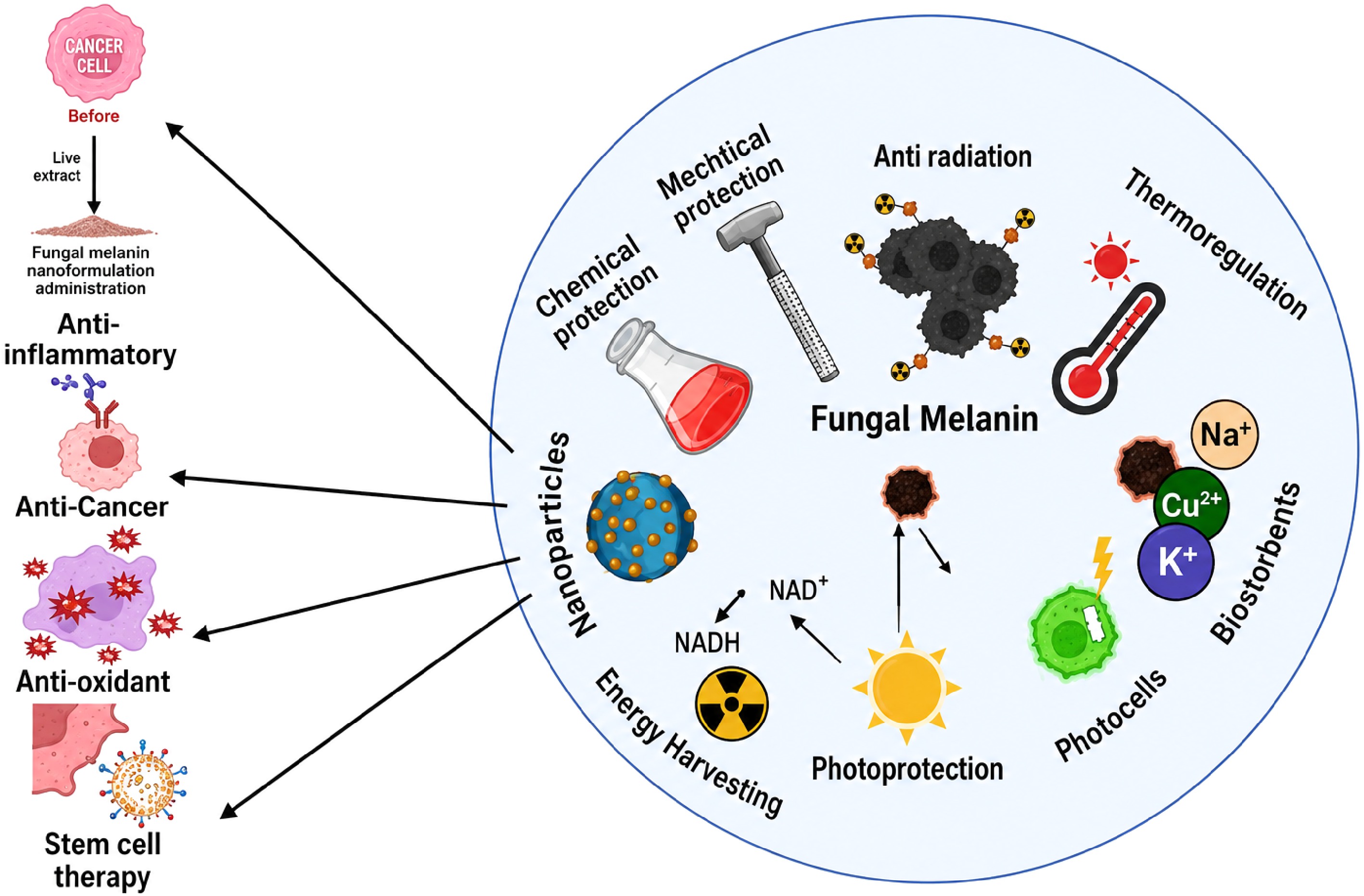
Figure 1.
Properties and applications of fungal melanin pigment.
-
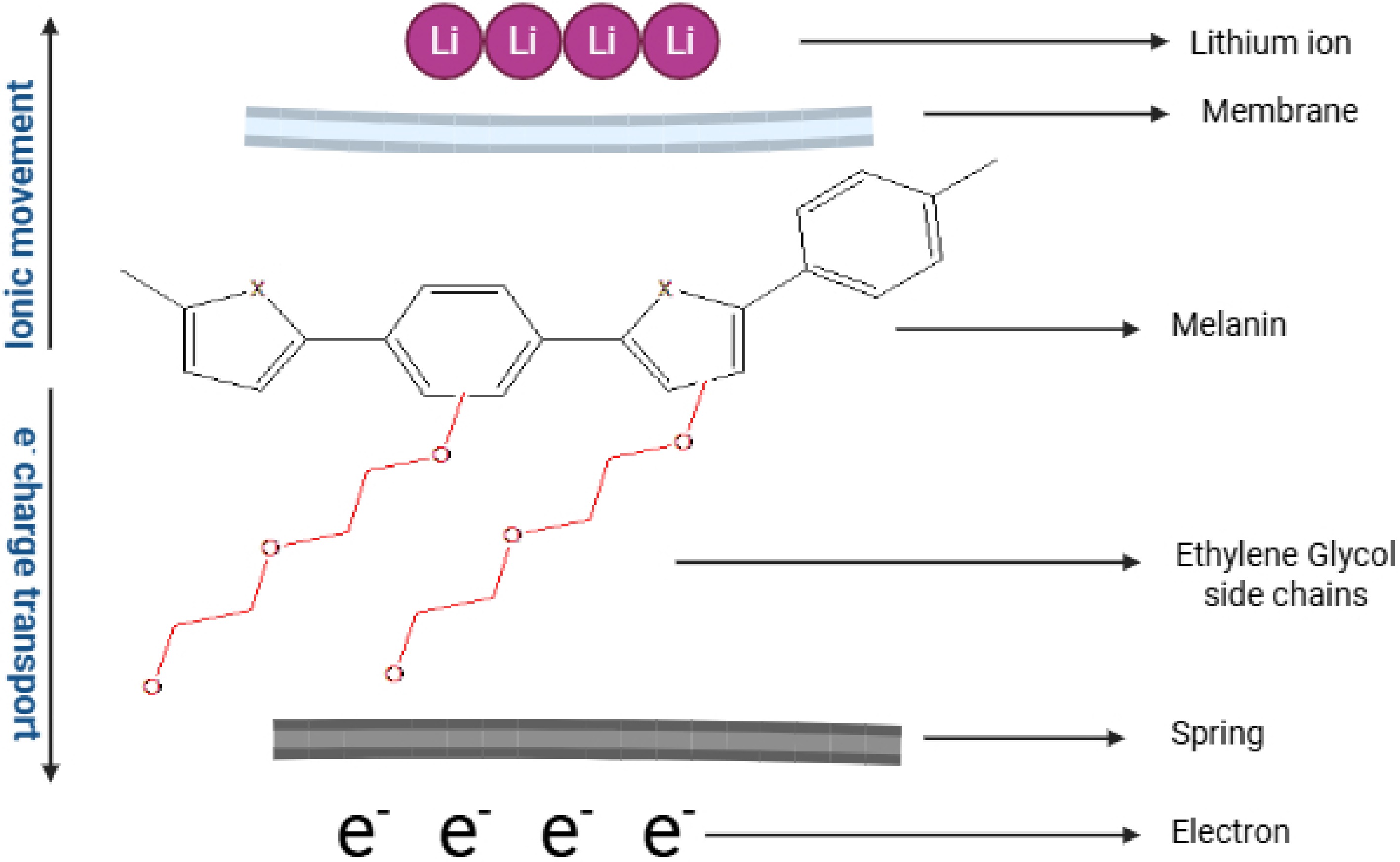
Figure 2.
Composite biohybrid cell with enhanced conducting properties.
-
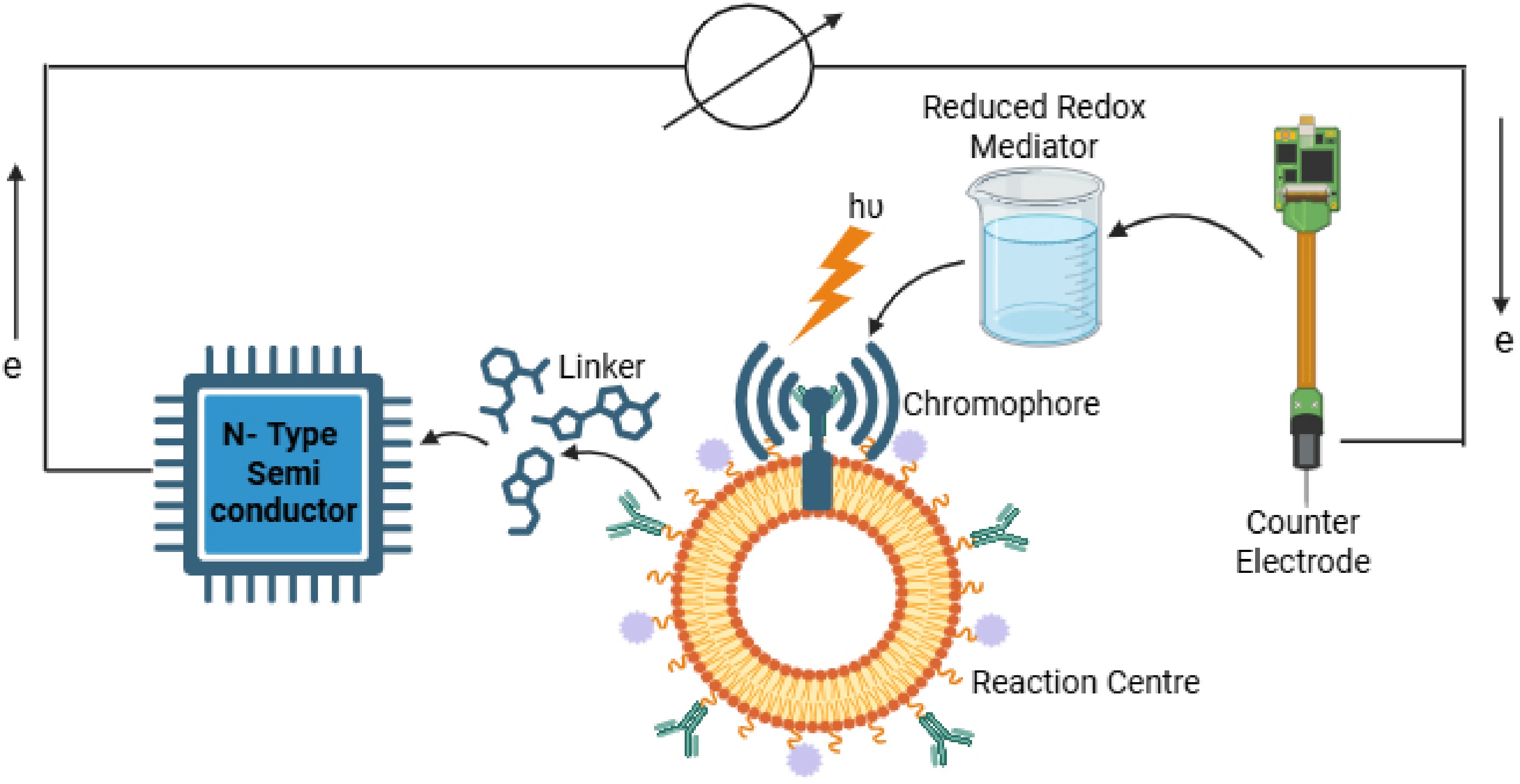
Figure 3.
Light harvesting and redox-driven electron transfer in biohybrid cells.
-
Biological component Representative examples Primary function Photovoltaic/bioelectronic role Advantages Melanin pigments Eumelanin, DHN-melanin Broadband light absorption, redox cycling Photosensitizer, hole-transport layer, interfacial stabilizer, UV-protective coating UV–Vis–NIR absorption, photostability, mixed ionic–electronic conductivity Carotenoids β-carotene, torulene, astaxanthin Visible-light absorption, photoprotection Auxiliary photosensitizer, ROS quencher Improves stability, reduces photodegradation Quinone pigments Anthraquinones, naphthoquinones Reversible redox reactions Natural dyes, electron mediators Stable redox cycling, visible-light activity Azaphilone pigments Polyketide-derived azaphilones Tunable optical absorption Spectral tuning in photoactive layers High photochemical stability Phenolic metabolites Phenolic acids, polyphenols Electron donation, antioxidant activity Electron shuttles, interface protection Reduces recombination and oxidative damage Flavonoids Flavones, flavonols Redox mediation Charge-transfer intermediates Stabilizes charge-separated states Terpenoids Mono- and sesquiterpenes Metal interaction, redox modulation Interface modifiers Enhances semiconductor interaction Polyketides Aromatic polyketides Electron transfer Photoredox mediators Chemical versatility Laccases Multicopper oxidases Oxidation of aromatic compounds Electrode surface modification, polymerization Green catalysis, surface functionalization Peroxidases Mn-peroxidase, lignin peroxidase Strong oxidation reactions Pigment modification, interface tuning Broad substrate specificity Oxidoreductases NADH/NADPH-dependent enzymes Metal ion reduction Green synthesis of nanoparticles Mild conditions, uniform nanomaterials Biogenic nanoparticles Ag, Au, TiO2, ZnO, CdS Light scattering, charge transport Photoelectrodes, interfaces Enhanced compatibility, eco-friendly synthesis Melanized hyphae Pigmented fungal cell walls Electron conduction Biological charge-transport pathways Semiconductive behavior Hyphal networks Filamentous fungal structures Spatial electron transport Conductive scaffolds Large surface area, structural flexibility Table 1.
Biological components of fungal endophytes and their functional roles in biohybrid photovoltaic systems.
-
Category Key elements Description/role Current status Future direction Electrode materials Carbon cloth, graphene, CNTs Conductive, biocompatible substrates Widely used Nano-structured optimization Metal-oxide semiconductors TiO2, ZnO Electron injection and transport Proven in DSSCs Band alignment tuning Conductive polymers PANI, PPy, PEDOT : PSS Flexible charge-transport layers Emerging Composite enhancement Immobilization matrices Hydrogels, bioinks, porous scaffolds Stabilize biomolecules Actively developed Printable large-area devices Device architectures DSSCs, hybrid PV–biofuel cells Light-to-electric/chemical
energy conversionProof-of-concept Integrated multifunctional systems Light-harvesting mechanism Pigment photochemistry Non-photosynthetic absorption Demonstrated Spectral optimization Electron transfer pathways Redox mediation, hyphal conduction Charge transport without photosystems Functional but low efficiency Engineered conductivity Power conversion efficiency Typically < 1% Lower than silicon PV Limited Hybrid enhancement Stability UV and oxidative tolerance Better than many organic dyes Moderate Advanced encapsulation Scalability Fermentation-based production Renewable, low-energy Developing Industrial bioprocessing Batch variability Growth-condition dependence Limits reproducibility Major challenge Controlled bioreactors Biosafety Non-pathogenic strains preferred Manageable risk Addressed via purification Standardized safety protocols Engineering solutions Genetic engineering, composites Performance enhancement Rapid progress CRISPR-based optimization Additive manufacturing Bioinks, 3D printing Structural control Early-stage Large-area fabrication Target applications Sensors, agriculture, wearables Low-power energy needs Highly suitable Decentralized energy systems Sustainability Biomass-based materials Low carbon footprint Strong advantage Life-cycle optimization Table 2.
Materials, device architectures, performance, challenges, and applications of fungal endophyte-based photovoltaic systems.
Figures
(3)
Tables
(2)