












-
The push for renewable energy worldwide has resulted in the growing interest in sustainable, low-cost and environmentally friendly energy technologies. Silicon-based solar cells are the prevailing photovoltaic cells in the market, but their manufacturing process consumes a lot of energy and non-renewable raw materials, and its recycling is complicated. Such restrictions have promoted the creation of biohybrid photovoltaic-based systems, which are integrations of biological materials and traditional substances in order to enhance sustainability and mitigate impacts on the environment[1,2].
To allow low-temperature and environmentally friendly fabrication, and facilitate high light absorption and electron transfer processes, biohybrid photovoltaics frequently utilize biological pigments, redox-active molecules, or biogenic nanomaterials. Recent studies have been largely concerned with photosynthetic organisms e.g., algae, cyanobacteria, and bacterial pigments. However, fungi, especially fungal endophytes, are largely understudied although they are much more metabolically diverse and resilient to environmental changes[3−5].
Fungal endophytes represent some of the most promising biohybrid cells since they have the potential to synthesize a wide variety of pigments,redox active metabolites, conductive biopolymers, and metal-binding compounds. Endophytic fungi are typically more tolerant to environmental stresses, have a greater biomass, and can be cultured on a larger-scale fermentation level than bacteria or algae. Fungal melanins with their wide range of light absorption, redox stability, and mixed ionic conduction have been of special interest among their products, as they are applicable in the photovoltaic and interfacial applications[6,7].
Besides pigments, fungal endophytes are able to biosynthesize metallic and semiconducting nanoparticles in mild and non-toxic conditions. The biological synthesis pathway does not use heat or dangerous chemicals and provides a more environmentally-friendly way of producing nanoparticles than traditional methods. When adopted to solar-cell structures, such nanoparticles have the capacity to increase light harvesting and charge transport[8,9].
This review gives an overall summary of the possible application of fungal endophytes in biohybrid photovoltaic technologies. It evaluates their biological diversity, important metabolites, light-harvesting processes, and integration strategies, as well as emphasizes the existing issues and future perspectives.
-
Fungal endophytes are fungi that grow within tissues of plants without causing any visible disease symptoms, including root, stem, leaf, flower, and seed tissues. In contrast to pathogenic fungi, endophytes form a mutualistic relationship with their host plants, in which both sides may gain. Modern genomic techniques, metagenomics, and microbiome sequencing have allowed endophytes to be viewed as an important component of the microbial community of plants, and not a passive or incidental occupant. They also actively affect plant physiology by enhancing nutrient intake, resisting abiotic stresses (including drought, salinity, and heat tolerance), and resisting pathogen and herbivore pressures. These functions indicate that endophytes are significant in plant survival, productivity, and stability in the ecosystem[10,11].
Taxonomically, fungal endophytes are highly diverse. They have been found in all major fungal phyla, including Ascomycota, Basidiomycota, Mucoromycota, and Zygomycota, with Ascomycota being predominant in most studies. Fusarium, Penicillium, Aspergillus, Trichoderma, Colletotrichum, and Alternaria are common endophytic genera. Notably, endophyte communities are very dynamic. Each plant species can have hundreds of genotypically and functionally different endophytic fungi, and their association may change according to plant organ, stage of plant development, season, geographical location, and environmental conditions. Indicatively, root endophytes tend to vary considerably in comparison to leaf or stem endophytes, based on variations in nutrient conditions, oxygen, and host signalling conditions[12−14].
Endophytic fungi occur almost everywhere on the earth, both in tropical forests and arid deserts, in the Alps, in salty coastal areas, and in polluted and industrial soils. Extreme endophytes are of special scientific significance since they are highly adapted to extreme conditions, including high ultraviolet radiation, large temperature ranges, high salinity, drought, and oxidative stress. These stressors are similar to the operational problems encountered by photovoltaic and solar-energy devices, such as long-term exposure to sunlight/heat, heat buildup, and reactive oxygen species. Therefore, biomolecules related to stress-adapted endophytes are particularly desirable in the application of durable biohybrid photovoltaic systems, including pigments, enzymes, and protective polymers[15−17].
Genomic and comparative evolutionary evidence can explain more of why fungal endophytes are so conducive to technology. The sets of genes linked to pathogenicity (cell-wall-degrading enzymes and virulence factors) against many endophytes have been reduced, and in these cases, there is an increase in the number of gene clusters involved in the biosynthesis of secondary metabolites. These are the secondary metabolites, and this list includes pigments, phenolic compounds, quinones, polyketides, terpenoids, and metal-binding molecules. These compounds are usually redox, photostable, antioxidant, and electronic or ionic conductors. This metabolic proficiency indicates the adaptive mechanism of endophytes that do not depend on hostile invasion, but on chemical flexibility to survive in plant tissues[16,18].
Altogether, ecological adaptation, genetic variation, and metabolic specialization are peculiar features that comprise the reason behind the usefulness of fungal endophytes as a biological resource. Their capacity to form viable products in factual conditions of growth, combined with their strength to endure environmental strain renders them as potential candidates to be incorporated into biohybrid photovoltaic and energy-conversion technologies[15,19,20].
-
Melanin, the most studied fungal pigment, is known to have a wide light and redox activity, thus it can be used in photovoltaic devices as a photosensitizer, or a protective coating. Other pigments such as carotenoids and anthraquinones that are produced by fungal endophytes can also be utilized in dye-sensitized solar cells because of their high light absorption and stability. In addition, redox-active metabolites, including phenolic compounds and flavonoids, are produced by endophytic fungi and help in the transfer of electrons and shield photovoltaic interfaces. These fungi produce oxidative enzymes as well, which alter electrode surfaces and facilitate the synthesis of nanoparticles in an environmentally friendly way and increase their compatibility with photovoltaic materials[21,22].
Pigments and photosensitizers
-
Melanin is the most technologically relevant and best studied fungal pigment (Fig. 1). Fungal melanins are heterogeneous complex biopolymers that are oxidative polymerization products of indolic or phenolic precursors. They are structurally composed of π-electron-rich aromatic networks, which allow broadband optical absorption in the ultraviolet and visible range, and up to the near-infrared region. This is good with photovoltaic uses because it can be used to generate a higher proportion of the solar spectrum than many traditional organic dyes[23,24].
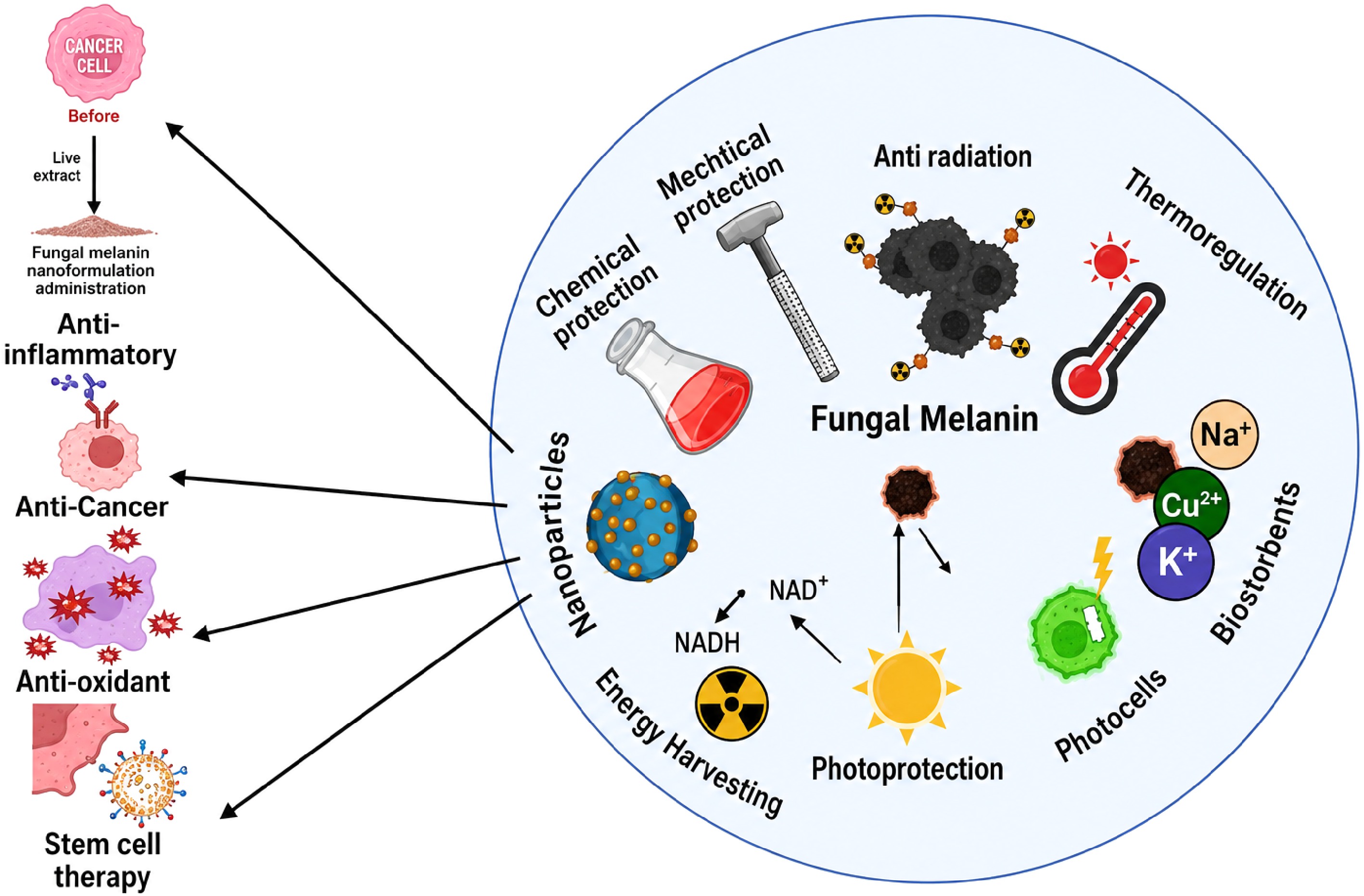
Figure 1.
Properties and applications of fungal melanin pigment.
Besides light absorption, melanin has a number of properties that are especially useful in solar devices. It demonstrates reversible redox, which means that it can be involved in the process of electron donation and acceptance. Melanin can also chelate metal ions and strongly bind to metal-oxide surfaces including TiO2 and ZnO, common in photovoltaic photoanodes. Moreover, fungal melanin has mixed ionic electronic conductivity, i.e. it could support both ionic movement and electronic charge transport (Fig. 2). This bi-functionality renders melanin an ideal photosensitizer, as well as a hole-transport material or interfacial coating that minimizes recombination losses and stabilizes charge separation. Its photostability and resistance to ultraviolet radiation are also inherent characteristics that ensure its application as a protective coating in solar applications[25−27].
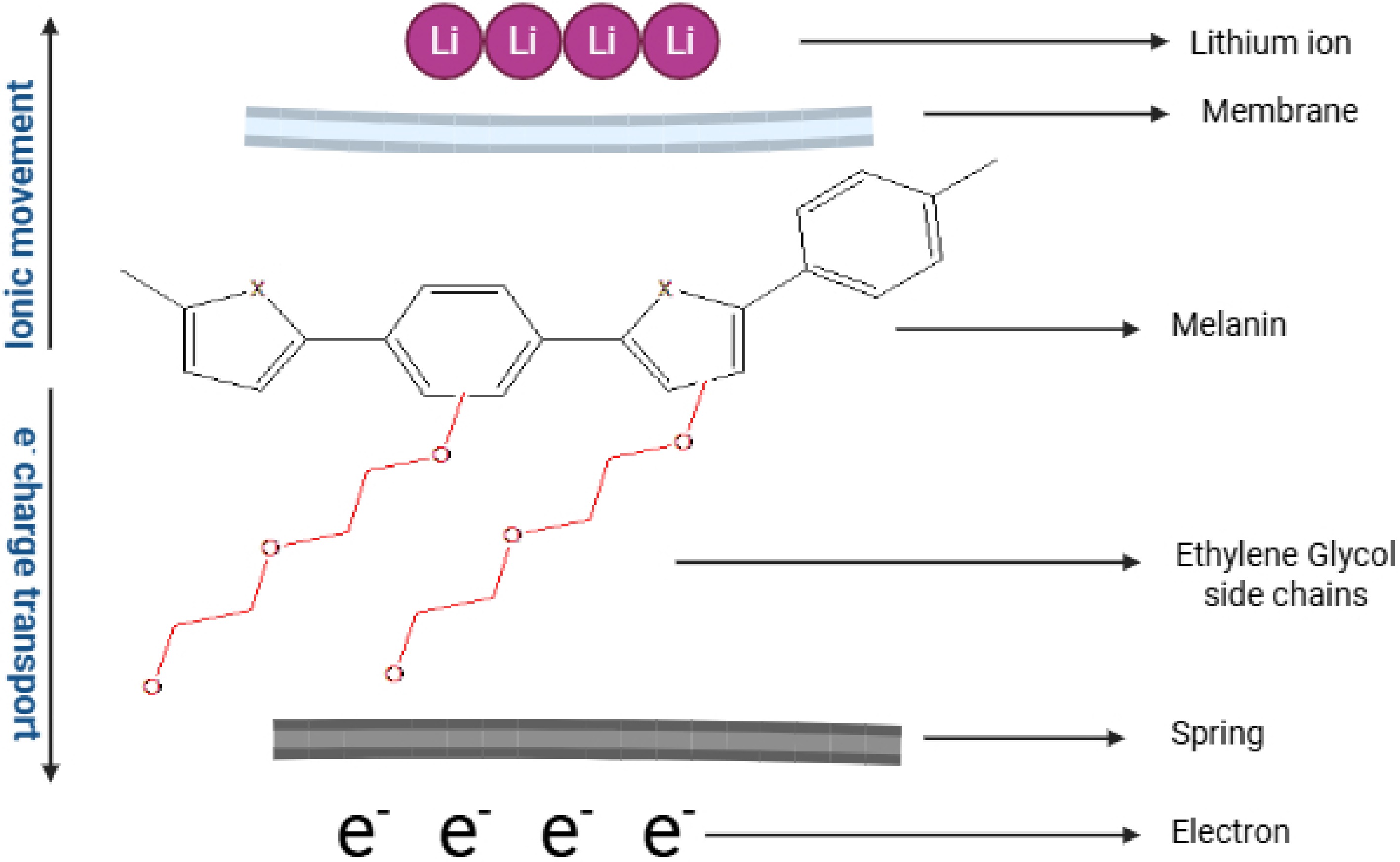
Figure 2.
Composite biohybrid cell with enhanced conducting properties.
Other photovoltaic-relevant pigment classes are produced by fungal endophytes in addition to melanin. There are carotenoids like 2-carotene, torulene, and astaxanthin, which are good at absorbing in the visible spectrum, and are famously used in light harvesting and photoprotection. Carotenoids may also serve as auxiliary photosensitizers in biohybrid systems, giving up excitation energy or electrons to other semiconducting materials, and quenching reactive oxygen species leading to photodegradation[28,29].
The toughening of optical properties and the excellent photochemical stability of azaphilones, a series of polyketide-based pigments are demonstrated. Chemical substitution is a way of modifying their absorption properties to be useful in spectral tuning in photovoltaic layers. On the same note, anthraquinones and naphthoquinones exhibit intense visible-light absorption, and high redox potential. These pigments may be either electron acceptors or donors, and can be involved in photoredox reactions in the presence of light. They have reversible redox properties and are stable, so they may be utilized as natural dyes in dye-sensitised solar cells or as photoactive components in hybrid thin films[29,30].
A combination of fungal pigmentation presents a variable and environmentally friendly pathway for synthetic photovoltaic pigments and has been associated with the benefits of wide spectral response, chemical stability, and the ability to be made at low temperatures[31].
Redox-active metabolites
-
Besides pigments, endophytic fungi have a great variety of redox-active secondary metabolites, which can participate in electron transfer processes. These are phenolic compounds, flavonoids, terpenoids, polyketides, and nitrogen-containing aromatic molecules. Most of these metabolites contain functional groups that can be oxidised and reduced, and hence can undergo redox cycling in response to light or electrical stimuli[32,33].
Of particular importance are phenolic compounds and flavonoids as they have the capability to donate or accept electrons and stabilize the radical intermediates. They can be used in photovoltaic settings as natural electron shuttles, to move charge between photoactive pigments and electrode surfaces. They assist in controlling the flow of electrons, enhancing charge separation at the interface, and minimizing recombination between charges. Meanwhile, they have strong antioxidant properties that enable them to counteract reactive oxygen species that are produced during photoexcitation, and protect the sensitive parts of the device against oxidative stress[27,34].
Endophytes tend to produce terpenoids and polyketides that have a high affinity to metal ions and semiconducting surfaces. Other metabolites are able to generate charge-transfer complexes with metal oxides, improving the efficiency of electron injection in hybrid systems. Other types of indirect photochemical reactions involve the light-independent (non-organized) redox transformations by which the light absorbed by others induces electron transfer without the involvement of organized photosynthetic machinery[35−37].
On the whole, redox-reactive fungal metabolites offer a versatile and chemically heterogeneous set of tools to control the electron flow of biohybrid photovoltaic systems. Their multifunctional properties of being able to function as electron donors, photoprotectants, and stabilizers of interfaces can be useful complements to pigment-based light-harvesting strategies.
Enzymes for electron transfer and nanomaterial synthesis
-
Fungal endophytes are also active oxidative and reductive enzyme producers that promote electron transfer and facilitate the synthesis of functional nanomaterials in an environmentally friendly way. Some of the most applicable enzymes include laccases, peroxidases, and different oxidoreductases.
The laccases are multicopper oxidases that can oxidize a broad spectrum of phenolic and aromatic substrates accompanying the transfer of electrons to molecular oxygen. Laccases can be employed to treat electrode surfaces in biohybrid photovoltaic applications, to polymerize conductive biopolymers, or to crosslink films containing pigments. Their ability to catalyze controlled oxidation reactions means they are able to tune surface chemistry and enhance electrical contact between biological and inorganic parts[38,39].
Peroxidases, such as manganese peroxidase and lignin peroxidase, are characterized by a high level of oxidative strength and a wide reaction specificity. Such enzymes may either transfer electrons by forming redox-active intermediates, or directly react with organic molecules at electrode interfaces. They can also be used to adjust pigment structures, or increase the adhesion between biomolecules to photovoltaic substrates by exploiting their activity[26,40,41].
Oxidoreductases (especially the NADH/NADPH-dependent ones) are essential in the process of green synthesis of metal and semiconductor nanoparticles. These enzymes are utilized by endophytic fungi to minimize metal ions in mild aqueous conditions, resulting in the creation of nanoparticles like silver, gold, titanium dioxide, zinc oxide, and cadmium sulfide. Biogenic nanoparticles, compared to chemically synthesized nanoparticles, tend to exhibit uniform size distributions, functionalization of surfaces with bio-ligands, and compatibility with polymeric/inorganic photovoltaic layers[26,42,43].
These processes make it possible through enzyme-mediated processes to fabricate nanomaterials via low-energy, non-toxic fabrication pathways, which can be used to increase light absorption, charge separation, and electroless transport in solar devices. Fungal enzymes facilitate the synthesis of materials by attaching catalytic activity to form future biohybrid photovoltaic systems that are based on biology[44,45].
Table 1 provides a summary of all the key pigments, metabolites, enzymes, and the structural characteristics of fungal endophytes presented in this review, and their functional importance for light harvesting and electron transfer.
Table 1. Biological components of fungal endophytes and their functional roles in biohybrid photovoltaic systems.
Biological component Representative examples Primary function Photovoltaic/bioelectronic role Advantages Melanin pigments Eumelanin, DHN-melanin Broadband light absorption, redox cycling Photosensitizer, hole-transport layer, interfacial stabilizer, UV-protective coating UV–Vis–NIR absorption, photostability, mixed ionic–electronic conductivity Carotenoids β-carotene, torulene, astaxanthin Visible-light absorption, photoprotection Auxiliary photosensitizer, ROS quencher Improves stability, reduces photodegradation Quinone pigments Anthraquinones, naphthoquinones Reversible redox reactions Natural dyes, electron mediators Stable redox cycling, visible-light activity Azaphilone pigments Polyketide-derived azaphilones Tunable optical absorption Spectral tuning in photoactive layers High photochemical stability Phenolic metabolites Phenolic acids, polyphenols Electron donation, antioxidant activity Electron shuttles, interface protection Reduces recombination and oxidative damage Flavonoids Flavones, flavonols Redox mediation Charge-transfer intermediates Stabilizes charge-separated states Terpenoids Mono- and sesquiterpenes Metal interaction, redox modulation Interface modifiers Enhances semiconductor interaction Polyketides Aromatic polyketides Electron transfer Photoredox mediators Chemical versatility Laccases Multicopper oxidases Oxidation of aromatic compounds Electrode surface modification, polymerization Green catalysis, surface functionalization Peroxidases Mn-peroxidase, lignin peroxidase Strong oxidation reactions Pigment modification, interface tuning Broad substrate specificity Oxidoreductases NADH/NADPH-dependent enzymes Metal ion reduction Green synthesis of nanoparticles Mild conditions, uniform nanomaterials Biogenic nanoparticles Ag, Au, TiO2, ZnO, CdS Light scattering, charge transport Photoelectrodes, interfaces Enhanced compatibility, eco-friendly synthesis Melanized hyphae Pigmented fungal cell walls Electron conduction Biological charge-transport pathways Semiconductive behavior Hyphal networks Filamentous fungal structures Spatial electron transport Conductive scaffolds Large surface area, structural flexibility -
The fundamental difference between fungal endophytes and classical photosynthetic organisms (including plants, algae, and cyanobacteria) lies in the fact that they lack organized photosystems (Photosystem I and Photosystem II), and chlorophyll-based light-harvesting complexes. However, fungi are not photochemically dormant. They depend on a blend of photoactive pigments, redox-active metabolites, enzymes, and conductive cellular structures, which combine to allow light uptake and electron transfer via other non-photosynthetic pathways. These systems are progressively identified to be applicable to biohybrid photovoltaic and bioelectronic virtues[38,46].
Light absorption by fungal pigments
-
Examples of fungal pigments used as the primary light-harvesting complexes of endophytic fungi are melanin, carotenoids, and quinones. These pigments take photons with a broad spectrum and convert light energy into excited states of electrons[47,48].
Of special importance is melanin because it has a broad band absorption, which extends across the ultraviolet and the visible spectrum, to the near-infrared spectrum. This is due to its heterogeneous, π-conjugated polymer structure, which has no one bandgap, but rather a distribution of energy states. Upon absorption of light, the melanin undergoes photoinduced charge separation, resulting in the formation of mobile electrons and holes that can participate in redox reactions. Compared to conventional organic dyes, melanin releases excess energy in a non-radiative process, reducing photodegradation and enhancing stability in continuous light intensity[49,50].
Carotenoids synthesized by endophytic fungi are visible-spectrum absorbers and could be used as auxiliary photosensitizers. When excited by light, carotenoids can transfer either energy or electrons to their neighbouring molecules or conductive substrates. They are also protective factors because they inhibit the excess energy of excitation and counteract reactive oxygen species, and therefore stabilize the light-harvesting interfaces in photovoltaic systems[34,51].
Quinone pigments, such as anthraquinones or naphthoquinones, are highly redox-active and their oxidation-reduction potentials are good. Photoexcitation of these compounds may be a recipient or a donor of electrons; thus, these compounds are helpful in bridging components of light absorbers and electrodes. They are recyclable due to their redox-reversible reactions, which cannot be readily degraded[26,52,53].
Photochemical and redox-driven electron transfer
-
In systems, light harvesting in fungi is not associated with organized photochemical reaction centres, but rather redox chemistry. The photoexcited pigments and metabolites of the photosynthetic electron acceptor react with other reactants to produce a series of redox reactions, and the electrons are released to other acceptors (Fig. 3). Such acceptors may be metal oxides, carbonaceous, or other redox-active fungal metabolites[54,55].
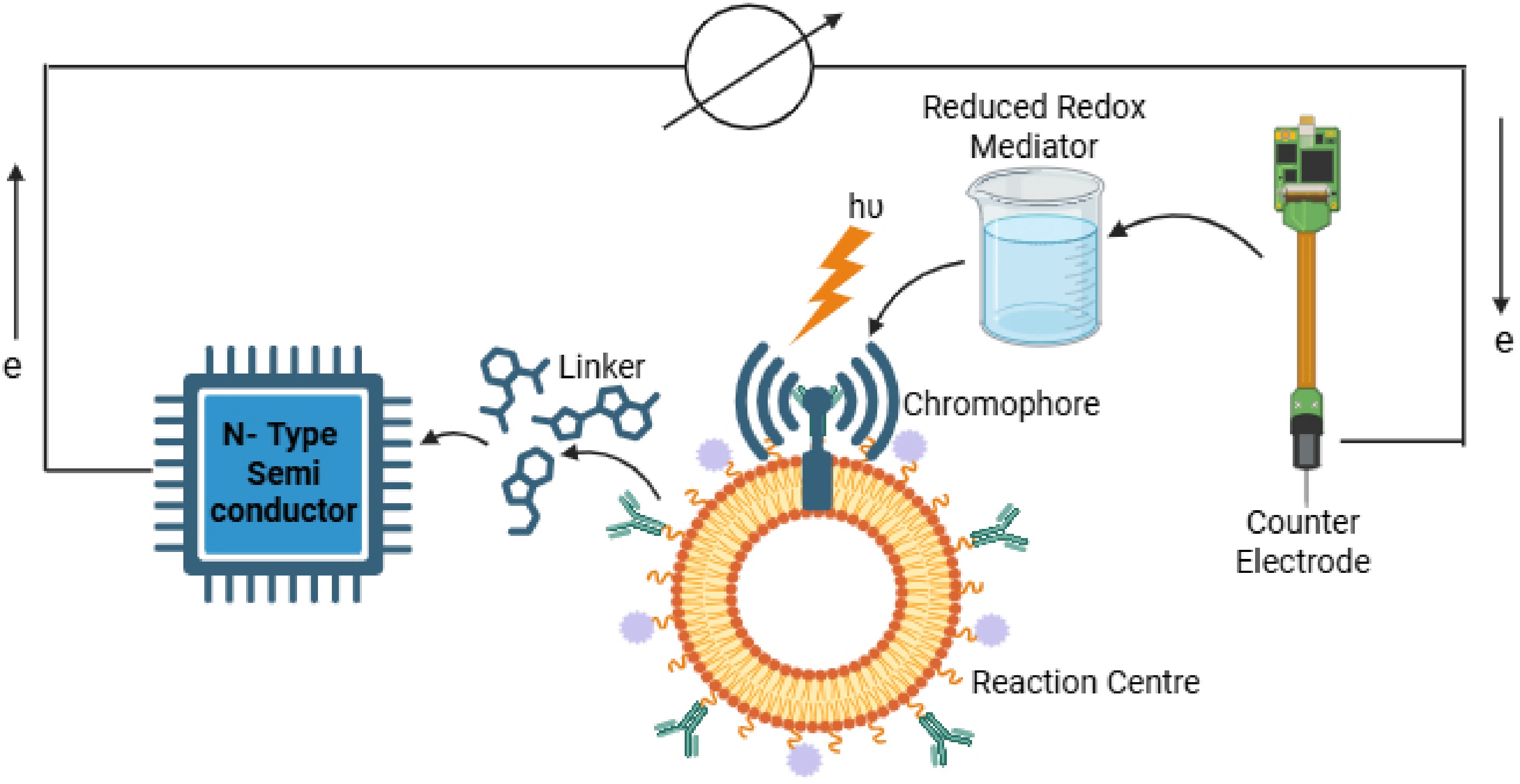
Figure 3.
Light harvesting and redox-driven electron transfer in biohybrid cells.
Endophytes produce redox-reactive molecules (phenolics, flavonoids, quinones) that mediate an electronic pathway between the photoexcited pigments and conductive substances. Such molecules stabilise charge-separated states and allow the directional electron flow that reduces recombination losses. These redox mediation processes in photovoltaic systems are necessary to maintain continued production of photocurrent in systems that do not have highly ordered charge-transport channels.
It is worth noting that fungal redox systems are able to effectively operate in low-light conditions and scattered light. This property shows not only the ecological acclimation of endophytes to dark flora, but perhaps advantages to solar appliances that operate under less than ideal lighting regimes[47,56].
Extracellular electron transfer by fungal endophytes
-
In addition to intracellular photochemical reactions, fungal endophytes could also undergo extracellular electron transfer (EET); the flow of electrons between the fungal cell and external acceptors, e.g., minerals, electrodes, and nanomaterials. This capacity is necessary in the incorporation of fungi into bioelectronic and photovoltaic structures[57,58].
One of these EET pathways is through secreted redox mediators; quinones, phenolics, among other small molecules. These compounds spread out of the fungal cell, absorb electrons out of the intracellular metabolic reactions, and pass the electrons out to external conductive surfaces. This mediated electron transfer enables fungi to communicate with materials, that is, to react to an electrical signal without being in physical contact[57,59].
The second pathway is founded on the action of membrane-bound enzymes, e.g., oxidoreductases and multicopper oxidases, promoting the transfer of electrons across the cell membrane. These enzymes light the intracellular redox reactions to external electron acceptors and play an important role in the biosynthesis of nanoparticles and surface redoxation[60−62].
Conductive hyphal structures and melanized cell walls
-
Fungi, unlike electroactive bacteria, do not have protein-based conductive pili or nanowires. Rather, they use their hyphal networks as structural channels for electron transport. Fungal hyphae are multicellular organisms with filamentous structures capable of extending across long distances in the form of interlinked networks[63,64].
Melanin, a semiconductive material, is found in large quantities in the cell walls of hyphae in melanized fungi. The aromatic and π-stacked form of melanin facilitates the electron hopping and charge delocalization down the wall of the cell. It is theorized, and experimental work indicates that melanized hyphae are capable of conducting electrons over distances of a few micrometers, in fact, acting as biological conductors[49,50].
The conductivity of hyphae is what enables fungi to conduct electrons to spatially separated areas, as well as to interact with external substances on a large scale. Such properties may be used in biohybrid photovoltaic systems to develop conductive scaffolds, interfacial layers, or living networks to aid in the collection and transport of charges[44,65].
Comparison with bacterial electron transfer strategies
-
The mechanism of light-harvesting and electron-transfer in fungi is completely different compared to the electroactive and photosynthetic bacteria. In bacteria, specialized photosystems, i.e., the use of cytochromes and conductive pili, are replaced by chemically versatile pigments in fungi, i.e., the use of diffusible redox mediators and conductive cell wall components. These fungal mechanisms are less efficient in terms of instantaneous electron flux, although they are advantaged by chemical stability, environmental tolerance, and structural flexibility[57,66].
These novel designs expand the design frontier of biohybrid photovoltaic and bioelectronic systems. Fungal-based systems vs photosynthetic mimicking systems. Functions of photosynthesis can be mimicked, so that light-dependent redox reactions can be catalyzed with inorganic semiconductors, conductive polymers, and carbon-based materials[38,67−69].
In short, fungal endophytes have the ability to capture the light and to transduce electrons through the combined use of pigment photochemistry, redox mediation, enzyme activity, and conductive hyphal structures. These systems are inherently distinct to classical photosynthetic systems, yet have powerful and adaptable routes to bioelectronic integration, which offers the foundation for developing sustainable biohybrid photovoltaic systems[68,70].
-
The successful application of fungal endophyte-derived biomolecules in photovoltaic systems depends mainly on how these biological components are integrated with functional materials and device architectures. Because fungal pigments, metabolites, and enzymes are chemically complex and often sensitive to processing conditions, careful selection of electrode materials, immobilization strategies, and device configurations is essential to preserve their activity while enabling efficient charge transport[26,58,71].
Electrode materials for fungal-based photovoltaics
-
Biomolecules derived from fungi have been built into various groups of electrode materials that are in general use in photovoltaic and bioelectronic systems.
Some of the most popular substrates include carbon-based electrodes such as carbon cloth, carbon paper, graphite, graphene, and carbon nanotube (CNT) networks. These materials have a high electrical conductivity, chemical stability, high surface area, and high biocompatibility. Fungal pigments like melanin can be strongly attracted to carbon surfaces by π-π interactions and hydrogen bonding, which allow them to be adsorbed reliably and allow electronic interactions. Carbon electrodes are also compatible with hydrated and biologically derived coatings, and so are convenient in biohybrid systems where moisture and ionic movement cannot be avoided[72,73].
Most dye-sensitized and hybrid photovoltaic systems are based on metal-oxide semiconductors, especially titanium dioxide (TiO2) and zinc oxide (ZnO). They have preferential band alignment with the ejection of electrons by photoexcited pigments, and have a large surface area when made in mesoporous films. Melanin and quinone-based fungal pigments are able to adsorb onto metal-oxide surfaces due to metal chelation or surface OH. It is this interaction that allows the transfer of electrons out of the excited biomolecule into the conduction band of the semiconductor, a major requirement of photovoltaic action[74−76].
Polymers
-
Conductive polymers, including polyaniline (PANI), polypyrrole (PPy), and PEDOT : PSS are becoming a popular flexible and tunable fungal biomolecule matrix. These polymers can be worked at low temperature, plated out as thin films and even chemically modified to make these polymers compatible with biological components. In combination with fungal pigments or enzymes the conductive polymers are used as charge-transport layers to fill the gap existing between soft biological materials and a rigid inorganic electrode[77−79].
Immobilization and encapsulation strategies
-
Fungal-derived pigments and enzymes have a high sensitivity to functional degradation, and thus, appropriate immobilization strategies are necessitated. Aggregation, denaturation, or inactivation are common effects of direct deposition; hence, structured matrices are widely used.
The popularity of hydrogels lies in the fact that they enable a hydrated soft environment, which is similar to natural biological conditions. Biopolymers (cellulose, alginate, or gelatin) and conductive polymer composites can be converted into hydrogels, and fungal pigments can be incorporated without losing their redox activity and light absorption. Hydrogels are also used in photovoltaic applications where ionic transport can be used to enhance interfacial stability and charge compensation[80−82].
Another recent method of creating devices is through bioinks and printable materials. Additive manufacturing can be used with bioinks containing fungal pigments, conductive polymers, carbon nanomaterials, or nanocellulose. This provides the ability to control the thickness of the film, the porosity, and the geometry precisely, and thus allowing optimisation of the light penetration and electron movement. Flexible or patterned photovoltaic devices are currently attractive targets of such approaches[7,83−85].
Porous scaffolds and composite films, such as mesoporous metal oxides, carbon felt, and nanofibrous polymer matrices, offer large surface areas during which biomolecules can be loaded, and effective pathways during which charges can be transported. The structures have the benefit of making the fungal pigments uniformly distributed, lowering aggregation, and increasing the electrical contact between the biological and inorganic components[55,86].
Dye-sensitized solar cells using fungal pigments
-
A direct display of fungal-derived biomolecules in photovoltaics is in the dye-sensitized solar cells (DSSCs). Fungal melanin has also been used in these systems as an example of a natural photosensitizer deposited onto mesoporous TiO2 photoanodes. When melanin absorbs light, it can inject electrons into the TiO2 conduction band, producing a photocurrent that can be measured[30].
The conversion efficiencies of melanin-sensitized DSSCs in the conversion of power are much lower than those obtained using synthetic ruthenium-based or organic dyes, but these experiments are crucial proof-of-concept experiments. They demonstrate that the basic functions of light harvesting and charge injection can be carried out by completely biogenic sensitizers. Fungal pigments have advantages such as sustainability, low-cost biomass, wide spectral absorption, and great photochemical resistance[55,87,88].
Hybrid and bioelectrochemical device architectures
-
Next to the traditional photovoltaics, fungi-based biomolecules can easily be utilized in hybrid energy systems that can include photovoltaic and bioelectrochemical capabilities. These architectures contain fungal pigments that trap light and store charge carriers that are transported using inorganic semiconductors or conductive polymers in order to catalyze downstream electrochemical reactions[38,44,89,90].
Hybrid photo-biofuel cell systems can be taken as one of the potential directions. In this case, the light-sensitive mediators, fungal pigments, or redox-active metabolites that incorporate photon absorption in the reaction with enzymatic or microbial fuel-cell reactions are used. It is in this way that solar energy has been transformed into electrical or chemical energy using complementary biology and inorganic elements[38,45].
Flexible and low-power photovoltaic devices, which use fungal pigments embedded into conductive hydrogel or polymer composites are another area of development. They are especially applicable in wear[91].
Overall, architectures that allow the inclusion of fungal-derived biomolecules in photovoltaic devices are required to balance between biological functionality, and the ability to transport charge and last long. Carbon-based electrodes, metal-oxide semiconductors, and conductive polymers complement this integration; bridging the mechanical and chemical differences between biological and inorganic components is provided by hydrogel, bioink, and porous scaffolds[92,93].
Though the current efficiencies are rather small, these material and device approaches prove that it is possible to implement fungal endophyte-based parts into functional systems of solar energy usage. The further development of materials engineering, additive manufacturing, and biohybrid design is likely to increase the importance of fungal biomolecules in next-generation, sustainable photovoltaic technologies[94,95].
-
The photovoltaic and bioelectrochemical systems based on fungal pigments are currently characterized by modest performances when measured in terms of such traditional parameters as power conversion efficiency (PCE), current density, and long-term stability of the operation. In the majority of reported works, devices using fungal colors, especially melanin, have much lower efficiencies than commercial silicon solar cells and state-of-the-art thin-film photovoltaics. Likewise, they typically have low power outputs compared to those obtained by established bacterial bioelectrochemical systems, including microbial fuel cells (MFCs) and cyanobacteria-based biophotovoltaics [45,65,96].
Fungal melanin-sensitized solar cell systems. In dye-sensitized solar cell systems, photocurrents and efficiencies, which are usually considerably less than 1%, are typically observed in devices sensitized with fungal melanin. These are very low relative to synthetic dye-based DSSCs, or even inorganic photovoltaics that can achieve efficiencies of over 10%−20%. Reduced performance of fungal-pigment systems may be ascribed to various reasons, such as a low inherent conductivity of the biological pigments, ineffective charge separation, and increased recombination losses at the bioorganic interface. Moreover, differences in pigment structure and film morphology may also influence reproducibility and optimization of the device[97−99].
Fungal-based photovoltaic platforms are also likely to record lower instantaneous power densities when compared to bacterial bioelectrochemical systems. Electroactive bacteria have the advantage in having specific electron-transfer complexes (including multiheme cytochromes and conductive pili) that make them capable of efficient and specific extracellular electron transfer. Fungal systems depend instead on electron transfer mediated by chemicals with the help of pigments, redox metabolites, and melanized cell walls, which is less efficient and slower than that of ATP[70,100,101].
However, despite the aforementioned limitations, fungal-pigment systems have a number of notable benefits that cannot be adequately quantified by measures of efficiency alone. Broad spectral absorption, especially in melanin, which absorbs over the ultraviolet, visible, and near-infrared spectrum, is one of its strengths. This enables fungal pigments to collect light in a detrimental diffuse, low-intensity, or spectrally changing environment in which conventional photovoltaics might fail. The traits are particularly applicable where a low-cost source of energy is needed indoors, in shaded conditions, or under low lighting[102,103].
Chemical and environmental stability is also another strength. Lots of fungal pigments are naturally inaccessible to ultraviolet radiation, oxidative stress, and temperature variations. This resistance has been shown to be a measure of the ecological fitness of fungi to adverse conditions, and can be converted to greater resistance to photodegradation and chemical degradation in devices. Fungal pigments tend to degrade more slowly than certain synthetic organic dyes when subjected to extended light and oxidative exposure[104−106].
Sustainability and manufacturing routes also have an additional differentiation on fungal materials compared to conventional photovoltaic attributes. Low-energy fermentation processes can be used to produce fungal pigments and metabolites based on renewable biomass without requiring rare metals, toxic solvents, or high-temperature fabrication. It provides possible benefits of environmental sensitivity, scalability, and life-cycle sustainability, especially in the case of decentralized, or low-cost energy technologies[107,108].
In light of this, the materials produced by fungi are currently most useful as complementary factors instead of direct competitors to high-efficiency photovoltaics. Their highest utility is in hybrid energy systems, in which they can be used as natural photosensitizers, redox mediators, protection-providing interfacial surfaces, or stability-promoting additives to inorganic semiconductors or conductive polymers. These applications can make fungal pigments enhance spectral coverage, environmental stability, or sustainability, even though they are not necessarily the source of power generation[31,109].
It is important to note that the current power conversion efficiencies (PCE) of fungal-based photovoltaic systems are generally below 1%. Although the efficiencies are modest compared to conventional silicon and thin-film photovoltaics, the unique advantages in stability, spectral absorption, and sustainability make them suitable for low-power, decentralized applications. Direct comparative data with existing technologies are limited, acknowledging that these systems currently serve niche functions where environmental resilience and material sustainability are prioritized.
To conclude, although fungal-pigment-based photovoltaic systems are not currently as efficient as traditional solar technologies or more advanced bacterial bioelectrochemical systems, their combination of wide light absorption, durability, and sustainability is encouraging as a component of future hybrid and niche energy systems. Further enhancement of material integration, device architecture, and biological engineering should reduce the performance gap and increase their applicability[44,65,110,111].
-
Although the application of fungal endophytes in photovoltaic and biohybrid energy systems is gaining momentum, a number of scientific and engineering issues need to be resolved before they surpass laboratory-level demonstrations. These issues are associated primarily with material stability, reproducibility, scalability, biosafety, and device integration. To overcome them, fungal biotechnology, materials engineering, and device design will have to make joint moves[112−114].
Long-term stability under operating conditions
-
Another major issue is fungal-derived pigments, metabolites, and enzyme-based components being stable in the long term when subjected to continuous light, changes in temperature, moisture, and oxidizing conditions. Even though the fungal pigments are more resistant to light and oxygen than many artificial organic dyes, extended exposure to both light and oxygen may cause gradual redox fatigue, structural alteration, or electronic inactivity. Thermal stress and dehydration, especially of enzymes and hydrated biomolecules has the potential to cause a loss of activity with time[115−117].
Techniques to enhance stability involve the incorporation of fungal biomolecules into protective scaffolds like crosslinked hydrogel, polymer composite, or inorganic-organic hybrid film. Photodegradation can be further prevented by encapsulation using UV-filtering or oxygen-barrier coatings. Furthermore, composite structures of biological building blocks with inorganic nanomaterials (e.g., TiO2, ZnO, carbon nanotubes) can conduct heat more easily and stabilize charge transport routes, increasing the lifetime of the device[118,119].
While intrinsic stability of fungal pigments such as melanin is promising, comprehensive experimental validation under operational conditions remains an ongoing effort. Strategies such as encapsulation within hydrogels, hybrid nanomaterials, and protective coatings are being investigated to improve long-term device stability. Further systematic aging studies are necessary to quantify stability enhancements and device lifetimes.
Batch-to-batch variability and reproducibility
-
Biological materials are naturally subject to batch-to-batch variation, which is a significant challenge to the fabrication of devices reproducibility. Depending on growth conditions (nutrient availability, pH, temperature, oxygen levels, and time of cultivation), fungus pigment yield, composition, and physicochemical properties can change. Minor changes in fermentation or extraction may result in large changes in pigment conductivity, solubility, and redox, which eventually influence photovoltaic performance[4,31,102].
To mitigate this problem, controlled bioprocessing is necessary. Variability can be greatly reduced and consistency enhanced by the use of bioreactors, where the growth parameters can be strictly controlled. Protocols of extraction and purification should be standardized, as various chemical treatments can modify the pigment polymer length, functional groups, as well as electronic properties. The reproducibility will be further enabled by the creation of clear-cut quality-control indicators in fungal-derived materials (optical absorption profiles, redox potentials, and conductivity)[104,120−122].
Scalability of pigment and biomolecule production
-
Although fungal endophytes may be cultured large-scale, scaling up of pigment production to be used in photovoltaic systems is not feasible in practice. Large-scale deployment needs high pigment yield, uniform quality, and low-cost downstream processing. Other pigments like melanin are not very soluble, and they cannot be easily processed into uniform films, making them hard to make.
Engineering solutions involve the optimization of fermentation procedures to maximise the secretion or intracellular accumulation of pigments, or devising extraction procedures that will give processable pigment forms. The use of metabolic engineering enables fungal strains to be engineered to be more productive in pigments, have control of their molecular structure, or be more soluble. Instead, precursors can be deposited and then biosynthesized and polymerized, which enhances processing when the device is being created[26,102,123,124].
Biosafety and environmental considerations
-
Biosafety and environmental issues may arise when using fungal endophytes, as it depends on whether the live organisms or spores are integrated into the device. Certain endophytic fungi are genera that contain opportunistic pathogens or allergic species, and unwanted release into the environment should be prevented. Moreover, biologically active elements can wear out the materials of the devices[125,126].
To reduce these risks, the majority of photovoltaic systems use non-living material, e.g., purified pigments, metabolites, or enzymes instead of living fungi. In cases where it is necessary to have biological activity, exposure to the environment can be avoided through encapsulation across closed matrices. Safety is further enhanced by choosing non-pathogenic strains with well-characterized strains, and conducting genetic screening to ensure that there are no virulence factors. Life-cycle assessment and environmental impact assessment are also essential to make sure that fungal-based devices can meet the sustainability and regulatory criteria[114,122,127].
Genetic and materials engineering strategies
-
The latest developments in synthetic biology and genetic engineering offer a potent means of getting around most of the restrictions regarding fungal materials. Specific genetic modification has the potential to enhance pigment production, fine-tune redox capabilities, and enhance stress resistance. Genome editing technologies like CRISPR allow biosynthetic pathways to be tightly regulated, making it possible to create pigments and metabolites with the best photovoltaic characteristics[128,129].
Concerning materials, the design of composite materials plays an important role in enhancing charge transportation and mechanical integrity. The addition of fungal pigments to conductive polymers, carbon-based materials, or nanostructured metal oxides, may increase electron mobility as well as decrease recombination losses. Additive manufacturing and 3D printing allow the specific control of device architecture which guarantees the homogeneous distribution of biological parts, and the ability to fabricate complex structures on a larger scale[130−132].
In general, to overcome the obstacles encountered with fungal endophyte-based photovoltaic systems, the interdisciplinary approach that brings together biology, materials science, and engineering is required. Further developments in bioprocess management, genetic engineering, encapsulation, and superior production are anticipated to greatly enhance reproducibility, performance, and scalability. These engineering strategies are bound to evolve the materials from fungi to become part of hybrid and sustainable energy technologies as materials that are proven to be more than mere experimental elements[133,134].
Examples of effective bioinorganic coupling include the use of fungal melanin adsorbed onto metal-oxide semiconductors such as TiO2 or ZnO in dye-sensitized solar cells, and the fabrication of bio-ink-based additive manufacturing of flexible devices incorporating fungal pigments and nanomaterials. Such approaches demonstrate the feasibility of bio-electronic interfaces that combine biological and inorganic components efficiently.
-
Fungal endophyte-based biohybrid photovoltaic systems are particularly well suited for low-power and decentralized energy applications, where conventional photovoltaic technologies may be impractical due to cost, rigidity, or sensitivity to environmental conditions. Unlike high-efficiency silicon solar cells, these biohybrid systems are not intended to deliver large-scale power generation. Instead, their value lies in their ability to operate reliably under low-light, diffuse, or fluctuating illumination, while offering sustainability, flexibility, and environmental compatibility[44,110,135].
Applications in low-power and decentralized energy systems
-
Environmental sensing and monitoring is one of the most promising fields of application. Air quality, water quality, soil health, or climate monitoring sensors are distributed sensors that are typically powered on the micro- to milliwatt scale. Photovoltaic elements made of fungal pigments have the potential to supply low-level power continuously in shady areas or indoors, which will eliminate the need for batteries and maintenance. The stability of fungal pigments is also enhanced in the case of chemical and UV stability, thus increasing durability in outdoor applications[31,105,136].
Fungal biohybrid photovoltaics fit the natural environment of plant-associated microbiomes in agricultural monitoring systems. Soil moisture, nutrients, crop health, or pest sensors are frequently deployed over an extensive region and have to operate in an unstable light environment, such as the partial shadow of plants. Fungal pigments have the advantages of being broad-spectrum absorbers with low-light sensitivity, making them a viable power source in any Internet-of-Things (IoT) device used in the agricultural environment[137,138].
Another new place of application is wearable electronics and biosensors. Wearable health monitors, smart textiles, and personal environmental sensors require flexible and lightweight sources of energy. Fungal pigments in conductive hydrogels or polymer composites can be fabricated into biocompatible and bendable shapes. They are suitable for self-powered wearable systems due to their capability of operating with small voltages as well as indoor lighting conditions[91,139−141].
Fungal biohybrid photovoltaics in the built environment. Fungal biohybrid photovoltaics may be used in building-integrated devices and facade-mounted devices. They can be used as smart windows, green roofs, building skins, and even indoor panels that harness energy and can be used to complement more common sources of power. Due to the possibility of fungal pigments being used to add more functional capabilities such as UV protection, thermal buffering, or moisture control, these systems could also be multifunctional, rather than just generating electricity[58,102,142].
Integration with hybrid energy and bioelectronic systems
-
Fungal endophyte-based materials can easily be employed as part of a hybrid energy system, in a fashion similar to stand-alone photovoltaics. Inorganic semiconductors, conductive polymers, or biofuel-cell components can be photosensitized or mediated by using fungal pigments and redox-active metabolites in such configurations. These hybrid designs can be light-harvesting devices with energy storage, electrochemical conversion devices, or sensors[31,58,139].
As an example, photo-assisted biofuel cells could be used in incorporating fungal pigments where electron generation in response to light could intensify a microbial or enzymatic electrochemical reaction. Equally, fungal materials can serve as stabilizing interfaces layers or redox buffers in multi-component energy-harvesting devices to improve durability and spectral bandwidth[31,57,58].
Research priorities and technological development
-
To bring fungal endophyte-based photovoltaics out of the laboratory prototypes into practical technologies, there are several research directions that are especially significant.
To find the fungal endophytes with the most favorable pigment content, redox profile, and environmental resistance, high-throughput strain screening is required. Optical, electrochemical, and stress-response screening platforms that are automated can speed up discovery and minimize the use of trial-and-error[143,144].
Metabolic engineering through omics will be central in enhancing performance and reproducibility. The regulatory networks of pigment biosynthesis, redox mediation, and stress adaptation can be uncovered by genomics, transcriptomics, proteomics, and metabolomics. This knowledge can be used to direct specific genetic engineering to improve pigment production, provide optical control, and achieve stability in photovoltaic working environments[145,146].
Benchmarking and the standardized testing of devices are necessary in order to make any meaningful comparison across the studies. It will be beneficial to standardize illumination conditions, device structure, performance indexes, and stability testing to enhance reproducibility and have a better view of technological advancements[147,148].
The possibility to integrate a material on a scale is one of the challenges and opportunities. Fungal-based photovoltaic elements can be fabricated on a large scale using advances in biopolymer processing, conductive composites, and additive manufacturing without compromising biological functionality. The creation of printable inks, finishes, and modular components of devices will be essential to viable implementation[149,150].
Lastly, environmental impact analysis and life-cycle assessment (LCA) would have to be integrated at the initial stages of technology development. Though fungal-based systems immediately strike as being more sustainable in their nature, with low-temperature processing, renewable feedstocks, and little use of toxic materials, it needs to be quantitatively assessed to determine energy payback time, carbon footprint, recyclability, and ecological safety[151−153].
Overall, biohybrid photovoltaics with fungal endophytes are very niche in the renewable energy system. They are stronger in sustainability, adaptability, and functionality at low and varying light conditions, than in high efficiency. As biology screening, metabolic engineering, materials integration, and standardized testing continue to evolve, these systems have been found to be ready to assist in the future decentralized, low-power, and multifunctional uses of energy[65,89,96,154].
In order to give a system-level perspective of the process by which fungal endophyte-derived components are converted into functional devices, Table 2 lists the materials involved, device structures, performance features, challenges, engineering, and applications domains. All of them, combined, depict fungal endophyte-based photovoltaics as positioned as sustainable, low-power, and multifunctional energy sources, instead of high-efficiency alternatives to traditional solar technologies.
Table 2. Materials, device architectures, performance, challenges, and applications of fungal endophyte-based photovoltaic systems.
Category Key elements Description/role Current status Future direction Electrode materials Carbon cloth, graphene, CNTs Conductive, biocompatible substrates Widely used Nano-structured optimization Metal-oxide semiconductors TiO2, ZnO Electron injection and transport Proven in DSSCs Band alignment tuning Conductive polymers PANI, PPy, PEDOT : PSS Flexible charge-transport layers Emerging Composite enhancement Immobilization matrices Hydrogels, bioinks, porous scaffolds Stabilize biomolecules Actively developed Printable large-area devices Device architectures DSSCs, hybrid PV–biofuel cells Light-to-electric/chemical
energy conversionProof-of-concept Integrated multifunctional systems Light-harvesting mechanism Pigment photochemistry Non-photosynthetic absorption Demonstrated Spectral optimization Electron transfer pathways Redox mediation, hyphal conduction Charge transport without photosystems Functional but low efficiency Engineered conductivity Power conversion efficiency Typically < 1% Lower than silicon PV Limited Hybrid enhancement Stability UV and oxidative tolerance Better than many organic dyes Moderate Advanced encapsulation Scalability Fermentation-based production Renewable, low-energy Developing Industrial bioprocessing Batch variability Growth-condition dependence Limits reproducibility Major challenge Controlled bioreactors Biosafety Non-pathogenic strains preferred Manageable risk Addressed via purification Standardized safety protocols Engineering solutions Genetic engineering, composites Performance enhancement Rapid progress CRISPR-based optimization Additive manufacturing Bioinks, 3D printing Structural control Early-stage Large-area fabrication Target applications Sensors, agriculture, wearables Low-power energy needs Highly suitable Decentralized energy systems Sustainability Biomass-based materials Low carbon footprint Strong advantage Life-cycle optimization -
This review introduced a systematic evaluation of fungal endophytes as an emerging biological resource for biohybrid photovoltaic and bioelectrochemical technologies, which has integrated the body of knowledge in plant microbiome research, fungal biotechnology, materials science, and solar-energy engineering. In contrast to traditional photosynthetic organisms, the fungal endophytes do not have organized photosystems, but they compensate by having a diverse repertoire of photoactive pigments, redox-active metabolites, oxidative enzymes, and conductive cellular structures that collectively facilitate light harvesting, separation of charges, and electron transfer by alternative pathways.
Photovoltaic applications under adverse or fluctuating conditions. Fungal endophytes are exceptionally adapted to photovoltaic systems due to their biological properties, namely, metabolic versatility, ecological plasticity, and resistance to stress. Melanin, carotenoids, and quinones are pigments that offer broad-spectrum light absorption, redox stability, and photochemical resilience, whereas secondary metabolites and enzymes mediate electrons, interfacial stability, and green synthesis of functional nanomaterials. These characteristics separate fungal systems and algae- and bacteria-based bioelectrochemical systems, and broaden the design space of biohybrid solar technology, compared to photosynthesis-mimicking designs.
Regarding materials and devices, the review has shown that components derived from fungi can be effectively incorporated into carbon-based electrodes, metal-oxide semiconductors, conductive polymers, hydrogels, bioinks, and porous scaffolds. Even though existing power conversion efficiencies are still low relative to commercial photovoltaics, demonstrations of photovoltaic systems based on melanin-sensitized dye-sensitized solar cells and hybrid photo-bio electrochemical systems are clear indications of the technical viability of fully or partially biogenic photovoltaic architectures. Notably, the benefits of fungal materials are not limited to efficiency, and further benefits such as broad spectral accessibility, chemical stability, low-energy production, and renewable biomass sustainability are also present.
Currently, the photovoltaic systems created using fungal endophytes are best suited as complementary and enabling technologies, as opposed to substitutes for the high-efficiency silicon or thin-film solar cells. They have the greatest potential in low-power, decentralized, and multifunctional applications, including environmental sensors, agricultural sensors, wearable electronics, building-integrated sensors, and hybrid energy systems. Under such circumstances, the ability to operate in low-light conditions, environmental friendliness, and keeping maintenance to a minimum, are more likely to be of high importance than peak efficiency.
The review also identifies the most critical issues that should be tackled to further develop the field, such as long-term stability, reproducibility of biological materials, scalability of pigment production, biosafety issues, as well as standardized performance benchmarking. Positively, recent advances in synthetic biology, metabolic and genetic engineering, super composite materials, and additive manufacturing offer distinct avenues to the elimination of these limitations. A key challenge in applying laboratory-level innovations into viable technologies will require massive strain screening, optimization via omics, strong encapsulation policies, and life-cycle assessment.
Finally, endophytes of fungi are one of the untapped and promising areas of sustainable solar-energy studies. Their special biological robustness, chemical adaptability, and their compatibility with the principles of green manufacturing make them worth considering as an addition to biohybrid photovoltaic systems of the future. With interdisciplinary research further maturing, technologies based on fungal endophytes can help contribute to decentralized and low-carbon energy solutions in the future and be environmentally responsible.
The authors would like to thank the Department of Biosciences and the Technology and Department of Mechanical Engineering for providing plagiarism software.
-
The authors confirm their contributions to the paper as follows: literature survey and writing − original draft: Akhai S, Shivani; conceptualization and reviewing: Gupta M; reviewing, writing, and editing: Kumar P, Kumar D; literature survey and editing: Goyal S, Thakur Z. All authors reviewed and approved the final version of the manuscript.
-
Data sharing not applicable to this article as no datasets were generated or analyzed during the current study.
-
The authors declare that they have no conflict of interest.
- Copyright: © 2026 by the author(s). Published by Maximum Academic Press, Fayetteville, GA. This article is an open access article distributed under Creative Commons Attribution License (CC BY 4.0), visit https://creativecommons.org/licenses/by/4.0/.
-
About this article
Cite this article
Shivani, Akhai S, Kumar P, Kumar D, Goyal S, et al. 2026. Biohybrid photovoltaic systems based on fungal endophytes. Studies in Fungi 11: e023 doi: 10.48130/sif-0026-0017 

Biohybrid photovoltaic systems based on fungal endophytes
- Received: 05 February 2026
- Revised: 31 March 2026
- Accepted: 13 April 2026
- Published online: 10 August 2026
Abstract: Fungal endophytes are fungi that inhabit plant tissues without causing disease. They have been a focus in recent years as possible biological parts of biohybrid photovoltaic, and bioelectrochemical systems. This review surveys the biological and chemical characteristics of fungal endophytes that facilitate light-taking, electron-transfer, as well as energy-conversion. It overviews how endophytic fungi and their products have been incorporated into the structure of electrodes and photovoltaic devices, and compares the performance with that of other biohybrid systems, such as algae-, cyanobacteria-, and microbial fuel cell-based systems. The chapter addresses the major processes that are engaged in photosensitization and charge transfer that include pigment-mediated reactions, redox-active products, and enzyme-mediated electron transfer. It also discusses material integration strategies such as conductive polymers, carbon-based materials, and hydrogels. Significant stability, scalability, and environmental stability issues are recognized. Lastly, research opportunities in the future are suggested; including strain screening, genomics- and omics-based engineering, optimization of devices, and life-cycle assessment, contributing to the design of sustainable fungal-based photovoltaic technologies.