-
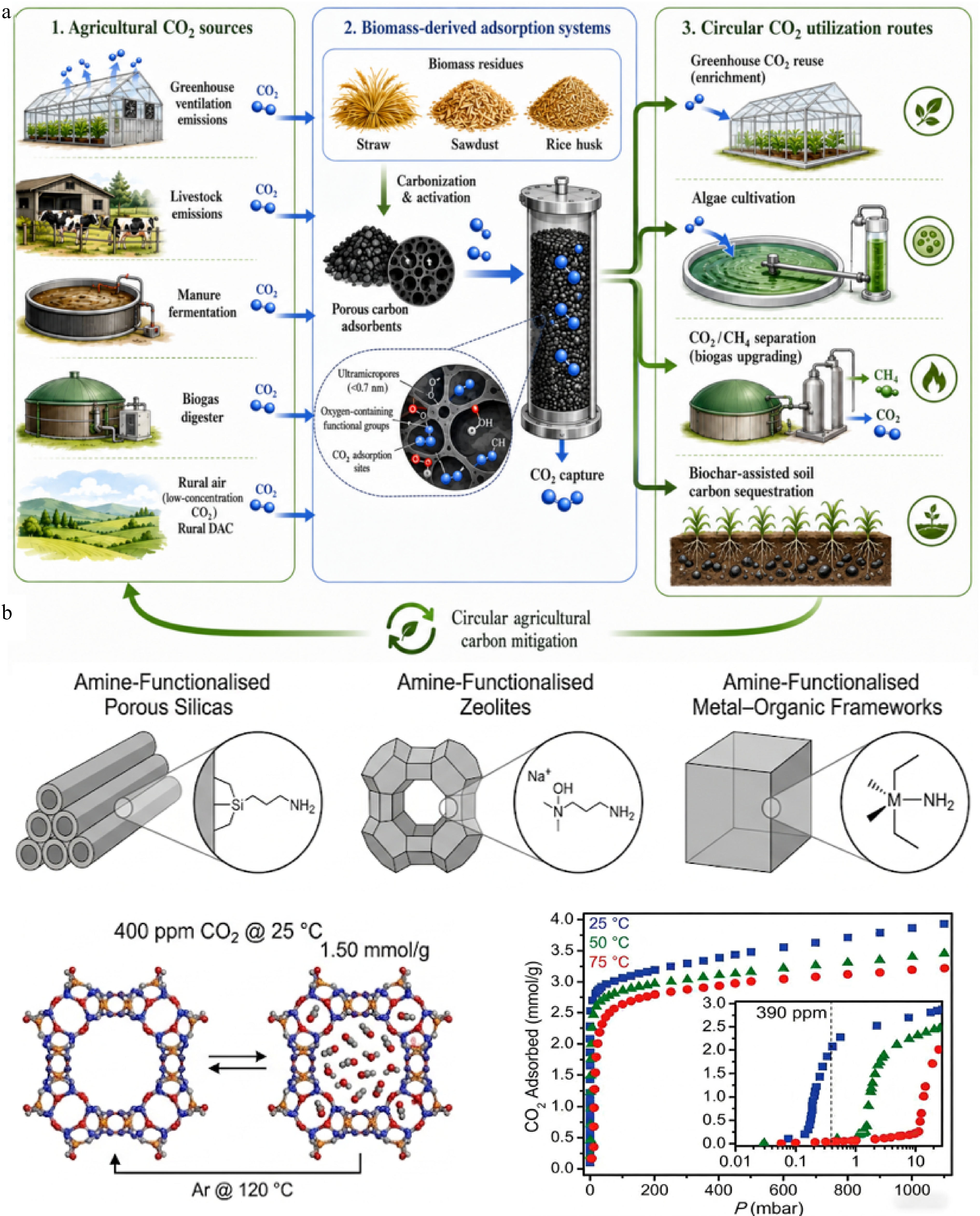
Figure 1.
Representative adsorption-based CO2 mitigation pathways for circular agricultural systems. (a) Agricultural-scale carbon sources and utilization routes, including greenhouse ventilation-based CO2 capture and reuse, treatment of the gas from livestock manure fermentation, upgrading biogas through CO2/CH4 separation, rural direct air capture (DAC), algal cultivation, and biochar-assisted soil carbon sequestration. (b) Representative amine-functionalized and porous adsorbent systems, including biomass-derived activated carbons, porous silicas, zeolites, and metal–organic frameworks (MOFs), together with a schematic low-partial-pressure CO2 adsorption behavior. This conceptual framework was developed from References[2,4,5,10].
-
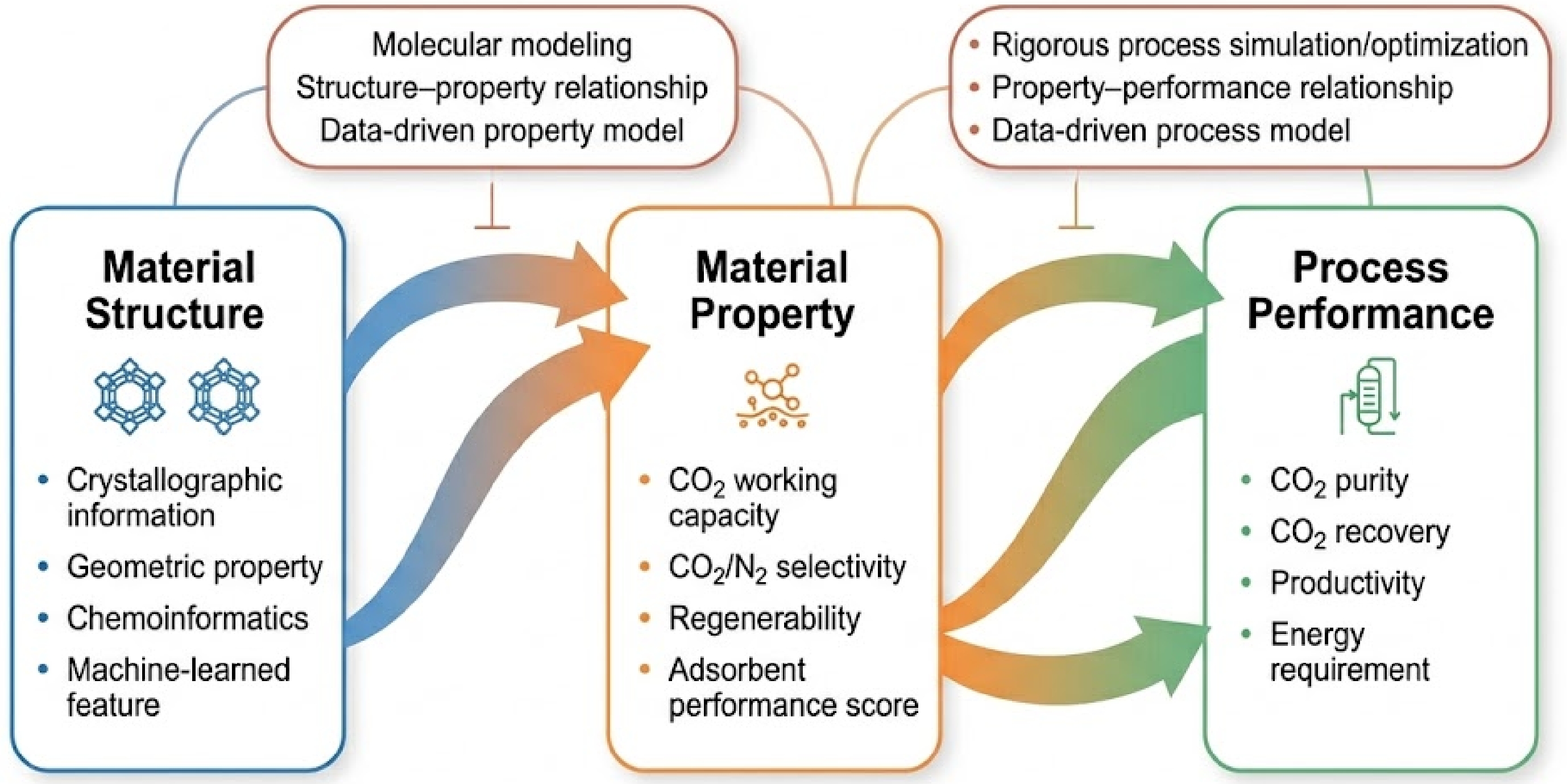
Figure 2.
Data-driven integrated framework for adsorbent discovery and process optimization. The conceptual framework was developed from Ref.[18].
-
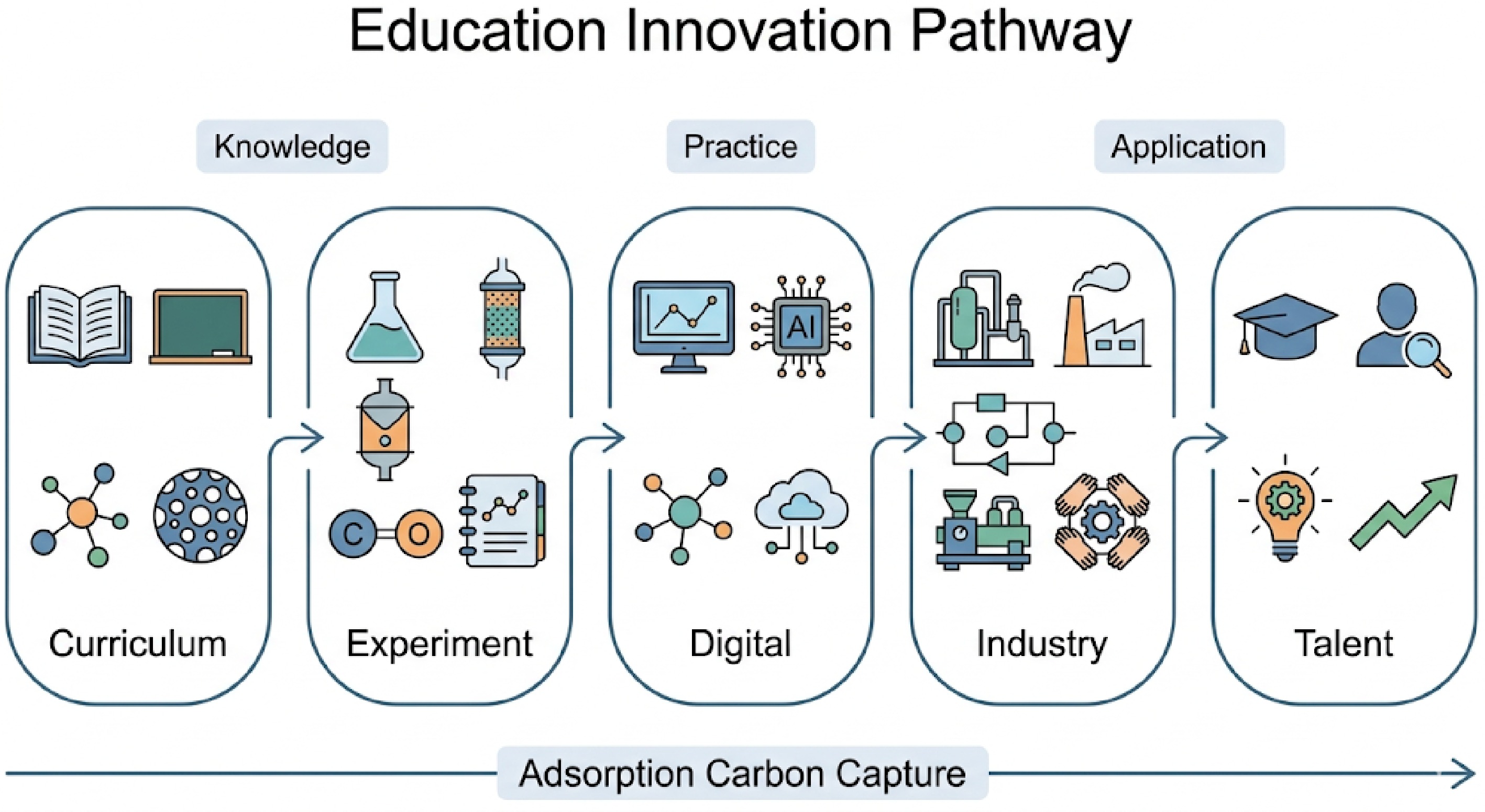
Figure 3.
Schematic illustration of the educational innovation pathway for adsorption-based carbon mitigation in circular agricultural systems.
Figures
(3)
Tables
(0)