












-
Against the backdrop of continued global efforts toward carbon neutrality, carbon capture, utilization, and storage (CCUS) has been widely recognized as a key technological portfolio for achieving deep decarbonization in hard-to-abate sectors[1,2]. According to the latest assessment of the International Energy Agency (IEA), although globally announced carbon capture capacity continues to increase, a substantial gap remains relative to the scale required under net-zero emissions pathways. This underscores the urgent need for carbon capture technologies that are highly efficient, low in energy consumption, and readily scalable. Compared with conventional liquid amine absorption, solid adsorption offers distinct advantages in terms of reduced equipment corrosion, tunable adsorbent properties, modular design, and low-temperature regeneration, making it particularly suitable for low- to medium-concentration CO2 separation, industrial flue gas purification, direct air capture (DAC), and decentralized agricultural carbon management scenarios[1−3]. In circular agricultural systems, adsorption-based carbon mitigation should therefore be understood not only as an industrial separation technology but also as a platform for linking agricultural residue valorization, on-farm carbon capture, CO2 utilization, and soil carbon sequestration.
Agriculture provides both carbon sources and renewable material resources for adsorption-based mitigation. Straw, rice (Oryza sativa) husks, bagasse, corn (Zea mays) stover, coconut (Cocos nucifera) shells, pruning residues, and livestock manure can be converted into activated carbons or heteroatom-doped porous carbons through carbonization, steam or CO2 physical activation, recoverable chemical activation, and optional heteroatom-doping strategies. These biomass-derived adsorbents offer a waste-to-materials pathway that can reduce precursor costs while improving the environmental profile of adsorbent production[4,5]. At the system level, adsorption units may be deployed for capturing CO2 from greenhouse ventilation streams, livestock waste fermentation, biogas plants, composting, crop residue fermentation, grain drying, and other agricultural facilities associated with rice production. Captured CO2 can then be reused for greenhouse fertilization or algal cultivation, or coupled with biochar-assisted soil carbon sequestration, thereby strengthening the synergy between agricultural carbon sinks and adsorption-based CCUS[6−9]. As shown in Fig. 1a, adsorption-based carbon mitigation in circular agricultural systems can be organized around three linked modules: Agricultural CO2 sources, biomass-derived adsorbent systems, and circular CO2 utilization pathways.
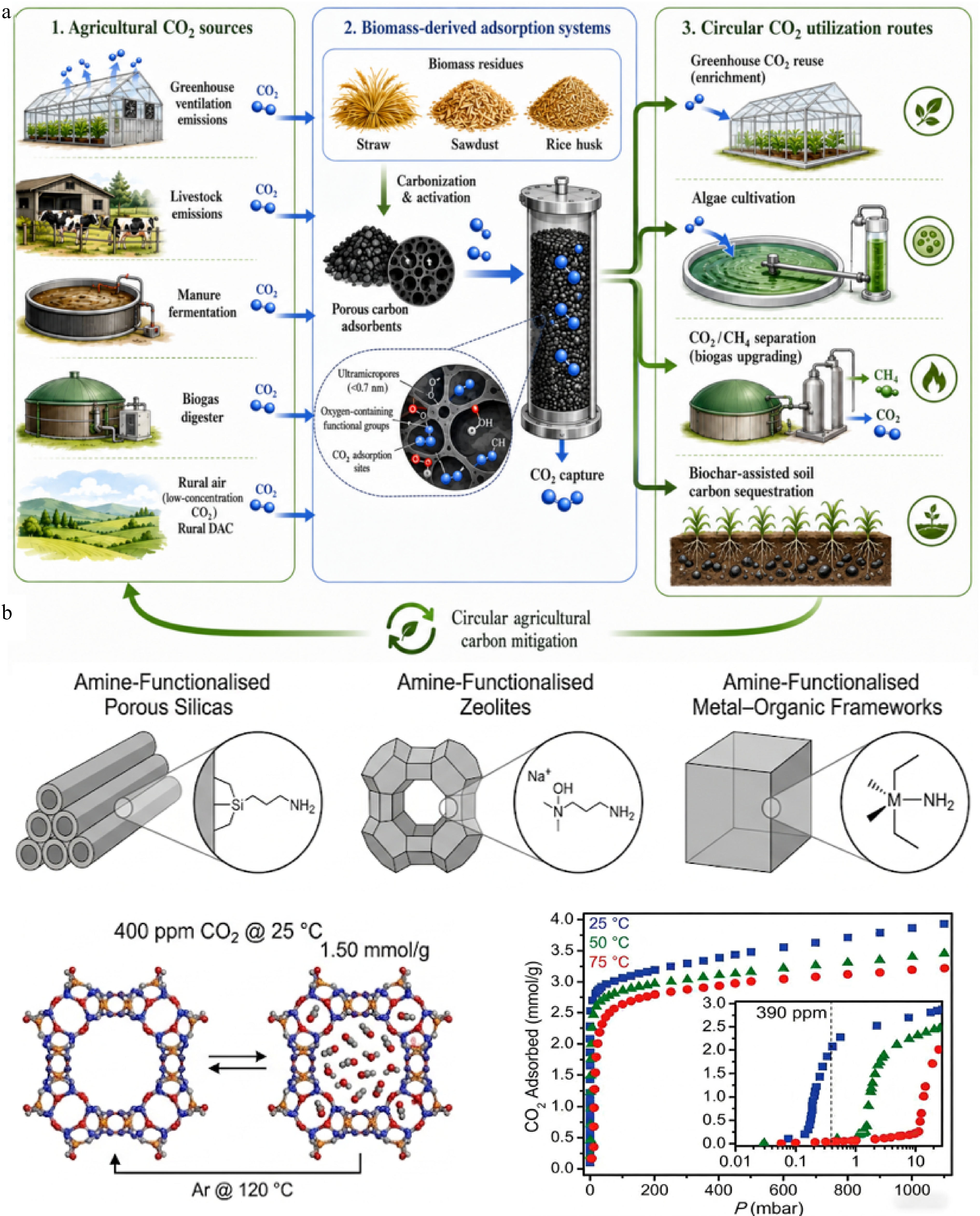
Figure 1.
Representative adsorption-based CO2 mitigation pathways for circular agricultural systems. (a) Agricultural-scale carbon sources and utilization routes, including greenhouse ventilation-based CO2 capture and reuse, treatment of the gas from livestock manure fermentation, upgrading biogas through CO2/CH4 separation, rural direct air capture (DAC), algal cultivation, and biochar-assisted soil carbon sequestration. (b) Representative amine-functionalized and porous adsorbent systems, including biomass-derived activated carbons, porous silicas, zeolites, and metal–organic frameworks (MOFs), together with a schematic low-partial-pressure CO2 adsorption behavior. This conceptual framework was developed from References[2,4,5,10].
The core mechanism of adsorption-based carbon mitigation lies in the use of physical or chemical interactions between CO2 molecules and the surfaces of porous solid materials to achieve the selective enrichment of CO2 from complex gas mixtures. The existing adsorbents mainly include activated carbons, zeolites, metal–organic frameworks (MOFs), covalent organic frameworks (COFs), and amine-functionalized porous materials[11−14]. Activated carbons are characterized by low precursor costs, wide availability, and a relatively low regeneration energy demand; zeolites generally exhibit high selectivity but are highly susceptible to competitive adsorption by water vapor[12]. In contrast, ordered porous materials such as MOFs and COFs offer outstanding theoretical performance owing to their precisely tunable pore structures and surface functionalities. Amine-functionalized adsorbents have shown particular promise for low-partial-pressure CO2 capture, especially in DAC applications[13,14]. As shown in Fig. 1b, materials such as amine-functionalized porous silicas, zeolites, and MOFs can substantially enhance low-partial-pressure CO2 capture through regulating the pore structure and the introduction of active binding sites. No single class of adsorbents is universally superior; rather, their suitability depends on the gas composition, the temperature and humidity conditions, the regeneration strategy, and the overall process-level energy balance[1,11−14].
From a process perspective, pressure swing adsorption (PSA), vacuum swing adsorption (VSA), temperature swing adsorption (TSA), and temperature–vacuum swing adsorption (TVSA) represent the major process configurations for adsorption-based CO2 capture, particularly in DAC and distributed agricultural applications[15,16]. PSA and VSA are suitable for rapid cyclic separation and are especially relevant to upgrading biogas, where CO2/CH4 separation can increase the quality of biomethane from digestion of livestock manure and agricultural residue[6,7]. TSA is more readily integrated with low-grade heat sources, including greenhouse waste heat, solar thermal energy, and heat recovered from biogas or biomass energy systems. For rural deployment, low-temperature regeneration, moisture resistance, simple operation, and cycle life often play a more decisive role than single-cycle adsorption capacity. These considerations indicate that adsorption-based carbon mitigation is not merely a materials science issue, but a system-level optimization problem involving materials, agricultural processes, equipment, renewable energy, and carbon accounting.
Agricultural-scale application scenarios
-
First, greenhouse-based CO2 capture and reuse can link adsorption units with protected agriculture. CO2-enriched cultivation is widely used to improve photosynthesis, yield, and resource-use efficiency, but sustainable CO2 sources and precise delivery strategies remain important constraints[8]. Adsorption-based capture from greenhouse exhausts, nearby biomass combustion, fermentation, or DAC modules can provide a controllable CO2 source while reducing dependence on fossil fuel-derived CO2.
Second, anaerobic digestion of livestock manure and agricultural residue provides a natural entry point for adsorption-based biogas upgrades. Raw biogas contains substantial CO2, which lowers its calorific value; selective CO2 adsorption using activated carbons, zeolites, or biomass-based adsorbents can increase the purity of methane and support a decentralized biomethane supply[6,7]. This creates a closed loop among waste treatment, renewable energy supply, and carbon management.
Third, soil–plant–adsorbent coupled carbon sequestration can connect CO2 capture with agricultural carbon sinks. Biochar and engineered porous carbons may function as soil amendments, long-lived carbon stores, and platforms for nutrient or moisture management. When combined with robust lifecycle assessment and field validation, this pathway can help evaluate whether adsorption-derived materials deliver net climate benefits in real farming systems[9]. However, only environmentally compatible biochar-based adsorbents should be considered for application to the soil, and their residual activators, ash composition, heavy metal content, and long-term ecological effects must be carefully evaluated before field deployment.
Material-related innovation remains the core driving force for continued breakthroughs in this field. In recent years, researchers have improved adsorption performance through surface functionalization, pore structure regulation, heteroatom doping, and composite design[1,11,13,14]. For circular agricultural systems, biomass-derived carbon materials are particularly important because agricultural residues can be converted into porous adsorbents with adjustable microporosity, surface chemistry, and ash composition[4,5]. Straw, rice husks, bagasse, corn stover, coconut shells, and manure-derived biochar can support the low-cost production of activated carbon, whereas physical activation using steam or CO2, as well as recoverable chemical activation, can enhance narrow micropores that favor CO2 uptake. Nitrogen doping and amine functionalization may further improve the affinity under low-partial-pressure and humid conditions. Nevertheless, agricultural feedstocks introduce additional scale-up barriers, including seasonal availability, compositional variability, the interference of mineral ash, pelletization requirements, mechanical durability, regeneration stability, and the need to verify the net carbon benefits across the full lifecycle. Therefore, the development of future materials must shift from pursuing peak adsorption capacity to evaluating manufacturability, rural supply chains, impurity tolerance, and compatibility with farm-scale regeneration using solar energy, waste heat, or biogas-derived energy.
Molecular simulation and artificial intelligence (AI) are profoundly reshaping the development paradigm for adsorbent materials. High-throughput computation, molecular dynamics, and grand-canonical Monte Carlo (GCMC) simulations can accurately predict adsorption isotherms, diffusion behavior, the heat of adsorption, and selectivity, thereby narrowing the range of candidate materials prior to experimental validation. Machine learning models further improve the efficiency of material screening and process optimization, particularly for the rapid evaluation of vast material spaces such as MOFs. Existing studies have demonstrated that the synergistic integration of AI, molecular simulation, and experimental validation can significantly accelerate the discovery of high-performance adsorbents[17]. Nevertheless, major bottlenecks remain, including uneven training data quality, poor comparability across experimental conditions, limited model interpretability, and the frequent mismatch between predicted high performance and practical synthesizability or scalability. Accordingly, future efforts towards greater value should focus on establishing standardized open databases, multiscale multiphysics models, and manufacturability-oriented screening frameworks, rather than merely pursuing higher predictive accuracy. As shown in Fig. 2, the development of adsorbents is evolving from single-material structural screening toward an integrated optimization framework linking the material's structure and properties with the process's performance.
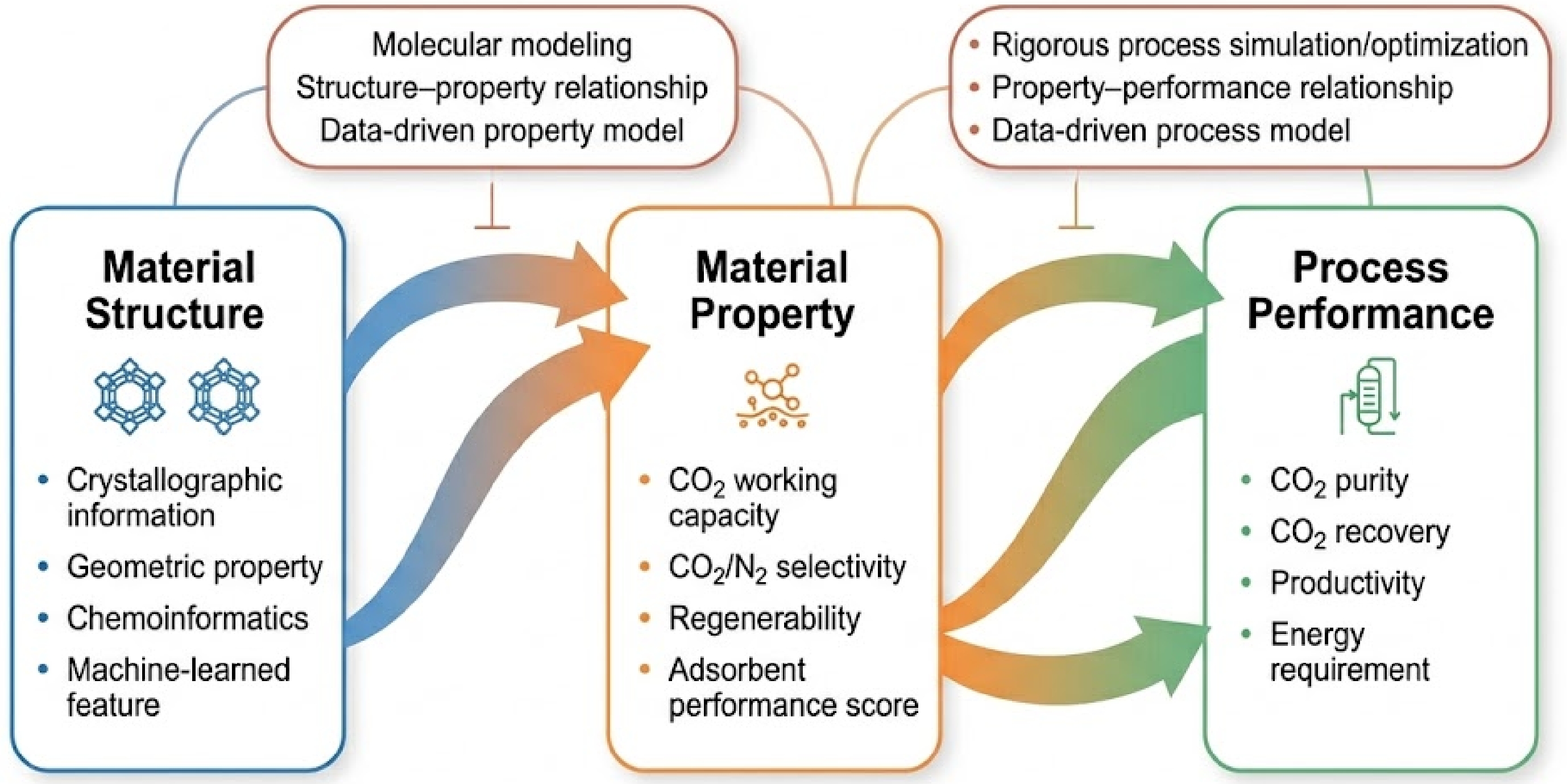
Figure 2.
Data-driven integrated framework for adsorbent discovery and process optimization. The conceptual framework was developed from Ref.[18].
-
Compared with the rapid development of adsorption-based carbon mitigation technologies, relevant curricula in higher education have significantly lagged behind. In environmental engineering, agricultural engineering, chemical engineering, and materials science programs, the teaching on carbon capture often remains confined to conventional absorption-based technologies, with insufficient coverage of biomass-derived adsorbent design, greenhouse CO2 utilization, biogas upgrades, farm-scale carbon capture and use (CCU), soil carbon sequestration, process simulation, lifecycle assessment, and AI-assisted discovery of materials[19]. This mismatch may leave students with a grasp of the basic principles while limiting their ability to solve carbon management problems in circular agricultural systems. In this context, education on carbon mitigation technologies must shift from knowledge transmission toward developing competence, systems thinking, and circular bioeconomy-oriented engineering practice.
Specifically, educational reform regarding adsorption-based carbon mitigation should be advanced along at least four dimensions.
First, course content should be restructured around circular agricultural carbon management. Modules on CO2 adsorption mechanisms, biomass-derived adsorbent synthesis, agricultural waste valorization, greenhouse CO2 enrichment, biogas upgrades, adsorption bed design, process-related energy analysis, and carbon footprint assessment can be incorporated into courses such as Environmental Chemistry, Separation Engineering, Agricultural Waste Resource Utilization, Bioenergy Engineering, Reaction Engineering, and Introduction to Materials Science. Second, experimental and project-based learning should be strengthened. Students can prepare activated carbons from rice husks, straw, or bagasse; conduct adsorption isotherm and breakthrough experiments; test humid CO2 streams; compare CH4/CO2 separation; and design small farm-scale CCU prototypes. Third, interdisciplinary training should be promoted through team projects that integrate agronomy, materials science, process engineering, energy systems, data science, techno-economics, and lifecycle assessment. Fourth, digital and AI-oriented training should be integrated into the curriculum so that students can build databases, screen biomass-derived adsorbents, simulate adsorption cycles, and evaluate carbon mitigation benefits under realistic agricultural constraints. As illustrated in Fig. 3, the integration of circular agriculture-related curriculum reform, experimental training, digital platforms, and industrial or farm practice can establish a closed-loop talent development framework.
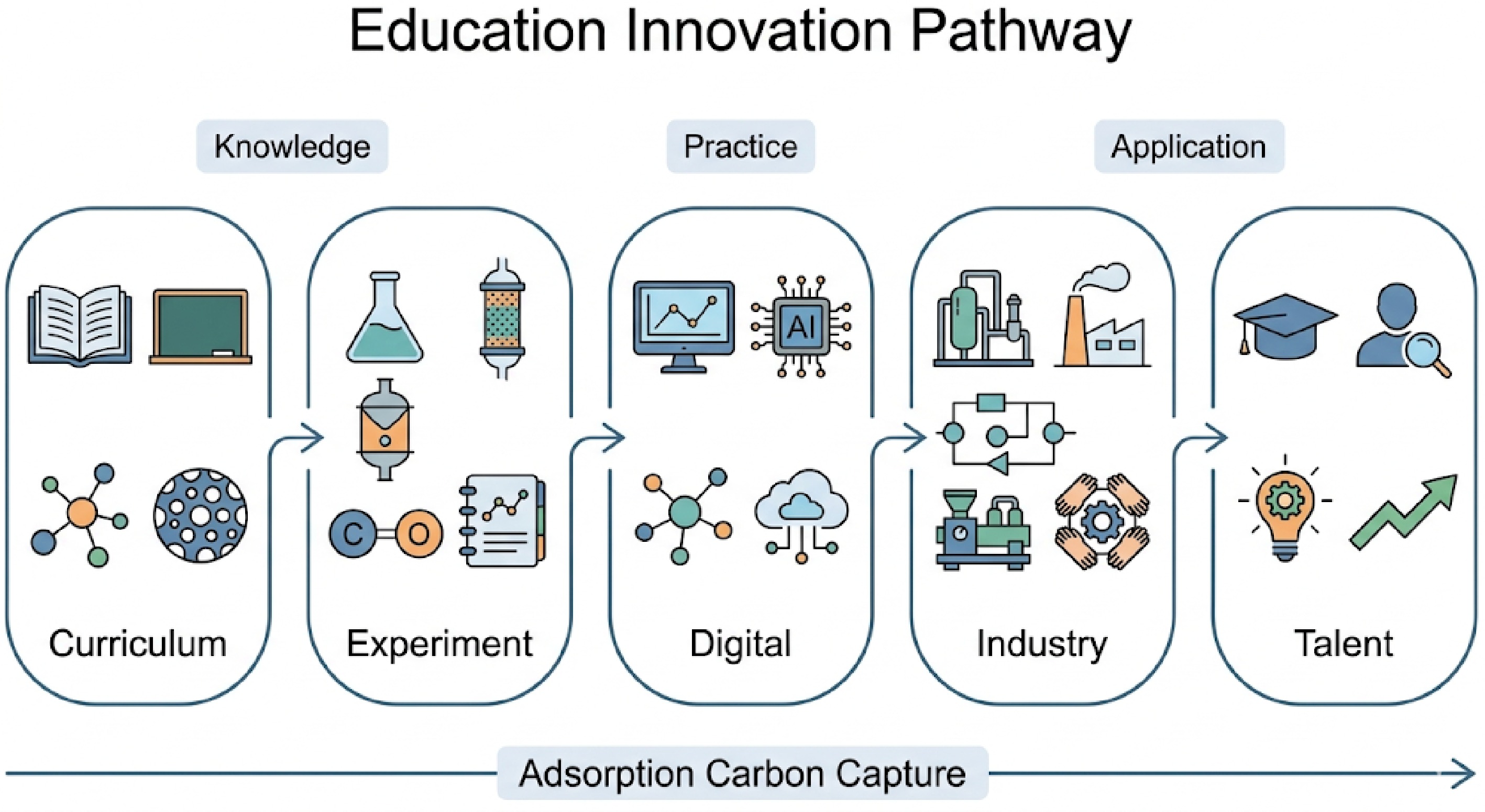
Figure 3.
Schematic illustration of the educational innovation pathway for adsorption-based carbon mitigation in circular agricultural systems.
These reforms do not merely involve adding more courses; instead, they require a fundamental reconfiguration oriented toward talent cultivation for the circular bioeconomy. Universities can treat adsorption-based carbon mitigation as a representative platform for integrating research and teaching on agricultural decarbonization. Faculty members can translate materials synthesis, biomass pretreatment, adsorption testing, model analysis, greenhouse CO2 control, biogas upgrades, and carbon accounting into course-based case studies. Agricultural enterprises, biogas plants, greenhouse operators, and rural energy service providers can provide realistic data on gas composition, feedstock availability, operating constraints, and cost parameters. This model would allow students to learn not only how much CO2 an adsorbent can capture but also how to select technologies, integrate processes, evaluate the lifecycle impacts, and make system-level decisions under complex agricultural constraints.
-
Looking ahead, the development of adsorption-based carbon mitigation technologies is likely to advance along several key directions.
(1) The synergistic design of adsorbents with high performance, low cost, and strong stability will remain a central priority, especially for biomass-derived adsorbents in circular agricultural systems. Future research should place greater emphasis on performance under realistic operating conditions, including high humidity, oxygen, impurities, feedstock variability, the mechanical strength of pellets, and multicycle regeneration. Low-cost carbon materials from straw, rice husks, bagasse, corn stover, and manure-derived biochar are expected to become important directions for balancing economic viability, waste valorization, and adsorption performance.
(2) AI-driven integrated optimization of materials and processes will play an increasingly important role. In the future, AI should not be used solely for screening materials; in addition, the adsorbent properties, agricultural feedstock characteristics, packed bed design, cyclic operating strategies, regeneration energy, carbon accounting, and crop or biomethane utilization benefits should be jointly optimized within a unified framework. Closed-loop platforms spanning molecular-scale insights, farm-scale experiments, and system-scale lifecycle assessments will be especially valuable.
(3) Distributed carbon mitigation scenarios will become increasingly important for agricultural decarbonization. Solid adsorbents offer potential for rural DAC, CO2 capture from greenhouse ventilation, biogas upgrades, and coupling with renewable energy or agricultural waste heat. However, deployment in rural and agricultural settings remains constrained by the energy supply, the materials' lifetime, moisture tolerance, maintenance requirements, and the economic scale of small or medium-sized farms. In particular, rural DAC must address the low CO2 driving force, the large air-handling demand, the pressure drop, and electricity consumption associated with operating fans. Future progress will require modular equipment, robust control systems, and integration with greenhouse fertilization, algal cultivation, biomethane supply, or soil carbon sequestration.
(4) Educational systems must be more closely aligned with the needs of circular agricultural carbon management. Universities should develop integrated course clusters centered on carbon capture, biomass utilization engineering, agricultural CCU, bioenergy systems, carbon assessment, and carbon management, while promoting the joint development of experimental platforms, virtual simulation platforms, greenhouse or biogas demonstration units, and industrial training bases. In this way, students can be trained as low-carbon agricultural engineering professionals who understand the materials, the processes, data analysis, lifecycle evaluation, and system-level decision-making.
-
Adsorption-based carbon mitigation technologies possess both scientific significance and broad engineering prospects, and they can become enabling tools for carbon-neutral circular agricultural systems. Their value lies not only in their CO2 separation performance, but also in the ability to connect agricultural waste valorization, biomass-derived adsorbent production, decentralized CO2 capture, greenhouse CO2 reuse, biogas upgrades, algal cultivation, and soil carbon sequestration. Future breakthroughs will depend on the systemic synergy among material design, process intensification, renewable or waste heat regeneration, intelligent optimization, lifecycle assessments, and farm-scale deployment. At the same time, educational innovation should be regarded as a fundamental condition for sustaining technological implementation. By integrating biomass utilization-related engineering, circular agricultural carbon management, farm-scale CCU practice, and AI-assisted design into higher education, universities can cultivate interdisciplinary talent for agricultural decarbonization. From this perspective, the co-development of adsorption technology, circular agriculture, carbon neutrality, and talent cultivation will become an important direction for future low-carbon agricultural systems.
-
The authors confirm their contributions to the paper as follows: conceptualization, methodology, formal analysis, manuscript draft, funding acquisition: Su R; conceptualization, formal analysis, writing – review and editing: Ma X; manuscript draft, data curation: Xue R; formal analysis, writing – review and editing: Luo Y; data curation, methodology, writing – review and editing: Huang L. All authors reviewed the results and approved the final version of the manuscript.
-
Data sharing not applicable to this article as no datasets were generated or analyzed during the current study.
-
This research was funded by the Science and Technology Innovation Program of Hunan Province (2025RC3182), the Research Project on Teaching Reform in Ordinary Undergraduate Universities in Hunan Province (202401000120), and the Teaching Reform Research Project of Central South University of Forestry and Technology. The authors thank all contributors who provided support for this article.
-
All authors declare that there are no conflicts of interest.
- Copyright: © 2026 by the author(s). Published by Maximum Academic Press, Fayetteville, GA. This article is an open access article distributed under Creative Commons Attribution License (CC BY 4.0), visit https://creativecommons.org/licenses/by/4.0/.
-
About this article
Cite this article
Su R, Xue R, Luo Y, Ma X, Huang L. 2026. Prospects for adsorption-based carbon mitigation in circular agricultural systems: biomass-derived adsorbents, process integration, and educational innovation. Circular Agricultural Systems 6: e021 doi: 10.48130/cas-0026-0022 

Prospects for adsorption-based carbon mitigation in circular agricultural systems: biomass-derived adsorbents, process integration, and educational innovation
- Received: 12 April 2026
- Revised: 09 June 2026
- Accepted: 10 June 2026
- Published online: 12 August 2026
Abstract: Adsorption-based carbon mitigation technologies provide flexible and modular routes for carbon capture, utilization, and storage, and they are becoming increasingly relevant to circular agricultural systems. In addition to conventional industrial flue gas purification and direct air capture (DAC), adsorption processes can be integrated with agricultural greenhouse ventilation, livestock manure fermentation, biogas upgrading, rural bioenergy systems, and soil carbon management. Agricultural residues such as straw, rice (Oryza sativa) husks, bagasse, corn (Zea mays) stover, and livestock manure can serve as low-cost precursors for biomass-derived adsorbents, and manure-derived biochar can further function as a carbon-rich adsorbent or soil amendment, enabling a waste-to-materials pathway that links agricultural waste valorization with carbon mitigation. Captured CO2 may be reused for greenhouse fertilization and algal cultivation, wheres the CO2 removed from biogas can enhance the quality of biomethane; biochar-assisted soil carbon sequestration may further close carbon loops within agricultural production systems. However, practical deployment still faces challenges related to CO2 selectivity, moisture tolerance, cyclic stability, regeneration energy, feedstock variability, and scale-up in decentralized rural settings. The integration of molecular simulation, artificial intelligence, lifecycle assessment, and farm-scale process design can accelerate the discovery of adsorbents and system optimization. Meanwhile, higher education must incorporate circular agricultural carbon management, biomass utilization engineering, and farm-scale carbon capture and utilization practice into its curricula. Coordinated advances in adsorbent materials, agricultural process integration, and educational innovation can support agricultural decarbonization and cultivate interdisciplinary talent for a carbon-neutral circular agriculture.