-
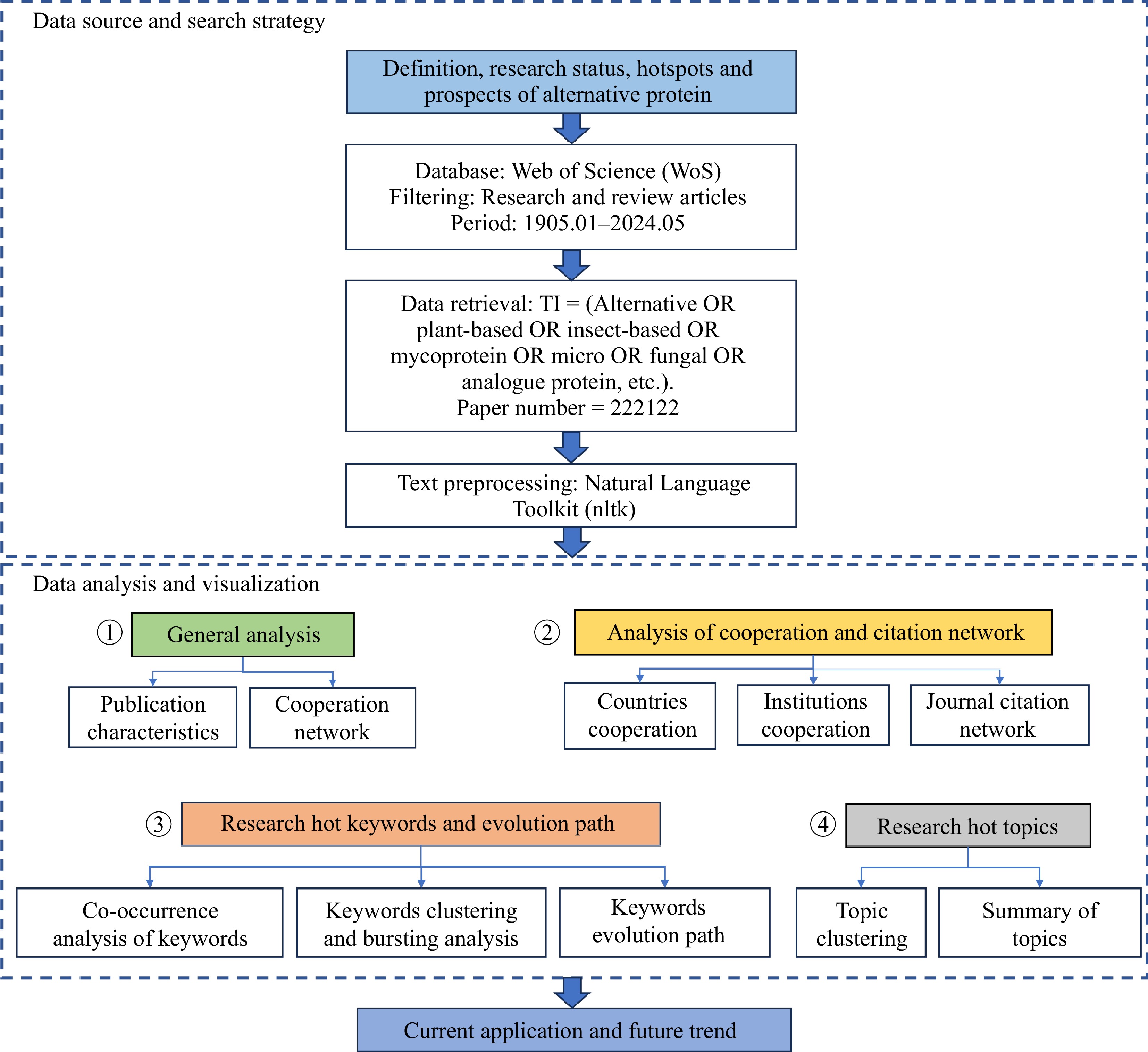
Figure 1.
Flow chart of bibliometric analysis.
-
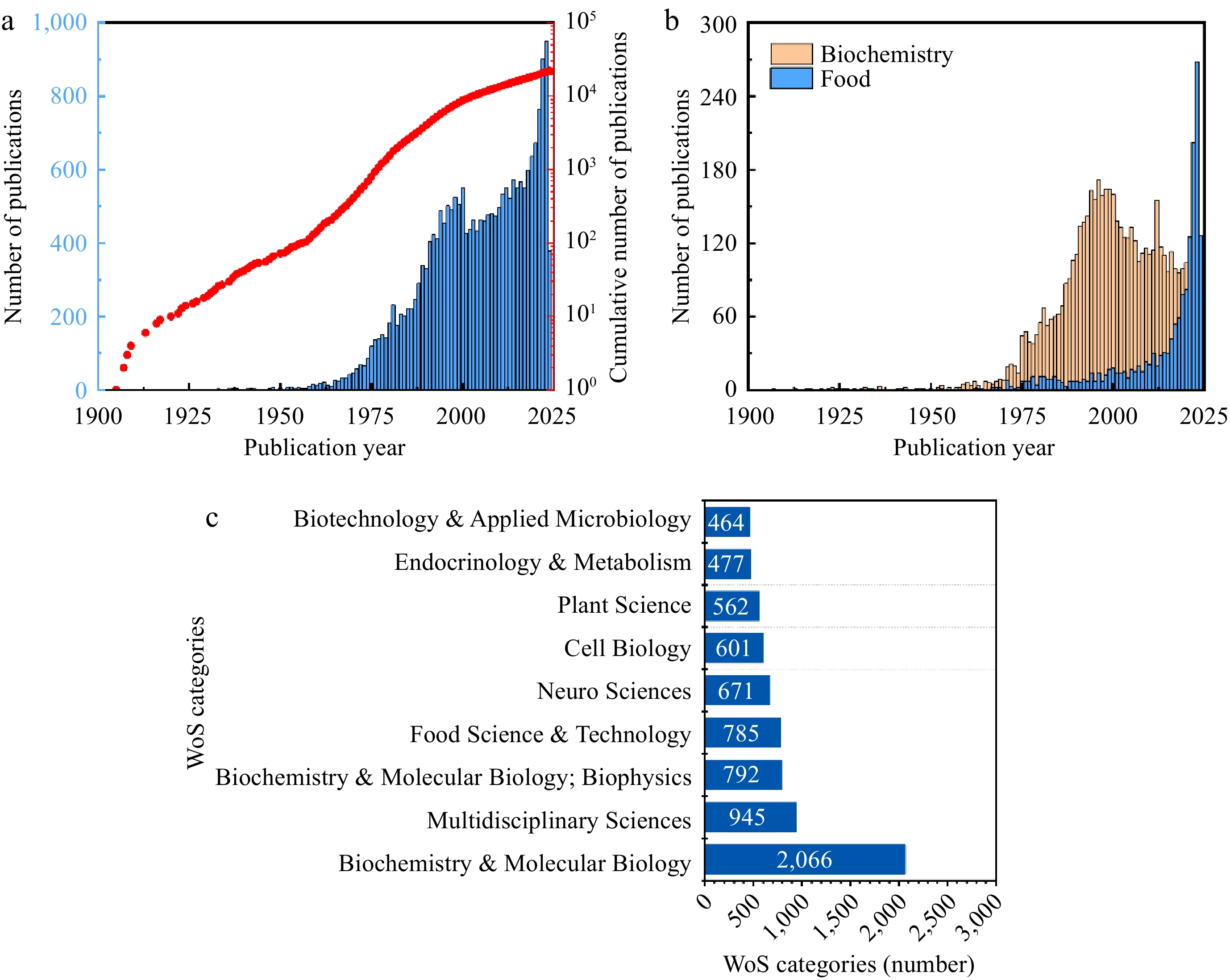
Figure 2.
Number of publications on alternative proteins from 1905 to 2024. (a) Characterization of total 22,122 publications. (b) Publications in field of Biochemistry and Food. (c) Publications across the top eight WoS categories.
-
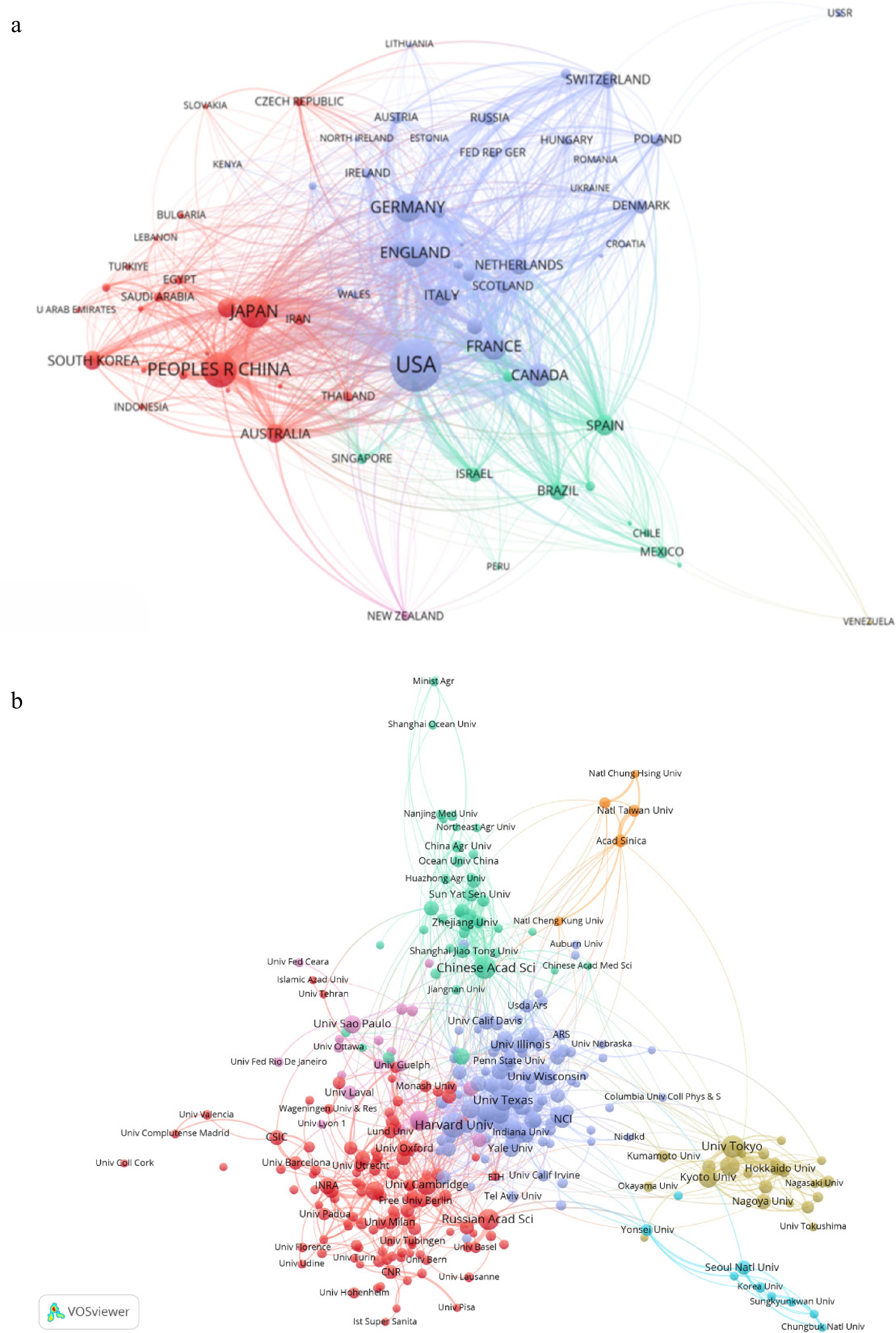
Figure 3.
Co-occurrence network relationship regarding alternative proteins from different countries and institutions.
-
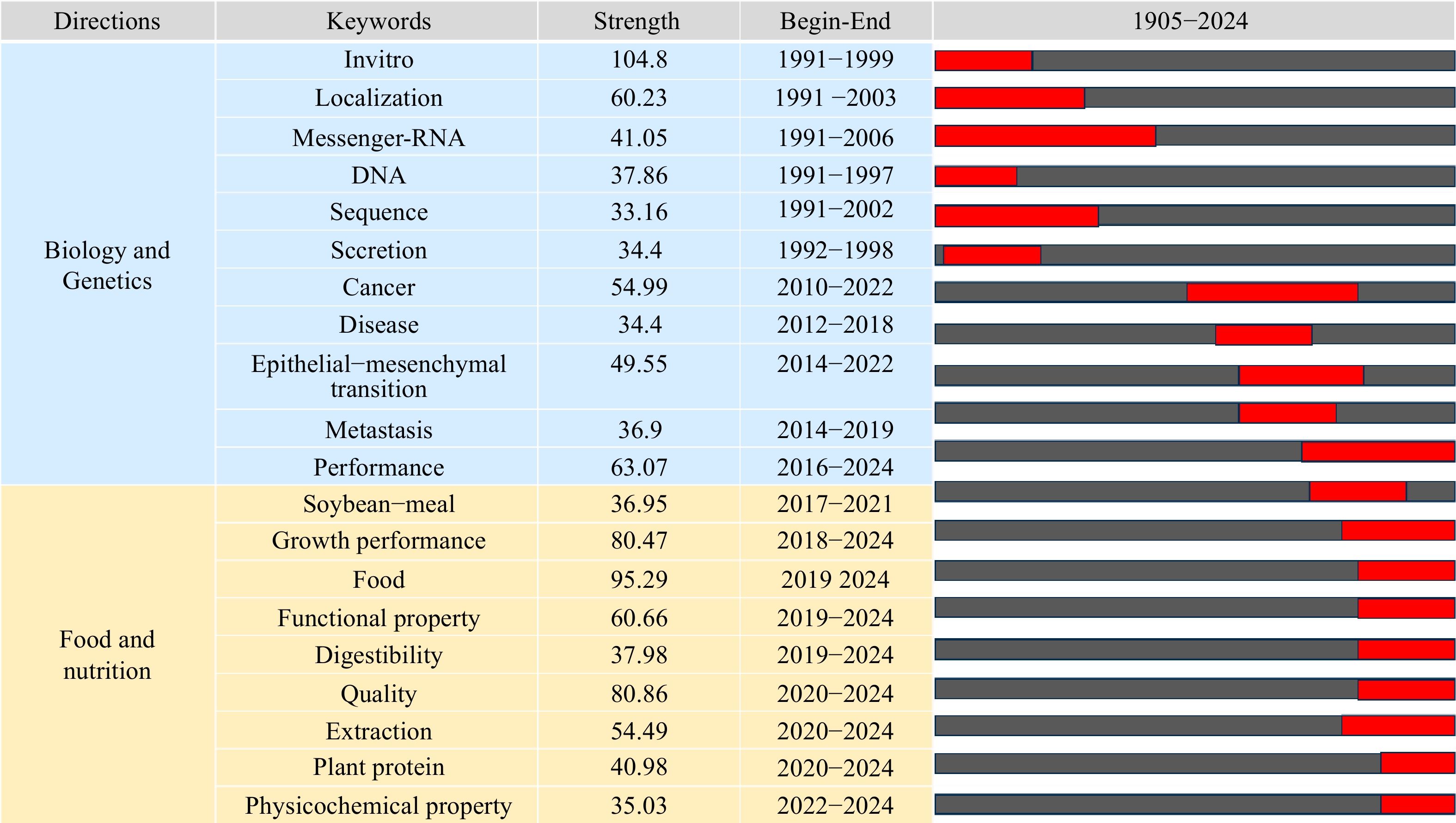
Figure 4.
Research hotspots and keyword bursts. 'Begin' indicates the year in which a keyword first emerged, 'End' represents the year in which the burst ended, and 'Strength' reflects the burst intensity. The red timeline shows the duration of each keyword emergence.
-
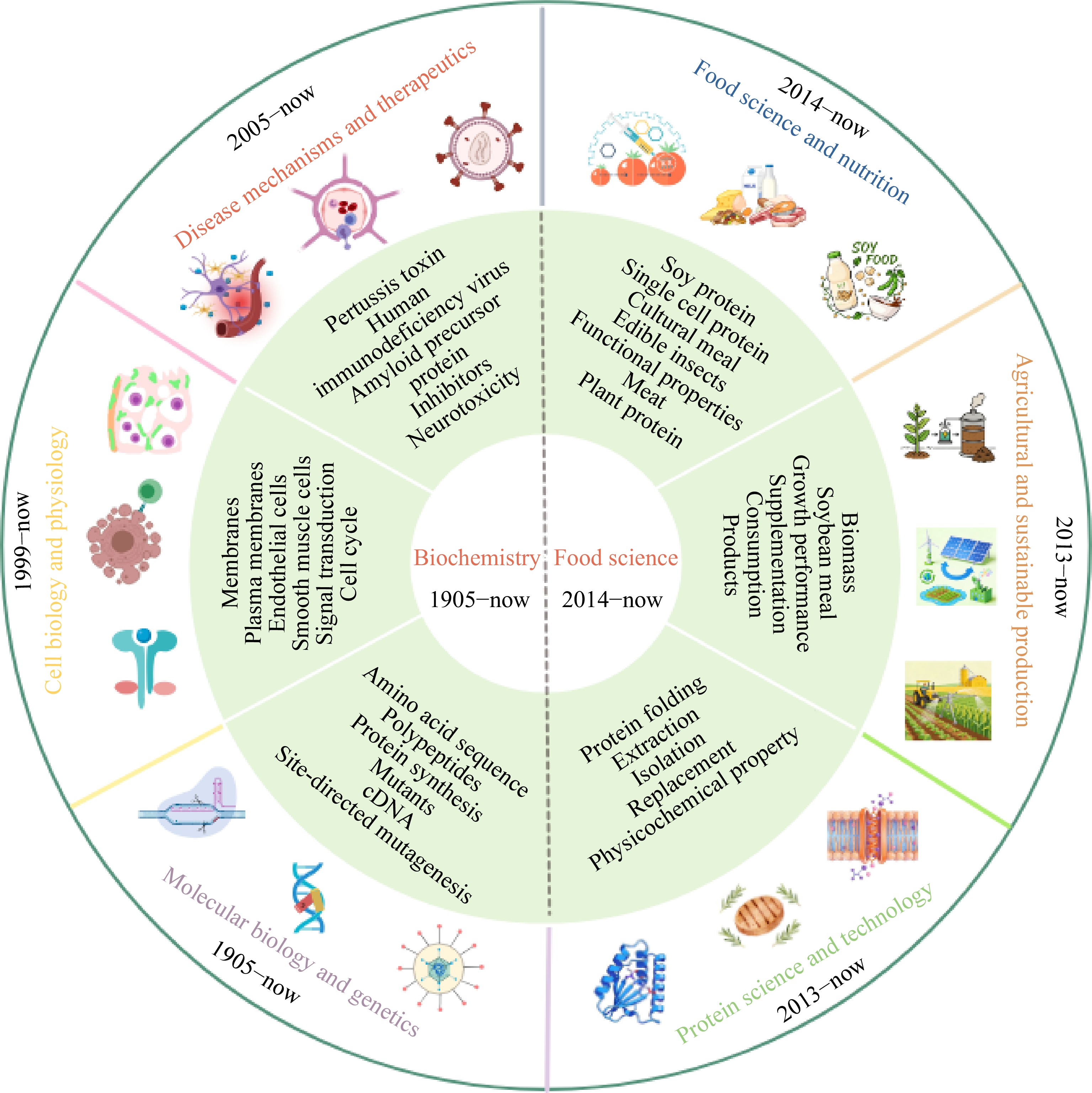
Figure 5.
Research evolution and main research directions (Created with MedPeer [
medpeer.cn ]). -
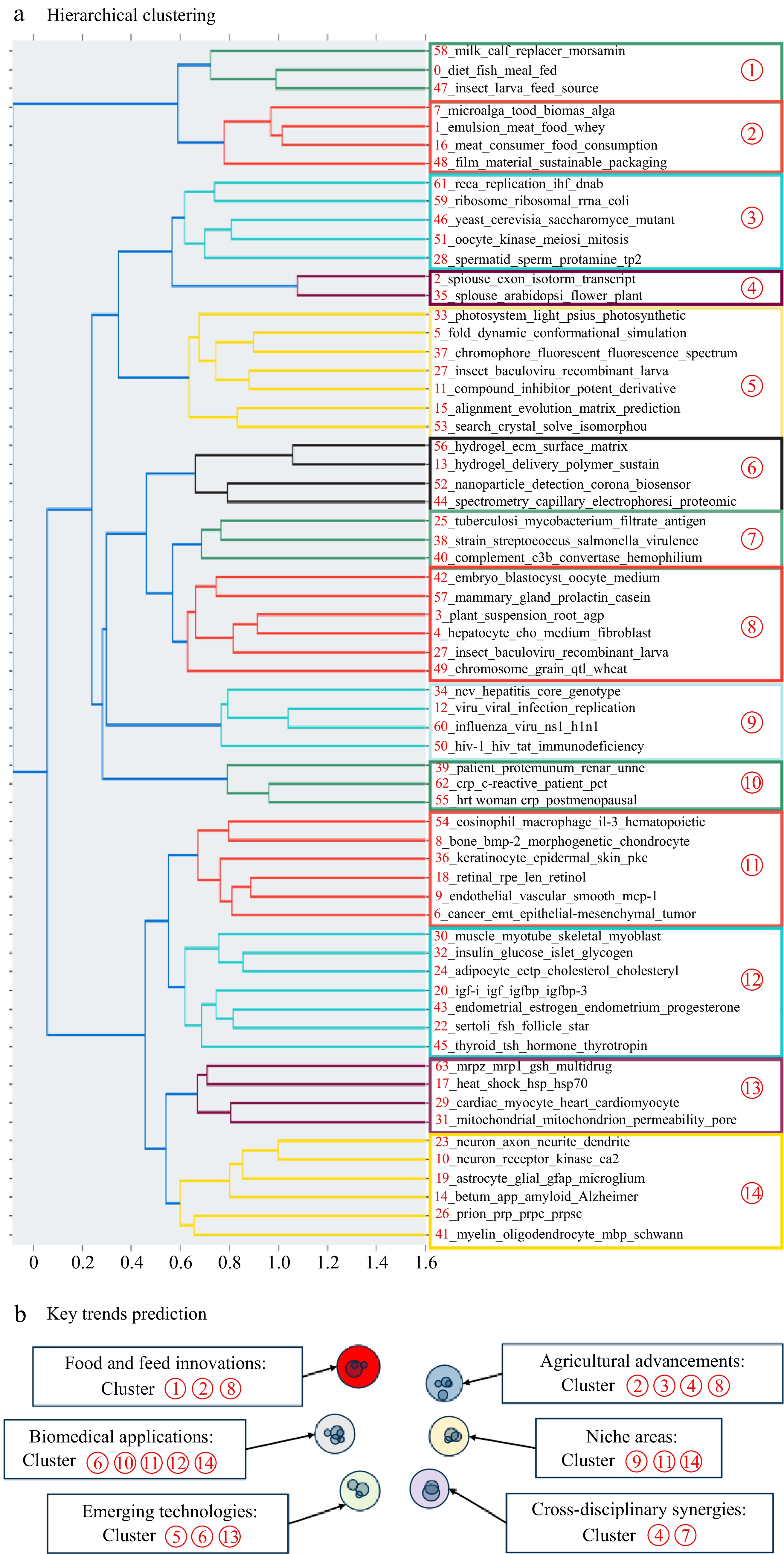
Figure 6.
Thematic Clustering using the BERTopic model. (a) Hierarchical clustering of 63 topics and their temporal distribution (1905−2024). The left panel shows the hierarchical clustering dendrogram of the identified BERTopic topics based on semantic similarity. Individual topic numbers are listed along the right side of the dendrogram. Colored branches and boxes indicate major thematic clusters, which were manually grouped and labeled as 14 broader topic groups. (b) Key trends prediction: (1) food and feed innovations: Clusters 1, 2, and 8; (2) agricultural advancements: Clusters 2, 3, 4, and 8; (3) biomedical applications: Clusters 6, 10, 11, 12, and 14; (4) niche area (e.g., neuroscience): Clusters 9, 11, and 14; (5) emerging technologies: Clusters 5, 6, and 13; (6) cross-disciplinary synergies: Clusters 4 and 7.
-
Criteria Inclusion Exclusion Keyword presence Includes keywords of 'alternative protein' in the title Does not include 'alternative protein' in the title Peer review Peer-reviewed article Non-peer-reviewed article Language Published in English Published in languages other than English Availability Full text available online Full text not available online (e.g., books) Definition Focuses on generic terms of alternative proteins as protein sources, as opposed to 'traditional' animal-derived proteins Focuses on technical titles or specific protein sources, without discussing their alternative functions Topic Explicitly investigates at least one of the following topics: protein consumption, livestock production, behavioral change in diets, and alternative proteins to meat Focuses on the production processes, functional properties of proteins, or uses alternative proteins as contextual examples Article type Research article, review article Books, conference articles Table 1.
Inclusion and exclusion criteria for search strategy on alternative protein research.
-
Ranking Country (number of papers) Organization (number of papers) Journal (number of papers) 1 USA (6,465) Harvard University (229) Journal of Biological Chemistry (733) 2 China (2,274) Chinese Academy of Sciences (183) Proceedings of the National Academy of Science of the United States (286) 3 Japan (1,793) The University of Tokyo (170) Biochemistry (268) 4 Germany (1,375) The University of Texas (158) Journal of Virology (185) 5 England (1,109) Russian Academy of Sciences (145) Aquaculture (181) 6 France (998) Kyoto Univeristy (127) Journal of Molecular Biology (148) 7 Canada (874) Osaka University (127) Nucleic Acids Research (134) 8 Italy (658) University of Toronto (126) Journal of Cell Biology (99) 9 Spain (582) University of Cambridge (124) Nature (55) 10 India (512) University of California, San Francisco (123) Cell (43) Table 2.
A summary of top 10 rankings from different countries, institutions and journals.
Figures
(6)
Tables
(2)