












-
Alternative proteins have drawn global attention recently due to the urgent need to address pressing challenges in environmental sustainability, public health, and food security. However, the term 'alternative proteins' lacks a universally accepted definition, creating ambiguity in research and policy discussions. In contemporary discourse, 'alternative proteins' are predominantly framed as animal protein substitutes, with food science literature emphasizing their role in substituting traditional animal-derived sources (e.g., meat and dairy)[1−3]. Within food science and technology, research has focused on identifying and developing alternative sources that provide adequate human nutrition while reducing environmental impacts. These investigations include the discovery of new protein sources, such as microbial, algal, insect-based, cultured meat, or recombinant proteins, as well as the development of more efficient extraction techniques[4−11]. Additional research has explored the modification of functional properties (e.g., solubility, emulsification, foaming, and gelation) and organoleptic attributes (e.g., taste, mouthfeel, and appearance), along with innovative processing methods, particularly for texturization and formulation[12−18]. While this food science perspective has been highly influential, researchers have noted that defining alternative proteins primarily as food substitutes may narrow the conceptual scope of the field and obscure relevant insights from other biological disciplines. In particular, such framing tends to emphasize technological and nutritional aspects of food production while overlooking a critical parallel paradigm in biochemistry, where 'alternative proteins' refer to novel polypeptides synthesized from non-canonical open reading frames, offering insights into genetic regulation and disease mechanisms[19−21]. This duality, spanning sustainable food systems and molecular biology, reflects the field's interdisciplinary richness but also perpetuates conceptual fragmentation with real-world consequences, including: (1) policy and investment inefficiencies, where conflicting definitions misdirect funding, e.g., plant-based food startups competing with biomedical researchers for resources; (2) missed scientific synergies, conflicting definitions hinder cross-disciplinary innovation, e.g., cutting-edge biomedical techniques, such as gene-editing, remain underutilized in improving alternative protein nutrition and texture; and (3) public distrust, where conflicting narratives, e.g., 'lab-grown meat' vs. 'climate-friendly protein' confuse consumers. This duality delays scalable solutions for climate mitigation, health innovation, and economic efficiency. A harmonized definition and unified conceptual framework are now critical to unlocking the full potential of alternative proteins across food innovation, biotechnology advancement, and planetary sustainability.
Bibliometric analysis offers a robust methodology to quantify and visualize research trends, collaboration networks, and knowledge evolution[22]. By leveraging tools like VOSviewer and BERTopic, this approach enables the identification of citation patterns, keyword clusters, and thematic shifts across decades of literature. Such analysis is particularly suited to interdisciplinary fields like alternative proteins, where traditional reviews may fail to capture macro-level trends. This study conducts the first large-scale bibliometric analysis of publications to address three critical gaps: (1) Definitional Ambiguity: synthesizing biochemical and food science perspectives into a unified framework; (2) Fragmented Research Status: mapping historical phases, collaboration networks, and disciplinary hotspots; and (3) Uncertain Future Trends: identifying research directions (e.g., dairy alternatives, protein extraction technologies) through topic modeling.
By integrating these insights, we offer a structured overview that can support researchers, policymakers, and industry leaders in identifying knowledge gaps, fostering interdisciplinary collaboration, and prioritizing high-impact areas such as scalability, sustainability, and consumer engagement. This work clarifies the historical trajectory of alternative protein research and highlights emerging trends that are likely to shape the future of global food innovation.
-
In this study, we examine the development of alternative protein research through a bibliometric approach, focusing on trends in Library and Information Science (LIS), to first establish a unified definition of alternative protein. The search strategy and data extraction framework in this paper are grounded in this comprehensive definition of alternative proteins, ensuring that relevant research within these parameters is systematically captured and analyzed.
Data source and search strategy
-
Data were sourced from the Web of Science (WoS) database, including only 'research articles' and 'review articles', while excluding conference papers and books. To avoid additional methodological uncertainty and prevent a substantial expansion of the study scope caused by integrating other data sources, such as Scopus and PubMed, WoS was selected as the single data source. This strategy prioritizes precision over recall and may underrepresent adjacent literature. In addition, the dataset should be interpreted as representing the core literature explicitly framed around alternative protein-related concepts, rather than the entire universe of adjacent protein research. Although this constraint may have reduced the breadth of the search, it improved the relevance and reliability of the final dataset. This approach also helped exclude studies focused on specific protein sources that could not be definitively classified as 'alternative proteins' without manual validation, thereby reducing false positives. In addition, the search formula incorporated multiple combinations related to alternative proteins, using proximity symbols and Boolean operators to capture relevant variations as comprehensively as possible. However, a formal sensitivity analysis of individual search terms was not performed, which should be acknowledged as a limitation of this study. The inclusion and exclusion criteria are shown in Table 1. The search was conducted in the TITLE field, with a cut-off date of May 2024. The specific search query used was as follows:
Table 1. Inclusion and exclusion criteria for search strategy on alternative protein research.
Criteria Inclusion Exclusion Keyword presence Includes keywords of 'alternative protein' in the title Does not include 'alternative protein' in the title Peer review Peer-reviewed article Non-peer-reviewed article Language Published in English Published in languages other than English Availability Full text available online Full text not available online (e.g., books) Definition Focuses on generic terms of alternative proteins as protein sources, as opposed to 'traditional' animal-derived proteins Focuses on technical titles or specific protein sources, without discussing their alternative functions Topic Explicitly investigates at least one of the following topics: protein consumption, livestock production, behavioral change in diets, and alternative proteins to meat Focuses on the production processes, functional properties of proteins, or uses alternative proteins as contextual examples Article type Research article, review article Books, conference articles 'TI = (protein* AND (alternati* OR transition OR 'plant-based' OR 'insect-based' OR 'ocean-based' OR 'non-animal" OR substitut' OR cultured OR Cultivated OR replac* OR (future OR novel OR vegetable) NEAR/1 sourc*)) OR TI = ((food* OR product*) AND ('single cell protein*')) OR TI = ((food* OR product* OR application) AND (protein*) AND (mycoprotein OR micro OR fungal OR analog*)) OR TI = ((protein* OR food) AND (protein*) AND (sustain*)) OR TI = ((protein*) AND meat AND (substitut* OR alternati* OR analog* OR cultured OR Cultivated OR Cell-based OR replac* OR reduction OR fake OR mock OR imitation OR reduction)) OR TI = ((protein) AND (dietary NEAR/0 shift)) OR TI = ((protein OR food) and (m*croalgae))'. This yielded a total of 22,122 relevant publications on alternative protein research.
Statistical analysis and visualization
Text preprocessing
-
The titles and abstracts of the 22,122 publications formed the corpus for analysis (Supplementary Table S1). The corpus was preprocessed using Python Natural Language Toolkit (NLTK), including tokenization, lowercasing, stop-word removal, punctuation cleaning, non-informative token removal, and lemmatization. Domain-specific terms were further standardized to ensure consistent treatment of spelling variants, singular and plural forms, hyphenated terms, and synonymous expressions. During preprocessing, punctuation was removed, and selected high-frequency or domain-relevant multi-word terms were tokenized as single units using the MultiWordExpressionTokenizer implemented in NLTK. Rather than constructing a separate comprehensive dictionary of all possible multi-word terms, we used a rule-based and expert-validated list of relevant multi-word expressions to ensure consistent and reproducible text processing. Specifically, morphological lemmatization was first applied to normalize inflected forms, particularly plural nouns. Textual feature normalization was then performed using regular expressions to standardize hyphenated and non-hyphenated forms, remove non-informative punctuation, and correct spacing inconsistencies. Finally, domain-specific semantic consolidation was conducted manually to merge variant expressions, near-synonymous multi-word phrases, and high-frequency abbreviations referring to the same core concept where appropriate. However, excessive semantic aggregation was avoided. Terms representing distinct subfields or technological pathways, such as 'plant-based protein', 'microbial protein', 'insect protein', and 'cultivated meat', were retained separately to preserve meaningful thematic differences within the alternative protein domain.
Keyword clustering and visualization
-
The dataset was retrieved from the WoS, a platform that employs rigorous journal selection criteria and standardized indexing protocols. While this approach ensures high-quality data collection and improves retrieval accuracy, it may introduce a geographical bias favoring English-language publications and Western journals. We systematically analyzed metadata including affiliations, article titles, publication years, abstracts, and keywords. VOSviewer was used to construct and visualize co-occurrence and citation networks among countries (Supplementary Table S2), institutions (Supplementary Table S3), and journals (Supplementary Table S4), while CiteSpace V6.3.R2 was employed to generate keyword clusters and bursts, with 1-year time slices, keyword nodes, q-index selection with k = 25, LSI-based cluster labeling, and Pathfinder pruning. The keyword clustering network showed acceptable structural quality, with modularity Q = 0.39 and weighted mean silhouette S = 0.72. In the present study, citation analysis was mainly used to describe the overall distribution of major contributing countries and institutions in the alternative protein research field, rather than to conduct a strict performance-based comparison of scholarly impact. Future studies could further construct time-sliced collaboration networks to evaluate temporal changes in international collaboration and normalized research impact.
Topic clustering
-
The first step of our analysis involved conducting BERTopic modeling on the full corpus of 22,122 publications related to alternative protein research, regardless of disciplinary field. BERTopic is a modern topic-modeling framework that integrates transformer-based language models with clustering algorithms to identify coherent thematic structures within large text datasets. Compared with traditional methods such as Latent Dirichlet Allocation (LDA), BERTopic leverages pre-trained language representations to capture semantic relationships between words and documents more effectively, thereby improving topic coherence[23]. The main BERTopic settings were reported, including the use of the all-MiniLM-L6-v2 embedding model, Uniform Manifold Approximation and Projection (UMAP) parameters, Hierarchical Density-Based Spatial Clustering of Applications with Noise (HDBSCAN) clustering parameters, class-based Term Frequency–Inverse Document Frequency (c-TF-IDF), and maximal marginal relevance-based (MMR) topic representation. Specifically, UMAP was applied for dimensionality reduction, with the parameters set as follows: n_neighbors = 15, n_components = 5, min_dist = 0.0, and metric = cosine. HDBSCAN was used for density-based clustering. For the full-corpus model, the parameters were set to min_cluster_size = 40, min_samples = 40, and metric = euclidean; for the food sub-corpus model, the parameters were set to min_cluster_size = 30, min_samples = 30, and metric = euclidean. Topic representation was performed using c-TF-IDF, combined with MMR. Unless otherwise stated, BERTopic and its dependencies were kept at their default settings, as the focus of this study was descriptive topic discovery rather than algorithmic optimization. We also used the CV coherence score to evaluate topic coherence. The full corpus model identified 63 topics (Supplementary Table S5: 63 hot topics-BERTopic model) with an average CV coherence score of 0.7180, while the food sub-corpus model identified 10 topics with an average CV coherence score of 0.6541, both exceeding 0.50 and indicating acceptable semantic coherence. This approach allowed us to identify key themes across diverse disciplines, such as protein structure and function, protein processing, protein extraction, signaling pathways, and chronic diseases.
-
We identified 22,122 relevant publications (Fig. 1) following the bibliometric approach (Methods). Two representative definitions of alternative proteins were found from different perspectives in scientific research. One originated from biochemistry and chemical biology, in which an alternative protein refers to predicted proteins translated from alternative open reading frames[24]. Many of these so-called alternative proteins also resemble parts of other proteins that have known activity or function, and the research on alternative proteins may advance our understanding of how genes work in both health and disease. Another definition is found in food science and nutrition, where the term alternative protein refers to protein sources including insects, algae, plant-based single-cell proteins and fungi, as opposed to 'traditional' animal proteins such as meat, fish, dairy, and eggs[25]. The main aim of this kind of research is to provide insights into the potential environmental and health benefits of reducing meat consumption. These dual perspectives inform the harmonized definition integrating molecular and systemic dimensions, as detailed in the Discussion.
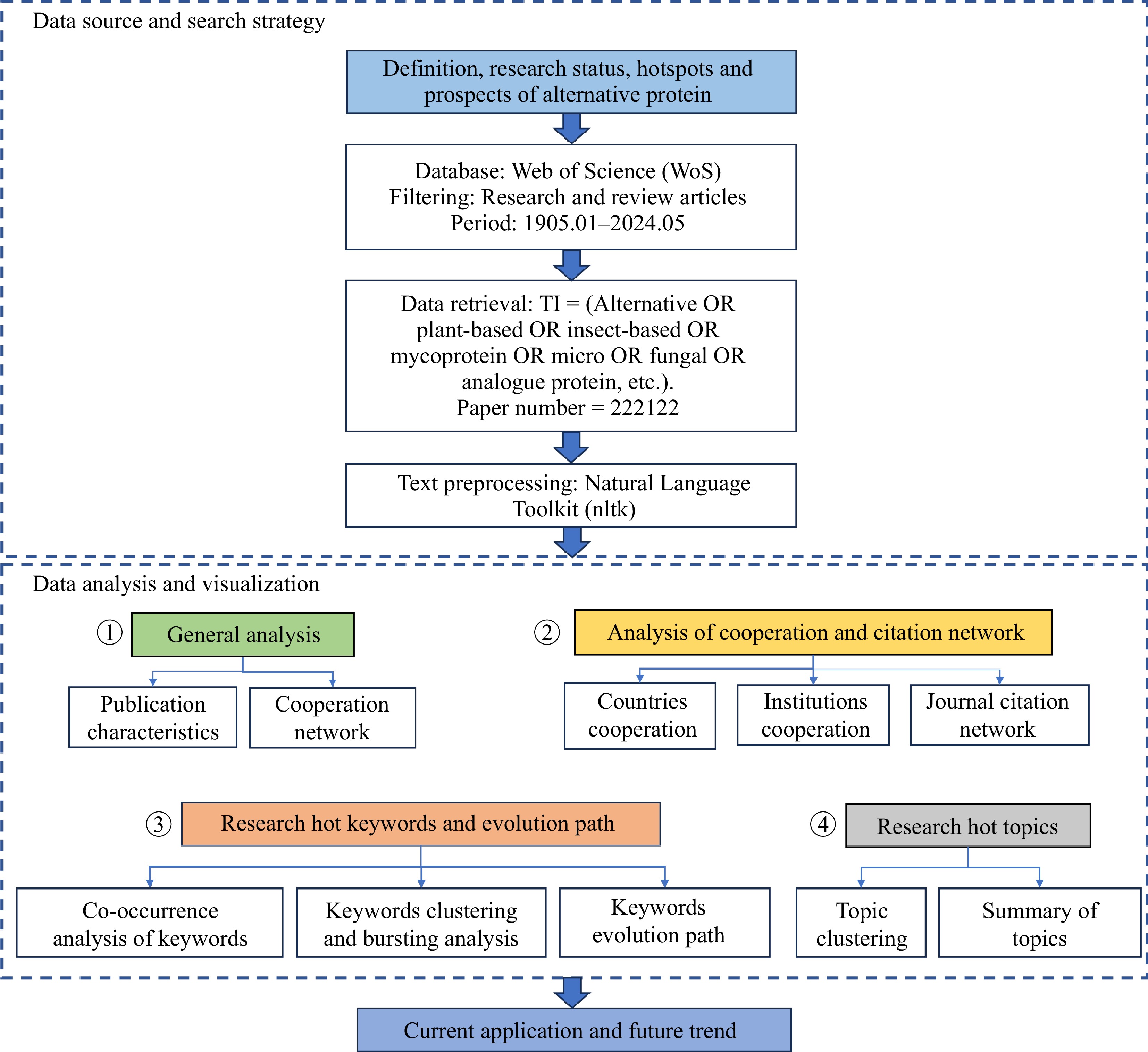
Figure 1.
Flow chart of bibliometric analysis.
Evolution of alternative protein research: a century of growth, decline, and resurgence
-
Annual publication counts serve as valuable indicators of research evolution, enabling analysis of historical developments, current status, and emerging trends in alternative protein studies. As shown in Fig. 2a, the earliest documented research related to alternative proteins dates back to 1905, appearing in an article titled 'On the substitution of proteins using glue in metabolism', which was published in a German book entitled 'Archiv fur die Gesamte Physiologie des Menschen und der Tiere' (Archive for the Entire Physiology of Humans and Animals)[26]. It covers a wide range of topics related to the physiological processes in humans and animals and includes studies related to protein metabolism and the physiological effects of protein replacement. This reflects early 20th-century interest in non-animal protein sources for animal nutrition. The annual number of publications increased dramatically from a single article in 1905 to 550 articles per year by 1999. However, output decreased to 426 articles per year in 2000, indicating a decline in research popularity. Thereafter, publication rates remained stable until 2013, followed by a resurgence beginning in 2014 that reflects renewed scientific interest. As a result, by 2023, 949 articles had been published. The cumulative number of publications in different categories was also counted based on the WoS search conditions. As shown in Fig. 2b, we plotted the annual number of publications in the fields of biochemistry and food science. A clear divergence emerged after 2001, with publications in biochemistry declining while those in the food field gradually increased. By around 2021, the total number of publications in food science had surpassed those in biochemistry, indicating a substantial shift in research focus within the alternative protein field. In addition, the highest number of research publications was found in the fields of Biochemistry and Molecular Biology (2,066 articles), followed by Multidisciplinary Sciences (945 articles), Biophysics (792 articles), Food Science and Technology (785 articles), and Neurosciences (671 articles).
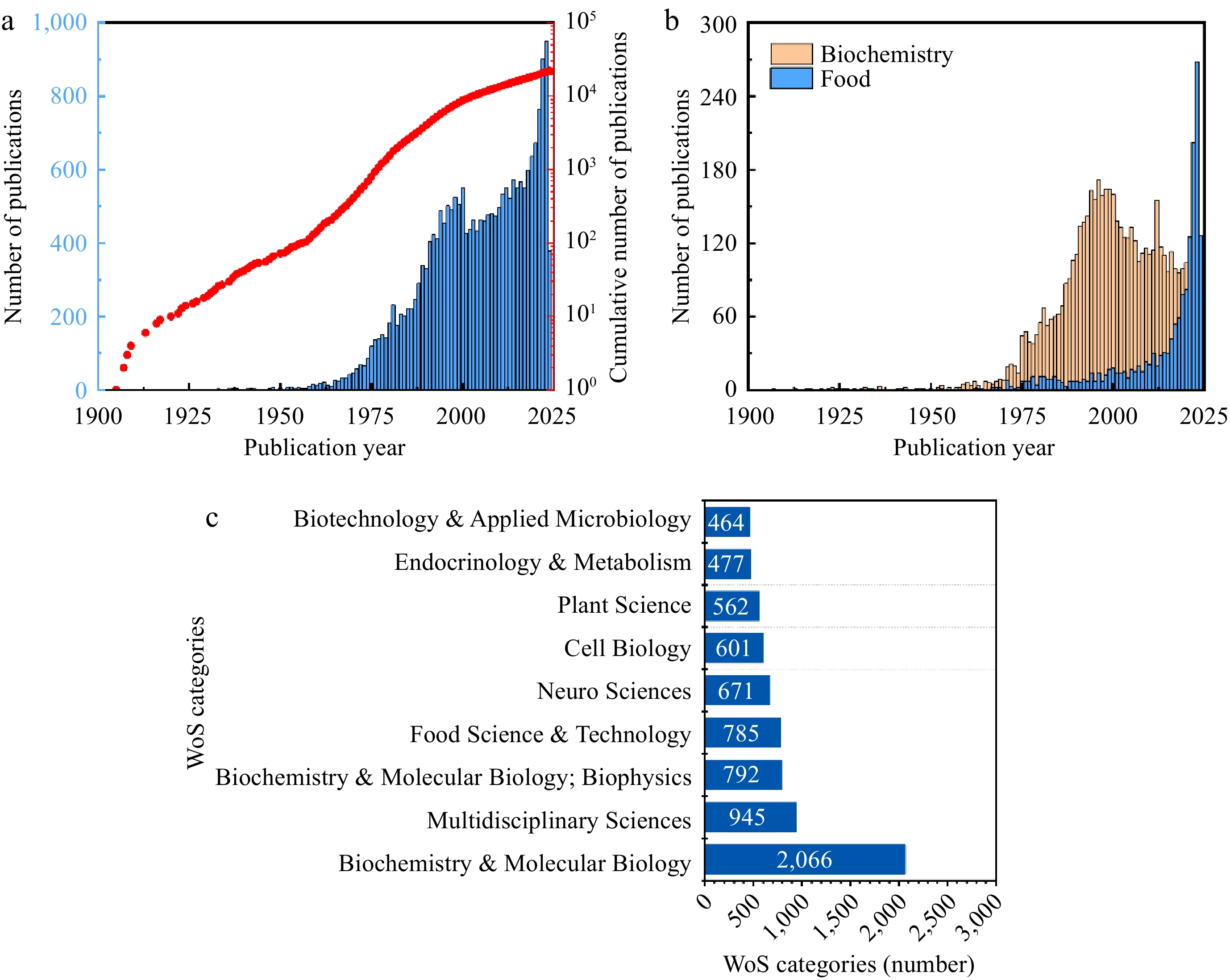
Figure 2.
Number of publications on alternative proteins from 1905 to 2024. (a) Characterization of total 22,122 publications. (b) Publications in field of Biochemistry and Food. (c) Publications across the top eight WoS categories.
Analysis of co-occurrence and citation networks
-
Through the analysis of the co-occurrence and citation networks, the collaboration and citation patterns within and among countries, institutions, and journals in the research of alternative proteins could be obtained, and the top 10 contributors were identified for each category. Notably, citation metrics are presented as raw counts without temporal normalization, as co-authorship (not citation frequency) determines partnerships in collaboration networks. Figure 3a shows the co-occurrence map of countries; three main clusters could be identified, including the USA (light purple), China (red) and Spain (light green). A total of 139 countries published research on alternative proteins, and 73 countries published more than 10 articles in this field. As summarized in Table 2, the top five countries are the USA (6,465 articles, 335,044 citations), China (2,274 articles, 42,126 citations), Japan (1,793 articles, 61,551 citations), Germany (1,375 articles, 56,498 citations), and UK (1,109 articles, 60,757 citations). The USA has been one of the most active contributors to alternative protein research, showing high publication output, strong citation visibility, and extensive international collaboration. In contrast, research activity in China increased more recently, suggesting a later but rapidly growing engagement with this field. This later growth may be associated with several factors, including differences in market structure, policy caution, and dietary habits. For instance, government-backed investments in alternative protein research began much earlier in the USA than in China. According to data from the Good Food Institute, the USA launched its first publicly funded project in 1999 (An In Vitro Edible Muscle Protein Production System), while China's earliest known project, Green Biological Manufacturing, was not announced until 2020. Figure 3b shows the collaboration map of institutions. Five main clusters can be identified, including light purple (Harvard University, USA), red (Russian Acad Sci, Russia), light green (Chinese Academy of Sciences, China), dark yellow (The University of Tokyo, Japan), and pink (University of Cambridge, UK). It could be found that close collaboration mainly exists between universities and institutions in geographically close areas, indicating a tendency for regional collaboration. The citation network of journals was also investigated and is shown in Supplementary Fig. S1. According to the statistics, 439 journals published more than 10 articles related to alternative proteins from 1905 to 2024, including Nature (55 articles, 11,425 citations), Cell (43 articles, 15,199 citations), and Science (28 articles, 4,567 citations), etc. The high number of articles published in prestigious journals indicates the significant interest and commitment to understanding and developing alternative protein sources. In addition, the top 10 ranked journals and their WoS categories[27] are listed in Table 2. All of them could be classified under Life Sciences and Biomedicine in Web of Science, as they predominantly focus on biological and medical research, although some interdisciplinary exceptions exist. For example, Nature and PNAS include significant Physical Sciences content; aquaculture may intersect with Technology and Engineering when addressing farming technology. None of the top journals primarily belong to the Social Sciences or Arts and Humanities categories.
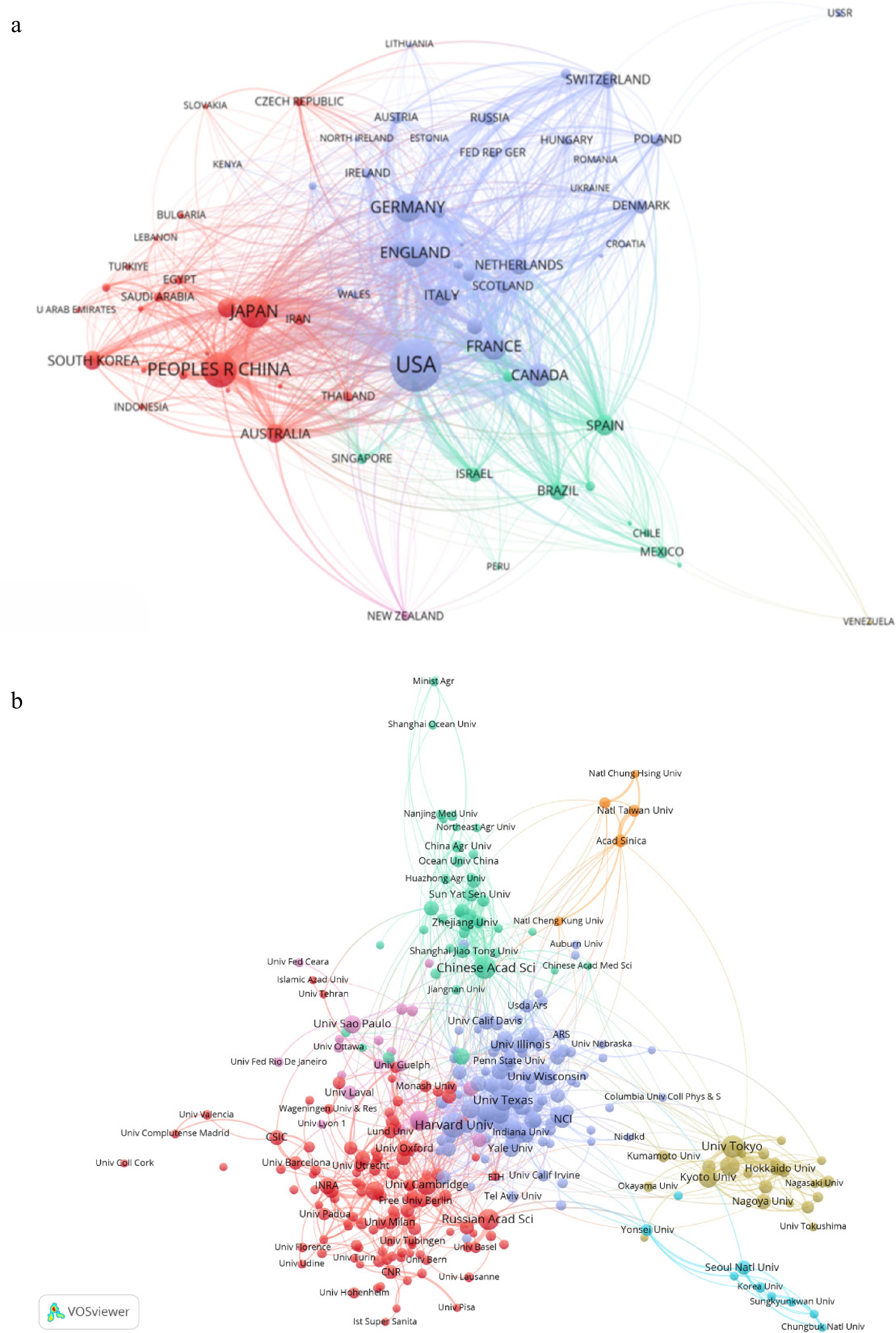
Figure 3.
Co-occurrence network relationship regarding alternative proteins from different countries and institutions.
Table 2. A summary of top 10 rankings from different countries, institutions and journals.
Ranking Country (number of papers) Organization (number of papers) Journal (number of papers) 1 USA (6,465) Harvard University (229) Journal of Biological Chemistry (733) 2 China (2,274) Chinese Academy of Sciences (183) Proceedings of the National Academy of Science of the United States (286) 3 Japan (1,793) The University of Tokyo (170) Biochemistry (268) 4 Germany (1,375) The University of Texas (158) Journal of Virology (185) 5 England (1,109) Russian Academy of Sciences (145) Aquaculture (181) 6 France (998) Kyoto Univeristy (127) Journal of Molecular Biology (148) 7 Canada (874) Osaka University (127) Nucleic Acids Research (134) 8 Italy (658) University of Toronto (126) Journal of Cell Biology (99) 9 Spain (582) University of Cambridge (124) Nature (55) 10 India (512) University of California, San Francisco (123) Cell (43) Research hotspots and main directions
-
Following the co-occurrence and citation network analysis, we conducted a keyword co-occurrence, clustering, and keyword burst analysis to identify research hotspots and main directions in alternative protein research. The top 20 keywords with the strongest bursts are presented in Fig. 4. Two main research periods were identified, and it was found that the research hotspots on alternative proteins have evolved from foundational studies in biology and genetics (light blue color) to a broader focus that includes food science, nutrition, and sustainable production (light orange color).
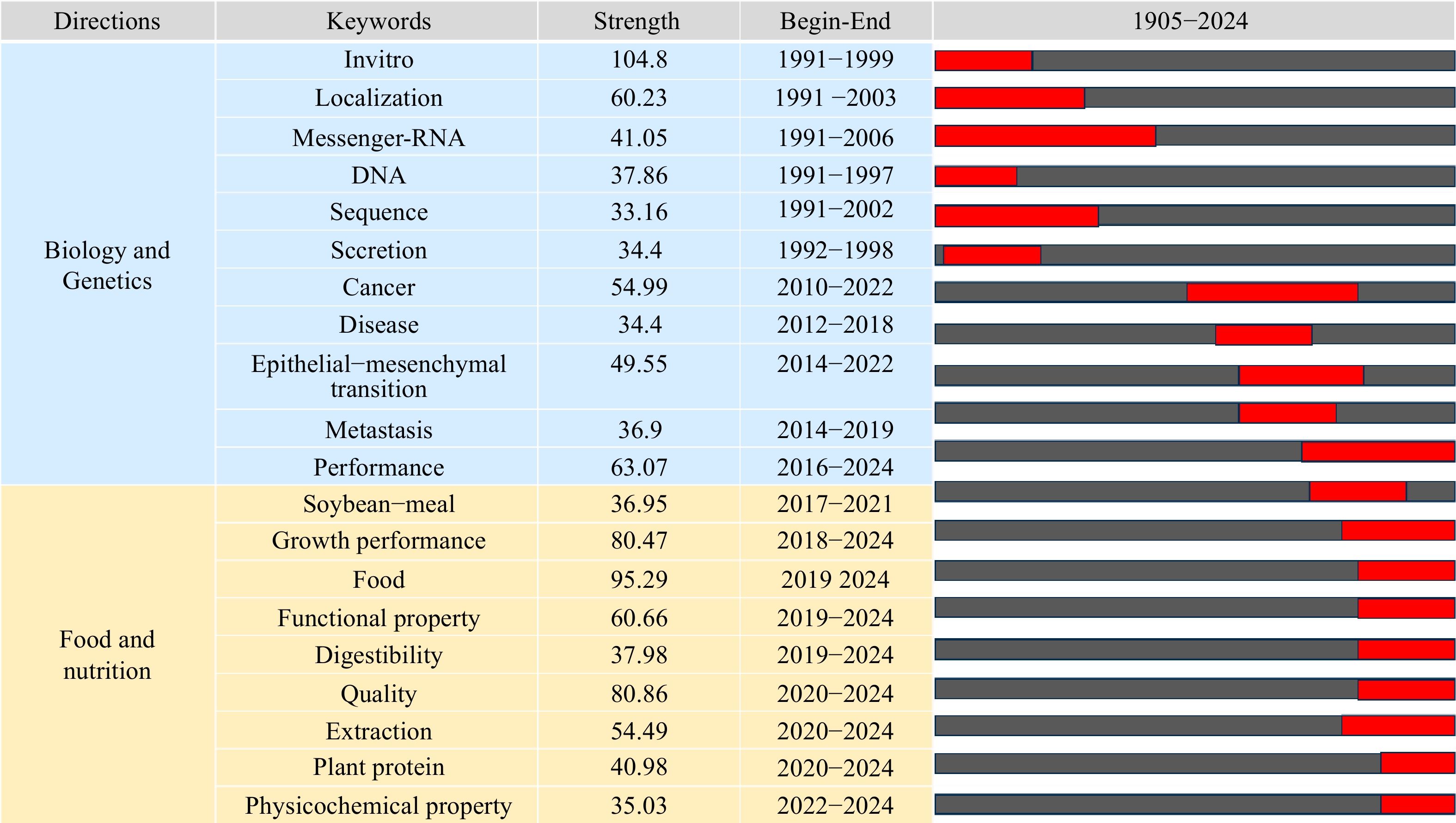
Figure 4.
Research hotspots and keyword bursts. 'Begin' indicates the year in which a keyword first emerged, 'End' represents the year in which the burst ended, and 'Strength' reflects the burst intensity. The red timeline shows the duration of each keyword emergence.
The main directions of each period were then summarized based on the detailed information of keywords. As shown in Fig. 5, in the earlier period, research was primarily concerned with understanding the basic biology of proteins and their role in disease. In this period, three main directions could be identified based on the high-frequency keywords: (1) Molecular Biology and Genetics, focusing on understanding the fundamental components of protein, such as 'amino acid sequence' and 'polypeptides', and the study of genetic mechanisms, including 'cDNA' and 'site-directed mutagenesis'; (2) Cell Biology and Physiology, focusing on the investigation of cellular structures and functions, such as 'membranes' and 'endothelial cells', and the exploration of cellular processes like 'cell cycle' and 'signal transduction'; (3) Disease Mechanisms and Therapeutics, focusing on the diseases related to protein dysfunction, such as 'pertussis toxin' and 'human immunodeficiency virus', and the development of therapeutic strategies, including 'inhibitors' and 'neurotoxicity' studies.
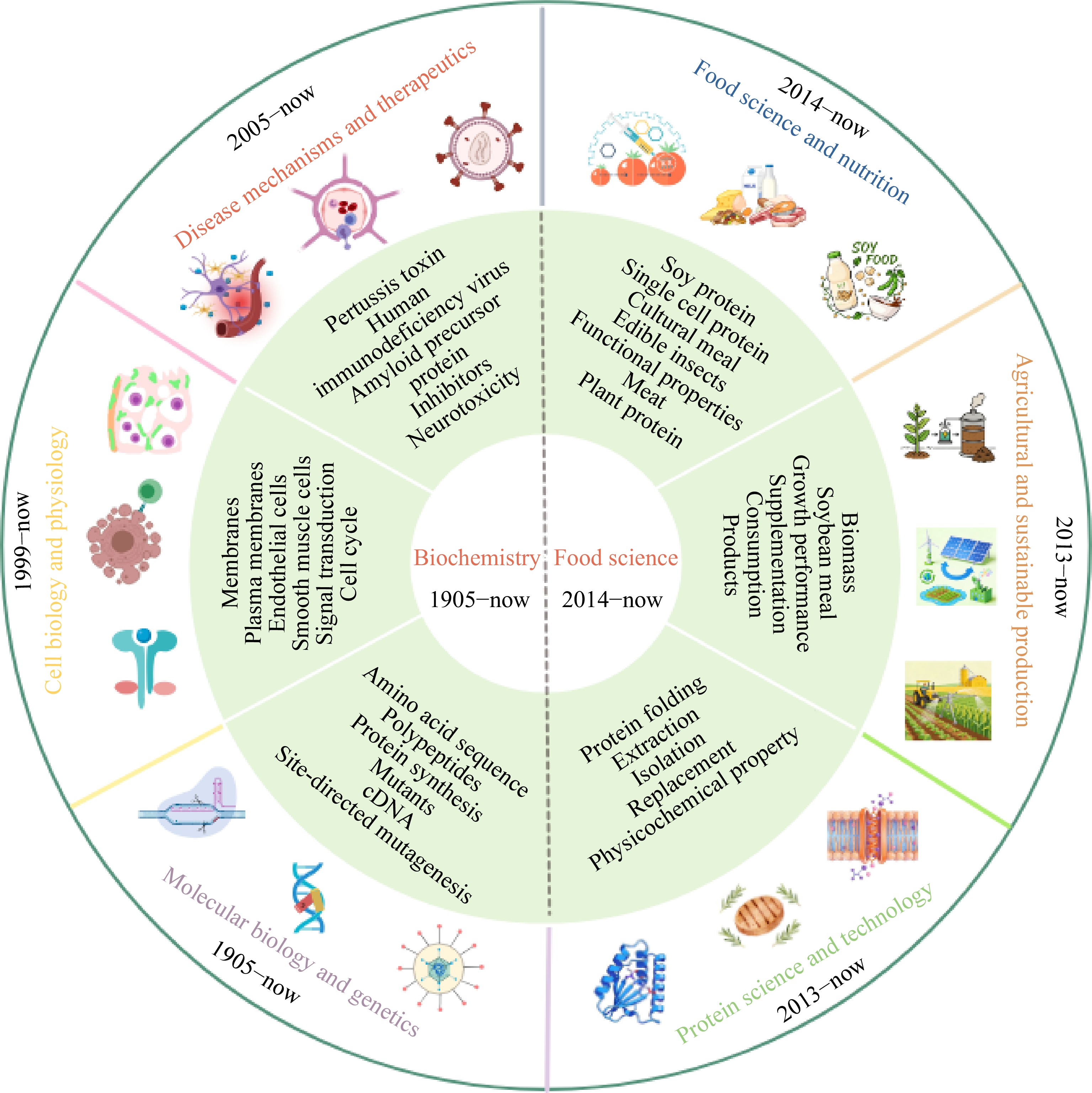
Figure 5.
Research evolution and main research directions (Created with MedPeer [
medpeer.cn ]).In the more recent period, research has expanded to include the exploration of alternative protein sources, their nutritional and functional properties, and sustainable production methods. Three main directions were also identified in this period: (1) Food Science and Nutrition, focusing on the exploration of alternative protein sources, such as 'plant protein', 'single-cell protein', and 'edible insects', and the assessment of the nutritional and functional properties of these proteins in food applications. (2) Agriculture and Sustainable Production, focusing on the development of sustainable protein production methods, including 'biomass' utilization and 'soybean meal' applications, and the study of environmental impacts and resource consumption associated with alternative protein production; (3) Protein Science and Technology, focusing on the advanced studies of protein properties, including 'protein folding' and 'physicochemical properties', and the development of efficient 'extraction', 'isolation', and 'replacement' technologies for protein purification. Additionally, there is a growing interest in the application of biotechnology and cell culture techniques for the production of alternative proteins.
Research hot topics - intertopic distance map
-
In addition to keyword clustering, we performed topic modeling using the BERTopic model. This involved mapping all documents into a two-dimensional space, which revealed 63 distinct topics to help forecast future research trends in alternative proteins. As shown in Fig. 6a, a hierarchical clustering analysis was performed to reveal the relationships between these topics, highlighting key research trends and interdisciplinary connections in alternative protein research. Topics with higher semantic similarity are positioned closer together to each other and can be merged into the same cluster. We identified 14 distinct research clusters and analyzed their temporal distribution (Fig. 6b), enabling us to predict emerging trends in alternative protein research. Key trends include the dominance of sustainable food and feed innovations (Cluster 1, 2, and 8), particularly plant-based and algal proteins (e.g., microalgae and plant-derived emulsion technologies), as well as insect and single-cell proteins (e.g., yeast and insect larvae) for both human consumption and animal feed[28−33]. These developments are driven by the need for scalable, low-carbon alternatives to traditional animal products, with a focus on improving texture, nutritional profiles, and industrial feasibility. Agricultural advancements are also prominent (Clusters 2, 3, 4, and 8), particularly in replacing conventional fishmeal with insect- or microbial-based feeds to reduce environmental impact, as well as crop engineering to enhance protein content in staple crops like wheat and legumes[34,35]. Biomedical applications are another major area of growth (Clusters 6, 10, 11, 12, and 14), with research exploring alternative proteins for precision nutrition (e.g., managing diabetes and cholesterol) and advanced drug delivery systems (e.g., protein-based hydrogels and nanoparticles for sustained release or tissue engineering)[36,37]. Niche areas with growth potential include neuroscience (Clusters 9, 11, and 14), where protein-derived peptides are being investigated for neuroprotection and neurodegenerative disease mitigation, and virology, where alternative protein platforms are being leveraged for vaccine development[38]. Emerging technologies (Clusters 5, 6, and 13), such as AI and structural biology, are playing a pivotal role in designing novel protein structures with optimized functionality, while sustainable packaging solutions (e.g., protein-based biodegradable films) are gaining traction as eco-friendly alternatives to plastics[39]. Cross-disciplinary synergies (Clusters 4 and 7) are increasingly evident, with food science intersecting with biomedicine (e.g., mammary gland research for infant formula innovation[40]) and policy-driven studies focusing on consumer behavior to accelerate adoption
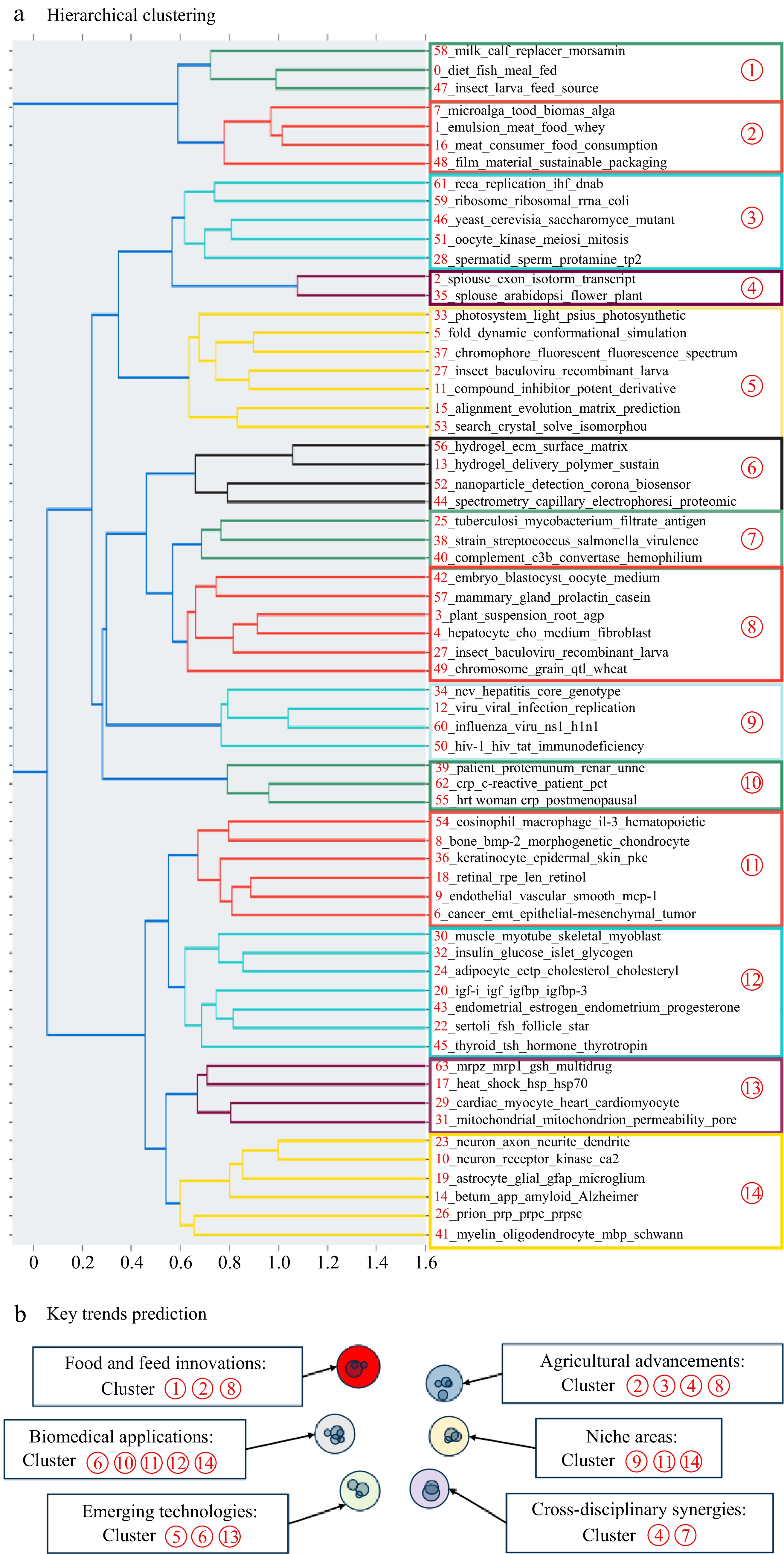
Figure 6.
Thematic Clustering using the BERTopic model. (a) Hierarchical clustering of 63 topics and their temporal distribution (1905−2024). The left panel shows the hierarchical clustering dendrogram of the identified BERTopic topics based on semantic similarity. Individual topic numbers are listed along the right side of the dendrogram. Colored branches and boxes indicate major thematic clusters, which were manually grouped and labeled as 14 broader topic groups. (b) Key trends prediction: (1) food and feed innovations: Clusters 1, 2, and 8; (2) agricultural advancements: Clusters 2, 3, 4, and 8; (3) biomedical applications: Clusters 6, 10, 11, 12, and 14; (4) niche area (e.g., neuroscience): Clusters 9, 11, and 14; (5) emerging technologies: Clusters 5, 6, and 13; (6) cross-disciplinary synergies: Clusters 4 and 7.
The analysis highlights a shift from fundamental biochemical research to applied solutions addressing global challenges like climate change, food security, and public health. Underexplored areas, such as bioimaging tools using protein-based fluorescent tags, suggest further opportunities for innovation. Overall, alternative protein research is expanding beyond dietary substitutes into a dynamic frontier that integrates sustainability, health, and cutting-edge technology, with future growth likely to be shaped by policy, consumer demand, and technological breakthroughs. This multidisciplinary approach underscores the field's potential to transform food systems, healthcare, and environmental sustainability in the coming decades.
-
The bibliometric analysis of 22,122 publications on alternative proteins revealed a substantial evolution of research interests and trends over more than a century. The field has undergone significant transformation, driven by interdisciplinary collaboration and a growing focus on sustainability, health, and food security. By integrating insights from the historical publication trends, co-occurrence and citation networks, research hotspots, and hot topics, we provide a comprehensive view of how the field has developed and where it may be headed in the future.
The historical analysis of alternative protein research reveals two primary perspectives: one rooted in biochemistry and chemical biology, focusing on proteins translated from alternative open reading frames. For example, Gurskaya et al. analyzed the alternative splicing of cassette exons at the single-cell level and found that mass spectrometry-based proteomics can be coupled with fluorescent protein assays to identify and quantify distinct protein isoforms, thereby verifying the correlation between fluorescent signal ratios and actual protein expression levels[41]. The other is rooted in food science and nutrition, exploring sustainable protein sources such as plants, insects, and fungi. For example, Pihlanto et al. proposed that increasing the utilization of plant proteins is necessary to support the replacement of animal proteins, and provided an overview of the nutritional properties and potential benefits of lupins, quinoa, and hempseed[42]. This dual focus highlights the interdisciplinary nature of the field, which bridges fundamental scientific research with practical applications in food systems and sustainability. Based on this duality and the above analysis, we propose an updated definition of alternative proteins as novel or non-traditional protein forms, at either the molecular or food-system level, that challenge conventional paradigms while offering innovative solutions to scientific, health, and sustainability challenges. In this study, publications were considered relevant to alternative protein research when they met at least one of the following criteria: (1) they investigated non-traditional or emerging protein sources, including plant, microbial, algal, insect, cultured, recombinant, fungal, or single-cell proteins; (2) they addressed protein substitution, protein transition, or replacement of conventional animal-derived proteins; (3) they examined molecular or biochemical forms referred to as alternative proteins, such as proteins translated from alternative open reading frames; or (4) they focused on the functional, nutritional, technological, environmental, biomedical, or sustainability-related applications of these protein systems.
The resurgence of interest in alternative proteins since 2014, as evidenced by the sharp increase in publications (reaching 949 articles per year in 2023), highlights the growing importance of this field. This resurgence is driven by advancements in biotechnology, increasing environmental concerns, and the need for sustainable food solutions. The historical trends also reveal a decline in research output in the early 2000s, followed by stabilization and eventual growth, indicating shifting scientific priorities and renewed interest in alternative proteins.
The analysis of the co-occurrence and citation network in alternative protein research provides valuable insights into the collaborative landscape of this interdisciplinary field. By examining the interactions among countries, institutions, and journals, we can identify key players, regional trends, and the dynamics of knowledge exchange that have shaped the development of alternative protein research over the past century. The high publication output and citation visibility of the US, China, and European countries underscore the role of research investment and policy frameworks in driving innovation, while low- and middle-income nations (LMICs) face barriers such as limited public funding and technology access, which hinder their participation. Addressing these challenges could expand global alternative protein innovation capacity. In addition, regional collaboration patterns suggest that logistical and cultural proximity may influence partnerships more than global connectivity. Leading institutions like Harvard University, the Chinese Academy of Sciences, and the University of Cambridge serve as central hubs for interdisciplinary research. These institutions foster collaboration between universities and research organizations, bridging the gap between fundamental biochemistry and applied food science. The prominence of journals like Nature and Cell in publishing alternative protein research signals its cross-disciplinary relevance. The integration of biochemistry, food technology, and environmental science is critical for addressing complex challenges like scalable protein production and nutritional optimization.
Keyword co-occurrence, clustering, and bursting analyses in the field of alternative proteins provide a detailed understanding of how research hotspots and directions have evolved over time. By identifying two main research periods: earlier foundational studies (1905−2013) and recent applied and sustainable research (2014−now), we can trace the shift from fundamental biological and genetic research to a broader focus on food science, nutrition, and sustainable production. This evolution reflects the growing importance of alternative proteins in addressing global challenges such as food security, environmental sustainability, and public health concerns.
The identification of 14 consolidated research directions, ranging from dairy alternatives to protein extraction technologies, provides a roadmap for future inquiry. It should be noted that the future-oriented directions identified in this study are based on bibliometric signals, including keyword bursts, topic clustering, and recent publication trends, rather than on formal forecasting models. Therefore, emerging areas should be interpreted as areas of increasing research attention rather than as definitive future outcomes. More rigorous forecasting approaches, such as scenario analysis or expert surveys, would be valuable in future studies to validate these projected directions. Notably, bibliometric signals reveal growing research interest in advanced sustainable food innovations, such as plant-based, algal, insect, and single-cell proteins, with targeted research aimed at improving industrial scalability, nutritional optimization, and integration into food and pharmaceutical systems, including drug delivery applications. A Nature paper also highlights fungi-based bacon and insect burgers as key emerging protein alternatives, alongside microbial and plant-based options, in the transition toward sustainable future diets[43]. For instance, companies like Unilever's 'Vegetarian Butcher' are actively developing fungi-based bacon and fish alternatives. Quorn (made from Fusarium venenatum) and other fungal products are already commercially successful, offering textures resembling chicken or bacon. In addition, the European Union has approved yellow mealworms for human consumption, and cricket flour and insect-based burgers are now available in Europe. Jennifer Doudna, the 2020 Nobel laureate in chemistry for her CRISPR gene-editing breakthrough, has expressed strong support for alternative proteins, particularly cultivated (lab-grown) meat. Her research enables precise editing of microbial genomes, such as yeast and algae, to enhance protein yield or nutritional profiles[44]. Organizations such as the Innovative Genomics Institute (which she co-founded) have explored CRISPR's role in sustainable food, highlighting how biotechnology research can directly support scalable protein systems.
In addition, emerging technologies, such as AI and structural biology, alongside cross-disciplinary collaboration, may become increasingly important in the present bibliometric analysis. Future research programs should therefore integrate computational protein design, bioprocess engineering, and food science to accelerate the development of scalable and functional protein ingredients. These innovations will advance protein design, biodegradable packaging, and sustainable agricultural solutions, while niche applications in neuroscience and virology further support the global transition to more sustainable protein production systems. A Cell paper strongly aligns with this described trend, which highlights AI-driven protein design (e.g., deep learning models like ProteinMPNN and AlphaFold2) to create novel, functional protein structures not found in nature, enabling precision in applications like enzyme design and therapeutics[45]. Moreover, Frances Arnold, a Nobel Prize-winning chemist, also strongly supports alternative proteins research, particularly those leveraging synthetic biology and engineered microbial consortia[46]. Her research on enzyme engineering is critical to optimizing alternative protein production, such as plant-based or fermentation-derived proteins.
Despite significant progress, key gaps remain in alternative protein research. Compared with technical themes such as protein source development, extraction, processing, and functional property modification, topics related to policy frameworks (approximately 0.11%), regulatory harmonization (approximately 0.33%), consumer behavior (approximately 1.24%), and lifecycle assessment (approximately 0.47%) accounted for a relatively small proportion of the retrieved literature (approximately 2.15% in total). This imbalance suggests that the alternative protein field remains more strongly driven by technological development than by integrated policy, sustainability assessment, and adoption-oriented research. Addressing these barriers will require targeted investments in bioprocess optimization, large-scale fermentation infrastructure, and advanced food structuring technologies. Future research should therefore focus on improving fermentation efficiency, developing scalable bioreactor systems, and advancing material science approaches to food texture engineering, which are essential for making alternative proteins economically competitive with conventional animal proteins. For plant-based meats, improving micronutrient profiles, as emphasized by Harvard nutritionist Walter Willett, and achieving meat-like texture remain hurdles[47]. In cultured meat, pioneers such as Mark Post emphasize the need for advancements in scaffolding and 3D bioprinting to replicate the full sensory experience, including texture and juiciness[48]. Meanwhile, microbial fermentation struggles with strain efficiency and yield, while insect proteins face cost barriers due to small-scale production[49,50].
In addition, gaps remain in areas such as policy analysis, consumer acceptance studies, and lifecycle assessments of alternative protein production. To address these gaps, policymakers and researchers should collaborate to develop harmonized regulatory frameworks, standardized sustainability metrics, and large-scale consumer research programs. Experts such as Bruce Friedrich (Good Food Institute, GFI) stress the urgent need for global regulatory harmonization to accelerate alternative protein innovation, warning that inconsistent approvals hinder progress[51]. Sensory scientist Charles Spence and sustainability researcher Jason Clay (World Wildlife Fund, WWF) highlight unresolved challenges in consumer acceptance (taste, cultural bias) and incomplete lifecycle assessments (energy, land-use trade-offs), calling for interdisciplinary solutions to ensure scalability and impact[52,53]. Developing internationally comparable lifecycle assessment frameworks and evidence-based policy guidelines will be critical for evaluating the true environmental benefits of alternative proteins and guiding sustainable investment decisions. This analysis aids policymakers and funding agencies in prioritizing high-impact areas, such as scaling microbial protein production or optimizing plant-based analogs. By linking technological development with regulatory alignment and sustainability assessment, these priorities provide a clearer pathway for translating research advances into large-scale food system transformation.
-
This bibliometric analysis reveals the evolution of alternative protein research from its early biomedical origins to its current role in food innovation, sustainability, and health. Our findings highlight the field's interdisciplinary nature, the shifting focus of research activity, and the rise of new application domains, ranging from plant-based foods to biomedical therapeutics. Topic modeling and keyword clustering reveal clear trajectories toward scalable, functional, and sustainable protein systems, while also identifying persistent gaps that limit widespread adoption. This study resolves definitional ambiguity, maps fragmented research networks, and clarifies future trends, directly addressing the core gaps outlined in the Introduction section.
By synthesizing these insights, we offer a structured overview for researchers, funders, and policymakers to identify emerging priorities and strategic opportunities. While our analysis depends on the data coverage and methodological assumptions, it nevertheless underscores the urgent need for integration across disciplines, geographies, and knowledge systems. The next decade of alternative protein research will be defined not only by discoveries but also by the interdisciplinary collaborative pathways it will develop. When successful, this field has the potential to transform our diets, while simultaneously addressing human and planetary health.
-
The authors confirm their contributions to the paper as follows: data curation: Liu X, Cao Y, Meng C, Lu C, Fu Z; visualization: Liu X, Cao Y, Sagis LM, Meng C, Lu C, Fu Z, Sui X; investigation, writing − original draft: Liu X; methodology: Liu X, Cao Y, Sagis LM, Jiang L, Meng C, Lu C, Fu Z, Li X, Zhou W, Liu X, Wan Z, Yang J, Sui X, Zhao Y, Li Y; writing − review and editing: Cao Y, Sagis LM, Jiang L, Li X, Zhou W, Liu X, Wan Z, Yang J, Sui X, Zhao Y, Li Y; conceptualization: Jiang L, Li X, Zhou W, Liu X, Wan Z, Yang J, Zhao Y, Li Y; funding acquisition: Li Y, Sui X. All authors reviewed the results and approved the final version of the manuscript.
-
The datasets generated during and/or analyzed in the current study are available from the corresponding author on reasonable request.
-
The authors declare that they have no conflict of interest.
-
accompanies this paper online at: https://doi.org/10.48130/fia-0026-0032.
-
Authors contributed equally: Xiangyu Liu, Yuan Cao
- Supplementary Table S1 The table of 22,122 publications in WoS - bibliometric approach.
- Supplementary Table S2 Nodes-country or region.
- Supplementary Table S3 Nodes-organization.
- Supplementary Table S4 Nodes-journal.
- Supplementary Table S5 63 hot topics-BERTopic model.
- Supplementary Fig. S1 Citation network relationship regarding alternative proteins from different.
- Copyright: © 2026 by the author(s). Published by Maximum Academic Press on behalf of China Agricultural University, Zhejiang University and Shenyang Agricultural University. This article is an open access article distributed under Creative Commons Attribution License (CC BY 4.0), visit https://creativecommons.org/licenses/by/4.0/.
-
About this article
Cite this article
Liu X, Cao Y, Sagis LM, Jiang L, Meng C, et al. 2026. The past, present, and future for alternative protein research: a century of interdisciplinary trends. Food Innovation and Advances 5(3): 382−393 doi: 10.48130/fia-0026-0032 

The past, present, and future for alternative protein research: a century of interdisciplinary trends
- Received: 24 December 2025
- Revised: 25 May 2026
- Accepted: 30 May 2026
- Published online: 20 August 2026
Abstract: Alternative proteins are commonly framed as substitutes for animal proteins and therefore examined primarily through a food science perspective. However, this narrow framing overlooks their broader relevance across biological disciplines. In this study, we employed a bibliometric analysis of 22,122 publications to map the evolution of alternative protein research from 1905 to the present. Our findings show that alternative protein research has evolved through two major phases. Early research focused largely on fundamental biological questions, particularly genetic and molecular mechanisms. In contrast, more recent work has shifted toward applied domains, such as food science, nutrition, and sustainable production. These trends highlight the inherently interdisciplinary nature of alternative protein research, spanning both foundational biology and innovations in food systems. Future research on alternative proteins will focus on advancing sustainable food and feed innovations and prioritizing emerging technologies, such as using AI to optimize protein expression and using structural biology to improve the texture and digestibility of newly developed foods. Advancing the field will also require greater integration of policy analysis and consumer acceptance research to support cross-disciplinary collaboration. Although alternative proteins show promise for addressing sustainability challenges, critical gaps persist in production scalability, policy frameworks, and comprehensive lifecycle assessments. Addressing these gaps will be critical for realizing the full potential of alternative proteins.
-
Key words:
- Alternative proteins /
- Bibliometric analysis /
- Environmental sustainability /
- Food systems /
- Evolution