-
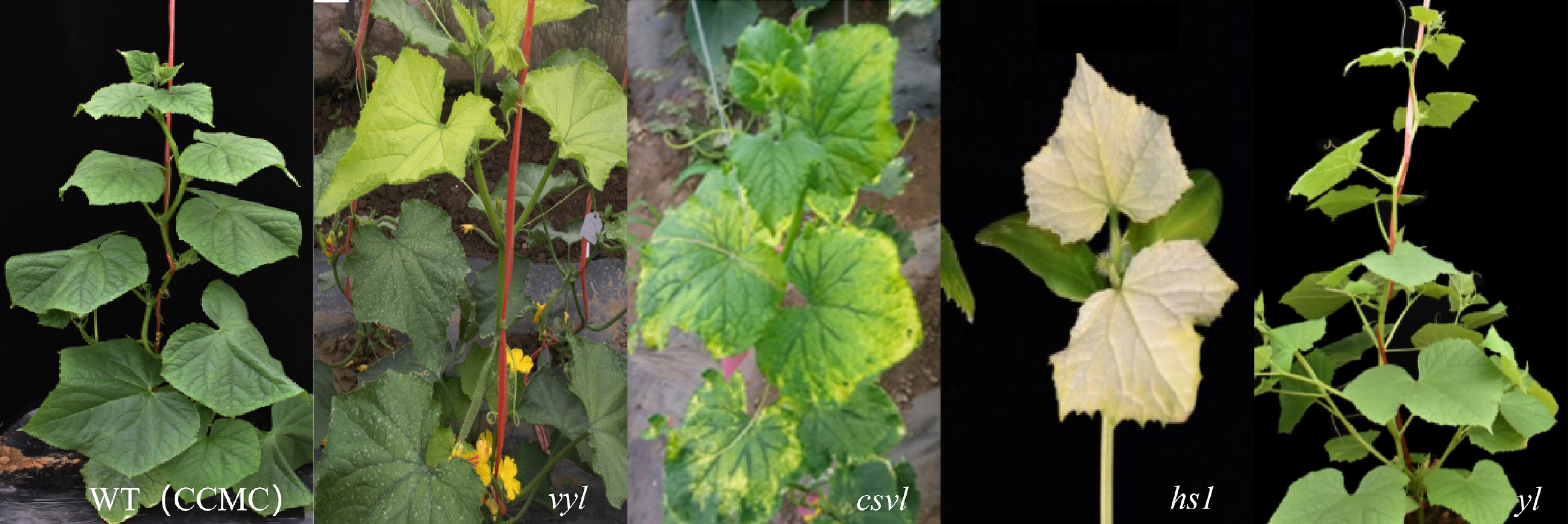
Figure 1.
Phenotypic comparison of cucumber leaf color mutants. The wild type ('WT', CCMC) and four cucumber seedlings with typical leaf color variations, vyl, csvl, hs1, and yl, are shown from left to right. The WT (CCMC) displays normal green leaves. Among them, vyl showed that the young leaves turned green gradually with growth; csvl showed mottled yellow and green; hs1 showed that the leaves of the plant were albino; yl showed the yellow phenotype.
-
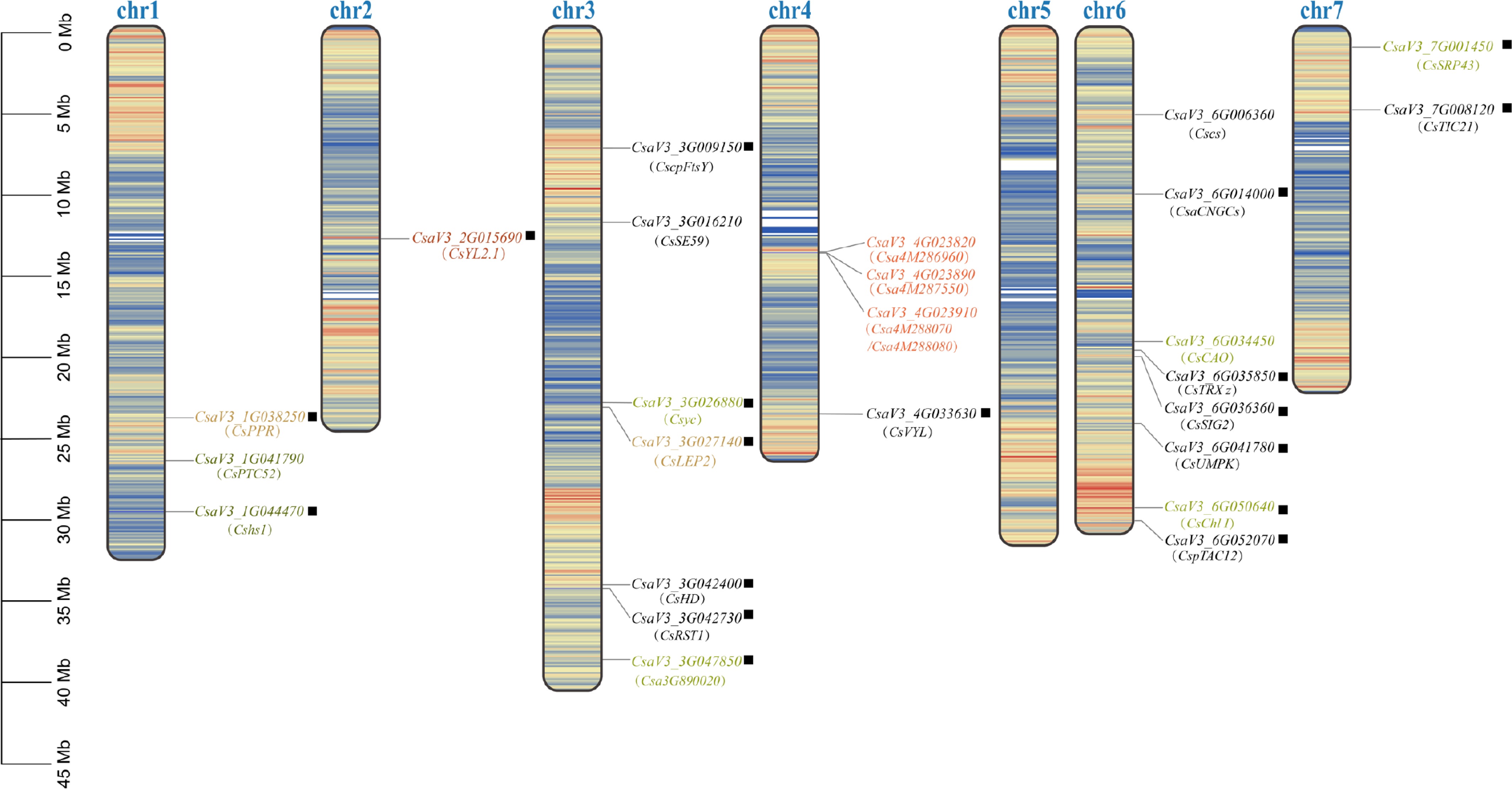
Figure 2.
The distribution of candidate genes identified for leaf color in cucumber (Cucumis sativus). The gene ID was noted in reference genome 9930 v3.0. The blue to red color in the chromosome represents that the density of genes on the chromosome is from low to high within 100 kb windows. The gene IDs are color-coded based on the molecular mechanisms they regulate: green for the chlorophyll metabolic pathway, yellow for the nuclear-cytoplasmic interaction pathway, orange for the carotenoid metabolic pathway, and black for the chloroplast biogenesis pathway. Black squares denote genes that have been fine-mapped.
-
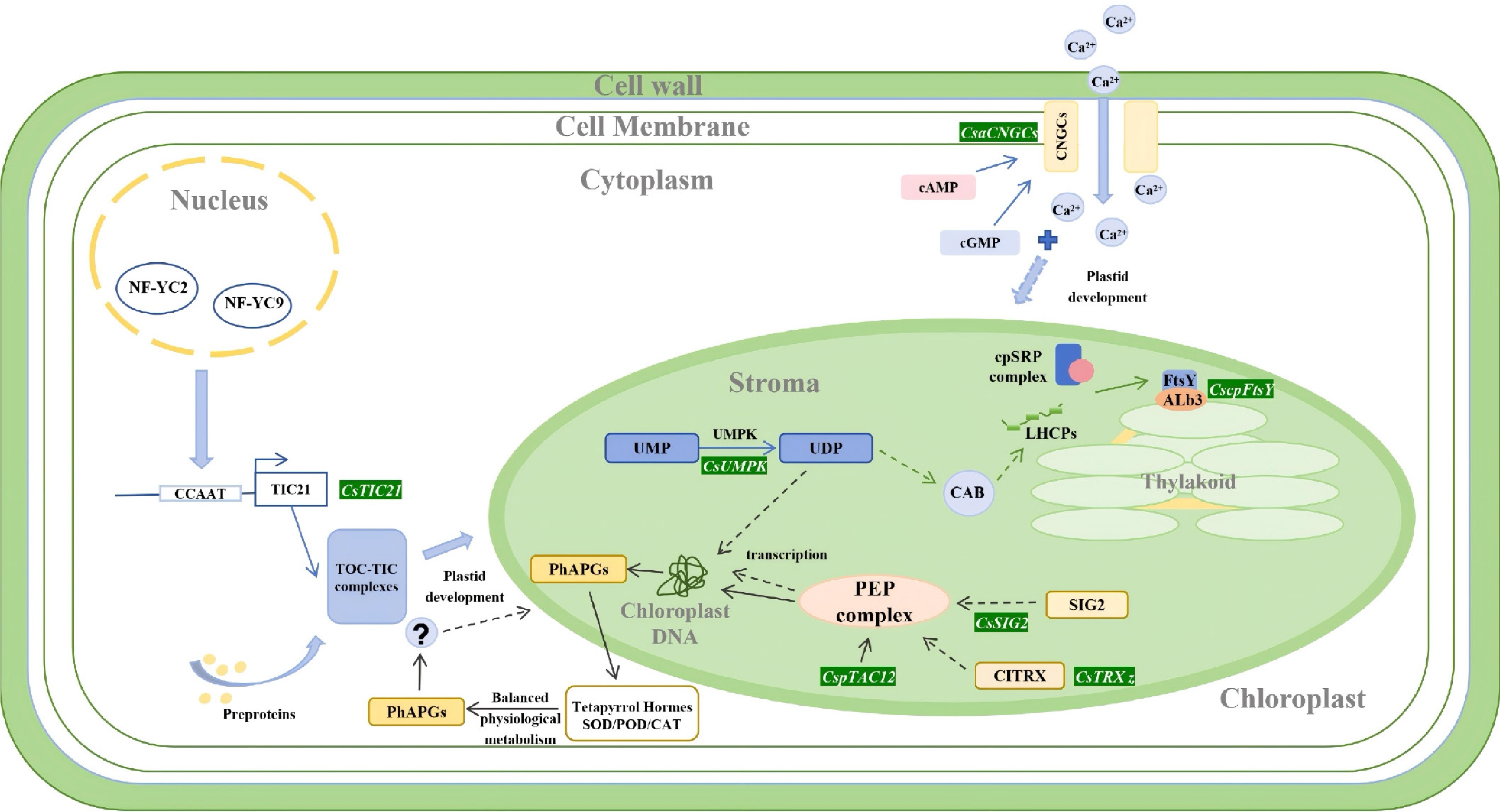
Figure 3.
Schematic model of the molecular network regulating chloroplast biogenesis and maintenance. Chloroplast development requires the precise coordination of nuclear-encoded factors, plastid transcription, structural assembly, and metabolic support. Protein Import and Thylakoid Targeting: Nuclear transcription factors (e.g., NF-YC2/9) activate the expression of CsTIC21, a core component of the TOC-TIC complex, ensuring the import of cytoplasm-synthesized preproteins. Concurrently, CscpFtsY functions in the cpSRP pathway to facilitate the insertion of light-harvesting chlorophyll-binding proteins (LHCPs) into the thylakoid membrane. Plastid Transcription: The expression of chloroplast DNA is heavily dependent on the plastid-encoded RNA polymerase (PEP) complex. This complex is structurally stabilized by CsTRXz (CITRX) and recruited to specific targets by sigma factors such as SIG2. Metabolic and Ion Signaling Support: Enzymatic conversion of UMP to UDP by UMP provides essential nucleotide precursors for thylakoid formation. Additionally, cell membrane-localized CsaCNGCs mediate cAMP/cGMP-dependent influx, triggering signaling for plastid development. Genes highlighted in a green background (e.g., CsTIC21, CscpFtsY) represent the key regulatory genes identified in cucumber.
-
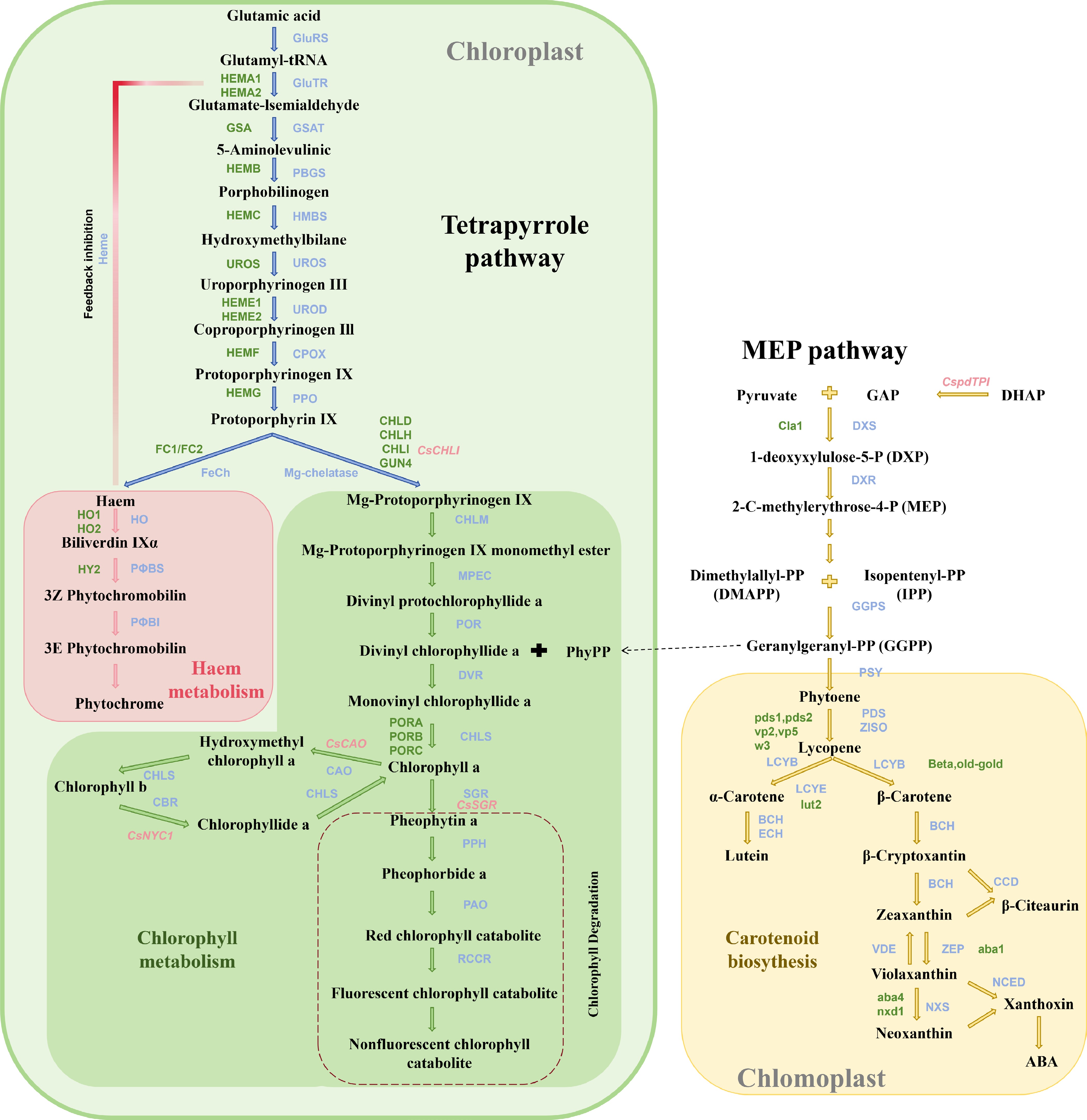
Figure 4.
The pigment metabolic network of chlorophyll, carotenoid, and heme pathways. The tetrapyrrole pathway begins with glutamic acid and branches at protoporphyrin IX to synthesize either haem (heme metabolism) or chlorophylls (chlorophyll metabolism). The chlorophyll metabolism module encompasses the synthesis of chlorophyll a and b, as well as their sequential degradation into nonfluorescent chlorophyll catabolites. Haem exerts a feedback inhibition on the early steps. The MEP and carotenoid biosynthesis pathways utilize pyruvate and GAP to produce various carotenes, xanthophylls, and abscisic acid (ABA). Genes were noted in green color, while enzymes were labeled in blue color. Genes highlighted in pink (e.g., CsCHLI, CsCAO, CspTPI) represent the key regulatory genes identified in cucumber (Cucumis sativus). Full names of enzyme abbreviations are listed below. GluRS: Glutamyl-tRNA synthetase acid; GluTR: Glutamyl-tRNA reductase; GSAT: Glutamate-1-semialdehyde aminotransferase; PBGS: Porphobilinogen synthase; HMBS: Hydroxymethyl-bilane synthase; UROS: Uroporphyrinogen III synthase; UROD: Uroporphyrinogen III decarboxylase; CPOX: Coproporphyrinogen III oxidase; PPO: Protoporphyrinogen IX Oxidase; FeCh: Ferrochelatase; HO: hemeo oxygenase; PΦBS: phytochromobilin synthase; PΦBI: phytochromobilin isomerase; Mg-chelatase: Protoporphyrin IX Mg-chelatase; CHLM: Mgprotoporphyrin IX methyltransferase; MPEC: Mg-protoporphyrin IX monomethylester oxidative cyclase; POR: protochlorophyllide oxidoreductase; DVR: Divinyl chlorophyllide a 8-vinyl reductase; CHLS: Chlorophyll synthase; CAO: Chlorophyllide a oxygenase; CBR: Chlorophyll b reductase; SGR: Mg-dechelatase; PPH: pheophytinase; RCCR: red chlorophyll catabolite reductase; DXS: 1-deoxy-D-xylulose-5-phosphate synthase; DXR: 1-deoxy-D-xylulose-5-phosphate reductoisomerase; GGPS: geranylgeranyl diphosphate synthase; PSY: Phytoene synthase; PDS: Phytoene desaturase; ZISO: ζ-carotene isomerase; LCYB: Lycopene-β-cyclase; LCYE: Lycopene-ε-cyclase; BCH: β-carotene hydroxylase; ECH: ε-carotene hydroxylase; CCD: Carotenoid cleavage dioxygenase; VDE: Violaxanthin de-epoxidase; ZEP: Zeaxanthin epoxidase; NXS: neoxanthin synthase; NCEDs: 9-cis-epoxycarotenoid dioxygenase.
-
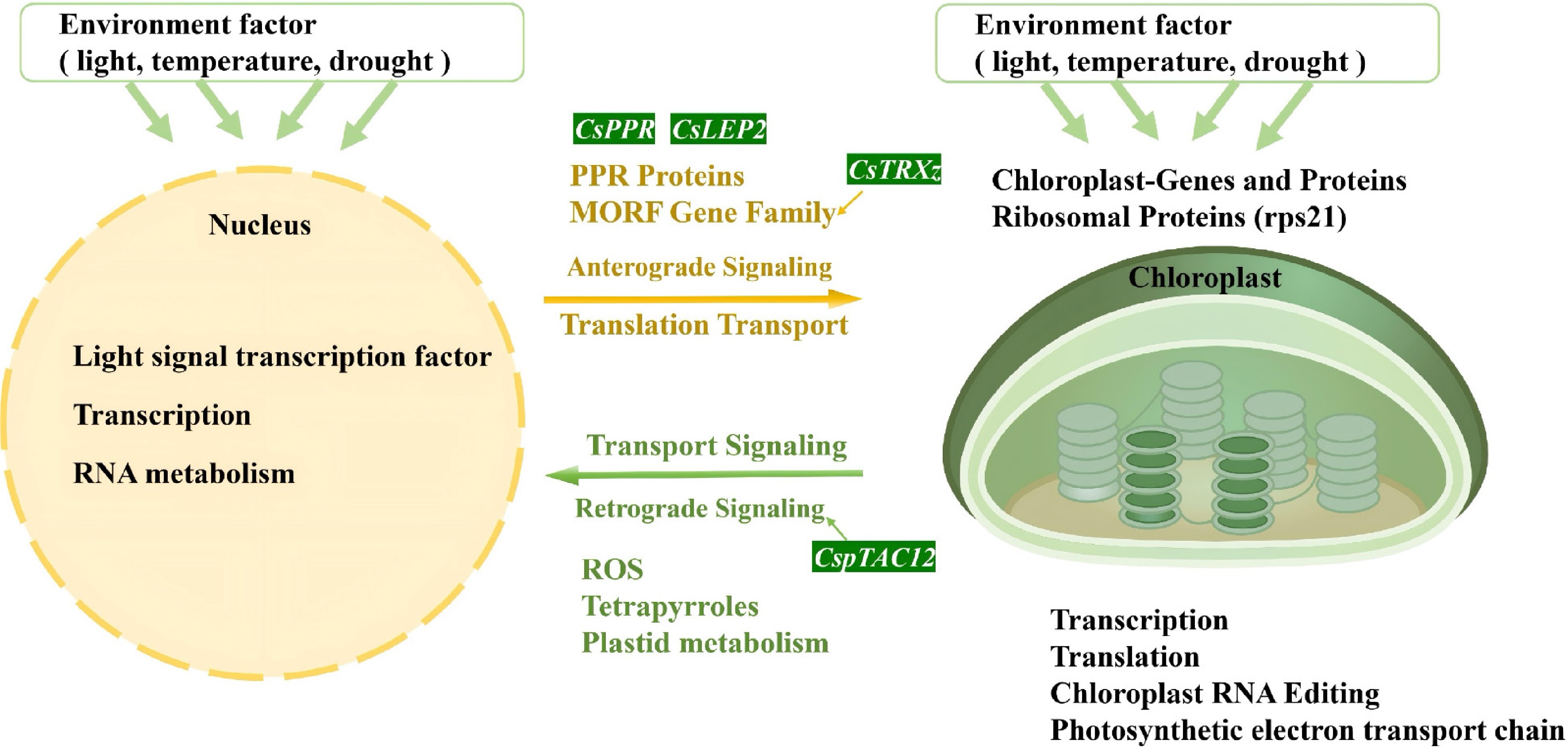
Figure 5.
Schematic model of nuclear-cytoplasmic communication. An environmental stimulus (e.g., light, temperature) is perceived by the nucleus and communicated to the chloroplast via anterograde signaling. During this process, specific nuclear-encoded regulators, such as PPR proteins (e.g., CsPPR), MORF (plastid multiple organellar RNA editing factors) family members, and ribosomal proteins (e.g., rps21), are transported into the plastid to govern chloroplast RNA editing and translation. In contrast, metabolic shifts (e.g., ROS, tetrapyrroles) or translation defects generated by the chloroplast produce retrograde signals. These signals are transduced back to the nucleus, causing changes in nuclear gene expression. Genes highlighted in a green background (e.g., CsPPR, CsLEP2) represent the key regulatory genes identified in cucumber (Cucumis sativus).
Figures
(5)
Tables
(0)