-
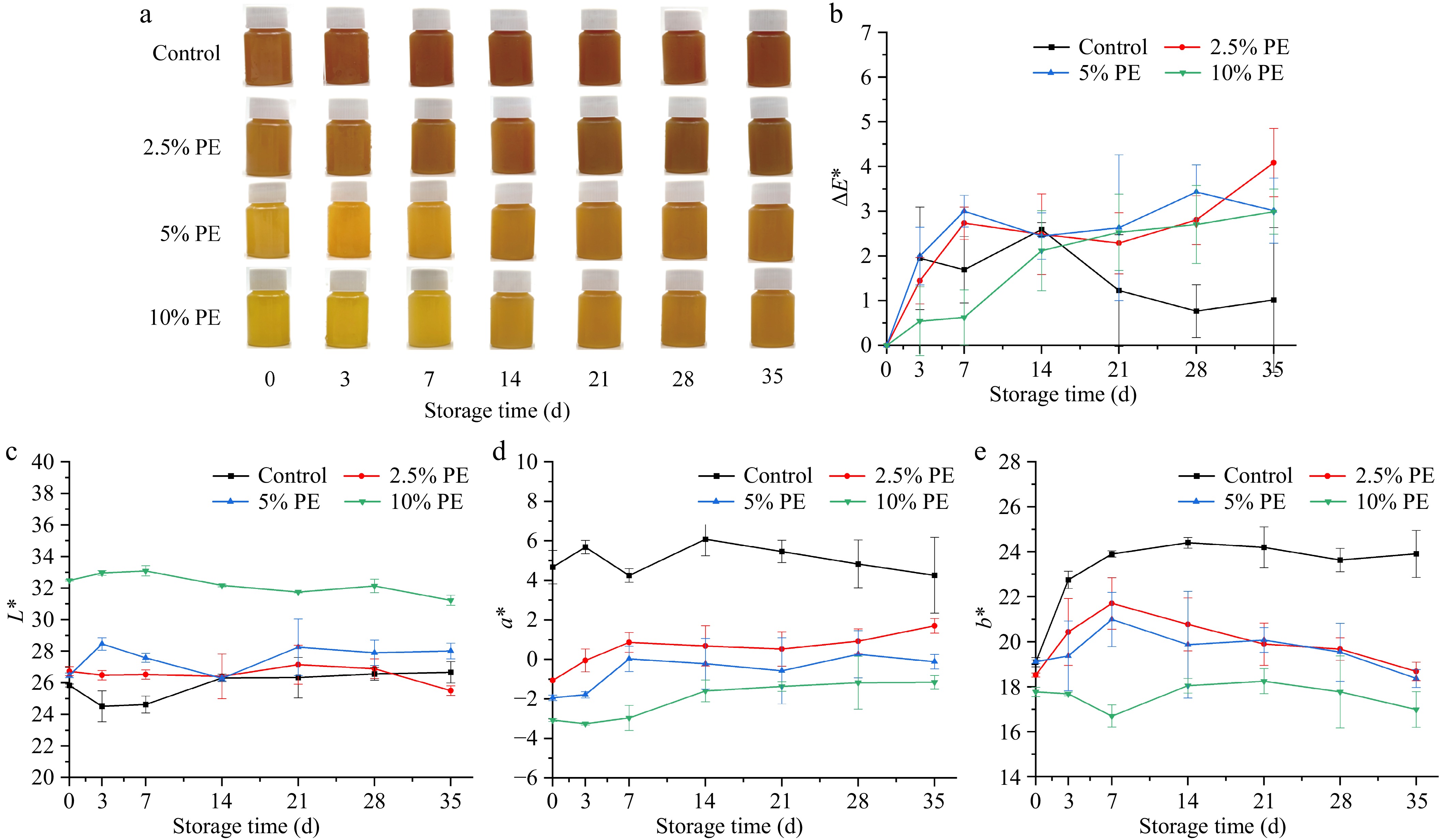
Figure 1.
Apparent color changes and chromatic difference analysis of apple juice treated with HPP after adding Phyllanthus emblica juice during storage for 35 d at 4 °C. Each experiment in the figure included three replicate groups.
-
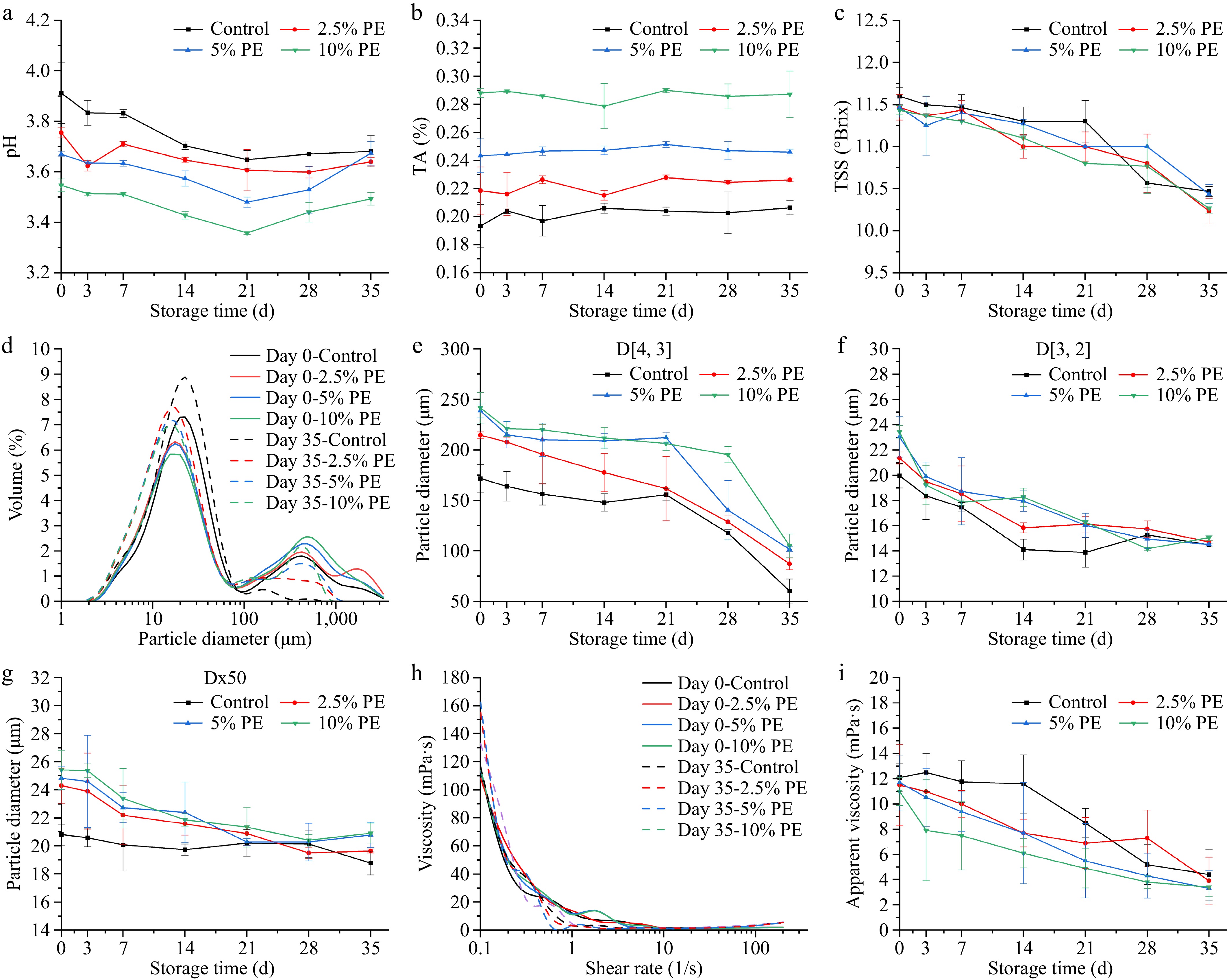
Figure 2.
Changes in pH, total titratable acidity (TA), total soluble solids (TSS), particle size distribution (PSD), particle diameters, and rheological properties of apple juice treated with HPP after adding Phyllanthus emblica juice during storage for 35 d at 4 °C. (a) pH; (b) TA; (c) TSS; (d) PSD; (e) volume-based mean diameter (D[4,3]); (f) surface-area-based mean diameter (D[3,2]); (g) mode diameter (Dx50); (h) changes of the apparent viscosity; and (i) apparent viscosity at the shear rate of 1 s−1. Each experiment in the figure included three replicate groups.
-
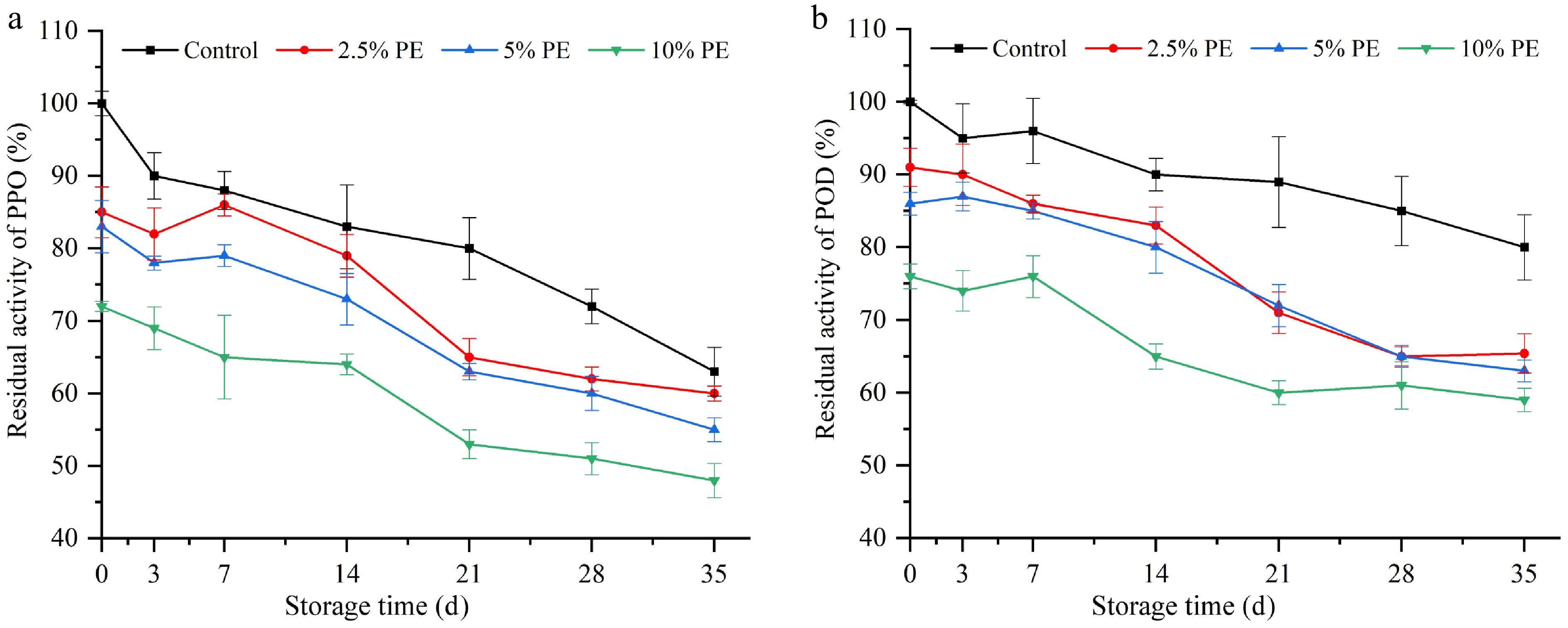
Figure 3.
Changes in (a) polyphenol oxidase (PPO), and (b) peroxidase POD of apple juice treated with HPP after adding Phyllanthus emblica juice during storage for 35 d at 4 °C. Each experiment in the figure included three replicate groups.
-
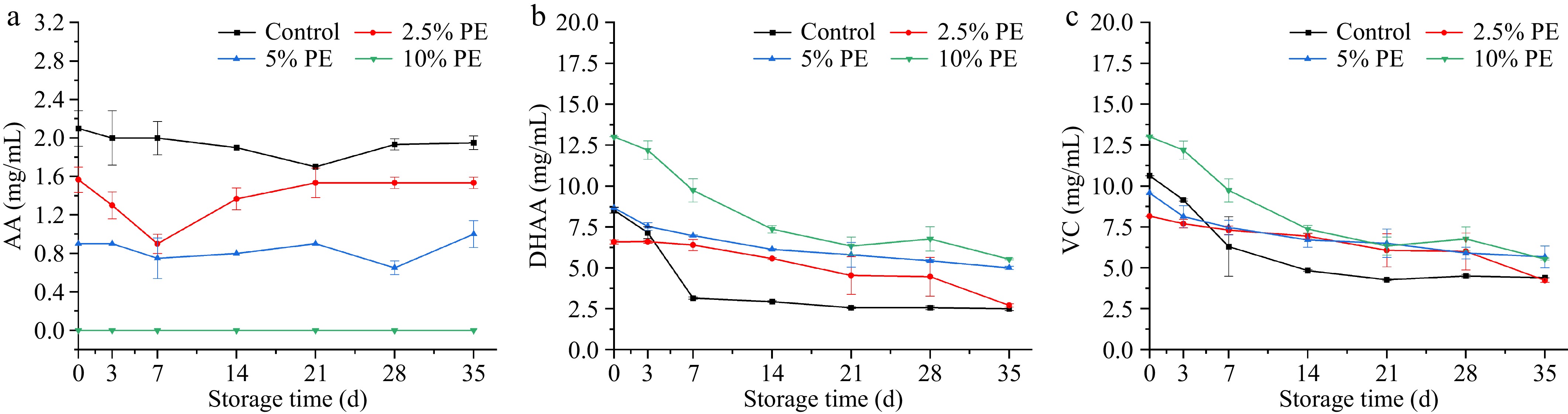
Figure 4.
Changes in (a) ascorbic acid (AA), (b) dehydroascorbic acid (DHAA), and (c) total vitamin C (VC) of apple juice treated with HPP after adding Phyllanthus emblica juice during storage for 35 d at 4 °C. Each experiment in the figure included three replicate groups.
-
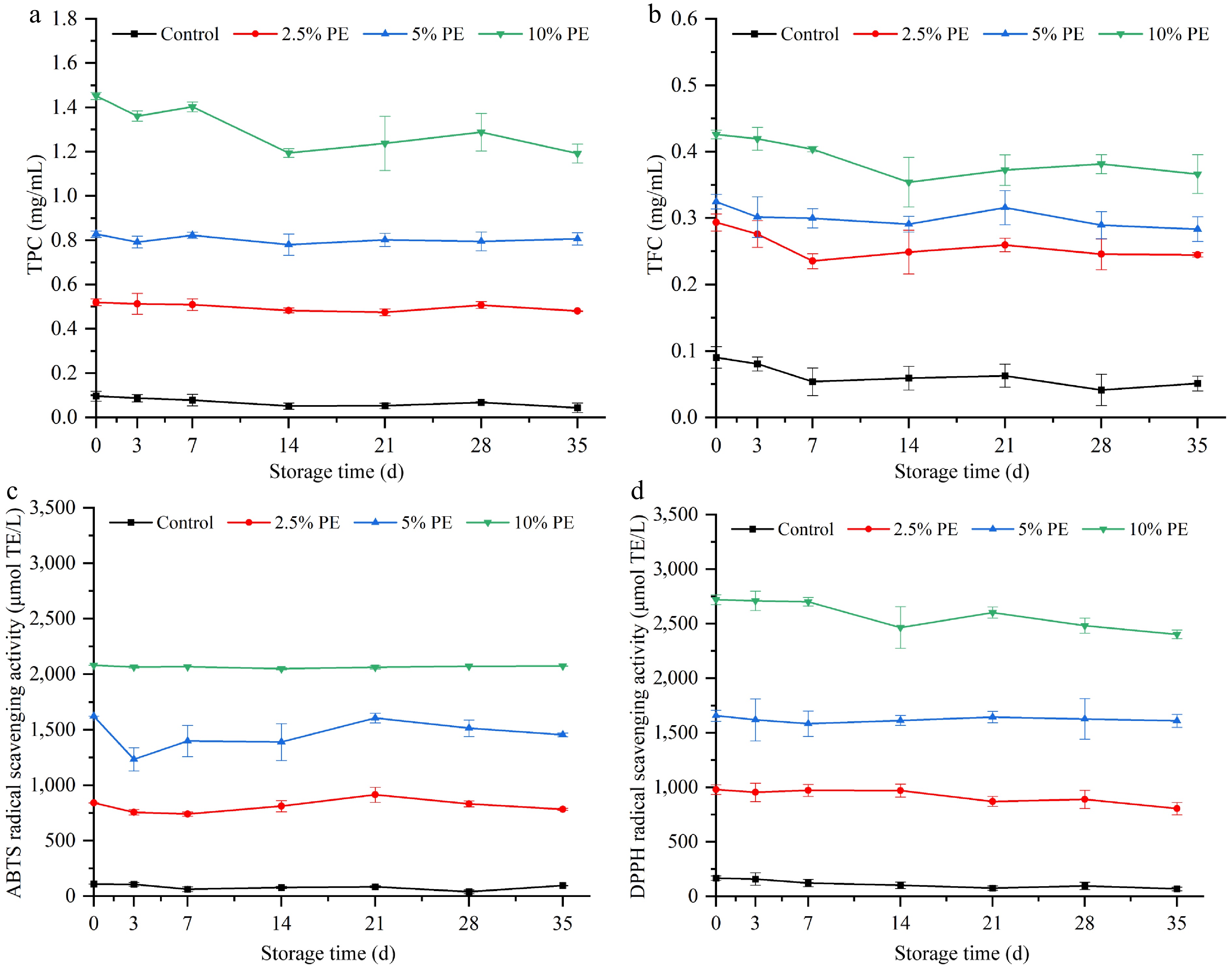
Figure 5.
Changes in (a) total phenolic content (TPC), (b) total flavonoid content (TFC), (c) ABTS, and (d) DPPH radical scavenging activities of apple juice treated with HPP after adding Phyllanthus emblica juice during storage for 35 d at 4 °C. Each experiment in the figure included three replicate groups.
-
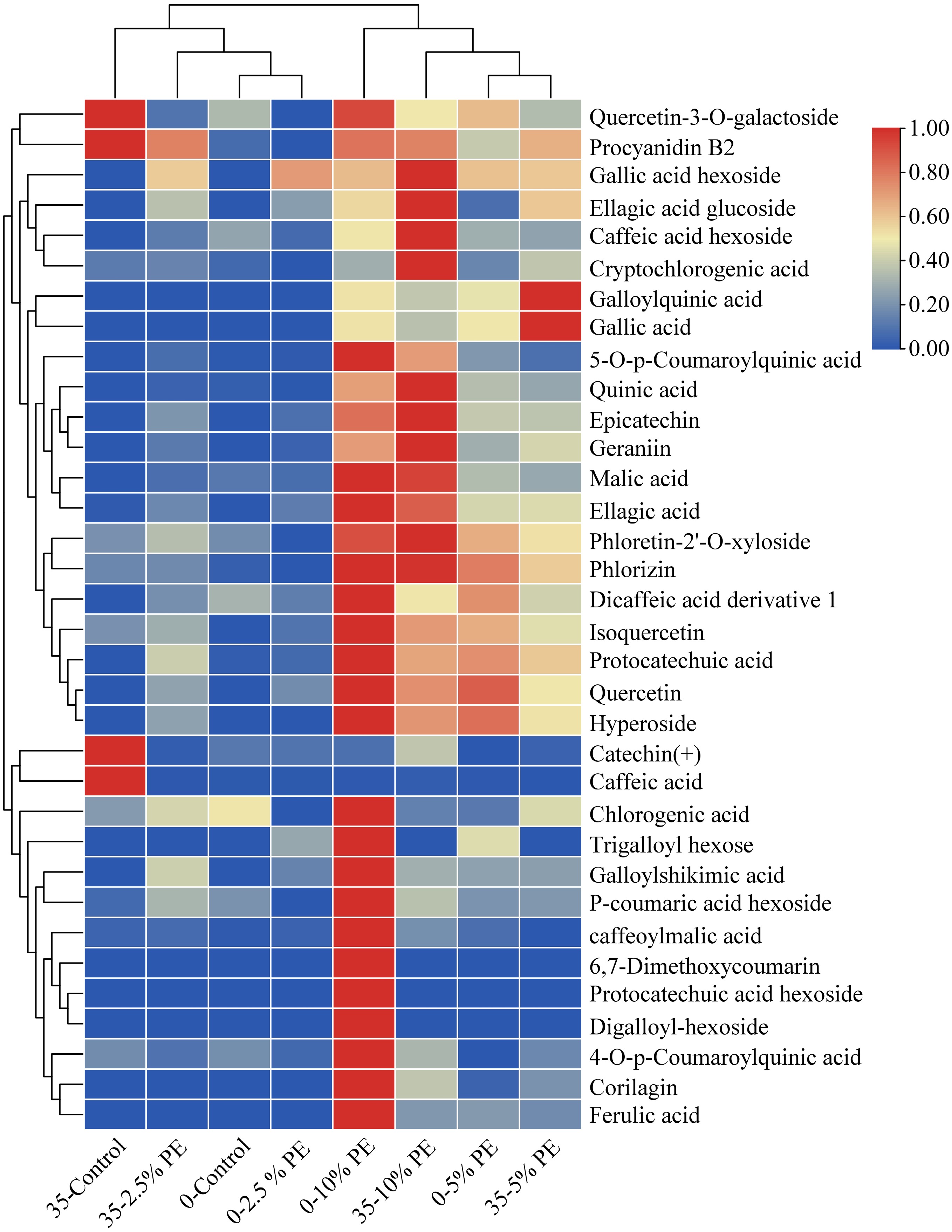
Figure 6.
Heatmap visualization of phenolics at day 0 and day 35 of apple juice treated with HPP after adding Phyllanthus emblica juice during storage for 35 d at 4 °C. The color intensity was based on a normalized scale from the maximum of 1 (red) to the minimum of 0 (blue), which indicated the abundance of the phenolics from high to low. Each experiment in the figure included three replicate groups.
-
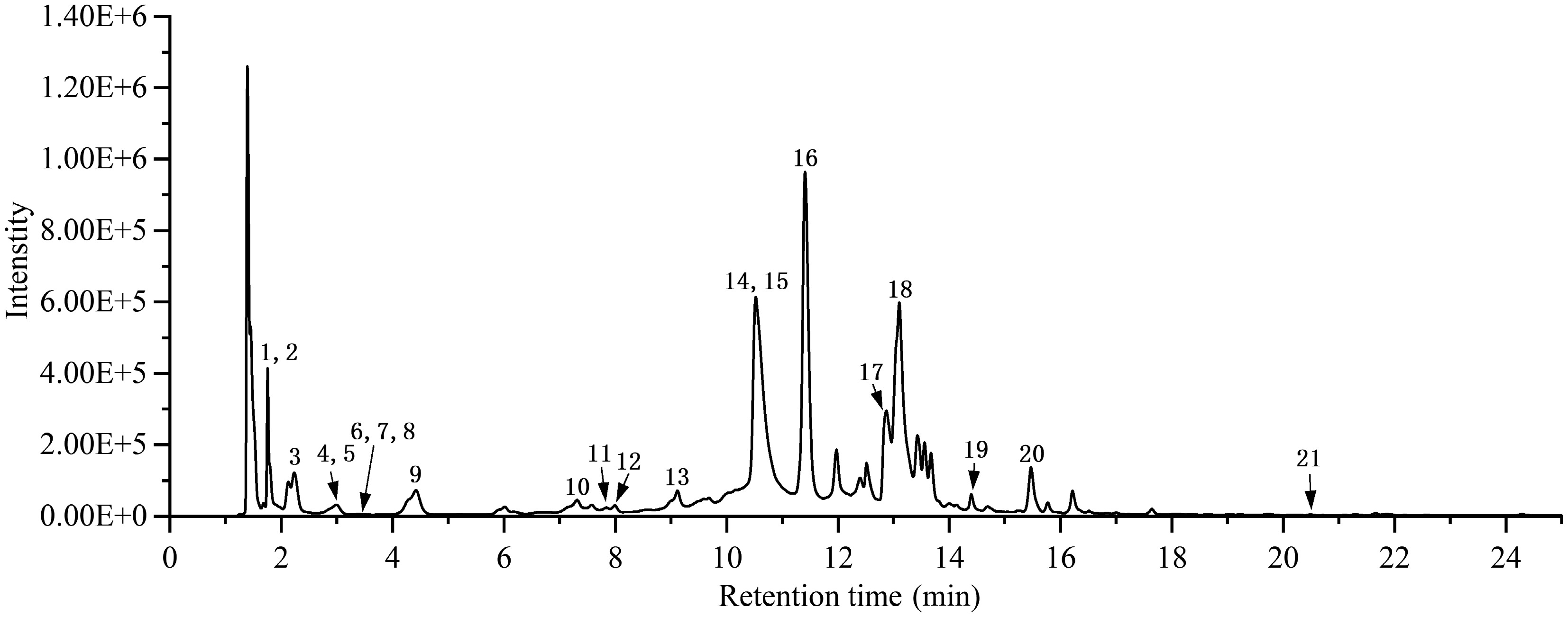
Figure 7.
The negative ion current chromatograms of the Phyllanthus emblica juice after HPP treatment.
-
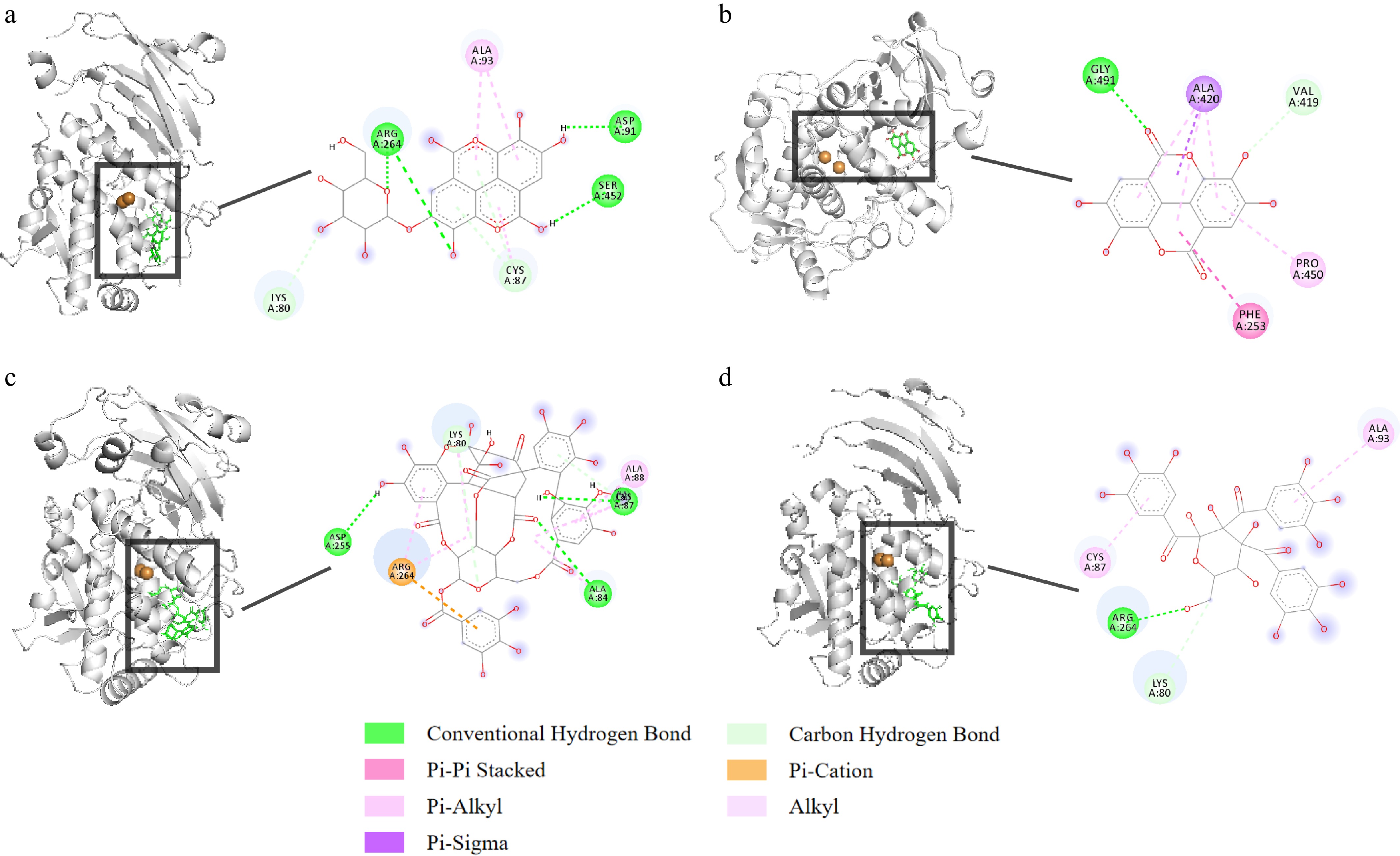
Figure 8.
Molecular docking results of (a) ellagic acid 4-O-β-D-glucoside, (b) ellagic acid, (c) geraniin, and (d) trigalloyl-hexoside with PPO.
Figures
(8)
Tables
(0)