-
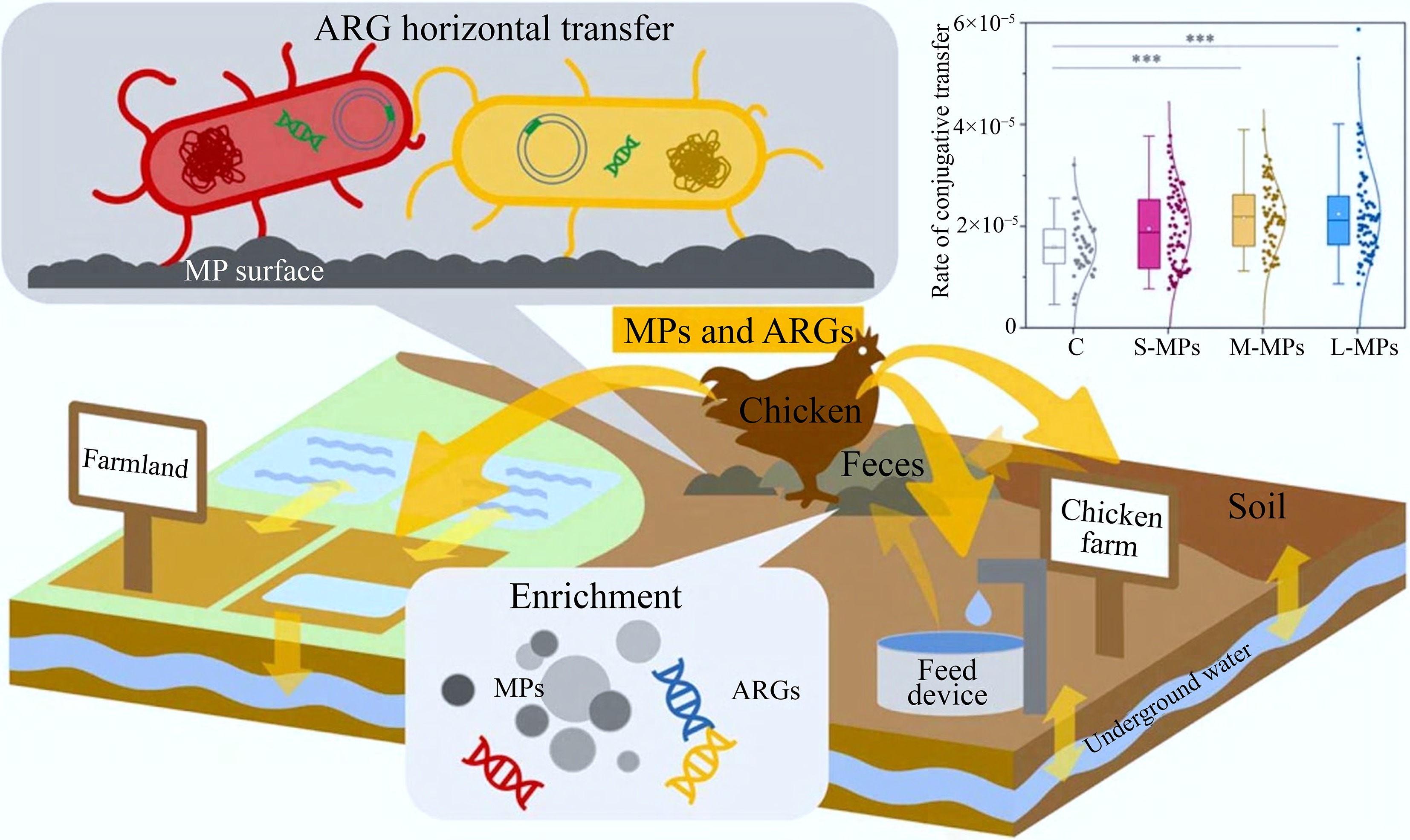
Figure 1.
Microplastics intensify the co-occurrence and horizontal transfer of ARGs; ***, p < 0.001. Reproduced from[65].
-
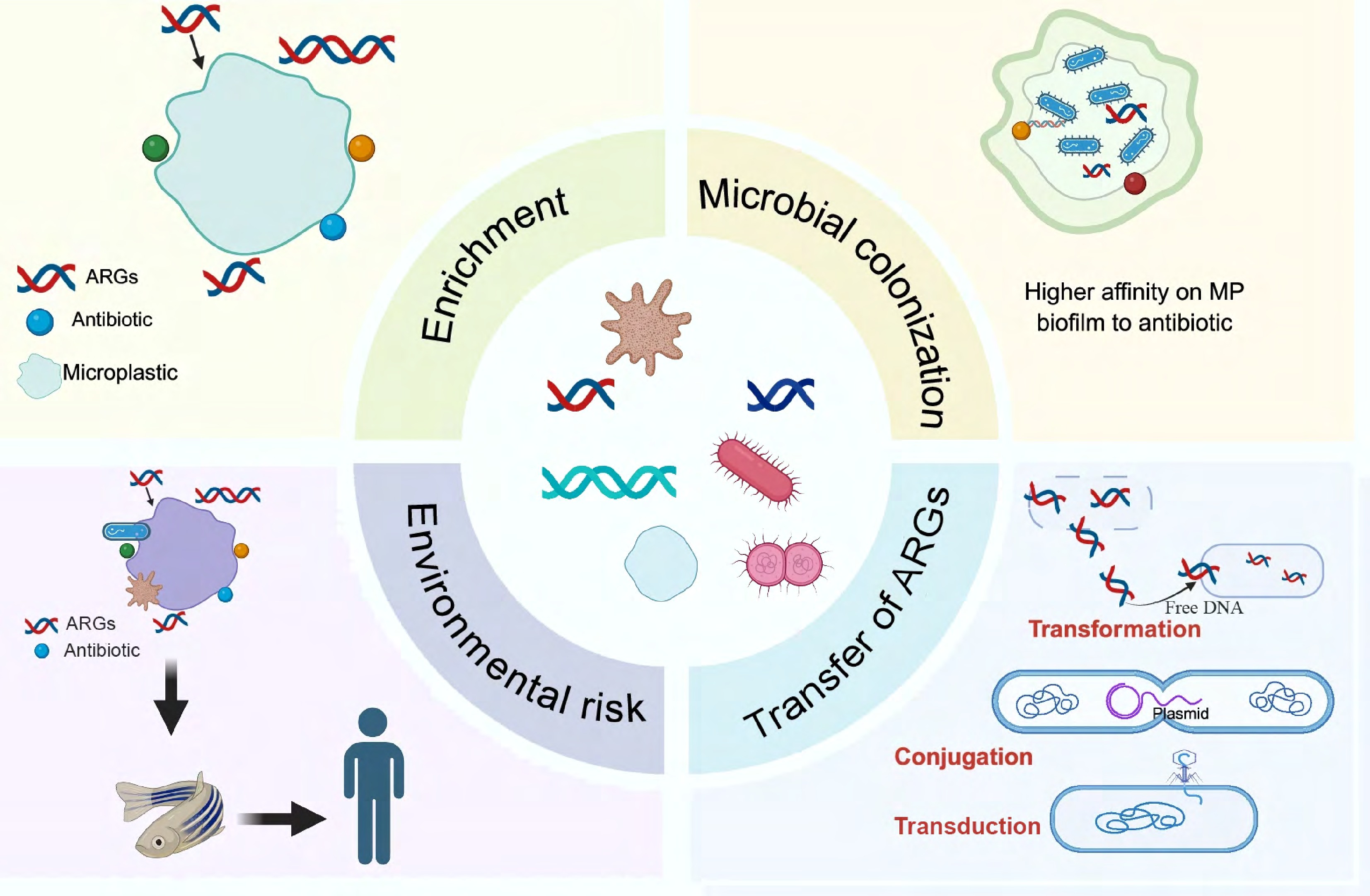
Figure 2.
Colonization of pollutants on the surface of microplastics and transfer in the environment. Reproduced from[19].
-
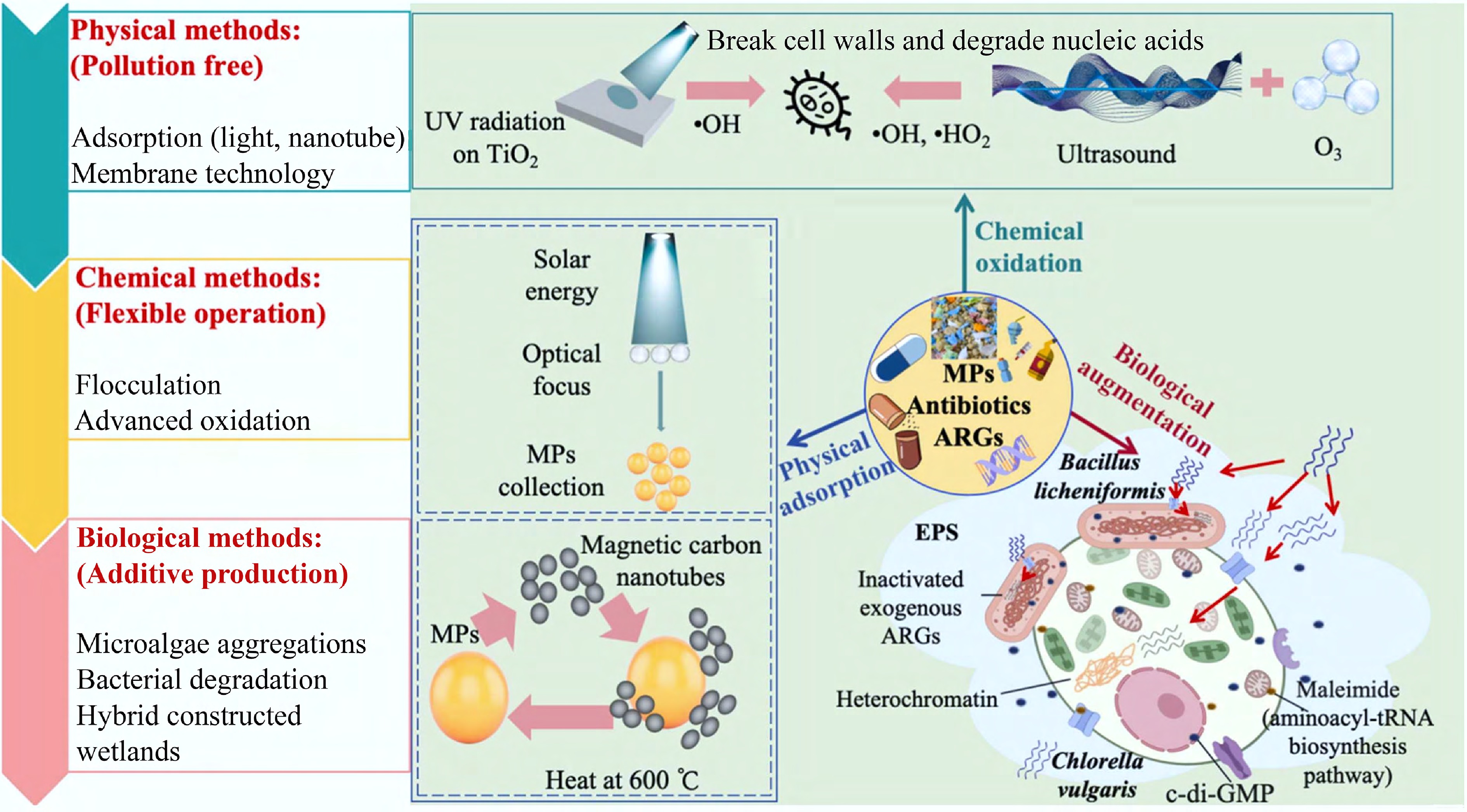
Figure 3.
Illustration and summary of some promising technologies for removing emerging pollutants. Reproduced from[80].
-
Table 1.
Antibiotic residue levels in livestock manure in China and selected developed countries
-
Antibiotic concentration Main mechanism Specific manifestation High concentration Enriches ARG-hosting bacteria, promotes HGT, and indirectly increases the abundance of ARGs. Under high doxycycline stress, the abundance of tetracycline ARG-hosting bacteria increases tetracycline and sulfonamide ARGs and their potential hosts are positively correlated with the final antibiotic concentration[34,35]. MIC Induces the expression of specific ARGs, activates MGEs,
and facilitates HGT of ARGs.Antibiotics at MICs more effectively increase ARGs' abundance than high concentrations[36−38]. sub-MIC Induces the bacterial SOS response (the bacterial DNA
damage repair response), promotes the spread and
expression of ARGs, and affects bacterial growth.Maintains the persistence of drug-resistant bacteria; ARGs can still spread after antibiotic elimination[39,40]. Table 2.
Effects of antibiotic concentrations at different levels on the transmission, abundance, and expression of ARGs
-
Influencing factor Main content Effects of microplastics' intrinsic properties Polymer type Polyamide exhibits the strongest adsorption affinity[53]; polystyrene and polyvinyl chloride adsorb tetracyclines through multiple synergistic interactions[54]; polyethylene and polypropylene, which are common in livestock and poultry manure, show relatively weak adsorption capacity[55]. Surface properties Aging processes significantly enhance the adsorption capacity of tetracyclines onto microplastics, with the adsorption capacity increasing from 0.387–0.507 to 0.538–0.688 mg/g[56]. The adsorption capacity of aged polybutylene succinate increases by 58.7%[57]. Aged polystyrene generates oxygen-containing functional groups, which strengthen hydrogen bonding while weakening π–π interactions, consequently reducing the adsorption coefficient[58]; Particle size The smaller the microplastic particle size, the larger the specific surface area, and the higher the adsorption rate and capacity of antibiotics[59]; the high proportion and strong mobility of small microplastics in livestock and poultry manure amplify the coupled pollution risk of the two pollutants. Effects of environmental conditions pH Neutral conditions are the most favorable for the adsorption of tetracyclines[60], whereas acidic and alkaline environments significantly weaken the adsorption effects[54]. Ionic strength Promotes the adsorption of hydrophobic antibiotics[61]. Organic matter A high concentration of organic matter hinders adsorption and inhibits desorption[62], prolongs the environmental retention time of antibiotics, strengthens their coupled pollution effects, and increases the difficulty of utilizing and managing manure resources. Table 3.
The influence of microplastics in livestock and poultry manure on the adsorption of antibiotics
-
Technology category Maturity for manure treatment Evidence for simultaneous control of the three contaminants Physical treatment Solid–liquid separation High (engineered)[106] Membrane separation Medium–high (full-scale application)[107] Adsorption Medium (pilot-scale)[108] Chemical treatment Fenton oxidation Medium (pilot-scale)[109] Electrochemical oxidation Low (mainly laboratory)[110] Hydrothermal carbonization Medium (pilot-scale)[111] Biological treatment Anaerobic digestion High (engineered)[112] Traditional composting High (engineered)[113] Ultrahigh temperature composting High (full-scale application)[114] Table 4.
Summary of the maturity of various technologies
Figures
(3)
Tables
(4)