









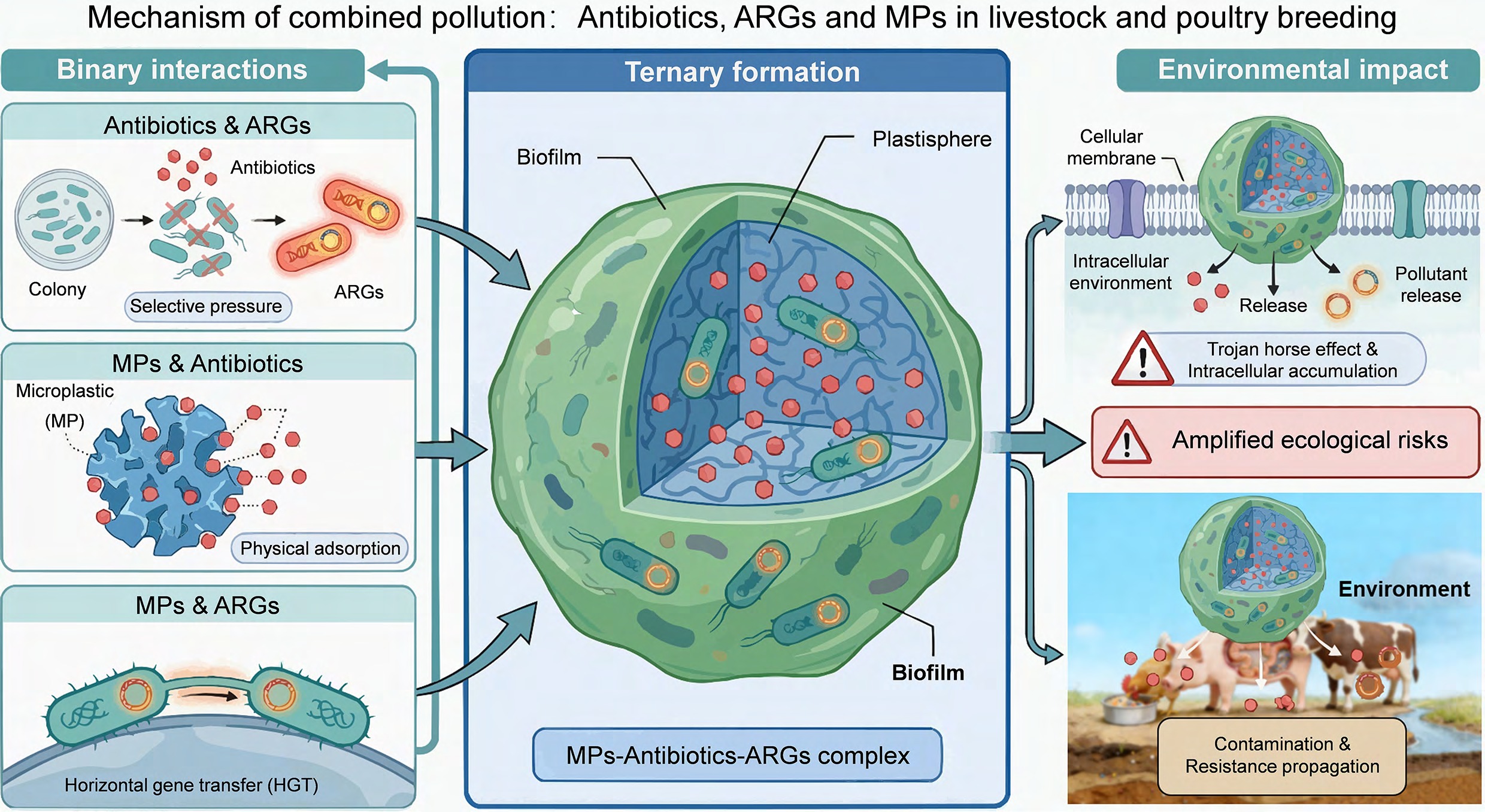


-
Livestock and poultry production constitutes a crucial component of global food security. Over the past few decades, the global demand for meat, eggs, and milk has grown consistently, driving an increase in the total volume of livestock and poultry farming. China is a major livestock and poultry producer in the world[1]. According to data from the National Bureau of Statistics of China (NBSC), the total production of pork, beef, mutton, and poultry meat in China exceeded 100 million tons in 2025. The large-scale confinement of livestock and poultry production has generated ever-increasing volumes of manure, raising serious concerns about environmental pollution[2]. Among these, emerging pollutants, including antibiotics, antibiotic resistance genes (ARGs), and microplastics, show substantial accumulation and release in livestock and poultry production systems and have become an environmental and public health concern. The outline of the 15th Five-Year Plan for National Economic and Social Development of the People's Republic of China explicitly states that coordinated governance of emerging pollutants should be implemented in livestock and poultry production, and a modern environmental governance system should be established[3]. The governance of emerging pollutants has become one of the core tasks of ecological and environmental protection in China.
More than half of the world's antibiotics are used in animal husbandry[4]. Tetracyclines, for instance, are the most used antibacterial medicines because of their low cost and broad-spectrum antibacterial properties. Their use is expected to increase by 9% from 2025 to 2030[5]. However, antibiotics cannot be completely absorbed after entering animals, and 17%–80% of the antibiotics are excreted through the urine and feces[6,7]. Although several countries have banned the use of antibiotic growth promoters in animal farming, antibiotics are still widely used for therapeutic and prophylactic purposes in animal husbandry[8]. Antibiotic residues in manure contaminate soil and water bodies via land application and runoff[9], and ARGs tend to accumulate in the rhizosphere soil and spread to edible plant parts[10]. These antibiotic residuals drive the proliferation and spread of ARGs, while livestock and poultry manure serves as a reservoir and source of ARGs and threatens agricultural ecology and public health[11]. There are two pathways for bacteria to acquire antibiotic resistance, namely producing ARGs through spontaneous gene mutations and obtaining ARGs through horizontal gene transfer (HGT)[12]. Antibiotic classes such as tetracyclines, sulfonamides, and macrolides are frequently detected in livestock and poultry production waste. Intensive production substantially elevates antibiotic residues in animal manure, along with the diversity and abundance of ARGs. Environmental antibiotic-resistant bacteria also act as potential reservoirs of ARGs[13−15].
Microplastics are defined as plastic fragments with a diameter of less than 5 mm[16]. Their sources in livestock and poultry manure mainly include three categories: Waste from production facilities, residues of microplastic carriers in feed additives, and environmental inputs, including atmospheric deposition and soil erosion, which ultimately accumulate in manure[17,18]. Microplastics, characterized by their resistance to degradation, high specific surface area, and strong hydrophobic properties, can infiltrate the environment during the utilization of manure. They not only adsorb organic pollutants such as antibiotics but also provide a substrate for biofilm formation, which facilitates the colonization and gene exchange of antibiotic-resistant bacteria[19].
Numerous studies have investigated the risks of antibiotics, ARGs, and microplastics in various environments, including the oceans, soil, and wastewaters. However, research on their environmental risks in livestock and poultry manure remains limited[20]. Furthermore, antibiotics, ARGs, and microplastics coexist in the livestock and poultry manure. Most existing research primarily focuses on the interactions of single pollutants or pairs of pollutants, with limited attention given to their combined pollution effect. Furthermore, inconsistent conclusions have been drawn regarding whether microplastics significantly aggravate the environmental risks of antibiotics and ARGs, indicating that such combined pollution effects are distinctly medium-dependent and condition-dependent.
This paper systematically reviews the interactions among antibiotics, ARGs, and microplastics in livestock and poultry manure, focusing on the complex mechanisms that transition from binary interaction to potential ternary interactions. Through a comparative analysis of inconsistent outcomes in published studies and an exploration of their contributing factors, key uncertainties and research gaps in current research were identified. This review aims to provide a theoretical foundation for accurately assessing the risks associated with emerging pollutants in livestock and poultry farming, and to inform the development of targeted prevention and control technologies for managing combined pollution in China's livestock and poultry industry.
This narrative review approach is adopted instead of a systematic review or meta-analysis because of the considerable heterogeneity in existing research regarding the ternary coexistence of microplastics, antibiotics, and ARGs in livestock and poultry production environments, characterized by variations in microplastic particle sizes, aging degrees, antibiotic types, manure matrix types, and incubation conditions. Because of the scarcity of quantitative risk data of the complete three-component combined pollution system, a narrative synthesis framework is adopted to qualitatively categorize pollution sources, interfacial adsorption mechanisms, HGT risks, and pollution control technologies.
The literature search was performed in the Web of Science Core Collection database using the search query (microplastic OR microplastics) AND (antibiotic OR veterinary drug) AND (antibiotic resistance gene OR ARG) AND (livestock OR poultry OR manure OR production environment), covering publications from 2010 to 2026. The initial screening, based on titles and abstracts, excluded irrelevant topics, followed by a full-text review of the remaining articles and a backward citation analysis of highly cited representative papers to enhance the review of classic studies.
-
In China's livestock and poultry production industry, antibiotic usage and residues are prevalent. Significant variations exist in antibiotic residues among manure of different livestock and poultry species. The concentrations of antibiotic residues are highest in pig manure, followed by poultry manure and cattle manure. Residue levels are influenced by the patterns of veterinary drug applications across various livestock and poultry species. The extensive application of tetracyclines and sulfonamides in pig and poultry production results in significant associated residues[21]. Tetracyclines are found in relatively high concentrations among these antibiotics[22]. Compared with developed nations like the United States, Canada, Germany, and Australia, reported concentrations in livestock manure from the selected Chinese studies extended to higher upper ranges (Table 1).
Table 1. Antibiotic residue levels in livestock manure in China and selected developed countries
As the primary residual veterinary antibiotics in manure act as a major source of environmental ARG pollution, they exert ongoing selective pressure that fosters the development and accumulation of ARGs within indigenous microbial communities. Two complementary mechanisms create selection pressure: Direct inactivation of susceptible bacteria and adaptive screening under prolonged low-dose exposure to combined antibiotics. Antibiotics selectively impact the microbial community by eliminating or inhibiting antibiotic-sensitive bacteria while largely leaving antibiotic-resistant bacteria possessing the relevant ARGs unaffected. This dynamic allows antibiotic-resistant bacteria to gain a competitive advantage and proliferate substantially, resulting in a significant increase in the abundance of ARGs within the bacterial community, directly promoting the persistence of antibiotic-resistant strains and the establishment of dominant populations. The selective stress effects of various types of antibiotics manifest in distinct ways. For instance, β-lactam antibiotics induce the expression of β-lactamase genes, thereby protecting themselves and adjacent sensitive bacteria, while significantly enhancing the adaptability of plasmids within the population[28]. In addition to antibiotic-specific screening, some studies also indicated that non-corresponding antibiotics could amplify the selective pressure on ARGs[29]. This selective pressure leads to the sustained accumulation of ARGs within the microbial community, which may endure for extended durations even after the withdrawal of the drugs[30]. Furthermore, antibiotic selection pressure can directly induce the transposition, conjugation, and replication of mobile genetic elements (MGEs), facilitating the horizontal spread of ARGs[31]. Gu et al.[32] reported that application of manure to the land increased the abundance of ARGs by 11–36 times in the agricultural soils surrounding livestock farms, with tetracycline resistance genes being the most severe contaminant. This phenomenon demonstrates both the high prevalence and severity of ARG pollution in livestock production environments, and the inherent correlation between ARG contamination and antibiotic residues.
The effects of antibiotics on ARGs are significantly linked to their concentrations, particularly subminimal inhibitory concentrations (sub-MICs), which are prevalent because of the frequent administration of antibiotics at sublethal doses in farm animals, leading to residual low and subinhibitory levels in tissues and gastrointestinal tracts of farm animals. When residual antibiotic concentrations exceed the minimum inhibitory concentration (MIC), selection of resistant bacteria is promoted. Nevertheless, even sub-MICs (e.g., 0.13–0.25 mg/L for tetracyclines) are capable of inducing stress responses, elevating mutation rates, and facilitating plasmid maintenance and HGT[33]. Variations in antibiotic concentrations affecting the transmission, abundance, and expression of ARGs are summarized in Table 2.
Table 2. Effects of antibiotic concentrations at different levels on the transmission, abundance, and expression of ARGs
Antibiotic concentration Main mechanism Specific manifestation High concentration Enriches ARG-hosting bacteria, promotes HGT, and indirectly increases the abundance of ARGs. Under high doxycycline stress, the abundance of tetracycline ARG-hosting bacteria increases tetracycline and sulfonamide ARGs and their potential hosts are positively correlated with the final antibiotic concentration[34,35]. MIC Induces the expression of specific ARGs, activates MGEs,
and facilitates HGT of ARGs.Antibiotics at MICs more effectively increase ARGs' abundance than high concentrations[36−38]. sub-MIC Induces the bacterial SOS response (the bacterial DNA
damage repair response), promotes the spread and
expression of ARGs, and affects bacterial growth.Maintains the persistence of drug-resistant bacteria; ARGs can still spread after antibiotic elimination[39,40]. Manure treatment technologies vary in their effectiveness for removing antibiotics and ARGs, with aerobic composting achieving 64.7% degradation of antibiotics and over 45.1% overall removal efficiency, whereas ARG reduction is influenced by the operational conditions[41]. For anaerobic digestion, the efficiency of ARG removal under thermophilic conditions (45–65 °C) is significantly higher than that under mesophilic conditions (25–40 °C)[42]. The incorporation of 5% biochar facilitates the adsorption of sulfonamides and curtails sul1 genes' proliferation[43]. Nevertheless, certain ARGs are more difficult to eliminate than their corresponding antibiotics; for instance, quinolone resistance genes (qnr) remain abundant even after composting[40,41].
Characteristics and adsorption mechanisms of combined microplastic and antibiotic pollution
-
The presence of microplastics and antibiotics in livestock and poultry manure has increasingly drawn the interest of researchers in agricultural environmental sciences. This co-occurrence of microplastics and antibiotics in livestock and poultry manure not only diminishes the efficiency of manure resource utilization but also poses risks to ecological stability and human health through potential contamination of the food chain; meanwhile, microplastics facilitate antibiotic enrichment and environmental alterations, with their presence varying significantly across manure types, depending on the feeding practices and plastic usage conditions. The essence of microplastic–antibiotic co-pollution extends beyond mere coexistence, as it notably alters the environmental behavior and bioavailability of antibiotics upon their adsorption to microplastics.
Microplastics predominantly infiltrate livestock and poultry manure via feed additives, drinking water systems, and plastic materials in the rearing environment, primarily existing as fragments and fibers made of polyethylene and polypropylene[44]. Variation in microplastics' abundance among different manure types is significant and is largely affected by local feeding practices and plastic usage conditions. Yang et al.[45] investigated the effects of livestock manure application on soil microplastics and reported that the microplastic abundance in pig manure was 1,250 ± 640 particles/kg and that in cattle manure was 1,890 ± 310 particles/kg. In contrast, Wu et al.[44] analyzed microplastics in livestock manure across South China, and found that microplastics' abundance in dairy manure and chicken manure was 740 ± 129 and 667 ± 99 particles/kg, respectively. Wang et al.[46] reported that the coexistence ratio of microplastics and antibiotics in fecal sewage exceeded 71%, demonstrating a significant correlation between their concentrations, with microplastics effectively adsorbing antibiotic molecules through their high specific surface area and hydrophobicity, ultimately forming a stable combined pollutant system that underpins their interactive effects[47].
The surfaces of microplastics often exhibit pore structures and functional groups capable of adsorbing antibiotics[48]. The adsorption of contaminants onto microplastics is mainly involved in hydrophobic interactions, electrostatic interactions, pore-filling, Van der Waals forces, hydrogen bonding, and π–π interactions[49,50]. Hydrophobic interactions are the main driving force for the adsorption of hydrophobic antibiotics[51]. Microplastics containing benzene rings, such as polystyrene, enhance the adsorption of aromatic antibiotics through π–π interactions[52]. Polyamide contains amino and carboxyl groups, enabling it to adsorb antibiotics (e.g., tetracyclines) via hydrogen bonding. By contrast, polystyrene adsorbs aromatic pollutants primarily through π–π interactions[53]. Furthermore, when both antibiotic molecules and the surfaces of microplastics are charged, they form ionic bonds via electrostatic interactions, thereby further enhancing the adsorption capacity.
Adsorption capacity varies according to the type of antibiotics, microplastics, and environmental conditions[53]. As indicated in Table 3, the adsorption performance of antibiotics onto microplastics is jointly governed by multiple factors, including the polymer type, surface properties, particle size, and conditions of the environmental medium. The aging of microplastics, the formation of biofilms, and the competitive adsorption of dissolved organic matter can alter the intensity of the interactions, leading to distinct scenario-dependent adsorption results in laboratory settings that are not easily applicable to complex natural environments. Future studies should focus on establishing ecological simulation systems (e.g., microcosm setups), developing in situ characterization techniques, and integrating machine learning approaches to predict multifactor interactive effects.
Table 3. The influence of microplastics in livestock and poultry manure on the adsorption of antibiotics
Influencing factor Main content Effects of microplastics' intrinsic properties Polymer type Polyamide exhibits the strongest adsorption affinity[53]; polystyrene and polyvinyl chloride adsorb tetracyclines through multiple synergistic interactions[54]; polyethylene and polypropylene, which are common in livestock and poultry manure, show relatively weak adsorption capacity[55]. Surface properties Aging processes significantly enhance the adsorption capacity of tetracyclines onto microplastics, with the adsorption capacity increasing from 0.387–0.507 to 0.538–0.688 mg/g[56]. The adsorption capacity of aged polybutylene succinate increases by 58.7%[57]. Aged polystyrene generates oxygen-containing functional groups, which strengthen hydrogen bonding while weakening π–π interactions, consequently reducing the adsorption coefficient[58]; Particle size The smaller the microplastic particle size, the larger the specific surface area, and the higher the adsorption rate and capacity of antibiotics[59]; the high proportion and strong mobility of small microplastics in livestock and poultry manure amplify the coupled pollution risk of the two pollutants. Effects of environmental conditions pH Neutral conditions are the most favorable for the adsorption of tetracyclines[60], whereas acidic and alkaline environments significantly weaken the adsorption effects[54]. Ionic strength Promotes the adsorption of hydrophobic antibiotics[61]. Organic matter A high concentration of organic matter hinders adsorption and inhibits desorption[62], prolongs the environmental retention time of antibiotics, strengthens their coupled pollution effects, and increases the difficulty of utilizing and managing manure resources. Exacerbation of environmental risks by microplastics and ARGs
-
Microplastics and ARGs often coexist in livestock manure and the surrounding agricultural environments. However, their coexistence does not necessarily amplify environmental risks, as their collective impacts are affected by several factors, including the type of microplastic, the degree of aging, particle size, and the presence of other pollutants[63]. Microplastics act as substrates for microbial colonization, facilitating the attachment of microorganisms and the secretion of extracellular polymers that promote biofilms' development and maturation[63]. The formation of a plastisphere on the surface increases the bioavailability of microplastics and their pollutant affinity, while simultaneously fostering conditions that promote the proliferation of pathogens, ARGs, microbial interactions, and HGT[19,64]. This microenvironment efficiently enriches various pathogenic bacteria and ARGs, laying the foundation for their coupling effects. In agricultural environments, the coexistence of microplastics and ARGs often significantly exacerbates the environmental dissemination and diffusion rate of ARGs (Fig. 1). Microplastics have emerged as a notable persistent source of ARGs in livestock and poultry farms, and their abundance is significantly higher than that in the surrounding soil environment. For instance, the abundance of polyvinyl chloride microplastics in chicken manure reaches up to 14.9 particles/g, with the copy number of enriched ARGs reaching 6.24 × 10⁸ copies/g. ARG abundance shows a significant positive correlation with microplastic content. Microplastics also increase the frequency of bacterial conjugative transfer by 1.4–1.7 times[65]. Among the various microplastics, the biodegradable and aged ones exert a more significant impact on ARG abundance and present a higher ecological risk because of their modified surface properties[66].
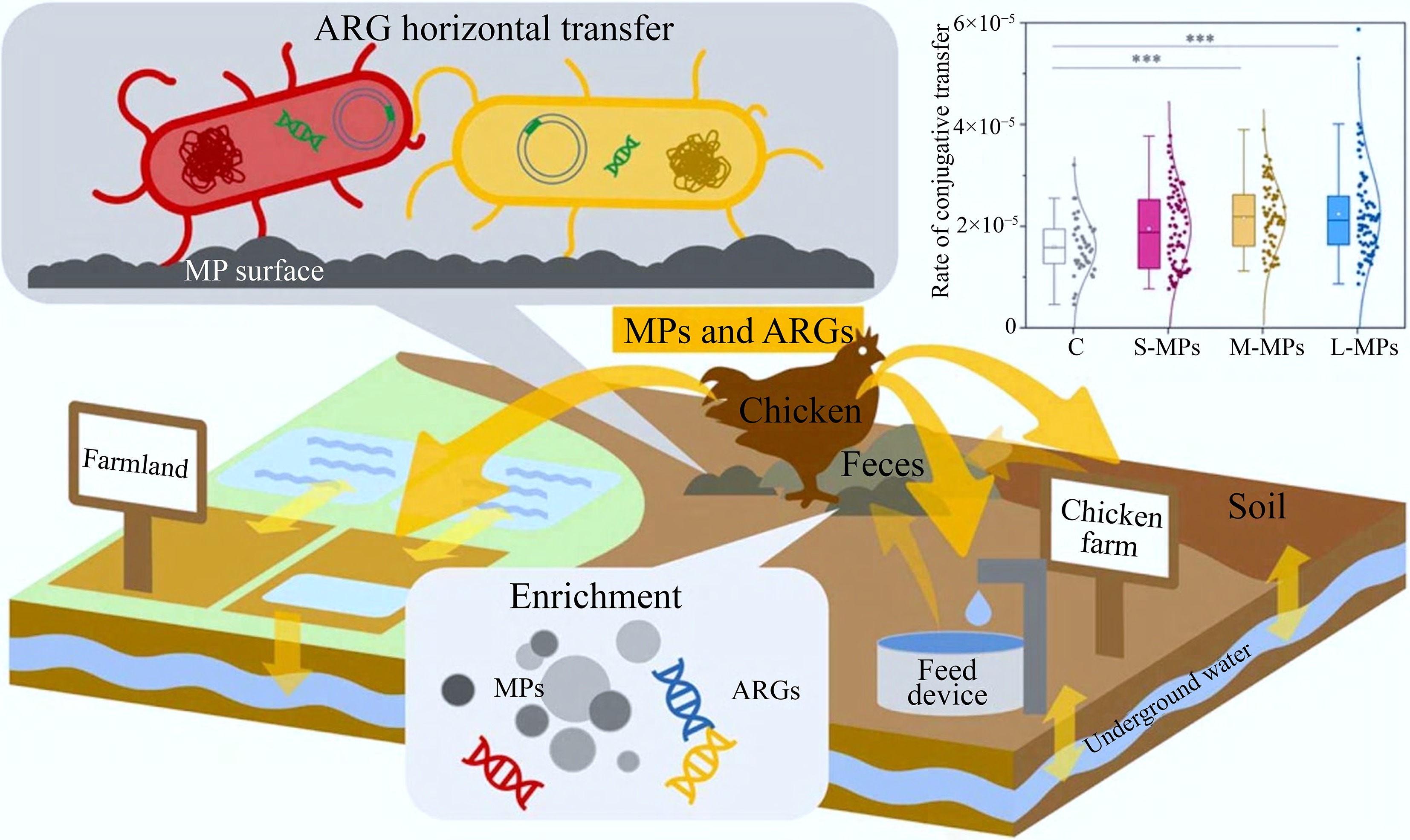
Figure 1.
Microplastics intensify the co-occurrence and horizontal transfer of ARGs; ***, p < 0.001. Reproduced from[65].
Microplastics not only negatively affect microbial communities but also serve as vehicles for MGEs, offering stable storage and protection for ARGs, thus facilitating their enduring presence in the environment and increasing the risk of HGT[67]. The adsorption of antibiotics and extracellular ARGs onto microplastics' surfaces creates localized hotspots with high contaminant concentrations and microbial densities, thereby facilitating close cell-to-cell contact and enhancing HGT. Closely aggregated bacteria in biofilms reduce cells' distance from each other, facilitating the synchronous transfer of pathogenic genes and ARGs[68]. Serving as ideal interfaces, biofilms harbor ARGs on microplastics at abundances seven times higher than those in the surrounding environments. Polyethylene biofilms increase the frequency of ARG conjugation by 19.6 times[69]. This enhancement is primarily due to the extracellular polymeric substances of biofilms, which sequester antibiotics and ARGs, provide a protective habitat for bacterial communities, and promote the long-term survival of ARGs by protecting microbes from environmental stresses. In addition to biofilm mediation, microplastics directly affect bacterial cell membranes or indirectly affect them by inducing oxidative stress in bacteria. These two effects jointly lead to the formation of cell membrane pores and an increase in membrane permeability, thereby reducing the resistance of plasmids entering bacterial cells, enhancing the efficiency of HGT and facilitating the dissemination of ARGs. Furthermore, smaller particle sizes correspond to higher ARG transfer efficiency[70]. Microplastics 2 μm in size consistently increase the efficiency of HGT, whereas 20-μm microplastics inhibit their processes across all tested concentrations. In addition, nanoplastics enhance the efficienty of HGT at 0.5 mg/L but suppress it at elevated concentrations[71].
The combined effects of microplastics and ARGs have received considerable attention, but discrepancies persist. Most studies indicate that microplastics amplify environmental risks by enriching potential host bacteria for ARGs. For instance, traditional microplastics increased the relative abundance of risky ARGs by 20%–37%, whereas degradable microplastics increased it by 51%–85%[72]. Composting can partially reduce ARGs via microbial degradation and environmental stress. Nevertheless, the presence of microplastics complicates this process. Studies have demonstrated that microplastics disrupt carbon and nitrogen cycling, alter the microbial community structure, and affect compost's maturity. Meanwhile, acting as carriers for ARGs and other pollutants, microplastics may facilitate the dissemination of ARGs[73]. Though some research has indicated that microplastics do not elevate the total abundance of ARGs in compost, they may indirectly reduce the risk by raising compost temperatures and promoting decomposition[74]; nevertheless, the prevailing consensus among studies is that the main concern posed by microplastics is their ability to enhance the HGT of ARGs rather than simply increasing their abundance.
The discrepancies among different studies can be attributed to factors such as the type of microplastic, aging, particle size, environmental conditions, and treatment systems, suggesting that a comprehensive evaluation should encompass host enrichment, transmission pathways, and risks of HGT rather than relying on discrepancies in abundance alone. Future research should enhance the integration of long-term monitoring and multifactor comparisons in real livestock production systems to clarify the boundary conditions of risk-amplification mechanisms.
-
Biofilms attached to microplastic surfaces can provide adsorption sites for antibiotic molecules and create local microenvironments for bacterial colonization and gene exchange, thus increasing the potential for the enrichment and dissemination of ARGs[64]. Some antibiotics in livestock manure can be adsorbed onto microplastics' surfaces via hydrophobic interactions, electrostatic interactions, and hydrogen bonding. In particular, their adsorption capacity may be further improved with elevated levels of oxygen-containing functional groups on microplastics after aging. Previous studies indicated that the enhancement of specific surface area and oxygen-containing functional groups in aged microplastics led to a 3.9–48.5-fold increase in the adsorption capacity of ciprofloxacin and a 5.2–8.3-fold rise in the abundance of ARGs[75−77]. As abiotic stressors, microplastics alter the interactions among microorganisms[78]. Antibiotics remaining in livestock and poultry manure exert extensive selective pressure on the original microbial community, thereby strengthening the formation basis of the ternary complex. Studies have demonstrated that the adsorption of antibiotics by microplastics affects their migration in the environment and bioavailability. For instance, microplastics adsorbed with antibiotics act as vectors for HGT, promoting the spread of ARGs[79]. Concurrently, antibiotic-resistant bacteria carrying ARGs, with their inherent survival advantages or specific surface adhesion factors, are more likely to successfully colonize and form biofilms on the surface of this complex. This not only provides numerous attachment sites for antibiotic-resistant bacteria and ARGs but also increases antibiotic concentrations, thereby intensifying the selection pressure by ARGs. Ultimately, a stable microplastic–antibiotic–ARG ternary complex is formed[80,81]. Tian et al.[56] reported that during the adsorption of tetracyclines onto microplastics, biofilm formation significantly promoted the proliferation of seven ARGs, namely tetA, tetB, tetC, tetD, tetE, tetG, and tetK.
Synergistic risks of microplastics, antibiotics, and ARGs
-
Microplastics exhibit a high affinity for organic pollutants, and their migration in manure and the surrounding environment involves the adsorption and desorption of toxic pollutants. This phenomenon is known as the Trojan horse effect[82]. After the formation of the ternary complex, its environmental risks continue to increase because of the synergistic effects of the Trojan horse effect and HGT mediated by biofilms. Antibiotics and antibiotic-resistant bacteria become concentrated within the micrometer-scale spaces on the surfaces of microplastics, intensifying the selection pressure of antibiotics and continuously influencing the microbial community within the biofilm, which leads to strong screening and enrichment of ARGs. In environments with low antibiotic concentrations, the localized high concentration of antibiotics adsorbed onto microplastics promotes the continuous selection and enrichment of bacteria harboring ARGs[83], thereby amplifying the risk associated with coupled pollution (Fig. 2). These enriched pollutants re-enter the external environment (e.g., soil, water bodies, and agricultural systems), promoting the transfer of ARGs among environmental microbes and potentially entering the food chain through crops, which poses ongoing ecological and health risks beyond the initial exposure.
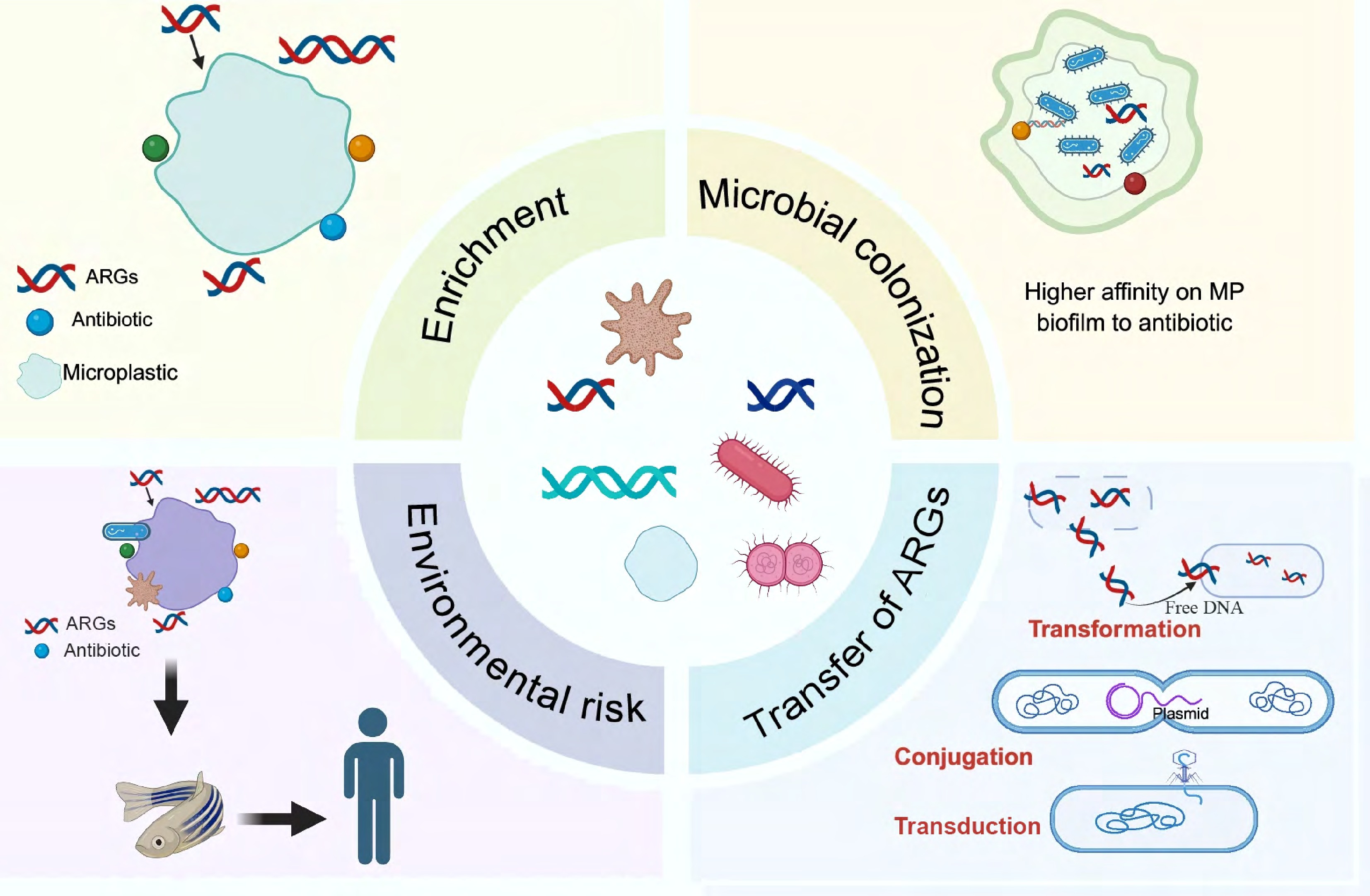
Figure 2.
Colonization of pollutants on the surface of microplastics and transfer in the environment. Reproduced from[19].
This microplastic–antibiotic–ARGs ternary complex exhibits stronger resistance to environmental attenuation processes such as antibiotic degradation and biological competition. Microbial biofilms on microplastics provide physical support and a stable living environment for microorganisms, protecting them from external disturbances, promoting bacterial proliferation and colonization, and further driving the spread of contamination[84]. In river ecosystems, the presence of ciprofloxacin exerts selective pressure on microplastic biofilms, influencing the accumulation of ARGs and the composition of microbial communities[64]. In livestock and poultry waste, microplastics act as carriers, enabling the transport of pollutants over long distances when they are combined with manure, dispersing through agricultural environments via soil, water bodies, and other pathways, extending the reach of pollution impacts.
Despite the well-established logical framework describing the ternary composite pollution system of microplastics–antibiotics–ARGs, direct quantitative experimental evidence verifying that the risk of ternary co-contamination exceeds the superimposed risks of single or binary pollutants remains scarce. Most existing laboratory and field studies have separately investigated the environmental behaviors and hazards of individual pollutants or binary combinations (antibiotics–ARGs, microplastics–antibiotics), but controlled comparative trials simultaneously covering single, dual, and ternary pollution treatments are relatively limited. This deficiency represents a general research bottleneck in the current agricultural environmental field, and future targeted comparative microcosm experiments are urgently required to quantitatively distinguish additive, synergistic, and antagonistic effects under ternary combined pollution.
-
Physical treatment technologies primarily remove the pollutants in livestock and poultry manure through processes such as interception, sedimentation, filtration, and adsorption. Given the three-element composite pollution mechanism, pretreatment technologies such as solid–liquid separation directly remove large-particle microplastics through size exclusion. Simultaneously, the separation of microplastics, which may have adsorbed antibiotics and formed biofilms, leads to the removal of both the antibiotics and the associated ARGs[73]. The solid–liquid phase distribution differences of different antibiotics directly affect the separation efficiency. For instance, tetracyclines tend to be enriched in the solid phase[85], whereas β-lactams remain in the liquid phase[86].
Membrane separation technologies, including ultrafiltration and nanofiltration, effectively retain pollutants, whereas reverse osmosis and membrane bioreactors exhibit high removal efficiencies[87]. For instance, in the treatment of manure using two-stage reverse osmosis, the process relies on the physical retention of insoluble particulates and ions, and the total abundance of ARGs decreases by 99.79%[88]. However, challenges such as membrane fouling and insufficient removal of submicron plastics remain[89]. Adsorption and interception technologies use porous materials, such as activated carbon and biochar, to adsorb microplastics and antibiotics. Biochar also indirectly inhibits the spread of ARGs by regulating microbial communities[90]. Additionally, mineral materials like quartz particles promote the degradation of antibiotics[91]. The maturity of physical treatment technology is relatively high. Solid–liquid separation and membrane separation have been widely applied in engineering, but it is difficult for a single physical treatment to achieve the simultaneous and efficient removal of all three pollutants.
Chemical treatment
-
Among chemical treatment technologies, advanced oxidation processes show significant potential. Advanced oxidation processes attack pollutant molecules by generating highly oxidative free radicals. Fenton and Fenton-like processes can effectively degrade antibiotics and inactivate extracellular ARGs. The mechanism depends on how free radicals can directly damage the molecular structure of antibiotics and simultaneously oxidize and break exposed DNA strands. However, this type of technology has a relatively low removal efficiency for microplastics themselves and may break large-sized plastics into secondary microplastics[92,93]. Electrochemical oxidation is clean and efficient[94], and the electro-Fenton process has been applied in preliminarily trials[95]. Chemical flocculation achieves partial cosedimentation of microplastics and ARGs, but shows limited effects on antibiotic removal and creates the risk of metal residues[96]. Hydrothermal carbonization at 200–300 °C significantly reduces the abundance of antibiotics and ARGs[97]. Laboratory research on chemical treatment technologies is relatively extensive, but the engineering application of these technologies is still limited, and there are obvious shortcomings in the treatments' effects on microplastics.
Biological treatment
-
Biological treatment technologies show great potential in treating livestock and poultry manure by regulating microbial communities and inhibiting the HGT of ARGs. Anaerobic digestion breaks down large-molecule organic substances into small-molecule ones through the succession of microbial communities and extracellular enzymes secreted during hydrolysis, which are then absorbed and utilized by microorganisms, thereby reducing the abundance of ARGs and the activity of MGEs[98]. However, the presence of microplastics can promote the transfer and enrichment of ARGs[99]. This shows the Trojan horse effect of microplastics discussed above. Aerobic biofilm systems degrade pollutants through co-metabolism[100], whereas the microalgae–bacterial symbiotic system exhibits high purification efficiency[101]. The combination of anaerobic digestion and aerobic treatment exerts a synergistic effect on the removal of combined pollutants.
Traditional composting shows limited capacity to remove microplastics and ARGs[102]. The high-temperature period represents a critical phase for antibiotic degradation and ARG removal during composting[103], and it accelerates the aging of microplastics and enhances their biodegradability[73]. However, the composting process may also accelerate the aging and fragmentation of microplastics and the release of dissolved organic matter through physical, biological, and chemical mechanisms, thereby promoting the spread of ARGs[73]. The presence of microplastics in the composting system can lead to increases of 262.3% in the abundance of ARGs and if 747.0% in that of intI1[104]. The abundance of ARGs in the plastisphere can even reach 32 times that of compost samples[104]. The removal efficiency of ARGs and MGEs in chicken manure achieved by ultrahigh-temperature composting technology, when covered with a semipermeable membrane, reached 92% and 93%, respectively, significantly surpassing that of traditional composting[105]. The maturity of biological treatment technology is relatively high. Composting and anaerobic digestion have been widely used in engineering, but the presence of microplastics poses a challenge to the treatment effect.
Existing studies have systematically summarized the principles, operating conditions, removal efficiencies, advantages, and disadvantages of various removal technologies for the three pollutants in the aquaculture environment and clarified the strengths and drawbacks of physical methods (microbubbles, adsorption filtration, etc.), chemical methods (coagulation–flocculation, advanced oxidation, etc.), and biological methods (microalgae, bacteria, etc.)[80]. Table 4 summarizes the maturity levels of various technologies. However, existing single treatment technologies exhibit limitations, mostly remaining at the laboratory scale, with a shortage of scalable practical technologies, low-cost, and free of secondary pollution. The combined application of physical, chemical, and biological technologies represents a key direction for the synchronous and efficient removal of microplastics, antibiotics and ARGs from livestock and poultry manure (Fig. 3).
Table 4. Summary of the maturity of various technologies
Technology category Maturity for manure treatment Evidence for simultaneous control of the three contaminants Physical treatment Solid–liquid separation High (engineered)[106] Membrane separation Medium–high (full-scale application)[107] Adsorption Medium (pilot-scale)[108] Chemical treatment Fenton oxidation Medium (pilot-scale)[109] Electrochemical oxidation Low (mainly laboratory)[110] Hydrothermal carbonization Medium (pilot-scale)[111] Biological treatment Anaerobic digestion High (engineered)[112] Traditional composting High (engineered)[113] Ultrahigh temperature composting High (full-scale application)[114] 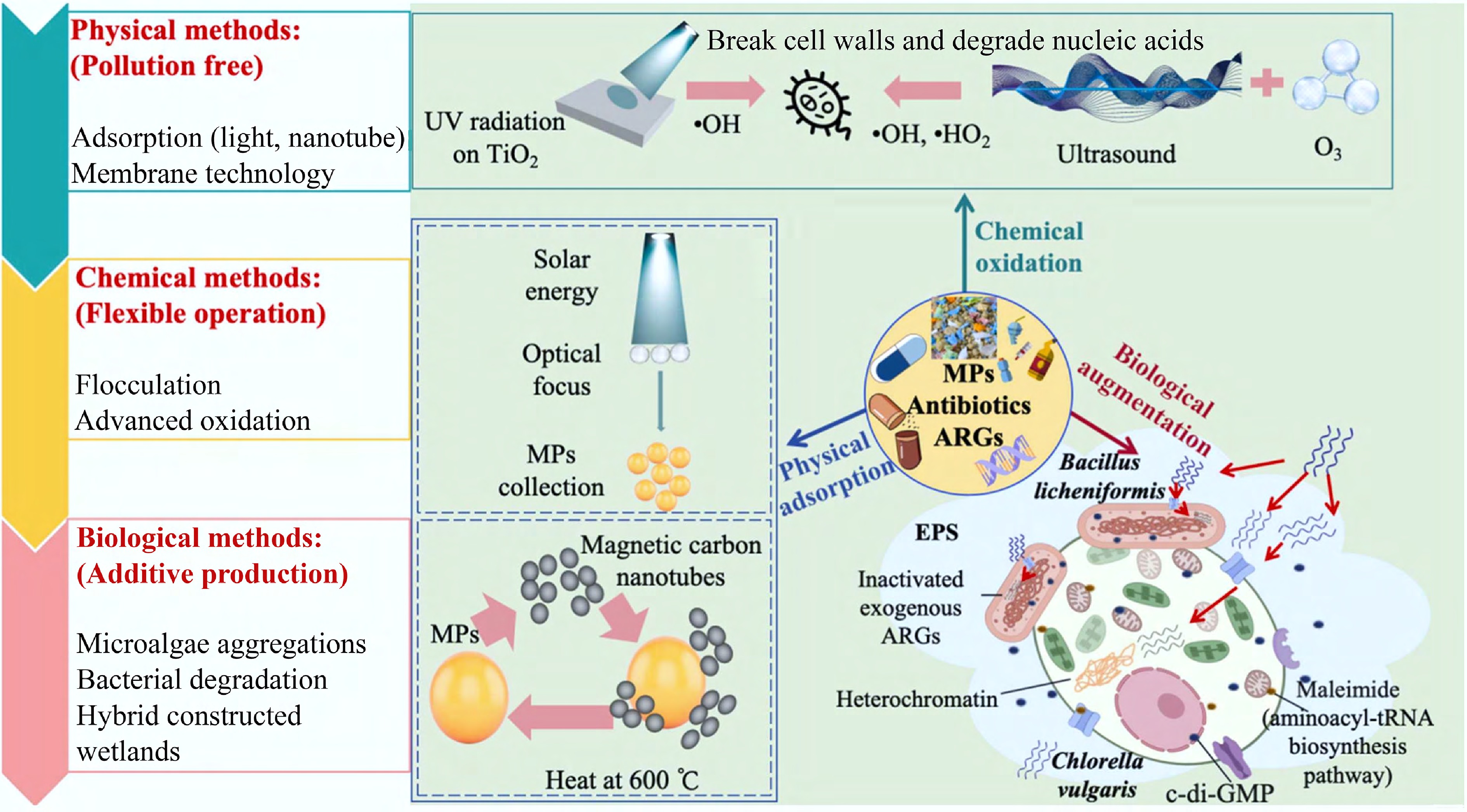
Figure 3.
Illustration and summary of some promising technologies for removing emerging pollutants. Reproduced from[80].
-
The presence of antibiotics, ARGs, and microplastics in livestock and poultry manure creates a complex pollution system defined by both binary interactions and potential ternary interactions, which may amplify environmental risks relative to individual pollutants, although direct quantitative evidence for true synergism remains limited. At the binary interaction level, antibiotics regulate the generation, enrichment, and propagation of ARGs through selective pressure and concentration-dependent effects. Microplastics efficiently adsorb antibiotics and prolong their environmental retention time through their inherent characteristics and the influence of environmental conditions. Concurrently, microplastics significantly promote the horizontal transfer of ARGs by forming biofilms and disrupting bacterial cell membranes. At the potential ternary interactions level, microplastics serve as the core carrier, physically enriching antibiotics and ARGs to create a stable complex. Through the Trojan horse effect and biofilm-mediated HGT, this system facilitates the accumulation and diffusion of pollution risks. Furthermore, this complex exhibits strong resistance to environmental degradation and has the capacity to migrate across media, expanding the pollution range. The existing physical, chemical, and biological treatment technologies each exhibit limitations. Physical technologies are influenced by the size and shape of pollutants, whereas chemical technologies create the risk of secondary pollution and have unclear mechanisms. Furthermore, the removal efficiency of biological technologies is limited when addressing combined pollution.
Future studies should focus on dynamic changes in the coexistence of the three components within real livestock farming scenarios. Using multiscale analysis, multiomics approaches, and long-term monitoring, future research should deeply elucidate the regulatory mechanisms by which diverse environmental factors influence combined pollution's behavior. Meanwhile, it is essential to strengthen research on the co-evolutionary relationships among ARGs, MGEs, and host bacteria to reveal the key driving processes underlying their coupled dissemination. With the severe pollution issues associated with livestock farming, the environmental fate, transmission patterns, and mechanisms of the evolution of risk of combined microplastic–antibiotic–ARG pollution will become important research priorities in the fields of agricultural environmental science and ecological security in the future.
-
Not applicable.
The authors greatly appreciate the suggestions from the reviewers and editors. We are deeply grateful to Shunli Wang and Hong Li for devoting substantial time to reviewing the entire manuscript, correcting grammatical errors, optimizing sentence structures, and polishing the English writing to enhance the readability and fluency of this paper.
-
The authors confirm their contributions to the paper as follows: Yuwei Fu: literature collection, data collation, and writing of the original draft; Zhiping Zhu: research guidance, manuscript revision, and overall supervision; Wenzan Wang, Mingzhen Zhang: academic discussions and content improvement. All authors reviewed the results and approved the final version of the manuscript.
-
Data sharing is not applicable to this article as no datasets were generated or analyzed during the current study.
-
The authors declare that they have no known competing financial interests or personal relationships that could have appeared to influence the work reported in this paper.
-
Full list of author information is available at the end of the article.
- Copyright: © 2026 by the author(s). Published by Maximum Academic Press, Fayetteville, GA. This article is an open access article distributed under Creative Commons Attribution License (CC BY 4.0), visit https://creativecommons.org/licenses/by/4.0/.
-
About this article
Cite this article
Fu Y, Zhu Z, Wang W, Zhang M. 2026. Combined pollution and transmission mechanism of microplastics–antibiotics–antibiotic resistance genes in the livestock and poultry production environment. Agricultural Ecology and Environment 2: e023 doi: 10.48130/aee-0026-0021 

Combined pollution and transmission mechanism of microplastics–antibiotics–antibiotic resistance genes in the livestock and poultry production environment
- Received: 01 April 2026
- Revised: 15 July 2026
- Accepted: 12 August 2026
- Published online: 02 September 2026
Abstract: Large-scale livestock and poultry production causes widespread environmental pollution from typical emerging contaminants, including antibiotics, antibiotic resistance genes (ARGs), and microplastics, which impose threats to human and environmental health. Prevalent antibiotic use and microplastic input in livestock production systems result in the co-occurrence of these three pollutants in livestock and poultry manure. However, existing studies primarily focus on single or dual pollutants, lacking systematic insight into their synergistic mechanisms and comprehensive environmental risks. This paper systematically reviews the binary coupling interaction mechanisms of the three pollutants, including the selective pressure and dose-dependent regulation of ARGs by antibiotics, the adsorption characteristics and influencing factors of microplastics toward antibiotics, and the coexistence features of microplastics and ARGs as well as their horizontal gene transfer-promoting mechanisms. This review also elaborates on the potential ternary interactions pollution mechanism of the "microplastic–antibiotic–ARGs" complex, where microplastics act as carriers to enrich pollutants and amplify environmental risks via the Trojan horse effect and biofilm mediation. This study also analyzes the deficiencies of single physical, chemical, and biological treatment technologies for the pollutants, and clarifies that integrated technologies will be the core direction of future pollution control. This critical review lays a theoretical foundation for comprehensive risk assessment and targeted prevention and control of emerging pollutants in livestock production, and provides support for the coordinated pollution management of China's livestock and poultry industry.