-
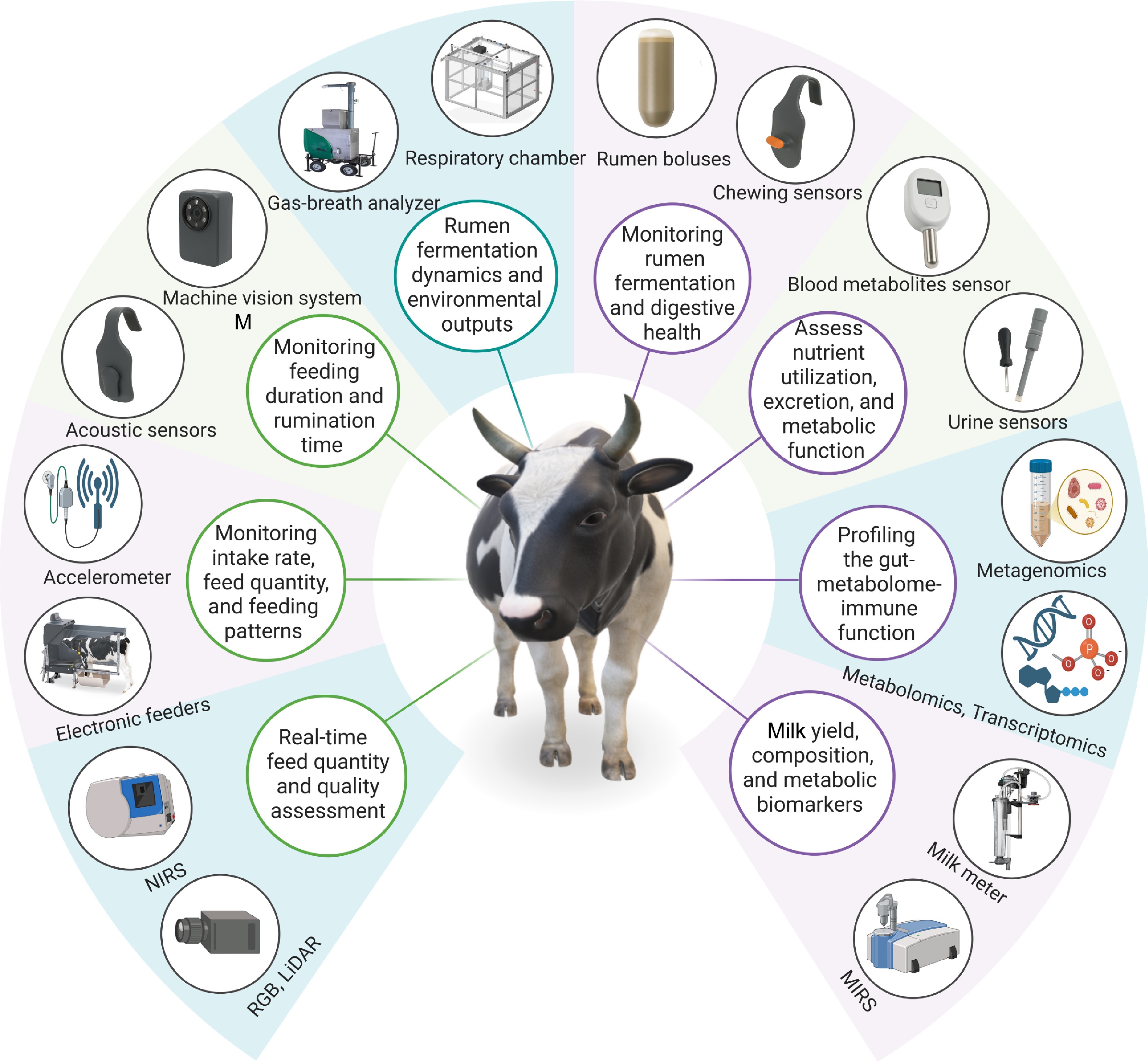
Figure 1.
Integrated sensor and diagnostic technologies enabling precision nutrition in ruminants. This figure illustrates a comprehensive suite of advanced monitoring tools that support precision nutrition in ruminants by capturing real-time data on feeding behavior, intake, digestion, metabolism, productivity, and environmental factors. Technologies such as electronic feeders, accelerometers, acoustic sensors, and machine vision systems monitor feeding duration, intake rate, and activity patterns. Optical sensing tools, including NIRS, RGB imaging, and LiDAR, enable rapid feed quantity and quality assessments. Internal monitoring devices—such as rumen boluses, chewing sensors, and gas analyzers—provide insights into fermentation dynamics and digestive health. Metabolic function is assessed using biosensors for blood and urine, alongside multi-omics approaches like metagenomics, metabolomics, and transcriptomics. Tools such as milk meters, MIRS, and imaging systems capture outputs related to milk yield, composition, and body condition. The integration of these technologies allows for dynamic, individualized feeding strategies that optimize performance, health, and environmental sustainability.
-
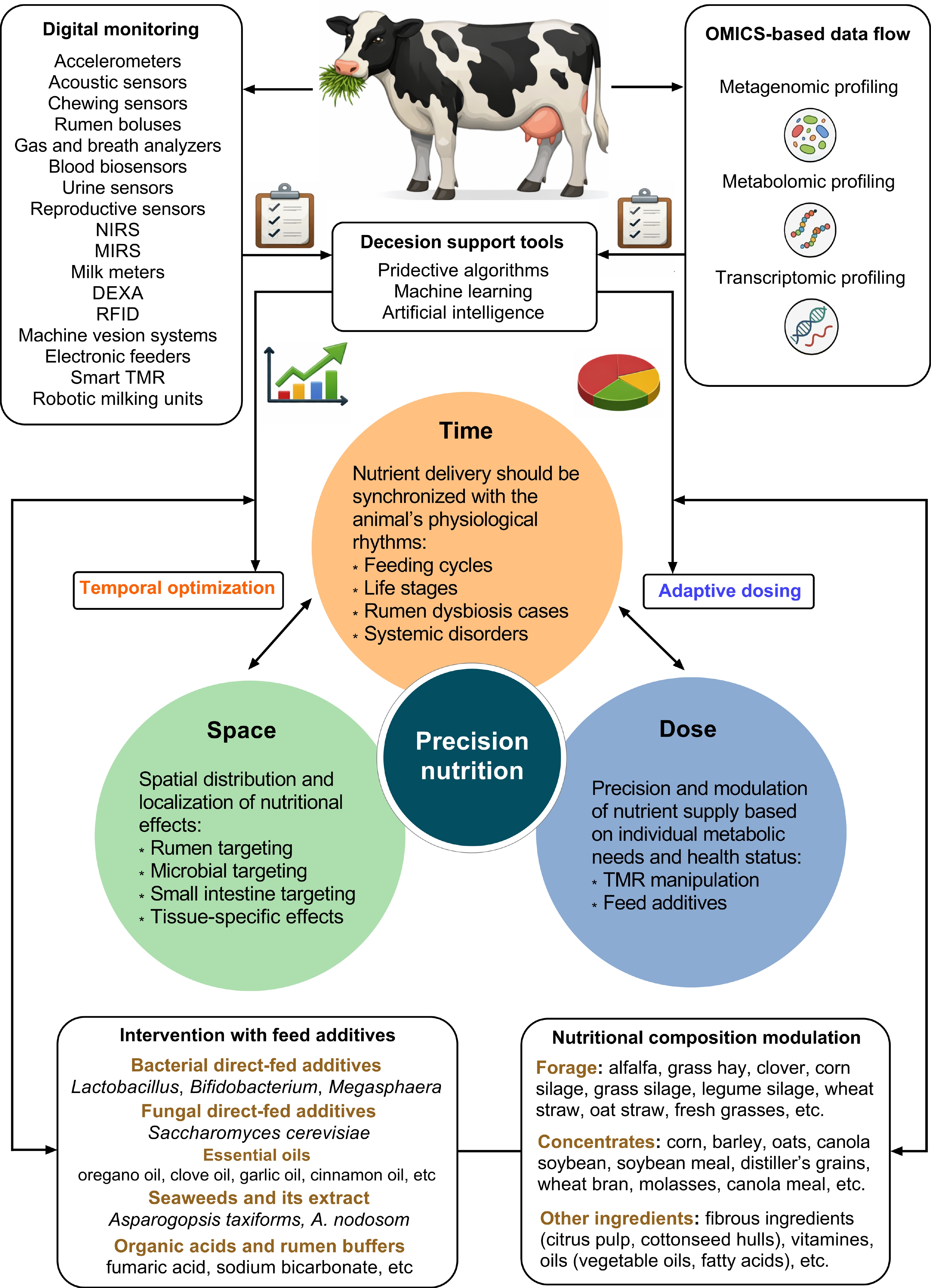
Figure 2.
Three-dimensional regulatory model of dynamic nutritional intervention in precision nutrition for ruminants. This figure presents the three-dimensional regulatory model of dynamic nutritional intervention (time × space × dose) to optimize precision nutrition strategies for ruminants. Digital monitoring and advanced tools track physiological parameters, feeding behaviors, and health markers in real time, providing critical insights into animal performance. OMICS-based data flow (metagenomic, metabolomic, transcriptomic) enables comprehensive analysis of microbial communities, metabolic pathways, and host gene expression, deepening our understanding of the gut-metabolome-immune axis. Data from both monitoring tools and OMICS analysis reflect nutrient utilization, microbial activity, and metabolic status, guiding precision nutrition interventions. Decision support tools such as predictive algorithms, machine learning, and artificial intelligence convert raw data into predictive models, informing adaptive dosing and dietary adjustments. These models help identify the optimal timing, dose, and spatial targeting of nutritional interventions, tailoring nutrition to the animal’s needs. Insights enable precise modulation of nutrients at the right time (e.g., aligning with lactation or rumen dysbiosis, systemic disorders), at the correct dose (e.g., feed additives, dietary ingredients manipulation), and in the right space (e.g., rumen, tissues, microbial communities), ensuring maximal health, productivity, and efficiency.
-
Animal/design Basal diet DFM additives Dose Effect Ref. Lactic acid bacteria (LAB) Ruminally-cannulated beef steers Corn-based finishing diet Lactobacillus acidophilus and Enterococcus faecium 109 CFU/d ↑ Minimum and maximum pH
↑ Propionate (tendency)
↓ Acetate (tendency)
↔ DL- and L-lactate[61] Arabian lamb TMR (alfalfa hay, wheat straw, barley grain, corn grain, soybean meal, and wheat bran) FP: Lactobacillus plantarum + L. fermentum
SCFP: Saccharomyces cerevisiae (SC) + FP
MSCFP: Megasphaera elsdenii (Me) + SCFPA 50 mL oral dose/d of each group, FP (4.5 × 10⁸ CFU), SCFP (FP + 1.4 × 10¹⁰ CFU SC), and MSCFP (SCFP + 4.5× 10⁸ CFU Me). ↑ Microbial protein synthesis (MSCFP)
↑ R. albus and R. flavefaciens in the rumen (SCFP and MSCFP)
↑ M. elsdenii (MSCFP)
↓ Methanogen counts (MSCFP)[63] Ruminally-cannulated–Friesian cattle (in vitro rumen fermentation) 40:60 rice straw to concentrate ratio Enterococcus faecium SROD 0%, 0.1%, 0.5% and 1% (v/v) of the culture (7.0 × 10⁸ CFU/mL) ↑ Propionate, acetate, butyrate, and TVFA concentrations (0.1% dose)
↑ Abundance of R. flavefaciens (0.1% dose)
↓ Methane emissions (0.1% dose)
↑ Total fungi and F. succinogenes (1.0% dose)[62] Exp. 1: In vitro fermentation (Rumen fluid from Barki sheep)
Exp. 2: In vivo trial on Holstein cows.TMR (berseem clover, corn silage, soybean meal, and yellow corn) Isolated Enterococcus faecium EGY_NRC1, and Commercial Enterococcus. faecium NCIMB 11181 2 g/kg diet DM (1.1 × 10⁹ CFU/g in the isolated strain and 2 × 10¹² CFU/g in the commercial strain) ↑ Nutrient degradability (in vitro, both strains)
↓ pH and methane production (in vitro, both strains)
↑ Digestibility of DM, NDF, ADF, OM, CP, and NSC (in vivo, isolated strain)
↑ Digestibility OM, CP, and NSC (in vivo, both strains)[65] Lactic acid utilizing bacteria (LUB) A meta-analysis study including data from 32 studies Different diets Megasphaera elsdenii Different doses ↑ Ruminal propionate, butyrate, isobutyrate, and valerate.
↓ Ruminal lactic acid concentration, acetate proportion.
↓ Ruminal populations of M. elsdenii and Streptococcus bovis.
↓ Methane emission.
↓ Blood lactate and urine pH.
↓ Diarrhea, bloat incidences, and liver abscess.[55] In vitro study (Rumen fluid from Norwegian red dairy cows) 60% grass silage and 40% concentrate (barley, wheat, and soybean meal) 31 propionic acid bacterial strains (mostly Propionibacterium, and some Tessaracoccus and Luteococcus) CFU/mL/incubation. ↓ Methane production (20%; Propionibacterium thoenii T159)
↑ Substrate degradation (8%), and TVFA (21%; Propionibacterium thoenii T159)[56] Fungal DFMs Ruminally cannulated Holstein cows TMR based-SARA challenge (corn silage: 61%, concentrates: 30%, and dehydrated alfalfa 9% DM) Saccharomyces cerevisiae Sc47 5 g/d (1010 CFU/g DM) top-dressed on the morning feed ↑ Ruminal pH
↑ Ruminal TVFA and propionate concentration
↓ Ruminal lactate concentration
↑ Fibrolytic bacteria: Fibrobacter, Ruminococcus
↑ LUB: Megasphaera, Selenomonas
↓ Starch-utilizing bacteria: Prevotella, Mitsuokella[59] Ruminally cannulated Holstein cows Corn silage 41.7%, brewer’s grains 12.1%, and concentrate 46.2% DM basis Saccharomyces cerevisiae - Low live yeast (LLY; 5.7 × 10⁷ CFU/d)
- High live yeast (HLY; 6.0 × 10⁸ CFU/d)
- High dead yeast (HDY; 6.0 × 10⁸ CFU/d)↑ Ruminococcus, Fibrobacter succinogenes (LLY, HLY)
↑ Ruminobacter, Bifidobacterium, S. ruminantium (LLY, HDY)
↑ Streptococcus bovis (HDY)
↑ Paraprevotellaceae, CF231, Treponema, Lachnospiraceae (LLY)[60] ↑ = increased, ↓ = decreased, ↔ = not changed, CFU= colony-forming units, TVFA = total volatile fatty acids, LAB = lactic acid bacteria, LUB = lactic acid utilizing bacteria, DFM = direct-fed microbial, DM = dry matter, NDF = neutral detergent fiber, ADF = acid detergent fiber, OM = organic matter, CP = crude protein, NSC = non-structural carbohydrates, TMR = Total Mixed Ration. Table 1.
Effect of microbial direct-fed additives on rumen fermentation, microbial ecology, metabolic function, and physiological responses in ruminants.
-
Animal/design Basal diet Prebiotic additives Dose Effect Ref. In vitro fermentation (ileal contents from veal calves) Finisher milk replacer + fibrous pellets (180 g/kg DM CF, 300 g/kg DM starch) Short-chain FOS 100 and 250 mg doses ↑ TVFA, acetate, and butyrate concentrations;
↑ L-lactate concentration;
↓ pH;
↑ Lactobacillus, Streptococcus, and LUB[67] Crossbred sheep (Suffolk × Small tail Han-yang) TMR (corn, soybean meal, cotton seed meal, alfalfa hay, and tall oat grass) MOS 1.2%, 1.6% and 2.0% kg-1 of basal diet (as-fed basis) ↑ NDF and ADF digestibility (1.6% and 2.0%; tendency);
↑ Nitrogen retention tendency;
↑Total antioxidant capacity (T-SOD at 1.6% dose);
↑ Serum GSH-PX activity
↓ Malondialdehyde concentration;
↔ Immunity parameters;
↔ Fermentation parameters[100] Holstein calves Raw milk (8 L/d) + Starter concentrates (CP 18.8% DM basis; fed from day 3) GOS 10 g/d/calf ↑ Ruminal acetate, propionate, and TVFA concentrations;
↓Ruminal pH and NH₃-N concentration;
↑ Microbial crude protein;
↑ OTU richness, Prevotella, and Lactobacillus;
↓ Olsenella, Escherichia_Shigella, and Eubacterium;
↓ Incidence of diarrhea;
↑ Serum HDL, total protein, and calcium[66] Holstein calves Experiment 1 (milk replacer) Experiment 2 (whole milk) COS and symbiotic
(SB = COS + Clostridium butyricum)COS (5 g/d pre-weaning, 10 g/d post-weaning); SB (COS + 108 CFU C. butyricum /d) ↑ Fecal butyrate (at four weeks; whole milk);
↑ Clostridium coccoides, Eubacterium rectale group in feces;
↔ Lactobacillus, Bifidobacterium, or Enterobacteriaceae in feces[101] Holstein cows TMR (40:60 concentrate-to-forage ratio) Inulin 200 g/d oral dosing ↓ Rumen pH and NH₃–N concentration;
↑ Rumen acetate, propionate, lactate, and butyrate concentrations;
↑ Rumen Muribaculaceae, Acetitomaculum, Butyrivibrio, Prevotellaceae_NK3B31_group;
↓ Rumen Escherichia-Shigella, Erysipelotrichaceae__UCG-004, RF39;
↑ Ruminal amino acids: L-lysine, L-proline, L-phenylalanine, and L-tyrosine;
↓ Ruminal lipid metabolites: LysoPCs (16:0, 18:1, 18:2), 8-methylnonenoate;
↓ Total CHOL and TG in serum
↓ Milk urea nitrogen and somatic cell count[102] ↑= increased, ↓= decreased, ↔ = not changed, GOS = galacto- oligosaccharides, FOS = fructo-oligosaccharides, MOS = manano-oligosacáridos, COS = Cello-oligosaccharide, OTU = operational taxonomic units, TVFA = total volatile fatty acids, NDF = neutral detergent fiber, ADF = acid detergent fiber, TMR = total mixed ration, HDL = high density lipoprotein, T-SOD = total superoxide dismutase, NH₃-N = ammonia nitrogen, LUB = lactic acid utilizing bacteria, GSH-PX = glutathione peroxidase, LysoPCs = lysophosphatidylcholines CHOL = cholesterol, LysoPC = lysophosphatidylcholine, TG = triglyceride. Table 2.
Effect of prebiotic additives on rumen fermentation, microbial ecology, metabolic function, and physiological responses in ruminants.
-
Animal/design Basal diet EO/EO active components Dose Effect Ref. Holstein calves Whole milk + starter mix of 90% pelleted feed and 10% wheat straw Sage (Salvia officinalis) EO 100 or 200 μL/calf/d mixed with milk ↑ Serum IgG (linear with dose);
↓ Serum TNF-α, IL-1β, IL-6 (with increasing dose);
↓ Ruminal NH₃-N and total SCFA concentrations;
↓ Rumen iso-butyric, iso-valeric, and propionic acid concentrations;
↑ Acetic acid and butyric acid % in TVFA;
↑ Bifidobacterium, Acidaminococcus, Prevotella, Prevotellaceae_NK3B31_group, Prevotella_9 in the rumen;
↓ Lachnospiraceae_NK3A20_group, Syntrophococcus, Erysipelotrichaceae_UCG-002[72] Holstein male calves Pellets (corn and soybean meal) and oat grass (5:1 ratio) Oregano EO 4, 6, or 8 g/d oral gavage after morning feeding ↑ Serum IgA (in 8 g/d group), IgM (in both 6 g and 8 g/d groups);
↑ Microbial abundance and diversity;
↑ Turicibacter, Romboutsia, Clostridium_sensu_stricto_1 in the rumen (4 g/d group);
↑ Olsenella, Actinobacteriota, Corynebacterium in the rumen (6 g/d group);
↑ Shuttleworthia, Saccharofermentans, Streptococcus in the rumen (8 g/d group);
↑ Metabolism of cofactors and vitamins (8 g/d group)[76] Simmental × Charolais × Angus crossbred bulls TMR (corn, silage, corn, corn stover, wheat straw, alfalfa hay) Cinnamon–pepper–chili EO complex 16 g/head/d ↑ Serum IgA, IgG, T-SOD, GSH-PX, glucose, and dopamine;
↑ Intestinal abundance of Butyrivibrio, Eisenbergiella, Dorea, UCG-010.
↑ ADG[74] Holstein dairy cows TMR (alfalfa, fescue hay, ryegrass hay, soybean meal, corn and wheat grains, and by-products) Commercial EO blend (Eugenol, geranyl acetate, coriander EO) 1 g/head/d ↓ Methane emissions (both absolute reduction and per kg DMI;
↑ Entodinium, Evosa;
↓ Fusobacteria, Chytridiomycota, Epidinium, Ciliphora, Mogibacterium, unclassified Neocallimastigomycetes[71] Shami lactating goats (in vitro + in vivo) 50% concentrate: 50% roughage Nano-emulsified EO blend (oregano, garlic, clove oils) 3, 5, or 7.5 mL/head/d ↓ In vitro gas production, GPSF, GPNSF, and SCFA (dose-dependent; highest at 7.5 mL);
↑ 4% FCM, milk protein, fat, lactose, TS, ash (dose-dependent; highest at 7.5 mL);
↓ Milk SFA;
↑ Milk PUFA (C18:2, C18:3, C20:2–5, C22:5, C22:6);
↑ Serum albumin, globulin, IgG, IgM;
↑ Antioxidant status (GPx activity)[103] Small tail Han hybrid male lambs 50% wheat straw and 50% concentrate pellets Zanthoxylum bungeanum EO 5, 10, and 15 ml/kg feed ↑ Rumen pectinase and lipase activity (at 10 mL/kg);
↑ Ruminal relative abundance of Rikenellaceae_RC9_gut_group, Ruminococcaceae_NK4A214_group, Treponema_2 (at 10 mL/kg) and Christensenellaceae_R_7_group (at 5 mL/kg);
↑ Ruminal PC (18:3/15:0), 2-piperidinone, indole, beta-alanine (shared in 5 and 15 mL/kg doses);
↑ 2-Piperidinone, diethanolamine, methylsuccinic acid, PE (p-18:1/18:1), and PC (18:3/15:0) (at 10 mL/kg dose)[73] Korean native goats (Capra hircus coreanae) 50% tall fescue hay and 50% commercial concentrate Pinus koraiensis cone EO 1 g/goat /d ; ↓ Methane emission (eructation CH4/BW0.75);
↓ Ruminal TVFA, propionate, and NH3-N concentrations;
↑ Ruminal acetate:propionate ratio (trend)
↓ Total fungal abundance;
↓ Evenness of prokaryotic community;
↑ Relative abundance of ruminal phyla (Thermoplasmatota, Verrucomicrobiota) and genera (Candidatus Methanomethylophilus);
↑ Serum albumin, ALT/SGPT, creatinine;
↓ Serum glucose and triglycerides[77] Dorper sheep male TMR (alfalfa, corn, whole corn silage, gourd seed skin, DDGS, flax seed meal, sunflower seed meal, and wheat bran) Allium mongolicum regel EO 40 mg/kg feed ↑ Ruminal acetate, propionate, and TVFA concentrations;
↓ Ruminal pH and NH₃-N concentration;
↑ Relative abundance ruminal phyla (Firmicutes, Actinobacteriota, Verrucomicrobiota) and genera (Prevotella, Prevotellaceae_UCG-003);
↓ Relative abundance ruminal phyla (Bacteroidetes, Spirochaetota) and genera (Succiniclasticum, Norank_f__F082, Christensenellaceae_R-7_group, Norank_f__Muribaculaceae);
↑ Ruminal cellulase, α-amylase, and proteinase activity;
↑ Apparent digestibility of DM and CP[75] ↑ = increased, ↓ = decreased, EO = essential oil, DM = dry matter, DMI = dry matter intake, ADG = average daily gain, NH3-N = ammonia nitrogen, SCFA = short-chain fatty acids, TVFA = total volatile fatty acids, DDGS = distillers dried grains with solubles, IgA = immunoglobulin A, IgG = immunoglobulin G, IgM = immunoglobulin M, TNF-α = tumor necrosis factor-alpha, IL = interleukin, ALT = alanine aminotransferase, SGPT = serum glutamate pyruvate transaminase, T-SOD = total superoxide dismutase, GSH-PX = glutathione peroxidase, PE = phosphatidylethanolamine, PC = phosphatidylcholine. BW = body weight, DM = dry matter, CP = crude protein, SCFA = short-chain fatty acid, GPSF = gas production structure fiber, GPNSF = gas production non-structure fiber, FCM = fat corrected milk, SFA = saturated fatty acid, USFA = unsaturated fatty acid. Table 3.
Effect of essential oil additives on rumen fermentation, microbial ecology, metabolic function, and physiological responses in ruminants.
-
Animal/design Basal diet Seaweed/seaweed extract additives Dose Effect Ref. In vitro study (rumen fluid from Jersey cows) TMR A (Hohenheim gas test; HGT): corn grain, soybean meal, corn silage, and grass silage.
TMR B (Extended HGT; eHGT and Rusitec): grass silage, lupins, soybean meal, and wheatAsparagopsis taxiformis, Ascophyllum nodosum, and Fucus vesiculosus 5% of TMR DM (HGT and eHGT)
2.5% of TMR DM (Rusitec system)↓ Gas production (all seaweeds; A. taxiformis recoreded the greatest reduction in both experiments);
↓ Acetate:propionate ratio (A. taxiformis);
↓ NH3-N, acetate, iso-butyrate, butyrate (A. taxiformis);
↑ Valerate and iso-valerate;
↑ Methanobrevibacter (A), Methanomethylophilaceae (UBA71), Sphaerochaetaceae, Streptococcus, Limosilactobacillus, Prevotella, Limimorpha, Ruminobacter, Pyramidobacter, Lactobacillus (A. taxiformis);
↓ Methanobrevibacter (A), Methanomicrobium, Limimorpha, Bacteroidales (RUG11257), Alphaproteobacteria, Anaerovoracaceae (A. taxiformis)[104] Ruminally cannulated Jersey cows TMR consists of 65% forage (legume-grass silage and corn silage) and 35% concentrate (ground corn and soybean meal) Ascophyllum nodosum in comparison with monensin 57, 113, or 170 g/d (equivalent to ~0.24%–0.81% of dietary DM) ↓ Ruminal TVFA and butyrate (linear with dose);
↑ Propionate (Monensin)
↓ Acetate:propionate ratio (Monensin);
↓ Tenericutes abundance in the rumen (A. nodosum);
↓ Ruminal Rikenellaceae RC9, Ruminococcaceae UCG. and CAG:352 (Monensin);
↑ DM, OM, CP digestibility (A. nodosum)
↑ Iodine intake, and its level in the serum, feces, and urine (A. nodosum);
↑ Arsenic intake and fecal excretion (but not serum, urine, and milk)[105] Holstein cows TMR (60:40 – grass silage-to- concentrate ratio) A. taxiformis in comparison with oregano Low dose (0.25%; LAT) and high dose (0.5%; HAT) of DMI ↓ Ruminal abundance of Methanobrevibacter millerae and M. YE315 (in HAT);
↓ Methyl Coenzyme M reductase (MCR; EC:2.8.4.1) gene copy numbers by 61%–65% (in HAT);
↓ Total hydrogenase gene abundance (in HAT);
↓ Acetate concentration (in HAT);
↑ Propionate, butyrate, and valerate concentrations (in HAT);
↑ Ruminal butyrate-producing taxa (Butyrivibrio, Moryella, and Unclassified Eubacterium) and butyrate synthesis genes, especially EC:1.3.8.1 (crotonyl-CoA to butyryl-CoA) (in HAT).[81] Rumen-cannulated Holstein and Jersey cross cows (in vitro and in vivo experiments) Freeze-dried and ground perennial ryegrass (Lolium perenne) Ecklonia radiata seaweed extract In vitro (2, 9.5, and 31.5 μL/
fermentation jar) in vivo (5 μL/
head/d)↓ Ruminal TVFA, acetate, propionate, valerate, and iso-valerate;
↓ Ruminal NH₃ concentrations (~5%–6%; in low doses) and showed no effect when adding with tannins).[80] Dairy goats (local Greek Alpine breeds) TMR (50:50 forage-to-concentrate ratio Schizochytrium spp. 20, 40, and 60 g/ head/d ↓ Total archaea in the rumen (28%–46% in treated groups);
↓ Ruminal methanogens by 46%–58% (Methanomassiliicoccales, Methanobrevibacter spp., Methanosphaera stadmanae, Methanobacterium formicicum);
↓ Ruminal Firmicutes (25%–40%), Ruminococcus flavefaciens (up to 85%), and Butyrivibrio fibrisolvens (22%–37%)v
↓ Neocallimastigales (25%–50%);
↑ Entodinium (1.3-fold increase)[82] ↑ = increased, ↓ = decreased, TMR = total mixed ration, DM = dry matter, OM = organic matter, CP = crude protein, NDF = neutral detergent fiber, ADF = acid detergent fiber, DMI = dry matter intake, NH3-N = ammonia nitrogen, TVFA = total volatile fatty acids, MCR = methyl coenzyme M reductase, EC = enzyme commission. Table 4.
Effect of seaweed/seaweed extract additives on rumen fermentation, microbial ecology, metabolic function, and physiological responses in ruminants.
-
Animal/design Basal diet Organic acid additives Dose Effect Ref. Rumen-cannulated Xinong Saanen goats TMR (chopped or ground alfalfa hay, crushed or ground corn, corn silage, soybean meal, and cottonseed meal) varying in forage:concentrate particle size ratio (Fps:Cps) Fumaric acid 24 g/goat/d in two equal portions with the diet ↓ Methane production (more with low-Fps:Cps diet (−31.72%) than with high-Fps:Cps diet (−17.91%);
↑ Rumen pH and propionate concentration;
↓ Acetate:propionate ratio (more with low-Fps:Cps diet);
↓ TVFA concentration;
↓ Methanogen abundance in the rumen;
↑ Butyrivibrio fibrisolvens abundance in the rumen (high Fps:Cps)[106] Italian Holstein-Friesian heifers TMR with a transition from low-starch (24% starch, 39.8% NDF) to high-starch (30% starch, 33.6% NDF) diet over 22 d FM: A fumarate-malate blend (magnesium fumarate, malic acid, sodium acetate, sodium bicarbonate).
PM: A polyphenol- EO blend (high in flavonoids from natural plant extracts)FM: 60 g/d. PM: 100 g/d ↓ Reticular pH drops: FM (nadir pH = 5.69) and PM (pH = 5.62), both reduced rumen acidification compared to control (pH = 5.40);
↓ Time with rumen pH < 5.6: FM (16 min/d), PM (18 min/d), compared to control (199 min/d);
↑ Acetate:propionate ratio (control group);
↓ Neutrophils and acute phase proteins (SAA, LBP, Hp) (PM vs FM and control);
↔ Blood/fecal LPS or other blood variables[107] Ruminally fistulated lactating Hu sheep The low-concentrate (LC) group received a forage:concentrate ratio of 7:3, while the high-concentrate (HC) and HC disodium fumarate (HCDF) groups received a 3:7 ratio Disodium fumarate 10 g/head/d (HCDF group) ↑ Rumen pH, antioxidant gene expression, FOXA2 nuclear entry;
↓ Ruminal and hepatic LPS, hemorrhage/inflammation, Serum ALT/AST, pyroptosis markers (caspase-1, IL-1β, IL-18, GSDMD-NT), mitophagy-related proteins (MAP1LC3-II, PINK1, Parkin), NLRP3 inflammasome activation, and TLR4-NF-κB pathway activation[91] Weaned Holstein dairy calves Starter feed and oat grass Benzoic acid 0.25%, 0.50%, and 0.75% on DM basis ↑ ADFI (peaking with 0.50% dose);
↑ Molar proportions of butyrate and iso-butyrate in the rumen;
↑ Ruminal abundance of beneficial bacteria (e.g., Bifidobacterium);
↓ Abundance of harmful bacteria (e.g., Oscillospiraceae_UCG-002);
↓ Glycolysis and TCA-related pathways in rumen microbiota[108] Weaned Hu sheep lambs Corn, wheat bran, soybean meal, alfalfa hay, and whole corn silage Benzoic acid 0.5%, 1%, or 1.5% of DM basis ↑ Digestibility of DM, OM, NDF, and ADF (1% dose);
↑ Plasma albumin (1% dose);
↑ Hippuric acid and hippurate N in urine and plasma (1 and 1.5 doses); ↓ Plasma urea-N at 3h post-feeding (1.5% dose);
↔ Urinary pH, total N excretion, fecal N, urinary N, or N retention[109] Ruminally cannulated Saanen dairy goats Grain-based TMR (30% hay and 70% concentrate) Citric acid 0.5% citric acid solution (wt/vol) used to steep ground corn in a 1:1 ratio (corn:liquid) ↑ Mean and minimum ruminal pH, acetate proportion;
↓ Duration and area of ruminal pH <5.6, <5.8, and <6.0, TVFA, propionate, and LPS;
↓ Serum haptoglobin, and TNF[92] ↑ = increased, ↓ = decreased, ↔ = not changed, TVFA = total volatile fatty acid, ADFI = average daily feed intake, LPS = lipopolysaccharide, ADF = acid detergent fiber, NDF = neutral detergent fiber, OM = organic matter, DM = dry matter, ALT = alanine aminotransferase, AST = aspartate aminotransferase, TNF = tumor necrosis factor, SAA = serum amyloid A, LBP = lipopolysaccharide-binding protein, Hp = haptoglobin, IL-1β = interleukin 1 beta, IL-18 = interleukin 18, GSDMD-NT = N-terminal fragment of Gasdermin D, FOXA2 = forkhead box protein A2, MAP1LC3-II = microtubule-associated proteins 1A/1B light chain 3B, type II, PINK1 = PTEN-induced putative kinase 1, TLR4 = toll-like receptor 4, NF-κB = nuclear factor kappa-light-chain-enhancer of activated B cells. Table 5.
Effect of organic acid additives on rumen fermentation, microbial ecology, metabolic function, and physiological responses in ruminants.
-
Animal/design Base diet Rumen buffer/alkaliser additives Dose Effect Ref. Holstein lactating cows Isoenergetic, isonitrogenous TMR with forage (30 mm) gradually replaced by ground barley (2–3 mm) to induce SARA; for four 14-d experimental periods with decreasing forage-to-concentrate ratio (FCR): 48:52, 44:56, 40:60, and 36:64 Sodium bicarbonate (SB group) and magnesium oxide (MG group) Sodium bicarbonate (0.82% DM; ~200 g/d) and magnesium oxide (0.25% DM; ~62 g/d) ↓ Rumen pH with decreasing FCR (MG cows sustained higher pH, while SB cows spent more time with pH <5.8;
↓ NDF digestibility as FCR decreased, but MG cows showed higher digestibility at FCR 36:64;
↑ Urine pH in SB cows;
↑ Ruminal Fibrobacter and Treponema in MG vs. SB;
↑ Ruminal Weissella, Selenomonas, Butyrivibrio, Ruminococcus with decreasing FCR across all treatments[94] Male Dorper-Hu hybrid lambs Corn-based TMR (80:20 concentrate-to-forage ratio) Sodium bicarbonate and magnesium oxide Sodium bicarbonate (15 g/kg);
Magnesium oxide (2.5 and 5 g/kg), each supplemented with;
7.5 g/kg sodium bicarbonate↑ Rumen pH (sodium bicarbonate group, 2.5 and 5 g magnesium oxide groups);
↑ Ruminal TVFA (2.5 and 5 g magnesium oxide groups);
↑ Acetate:Propionate ratio in 2.5 and 5 g magnesium oxide groups;
(But lowest compared with sodium bicarbonate group);
↑ Ruminal abundance of Prevotella (2.5 and 5 g magnesium oxide groups);
↑ Serum TG and Mg (2.5 and 5 g magnesium oxide groups);
↑ Antioxidant Indices SOD and T-AOC in magnesium oxide groups (2.5 g had highest values)[95] Newborn dairy calves Calves were fed a 1:1 mixture of milk replacer and normal milk, with dry feed granules The alkaline mineral complex buffer (AMCB) included sodium metasilicate pentahydrate, potassium bicarbonate, zinc oxide, and Bis-(carboxyethyl germanium) sesquioxide (Ge-132) 5 mL AMCB/d (added to milk from day 1 to 60 ↑ Serum Immunity (TP and GLB at 15 d and 60 d; GLB at 30 d; and IgG at 45 d);
↑ Rumen pH at 30, 45, 60 d; NH₃-N at 30 d; and acetate:propionate ratio at 45 d;
↑ Christensenellaceae_R-7_group abundance in the rumen at 45 d;
↑ Prevotellaceae_UCG_001 and Christensenellaceae_R-7_group at 60 d;
↓ Prevotella_9 at 60 d;
↑ MIF, MANF, FGB, ATF3, AOX1 genes in ruminal epithelial tissue;
↑ Humoral immune response, defense response pathways[99] In vitro fermentation (rumen fluid from cannulated Rasa Aragonesa ewes) High concentrate diet (65:35 concentrate:forage) and high-forage dirt (35:65 concentrate:forage) Zeolite (70%–85% purity, 0–1 mm), bentonite (76.5% purity, < 0.15 mm), and sepiolite (89.4% purity, < 0.045 mm) 10 mg/g of total substrate DM ↑ pH (Zeolite in high concentrate diet during first 6 h; sepiolite had minimal effect);
↓ Gas production (Sepiolite in high concentrate diet; Bentonite in high forage diet from 8 h onwards);
↓ NH3-N concentration (Bentonite in high concentrate diet at 6 and 12 h; no effect in high forage diet)[98] Rumen-cannulated lactating dairy cows TMR (44:56 forage:concentrate ratio (56% DM concentrate, 22% DM corn silage, and 22% DM grass silage) CMA: calcareous marine algae (Lithothamnion calcareum). CMA+MM: calcareous marine algae and marine magnesium oxide. SB: sodium bicarbonate CMA: 0.45%. CMA+MM: 0.45% CMA + 0.11% MM. SB: 0.9%, all based on DM CMA and CMA+MM: Maintained higher mean rumen pH compared to control;
Control had a greater number of hours with rumen pH < 5.5 compared to all other treatments[97] Ruminally cannulated, late-lactation Holstein cows TMR (38.2% corn silage, 14.9% alfalfa haylage, 2.8% orchard grass hay, 16.4% high-moisture corn, 10.8% soybean meal, 3.9% soyhull pellet Potassium carbonate (K2CO3) 0.75% and 1.5% K2CO3 of DM ↑ Rumen fractional liquid passage rate;
↓ Ruminal NH3-N concentration;
↑ Rumen pH and acetate molar portion
↓ Propionate molar portion;
DMI: quadratic response, maximum at 0.75% dietary K2CO3[96] ↑ = increased, ↓ = decreased, ↔ = not changed, NH₃-N = ammonia nitrogen, TVFA = total volatile fatty acids, NDF = neutral detergent fiber, SOD = superoxide dismutase, T-AOC = total antioxidant capacity, TG = triglycerides, TP = total protein, GLB = globulin, IgG = immunoglobulin G, IgA = immunoglobulin A, MIF = macrophage migration inhibitory factor, MANF = mesencephalic astrocyte-derived neurotrophic factor, FGB = fibrinogen beta chain, ATF3 = activating transcription factor 3, AOX1 = aldehyde oxidase 1. Table 6.
Effect of rumen buffer/alkaliser additives on rumen fermentation, microbial ecology, metabolic function, and physiological responses in ruminants.
Figures
(2)
Tables
(6)