












-
The global livestock sector is undergoing rapid transformation in response to intersecting pressures from climate change, resource limitations, rising societal expectations for animal welfare, and increasing demand for high-quality animal-derived foods. Ruminants play a pivotal role in meeting these demands but face the dual challenge of enhancing production efficiency while reducing environmental externalities, including greenhouse gas emissions and nutrient losses[1]. These challenges expose fundamental shortcomings of conventional herd-based nutrition strategies that inadequately capture inter-animal variability in physiology, intake behavior, and metabolic capacity.
Traditional feeding systems typically rely on group-level rations formulated to meet average herd requirements. Such approaches neglect substantial heterogeneity among animals in nutritional demand, production stage, immune competence, and health status[2]. As a result, nutrient supply frequently deviates from biological demand, leading to inefficient feed conversion, excessive nitrogen excretion, and elevated enteric methane emissions. Precision nutrition represents a paradigm shift by integrating sensor-based technologies, real-time data analytics, and decision-support systems to deliver individualized nutrient inputs[3]. By dynamically matching nutrient supply to physiological requirements, this approach improves resource-use efficiency while supporting animal performance.
Diet–microbiome interactions are central to this framework, as dietary inputs directly shape rumen microbial composition and metabolic function, thereby influencing fermentation dynamics and nutrient availability[4]. Microbial metabolism generates bioactive compounds, including VFA and other metabolites, that regulate host energy balance, lipid metabolism, and endocrine signaling[5]. These metabolic processes are tightly linked to immune function, with microbial-derived signals modulating mucosal immunity, inflammatory responses, and gut barrier integrity[6]. Together, these interconnected processes constitute the gut–metabolic–immune axis, a dynamic regulatory network essential for ruminant health, productivity, and resilience. Therefore, understanding and modulating this axis is vital for achieving optimal biological function in ruminant systems.
Recent advances in multi-omics technologies, including metagenomics, metabolomics, and transcriptomics, have substantially expanded our capacity to resolve host-microbiome interactions and nutrient transformation pathways at high resolution[7]. When integrated with digital monitoring platforms, such as imaging sensors, biosensors, wearable devices, and automated feeding systems, these approaches enable real-time, individualized assessment of animal behavior, rumen fermentation, metabolic status, and immune function[8]. Machine learning and artificial intelligence further facilitate the integration of these complex datasets into predictive, data-driven nutrition strategies. In parallel, functional feed additives have emerged as promising tools to selectively modulate rumen microbial ecology and host immune–metabolic responses, with demonstrated effects on fermentation efficiency, gut homeostasis, antioxidant capacity, and inflammatory regulation[9]. Despite this promise, their incorporation into scalable, real-time precision nutrition programs remains limited.
This review presents a comprehensive, systems-based framework for precision nutrition in ruminants, one that integrates digital monitoring, multi-omics data, and functional dietary interventions. We emphasize the centrality of the gut–metabolome–immune axis, highlight emerging tools for individualized monitoring, and explore the translational potential of functional additives. By bridging fundamental biology with on-farm application, this work aims to support the development of sustainable, welfare-oriented, and high-efficiency livestock production systems.
-
Precision nutrition in ruminants is founded on delivering nutrients that precisely align with the real-time physiological and metabolic requirements of individual animals or defined groups[3]. This paradigm rests on three interlinked pillars: monitoring, modeling, and modulation. Together, these components enable a dynamic and responsive nutritional system that improves animal health, productivity, welfare, and sustainability. Monitoring forms the foundation of precision nutrition by continuously capturing data on intake, body condition, behavior, physiology, metabolism, and environmental factors. Optical sensing technologies, including red, green, blue (RGB) imaging, near-infrared spectroscopy (NIRS), multispectral imaging, hyperspectral imaging, and light detection and ranging (LiDAR) systems, are employed to assess feed quantity and quality in real time[10,11]. Electronic feeders, accelerometers, acoustic sensors, and machine vision systems accurately quantify feeding duration, intake rate, sorting behavior, rumination time, and overall activity patterns[12]. Smart total mixed ration (TMR) delivery systems and automated concentrate dispensers allow precise tracking of individualized feeding events[13]. In addition, gas and breath analyzers measure methane, NH3, and CO2 emissions, offering real-time insights into rumen fermentation dynamics and environmental outputs[14].
Internal physiological monitoring has expanded rapidly through chewing sensors, rumen boluses measuring pH and temperature, and biosensors for blood metabolites, offering continuous insight into digestive and metabolic status[15,16]. These technologies are increasingly complemented by multi-omics approaches, including metagenomics for microbiome profiling, metabolomics for systemic metabolic fluxes, and host transcriptomics to evaluate immune and metabolic gene expression, collectively resolving nutrient utilization through the gut–metabolome–immune axis[17]. Non-invasive tools such as urine sensors and fecal NIRS allow rapid assessment of nitrogen utilization and gastrointestinal function[3]. Weight and body composition are dynamically monitored using radio-frequency identification (RFID)-enabled automatic weighing systems and imaging technologies such as dual-energy X-ray absorptiometry (DEXA), computed tomography (CT), infrared sensors, and LiDAR[3]. Milk meters integrated with NIRS, MIRS, and biosensors capture milk yield, composition, and metabolic biomarkers[18]. Reproductive sensors for estrus detection, pregnancy monitoring, and calving prediction ensure appropriate nutritional support during critical reproductive stages[19]. In small ruminants, RFID-based fleece monitoring provides indicators of nutritional adequacy[20]. Environmental monitoring through infrared cameras and weather stations informs climate-adaptive feeding strategies, while geo-location systems, accelerometers, and video imaging map physical activity and social behaviors[21]. A summary of these advanced monitoring technologies and their respective targets is visually depicted in Fig. 1.
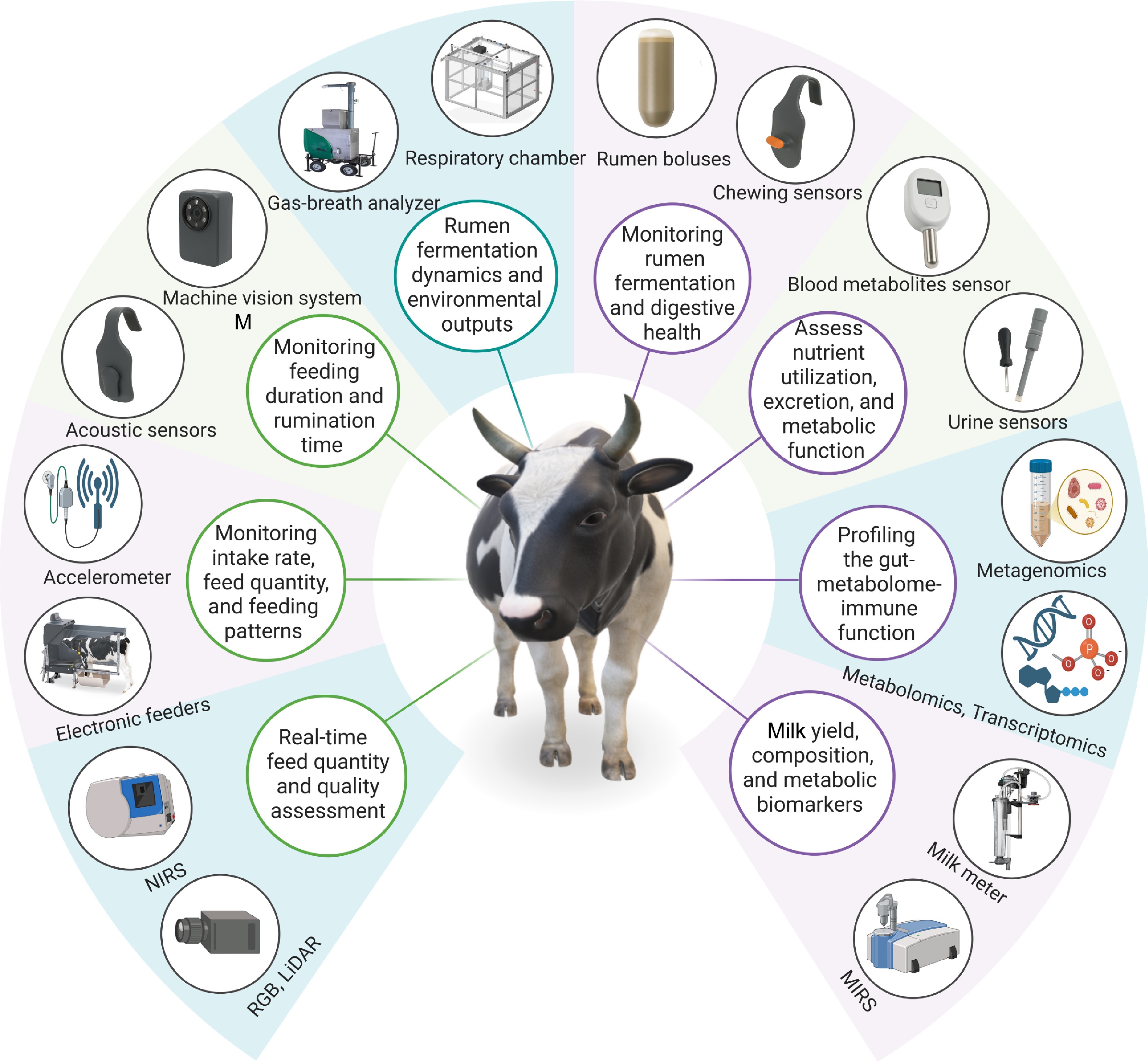
Figure 1.
Integrated sensor and diagnostic technologies enabling precision nutrition in ruminants. This figure illustrates a comprehensive suite of advanced monitoring tools that support precision nutrition in ruminants by capturing real-time data on feeding behavior, intake, digestion, metabolism, productivity, and environmental factors. Technologies such as electronic feeders, accelerometers, acoustic sensors, and machine vision systems monitor feeding duration, intake rate, and activity patterns. Optical sensing tools, including NIRS, RGB imaging, and LiDAR, enable rapid feed quantity and quality assessments. Internal monitoring devices—such as rumen boluses, chewing sensors, and gas analyzers—provide insights into fermentation dynamics and digestive health. Metabolic function is assessed using biosensors for blood and urine, alongside multi-omics approaches like metagenomics, metabolomics, and transcriptomics. Tools such as milk meters, MIRS, and imaging systems capture outputs related to milk yield, composition, and body condition. The integration of these technologies allows for dynamic, individualized feeding strategies that optimize performance, health, and environmental sustainability.
Modeling transforms high-frequency, multi-source data streams into actionable insights that guide nutritional decisions in real time. Advanced tools such as predictive algorithms, machine learning, and artificial intelligence are increasingly used to interpret complex, multivariate datasets across biological, environmental, and management domains[22]. These models dynamically estimate nutrient requirements, detect early signs of metabolic disturbances, and support pre-emptive, individualized dietary interventions. Modulation is the application arm of precision nutrition, translating insights into dynamic management actions. Automated feeding systems adjust ration formulations based on monitored feed intake, behavior, and physiological signals[12]. Functional feed additives are increasingly incorporated to modulate the gut-metabolic-immune axis, with multi-omics insights guiding their selection. For instance, probiotics tailored to rectify dysbiosis detected via metagenomics, or phytochemicals optimized using metabolomic signatures of inflammation[23,24]. Climate-responsive nutrition protocols are activated when heat stress or cold stress indicators are detected[25]. Dynamic fiber and starch adjustments are implemented in response to real-time detection of feed sorting behaviors or rumination deficits[26]. In dairy systems, robotic milking units tailor supplemental feeding based on individual milk yield and composition[27]. In beef and small ruminant production, automated feed bunks, walk-over weighing systems, and portable NIRS tools allow for group-level precision feeding while minimizing intake variability and social competition[28].
-
Metagenomic approaches, including 16S rRNA gene sequencing and whole-genome shotgun sequencing, are key tools in microbial ecology for investigating the taxonomic composition and functional potential of the gastrointestinal microbiome. Identifying KEGG Orthology (KO) identifiers, which represent gene families linked to specific metabolic functions, and carbohydrate-active enzymes (CAZymes) is central to understanding microbial contributions to host physiology[29,30]. The classification and annotation of CAZymes are facilitated through the CAZy database (
www.cazy.org ), a curated resource that categorizes enzymes into families based on their sequence similarities and functional characteristics. These families include glycoside hydrolases (GHs), glycosyltransferases (GTs), carbohydrate esterases (CEs), polysaccharide lyases (PLs), and auxiliary activities (AAs), all of which play critical roles in the breakdown, biosynthesis, and modification of carbohydrates[31]. The CAZy database, in conjunction with tools such as dbCAN2 (https://bcb.unl.edu/dbCAN2 ), provides a comprehensive platform for annotating CAZyme-coding genes within metagenomic datasets, thereby enabling the exploration of microbial strategies for dietary degradation[32]. Furthermore, functional annotation pipelines, incorporating databases such as KEGG (www.genome.jp/kegg ), MetaCyc (https://MetaCyc.org ), and CAZy, allow researchers to reconstruct microbial metabolic pathways. Advancements in computational biology, including improved metagenomic assembly algorithms, binning strategies, and genome-resolved metagenomics, have made it increasingly feasible to reconstruct high-quality metagenome-assembled genomes (MAGs)[33]. These MAGs provide insights into the metabolic potential of microbial taxa, support modeling of microbial networks, and help identify dietary intervention targets to optimize host health and productivity.Metabolomic detection
-
Metabolome determination typically involves untargeted or targeted workflows using high-throughput platforms such as nuclear magnetic resonance spectroscopy (NMR), gas chromatography–mass spectrometry (GC-MS), and liquid chromatography–mass spectrometry (LC-MS)[34]. These technologies detect a wide range of chemical entities, including amino acids, VFA, bile acids, sugars, lipids, and other microbial metabolites, across biofluids and tissues such as rumen fluid, plasma, urine, feces, saliva, and tissue biopsies. Several databases support metabolite identification and annotation, including the Human Metabolome Database (HMDB) (
https://hmdb.ca ), MetaboLights (www.ebi.ac.uk/metabolights ), and METLIN (https://metlin.scripps.edu ). These resources provide reference spectra and metadata for thousands of metabolites, facilitating accurate compound identification and classification. Pathway-based interpretation is supported by tools such as MetaboAnalyst (www.metaboanalyst.ca ), which provides multivariate statistical methods and metabolic pathway enrichment tools for downstream analysis[35]. To handle metabolomic dataset complexity, advanced statistical and machine learning approaches, such as principal component analysis (PCA), partial least squares-discriminant analysis (PLS-DA), and random forest (RF), are employed to uncover patterns, classify phenotypes, and predict outcomes.Host transcriptomic detection
-
Understanding the immune system’s responsiveness to dietary and microbial cues requires high-resolution insights into gene expression patterns across relevant tissues. Transcriptomics, particularly RNA sequencing (RNA-seq), provides a genome-wide view of host gene regulation, enabling the identification of immunological pathways influenced by nutrient intake and microbial metabolites[36]. Sampling for transcriptomic studies often targets immunologically active sites such as peripheral blood mononuclear cells (PBMCs), intestinal epithelium, mesenteric lymph nodes, and mucosal tissues[37]. To ensure sample quality, RNA is typically preserved using stabilization reagents like RNAlater® and extracted using column- or magnetic bead-based protocols[38]. High-throughput RNA-seq platforms such as the Illumina NovaSeq 6000 allow precise quantification of transcripts, while long-read platforms like Oxford Nanopore Technologies (ONT) or Pacific Biosciences (PacBio) can further resolve transcript isoforms[39,40]. Analytical pipelines incorporate tools such as FastQC for quality control, STAR or HISAT2 for alignment, and DESeq2 or edgeR for differential expression analysis[41−44]. Functional interpretation of transcriptomic data is carried out using pathway databases such as KEGG, Gene Ontology (
https://geneontology.org ), and Reactome (https://reactome.org ).Integrating omics-based data in precision nutrition
-
Metagenomic data provide insights into the diversity and functional potential of microbial communities within the gastrointestinal tract. Metabolomic data provide insights into the metabolic activity of the host, identifying the end products of rumen fermentation and systemic metabolic changes. This includes measuring VFAs, amino acids, lipids, and several other metabolite classes. Thus, targeted and non-targeted metabolomics allow for tracking changes in nutrient utilization, highlighting areas where dietary adjustments may be needed. Transcriptomic data offer valuable insights into how dietary and microbial signals are transduced to influence host gene expression, especially those involved in immune responses, metabolism, and nutrient absorption. Gene expression profiles of tissues such as the intestinal epithelium, rumen, and liver can reveal how the animal is metabolizing specific nutrients and whether markers of inflammation, immune activation, or oxidative stress are present, indicating the need for dietary adjustments or supplementation with targeted functional additives. The flow of multi-omics data provides a valuable roadmap for enhancing precision nutrition. However, the true potential of omics-based data lies in its integration with real-time digital monitoring technologies. While omics can reveal underlying metabolic shifts and microbial activity, its application alone is limited due to the time and complexity of sequencing, bioinformatics, and data processing. Therefore, the true value of multi-omics lies in its ability to construct predictive models and discover specific metabolic and microbiome biomarkers, which can then be applied in real time on farms through low-cost sensors.
-
Historically, ruminant feeding systems relied on grazing or separate feeding of forages and concentrates. For instance, concentrates were increased based on milk yield (1 kg concentrate per 3 kg milk) or body weight (~2.0% BW) in dairy cows[45]. While this approach improved lactational performance, it also led to decreased nutrient digestibility, highlighting inefficiencies in nutrient use at varying feed intake levels[46]. The introduction of in-parlor precision feeding devices allowed for the accurate delivery of prescribed amounts of concentrate, improving nutrient allocation based on individual animal needs. However, as milk production increased and more concentrates were fed, digestive disturbances and decreased milk fat concentrations were frequently observed in both research studies and commercial operations[46]. These challenges contributed to the widespread adoption of TMR systems. Furthermore, operations using automatic (i.e., robotic or voluntary) milking systems (AMS) often adopt partial mixed rations (PMR), with concentrates fed through the robot at the milking station[46]. The separate offering of feed ingredients leads to increased intake rates for concentrates compared with forages or TMR[47]. Consequently, feeding TMR is expected to reduce the risk of ruminal acidosis compared to separate feeding. However, to achieve the main objective of precision feeding in large-scale operations, the precise formulation of TMR ingredients and accurate delivery to animals is essential.
The formulation of TMR ingredients is primarily based on the forage-to-concentrate ratio, which plays a critical role in ruminal health. Increasing the concentrate ratio is often associated with a lower ruminal pH and an increased risk of subacute ruminal acidosis (SARA). Similarly, reducing forage particle size in TMR decreases the intake of physically effective NDF (peNDF), which can further lower rumen pH and exacerbate the risk of SARA[48]. Sorting TMR by grain particle size increases the intake of easily fermentable carbohydrates, thereby increasing total VFA concentrations in the rumen and disrupting the rumen metabolome and targeted metabolomics of fatty acids in blood and milk in dairy cows[49]. Excessive sorting for finer particles is reported to disrupt ruminal fermentation and alter the ruminal microbiota toward enrichment of starch-degrading taxa while reducing fibrolytic taxa within the rumen microbial community, resulting in decreased digestibility of neutral detergent fiber (NDF) and acid detergent fiber (ADF) in dairy cows[50]. The nutrient composition of concentrates, particularly starch, influences short-term satiety through increased ruminal propionate absorption[46], and high grain intake has been shown to reduce feed intake in cows fed TMR with finer particles[49]. Additionally, Lascano et al.[51] investigated the effect of forage level and type on ruminant digestion in Holstein heifers. Comparing low-forage (45%) and high-forage (90%) diets with varying fiber proportions revealed that the low-forage diet had higher digestibility of organic matter, NDF, and cellulose, along with increased total VFA concentrations. In contrast, high-forage diets showed higher dry matter turnover and liquid fraction turnover. Increasing straw proportion in the forage decreased digestibility, nitrogen retention, and microbial protein flow, while reducing ruminal protozoa numbers in low-forage diets. These findings highlight that precise feed ingredient inclusion is crucial to performance, with variability in the roughage fraction having a greater impact than variability in concentrate components[52]. Furthermore, the benefits of aligning nutrient supply with individual cow requirements can only be realized if nutrient delivery precision is high. For instance, in AMS, time constraints and increased concentrate allocation are often associated with higher refusal rates, which can reduce the precision of nutrient delivery[27]. Accordingly, optimizing the TMR formula together with ensuring accurate delivery constitutes the cornerstone of precision nutrition strategies aimed at preserving health and enhancing productivity in ruminants.
To translate these nutritional insights into actionable precision nutrition strategies, continuous monitoring of key physiological, behavioral, and nutritional parameters is essential, supported by a suite of advanced sensing technologies. Rumen pH and temperature are monitored using indwelling rumen boluses, enabling early detection of SARA signs. Feed intake and sorting behavior are tracked via electronic feeders, machine vision, and automated TMR delivery systems. Forage particle size and peNDF intake are assessed using NIRS and hyperspectral imaging. Individual animal status is captured through RFID-enabled scales for body condition, accelerometers and chewing sensors for activity and rumination, and biosensors for blood metabolites. Inline milk meters integrated with MIRS continuously analyze milk composition. These real-time data streams are integrated into machine learning models that dynamically estimate nutrient requirements and generate individualized dietary recommendations. This enables modulation via automated feeding systems—including robotic milking units and precision TMR delivery—that adjust rations based on monitored needs. By closing the loop between real-time monitoring and dynamic feed delivery, precision nutrition mitigates feed sorting, ruminal dysbiosis, and metabolic disorders while enhancing health and productivity.
-
Various functional feed additives have been reported to optimize one or more functions within the gut–metabolome–immune axis, including modulation of ruminal fermentation, microbial composition, metabolite production, and host immune responses. In this section, we integrate evidence from diverse studies to systematically evaluate their role as strategic tools for improving rumen efficiency, metabolic balance, and host resilience within precision nutrition systems. However, their efficacy is highly dependent on the composition and physicochemical characteristics of the basal diet (Tables 1−6). Variations in forage-to-concentrate ratio, fiber structure, and fermentability can lead to inconsistent outcomes across studies. From a precision nutrition perspective, such variability reflects differences in the precision of diet-additive matching rather than inconsistent additive effects. Therefore, effective application requires dynamic adjustment based on real-time dietary conditions and animal responses, supported by continuous monitoring to optimize additive efficacy.
Table 1. Effect of microbial direct-fed additives on rumen fermentation, microbial ecology, metabolic function, and physiological responses in ruminants.
Animal/design Basal diet DFM additives Dose Effect Ref. Lactic acid bacteria (LAB) Ruminally-cannulated beef steers Corn-based finishing diet Lactobacillus acidophilus and Enterococcus faecium 109 CFU/d ↑ Minimum and maximum pH
↑ Propionate (tendency)
↓ Acetate (tendency)
↔ DL- and L-lactate[61] Arabian lamb TMR (alfalfa hay, wheat straw, barley grain, corn grain, soybean meal, and wheat bran) FP: Lactobacillus plantarum + L. fermentum
SCFP: Saccharomyces cerevisiae (SC) + FP
MSCFP: Megasphaera elsdenii (Me) + SCFPA 50 mL oral dose/d of each group, FP (4.5 × 10⁸ CFU), SCFP (FP + 1.4 × 10¹⁰ CFU SC), and MSCFP (SCFP + 4.5× 10⁸ CFU Me). ↑ Microbial protein synthesis (MSCFP)
↑ R. albus and R. flavefaciens in the rumen (SCFP and MSCFP)
↑ M. elsdenii (MSCFP)
↓ Methanogen counts (MSCFP)[63] Ruminally-cannulated–Friesian cattle (in vitro rumen fermentation) 40:60 rice straw to concentrate ratio Enterococcus faecium SROD 0%, 0.1%, 0.5% and 1% (v/v) of the culture (7.0 × 10⁸ CFU/mL) ↑ Propionate, acetate, butyrate, and TVFA concentrations (0.1% dose)
↑ Abundance of R. flavefaciens (0.1% dose)
↓ Methane emissions (0.1% dose)
↑ Total fungi and F. succinogenes (1.0% dose)[62] Exp. 1: In vitro fermentation (Rumen fluid from Barki sheep)
Exp. 2: In vivo trial on Holstein cows.TMR (berseem clover, corn silage, soybean meal, and yellow corn) Isolated Enterococcus faecium EGY_NRC1, and Commercial Enterococcus. faecium NCIMB 11181 2 g/kg diet DM (1.1 × 10⁹ CFU/g in the isolated strain and 2 × 10¹² CFU/g in the commercial strain) ↑ Nutrient degradability (in vitro, both strains)
↓ pH and methane production (in vitro, both strains)
↑ Digestibility of DM, NDF, ADF, OM, CP, and NSC (in vivo, isolated strain)
↑ Digestibility OM, CP, and NSC (in vivo, both strains)[65] Lactic acid utilizing bacteria (LUB) A meta-analysis study including data from 32 studies Different diets Megasphaera elsdenii Different doses ↑ Ruminal propionate, butyrate, isobutyrate, and valerate.
↓ Ruminal lactic acid concentration, acetate proportion.
↓ Ruminal populations of M. elsdenii and Streptococcus bovis.
↓ Methane emission.
↓ Blood lactate and urine pH.
↓ Diarrhea, bloat incidences, and liver abscess.[55] In vitro study (Rumen fluid from Norwegian red dairy cows) 60% grass silage and 40% concentrate (barley, wheat, and soybean meal) 31 propionic acid bacterial strains (mostly Propionibacterium, and some Tessaracoccus and Luteococcus) CFU/mL/incubation. ↓ Methane production (20%; Propionibacterium thoenii T159)
↑ Substrate degradation (8%), and TVFA (21%; Propionibacterium thoenii T159)[56] Fungal DFMs Ruminally cannulated Holstein cows TMR based-SARA challenge (corn silage: 61%, concentrates: 30%, and dehydrated alfalfa 9% DM) Saccharomyces cerevisiae Sc47 5 g/d (1010 CFU/g DM) top-dressed on the morning feed ↑ Ruminal pH
↑ Ruminal TVFA and propionate concentration
↓ Ruminal lactate concentration
↑ Fibrolytic bacteria: Fibrobacter, Ruminococcus
↑ LUB: Megasphaera, Selenomonas
↓ Starch-utilizing bacteria: Prevotella, Mitsuokella[59] Ruminally cannulated Holstein cows Corn silage 41.7%, brewer’s grains 12.1%, and concentrate 46.2% DM basis Saccharomyces cerevisiae - Low live yeast (LLY; 5.7 × 10⁷ CFU/d)
- High live yeast (HLY; 6.0 × 10⁸ CFU/d)
- High dead yeast (HDY; 6.0 × 10⁸ CFU/d)↑ Ruminococcus, Fibrobacter succinogenes (LLY, HLY)
↑ Ruminobacter, Bifidobacterium, S. ruminantium (LLY, HDY)
↑ Streptococcus bovis (HDY)
↑ Paraprevotellaceae, CF231, Treponema, Lachnospiraceae (LLY)[60] ↑ = increased, ↓ = decreased, ↔ = not changed, CFU= colony-forming units, TVFA = total volatile fatty acids, LAB = lactic acid bacteria, LUB = lactic acid utilizing bacteria, DFM = direct-fed microbial, DM = dry matter, NDF = neutral detergent fiber, ADF = acid detergent fiber, OM = organic matter, CP = crude protein, NSC = non-structural carbohydrates, TMR = Total Mixed Ration. Table 2. Effect of prebiotic additives on rumen fermentation, microbial ecology, metabolic function, and physiological responses in ruminants.
Animal/design Basal diet Prebiotic additives Dose Effect Ref. In vitro fermentation (ileal contents from veal calves) Finisher milk replacer + fibrous pellets (180 g/kg DM CF, 300 g/kg DM starch) Short-chain FOS 100 and 250 mg doses ↑ TVFA, acetate, and butyrate concentrations;
↑ L-lactate concentration;
↓ pH;
↑ Lactobacillus, Streptococcus, and LUB[67] Crossbred sheep (Suffolk × Small tail Han-yang) TMR (corn, soybean meal, cotton seed meal, alfalfa hay, and tall oat grass) MOS 1.2%, 1.6% and 2.0% kg-1 of basal diet (as-fed basis) ↑ NDF and ADF digestibility (1.6% and 2.0%; tendency);
↑ Nitrogen retention tendency;
↑Total antioxidant capacity (T-SOD at 1.6% dose);
↑ Serum GSH-PX activity
↓ Malondialdehyde concentration;
↔ Immunity parameters;
↔ Fermentation parameters[100] Holstein calves Raw milk (8 L/d) + Starter concentrates (CP 18.8% DM basis; fed from day 3) GOS 10 g/d/calf ↑ Ruminal acetate, propionate, and TVFA concentrations;
↓Ruminal pH and NH₃-N concentration;
↑ Microbial crude protein;
↑ OTU richness, Prevotella, and Lactobacillus;
↓ Olsenella, Escherichia_Shigella, and Eubacterium;
↓ Incidence of diarrhea;
↑ Serum HDL, total protein, and calcium[66] Holstein calves Experiment 1 (milk replacer) Experiment 2 (whole milk) COS and symbiotic
(SB = COS + Clostridium butyricum)COS (5 g/d pre-weaning, 10 g/d post-weaning); SB (COS + 108 CFU C. butyricum /d) ↑ Fecal butyrate (at four weeks; whole milk);
↑ Clostridium coccoides, Eubacterium rectale group in feces;
↔ Lactobacillus, Bifidobacterium, or Enterobacteriaceae in feces[101] Holstein cows TMR (40:60 concentrate-to-forage ratio) Inulin 200 g/d oral dosing ↓ Rumen pH and NH₃–N concentration;
↑ Rumen acetate, propionate, lactate, and butyrate concentrations;
↑ Rumen Muribaculaceae, Acetitomaculum, Butyrivibrio, Prevotellaceae_NK3B31_group;
↓ Rumen Escherichia-Shigella, Erysipelotrichaceae__UCG-004, RF39;
↑ Ruminal amino acids: L-lysine, L-proline, L-phenylalanine, and L-tyrosine;
↓ Ruminal lipid metabolites: LysoPCs (16:0, 18:1, 18:2), 8-methylnonenoate;
↓ Total CHOL and TG in serum
↓ Milk urea nitrogen and somatic cell count[102] ↑= increased, ↓= decreased, ↔ = not changed, GOS = galacto- oligosaccharides, FOS = fructo-oligosaccharides, MOS = manano-oligosacáridos, COS = Cello-oligosaccharide, OTU = operational taxonomic units, TVFA = total volatile fatty acids, NDF = neutral detergent fiber, ADF = acid detergent fiber, TMR = total mixed ration, HDL = high density lipoprotein, T-SOD = total superoxide dismutase, NH₃-N = ammonia nitrogen, LUB = lactic acid utilizing bacteria, GSH-PX = glutathione peroxidase, LysoPCs = lysophosphatidylcholines CHOL = cholesterol, LysoPC = lysophosphatidylcholine, TG = triglyceride. Table 3. Effect of essential oil additives on rumen fermentation, microbial ecology, metabolic function, and physiological responses in ruminants.
Animal/design Basal diet EO/EO active components Dose Effect Ref. Holstein calves Whole milk + starter mix of 90% pelleted feed and 10% wheat straw Sage (Salvia officinalis) EO 100 or 200 μL/calf/d mixed with milk ↑ Serum IgG (linear with dose);
↓ Serum TNF-α, IL-1β, IL-6 (with increasing dose);
↓ Ruminal NH₃-N and total SCFA concentrations;
↓ Rumen iso-butyric, iso-valeric, and propionic acid concentrations;
↑ Acetic acid and butyric acid % in TVFA;
↑ Bifidobacterium, Acidaminococcus, Prevotella, Prevotellaceae_NK3B31_group, Prevotella_9 in the rumen;
↓ Lachnospiraceae_NK3A20_group, Syntrophococcus, Erysipelotrichaceae_UCG-002[72] Holstein male calves Pellets (corn and soybean meal) and oat grass (5:1 ratio) Oregano EO 4, 6, or 8 g/d oral gavage after morning feeding ↑ Serum IgA (in 8 g/d group), IgM (in both 6 g and 8 g/d groups);
↑ Microbial abundance and diversity;
↑ Turicibacter, Romboutsia, Clostridium_sensu_stricto_1 in the rumen (4 g/d group);
↑ Olsenella, Actinobacteriota, Corynebacterium in the rumen (6 g/d group);
↑ Shuttleworthia, Saccharofermentans, Streptococcus in the rumen (8 g/d group);
↑ Metabolism of cofactors and vitamins (8 g/d group)[76] Simmental × Charolais × Angus crossbred bulls TMR (corn, silage, corn, corn stover, wheat straw, alfalfa hay) Cinnamon–pepper–chili EO complex 16 g/head/d ↑ Serum IgA, IgG, T-SOD, GSH-PX, glucose, and dopamine;
↑ Intestinal abundance of Butyrivibrio, Eisenbergiella, Dorea, UCG-010.
↑ ADG[74] Holstein dairy cows TMR (alfalfa, fescue hay, ryegrass hay, soybean meal, corn and wheat grains, and by-products) Commercial EO blend (Eugenol, geranyl acetate, coriander EO) 1 g/head/d ↓ Methane emissions (both absolute reduction and per kg DMI;
↑ Entodinium, Evosa;
↓ Fusobacteria, Chytridiomycota, Epidinium, Ciliphora, Mogibacterium, unclassified Neocallimastigomycetes[71] Shami lactating goats (in vitro + in vivo) 50% concentrate: 50% roughage Nano-emulsified EO blend (oregano, garlic, clove oils) 3, 5, or 7.5 mL/head/d ↓ In vitro gas production, GPSF, GPNSF, and SCFA (dose-dependent; highest at 7.5 mL);
↑ 4% FCM, milk protein, fat, lactose, TS, ash (dose-dependent; highest at 7.5 mL);
↓ Milk SFA;
↑ Milk PUFA (C18:2, C18:3, C20:2–5, C22:5, C22:6);
↑ Serum albumin, globulin, IgG, IgM;
↑ Antioxidant status (GPx activity)[103] Small tail Han hybrid male lambs 50% wheat straw and 50% concentrate pellets Zanthoxylum bungeanum EO 5, 10, and 15 ml/kg feed ↑ Rumen pectinase and lipase activity (at 10 mL/kg);
↑ Ruminal relative abundance of Rikenellaceae_RC9_gut_group, Ruminococcaceae_NK4A214_group, Treponema_2 (at 10 mL/kg) and Christensenellaceae_R_7_group (at 5 mL/kg);
↑ Ruminal PC (18:3/15:0), 2-piperidinone, indole, beta-alanine (shared in 5 and 15 mL/kg doses);
↑ 2-Piperidinone, diethanolamine, methylsuccinic acid, PE (p-18:1/18:1), and PC (18:3/15:0) (at 10 mL/kg dose)[73] Korean native goats (Capra hircus coreanae) 50% tall fescue hay and 50% commercial concentrate Pinus koraiensis cone EO 1 g/goat /d ; ↓ Methane emission (eructation CH4/BW0.75);
↓ Ruminal TVFA, propionate, and NH3-N concentrations;
↑ Ruminal acetate:propionate ratio (trend)
↓ Total fungal abundance;
↓ Evenness of prokaryotic community;
↑ Relative abundance of ruminal phyla (Thermoplasmatota, Verrucomicrobiota) and genera (Candidatus Methanomethylophilus);
↑ Serum albumin, ALT/SGPT, creatinine;
↓ Serum glucose and triglycerides[77] Dorper sheep male TMR (alfalfa, corn, whole corn silage, gourd seed skin, DDGS, flax seed meal, sunflower seed meal, and wheat bran) Allium mongolicum regel EO 40 mg/kg feed ↑ Ruminal acetate, propionate, and TVFA concentrations;
↓ Ruminal pH and NH₃-N concentration;
↑ Relative abundance ruminal phyla (Firmicutes, Actinobacteriota, Verrucomicrobiota) and genera (Prevotella, Prevotellaceae_UCG-003);
↓ Relative abundance ruminal phyla (Bacteroidetes, Spirochaetota) and genera (Succiniclasticum, Norank_f__F082, Christensenellaceae_R-7_group, Norank_f__Muribaculaceae);
↑ Ruminal cellulase, α-amylase, and proteinase activity;
↑ Apparent digestibility of DM and CP[75] ↑ = increased, ↓ = decreased, EO = essential oil, DM = dry matter, DMI = dry matter intake, ADG = average daily gain, NH3-N = ammonia nitrogen, SCFA = short-chain fatty acids, TVFA = total volatile fatty acids, DDGS = distillers dried grains with solubles, IgA = immunoglobulin A, IgG = immunoglobulin G, IgM = immunoglobulin M, TNF-α = tumor necrosis factor-alpha, IL = interleukin, ALT = alanine aminotransferase, SGPT = serum glutamate pyruvate transaminase, T-SOD = total superoxide dismutase, GSH-PX = glutathione peroxidase, PE = phosphatidylethanolamine, PC = phosphatidylcholine. BW = body weight, DM = dry matter, CP = crude protein, SCFA = short-chain fatty acid, GPSF = gas production structure fiber, GPNSF = gas production non-structure fiber, FCM = fat corrected milk, SFA = saturated fatty acid, USFA = unsaturated fatty acid. Table 4. Effect of seaweed/seaweed extract additives on rumen fermentation, microbial ecology, metabolic function, and physiological responses in ruminants.
Animal/design Basal diet Seaweed/seaweed extract additives Dose Effect Ref. In vitro study (rumen fluid from Jersey cows) TMR A (Hohenheim gas test; HGT): corn grain, soybean meal, corn silage, and grass silage.
TMR B (Extended HGT; eHGT and Rusitec): grass silage, lupins, soybean meal, and wheatAsparagopsis taxiformis, Ascophyllum nodosum, and Fucus vesiculosus 5% of TMR DM (HGT and eHGT)
2.5% of TMR DM (Rusitec system)↓ Gas production (all seaweeds; A. taxiformis recoreded the greatest reduction in both experiments);
↓ Acetate:propionate ratio (A. taxiformis);
↓ NH3-N, acetate, iso-butyrate, butyrate (A. taxiformis);
↑ Valerate and iso-valerate;
↑ Methanobrevibacter (A), Methanomethylophilaceae (UBA71), Sphaerochaetaceae, Streptococcus, Limosilactobacillus, Prevotella, Limimorpha, Ruminobacter, Pyramidobacter, Lactobacillus (A. taxiformis);
↓ Methanobrevibacter (A), Methanomicrobium, Limimorpha, Bacteroidales (RUG11257), Alphaproteobacteria, Anaerovoracaceae (A. taxiformis)[104] Ruminally cannulated Jersey cows TMR consists of 65% forage (legume-grass silage and corn silage) and 35% concentrate (ground corn and soybean meal) Ascophyllum nodosum in comparison with monensin 57, 113, or 170 g/d (equivalent to ~0.24%–0.81% of dietary DM) ↓ Ruminal TVFA and butyrate (linear with dose);
↑ Propionate (Monensin)
↓ Acetate:propionate ratio (Monensin);
↓ Tenericutes abundance in the rumen (A. nodosum);
↓ Ruminal Rikenellaceae RC9, Ruminococcaceae UCG. and CAG:352 (Monensin);
↑ DM, OM, CP digestibility (A. nodosum)
↑ Iodine intake, and its level in the serum, feces, and urine (A. nodosum);
↑ Arsenic intake and fecal excretion (but not serum, urine, and milk)[105] Holstein cows TMR (60:40 – grass silage-to- concentrate ratio) A. taxiformis in comparison with oregano Low dose (0.25%; LAT) and high dose (0.5%; HAT) of DMI ↓ Ruminal abundance of Methanobrevibacter millerae and M. YE315 (in HAT);
↓ Methyl Coenzyme M reductase (MCR; EC:2.8.4.1) gene copy numbers by 61%–65% (in HAT);
↓ Total hydrogenase gene abundance (in HAT);
↓ Acetate concentration (in HAT);
↑ Propionate, butyrate, and valerate concentrations (in HAT);
↑ Ruminal butyrate-producing taxa (Butyrivibrio, Moryella, and Unclassified Eubacterium) and butyrate synthesis genes, especially EC:1.3.8.1 (crotonyl-CoA to butyryl-CoA) (in HAT).[81] Rumen-cannulated Holstein and Jersey cross cows (in vitro and in vivo experiments) Freeze-dried and ground perennial ryegrass (Lolium perenne) Ecklonia radiata seaweed extract In vitro (2, 9.5, and 31.5 μL/
fermentation jar) in vivo (5 μL/
head/d)↓ Ruminal TVFA, acetate, propionate, valerate, and iso-valerate;
↓ Ruminal NH₃ concentrations (~5%–6%; in low doses) and showed no effect when adding with tannins).[80] Dairy goats (local Greek Alpine breeds) TMR (50:50 forage-to-concentrate ratio Schizochytrium spp. 20, 40, and 60 g/ head/d ↓ Total archaea in the rumen (28%–46% in treated groups);
↓ Ruminal methanogens by 46%–58% (Methanomassiliicoccales, Methanobrevibacter spp., Methanosphaera stadmanae, Methanobacterium formicicum);
↓ Ruminal Firmicutes (25%–40%), Ruminococcus flavefaciens (up to 85%), and Butyrivibrio fibrisolvens (22%–37%)v
↓ Neocallimastigales (25%–50%);
↑ Entodinium (1.3-fold increase)[82] ↑ = increased, ↓ = decreased, TMR = total mixed ration, DM = dry matter, OM = organic matter, CP = crude protein, NDF = neutral detergent fiber, ADF = acid detergent fiber, DMI = dry matter intake, NH3-N = ammonia nitrogen, TVFA = total volatile fatty acids, MCR = methyl coenzyme M reductase, EC = enzyme commission. Table 5. Effect of organic acid additives on rumen fermentation, microbial ecology, metabolic function, and physiological responses in ruminants.
Animal/design Basal diet Organic acid additives Dose Effect Ref. Rumen-cannulated Xinong Saanen goats TMR (chopped or ground alfalfa hay, crushed or ground corn, corn silage, soybean meal, and cottonseed meal) varying in forage:concentrate particle size ratio (Fps:Cps) Fumaric acid 24 g/goat/d in two equal portions with the diet ↓ Methane production (more with low-Fps:Cps diet (−31.72%) than with high-Fps:Cps diet (−17.91%);
↑ Rumen pH and propionate concentration;
↓ Acetate:propionate ratio (more with low-Fps:Cps diet);
↓ TVFA concentration;
↓ Methanogen abundance in the rumen;
↑ Butyrivibrio fibrisolvens abundance in the rumen (high Fps:Cps)[106] Italian Holstein-Friesian heifers TMR with a transition from low-starch (24% starch, 39.8% NDF) to high-starch (30% starch, 33.6% NDF) diet over 22 d FM: A fumarate-malate blend (magnesium fumarate, malic acid, sodium acetate, sodium bicarbonate).
PM: A polyphenol- EO blend (high in flavonoids from natural plant extracts)FM: 60 g/d. PM: 100 g/d ↓ Reticular pH drops: FM (nadir pH = 5.69) and PM (pH = 5.62), both reduced rumen acidification compared to control (pH = 5.40);
↓ Time with rumen pH < 5.6: FM (16 min/d), PM (18 min/d), compared to control (199 min/d);
↑ Acetate:propionate ratio (control group);
↓ Neutrophils and acute phase proteins (SAA, LBP, Hp) (PM vs FM and control);
↔ Blood/fecal LPS or other blood variables[107] Ruminally fistulated lactating Hu sheep The low-concentrate (LC) group received a forage:concentrate ratio of 7:3, while the high-concentrate (HC) and HC disodium fumarate (HCDF) groups received a 3:7 ratio Disodium fumarate 10 g/head/d (HCDF group) ↑ Rumen pH, antioxidant gene expression, FOXA2 nuclear entry;
↓ Ruminal and hepatic LPS, hemorrhage/inflammation, Serum ALT/AST, pyroptosis markers (caspase-1, IL-1β, IL-18, GSDMD-NT), mitophagy-related proteins (MAP1LC3-II, PINK1, Parkin), NLRP3 inflammasome activation, and TLR4-NF-κB pathway activation[91] Weaned Holstein dairy calves Starter feed and oat grass Benzoic acid 0.25%, 0.50%, and 0.75% on DM basis ↑ ADFI (peaking with 0.50% dose);
↑ Molar proportions of butyrate and iso-butyrate in the rumen;
↑ Ruminal abundance of beneficial bacteria (e.g., Bifidobacterium);
↓ Abundance of harmful bacteria (e.g., Oscillospiraceae_UCG-002);
↓ Glycolysis and TCA-related pathways in rumen microbiota[108] Weaned Hu sheep lambs Corn, wheat bran, soybean meal, alfalfa hay, and whole corn silage Benzoic acid 0.5%, 1%, or 1.5% of DM basis ↑ Digestibility of DM, OM, NDF, and ADF (1% dose);
↑ Plasma albumin (1% dose);
↑ Hippuric acid and hippurate N in urine and plasma (1 and 1.5 doses); ↓ Plasma urea-N at 3h post-feeding (1.5% dose);
↔ Urinary pH, total N excretion, fecal N, urinary N, or N retention[109] Ruminally cannulated Saanen dairy goats Grain-based TMR (30% hay and 70% concentrate) Citric acid 0.5% citric acid solution (wt/vol) used to steep ground corn in a 1:1 ratio (corn:liquid) ↑ Mean and minimum ruminal pH, acetate proportion;
↓ Duration and area of ruminal pH <5.6, <5.8, and <6.0, TVFA, propionate, and LPS;
↓ Serum haptoglobin, and TNF[92] ↑ = increased, ↓ = decreased, ↔ = not changed, TVFA = total volatile fatty acid, ADFI = average daily feed intake, LPS = lipopolysaccharide, ADF = acid detergent fiber, NDF = neutral detergent fiber, OM = organic matter, DM = dry matter, ALT = alanine aminotransferase, AST = aspartate aminotransferase, TNF = tumor necrosis factor, SAA = serum amyloid A, LBP = lipopolysaccharide-binding protein, Hp = haptoglobin, IL-1β = interleukin 1 beta, IL-18 = interleukin 18, GSDMD-NT = N-terminal fragment of Gasdermin D, FOXA2 = forkhead box protein A2, MAP1LC3-II = microtubule-associated proteins 1A/1B light chain 3B, type II, PINK1 = PTEN-induced putative kinase 1, TLR4 = toll-like receptor 4, NF-κB = nuclear factor kappa-light-chain-enhancer of activated B cells. Table 6. Effect of rumen buffer/alkaliser additives on rumen fermentation, microbial ecology, metabolic function, and physiological responses in ruminants.
Animal/design Base diet Rumen buffer/alkaliser additives Dose Effect Ref. Holstein lactating cows Isoenergetic, isonitrogenous TMR with forage (30 mm) gradually replaced by ground barley (2–3 mm) to induce SARA; for four 14-d experimental periods with decreasing forage-to-concentrate ratio (FCR): 48:52, 44:56, 40:60, and 36:64 Sodium bicarbonate (SB group) and magnesium oxide (MG group) Sodium bicarbonate (0.82% DM; ~200 g/d) and magnesium oxide (0.25% DM; ~62 g/d) ↓ Rumen pH with decreasing FCR (MG cows sustained higher pH, while SB cows spent more time with pH <5.8;
↓ NDF digestibility as FCR decreased, but MG cows showed higher digestibility at FCR 36:64;
↑ Urine pH in SB cows;
↑ Ruminal Fibrobacter and Treponema in MG vs. SB;
↑ Ruminal Weissella, Selenomonas, Butyrivibrio, Ruminococcus with decreasing FCR across all treatments[94] Male Dorper-Hu hybrid lambs Corn-based TMR (80:20 concentrate-to-forage ratio) Sodium bicarbonate and magnesium oxide Sodium bicarbonate (15 g/kg);
Magnesium oxide (2.5 and 5 g/kg), each supplemented with;
7.5 g/kg sodium bicarbonate↑ Rumen pH (sodium bicarbonate group, 2.5 and 5 g magnesium oxide groups);
↑ Ruminal TVFA (2.5 and 5 g magnesium oxide groups);
↑ Acetate:Propionate ratio in 2.5 and 5 g magnesium oxide groups;
(But lowest compared with sodium bicarbonate group);
↑ Ruminal abundance of Prevotella (2.5 and 5 g magnesium oxide groups);
↑ Serum TG and Mg (2.5 and 5 g magnesium oxide groups);
↑ Antioxidant Indices SOD and T-AOC in magnesium oxide groups (2.5 g had highest values)[95] Newborn dairy calves Calves were fed a 1:1 mixture of milk replacer and normal milk, with dry feed granules The alkaline mineral complex buffer (AMCB) included sodium metasilicate pentahydrate, potassium bicarbonate, zinc oxide, and Bis-(carboxyethyl germanium) sesquioxide (Ge-132) 5 mL AMCB/d (added to milk from day 1 to 60 ↑ Serum Immunity (TP and GLB at 15 d and 60 d; GLB at 30 d; and IgG at 45 d);
↑ Rumen pH at 30, 45, 60 d; NH₃-N at 30 d; and acetate:propionate ratio at 45 d;
↑ Christensenellaceae_R-7_group abundance in the rumen at 45 d;
↑ Prevotellaceae_UCG_001 and Christensenellaceae_R-7_group at 60 d;
↓ Prevotella_9 at 60 d;
↑ MIF, MANF, FGB, ATF3, AOX1 genes in ruminal epithelial tissue;
↑ Humoral immune response, defense response pathways[99] In vitro fermentation (rumen fluid from cannulated Rasa Aragonesa ewes) High concentrate diet (65:35 concentrate:forage) and high-forage dirt (35:65 concentrate:forage) Zeolite (70%–85% purity, 0–1 mm), bentonite (76.5% purity, < 0.15 mm), and sepiolite (89.4% purity, < 0.045 mm) 10 mg/g of total substrate DM ↑ pH (Zeolite in high concentrate diet during first 6 h; sepiolite had minimal effect);
↓ Gas production (Sepiolite in high concentrate diet; Bentonite in high forage diet from 8 h onwards);
↓ NH3-N concentration (Bentonite in high concentrate diet at 6 and 12 h; no effect in high forage diet)[98] Rumen-cannulated lactating dairy cows TMR (44:56 forage:concentrate ratio (56% DM concentrate, 22% DM corn silage, and 22% DM grass silage) CMA: calcareous marine algae (Lithothamnion calcareum). CMA+MM: calcareous marine algae and marine magnesium oxide. SB: sodium bicarbonate CMA: 0.45%. CMA+MM: 0.45% CMA + 0.11% MM. SB: 0.9%, all based on DM CMA and CMA+MM: Maintained higher mean rumen pH compared to control;
Control had a greater number of hours with rumen pH < 5.5 compared to all other treatments[97] Ruminally cannulated, late-lactation Holstein cows TMR (38.2% corn silage, 14.9% alfalfa haylage, 2.8% orchard grass hay, 16.4% high-moisture corn, 10.8% soybean meal, 3.9% soyhull pellet Potassium carbonate (K2CO3) 0.75% and 1.5% K2CO3 of DM ↑ Rumen fractional liquid passage rate;
↓ Ruminal NH3-N concentration;
↑ Rumen pH and acetate molar portion
↓ Propionate molar portion;
DMI: quadratic response, maximum at 0.75% dietary K2CO3[96] ↑ = increased, ↓ = decreased, ↔ = not changed, NH₃-N = ammonia nitrogen, TVFA = total volatile fatty acids, NDF = neutral detergent fiber, SOD = superoxide dismutase, T-AOC = total antioxidant capacity, TG = triglycerides, TP = total protein, GLB = globulin, IgG = immunoglobulin G, IgA = immunoglobulin A, MIF = macrophage migration inhibitory factor, MANF = mesencephalic astrocyte-derived neurotrophic factor, FGB = fibrinogen beta chain, ATF3 = activating transcription factor 3, AOX1 = aldehyde oxidase 1. Bacterial and fungal direct-fed additives
-
Microbial direct-fed additives (DFMs) are widely applied to modulate rumen fermentation, stabilize ruminal pH, and improve metabolite profiles associated with energy efficiency and gastrointestinal health. Evidence summarized in Table 1 demonstrates that bacterial and fungal DFMs influence key ruminal outcomes, including VFA production, lactate metabolism, microbial community structure, methane emissions, and nitrogen utilization, under both in vivo and in vitro conditions. Bacterial DFMs are commonly categorized into lactic acid-producing bacteria (LAB) and lactic acid-utilizing bacteria (LUB) (Table 1). The LAB, including genera such as Lactobacillus, Bifidobacterium, Enterococcus, and Streptococcus, have been widely applied in ruminant nutrition due to their beneficial role in converting carbohydrates into lactic acid, contributing to microbial homeostasis and inhibiting pathogenic bacteria[9,53]. Continuous lactate production by LAB stimulates the proliferation of LUB, which is essential for maintaining ruminal pH stability. However, excessive lactic acid accumulation can lead to SARA[54], highlighting the need to balance lactate production and utilization in the rumen. Accordingly, co-administration of LUB, such as Megasphaera elsdenii and Propionibacterium freudenreichii, which convert lactate into VFA, is commonly employed. Megasphaera elsdenii directly utilizes lactate and simple carbohydrates, reducing lactate accumulation and increasing ruminal VFA production[55]. Propionibacterium species ferment lactate to propionate, contributing to improved fermentation efficiency and reduced hydrogen availability, with implications for methane mitigation[56].
Fungal DFMs, particularly yeast-based additives such as Saccharomyces cerevisiae, have been widely applied in ruminant nutrition due to their multifaceted benefits on rumen microbial ecology and fermentation dynamics. These fungal DFMs (Table 1) function through various mechanisms, including enhancing the proliferation of rumen microbiota, stimulating fiber degradation, and improving the flow of microbial protein to the small intestine[9]. Saccharomyces cerevisiae has been widely evidenced for its capacity to enhance ruminal function through multiple synergistic mechanisms. One of the primary functions of S. cerevisiae is its capacity to scavenge oxygen, thereby establishing optimal anaerobic conditions that favor the proliferation of fibrolytic microorganisms, including Fibrobacter succinogenes and Ruminococcus albus. This microbial stimulation leads to improved fiber digestibility, elevated ruminal VFA production, and enhanced microbial protein synthesis.[57,58]. Furthermore, S. cerevisiae supports the activity of LUB (e.g., Megasphaera and Selenomonas) and amylolytic bacteria (e.g., Ruminobacter and Bifidobacterium), contributing to a more stable rumen environment[59,60]. Despite these benefits, the persistence and viability of yeast strains within the rumen remain a significant constraint, as many strains exhibit limited colonization capacity[9]. Thus, the selection of robust, rumen-adapted strains is critical to optimizing the efficacy of fungal DFMs in ruminant diets.
The immunomodulatory role of DFMs in ruminants is predominantly mediated through indirect mechanisms linked to rumen function and microbial ecology. Across the studies summarized in Table 1, DFMs consistently increased VFA production, particularly propionate and butyrate[61,62], enhanced fibrolytic bacterial populations (e.g., Ruminococcus and Fibrobacter)[62,63], and reduced lactate accumulation and methane emissions[55,62]. These shifts promote ruminal pH stability and prevent dysbiosis-associated conditions such as SARA, which is closely linked to systemic inflammation and immune dysfunction. Moreover, increased production of microbial-derived metabolites, particularly butyrate, contributes to improved epithelial barrier integrity and suppression of pro-inflammatory signaling pathways such as NF-κB[64]. Enhanced nutrient digestibility and microbial protein synthesis further support immune function by improving amino acid availability required for immunoglobulin synthesis[63,65]. Additionally, reductions in disease incidence, including diarrhea, bloat, and liver abscess, provide functional evidence of improved immune resilience[55]. Collectively, these findings indicate that DFMs modulate the immune system primarily through indirect pathways involving fermentation dynamics, microbial balance, and metabolite signaling within the gut–metabolome–immune axis.
Integrating DFMs into precision nutrition requires shifting from static supplementation to dynamic, data-driven application guided by real-time monitoring. Rumen boluses continuously measure rumen pH, enabling detection of pH drops that trigger LUB intervention, such as M. elsdenii or S. cerevisiae, to stabilize fermentation and prevent SARA. Gas analyzers quantify methane emissions, guiding methane-mitigating strains supplementation (e.g., M. elsdenii, Propionibacterium), while feeders and accelerometers detect intake and rumination changes linked to dysbiosis. Biosensors (blood lactate, urine pH) provide metabolic cues for intervention. Metagenomics and metabolomics further guide DFM selection by profiling key microbial groups and fermentation outputs. Together, these tools enable precise, real-time selection, timing, and dosing of DFMs within a precision nutrition framework.
Prebiotic additives
-
Amid growing interest in biologically driven strategies to enhance animal performance, prebiotics have emerged as a promising dietary component for ruminants, primarily due to their capacity to modulate gut microbiota. These non-digestible dietary fibers exert beneficial effects on the host by selectively promoting the proliferation and metabolic activity of beneficial microbial communities within the gastrointestinal tract. In ruminants, prebiotics such as mannan-oligosaccharides (MOS), fructooligosaccharides (FOS), galactooligosaccharides (GOS), cellooligosaccharides (COS), and inulin have demonstrated potential to modulate the gut microbiome and enhance fermentation outcomes (Table 2). For instance, supplementing Holstein calves with GOS (10 g/d) increased concentrations of acetate, propionate, total VFA (TVFA), and microbial crude protein, while reducing ruminal NH3-N and pH, alongside increased microbial diversity and enrichment of beneficial taxa such as Prevotella and Lactobacillus, and reduced abundance of potentially pathogenic genera, contributing to improved gut health and reduced diarrhea incidence[66]. Similarly, in vitro fermentation studies using ileal contents from veal calves showed that FOS supplementation enhanced TVFA, acetate, butyrate, and L-lactate production, reduced pH, and increased populations of Lactobacillus, Streptococcus, and lactic acid-utilizing bacteria, indicating enhanced fermentative capacity in the hindgut[67]. Inulin has also been shown to selectively stimulate beneficial rumen bacteria, with dose- and time-dependent increases in Bifidobacterium and Lactobacillus abundance, although fermentation efficiency varies among taxa, with Lactobacillus strains exhibiting higher inulin utilization than Bifidobacterium[68]. Beyond terrestrial sources, marine-derived prebiotics such as laminarin and fucoidan from brown macroalgae have gained attention for their combined effects on microbial diversity and mucosal immune function through immunomodulatory properties[69]. Collectively, these findings position prebiotics as integral components of precision feeding strategies that, when guided by omics-based profiling, can be tailored to the gastrointestinal environment and physiological status of the animal to support metabolic efficiency, health resilience, and sustainable ruminant production.
Integrating prebiotics into precision nutrition relies on real-time monitoring to guide targeted use. Rumen pH boluses inform FOS, GOS, or inulin supplementation, while gas analyzers assess methane and fermentation efficiency. Electronic feeders and accelerometers track intake and rumination, and metagenomics identifies microbial shifts to refine prebiotic choice. Metabolomics quantifies VFA, NH3-N, amino acids, and lipid metabolites to guide prebiotic type and dose. Urine sensors evaluate nitrogen utilization. Milk metrics and blood biomarkers assess systemic responses, while RFID weighing systems track growth performance and health. Other monitoring systems record diarrhea incidence as functional evidence of gut health improvement. Together, these tools enable precise selection and dosing of prebiotics within a data-driven framework.
Essential oils
-
Essential oils (EO) represent a major category of phytobiotic characterized by volatile, lipophilic compounds such as thymol, carvacrol, eugenol, and citral, typically extracted from aromatic plants through steam distillation[70]. Both in vivo and in vitro studies have reported that EO supplementation often reduces the abundance of pathogenic or pro-inflammatory taxa, including Fusobacteria, Lachnospiraceae_NK3A20_group, and Erysipelotrichaceae_UCG-002 in the rumen[71,72], while simultaneously promoting fibrolytic genera such as Prevotella, Butyrivibrio, Christensenellaceae_R_7_group, Rikenellaceae_RC9_gut_group, and Ruminococcaceae[73−75]. However, these microbial responses are highly compositional and dose-dependent. For instance, oregano EO elicited divergent microbial shifts depending on dosage, with 4 g/d favoring Turicibacter and Clostridium_sensu_stricto_1, and 8 g/d promoting Streptococcus and Shuttleworthia[76]. In addition, EO can reduce ruminal NH3-N concentrations, likely through inhibition of hyper-ammonia-producing bacteria, as demonstrated in Holstein calves supplemented with sage oil[72], Korean native goats fed pine cone oil[77], and Dorper sheep receiving Allium mongolicum oil[75]. Essential oils also alter total and fractional VFA profiles in the rumen. In calves, sage EO lowered ruminal propionate while elevating acetate and butyrate percentages[72], and a similar reduction in propionate and acetate: propionate ratio was observed in goats supplemented with pine cone EO[77]. Beyond fermentation-related parameters, EO consistently modifies rumen and systemic metabolomic profiles. Supplementation with Zanthoxylum bungeanum EO was associated with notable elevations in bioactive ruminal metabolites such as indole, piperidinone, and specific phospholipids[73], suggesting shifts in microbial activity or epithelial metabolism. Essential oils administration enhanced serum antioxidant indices, such as total superoxide dismutase (T-SOD), glutathione peroxidase (GSH-PX), and total antioxidant capacity (TAC) in both bovine and small ruminant[74,78]. Immunomodulatory responses were also evident. For instance, elevated serum levels of immunoglobulins, particularly IgG and IgA, together with reduced pro-inflammatory cytokines, including tumor necrosis factor-α (TNF-α) and interleukins (IL-1β and IL-6), were reported in dairy calves receiving sage EO at 200 μL/calf/d[72]. Similarly, increased serum IgG and IgA levels were observed in beef bulls supplemented with a cinnamon–pepper–chili EO complex[74], and in goats subjected to high-dose oregano EO treatments[76]. Beyond these direct effects, EO also contributes to immune regulation through indirect mechanisms mediated by the gut–metabolome interface. For example, sage EO has been shown to increase ruminal butyrate concentrations, a key microbial-derived metabolite known to enhance epithelial barrier integrity by upregulating tight junction proteins and reducing intestinal permeability[64,72]. Butyrate also exerts anti-inflammatory effects by inhibiting NF-κB signaling pathways and modulating cytokine production, thereby limiting excessive inflammatory responses[64]. Collectively, EO act as dose- and compound-specific modulators of the gut–metabolome–immune axis, with their efficacy shaped by botanical origin, active constituents, and dietary context, as summarized in Table 3.
Integrating EO additives into precision nutrition requires real-time, data-driven monitoring to guide targeted interventions. Rumen pH boluses detect pH drops that inform EO use (e.g., Allium mongolicum regel). Gas analyzers quantify methane, enabling targeted application of EO blends (eugenol, geranyl acetate, coriander) or Pinus koraiensis EO. Feeders and accelerometers track intake and rumination responses. Metagenomics reveals microbial shifts (beneficial or pathogenic taxa) to guide EO selection (e.g., sage, oregano, other blends), while metabolomics (VFA, NH3-N, other metabolites) optimizes dose and fermentation efficiency. Transcriptomics and biosensors (immunoglobulins, cytokines, metabolic markers) assess host immune and metabolic responses. Milk meters, milk sensors, NIRS, MIRS, RFID weighing, and health records further capture productive performance and health resilience. Together, these tools enable precise EO selection, timing, and dosing within a precision nutrition framework.
Marine seaweed/seaweed extract additives
-
Seaweed and its active components have been widely investigated as feed additives in ruminant diets, and growing evidence highlights their potential integration into precision nutrition strategies targeting improved rumen function and methane mitigation. Seaweeds are commonly classified into red, brown, and green seaweeds, each offering distinct bioactive compounds with varying effects on the rumen environment. Red seaweeds, particularly Asparagopsis taxiformis and A. armata, are abundant in halogenated compounds such as bromoform, bromochloromethane, and dibromochloromethane, which act as potent inhibitors of enzymes like methyl-coenzyme M reductase (MCR) and cobamide-dependent coenzyme M methyltransferase[79]. These compounds suppress methane production by simultaneously blocking the terminal step of hydrogenotrophic methanogenesis and disrupting methyl transfer reactions essential for methanogen activity. This enzymatic blockade redirects hydrogen toward more efficient conversion into VFA and enhances fermentation energetics[80−82]. Multiple in vitro studies have reported methane reductions of over 95%–99% with low inclusion rates (0.2%–2% OM) of A. taxiformis[83,84]. These reductions are associated with bromoform concentrations in the seaweed ranging from 0.19 to 4.39 mg/g dry weight[85]. In parallel, brown seaweeds contribute to methane mitigation through their unique repertoire of bioactive compounds, particularly phlorotannins, which can constitute up to 90% of their total phenolic content[86]. Phlorotannins act similarly to tannins by exerting direct antimicrobial effects through binding to proteins on microbial cell walls, impairing methanogen function, and indirect effects by binding to feed proteins, thereby reducing their digestibility in the rumen[87,88]. In addition, green seaweeds, though containing fewer secondary metabolites compared to red and brown seaweeds, are rich in saponins, indicating their potential to reduce rumen methane production[85]. In terms of rumen fermentation, most in vitro and in vivo studies report that the inclusion of seaweed or seaweed extracts reduces TVFA, decreases NH3-N, and alters VFA profiles. These fermentation responses, together with documented shifts in the rumen microbiome, are summarized in Table 4 and highlight the potential of seaweeds as functional components in methane mitigation and rumen modulation strategies.
Integrating seaweed additives into precision nutrition relies on real-time monitoring to guide targeted interventions. Gas analyzers quantify methane, guiding the use of Asparagopsis taxiformis, Ascophyllum nodosum, Ecklonia radiata, or Schizochytrium spp. Rumen boluses track pH and temperature, while feeders and accelerometers monitor intake and rumination. Multi-omics refine decisions: metagenomics profiles methanogens and beneficial microbes, functional genes (e.g., MCR) confirm methanogenesis suppression, and metabolomics (VFA, NH3-N) optimizes fermentation. Transcriptomics supports shifts in butyrate pathways. Biosensors and NIRS monitor iodine and arsenic safety, alongside milk and urine compositional profiles. RFID and health records track performance and toxicity. Together, these tools enable precise selection, dosing, and timing of seaweed additives to reduce methane, modulate microbiota, and maintain safety within a precision nutrition framework.
Organic acid additives
-
Organic acids (OA) have emerged as promising feed additives in ruminant nutrition due to their ability to modulate ruminal fermentation, enhance nutrient utilization, and support overall animal performance. Among these, malate and fumarate are of particular interest for their dual role as metabolic intermediates and fermentation modulators. These OAs contribute to more efficient rumen function through several key mechanisms. They act as rapidly fermentable substrates that can enhance the energy yield of the diet by increasing the production of propionate at the expense of acetate and butyrate, particularly when animals are fed high-forage diets[89]. However, their effectiveness as energy supplements may be constrained by rapid fermentation and potential elimination from the rumen before complete microbial utilization, especially under high-dilution rates. Additionally, OA mitigates lactic acidosis by stimulating LUB, such as Selenomonas ruminantium and Megasphaera elsdenii, which convert lactate into propionate[90], thereby contributing to the maintenance of ruminal pH stability. Malate and fumarate also function as alternative hydrogen sinks in the rumen, redirecting metabolic hydrogen away from methanogenesis and toward propionate synthesis[89]. This redirection contributes to reduced enteric methane emissions.
Beyond their effects on fermentation, emerging evidence indicates that OA also exerts immunomodulatory functions. For instance, supplementation with disodium fumarate (10 g/head/d) in Hu sheep significantly reduced pyroptosis-related markers (caspase-1, IL-1β, IL-18, and GSDMD-NT), suppressed mitophagy-associated proteins (MAP1LC3-II, PINK1, and Parkin), and inhibited key inflammatory pathways, including NLRP3 inflammasome activation and TLR4–NF-κB signaling[91]. Similarly, citric acid supplementation in dairy goats decreased circulating inflammatory markers such as serum haptoglobin and TNF, indicating reduced systemic inflammation[92]. Nonetheless, the actual extent of methane reduction often falls short of theoretical projections due to factors such as partial conversion of OA to acetate and heterogeneity in microbial responses. However, the efficacy of OA in ruminant diets remains inconsistent (Table 5), warranting further research to optimize its application in precision feeding systems. Recent studies provide evidence that OA modulates the gut–metabolic–immune axis in a manner dependent on chemical structure, dose, and physiological state of the animal. These effects, summarized in Table 5, underscore the multifunctional role of OA in precision ruminant nutrition by supporting fermentation dynamics, microbial ecology, metabolic efficiency, and immune regulation.
Integrating OA into precision nutrition relies on real-time monitoring to guide targeted interventions. Rumen boluses track pH dynamics, informing the use of fumaric acid, fumarate–malate blends, disodium fumarate, citric acid, or benzoic acid to stabilize fermentation. Gas analyzers guide methane-mitigating acids (e.g., fumarate), while feeders and accelerometers monitor intake responses. Metagenomics reveals microbial shifts (e.g., Butyrivibrio, Bifidobacterium, pathogens), metabolomics optimizes ruminal fermentation and systemic metabolism, and transcriptomics confirms anti-inflammatory and gut-protective effects. Biosensors track systemic disorder markers (ALT, AST, LPS, acute-phase proteins), while urine sensors and fecal NIRS assess nitrogen use and inflammation. RFID and health records capture performance and clinical outcomes. Together, these tools enable precise selection, dosing, and timing of OA to improve rumen stability, reduce methane emissions, and support host health within a precision nutrition framework.
Ruminal buffer/alkalizer additives
-
Ruminal buffers are functional feed additives designed to stabilize ruminal pH by neutralizing excess acids generated during microbial fermentation, particularly under high-concentrate or low-forage dietary conditions[93]. These buffering agents include ground limestone, sodium bicarbonate, magnesium oxide, potassium carbonate, calcareous marine algae, and alkaline mineral complexes. Each contributes through distinct yet complementary mechanisms aimed at neutralizing excess acid produced in the rumen (Table 6). For example, sodium bicarbonates release buffering ions that counteract hydrogen accumulation; magnesium oxide binds free hydrogen ions to form water, thereby reducing acidity; and calcium carbonate, along with marine-derived sources, helps regulate both systemic and gastrointestinal pH[93]. Collectively, these buffers improve ruminal fermentation stability by maintaining pH within the optimal physiological range. Previous studies indicated that sodium bicarbonate and magnesium oxide sustained higher rumen pH in dairy cows fed progressively higher-concentrate diets, with magnesium oxide offering greater pH stability and fiber digestibility at low forage-to-concentrate ratios[94]. In lambs, a combination of sodium bicarbonate and magnesium oxide increased rumen pH and TVFA, particularly acetate and acetate:propionate ratios[95]. Potassium carbonate also elevated rumen pH and acetate molar proportion in lactating cows[96], and calcareous marine algae, alone or combined with marine magnesium oxide, maintained pH above the SARA threshold (< 5.5) compared to controls[97]. In addition, clay-based buffers like zeolite and bentonite showed pH-stabilizing effects, although responses varied by forage-to-concentrate ratio[98].
Beyond their primary role in rumen stabilization, emerging evidence suggests that ruminal buffers can also influence host immune function. For example, supplementation of an alkaline mineral complex buffer (5 mL/d) in dairy calves increased serum IgG levels and upregulated key genes in ruminal epithelial tissue, including macrophage migration inhibitory factor (MIF), mesencephalic astrocyte-derived neurotrophic factor (MANF), fibrinogen beta chain (FGB), activating transcription factor 3 (ATF3), and aldehyde oxidase 1 (AOX1)[99]. These molecular changes were associated with enhanced humoral immune responses and activation of defense-related pathways, indicating that buffering strategies may extend beyond physicochemical regulation of rumen pH to modulate epithelial immunity and host defense mechanisms. These effects, summarized in Table 6, underscore the multifunctional role of ruminal buffers in precision nutrition by supporting fermentation dynamics, microbial ecology, metabolic efficiency, and immune regulation.
Integrating rumen buffers and alkalisers into precision nutrition relies on real-time monitoring to guide targeted interventions. Rumen boluses continuously measure rumen pH (mean, minimum, and time spent below critical thresholds of pH < 5.5 and < 5.8), as well as fractional liquid passage rate, enabling detection of SARA events that inform buffer supplementation. Gas and breath analyzers quantify gas production, while electronic feeders and accelerometers track dry matter intake, intake rate, sorting behavior, and rumination time. Metagenomics profiles microbial community shifts, enabling targeted buffer selection (e.g., magnesium oxide versus sodium bicarbonate or other buffers) to enhance beneficial fibrolytic and lactate-utilizing populations. Metabolomics quantifies VFA and NH3-N, guiding buffer type and dose to optimize fermentation efficiency. Transcriptomics evaluates immune- and stress-related genes, including MIF, MANF, FGB, ATF3, and AOX1, along with humoral immune and defense response pathways, providing molecular evidence of rumen epithelial health and immune modulation. Biosensors measure serum biomarkers, including total protein, globulin, immunoglobulins, triglycerides, and magnesium, enabling systemic assessment of immunity, antioxidant status, and mineral balance. Collectively, these tools enable precise selection, dosing, and timing of buffers within a precision nutrition framework.
-
To advance our understanding of digital monitoring tools and omics-guided precision nutrition, particularly in modulating the gut-metabolome-immune axis, we propose an original theoretical framework: the three-dimensional regulatory model of dynamic nutritional intervention (time × space × dose) (Fig. 2). This model integrates digital monitoring tools and multi-omics insights to guide precision feeding strategies, offering a dynamic, individualized approach to optimize ruminant health and productivity. The time component of the model focuses on the timing and duration of nutritional interventions, emphasizing the synchronization of nutrient delivery with the animal’s physiological rhythms, such as lactation cycles, growth stages, and stress events like heat stress, calving, ruminal dysbiosis, and systemic disorders. Nutrient delivery must align with these physiological changes to optimize microbial fermentation, nutrient utilization, health statuses, and productive performance during key life stages. The space component of the model emphasizes the localization of nutritional effects within the animal's body. Nutrient interventions must target specific areas, such as the rumen, small intestine, or immune tissues, where they exert the greatest influence on microbial communities and host metabolism. The dose element addresses the quantity and concentration of nutrients and feed additives delivered to the animal. Nutrient doses must be personalized based on individual metabolic needs, health status, and environmental factors. The dynamic adjustment of nutrient doses should reflect varying requirements depending on life stages, body condition, and levels of ruminal fermentation.
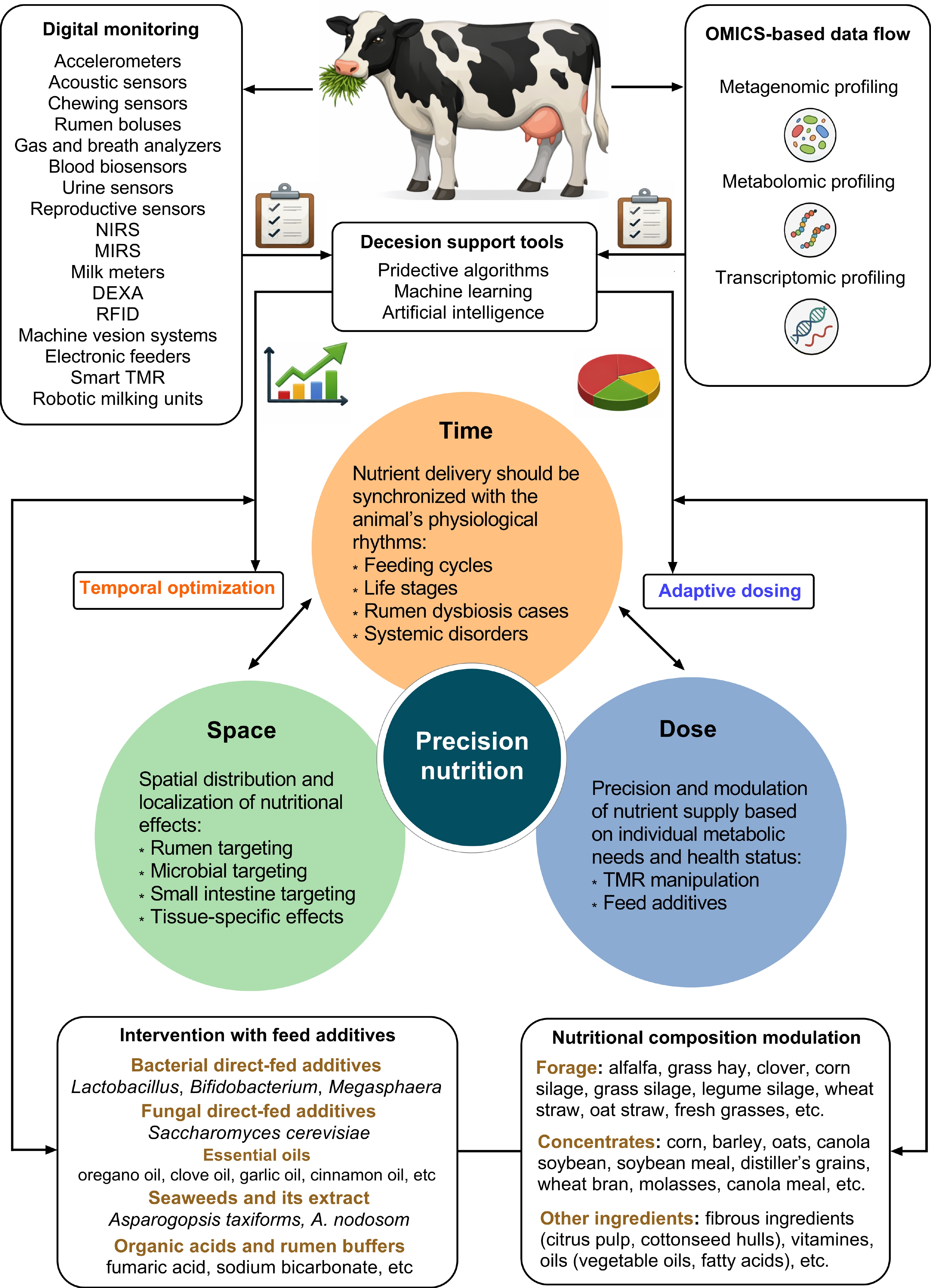
Figure 2.
Three-dimensional regulatory model of dynamic nutritional intervention in precision nutrition for ruminants. This figure presents the three-dimensional regulatory model of dynamic nutritional intervention (time × space × dose) to optimize precision nutrition strategies for ruminants. Digital monitoring and advanced tools track physiological parameters, feeding behaviors, and health markers in real time, providing critical insights into animal performance. OMICS-based data flow (metagenomic, metabolomic, transcriptomic) enables comprehensive analysis of microbial communities, metabolic pathways, and host gene expression, deepening our understanding of the gut-metabolome-immune axis. Data from both monitoring tools and OMICS analysis reflect nutrient utilization, microbial activity, and metabolic status, guiding precision nutrition interventions. Decision support tools such as predictive algorithms, machine learning, and artificial intelligence convert raw data into predictive models, informing adaptive dosing and dietary adjustments. These models help identify the optimal timing, dose, and spatial targeting of nutritional interventions, tailoring nutrition to the animal’s needs. Insights enable precise modulation of nutrients at the right time (e.g., aligning with lactation or rumen dysbiosis, systemic disorders), at the correct dose (e.g., feed additives, dietary ingredients manipulation), and in the right space (e.g., rumen, tissues, microbial communities), ensuring maximal health, productivity, and efficiency.
Monitoring forms the foundation of precision nutrition by continuously capturing data on feeding behaviors, body condition, physiology, metabolism, and environmental factors. Advanced digital monitoring technologies allow for high-frequency, real-time tracking of various animal physiological parameters. Tools such as optical sensing technologies (e.g., RGB imaging, NIRS, multispectral imaging, and hyperspectral imaging), LiDAR, and electronic feeders allow for the assessment of feed quantity and quality. Additional sensors such as accelerometers, acoustic sensors, and machine vision systems are used to track the changes in feeding duration, intake rate, sorting behavior, and rumination time, providing detailed insights into feeding efficiency and behavior. Other sensors, including chewing sensors, rumen boluses, and biosensors for blood metabolites, offer continuous insights into the digestive and metabolic status of animals. Non-invasive tools such as urine sensors, fecal NIRS, and milk meters integrated with NIRS, MIRS, and biosensors help capture data on milk yield, composition, and metabolic biomarkers, allowing for continuous assessment of metabolic health. Environmental sensors, including infrared cameras and weather stations, monitor external stressors such as heat or cold, providing the necessary feedback to adjust feeding strategies for climate-responsive nutrition. In addition, OMICS-based data flow (metagenomic, metabolomic, transcriptomic) enables comprehensive analysis of microbial communities, metabolic pathways, and host gene expression, deepening our understanding of the gut-metabolome-immune axis. The true value of multi-omics lies in its ability to support model construction and discover specific metabolic and microbiome biomarkers. These biomarkers can then be applied in real-time on farms using low-cost sensors, such as predicting specific metabolites via MIRS, NIRS, or biosensor arrays, offering practical, on-farm tools for dynamic nutritional adjustments.
Data integration and feedback loops from both monitoring tools and omics analysis reflect nutrient utilization, microbial activity, and metabolic status, guiding precision nutrition interventions. Decision support tools such as predictive algorithms, machine learning, and artificial intelligence convert raw data into predictive models, informing adaptive dosing and dietary adjustments. These models help identify the optimal timing, dose, and spatial targeting of nutritional interventions, tailoring nutrition to the animal’s needs. The continuous feedback mechanism is integral to this process, allowing the system to adapt dynamically in real-time to fluctuations in lactation, rumen dysbiosis, systemic disorders, and other changes in physiological or environmental conditions. Insights enable precise modulation of nutrients at the right time (e.g., aligning with lactation, rumen dysbiosis, or systemic disorders), at the correct dose (e.g., adjusting feed additives or dietary ingredients manipulation), and in the right space (e.g., rumen, tissues, or microbial communities). This continuous data-driven feedback system ensures that nutritional interventions are consistently aligned with the animal’s real-time physiological needs, ensuring maximal health, productivity, and efficiency.
-
Despite the transformative potential of gut-metabolome-immune axis-based precision nutrition in ruminants, widespread adoption remains constrained by logistical, technical, and economic barriers. Implementation requires substantial investment in omics platforms, sensor infrastructure, and AI-driven analytics, which limits accessibility for small- and medium-scale producers, particularly in low- and middle-income regions. These challenges are amplified in extensive grazing systems by limited connectivity, power infrastructure, and technical support. In addition, the integration of multi-omics, environmental, and sensor-derived data generates complex datasets that are often fragmented across non-standardized platforms, hindering interoperability and biological interpretation. The scarcity of validated biomarkers, ruminant-specific reference databases, and user-friendly decision-support tools further restricts translation into actionable nutritional strategies, while gaps in technical training contribute to data overload and reduced producer confidence.
At the same time, several converging developments are creating pathways for broader adoption. Declining costs of sensors, sequencing technologies, and computational resources, together with mobile diagnostics and low-power biosensors, are expanding access to real-time monitoring across diverse production systems. Cloud-based machine learning platforms are improving scalability and analytical capacity, while policy initiatives supporting climate-smart agriculture, traceability, and sustainable intensification are fostering enabling environments. Financial incentives and growing consumer demand for sustainable, transparent, and welfare-oriented animal production further align market forces with precision nutrition goals.
Future progress will depend on the development of integrated, AI-enabled platforms that couple real-time phenotyping with longitudinal multi-omics data to support adaptive, individualized feeding strategies. Systems biology approaches will refine understanding of host–microbiome–diet interactions and guide the design of targeted functional feed additives. Central to this evolution will be the establishment of standardized, curated databases linking additives to their mechanistic effects on immunometabolic pathways, supported by certification frameworks to enhance regulatory compliance and functional labeling. Coordinated efforts across academia, industry, and policy will be essential to deliver scalable, interoperable, and economically viable solutions, positioning precision nutrition as a cornerstone of sustainable and resilient ruminant production systems.
-
The integration of precision nutrition with multi-omics approaches and smart farming technologies provides a transformative framework for advancing ruminant production systems. By dynamically aligning nutrient supply with real-time indicators of microbial composition, metabolic state, and immune responsiveness, precision nutrition enables improved biological efficiency while reducing nutrient losses and environmental impact. Monitoring-informed application of functional additives, including DFMs, prebiotics, EO, seaweed-derived products, OA, and buffering agents, offers targeted modulation of rumen function, pH stability, nutrient utilization, and host immune competence. The future of this field will depend on AI-driven decision-support systems capable of translating complex, high-dimensional biological data into adaptive nutritional strategies. Within this context, the proposed gut–metabolome–immune framework represents a scalable and integrative platform for next-generation ruminant nutrition research and sustainable livestock systems. Critically, future progress must bridge multi-omics discovery and practical application by converting metagenomic, metabolomic, and transcriptomic insights into robust, simplified predictive models and biomarkers that can be deployed through rapid, low-cost on-farm monitoring tools, enabling real-time, data-driven nutritional interventions.
Not applicable.
-
Not applicable.
-
The authors confirm contribution to the paper as follows: study conception and design: Mousa AA; investigation: Mousa AA, Medjadbi M, Xie F, Abdelsattar MM; software: Mousa AA; data curation: Mousa AA, Medjadbi M; visualization: Mousa AA; validation: Mousa AA, Mohamed S, Elokil A; resources: Mousa AA, Baghdady GS; writing − draft manuscript preparation: Mousa AA; writing − review and editing: Mousa AA, Medjadbi M, Xie F, Abdelsattar MM, Baghdady GS, Mohamed S, Elokil A. All authors reviewed the results and approved the final version of the manuscript.
-
Data availability is not applicable to this article as no datasets were generated or analyzed during the current study.
-
The authors declare that they have no financial or personal relationships with individuals or organizations that could improperly influence this work, and there are no professional or personal interests of any kind in any product, service, or company that could be perceived as affecting the content of this paper.
- Copyright: © 2026 by the author(s). Published by Maximum Academic Press on behalf of Nanjing Agricultural University. This article is an open access article distributed under Creative Commons Attribution License (CC BY 4.0), visit https://creativecommons.org/licenses/by/4.0/.
-
About this article
Cite this article
Mousa AA, Medjadbi M, Xie F, Abdelsattar MM, Baghdady GS, et al. 2026. Precision nutrition strategies to modulate the gut–metabolome–immune axis in ruminants: integrating digital monitoring, multi-omics approaches, and functional feed additives. Animal Advances 3: e024 doi: 10.48130/animadv-0026-0011 

Precision nutrition strategies to modulate the gut–metabolome–immune axis in ruminants: integrating digital monitoring, multi-omics approaches, and functional feed additives
- Received: 26 January 2026
- Revised: 05 April 2026
- Accepted: 07 May 2026
- Published online: 04 September 2026
Abstract: The growing complexity of modern livestock production, driven by intensification, climate change, consumer expectations, and environmental constraints, necessitates nutritional strategies that transcend conventional feeding approaches. Traditional ration formulation maximizes average herd performance but often neglects individual animal variability and the dynamic interplay between diet, health, and environmental emissions. Precision nutrition has therefore emerged as a transformative paradigm, particularly in ruminant systems, by integrating digital monitoring, advanced modeling, and multi-omics insights to enable individualized and adaptive feeding strategies. This review synthesizes recent advances across three interconnected domains: technological enablers, biological insights, and nutritional interventions. We first highlight continuous sensing platforms, including wearable sensors, imaging technologies, and radio-frequency identification systems, coupled with AI-driven predictive analytics, which provide real-time assessments of feeding behavior, digestion, and physiology. We then examine biological foundations derived from metagenomics, metabolomics, and transcriptomics, positioning the gut–metabolome–immune axis as a central regulatory triad of ruminant performance. Disruptions in this axis, often triggered by imbalanced diets, compromise rumen stability and host physiological functions, underscoring the need for precision-guided nutritional modulation. Functional additives such as direct-fed microbials, prebiotics, essential oils, seaweed extracts, organic acids, and ruminal buffers are discussed as tools to reshape microbial ecology, stabilize rumen pH, optimize volatile fatty acid (VFA) production, mitigate gas emissions, and enhance systemic metabolism and immune function. Building on these insights, we propose a systems-based precision nutrition framework that links digital phenotyping and multi-omics biomarkers to targeted nutritional intervention strategies, enabling context-specific, host-aligned interventions. Finally, we outline the potential practical challenges, economic implications, and research priorities for scaling AI-enabled decision support in smart dairy and meat production systems. By bridging technology, biology, and nutrition, precision nutrition guided by the gut–metabolome–immune axis emerges as a cornerstone for resilient, productive, and sustainable ruminant systems.