-
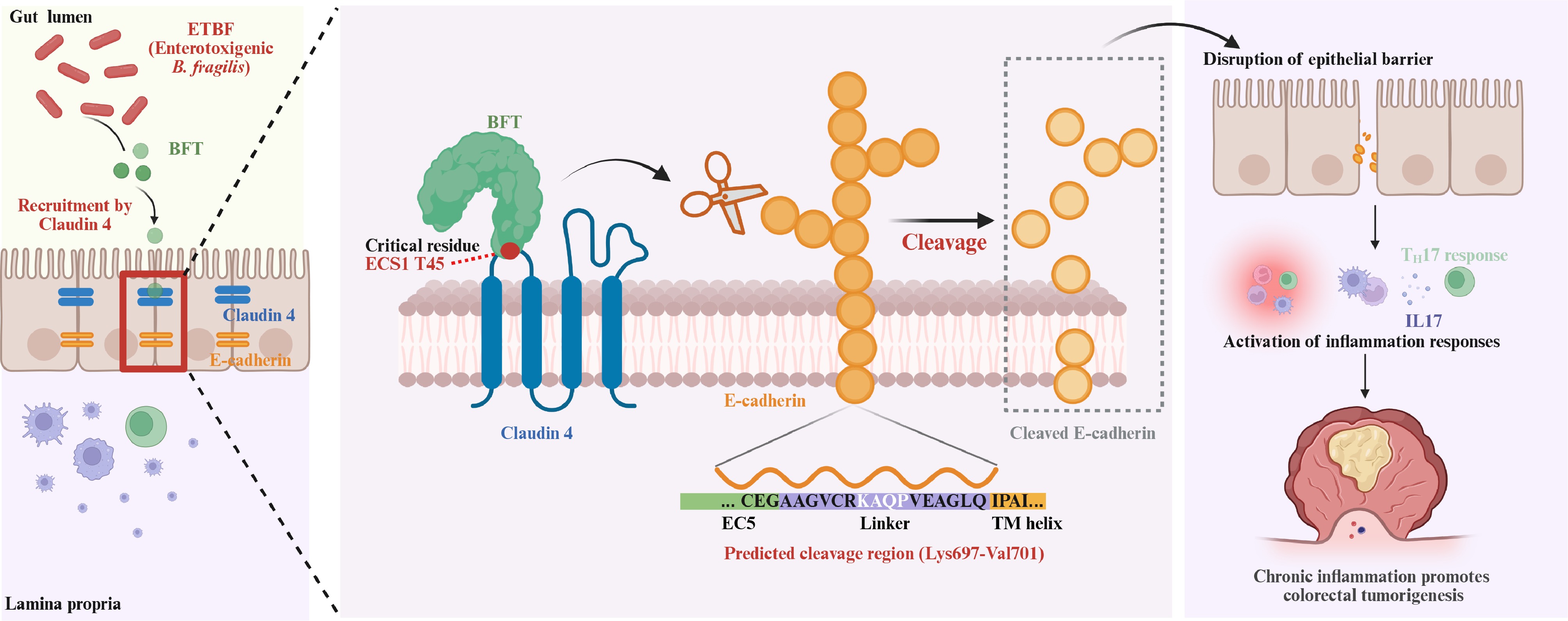
Figure 1.
Schematic diagram of BFT-claudin-4-mediated epithelial barrier disruption. Enterotoxigenic Bacteroides fragilis (ETBF) secretes B. fragilis toxin (BFT) into the gut lumen. BFT is recruited to colonic epithelial cells through binding to claudin-4 (CLDN4), a tight junction protein. The extracellular region of CLDN4 mediates toxin recognition, with residue T45 within ECS1 acting as a critical determinant for stable BFT binding. Upon CLDN4 engagement, BFT, a metalloprotease, is then positioned near membrane-associated E-cadherin and cleaves its extracellular domain. AlphaFold 3-based modelling predicts that the E-cadherin membrane-proximal linker region, particularly residues Lys697-Val701 near the extracellular domain 5-transmembrane helix junction, is threaded into the BFT active site. Cleavage of E-cadherin disrupts adherens junction integrity, weakens the epithelial barrier, and promotes inflammatory responses, including Th17-associated cytokine signaling. Sustained epithelial barrier damage and inflammation may ultimately contribute to colorectal tumorigenesis (created with
BioRender.com ).
Figures
(1)
Tables
(0)