-
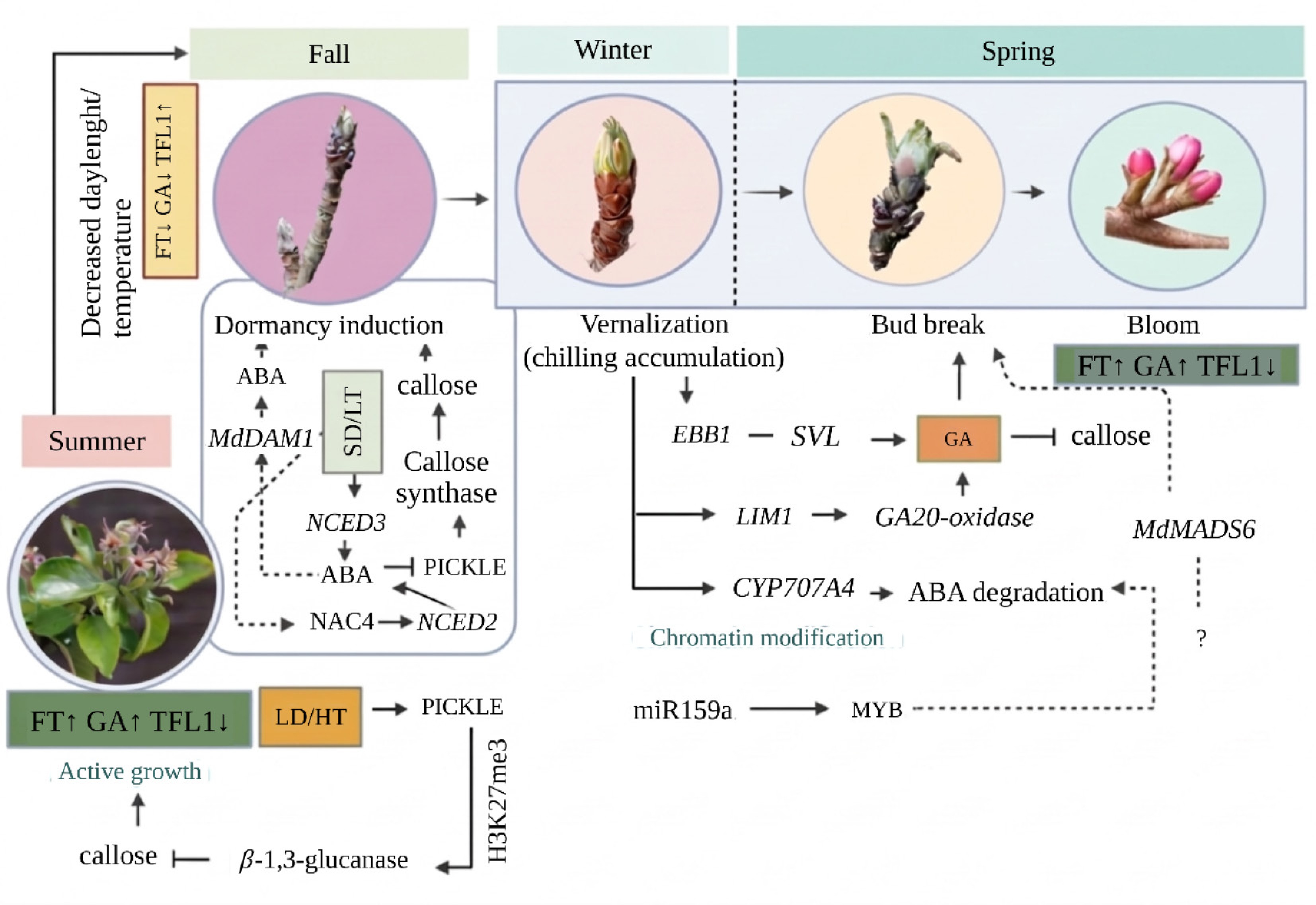
Figure 1.
The molecular control of seasonal bud development. As days get shorter after the start of astronomical summer, axial buds develop and potentially differentiate. A number of genes shape bud identity during dormancy in autumn, and growth arrests until adequate chill hours are sensed (endodormancy). Following adequate exposure to chill, heat units accumulate (ecodormancy) to activate pathways associated with budbreak. Lesions in any of the complex nodes of these integrated processes may affect dormancy and/or budbreak. Inset photo credits: Darren Turpin (
orchardnotes.com ) -
Genotype Origin Parental lines Susceptibilities Estimated chilling hours 'Anna' Israel 'Red Hadassiya' × 'Golden Delicious' U 250–300 'Beverly Hills' USA 'Melba' × 'Early McIntosh' F, PM 300 'Big River' USA Unknown U 250–400 'Dorsett Golden' Bahamas Seedling U 250–300 'Ein Shemer' Israel 'Zabidani' × 'Golden Delicious' U 200–300 'Elsa Sweet' USA Unknown U 200–300 'HRMN-99' India Seedling U *Unknown 'Julieta' Brazil 'Anna' × 'Mollie's Delicious' U 300–450 'Joy's Apple' USA Unknown U 200–300 'Lady Williams' Australia 'Rokewood' × 'Granny Smith' PM, S 200–300 'Pettingill' USA Seedling U 300 'Shell of Alabama' USA Seedling U 200-400 'Tropical Beauty' South Africa Seedling U 100 'Tropic Sweet' USA 'NJ38' × 'Anna' S 300–400 'Vered' Israel 'Calville St. Sauveur' × unnamed local seedling F, S, PM 100–200 'Winter Banana' USA Seedling CAR, S 300–400 Winter Cox' USA Unknown U 250–300 CAR, cedar apple rust; F, fire blight; PM, powdery mildew; S, scab; U, unknown; * While the estimated chilling hour range is unknown, the cultivar has been successfully grown in low-chill areas of the country (500 chilling hours or fewer). Table 1.
Varieties described as 'ultra-low chill' (300 chilling hours minimum or fewer).
-
Apple name Place of origin Apple origins Susceptibilities Estimate range of chilling hours 'Caricia' Brazil 'Anna' × 'Prima' U 350–450 'Chenango Strawberry' USA Seedling F 400 'Cripps Pink' Australia 'Golden Delicious' × 'Lady Williams' CAR, F, PM, S 400–500 'Cripps Red' Australia 'Golden Delicious' × 'Lady Williams' F, PM, S 400–500 'Cauley' USA Seedling F 400–500 'Eva' Brazil 'Anna' × 'Gala' U 330–350 'Fuji' Japan 'Red Delicious' × 'Ralls Janet' CAR, F 400–500 'Gala' New Zealand 'Kidd's Orange Red' × 'Golden Delicious' C, CAR, F, PM, S 400–500 'Gordon' USA Seedling U 400 'Granny Smith' Australia Seedling F, PM, S 400–500 'Hawaii' USA 'Golden Delicious' × 'Gravenstein' S *Unknown 'Maayan' Israel ('Calville St. Sauveur' × 'Damascus') × 'Delicious' U 450 'Michal' Israel ('Calville St. Sauveur' × 'Damascus') × 'Delicious' U 425 'Mollie's Delicious' USA ('Golden Delicious' × 'Edgewood') × ('Red Gravenstein' × 'Close') C 450–500 'Princesa' Brazil 'NJ56' × 'Anna' U 350–450 'Red Astrachan' Russia Seedling C, S *Unknown 'Reverend Morgan' USA Seedling U *Unknown 'San Jacinto' USA Seedling U *Unknown 'Summer Champion' USA Seedling CAR, S *Unknown 'White Winter Pearmain' USA Seedling S 400 C, canker; CAR, cedar apple rust; F, fire blight; PM, powdery mildew; S, scab; U, unknown; * While the estimated chilling hour range is unknown, the cultivar has been successfully grown in low-chill areas of the country (500 chilling hours or fewer). Table 2.
Apples reported to break dormancy in response to 300–500 chilling hours.
Figures
(1)
Tables
(2)