-
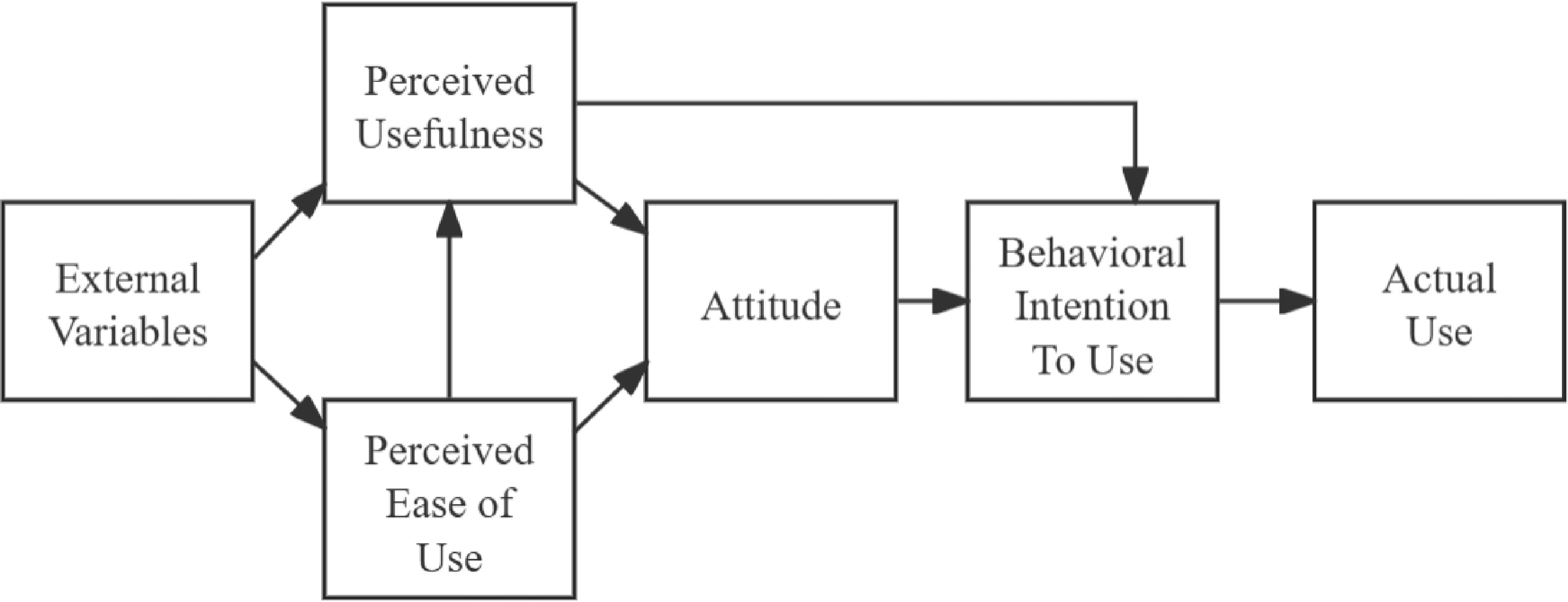
Figure 1.
The original version of the technology acceptance model used in this study.
-
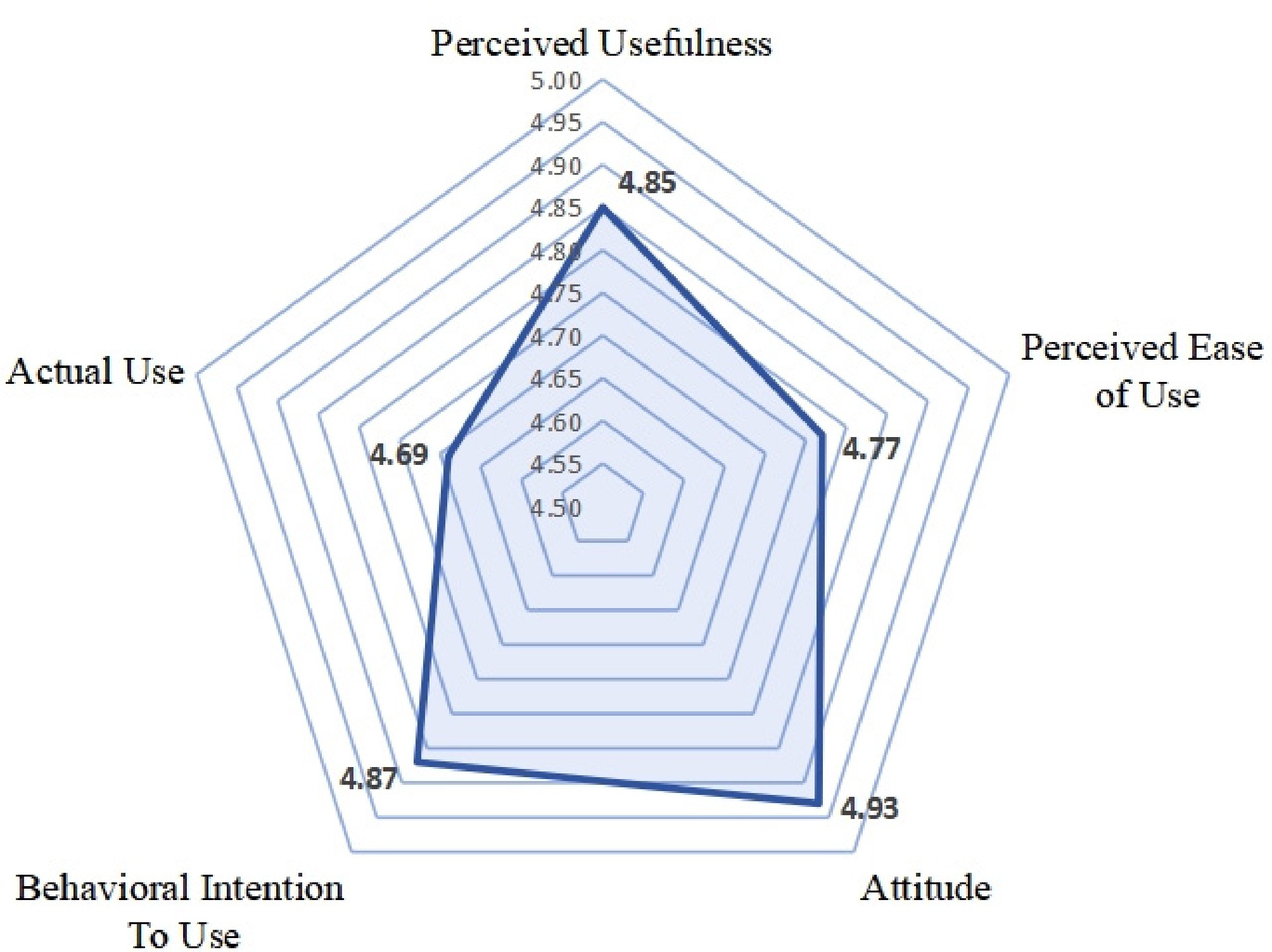
Figure 2.
Acceptance of the digital smoking cessation intervention in elderly COPD patients.
-
Characteristic Category n (%) Sex Male 510 (88.70) Female 65 (11.30) Age Younger elderly people (aged 60–74 years) 480 (83.47) Older elderly people (aged 75 years and above) 95 (16.53) Education degree Junior high school and below 140 (24.35) High school and technical secondary school 242 (42.09) Undergraduate and junior college 187 (32.52) Graduate student or above 6 (1.04) Occupation Cadre 60 (10.43) Civil servant 5 (0.87) Office worker 82 (14.26) Worker 212 (36.87) Farmer 77 (13.39) Professionals 22 (3.83) Retire 30 (5.22) Unemployed 2 (0.35) Other 85 (14.78) Settlements District of Beijing 345 (60.00) Beijing suburbs/rural areas 112 (19.48) Out of town 60 (10.43) Out-of-town suburbs/rural areas 58 (10.09) Marital status Unmarried 2 (0.35) Married or remarried 560 (97.39) Divorced or widowed 13 (2.26) Living status Living alone 37 (6.43) Living together with spouse 460 (80.00) Live with children 42 (7.30) Living with spouse and children 32 (5.57) Other 4 (0.70) Primary caregiver Oneself 537 (93.39) Spouse 27 (4.70) Children 11 (1.91) Medical expenses payment At public expense 20 (3.49) Medical insurance 445 (77.39) New rural cooperative medical insurance 42 (7.30) Self-financed 65 (11.30) Other 3 (0.52) Table 1.
Basic information of patients (n = 575).
-
Items Category n (%) COPD course of disease Initial diagnosis 178 (30.87) ≤ 3 years 222 (38.70) > 3 years 175 (30.43) FEV1% Grade I (mild): FEV1% ≥ 80% 95 (16.52) Grade II (moderate): 50% ≤ FEV1% < 80% 285 (49.57) Grade III (severe): 30% ≤ FEV1% < 50% 160 (27.83) Grade IV (extremely severe): FEV1% < 30%, or FEV1% < 50% with chronic respiratory failure 35 (6.08) CAT grade (COPD assessment test) Minor effect (0–10) 313 (54.35) Medium Impact (11–20) 230 (40.00) Serious impact (21–30) 27 (4.78) Very serious impact (31–40) 5 (0.87) mMRC grade (modified Medical Research
Council dyspnea scale)Only get breathless with strenuous exercise (0) 205 (35.65) Shortness of breath occurs when hurrying on level ground or walking up a slight hill (1) 237 (41.22) Walk slower than people of the same age because of breathlessness or have to stop for breath when walking at one's own pace on the level (2) 98 (17.04) Stop for breath after walking about 100 m or after a few minutes on level ground (3) 27 (4.70) Too breathless to leave the house or be breathless when dressing/undressing (4) 8 (1.39) Table 2.
Disease characteristics of the patients (n = 575).
-
Items Category n (%) Willingness to use digital medicine Very unwilling 2 (0.43) Unwilling 45 (7.83) Neutral 150 (26.09) Willing 217 (37.82) Very willing 161 (27.83) Digital therapeutics service forms Internet search engine 69 (12.00) WeChat official account 204 (35.47) APP 106 (18.43) WeChat mini program 196 (34.10) Other 0 Satisfaction with digital therapeutics use Very unsatisfied 60 (10.43) Unsatisfied 250 (43.48) Neutral 175 (30.43) Satisfied 75 (13.04) Very satisfied 15 (2.62) Frequency of digital therapeutics use Not in use for a week 220 (38.26) 1–3 days a week 197 (34.26) 4–6 days a week 118 (20.52) Use every day 40 (6.96) Functional services commonly used or desired for digital smoking cessation include Relevant knowledge about smoking cessation 235 (40.87) Reminders for medications 322 (56.00) Online consultations with medical staff 232 (40.35) Daily medication check-in record 310 (53.91) Guidance for smoking cessation training 335 (58.26) Patient communication features 230 (40.00) Online health courses and lectures 380 (66.09) Push notifications for treatment plans 327 (56.87) Self-monitoring and symptom assessment 350 (60.87) Other services 3 (0.52) APP, Application; multiple options were available for functional demand items. Table 3.
Patient willingness and current status of digital smoking cessation intervention (n = 575).
-
Items Users (n = 220) Non-users (n = 355) t-value p-value Attitude toward use 4.98 ± 0.45 4.88 ± 0.71 1.87 > 0.05 Behavioral intention 4.92 ± 0.49 4.80 ± 0.73 2.16 < 0.05 Perceived usefulness 4.95 ± 0.52 4.73 ± 0.74 3.86 < 0.05 Perceived ease of use 4.89 ± 0.56 4.65 ± 0.78 3.97 < 0.05 Actual use behavior 4.88 ± 0.60 4.49 ± 0.82 6.11 < 0.05 TAM total score 24.67 ± 2.15 22.55 ± 3.42 8.24 < 0.05 Table 4.
Comparison of TAM dimension scores between digital intervention users and non-users.
Figures
(2)
Tables
(4)