












-
Chronic obstructive pulmonary disease (COPD) is a widely prevalent respiratory disease with a high mortality rate worldwide, imposing a heavy disease burden on society[1]. In China, the prevalence of COPD among individuals aged 70 and older is 35.5%. This situation presents a significant public health challenge that severely impacts Chinese residents[2]. Smoking is regarded as the most significant risk factor for COPD, and quitting smoking is a crucial strategy to slow disease progression and enhance lung function. The Global Initiative for Chronic Obstructive Lung Disease (GOLD) and relevant domestic guidelines[3,4] have clearly indicated that smoking cessation is the crucial point of the prevention and management of COPD. While the importance of quitting smoking is clear, the rates of smoking cessation among COPD patients in China remain low. This may be due to limited accessibility and effectiveness of cessation treatments[5,6]. Despite the proven effectiveness of traditional smoking cessation interventions, such as counseling and pharmacotherapy, their limited coverage and lack of personalization pose significant challenges, making them insufficient to meet the needs of the large population of patients with COPD[7].
With the rapid advancement of information technology, Digital Therapeutics (DTx) offer smokers more convenient and personalized approaches to quitting smoking, demonstrating great potential for clinical application[8−10]. The Digital Therapeutics Alliance (DTA)[11] defines Digital Therapeutics (DTx) as evidence-based medical interventions that integrate software applications, wearable devices, and digital services to prevent, treat, or manage various diseases. DTx is regarded as a vital complement to traditional medicine[11−14]. However, the application of DTx in COPD smoking cessation intervention in China is still in its early stages. As of April 2015, the number of digital therapeutics service users reached 90 million, the majority of whom were young people, while elderly individuals, despite having greater healthcare needs, were not the primary users of DTx[15]. In any context where new technologies are combined with established practices, users' acceptance is essential for successful adoption. In the field of information technology, behavioral intention (BI) refers to an individual's tendency to adopt a technology, specifically the perceived likelihood of using it[16,17].
This study adopted the Technology Acceptance Model (TAM) as the core theoretical framework to analyze the willingness of elderly patients with chronic obstructive pulmonary disease (COPD) to use digital smoking cessation interventions. First proposed by Davis in 1989, TAM has become one of the most classical and widely applied theories for investigating information technology adoption behaviors, especially in the fields of healthcare and digital health service research[18]. As illustrated in Fig. 1, the core constructs of TAM consist of perceived ease of use (PEOU) and perceived usefulness (PU). Specifically, PEOU refers to users' subjective judgment on the effort required to operate a technical system, while PU reflects users' beliefs that adopting the technology can improve their health management performance. These two core factors significantly shape users' attitudes toward technology use, and further jointly determine their behavioral intention to adopt relevant technologies, which ultimately predicts actual usage behavior. Since the willingness to use digital therapeutics (DTx) essentially belongs to the category of individual behavioral decision-making, TAM provides a rigorous, mature, and systematic theoretical framework for exploring the cognitive mechanisms and motivational factors behind users' adoption of digital health tools.
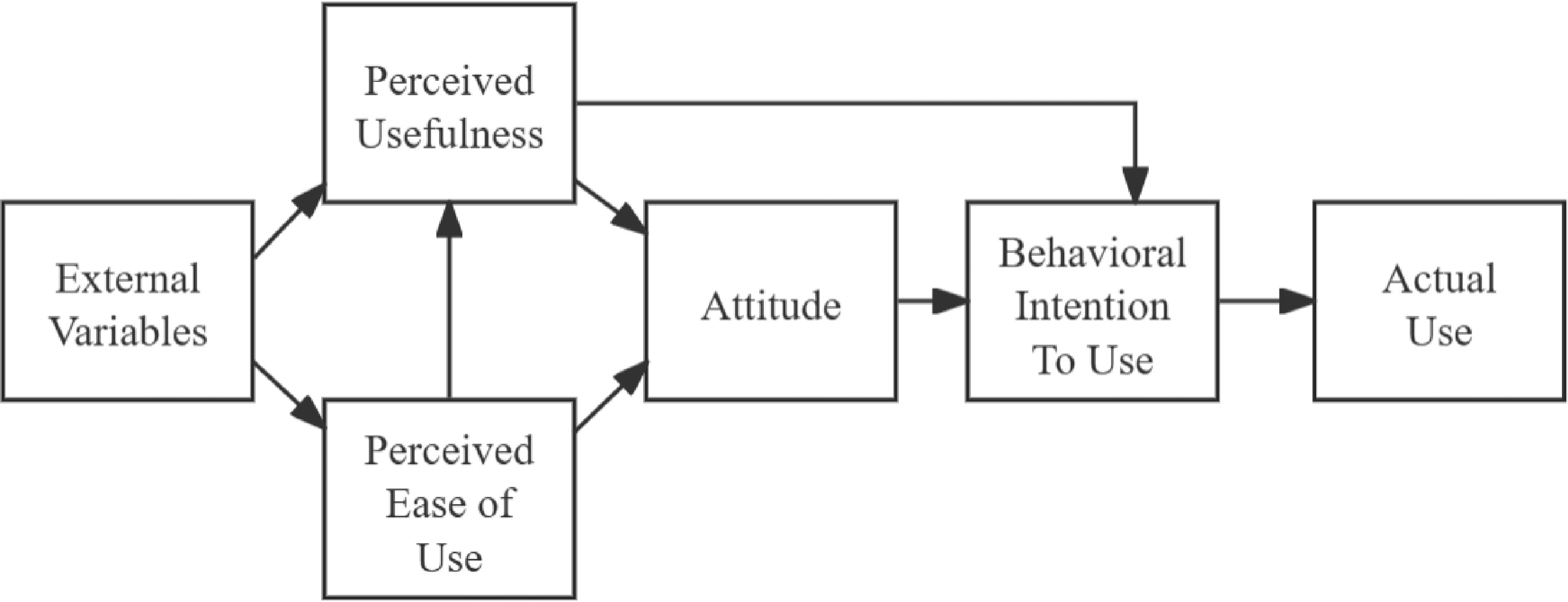
Figure 1.
The original version of the technology acceptance model used in this study.
Existing Internet-based healthcare adoption studies conventionally focus on external predictors of digital health use, including individual traits, environmental contexts, and healthcare system attributes[19,20], but largely ignore the internal psychological perceptions and attitudinal factors that mediate older adults' technology adoption behaviors. Critically, the specific perceptions, acceptance status, and practical barriers of digital smoking cessation interventions among elderly Chinese patients with COPD have been consistently overlooked in current literature. A scoping review confirmed that mobile health research for older patients with chronic respiratory diseases predominantly concentrates on general disease management rather than targeted smoking cessation support, and age-specific digital health adaptation issues for elderly COPD populations remain poorly understood[21]. Compounding this gap, current COPD-related digital health studies are mainly limited to three mainstream research directions: general mobile health management for COPD symptom control, economic benefit evaluation of digital medical services, and universal chronic disease digital intervention research for ordinary populations[22,23]. Few studies have independently designed, evaluated, or explored digital smoking cessation programs tailored exclusively for COPD patients. Even though existing mobile health interventions have been proven to improve overall COPD management and reduce medical costs, they do not address the unique demands of smoking cessation intervention for this patient group[22]. Most importantly, prior relevant studies have failed to address two core unresolved scientific questions. First, it remains unclear what key perceptual factors drive or hinder elderly Chinese COPD patients' willingness to adopt digital smoking cessation services. Second, how psychological perception mechanisms shape their digital intervention adoption decisions has not been theoretically and empirically clarified, and targeted exploration based on mature behavioral models for this specific population is still lacking. To address these research gaps, this study employs the Technology Acceptance Model (TAM) as the core theoretical framework. Focusing specifically on elderly Chinese COPD smokers, it describes the current acceptance of digital smoking cessation interventions across five TAM-related dimensions, together with patients' functional demands and usage patterns, and aims to provide preliminary descriptive evidence to inform the future development of age-friendly digital smoking cessation services. In this study, TAM was adopted as a dimensional measurement framework to structure the assessment of acceptance, rather than to empirically test the causal pathways among its constructs.
-
The study was approved by the Ethics Committee of Beijing Chaoyang Hospital, Beijing, China (Identification number: 2024-ke-595, 2025-ke-1). In this study, stratified cluster sampling was used to recruit eligible COPD patients to conduct a questionnaire survey in four hospitals in Beijing according to its urban spatial structure[24]. According to the World Health Organization (WHO) and the age classification standard in China[25], the elderly are defined as 60 years and above.
Inclusion criteria: (1) the diagnosis of COPD complies with the Guidelines for the Diagnosis and Treatment of Chronic Obstructive Lung Disease (Revised 2021) formulated by the Chinese Thoracic Society[26]; (2) age 60 years and above; (3) current daily or occasional smoking for more than 1 year; (4) possess basic daily smartphone usage skills for routine life scenarios; (5) conscious, able to communicate normally, and able to understand and comply with study requirements; (6) voluntarily sign the written informed consent, willing to participate in the study, and receive relevant smoking cessation interventions. Exclusion criteria: (1) serious heart, lung, brain, or blood system disorders and mental illness; (2) history of drug use or other serious dependence behavior; and (3) unable to cooperate with the study, such as unable to receive regular follow-up or intervention for any reason.
Sample size estimation
-
The sample size was estimated using the formula for a cross-sectional survey: n = Z2α/2 × p(1−p)/d2. Because no directly comparable prior estimate of digital smoking cessation acceptance among older COPD patients was available, p was set at 0.50 to obtain the maximum required sample size, with α = 0.05 and d = 0.05. The initial minimum sample size was 384. Considering stratified cluster sampling and potential invalid questionnaires, a design effect of 1.2 and an approximately 20% allowance for invalid responses were applied, yielding a target sample size of approximately 553. Therefore, 600 questionnaires were distributed, which was considered sufficient for the planned descriptive analysis.
Measures
Questionnaire design
-
The self-designed questionnaire 'Digital Smoking Cessation Intervention Willingness Questionnaire for Elderly COPD Patients' was finalized after two rounds of expert consultation and preliminary pre-investigation to ensure content validity and logical rationality. The formal questionnaire consisted of three systematic parts. Part 1 covered socio-demographic characteristics and clinical baseline information of participants. Part 2 investigated the current application status and functional demands of digital smoking cessation health services among elderly COPD patients. Part 3 was developed based on the classic TAM theoretical framework, including five core measurement dimensions: perceived usefulness, perceived ease of use, attitude toward use, behavioral intention, and actual use behavior. All questionnaire items adopted a 7-point Likert scoring standard (1 = strongly disagree, 7 = strongly agree), with higher scores indicating higher levels of patient acceptance and recognition of digital smoking cessation interventions. Internal consistency for the acceptance questionnaire was high (Cronbach's α = 0.98), and the content validity index (CVI) was 0.97.
Statistical analysis methods
-
Once the data were collected, it was entered by two people using EpiData software, and then an analysis database was formed. Statistical analysis of the data was performed using SPSS 22.0. All data were described using mean ± standard deviation (M ± SD) for normally distributed variables; median, interquartile range, maximum, and minimum for non-normal distribution variables; categorical variables were described using frequency and percentage. Cronbach's α coefficient was used for reliability evaluation. Content validity index and Pearson correlation analysis were used for validity evaluation. Subgroup comparative analysis was performed to distinguish differences in digital intervention acceptance based on participants' prior usage experience. All eligible participants were categorized into a user group (with digital smoking cessation intervention experience) and a non-user group (without relevant usage experience). After normality and homogeneity of variance testing, independent-samples t-tests were used to compare the TAM total score and individual dimension scores between the two subgroups, with a two-tailed p-value < 0.05 defined as statistically significant. All subgroup comparisons followed unified normality testing and data processing protocols consistent with the overall sample analysis.
-
A total of 600 questionnaires were distributed and fully retrieved, with 25 invalid questionnaires excluded due to logical errors, yielding 575 valid samples with an effective response rate of 95.83%. The sample was predominantly male (88.70%), and most participants were younger elderly adults aged 60–74 years (83.47%). The majority of participants were married (97.39%), resided in urban areas of Beijing (60.00%), lived with their spouses (80.00%), and had a high school or technical secondary school education (42.09%). Most participants took personal responsibility for daily health care (93.39%) and were covered by medical insurance (77.39%). Detailed sociodemographic characteristics are presented in Table 1.
Table 1. Basic information of patients (n = 575).
Characteristic Category n (%) Sex Male 510 (88.70) Female 65 (11.30) Age Younger elderly people (aged 60–74 years) 480 (83.47) Older elderly people (aged 75 years and above) 95 (16.53) Education degree Junior high school and below 140 (24.35) High school and technical secondary school 242 (42.09) Undergraduate and junior college 187 (32.52) Graduate student or above 6 (1.04) Occupation Cadre 60 (10.43) Civil servant 5 (0.87) Office worker 82 (14.26) Worker 212 (36.87) Farmer 77 (13.39) Professionals 22 (3.83) Retire 30 (5.22) Unemployed 2 (0.35) Other 85 (14.78) Settlements District of Beijing 345 (60.00) Beijing suburbs/rural areas 112 (19.48) Out of town 60 (10.43) Out-of-town suburbs/rural areas 58 (10.09) Marital status Unmarried 2 (0.35) Married or remarried 560 (97.39) Divorced or widowed 13 (2.26) Living status Living alone 37 (6.43) Living together with spouse 460 (80.00) Live with children 42 (7.30) Living with spouse and children 32 (5.57) Other 4 (0.70) Primary caregiver Oneself 537 (93.39) Spouse 27 (4.70) Children 11 (1.91) Medical expenses payment At public expense 20 (3.49) Medical insurance 445 (77.39) New rural cooperative medical insurance 42 (7.30) Self-financed 65 (11.30) Other 3 (0.52) Disease characteristics of patients with COPD
-
Participants exhibited diverse COPD disease courses, including newly diagnosed cases and patients with a disease history exceeding 3 years. In terms of pulmonary function classification based on FEV1%, moderate COPD (Grade II) accounted for the largest proportion (49.57%), followed by severe COPD (Grade III, 27.83%) and mild COPD (Grade I, 16.52%). According to the COPD Assessment Test (CAT) grading, 54.35% of participants reported slight life impacts caused by COPD, while 40.00% reported moderate impacts, 4.78% reported severe impacts, and 0.87% reported extremely severe impacts. Detailed clinical characteristics are summarized in Table 2.
Table 2. Disease characteristics of the patients (n = 575).
Items Category n (%) COPD course of disease Initial diagnosis 178 (30.87) ≤ 3 years 222 (38.70) > 3 years 175 (30.43) FEV1% Grade I (mild): FEV1% ≥ 80% 95 (16.52) Grade II (moderate): 50% ≤ FEV1% < 80% 285 (49.57) Grade III (severe): 30% ≤ FEV1% < 50% 160 (27.83) Grade IV (extremely severe): FEV1% < 30%, or FEV1% < 50% with chronic respiratory failure 35 (6.08) CAT grade (COPD assessment test) Minor effect (0–10) 313 (54.35) Medium Impact (11–20) 230 (40.00) Serious impact (21–30) 27 (4.78) Very serious impact (31–40) 5 (0.87) mMRC grade (modified Medical Research
Council dyspnea scale)Only get breathless with strenuous exercise (0) 205 (35.65) Shortness of breath occurs when hurrying on level ground or walking up a slight hill (1) 237 (41.22) Walk slower than people of the same age because of breathlessness or have to stop for breath when walking at one's own pace on the level (2) 98 (17.04) Stop for breath after walking about 100 m or after a few minutes on level ground (3) 27 (4.70) Too breathless to leave the house or be breathless when dressing/undressing (4) 8 (1.39) Current status of digital smoking cessation service use and functional demand
-
All valid participants were included for statistical analysis of digital service usage and functional demands (n = 575). WeChat-based digital platforms (WeChat official accounts and WeChat mini programs) were the most accessible and frequently used digital smoking cessation service channels among elderly COPD patients. Participants could select multiple functional demands. The frequencies are reported based on the total valid sample (n = 575). Online health courses and lectures (n = 380, 66.09%); self-monitoring and symptom assessment (n = 350, 60.87%); guidance for smoking cessation training (n = 335, 58.26%); reminders for medications (n = 322, 56.00%); relevant knowledge about smoking cessation (n = 235, 40.87%); and online consultations with medical staff (n = 232, 40.35%). Results are shown in Table 3.
Table 3. Patient willingness and current status of digital smoking cessation intervention (n = 575).
Items Category n (%) Willingness to use digital medicine Very unwilling 2 (0.43) Unwilling 45 (7.83) Neutral 150 (26.09) Willing 217 (37.82) Very willing 161 (27.83) Digital therapeutics service forms Internet search engine 69 (12.00) WeChat official account 204 (35.47) APP 106 (18.43) WeChat mini program 196 (34.10) Other 0 Satisfaction with digital therapeutics use Very unsatisfied 60 (10.43) Unsatisfied 250 (43.48) Neutral 175 (30.43) Satisfied 75 (13.04) Very satisfied 15 (2.62) Frequency of digital therapeutics use Not in use for a week 220 (38.26) 1–3 days a week 197 (34.26) 4–6 days a week 118 (20.52) Use every day 40 (6.96) Functional services commonly used or desired for digital smoking cessation include Relevant knowledge about smoking cessation 235 (40.87) Reminders for medications 322 (56.00) Online consultations with medical staff 232 (40.35) Daily medication check-in record 310 (53.91) Guidance for smoking cessation training 335 (58.26) Patient communication features 230 (40.00) Online health courses and lectures 380 (66.09) Push notifications for treatment plans 327 (56.87) Self-monitoring and symptom assessment 350 (60.87) Other services 3 (0.52) APP, Application; multiple options were available for functional demand items. TAM dimension score analysis and intention-usage contradiction
-
Descriptive statistics of TAM dimension scores demonstrated that elderly COPD patients exhibited moderate-to-high overall acceptance of digital smoking cessation interventions. The specific scores (M ± SD) were ranked in descending order: attitude toward use (4.93 ± 0.62), behavioral intention (4.87 ± 0.65), perceived usefulness (4.85 ± 0.68), perceived ease of use (4.77 ± 0.71), and actual use behavior (4.69 ± 0.75). The consistent score gap fully verified the obvious intention-behavior contradiction of participants: elderly COPD patients held positive use attitudes and strong behavioral intentions toward digital smoking cessation interventions, and fully recognized the practical usefulness of digital services. However, restricted by elderly operational barriers and insufficient digital literacy, their real-world actual use behavior scores were relatively low, forming a typical high-intention but low-usage phenomenon. As shown in Fig. 2, attitude toward use had the highest score among the five TAM-related dimensions, whereas actual use behavior had the lowest score.
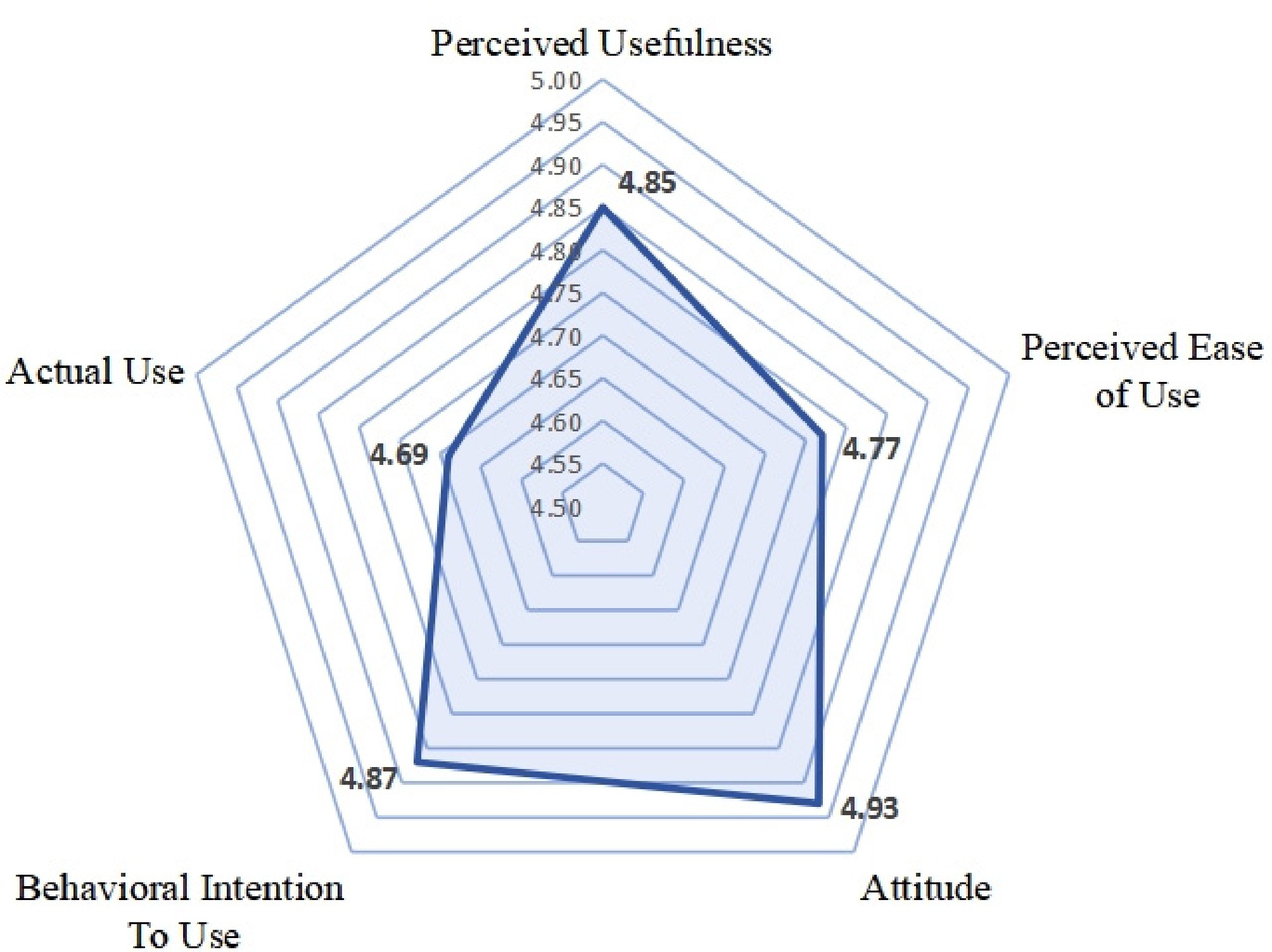
Figure 2.
Acceptance of the digital smoking cessation intervention in elderly COPD patients.
Subgroup analysis: users vs. non-users of digital interventions
-
All participants were categorized into the user group (n = 220) and non-user group (n = 355) according to their history of using digital smoking cessation interventions. Specifically, users were defined as individuals who had utilized any WeChat official account, mini-program, or APP-based digital smoking cessation tool at least once within the preceding 12 months; non-users were indicated by respondents with no prior exposure to such digital cessation services. As shown in Table 4, the TAM total score was significantly higher in the user group than in the non-user group (24.67 ± 2.15 vs. 22.55 ± 3.42, t = 8.24, p < 0.05). For individual dimensions, statistically significant differences were found in behavioral intention (4.92 ± 0.49 vs. 4.80 ± 0.73, t = 2.16); perceived usefulness (4.95 ± 0.52 vs. 4.73 ± 0.74, t = 3.86); perceived ease of use (4.89 ± 0.56 vs. 4.65 ± 0.78, t = 3.97); and actual use behavior (4.88 ± 0.60 vs. 4.49 ± 0.82, t = 6.11) between the two groups (all p < 0.05). No significant difference was detected in attitude toward use between users and non-users (4.98 ± 0.45 vs. 4.88 ± 0.71, t = 1.87, p > 0.05).
Table 4. Comparison of TAM dimension scores between digital intervention users and non-users.
Items Users (n = 220) Non-users (n = 355) t-value p-value Attitude toward use 4.98 ± 0.45 4.88 ± 0.71 1.87 > 0.05 Behavioral intention 4.92 ± 0.49 4.80 ± 0.73 2.16 < 0.05 Perceived usefulness 4.95 ± 0.52 4.73 ± 0.74 3.86 < 0.05 Perceived ease of use 4.89 ± 0.56 4.65 ± 0.78 3.97 < 0.05 Actual use behavior 4.88 ± 0.60 4.49 ± 0.82 6.11 < 0.05 TAM total score 24.67 ± 2.15 22.55 ± 3.42 8.24 < 0.05 -
This study investigated the willingness of elderly patients with chronic obstructive pulmonary disease (COPD) to use digital therapeutics (DTx) for smoking cessation, based on the Technology Acceptance Model (TAM). The results indicated generally favorable acceptance, with 65.65% of participants expressing positive or strongly positive attitudes. High scores in perceived usefulness and behavioral intention further reflect a positive intention toward adopting digital smoking cessation interventions in this population. These findings support the applicability of the TAM framework in understanding DTx adoption among elderly COPD patients and provide a basis for targeted digital health strategies.
Behavioral intentions and implementation challenges
-
This study identified a prominent intention-behavior gap among elderly COPD patients: participants demonstrated high positive behavioral intentions toward digital smoking cessation interventions, while their actual service usage rates and use behavior scores remained relatively low. This core contradiction can be explained by multiple age-related and technical factors. First, insufficient digital literacy remains a fundamental barrier. Although all participants in this study possessed basic smartphone skills as required by the inclusion criteria, basic device operation does not equate to the ability to navigate health-specific digital platforms. Many elderly users may be able to make phone calls or send messages via WeChat but struggle with more complex tasks such as registering for health applications, interpreting digital health reports, or following multi-step intervention protocols. This gap between general smartphone familiarity and health-specific digital competence likely contributes to the discrepancy between expressed willingness and actual engagement. Previous studies have similarly reported that older adults often overestimate their readiness to use digital health tools when asked about intentions, but encounter substantial difficulties during actual use[27]. Second, the operational complexity of existing digital health platforms poses a significant challenge for elderly users. Most currently available digital therapeutics platforms were not originally designed with elderly populations in mind. Complex navigation structures, small font sizes, excessive information density, and multi-layered menu systems can overwhelm older users and generate frustration, leading to early abandonment even among those with initial motivation to engage[28]. The finding that over half of the participants (53.91%) reported dissatisfaction with their previous digital therapeutics experience further suggests that current platform design fails to meet the usability expectations of this age group. Third, the symptom burden associated with COPD itself may hinder sustained digital engagement. Elderly COPD patients frequently experience dyspnea, fatigue, and reduced exercise tolerance, which can limit the time and energy available for interacting with digital devices. In this study, approximately one-third of participants had severe or very severe airflow limitation (FEV1% < 50%), and nearly 6% reported significant breathlessness even at rest. For these patients, the physical demands of managing daily symptoms may take priority over engaging with digital cessation tools, even when they recognize the potential benefits.
Fourth, a strong preference for face-to-face interactions with healthcare professionals may reduce reliance on digital alternatives. Smoking cessation is a complex behavioral change process that involves not only information delivery but also emotional support, motivational reinforcement, and real-time feedback from trusted clinicians. Several participants in this study population were accustomed to receiving cessation guidance through in-person clinical encounters, and the perceived absence of professional oversight in digital platforms may have diminished their confidence in using such tools independently. This interpretation is consistent with prior research suggesting that older adults with asthma or COPD value in-person care and trusted clinicians when considering mobile health tools[27]. Fifth, insufficient trust in the reliability and effectiveness of digital health tools may further widen the intention-use gap. Unlike pharmacological interventions or physician-directed counseling, digital smoking cessation interventions are a relatively novel concept for most elderly COPD patients in China. Uncertainty about data privacy, skepticism regarding the clinical validity of app-based interventions, and a general unfamiliarity with digital therapeutics as a legitimate treatment modality may all contribute to hesitation in translating positive attitudes into consistent use behavior. These findings carry direct implications for the design and implementation of future digital smoking cessation services targeting elderly COPD patients. To bridge the observed intention-use gap, several optimization strategies warrant consideration. At the platform level, age-friendly interface design should be prioritized, including simplified navigation, larger fonts and icons, voice-assisted operation, and minimized procedural steps. At the clinical integration level, digital tools should not be positioned as standalone replacements for professional guidance, but rather as adjuncts embedded within existing clinical workflows. Clinician-initiated onboarding, in which healthcare providers demonstrate and guide initial use during outpatient visits, may substantially reduce operational anxiety and build user confidence. At the support level, ongoing technical assistance through dedicated helplines, family caregiver involvement, or community health worker-mediated training could help sustain engagement beyond initial adoption. As demonstrated by the UK National Health Service's approach of clinician-prescribed health applications, integrating user-friendly digital tools into routine disease management pathways is both feasible and beneficial for long-term behavioral change[29].
Acceptance, needs, and optimization of digital interventions
-
Compared with traditional intervention methods, digital intervention has significant advantages in enabling real-time behavior monitoring and dynamic strategy adaptation through ecological momentary assessment[30], allowing convenient use through mobile platforms, and helping clinical decision-making through data statistics for personalized therapy. The study demonstrated strong overall willingness to use digital smoking cessation tools among elderly COPD patients, particularly through WeChat official accounts and WeChat mini programs. In practice, participants' satisfaction with DTx remained limited, pointing to the need for more patient-centered design better aligned with their usage habits. The survey results also showed that the top three most frequently used and desired digital health modules included online health courses and lectures, self-health symptom monitoring and assessment, and smoking cessation training guidance, highlighting the opportunities to strengthen digital interventions through targeted educational components and adaptive self-management features.
Significant subgroup differences between digital service users and non-users further supplement the research findings. Elderly patients with prior digital intervention experience had higher scores for perceived usefulness, perceived ease of use, use attitude, and behavioral intention scores, indicating that accumulated experience may improve their perceptions of digital health services and reduce operational anxiety and technical barriers. For elderly COPD patients without digital usage experience, targeted digital technology popularization, one-on-one operational guidance, and simplified pre-use training can significantly improve their digital literacy, reduce usage concerns, and raise the overall acceptance and actual usage rate of digital smoking cessation interventions in elderly populations.
Strengths and limitations
-
This study has several limitations. First, because of its cross-sectional design, this study can only describe the current acceptance of digital smoking cessation interventions among elderly COPD patients and cannot establish causal relationships or assess changes in acceptance and actual use over time. Second, participants were recruited from only four hospitals in Beijing, which may limit the generalizability of the findings to COPD patients in other regions, particularly those living in rural areas or areas with different healthcare resources. Third, the data were collected using a self-reported questionnaire, which may be affected by recall bias and social desirability bias. Fourth, the inclusion criterion requiring smartphone proficiency may have excluded elderly COPD patients with lower digital literacy or limited access to digital tools. As a result, the level of acceptance observed in this study may have been overestimated and may not fully represent elderly COPD patients who experience greater difficulties in using digital health services. Future studies should include more geographically diverse populations, especially older adults with lower digital literacy, and should use longitudinal designs to evaluate sustained use and real-world effectiveness of digital smoking cessation interventions. Despite these limitations, this is among the first studies to describe the acceptance of digital smoking cessation interventions specifically among elderly COPD patients in China using a structured TAM-based questionnaire. The sample size (n = 575) exceeded the minimum requirement, and participants were recruited from four hospitals representing different urban functional zones of Beijing. The focus on an underrepresented population and the identification of high-demand digital services offer significant contributions to the field, guiding future development of targeted digital interventions for elderly COPD patients.
-
This study provides valuable insights into the acceptance of digital smoking cessation interventions among elderly COPD patients based on the TAM. Older COPD patients in this cross-sectional study showed generally favorable acceptance of digital smoking cessation interventions, with high scores for attitude, perceived usefulness, perceived ease of use, and behavioral intention. However, actual use was relatively lower, satisfaction with previous digital therapeutics use was limited, and daily use was uncommon. These findings suggest that future digital smoking cessation services should emphasize age-friendly design, technical training, professional guidance, and integration with routine COPD management to improve real-world engagement and support smoking cessation behavior.
-
The study was conducted in accordance with the Declaration of Helsinki, and all procedures were approved by the Ethics Committee of Beijing Chaoyang Hospital, Capital Medical University (Identification number: 2024-ke-595, 2025-ke-1), approval date: September 2, 2024 and January 6, 2025. All procedures performed in this study were in accordance with relevant ethical regulations.
-
The authors confirm their contributions to the paper as follows: contributed equally to this study: Shi C, Wu F, Xiang J; conceptualization, writing – review and editing: Liang L, Jia Y; methodology: Shi C, Wu F; formal analysis: Li J, Zhan X, Lin Y; investigation: Xiang J, Niu J; data curation: Shi C, Li J; writing – original draft: Wu F, Xiang J; supervision: Liang L; project administration: Jia Y. All authors reviewed the results and approved the final version of the manuscript.
-
The raw data supporting the findings of this study are available from the corresponding author upon reasonable request. The data are not publicly available due to privacy and ethical restrictions on clinical participant information.
-
The authors declare that there is no conflict of interest regarding the publication of this manuscript. There are no financial or non-financial competing interests that could affect the objectivity and integrity of the research results.
-
# Authors contributed equally: Chenxi Shi, Fan Wu, Jiahui Xiang
- Copyright: © 2026 by the author(s). Published by Maximum Academic Press, Fayetteville, GA. This article is an open access article distributed under Creative Commons Attribution License (CC BY 4.0), visit https://creativecommons.org/licenses/by/4.0/.
-
About this article
Cite this article
Shi C, Wu F, Xiang J, Li J, Zhan X, et al. 2026. Acceptance of digital smoking cessation interventions based on the technology acceptance model (TAM) among elderly COPD patients: a cross-sectional study. Journal of Smoking Cessation 21: e009 doi: 10.48130/jsc-0026-0008 

Acceptance of digital smoking cessation interventions based on the technology acceptance model (TAM) among elderly COPD patients: a cross-sectional study
- Received: 05 April 2026
- Revised: 16 June 2026
- Accepted: 07 August 2026
- Published online: 29 September 2026
Abstract: This cross-sectional study aimed to systematically evaluate the acceptance of digital smoking cessation interventions and their associated factors among elderly patients with chronic obstructive pulmonary disease (COPD) in Beijing, China, based on the Technology Acceptance Model (TAM). A total of 575 valid questionnaires were collected from four hospitals. The questionnaire covered five TAM-related dimensions: perceived usefulness, perceived ease of use, attitude toward use, behavioral intention, and actual use behavior. Overall, participants showed favorable acceptance of digital smoking cessation interventions. The highest score was observed for attitude toward use (4.93 ± 0.62), followed by behavioral intention (4.87 ± 0.65), perceived usefulness (4.85 ± 0.68), perceived ease of use (4.77 ± 0.71), and actual use behavior (4.69 ± 0.75). WeChat official accounts and WeChat mini programs were the most commonly reported access channels. Participants expressed strong demand for online health courses and lectures, symptom self-monitoring and assessment, smoking cessation training guidance, and treatment plan reminders. These findings suggest that elderly COPD patients may recognize the value of digital smoking cessation services, but the gap between behavioral intention and actual use behavior highlights the need for age-friendly design, simplified operation, technical support, and clinician-guided implementation.
-
Key words:
- COPD /
- Smoking cessation /
- Digital therapeutics /
- Technology acceptance model /
- Acceptance