-
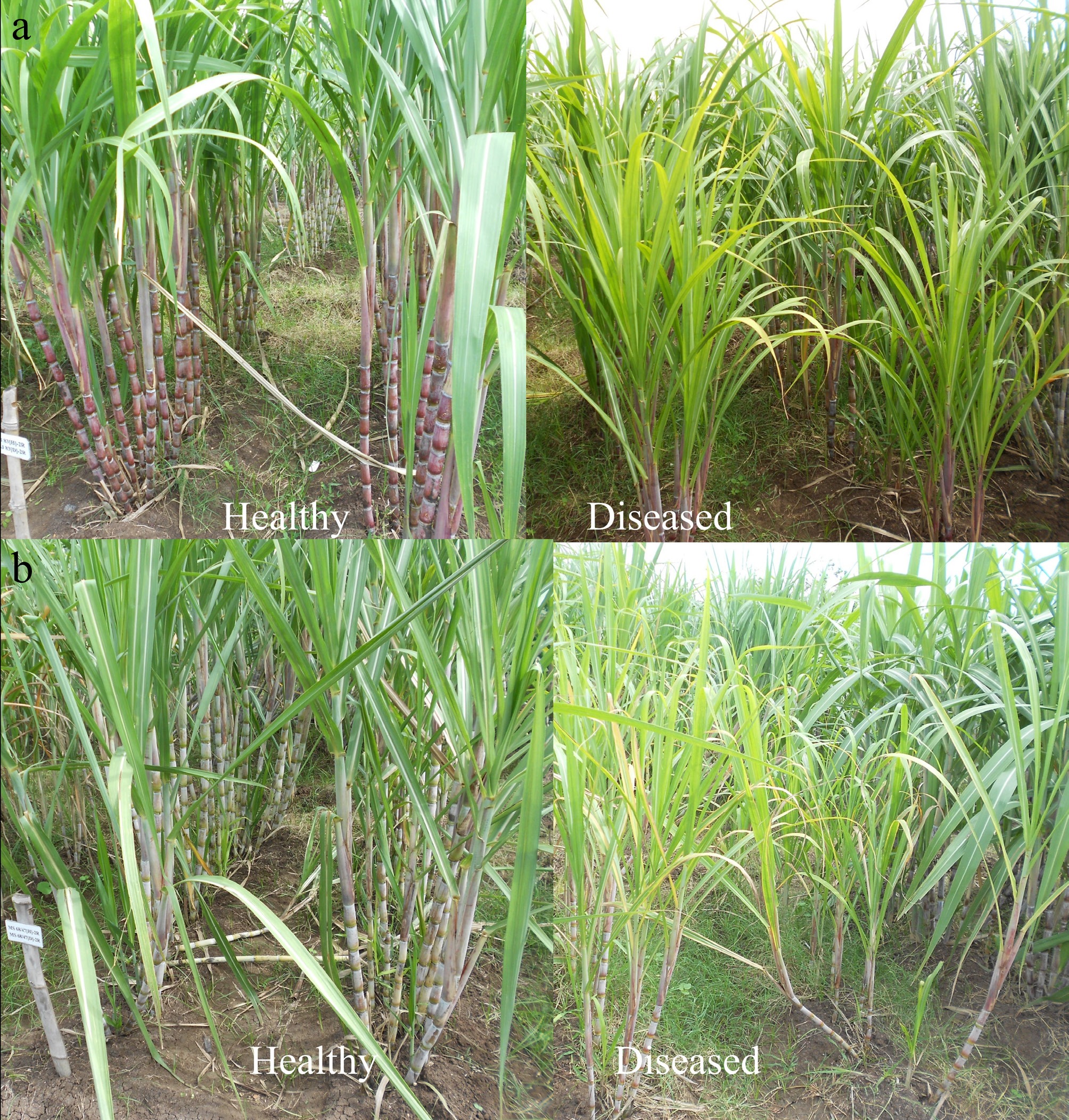
Figure 1.
Field stand of healthy and wilt-affected sugarcane in the field trials (180 days after planting); (a) cv. CoJ 83, (b) cv. MS68/47. Wilt-affected plots exhibit stunted growth with a sparse cane population and a pale canopy.
-
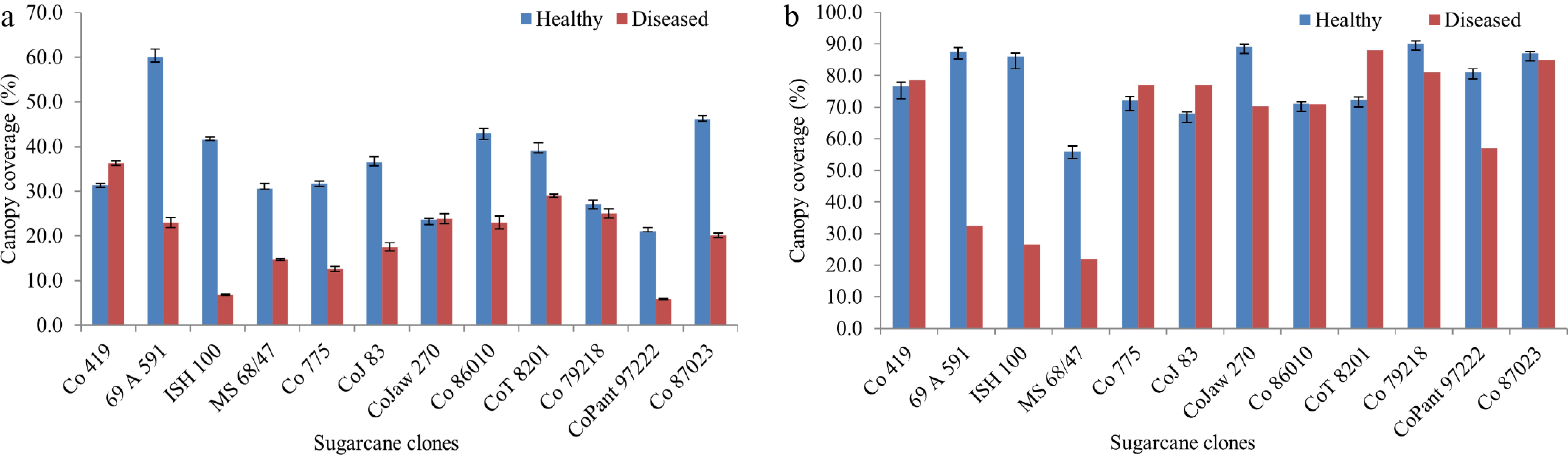
Figure 2.
Effect of wilt on fractional canopy coverage in sugarcane clones. Observations were recorded in the fourth (left) and seventh (right) months after planting.
-
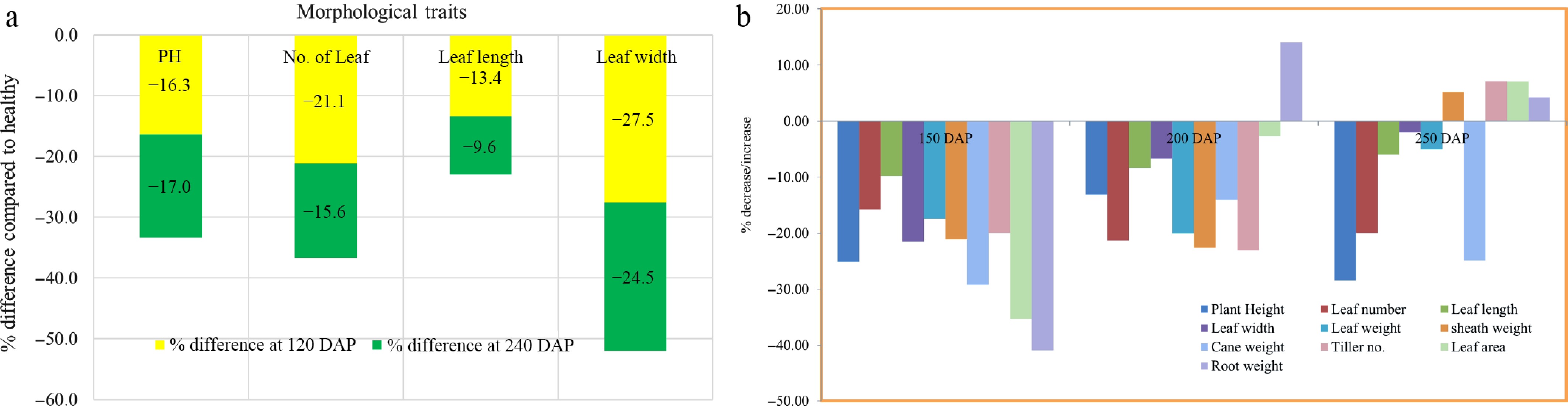
Figure 3.
Impact of wilt on various morphological traits in sugarcane. Left: Morphological responses (plant height [PH], number of leaves, leaf length, and leaf width) of sugarcane clones to wilt infection at 120 and 240 days after planting. Right: Effect of wilt on plant height (PH), leaf number, leaf length (LL), leaf width (LW), and leaf area index (LAI) during the formative phase in sugarcane clones (2022–23).
-
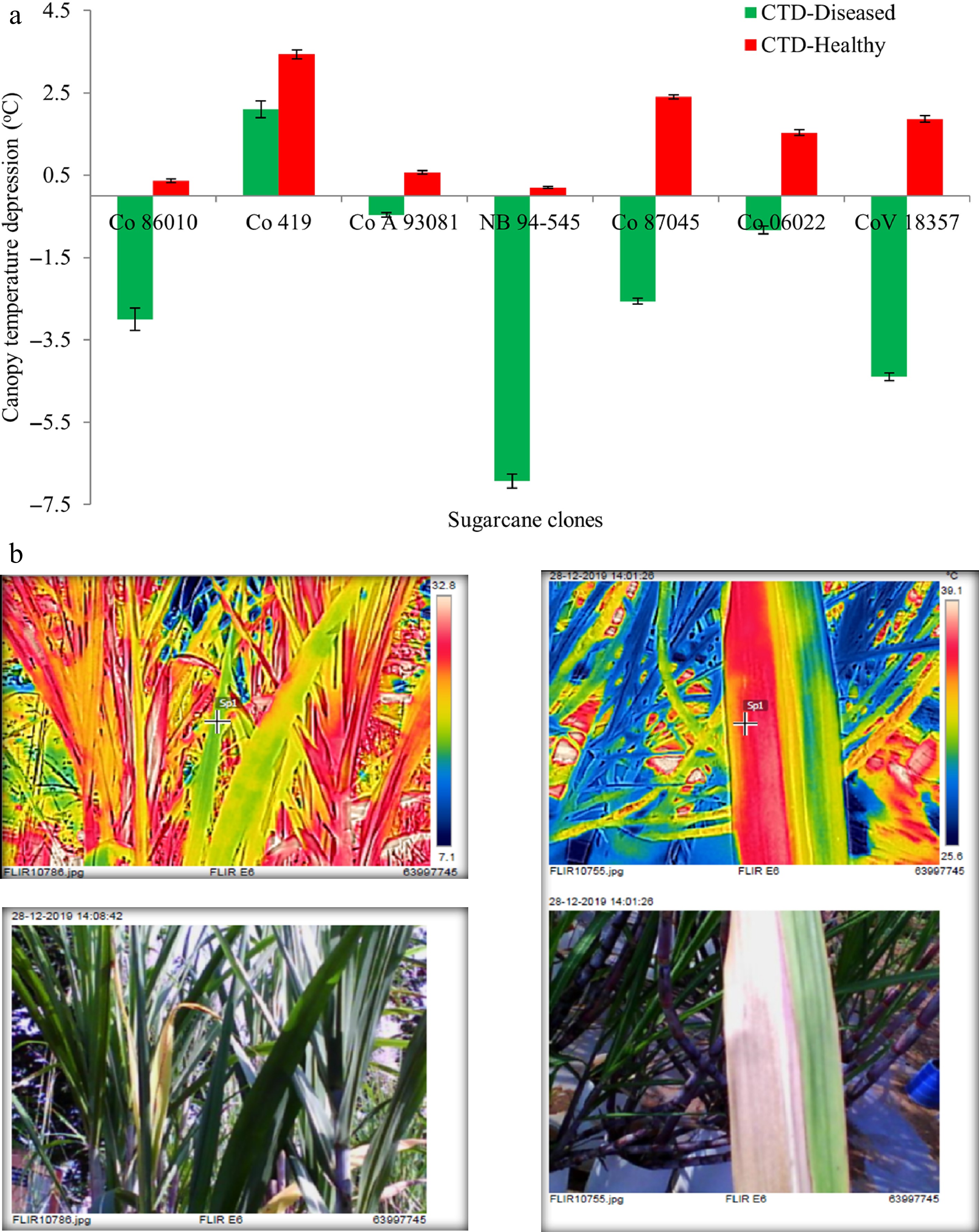
Figure 4.
Effect of wilt on sugarcane physiological parameters. (a) Effect of wilt on canopy temperature depression (CTD) in sugarcane clones; (b) CTD images of wilt-affected plants (cv CoV 18357) show a warmer canopy in wilt-affected plants. Top, thermal image; bottom, normal image.
-
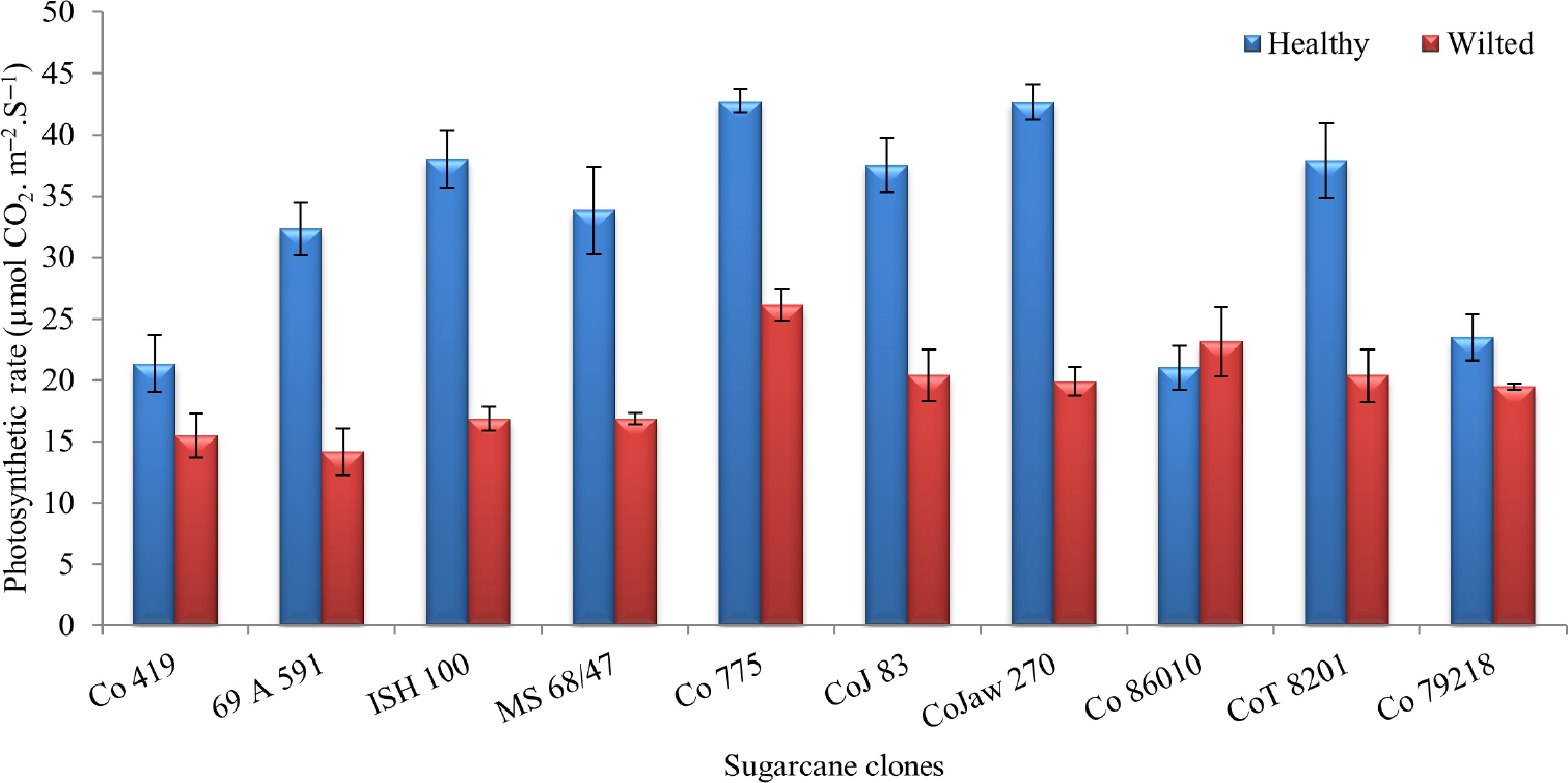
Figure 5.
Effect of wilt on photosynthetic rate in sugarcane varieties (recorded using a Portable Photosynthesis System).
-
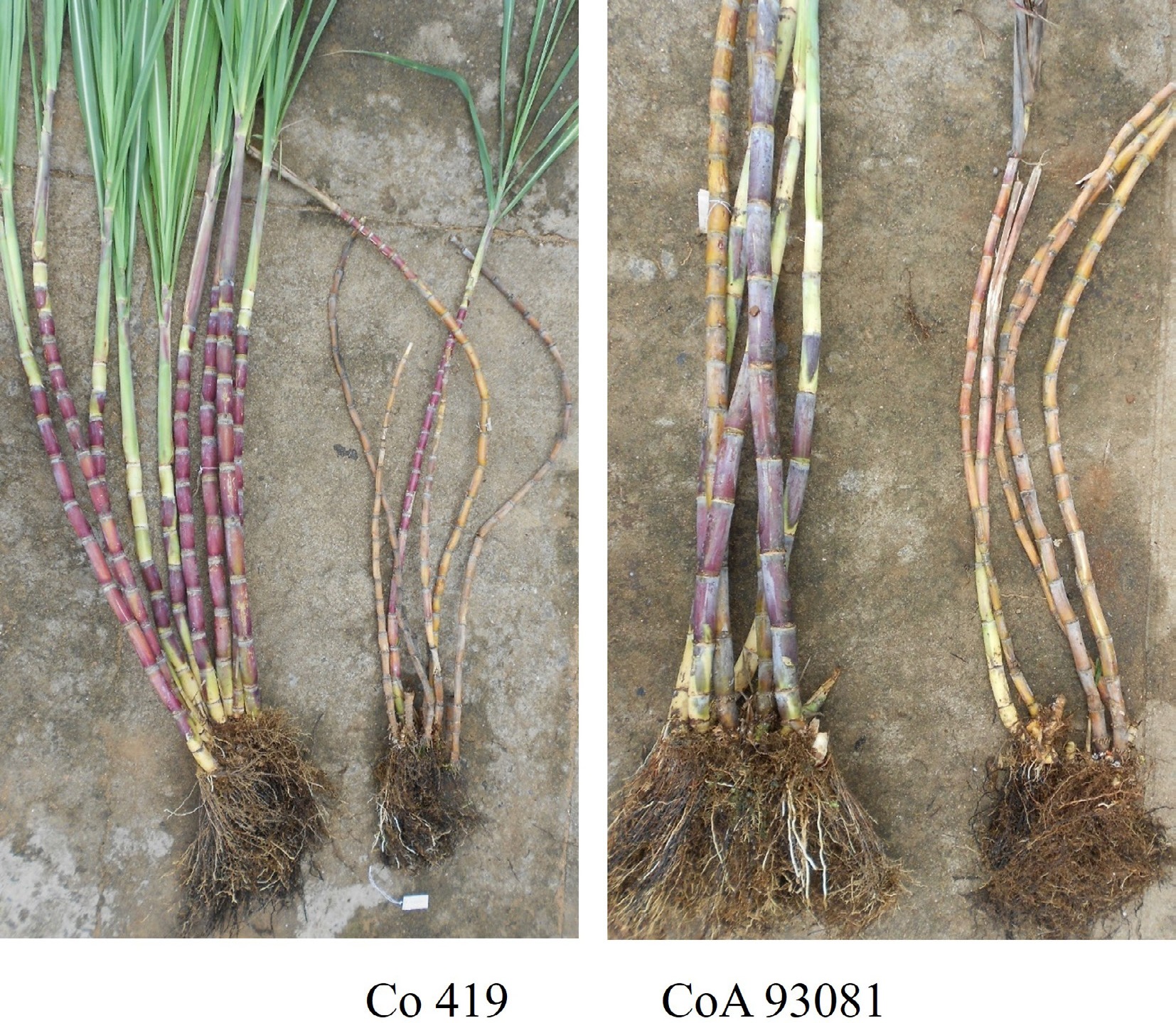
Figure 6.
Root growth along with cane growth in healthy and wilt-affected plants of sugarcane varieties Co 419 and CoA 93081. In each variety, a healthy clump is placed on the left and a wilted one on the right: wilt-affected clumps show weakened and dying canes along with dead root mass.
-
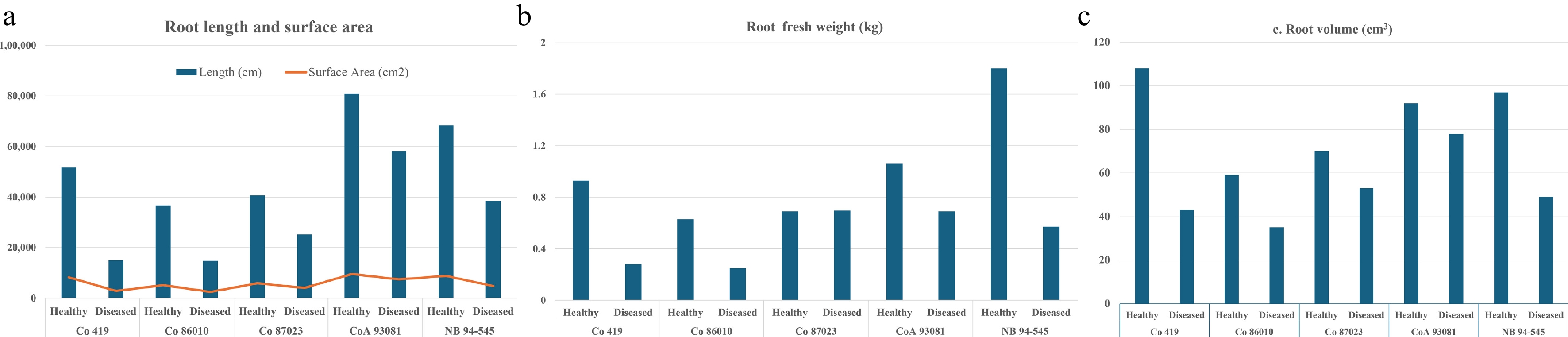
Figure 7.
Impact of wilt on root growth parameters in sugarcane. Root growth parameters, viz., root length and surface area, root fresh weight, and root volume, were assessed at 360 days after planting. The root mass was detached from the pots along with the soil, washed, and subjected to root scan analyses.
-
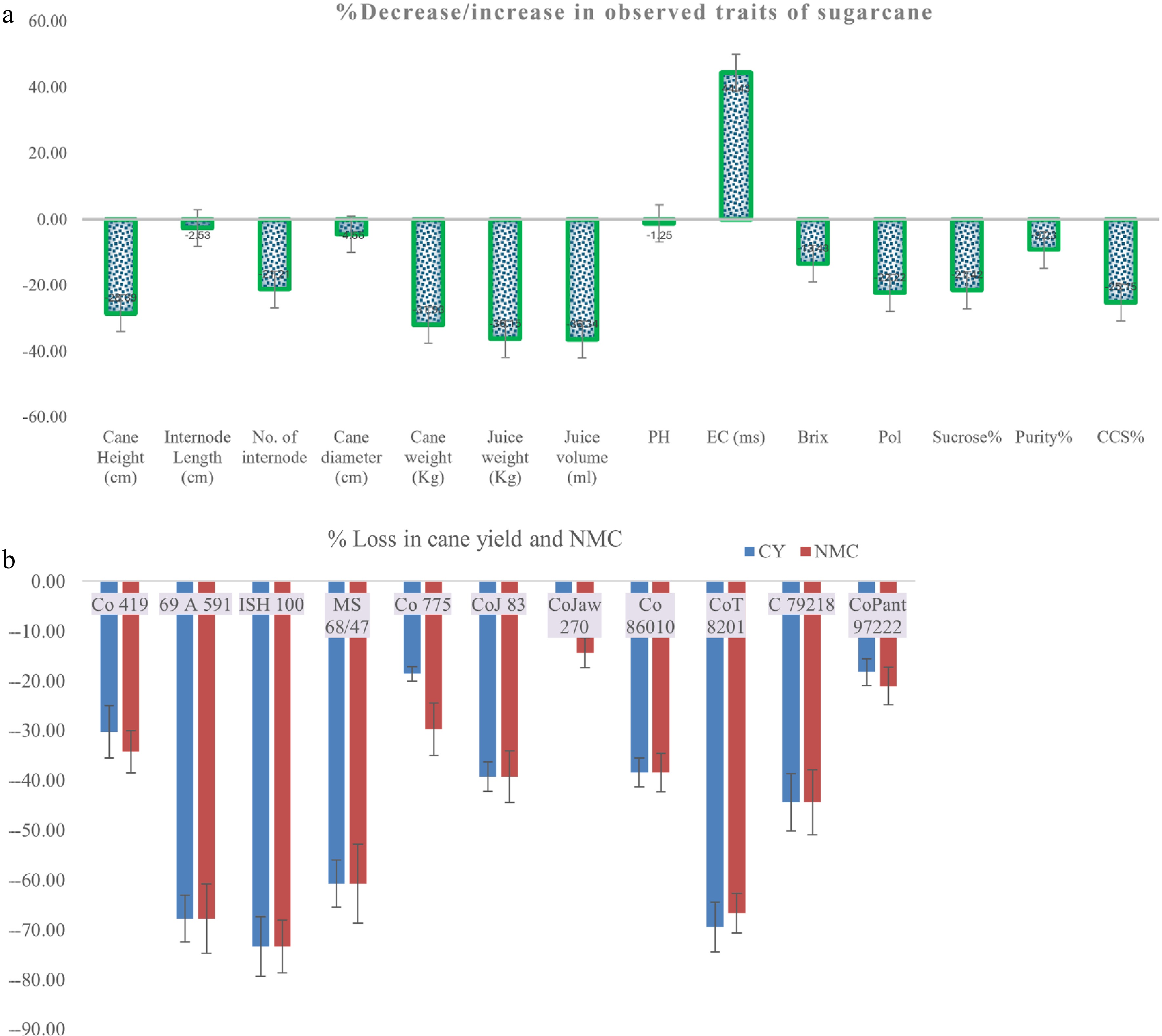
Figure 8.
Effect of wilt on sugarcane final cane yield parameters. (a) Impact of wilt on major cane growth and yield parameters in canes in 11 sugarcane varieties (values are the mean of 11 varieties). (b) Effect of wilt on the number of millable canes (NMC) and cane yield in 11 sugarcane varieties assessed during 2021–22. The loss in cane yield parameters reflects the relative loss in wilt-affected canes as compared to the respective healthy canes of 11 varieties.
-
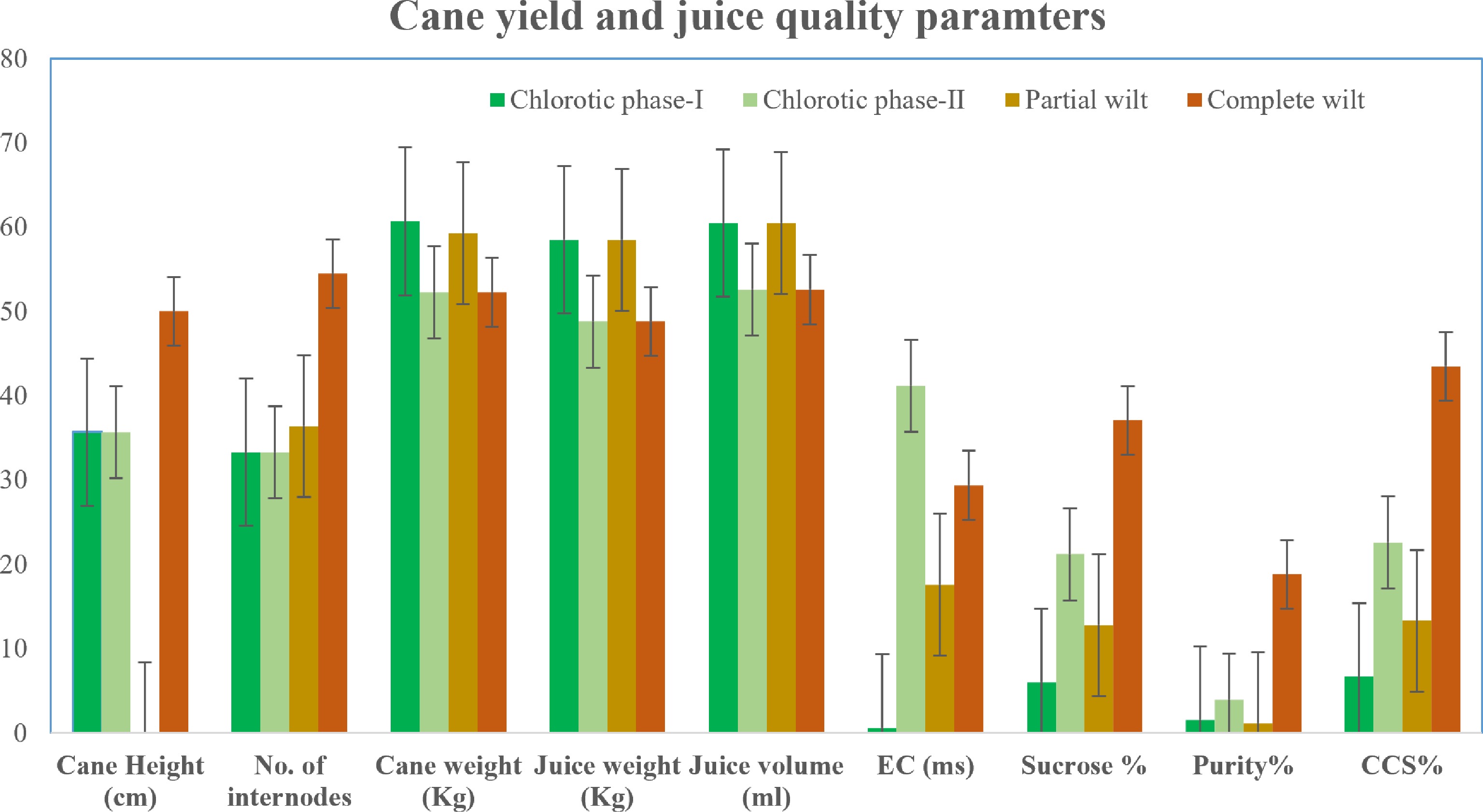
Figure 9.
Impact of wilt on cane yield and juice quality at the time of harvest in the sugarcane cv Co 11015 exhibiting different phases of wilt. Percent loss in values due to different wilt is depicted in the diagram, except EC values, which showed an increase in values due to F. sacchari infection. Chlorotic phase I: initial phase of wilt with partial chlorosis, with a few leaves turning yellow. Chlorotic phase II: all the leaves in the canopy turn yellowish. Partial wilt: cane stalks exhibit paleness along with foliage discolouration. Complete wilt: the affected canes exhibit total wilting (before drying of canes).
-
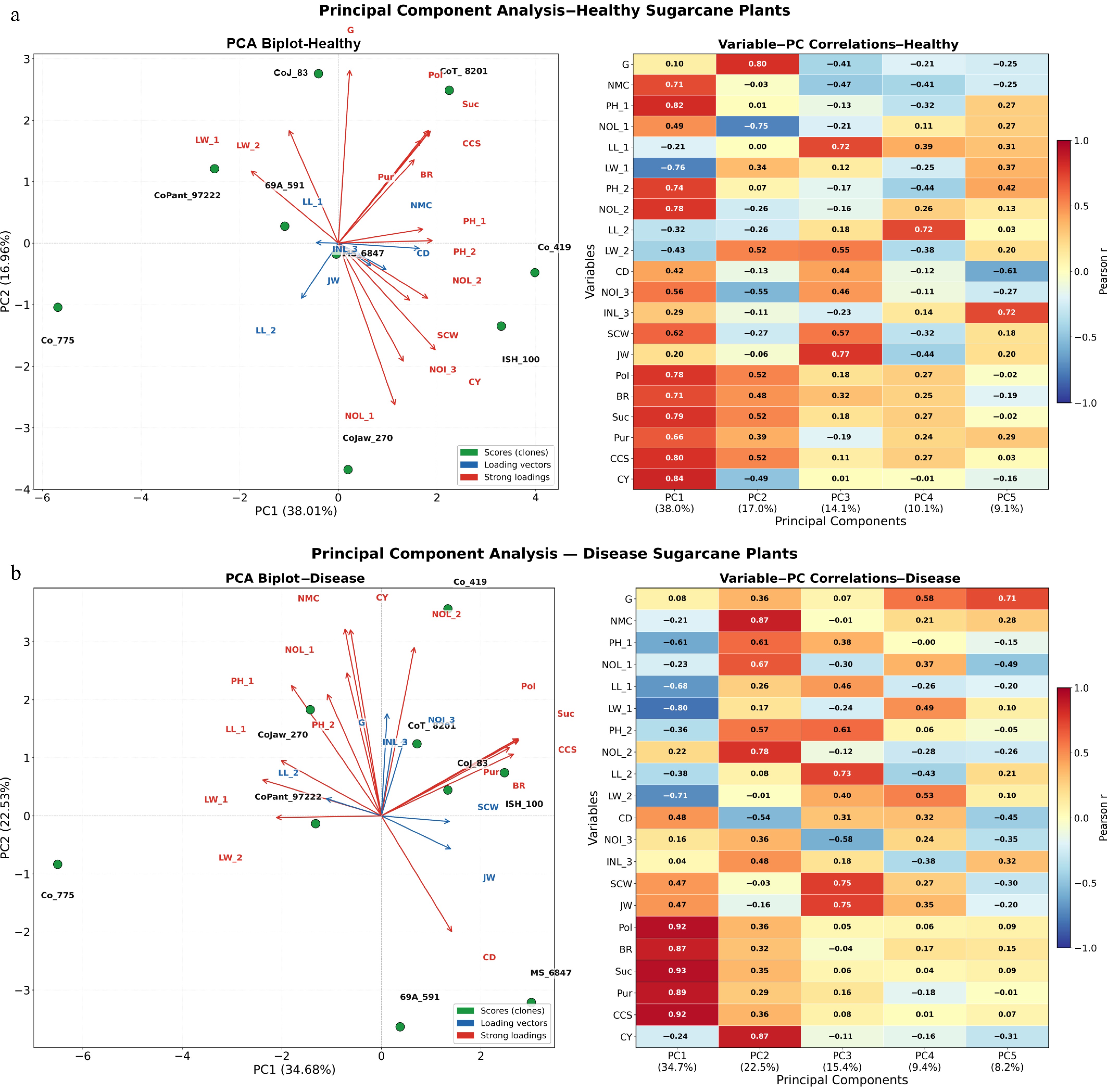
Figure 10.
Critical analysis of relationships between healthy and wilt-affected sugarcane for growth, physiological, and yield parameters. (a) Principal component analysis (PCA): Biplot (left) and correlation plot (right) of the studied variables of healthy plants. (b) Principal component analysis (PCA): Biplot (left) and correlation plot (right) of the studied variables of diseased plants.
Figures
(10)
Tables
(0)